Can You Put an Area Rug Over Carpet? A Friendly Guide for Your Home

Of course, you can put an area rug over carpet. In fact, it's one of our family's favorite design tricks for adding personality and protection to a room without having to do a major overhaul.
Yes, You Can Layer an Area Rug Over Carpet, and Here’s Why
We’ve been helping families in Southwestern Virginia and Northern North Carolina furnish their homes since 1902, and for a long time, the idea of layering a rug on top of a carpet felt a bit strange to people. But here in our community, it's become a go-to strategy for solving common design problems in a beautiful, affordable way. This isn't just a fleeting trend; it’s a genuinely practical solution for your home.
Defining Spaces and Adding Style
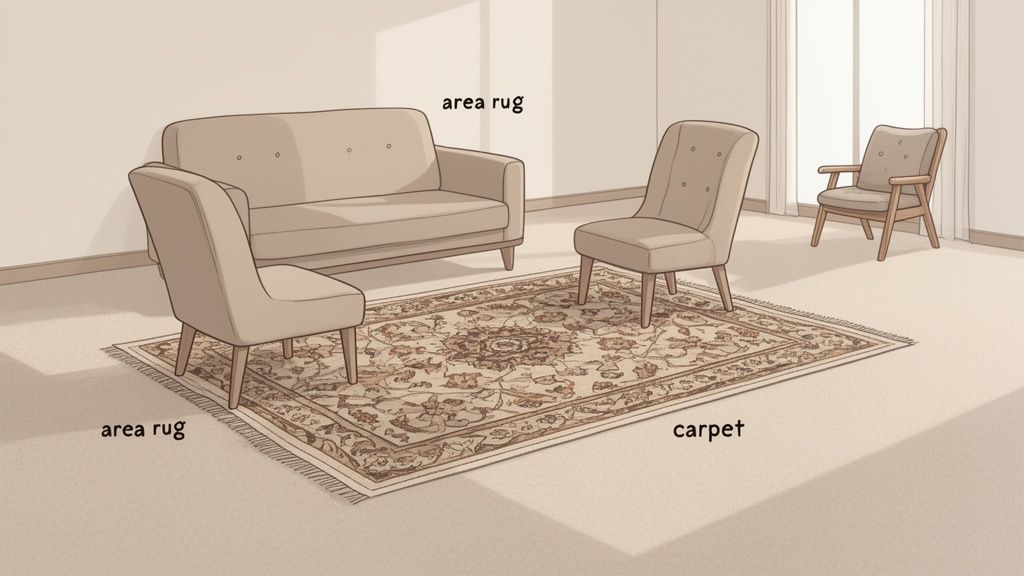
Placing an area rug over your wall-to-wall carpet is one of the simplest ways to bring structure and a fresh dose of style into your home. It’s the perfect fix for several situations:
- Anchoring a room: A well-placed rug grounds your furniture, creating a cohesive and inviting seating area. Imagine a beautiful Ashley rug tying your sofa and chairs together, instantly making the space feel more intentional and complete.
- Creating zones: In an open-concept living space, a rug can visually separate the living area from the dining nook. It can also define a cozy reading corner around your favorite La-Z-Boy recliner.
- Adding personality: This is your chance to introduce a pop of color, a bold pattern, or a rich texture that might feel too overwhelming for an entire room of carpeting.
Practical Protection for Your Floors
Beyond just looking good, layering a rug offers some real, functional benefits. It acts as a protective shield in high-traffic areas—like the path from the living room to the kitchen—saving your wall-to-wall carpet from premature wear and tear. Think of it as a smart, forward-thinking way to preserve your home’s value.
For years, some design purists saw this practice as unconventional, but it has since become a widely accepted technique for its dual aesthetic and functional advantages. Today, it’s recognized as a savvy way to break up the monotony of endless wall-to-wall carpeting and create a stunning focal point without a huge investment.
If you're looking for more ways to refresh your rooms, check out our other home decor tips.
Choosing the Right Rug and Pad for Your Space
Getting the layered look right starts with picking the perfect combination of rug and pad. The goal is to create harmony and comfort in your home, not a new tripping hazard. For our neighbors from Galax to Hillsville, we've found that nailing this pairing is the real secret to a beautifully layered and functional room.
The key is to play with contrast, especially in texture and pile height. If you've got a low-pile carpet like Berber, a medium-pile rug adds a wonderful sense of warmth and dimension. On the flip side, if your room has plush, high-pile carpet, a low-profile or flatweave rug is your best bet for creating stability and a clean, modern look.
The Magic of Texture and Pile Height
This is where the design really comes to life. A successful layered look hinges on thoughtful selections that feel both beautiful and practical. Industry experts will tell you that texture variation is absolutely critical—area rugs simply perform better when they're placed on short-pile or looped carpets. This allows the new rug to introduce a contrasting texture without making the floor feel heavy or monotonous.
For homeowners with plush, deep-pile carpets, a low-profile woven rug is the way to go. It creates a much more sophisticated appearance than trying to layer a thick rug on top of another thick rug. A low-pile, dense carpet provides the most stable base, which is something our expert design staff always recommends for a polished and secure final look.
Why a Quality Rug Pad Is Your Best Friend
Now, let's talk about the unsung hero of this whole project: the rug pad. A quality pad is absolutely non-negotiable. It's what stops your new rug from slipping, bunching up, or creeping across the room.
A great rug pad does more than just hold your rug in place. It adds a layer of cushioning, protects your carpet fibers from friction and wear, and even helps with noise reduction—a real bonus for busy family homes.
Choosing the right one is essential. Here’s a quick rundown of your options:
- Felt Pads: These are fantastic for adding extra cushion and comfort underfoot, but they don't offer a ton of grip on their own.
- Rubber Pads: Natural rubber pads provide an incredible grip, making them ideal for high-traffic areas where you're worried about slipping.
- Felt-Rubber Combo Pads: This is usually the best of both worlds. You get the soft cushioning from the felt and the secure, non-slip grip from the rubber.
We can help you find the right pad to provide that necessary grip without damaging your existing flooring, ensuring your layered look is beautiful and safe for everyone. This small investment also goes a long way in protecting your floors from furniture, a topic you can dive into with our guide on how to protect your floors from your furniture.
And if you need more guidance on finding that perfect rug, this expert guide on how to choose a living room rug offers deeper insights into size, materials, and style for your layered space.
How to Place Your Rug and Arrange Furniture
Once you've found the perfect rug and the right pad, it's time for the fun part: placement. This is where the magic really happens, turning a simple layered choice into a design element that looks like it was done by a pro. It’s all about creating a sense of purpose and cohesion in your room. We see it time and again in homes across Southwestern Virginia—the right placement makes all the difference.
A great rule of thumb our expert design staff lives by is making sure your rug is big enough to anchor your main furniture. For most living rooms, this means at least the front legs of your sofa and chairs should sit comfortably on the rug. Anything smaller often creates what designers call a 'floating rug,' which can make a space feel disconnected and smaller than it really is.
Visualizing Your Layout
Here’s a trick that our expert designer, Debra Williams, swears by, especially for our friends who are Aspiring Remodelers. Before you do any heavy lifting, grab a roll of painter's tape. Use it to mark the outline of where the rug will go right on your carpet. This simple step lets you see the scale and positioning in your actual space, helping you visualize the final look with your furniture.
This visualization step is a game-changer for different rooms:
- Living Room: Make sure the tape outline goes past both ends of your sofa by at least a foot.
- Dining Room: Pull the chairs out like you're about to sit down. The rug should be large enough that the back legs of the chairs don't slip off the edge.
This quick check ensures your furniture arrangement will feel balanced and intentional. If you're hunting for more layout ideas, our guide on living room arrangement ideas is packed with practical tips.
Getting a Smooth and Secure Finish
With your placement decided, roll out your rug pad first, making sure it's centered inside your taped outline. Then, carefully roll the area rug right on top. You might see a few wrinkles or bumps at first, but don't panic—that's totally normal.
Working from the center of the rug outward, use your hands to smooth everything flat. If you have some stubborn wrinkles that won’t quit, you can try "back-rolling" the rug in the opposite direction for a few minutes. Another option is to place heavy, flat objects (like a stack of books) on the spots for a day or two. The goal is to create a flat, secure surface that's safe for your family to walk on.
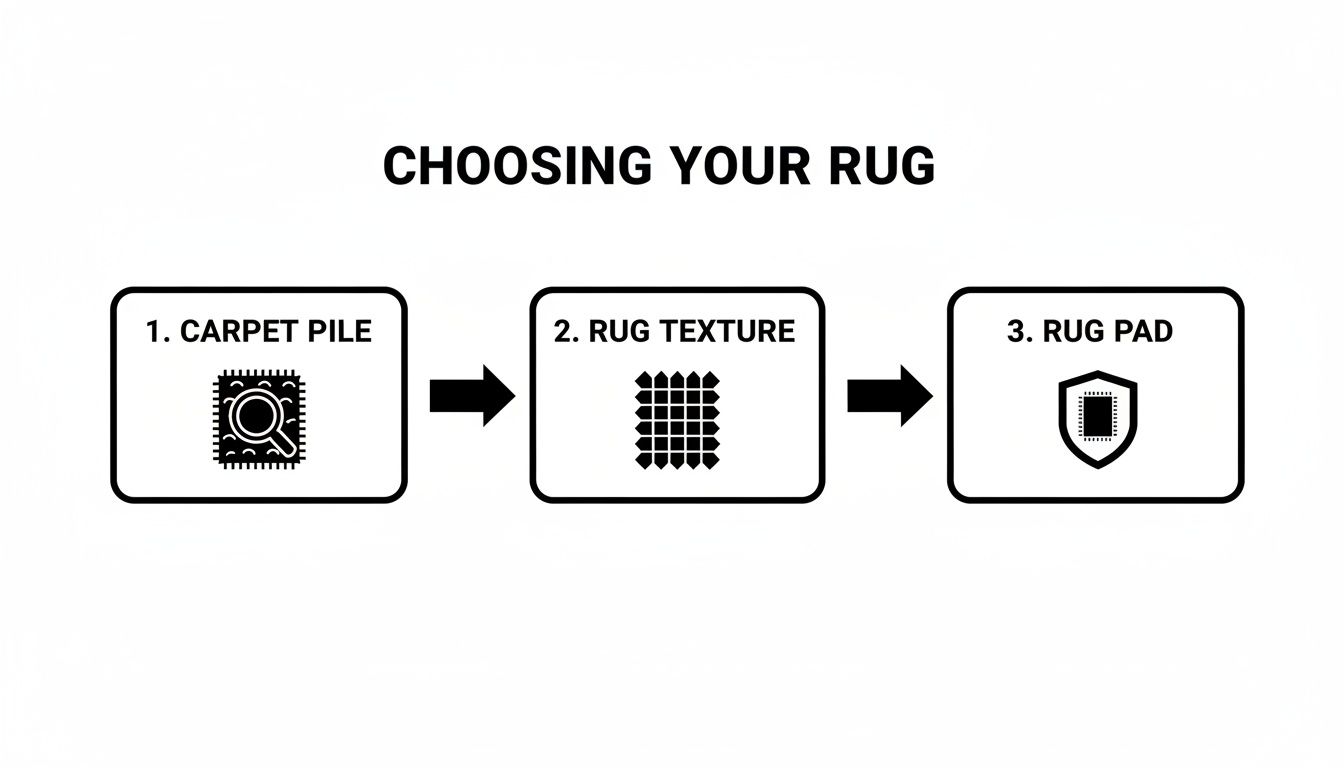
This simple process flow breaks down the key decisions for getting that great layered look. This visual guide really highlights that success hinges on the relationship between your existing carpet, the new rug, and that all-important rug pad.
Troubleshooting Common Rug on Carpet Problems
Even with the best planning, sometimes your beautifully layered rug decides to have a mind of its own. You might notice it bunching up, creeping across the room, or showing deep indentations from your furniture. Don't worry—these are common issues, and our family at Guynn Furniture has seen them all in homes from Galax to Independence.
Fortunately, the solutions are usually quite simple.
Stopping the Slip and Slide
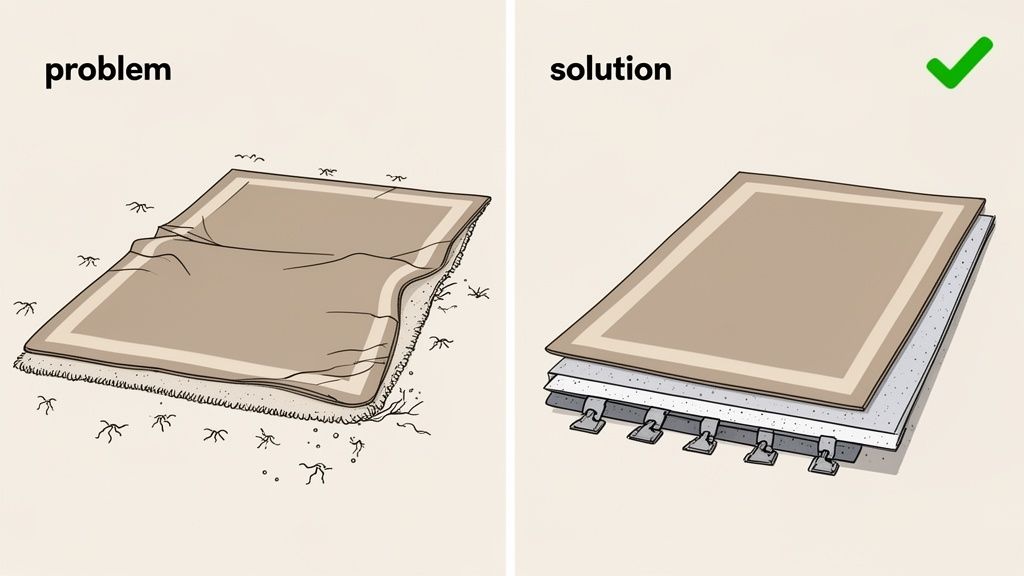
The most frequent complaint we hear is about a rug that won't stay put. If your rug pad isn't quite cutting it, you have a few other excellent options to anchor it securely.
- Carpet-to-Carpet Rug Tape: This isn't your average double-sided tape. It's specifically designed with an adhesive that grips both the rug backing and the carpet fibers without causing damage. It’s a great, affordable fix for stubborn corners.
- Rug Anchors: These are small, adhesive-backed squares or strips that attach to the corners of your rug. They create friction against the carpet below, effectively "locking" the rug in place.
- Strategic Furniture Placement: Sometimes, the easiest fix is using your furniture as an anchor. Ensuring the front legs of your heavy La-Z-Boy sofa or Bassett media console are firmly on the rug can often be enough to stop movement.
A constantly shifting rug isn't just an annoyance; it can be a safety hazard, especially for seniors or young children in the home. Taking the time to properly secure it provides peace of mind for the whole family.
Handling Indentations and Cleaning Challenges
Once your rug is secure, you might notice other little quirks, like deep dents from furniture or confusion about the best way to clean the layered setup. A little proactive care goes a long way.
To deal with indentations left by furniture legs, simply lift the rug and use your fingers to fluff the carpet fibers back up. For stubborn spots, a quick pass with a vacuum brush attachment works wonders. This is especially helpful when you decide to rearrange the room.
Vacuuming a layered setup also requires a slightly different approach. If your vacuum has an adjustable height setting, raise it slightly when cleaning the area rug. This prevents the beater bar from aggressively pulling on the rug's fibers or causing it to bunch up. For delicate or high-pile rugs, using an upholstery attachment is a gentler and highly effective option.
For our neighbors in Southwestern Virginia and Northern North Carolina with pets, preventing odor buildup is key. Periodically sprinkle a pet-safe carpet deodorizer on the wall-to-wall carpet, let it sit for a bit, then vacuum it up before placing the area rug back down. This keeps everything smelling fresh from the bottom layer up.
Common Problems and Solutions
Layering rugs is an art, but sometimes it requires a bit of science to get it just right. We've put together this quick-reference chart to help you solve the most frequent issues we see.
| Problem | Likely Cause | Guynn's Recommended Solution |
|---|---|---|
| Rug is "creeping" or "walking" across the floor | The rug pad is not providing enough grip for a carpet-on-carpet situation. | Use carpet-to-carpet tape or rug anchors under the corners. For larger rugs, anchor with heavy furniture. |
| Rug corners are curling or bunching up | The rug is too lightweight, or there's heavy foot traffic kicking up the edges. | Secure the corners with rug tape or consider a heavier rug with a more substantial backing. |
| Deep dents in the area rug and carpet underneath | Heavy furniture is compressing the fibers of both the rug and the carpet beneath it. | Use furniture coasters to distribute the weight. Periodically move furniture a few inches and fluff the fibers. |
| Area rug bunches when vacuuming | The vacuum's beater bar is too aggressive and is pulling on the rug fibers. | Raise the height setting on your vacuum. For delicate rugs, switch to an upholstery attachment without a spinning brush. |
Think of this table as your go-to guide for keeping your layered look flawless. With the right tools and techniques, these minor annoyances are easy to manage.
Maintaining Your Layered Look for Years to Come
Keeping your layered rug arrangement looking fresh and inviting is all about a simple, consistent routine. For our neighbors who value longevity—a principle we've stood by since 1902—this advice is key to protecting your investment. Just like any beautiful piece in your home, a little care goes a long way.
A proactive maintenance schedule ensures both the area rug and the carpet beneath it stay in great shape. At Guynn Furniture, we know that the long-term enjoyment of your home's comfort really comes down to these small, consistent efforts.
Your Weekly and Monthly Care Routine
The single most important part of your maintenance is regular vacuuming. For a layered setup, you’ll just want to tweak your technique a bit to care for both surfaces properly.
- Adjust Your Vacuum Height: If your vacuum has an adjustable beater bar, raise it to a higher setting when cleaning the area rug. This stops the bristles from aggressively pulling at the rug fibers, which can cause premature wear and bunching.
- Go with the Grain: Vacuum in the direction of the rug’s pile. You can figure this out by running your hand over the surface; one direction will feel smoother than the other. That's the way to go.
- Don't Forget Underneath: At least once a month, take a minute to roll up the area rug and give the carpet underneath a thorough vacuuming. This gets rid of any dust or allergens that might have settled between the layers.
This regular cleaning prevents dirt from getting ground into the fibers, which is the real secret to long-term freshness. For more ideas on keeping your entire home looking its best, check out our guide to tackling your spring cleaning checklist.
Handling Spills and Deep Cleaning
Spills are just a part of life, but they don't have to be a disaster. The key is to act fast.
Blot the spill immediately with a clean, dry cloth. Whatever you do, don't rub—that just pushes the stain deeper into the fibers. For tougher spots, a gentle cleaning solution made for your rug’s specific material is your best bet.
A crucial tip from our family to yours: Every so often, lift the area rug for a day to let the underlying carpet breathe. This simple step prevents moisture buildup and gives you a chance to spot any signs of wear or discoloration before they become a real problem.
For materials like wool, which we see in so many beautiful, high-quality rugs, it's vital to use the right cleaning techniques to make them last. You can find plenty of great resources online, including these expert tips for cleaning wool rugs and carpets, which offer some really detailed guidance.
By taking these proactive steps, you'll make sure your layered look remains a source of comfort and pride in your Hillsville or Galax home for many years.
Frequently Asked Questions About Layering Rugs
At our showrooms in Galax, Independence, and Hillsville, we get a lot of great questions about layering rugs. It’s a popular design trick, and we love helping our neighbors across Southwestern Virginia and Northern North Carolina feel confident enough to try it out.
Here are the answers to some of the most common questions we hear, with some straightforward advice to get you started.
What Size Rug Should I Use Over My Carpet?
The single most common mistake we see is picking a rug that’s just too small for the room. An area rug needs to be large enough to properly anchor the main furniture in the space, creating a defined, cohesive zone. Think of it as building an island of comfort for your seating area.
In a living room, for example, the rug should be big enough for at least the front legs of your sofa and any chairs to rest on it. You really want to avoid that "floating rug" look, where a tiny rug sits all alone in the middle of the floor, completely disconnected from the furniture. That just makes a room feel choppy and a lot smaller than it really is.
Will an Area Rug Damage My Wall-to-Wall Carpet?
This is a great question, and the short answer is no—as long as you use the right kind of rug pad. A quality pad made specifically for carpet-on-carpet layering is your best friend here. It creates a gentle but firm grip that stops the rug from shifting around, which is what causes the friction and wear on your wall-to-wall carpet.
A good pad also lets a bit of air circulate between the two layers. To keep everything in top shape, we suggest lifting the area rug every few months to vacuum and just let the carpet underneath breathe for a little while.
Can I Put Any Type of Rug Over High-Pile Carpet?
It's definitely a bit trickier, but you absolutely can. The secret to layering over a high-pile or shag carpet is choosing a rug with a contrasting, low profile.
You'll have the best luck with options like these:
- Flatweave Rugs: They have no pile at all, giving you a stable, smooth surface.
- Low-Pile Rugs: A dense, short pile will sit nicely without adding too much bulk.
- Thin Hide Rugs: The natural, irregular shape and flat profile of a hide can look absolutely stunning.
What you want to avoid is putting a thick, plush rug on top of an already thick carpet. That combination can create an unstable, lumpy surface that’s not only a tripping hazard but also makes it a real headache to position furniture evenly.
The goal is always to create a pleasant contrast in both texture and height. This contrast is what makes the layered look feel intentional and professionally designed rather than accidental.
This entire design strategy has become more popular as home furnishing trends have shifted over the years. The flooring industry has seen a significant transformation; what was once a market dominated by wall-to-wall carpet has evolved as homeowners increasingly prefer hard surfaces in main living areas. This shift has made layering area rugs over existing carpet an even more common and stylish solution for defining spaces. Learn more about how design trends are changing on houzz.com.
Ready to Find Your Perfect Layering Rug?
If you're ready to transform your room, layering an area rug over your existing carpet is a simple but incredibly effective way to refresh your home's style. With the right rug and just a bit of planning, you can create a beautiful, intentional space that truly feels like you. Our family has been helping furnish homes across Southwestern Virginia and Northern North Carolina since 1902, and we’d love to help you find the perfect piece.
Our large in-stock selection means you don’t have to wait weeks to start your room makeover. We carry beautiful, durable rugs from top brands like Ashley and Bassett that are absolutely perfect for layering. With our Low Price Promise, you can feel confident you're getting the best value, and our free in-home delivery and setup within 60 miles makes the whole process effortless.
Choosing to layer a rug is more than a design choice—it’s an investment in your home's comfort and longevity. It’s an easy update that makes a huge impact, and we’re here to help you get it just right.
Visit our showrooms in Galax, Independence, or Hillsville to test the comfort for yourself. Or, if you need a little extra guidance, schedule a consultation with our design team to start planning your dream room today. You can also browse our selection online at guynnfurniture.net.