
Can You Wash a Rug? A Homeowner’s Guide

So, can you actually wash a rug at home? For many common types, the answer is a resounding yes. It’s one of the best ways to refresh your entire space and get rid of that lived-in grime.
But before you start, there’s one golden rule: always check the care tag. That little label is your roadmap, telling you exactly what your rug can and can’t handle.
Your Quick Guide to Rug Washing
That beautiful rug anchoring your living room has seen a lot of life, and it's probably starting to show it. We get it. For our family of customers here in Southwestern Virginia and Northern North Carolina—especially those with kids and pets running around—choosing a durable, washable rug from a brand like Ashley is a total game-changer.
At Guynn Furniture & Mattress, we’ve been helping folks in Galax, Independence, and Hillsville keep their homes beautiful since 1902. A rug isn't just a floor covering; it’s where memories are made, whether it's under a cozy La-Z-Boy recliner or the dining set where you host holiday dinners. Keeping it clean is key to keeping it comfortable.
Rug Washing Cheat Sheet
Not sure where to start? This quick reference chart breaks down the best approach for the most common rug materials we see in homes.
| Rug Material | Is It Washable? | Best Washing Method |
|---|---|---|
| Cotton or Synthetic | Yes, usually. | Machine-wash on gentle, or hand-wash. |
| Wool or Jute | Yes, with caution. | Hand-wash only with a pH-neutral cleaner. |
| Silk or Viscose | No. | Professional cleaning is required. |
| Antique or Oriental | No. | Always trust a professional. |
| Shag or Rag Rugs | It depends. | Hand-wash is safest; some can be machine-washed. |
This table gives you a great starting point, but remember, the care tag on your specific rug always has the final say.
Before you dive in, take a quick look at this decision tree. It’s a simple visual to help you figure out the right path forward based on what that care tag says.
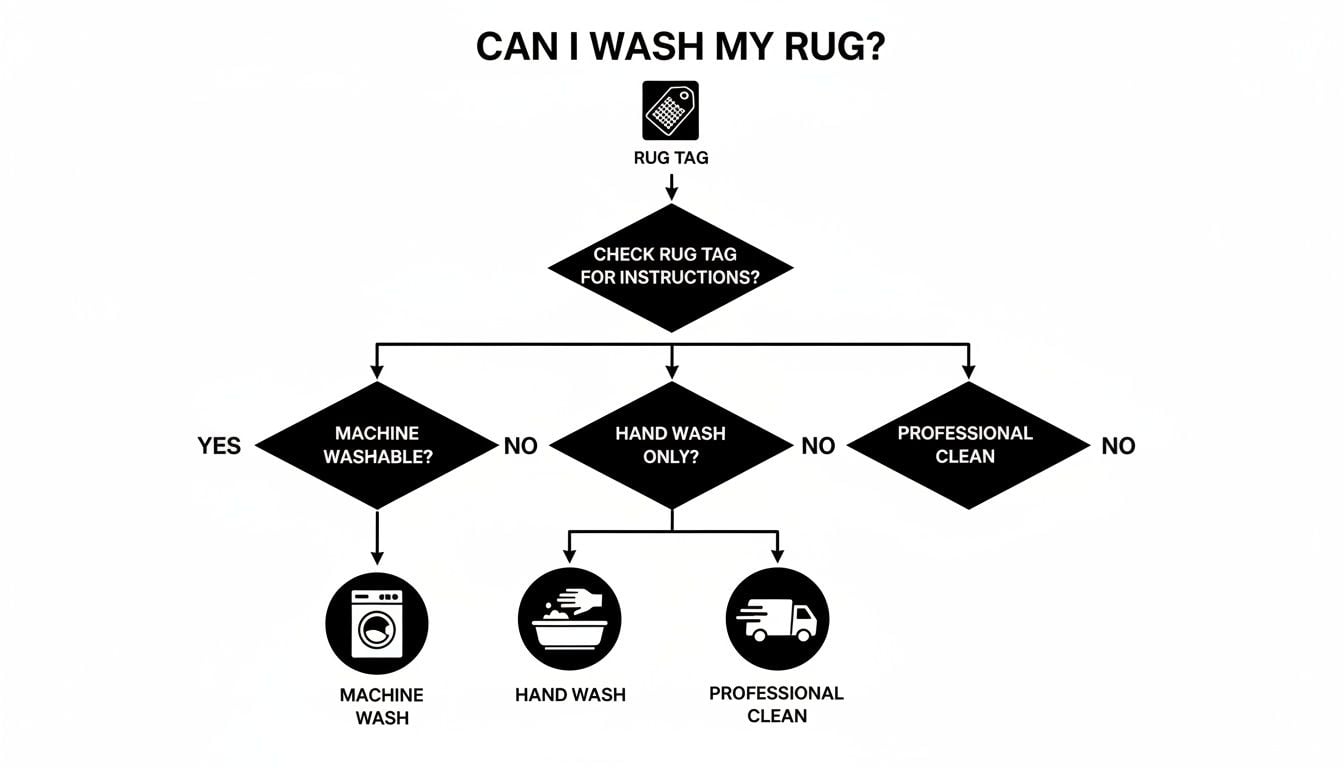
As you can see, that tag is your most trusted guide. It points you toward the right method for a successful, damage-free clean.
And if you’re feeling inspired to tackle more than just your floors, our comprehensive guide to spring cleaning your home is full of more helpful, neighborly advice. From our home in Galax, Hillsville, and Independence to yours, we're here to help.
Critical Pre-Wash Steps for a Perfect Clean
Before you even think about getting that rug wet, hold on. A few minutes of prep work can be the difference between a beautifully refreshed rug and a cleaning disaster. It’s a lesson we’ve learned firsthand over the years, and something our expert design staff always reminds folks who visit our showrooms.
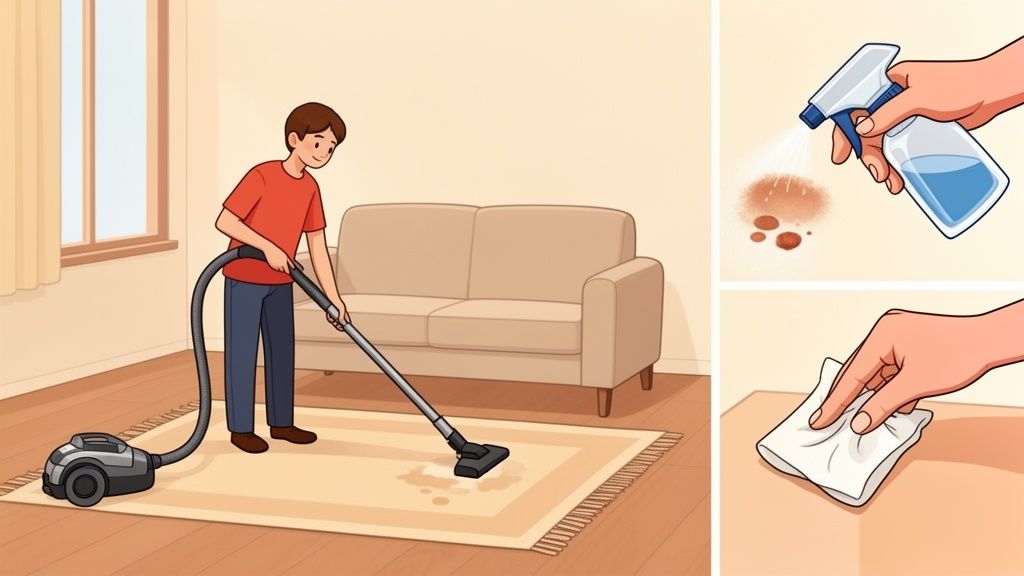
First things first: give your rug a thorough vacuuming. And we don’t just mean the top—flip it over and vacuum the back, too. This pulls out all the loose dirt, dust, and pet hair hiding deep in the fibers. Skipping this step is how you turn a little surface grime into a muddy mess during the wash.
Tackle Stains and Test for Color Bleeding
Once you've vacuumed, it’s time to play detective and spot-treat any stubborn stains. Trust us, a fresh spill is always easier to handle than one that’s had weeks to set. You often don’t even need harsh chemicals for common household spills.
For more in-depth advice, our team put together a fantastic guide on how to remove furniture stains, and the tips work just as well for rugs.
Finally, there’s one step that is absolutely non-negotiable: a colorfastness test. This is especially crucial for those vibrant, patterned rugs that perfectly tie together your Bassett or La-Z-Boy furniture. You don't want those beautiful colors running together.
How to Perform a Colorfastness Test:
Find a small, hidden spot on your rug—like a corner that usually sits under the sofa. Dampen a clean white cloth with a bit of water and a tiny drop of the detergent you plan on using. Gently dab the cloth on that spot. If you see any dye transfer onto the cloth, stop right there. Your rug will bleed in the wash and needs to be handled by a professional.
Before you start any cleaning, the most important thing is a solid understanding of your rug's material, as it dictates every other choice you’ll make. Taking these few extra minutes ensures the centerpiece of your room stays as beautiful as the day you brought it home from our showroom in Galax, Independence, or Hillsville.
How to Machine Wash Your Rug Without Ruining It

The idea of tossing a rug into the washing machine can be a little nerve-wracking. But for many modern synthetic rugs, it’s not only safe—it’s the most effective way to get them clean. This method is a lifesaver for durable, family-friendly options made from materials like polyester, nylon, and polypropylene, the kind of rugs built for the realities of a busy home.
We see these tough, beautiful rugs in homes all across Southwestern Virginia. For our customers in Hillsville and Galax, this is often the best solution for keeping those high-traffic area rugs looking fresh, even with kids and pets running around.
Setting Up for a Successful Wash
The first rule of machine washing is to give your rug plenty of room to breathe. Never, ever cram a rug into a washer that’s too small. It needs space to tumble and agitate freely, otherwise you risk damaging the rug's fibers and potentially your washing machine’s drum.
If it feels like a tight squeeze, your best bet is to head to a laundromat with commercial-sized machines. Once you're sure it fits, these guidelines will get you a perfect wash every time:
- Go for a Mild Detergent: Harsh chemicals can be brutal on rugs, stripping colors and breaking down the backing over time. A gentle, wool-safe detergent is always a solid choice.
- Pick the Right Cycle: Always use the gentle or delicate cycle. This setting minimizes the stress on the rug’s fibers and overall construction, keeping it intact.
- Use Cold Water Only: Hot water is the number one enemy of most rugs. It can cause synthetic fibers to warp, make colors bleed, and even cause the backing to disintegrate. Cold water gets the job done just as well and is much safer.
We often tell our customers that a high-quality rug is an investment in your home's comfort. Just like the durable fabrics on a La-Z-Boy recliner or an Ashley sofa, modern rug materials are designed for longevity with the right care.
How Many Times Can You Wash a Rug?
Imagine settling into your cozy living room, only to see that your favorite area rug is looking a little dull from all the foot traffic. The great news is that many high-quality washable rugs are built to handle 50 to 100 washes or more when cared for properly. This impressive durability comes from advanced synthetic fibers like polyester or nylon, which are designed to resist fading and wear far better than some natural fibers.
For the families we serve from our showrooms—whether you’ve got pets or are furnishing a brand-new home—this means that the rug under your dining table can look great for years. If you're thinking about adding a new rug to your space, be sure to check our guide on how to measure for an area rug to find the perfect fit.
A Gentle Guide to Hand-Washing Delicate Rugs
Some rugs just need a softer touch. For those special pieces made from natural fibers like wool, silk, or jute, hand-washing is the only way to go if you want to avoid damage like shrinking or fading. Think of it as a spa day for your most cherished rug.
This process is perfect for that beautiful antique you inherited or the cozy wool rug that adds so much warmth to a bedroom. It's a method our design expert, Debra Williams, often recommends to our neighbors in Independence and the wider Northern North Carolina region to keep these special pieces looking their best for years to come.
Preparing for Your Rug's Spa Day
Before you dive in, you'll need a few simple supplies and a clear, sunny day on your side. The goal is to mix up a gentle cleaning solution and find a good spot to work without making a mess indoors.
Here’s what you’ll need:
- A clean tarp or plastic sheet large enough for your rug to lie completely flat.
- A garden hose with a spray nozzle attachment.
- A bucket for mixing your cleaning solution.
- A soft-bristle brush (fun fact: a brush meant for detailing cars works perfectly).
- A pH-neutral or wool-safe detergent.
Pick a spot outside on a patio, deck, or driveway where water can easily drain away. The first thing you'll do is lay down your tarp—this creates a clean surface and protects your rug from picking up any new dirt from the ground.
We always tell our clients that caring for a delicate rug is a lot like caring for a fine piece of furniture—it requires a gentle hand. A beautiful wool rug can anchor a room just as much as a stunning Bassett chest or a comfortable Sealy mattress, and protecting that investment is key.
The Hand-Washing Process
Once you’re all set up, unroll your rug onto the tarp. Give it one final, light vacuuming to pick up any surface dust you might have missed before getting it wet.
Now, you can get started. The first step is to thoroughly saturate the rug with cool water from your garden hose. Next, mix your pH-neutral detergent with water in the bucket according to the product's directions. You're aiming for a mild, slightly sudsy solution, not a mountain of foam.
Pour the soapy water evenly over the rug and start gently scrubbing with your soft-bristle brush. Always move in the direction of the rug's fibers. This simple trick prevents fraying and keeps the pile looking smooth and uniform.
After you've worked through the entire surface, it’s time to rinse. Use the hose to wash the rug thoroughly until the water runs completely clear and you don’t see any more suds. This is a crucial step—any soap left behind can become sticky and attract more dirt later on.
Drying Your Rug the Right Way to Prevent Damage

You’ve done the hard work of washing your rug, but don't rush this final step. Getting the drying process right is just as important as the wash itself—it’s what prevents damage and keeps your rug looking its best.
Whatever you do, resist the urge to toss it in a machine dryer. The intense, direct heat is the number one enemy of a wet rug. It’s the fastest way we know to cause permanent shrinking, warping, or even melting the backing right off.
For our neighbors here in Southwestern Virginia, a clear, sunny day with low humidity is perfect for this job. The goal is to maximize air circulation all around the rug, which is the key to preventing that musty, mildew smell from ever taking hold.
The Best Methods for Air-Drying
Whether you machine-washed a durable synthetic or carefully hand-washed a delicate wool piece, air-drying is always the safest path forward. You’ve got a couple of solid options, depending on the rug’s size and the space you have to work with.
Lay It Flat: The ideal method for most rugs is laying them flat on a clean, dry surface. A patio, a clean deck, or even a pair of sawhorses works beautifully. This technique guarantees the rug keeps its shape without stretching. Just be sure to flip it every few hours so both sides dry evenly.
Hang It Properly: You can also hang your rug over a sturdy clothesline, a deck railing, or even across two clean chairs. If you go this route, drape it carefully so the front and back are both exposed to the air. It's a good idea to rotate it periodically to prevent a permanent crease from forming where it hangs.
Sometimes after a good wash, a rug’s fibers can look a little flat or compressed. Once it's completely dry, you can bring that plush texture right back. Just run a vacuum over it (with the beater bar turned off) or use a soft-bristled brush to gently fluff the pile.
Proper care goes beyond just cleaning. For more advice on keeping your floors and furnishings in top shape, take a look at our guide on how to protect your floors from your furniture.
When to Trust a Professional Rug Cleaner
We’re all for a good DIY project, but when it comes to certain rugs, calling in a professional is the smartest—and safest—move you can make. While at-home methods work wonders for many everyday rugs, some jobs are simply best left to the experts.
As a company that's been serving Southwestern Virginia and Northern North Carolina since 1902, we know that protecting the beautiful investments in your home means doing things the right way. Some rugs just aren’t built for a DIY wash day.
Signs Your Rug Needs Expert Attention
So, how do you know when to throw in the towel and make the call? It usually comes down to the rug’s material, its sheer size, or a stain that just won’t quit. When in doubt, it's always better to be safe than sorry.
Here are the clearest signs it's time to let a professional handle it:
- Delicate Materials: If your rug is made of silk, viscose, or is a genuine antique or hand-knotted Oriental rug, please don't attempt to wash it yourself. These fibers can be permanently damaged by the wrong water temperature, agitation, or cleaning solution pH.
- Oversized Rugs: That gorgeous, room-defining area rug is likely too big and heavy for even a commercial laundromat machine. Professionals have dedicated, large-scale equipment to clean oversized pieces without causing stress or damage.
- Stubborn, Set-In Stains: If you're fighting a losing battle with old pet accidents, red wine, or any other spot that resisted treatment, an expert has the right tools. They use powerful but fiber-safe solutions to break down grime that home remedies can't touch.
- The Care Tag Says So: This one’s a no-brainer. If the label explicitly reads "Dry Clean Only" or "Professional Clean Only," always follow those instructions.
In our experience helping families in Galax, Hillsville, and Independence, we’ve seen that valuable, deep-pile shag rugs are particularly vulnerable to home washing. The long fibers can get matted and damaged without the proper techniques.
How Often Should You Professionally Clean a Rug?
Wondering how often that rug really needs a deep clean? For most washable rugs in moderate-traffic areas—like a dining room featuring a beautiful Bassett set—we recommend a professional cleaning every 12 to 18 months.
For high-traffic spots, such as a living room anchored by a comfy La-Z-Boy sofa, you’ll want to aim for every 6 to 12 months. This is especially true if anyone in your family deals with allergies. You can learn more about recommended rug cleaning schedules and see how they can keep your home feeling fresh and inviting.
Frequently Asked Questions About Rug Cleaning
In our showrooms, the conversation often turns from picking the perfect La-Z-Boy sofa or Bassett dining set to how to actually live with the beautiful new rug underneath. We get a lot of great questions about rug care, so we've gathered a few of the most common ones right here.
Can You Wash a Rug to Get Rid of Pet Odors?
Yes, absolutely. For those lingering pet smells, washing your rug is one of the most effective solutions. A great home remedy is to add about a cup of white vinegar directly into the rinse cycle for machine-washable rugs.
Vinegar is a fantastic natural deodorizer that neutralizes odors without being harsh on the fibers. If you’re washing by hand, you can add the same amount to your final rinse water. It works like a charm.
What’s the Best Way to Wash a Large Area Rug?
This is a common challenge. If your area rug is too bulky for your home washing machine—and please, never try to cram it in—the best option is often a trip to the local laundromat. They have oversized, commercial-grade front-loading machines that can handle the job.
If the rug isn't machine washable, your best bet is to hand-wash it outside on a clean tarp on a clear, sunny day. Be ready for a bit of an arm workout, but the results are worth it!
Is It Cheaper to Wash My Rug Myself?
Without a doubt. Washing your own rug isn’t just doable; it’s a smart financial move that often makes rugs more economical than hard flooring over time. In fact, industry data shows that carpets and rugs can be 65% less expensive to maintain over a 22-year lifespan compared to hard surfaces.
Why? The costs for labor and supplies are significantly lower. Hard floors require 2.5 times more annual cleaning time, and their cleaning supplies can cost nearly seven times more. For our customers here in Southwestern Virginia who are investing in durable, long-lasting pieces, a washable rug really amplifies that value.
How Many Rugs Can I Wash at Once?
Our advice is always to wash rugs one at a time. This gives the rug plenty of room to tumble and agitate, which means a much deeper clean.
Washing rugs individually also keeps the washing machine balanced and prevents any potential color bleeding between rugs. It might take a little longer, but it ensures each rug gets the attention it needs.
For more in-depth tips, you can always explore guides on general carpet cleaning practices. And if you're curious about layering different styles, don't miss our post on whether you can put an area rug over carpet.
We understand that choosing the right furniture and rugs can feel overwhelming. That’s why we’ve created a no-pressure atmosphere where we act as your guide. Our large in-stock selection means you can enjoy your new pieces right away with our free in-home delivery and setup within 60 miles.
Visit our showrooms in Galax, Independence, or Hillsville to test the comfort for yourself.
Schedule a consultation with our design team to start planning your dream room today.
Browse our selection online at guynnfurniture.net.