A Guide to Decorating an Open Floor Plan

Decorating an open floor plan is really about creating distinct, functional "rooms without walls." The trick is to cleverly use furniture, area rugs, and lighting to define different zones, all while keeping that airy, spacious feeling your family loves.
The Joy and Challenge of Decorating an Open Floor Plan
That big, beautiful open space in your home is brimming with potential, but let's be honest—it can also feel a bit daunting to decorate. How do you make it feel cozy and connected instead of vast and undefined? That's what our family at Guynn Furniture is here to help with.
Since 1902, we've helped our neighbors in Galax, Independence, Hillsville, and across the wider Southwestern Virginia / Northern North Carolina region transform their houses into homes. This guide is packed with practical, no-pressure advice for making your open layout work perfectly for you.
We believe the right layout does more than just look good; it creates a calming environment for your family. A well-designed room can truly help reduce stress, and we've put together some thoughts on how to achieve that peaceful feeling in our guide to designing a room to reduce stress.
It’s no surprise that open layouts are so popular. The trick is making them work. Poorly planned spaces can actually feel smaller if furniture blocks walkways, but strategic zoning can make them appear much larger and more functional.
What We Will Cover in This Guide
Together, we'll explore simple, effective strategies to bring harmony to your space. You'll learn how to:
- Choose furniture that defines separate areas without building walls.
- Use area rugs and lighting to create cozy, functional zones.
- Unify the space with a cohesive color palette for a seamless look.
- Arrange everything for easy traffic flow and clear, beautiful sightlines.
Let’s dive in and make your open-concept layout work perfectly for your family.
Choosing Furniture to Define Your Space
In an open floor plan, your furniture has a much bigger job than just giving you a place to sit. It’s what creates the "walls" for each of your living zones. We're so used to lining pieces up against the perimeter, but the real secret is to think of them as powerful tools to build cozy, functional areas right in the middle of the room. It’s a shift in thinking that can feel a little strange at first, but it’s the key to making an open concept feel like home.
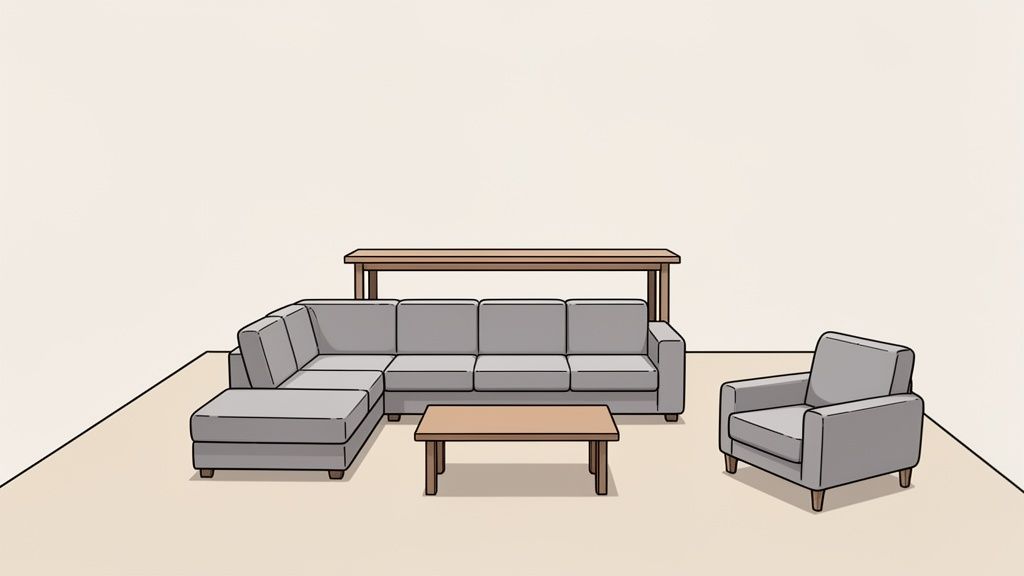
This is where the right pieces can truly shine. A well-placed La-Z-Boy sectional, for example, can carve out a comfortable living area all on its own. By arranging it to "float" in the space, you create an instant conversation nook that feels intentional and inviting.
Selecting Pieces That Anchor Your Zones
Choosing furniture with the right scale is crucial. You want pieces that feel substantial enough to anchor a zone without overwhelming the entire floor. A sofa or sectional with a higher back can act as a subtle divider, clearly signaling where the living area ends and something else begins.
Here’s one of our favorite tricks: position a console table behind a floating sofa. It creates a subtle but clear transition to your dining space or a main walkway, offering a perfect spot for lamps or decor. It’s a simple addition that adds immense function and definition.
For our neighbors in Southwestern Virginia and Northern North Carolina, this is where a visit to our showrooms can make all the difference. Seeing furniture in person helps you get a real feel for its true scale and presence. With our large in-stock selection of brands like Ashley and Bassett, you can find the perfect pieces for immediate delivery.
"Your furniture arrangement should create invisible walls. Think of your sofa, chairs, and tables as the building blocks for creating separate, functional rooms within one large space."
We know that furnishing a large, open area can feel like a big investment. That’s why we stand by our Low Price Promise. If you find the same piece for less at a local competitor, we'll match it on the spot, and we even offer a 30-day price guarantee after your purchase.
Furniture Beyond the Living Room
While the living area often gets the most attention, other key pieces are just as important for creating definition. The kitchen island, for instance, is a natural focal point in many open layouts, offering both function and a clear boundary. There are tons of great kitchen island design ideas out there that show how they can serve as beautiful, hard-working dividers.
Consider these other essential pieces for defining your space:
- Bookcases: A tall, open-backed bookcase can act as a light and airy room divider. It’s perfect for separating a reading nook from the main living area while providing valuable storage.
- Credenzas or Buffets: Placed in the dining zone, a credenza not only stores your dishes but also visually grounds the space, making the dining area feel distinct and purposeful.
- Benches: A low-profile bench can subtly separate an entryway from the living room without obstructing views. Plus, it offers a convenient spot to sit and remove shoes.
We focus on durable, family-friendly options that fit your life. Thinking about the best way to arrange these pieces can be a challenge, which is why we’ve put together some advice on choosing the best furniture for your home’s layout to help you get started.
Our expert design staff, including Debra Williams, is always here to help you visualize your space. From our family to yours, we believe that with the right furniture, your open floor plan can become the warm, connected heart of your home.
Creating Zones with Rugs and Lighting
We've talked about using furniture to build the "walls" of your rooms, but now let's get into the details of truly anchoring those spaces. Two of the most powerful tools you have for defining an open floor plan are area rugs and lighting. Think of them as the foundation and the spotlight that make each zone feel distinct and functional.
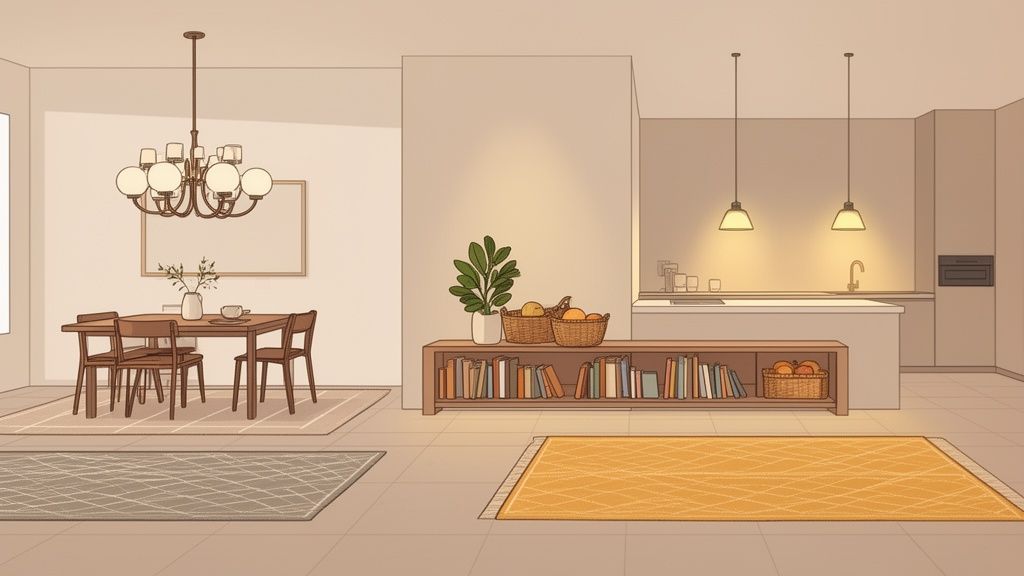
Without these two elements, even a perfect furniture arrangement can look like it's just floating in a big, undefined room. A well-chosen rug, for example, is like rolling out the floor for a specific activity. It sends a clear signal that this is the living room, and that over there is the dining area.
Using Area Rugs to Anchor Your Zones
The number one mistake we see families make is picking an area rug that’s way too small. A tiny rug makes your furniture look disconnected and can actually make the zone you're creating feel even smaller. You want a rug that’s large enough to unify the entire furniture grouping.
For a living area, that means the rug should be big enough for at least the front legs of your sofa and chairs to sit comfortably on it. This one simple trick instantly grounds the conversation area and makes it feel intentional. It's a small detail with a massive impact on the polished feel of your home.
Choosing the right rug size isn’t just a design rule; it’s a strategy for comfort. A properly sized rug connects your furniture, making the entire zone feel more cohesive and inviting for your family and guests.
If you’re feeling overwhelmed by the options, our expert design staff can help you map everything out with a scaled room plan. This ensures the rug you pick from our showroom is a perfect fit before our team provides free in-home delivery and setup within 60 miles to your home in Galax, Independence, Hillsville, or the wider region.
The Role of Lighting in Defining Spaces
Just like rugs define zones on the floor, lighting defines them from above. Using lighting strategically is one of the best ways to create ambiance and visually separate one area from another. A single, giant overhead light tends to make an open space feel flat and impersonal, almost like a warehouse.
The key is to layer your lighting. Think about how different types of fixtures create distinct moods for different functions:
- Pendant Lights: A row of pendants over a kitchen island is great for task lighting, but it also creates a strong visual boundary for the kitchen.
- Chandeliers: Hanging a beautiful chandelier right over your dining table instantly elevates that area, making it feel like a special "room" for meals.
- Floor & Table Lamps: Placing lamps next to a cozy La-Z-Boy recliner or at the end of a sofa creates warm pools of light perfect for reading, establishing a quiet corner within the larger space.
By mixing these different light sources, you'll add depth, warmth, and character. For more detailed guidance, check out our helpful article on how to put your living room in the best light.
A Quick Guide to Rug Sizing
Getting the rug size right is a huge step in successfully decorating your open floor plan. To help you visualize it, here’s a quick guide for selecting the right size for common zones.
Choosing the Right Area Rug Size for Your Zone
This table offers a simple starting point for anchoring your furniture correctly.
| Zone | Common Furniture | Recommended Rug Size | Placement Tip |
|---|---|---|---|
| Living Area | Sofa, Chairs, Coffee Table | 8'x10' or 9'x12' | Ensure at least the front legs of all furniture pieces are on the rug. |
| Dining Area | Dining Table & Chairs | Large enough for chairs to be pulled out | Measure your table and add 24 inches on all sides for chair movement. |
| Entryway/Foyer | Console Table, Bench | 5'x8' or Runner | Rug should be slightly narrower than the doorway or console table. |
| Reading Nook | Accent Chair, Side Table | 4'x6' or 5'x7' | Center the rug under the chair to create a distinct, cozy spot. |
Of course, these are just starting points. Every home in Southwestern Virginia and Northern North Carolina is unique, and that’s the fun of it! Since 1902, our family has been helping our neighbors find what works for them. We invite you to visit our showrooms to see our large selection of rugs and lighting from trusted brands like Ashley Furniture that will help you create the perfectly zoned, comfortable home you've always wanted.
Unifying Your Home with Color and Light
Once your zones are defined with furniture and rugs, it's time to tie it all together. The real secret to making an open floor plan feel intentional—not chaotic—is creating a sense of cohesion. Your best tools for the job are a unified color palette and a smart lighting plan. These two elements work in tandem to make your entire space feel harmonious and complete.
A solid color strategy doesn't mean your home has to be boring or beige, either. It’s all about creating a consistent backdrop that lets each zone show off its personality without clashing. It’s a simple idea, but it makes a huge difference in how your open layout feels day in and day out.
Establishing a Cohesive Color Palette
The easiest and most effective way to start is with one main neutral color for the walls throughout the entire space. Think of warm grays, soft whites, or calming taupes that reflect the beautiful landscapes right here in Southwestern Virginia and Northern North Carolina. This single wall color creates a seamless canvas that lets your furniture and decor take center stage.
From there, you’ll want to weave in two or three accent colors. Sprinkle these hues across the entire space using pillows, artwork, throws, and other accessories. For instance, if you pick a calming navy blue, use it for a pillow on your La-Z-Boy sofa, in the pattern of your dining room curtains, and maybe in a vase on the kitchen island. This repetition guides the eye smoothly from one zone to the next, creating a clear visual connection.
The goal is to create a color story that flows. By repeating accent colors in each 'room,' you're telling your eyes that even though the functions are different, all these spaces belong together as part of one cohesive home.
Choosing the right combination can feel like a big decision. To help you get started, we've put together a resource with professional advice. You can explore more ideas in An Expert’s Guide to the Perfect Color Palette right here on our website.
Layering Light for Warmth and Definition
Lighting is every bit as important as color. Relying on a single overhead fixture is a common mistake that can make a large, open room feel flat and sterile. The key is layered lighting—using a mix of different light sources at various heights to add warmth, create ambiance, and subtly define each area.
Think of your lighting in three distinct layers:
- Ambient Lighting: This is your general, overall illumination. It often comes from recessed lights or a central ceiling fixture, providing a base layer of light for the whole space.
- Task Lighting: This is focused light for specific activities. Think of a reading lamp beside a comfy recliner, pendant lights hanging over a kitchen island, or an adjustable lamp on a home office desk. These are your workhorses.
- Accent Lighting: This is the "jewelry" of your room. It highlights specific features you love, like a piece of art or an architectural detail. Picture lights or small spotlights are perfect for this.
By combining these three types, you create a rich, dynamic environment. You can set an intimate mood for dinner parties, switch to bright light for family game night, or create a soft glow for a quiet evening at home—all within the same open space.
Our showrooms in Galax, Independence, and Hillsville feature a variety of lighting options to help you complete your vision. And with a huge selection of in-stock furniture, you can find the perfect pieces to go with your new lighting scheme for immediate delivery. We've been helping families do just that since 1902.
Designing for Traffic Flow and Clear Views
An open floor plan that truly shines is more than just pretty—it has to work for the rhythm of your daily life. The goal is to move from one area to another without weaving through a furniture maze. It’s all about creating a natural, easy path between zones, a kind of functional comfort that our customers in Galax and Hillsville tell us they value most.
This careful planning of movement is a huge part of what makes a space feel calm and intuitive. If you want to get into the nitty-gritty, our guide on how to plan your room layout is a fantastic place to start.
Establishing Clear Pathways
Here’s a practical rule of thumb: leave at least 30-36 inches for your main walkways. Think about the high-traffic routes—the journey from the front door to the kitchen, or from the living area out to the patio. These are your home’s highways, and they need to stay clear. Side paths, like the gap between your sofa and coffee table, can be a little narrower, but you should still be able to pass through without turning sideways.
The ultimate test is simple: can you walk through the room with a full laundry basket without bumping into anything? If the answer is yes, you've nailed a layout that works for a real family.
Our expert design staff, including pros like Debra Williams, uses this kind of real-world thinking all the time when helping our neighbors across Southwestern Virginia. We’re focused on how you actually live in your home, not just how it photographs.
Preserving Sightlines and Views
One of the best parts of an open floor plan is that seamless view from the kitchen straight through to the living room. It creates a wonderful sense of connection, letting you keep an eye on the kids while you’re cooking or chat with guests from across the space. Protecting these sightlines is absolutely key.
This comes down to choosing furniture with the right height and profile. A sofa with a lower back, for instance, won't act like a visual wall in the middle of your great room. As you arrange your furniture, think about what you want to see. Don't let a chair back block the view of a beautiful fireplace or the window overlooking your yard. To dig deeper into making your home both beautiful and functional, learn more about how to plan room layout effectively and create a space that truly flows.
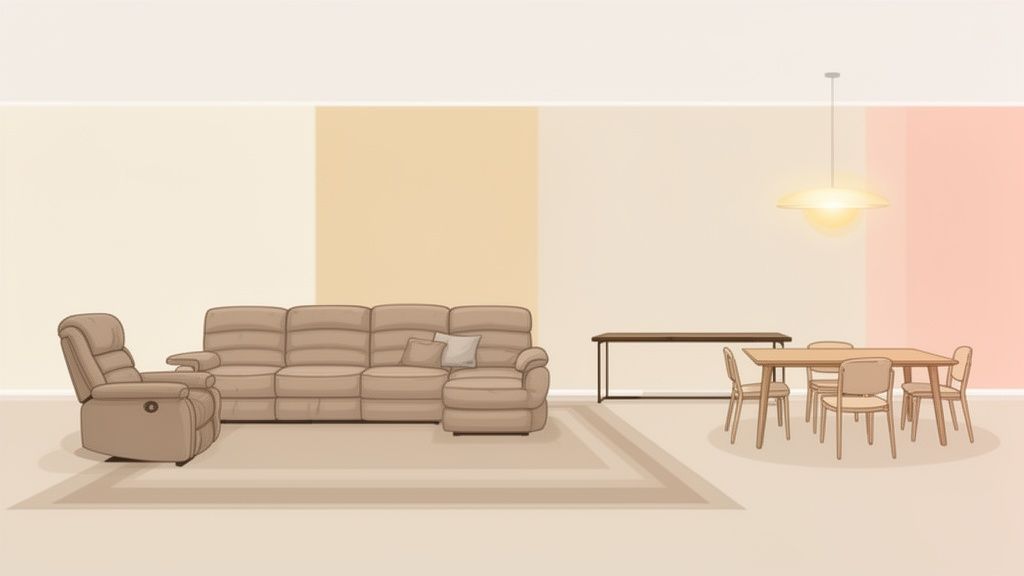
This simple, three-step process is how you can unify the entire open space with design elements that speak the same language.
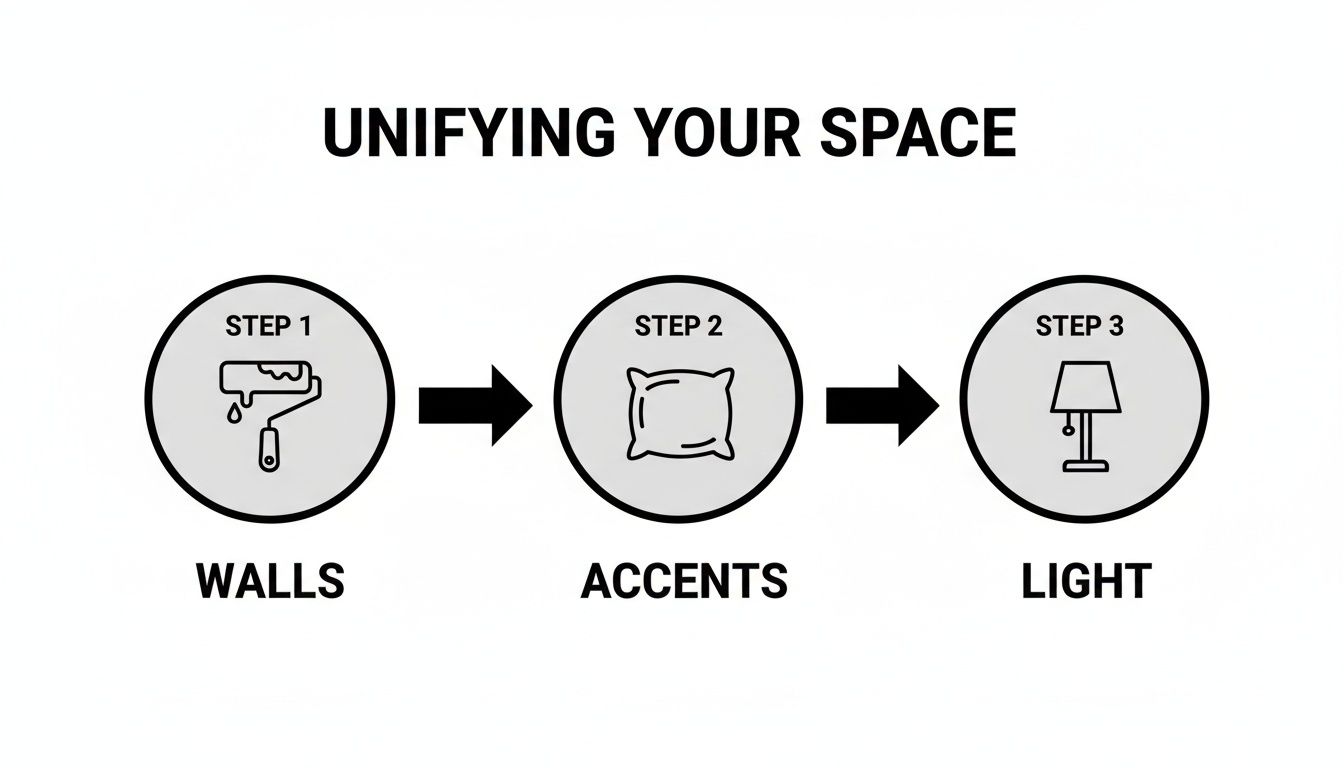
By coordinating your walls, accents, and lighting, you create a visual harmony that ties everything together.
Here at Guynn Furniture, we know that getting the arrangement just right can be tricky. That’s why our free in-home delivery and setup within 60 miles is such a game-changer. Our team does all the heavy lifting, placing your new La-Z-Boy sectional or Bassett dining set exactly where it needs to be to maximize both your traffic flow and your views. Since 1902, we’ve been helping families in Independence, Hillsville, and the greater Northern North Carolina region build homes that are as functional as they are beautiful.
Your Open Floor Plan Questions Answered
Decorating an open floor plan can bring up some tricky questions. Over the years, our family at Guynn Furniture has heard just about all of them from our neighbors in Galax, Independence, Hillsville, and the wider Southwestern Virginia region. We figured it was time to share our answers to a few of the most common ones we hear in our showrooms.
Think of this as a friendly chat over the fence, sharing the kind of practical advice we've gathered since we first opened our doors way back in 1902.
How Do I Make My Open Floor Plan Feel Cozy and Not Like a Big Warehouse?
This is a fantastic question and probably the one we hear the most. That vast, open space can feel cold and impersonal if you're not intentional about creating warmth. The secret is to build intimate "zones" where your family will naturally want to gather.
Start with the floor. Use area rugs to visually anchor and define different spots, like your main conversation area. Then, arrange your sofa and chairs from our comfortable Bassett or La-Z-Boy collections to face each other. This simple act of turning furniture inward, rather than pushing it all against a wall, immediately encourages connection and makes a large room feel much more human.
Adding layers of texture is also a game-changer.
- Soft Textiles: Bring in warmth with plush throw blankets, a variety of pillows, and soft curtains. These elements do more than just look good—they absorb sound and add a tangible layer of comfort.
- Varied Materials: Mix things up! Wood, metal, and upholstered pieces create visual interest that keeps the eye engaged and moving.
- Strategic Lighting: Don't rely solely on overhead lights. Place floor and table lamps in corners and near seating to create soft pools of light. This makes the space feel much more inviting and brings the scale down to a more personal level.
Can I Mix Different Furniture Styles in an Open Concept Space?
Absolutely! In fact, we encourage it. Mixing styles is what adds personality and keeps your home from looking like it came straight out of a catalog. Your home should reflect your family's unique taste, not a showroom floor. The trick is to find a common thread that ties all the pieces together into a cohesive story.
This common element could be:
- A Consistent Color Palette: If your traditional dining set and modern sofa both share tones of blue, they'll feel connected, even if their shapes are completely different.
- A Repeated Wood Tone: Pairing a rustic coffee table with sleeker dining chairs works beautifully if the wood finish is in the same family.
- A Shared Metal Finish: Using the same metal, like brushed brass or matte black, for lamp bases, table legs, and cabinet hardware creates a subtle but powerful link between zones.
Our expert design staff loves helping our neighbors in the Northern North Carolina area find that perfect balance. We can help you select pieces from brands like Ashley that work beautifully together, ensuring your space feels thoughtfully curated, not chaotic.
What Is the Best Way to Add Storage Without Creating Clutter?
Smart storage is a non-negotiable in an open concept, where everything is basically on display. The goal is to find pieces that work hard without adding visual noise. Multi-functional furniture is your best friend here.
Look for items that pull double duty. An ottoman with hidden storage is the perfect spot for blankets and toys. A stylish credenza or buffet in the dining area can hold everything from fine china to board games. We've even seen customers use beautiful bookcases as subtle room dividers that also offer valuable display and storage space.
"In an open floor plan, every piece of furniture has to earn its place. Choosing storage that is both beautiful and functional is the key to maintaining a serene and uncluttered home."
When you visit our showrooms, we can point out all sorts of practical storage solutions from our in-stock selection that will help keep your open space feeling tidy. And with our immediate delivery, you can solve your clutter problem right away.
How Do I Manage Noise in a Large Open Room?
Sound loves to travel in a big, open room, which can make it feel loud and echoey. Soft surfaces are your best defense for absorbing that noise and creating a more peaceful environment.
Large area rugs are the most effective tool, hands down. Upholstered furniture, like a plush sectional from Sealy or Therapedic, also does wonders. Don't forget about your windows—curtains are far better at dampening sound than blinds. Even adding large-scale fabric wall art or a few leafy plants can help break up sound waves. It’s all about layering in those soft materials to balance out the hard surfaces like floors and walls.
At Guynn Furniture & Mattress, we believe decorating your open floor plan should be an exciting journey, not a stressful one. We're here to offer no-pressure guidance to help you create a space that’s beautiful, functional, and perfect for your family.
Visit our showrooms in Galax, Independence, or Hillsville to test the comfort for yourself.
Schedule a consultation with our design team to start planning your dream room today.
Browse our selection online at guynnfurniture.net.