
A Practical Guide to Designing a Living Room Layout


It’s a familiar story for many of our neighbors: you fall in love with a sofa at the store, bring it home, and suddenly… it swallows the entire room. Or maybe you’ve been shuffling the same furniture around for years, and it just never feels quite right.
The secret to a living room that’s comfortable, functional, and truly feels like home isn’t just about the furniture you pick. It’s about how you arrange it. It all starts with a simple plan—a roadmap you create before you even think about making a purchase.
Your Living Room Layout Starts with a Plan, Not a Purchase
Think of us as a neighbor who’s been helping families figure out their living spaces for a long time. Designing a layout can feel like a high-stakes puzzle, but it doesn’t have to be. We’ll walk you through the practical steps, from pulling out the measuring tape to choosing furniture that actually serves your family’s day-to-day life.
Since 1902, our family at Guynn Furniture has been helping folks across Galax, Independence, Hillsville, and the wider Southwestern Virginia / Northern North Carolina region do just that. We know what matters most to our families here: comfort that lasts, durability you can count on, and a no-pressure atmosphere to figure it all out.
Why Planning Comes First
It’s tempting to jump straight to the fun part—shopping for that perfect new sofa or recliner. But trust us, a little prep work saves a lot of headaches (and expense) down the road. A solid plan ensures your new furniture not only fits but actually makes your home life better. For a deeper dive, you can also explore our guide on how to plan a room layout.
A good layout really comes down to a few key ingredients:
- Functionality: How do you really use the room? Is it for Friday movie nights with the kids, a quiet corner for reading, or a space for hosting big family gatherings?
- Flow: Can you walk through the room without bumping into a coffee table or squeezing past a chair? Good flow is essential for a space to feel relaxed and easy to live in.
- Focal Point: What’s the star of the show? A plan helps you arrange furniture to celebrate a beautiful fireplace, a big window with a great view, or even the TV.
- Scale: This is a big one. It’s all about making sure your furniture is proportional to the room itself, avoiding that "too big" or "too small" feeling that can throw the whole space off balance.
Our goal is simple: to help you find pieces from trusted brands like La-Z-Boy, Ashley, and Bassett that you'll love for years to come. But just as important, we want to help you create a layout that makes your house feel even more like home. Let's start building a living room you can't wait to come back to.
Measure Your Space to Avoid Costly Mistakes
Before you start dreaming about the perfect sofa or coffee table, let’s talk about the single most important step: measuring your space. We know, it sounds tedious. But taking a few minutes with a tape measure now will save you from a world of frustration later.
We've all heard the stories. That gorgeous La-Z-Boy sectional someone fell in love with? It never made it past the front door. A few simple measurements prevent that kind of heartbreak.
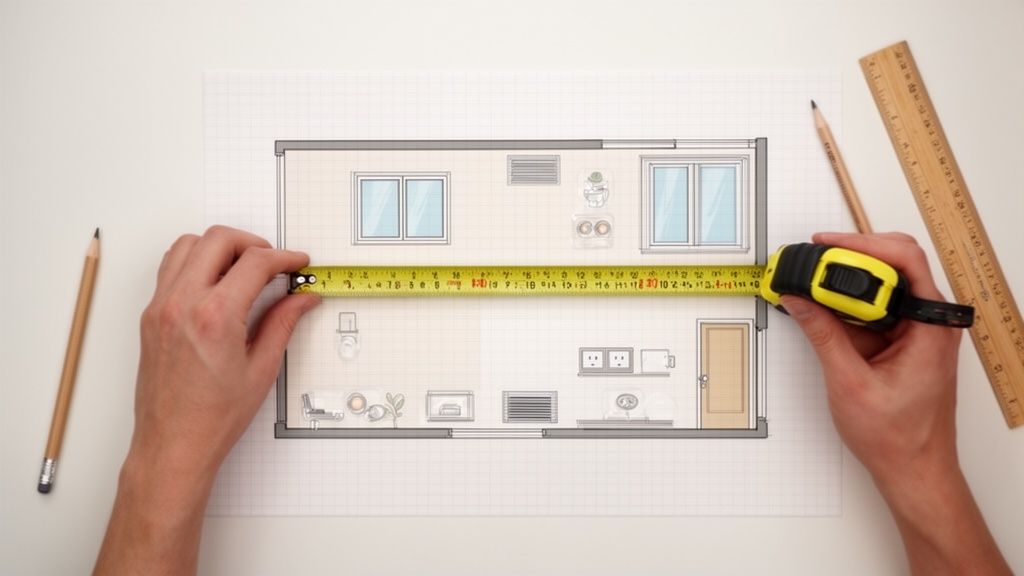
Start with the basics—the room's overall length and width. But don't stop there. The details are what really make or break a layout.
Note the "Fixed" Features
Every room has permanent features you have to work around. The easiest way to keep track of them is to grab a piece of paper and create a simple sketch of the room's shape. It doesn't have to be a masterpiece!
On your sketch, be sure to map out these non-negotiables:
- Doors and Windows: Note which way each door swings open. For windows, measure how much wall space they take up and—this is important—their height from the floor. This single detail impacts whether you can place taller pieces like bookcases or console tables underneath them.
- Architectural Details: Mark the exact location of your fireplace, any built-in shelving, or other architectural nooks and crannies. These are your anchors.
- Outlets and Vents: Knowing where your power outlets, cable hookups, and heating/cooling vents are will dictate where lamps and entertainment centers can go without creating a tangled mess of extension cords.
A simple, hand-drawn floor plan with all these features noted down is the best tool you can have. It turns furniture shopping from a guessing game into a series of confident decisions.
From Sketch to Shopping List
Use this handy checklist to make sure you capture every critical dimension before you start planning.
Essential Living Room Measurements Checklist
This quick reference will help you capture every dimension you'll need before you start planning your furniture arrangement.
| Measurement Item | Why It's Important | Your Measurement |
|---|---|---|
| Room Length & Width | Establishes the overall scale and maximum furniture size. | |
| Ceiling Height | Affects the scale of tall items like bookcases or light fixtures. | |
| Window & Door Dimensions | Determines furniture placement to avoid blocking access or views. | |
| Distance Between Windows/Doors | Shows you the exact amount of usable wall space you have. | |
| Fireplace/Mantel Dimensions | A natural focal point that dictates seating arrangements. | |
| Outlet & Vent Locations | Crucial for placing lamps, media centers, and electronics. | |
| Entryway & Hallway Widths | CRITICAL! Ensures your new furniture can actually get into the room. |
Once you have these numbers, your sketch becomes a powerful roadmap. You can clearly see the available wall space and the natural traffic paths you’ll need to keep clear.
For families here in Southwestern Virginia and Northern North Carolina, a functional layout is everything. It’s all about creating a space where everyone can move around easily and gather comfortably.
When you head out to shop, you'll know exactly what size sofa from Ashley or Bassett will fit perfectly. You’ll be able to tell immediately if a piece is too large or too small for the scale of your room.
For a more detailed breakdown, check out our helpful guide on how to measure a room for furniture. With your plan in hand, you're ready for the fun part: finding pieces that you’ll love and that genuinely work for your home.
Find Your Focal Point and Define Activity Zones
Once you have your room’s measurements down on paper, it's time for the fun part: figuring out what the star of the show will be. Every great living room has a focal point—a natural center of gravity that draws your eye and anchors the entire space. It’s the spot where you want everyone to look first.
For many of our neighbors here in Southwestern Virginia, that might be a beautiful stone fireplace perfect for cozying up to on a chilly evening. For others, it could be a large picture window with a view of the rolling hills, or the entertainment center where your family gathers for movie night. Identifying this main feature is key because it tells you how to orient your furniture for the best experience.
Create a Natural Gathering Spot
Your main seating area should be arranged to celebrate this focal point. If it’s the fireplace, you’ll want your sofa and chairs positioned to face it, creating a natural conversation area. Try placing a comfortable sofa directly opposite the fireplace, with two armchairs flanking it to create a welcoming U-shape. This arrangement practically invites family and friends to sit down and connect.
The goal is to arrange seating so that conversation feels easy and natural. You want people close enough to talk without shouting, but with enough personal space to feel comfortable—generally, seating should be no more than 10 feet apart.
Define Zones for Modern Living
Today, our living rooms often have to be more than just one thing. They might be a home office, a playroom, and a relaxation spot all at once. This is where zoning comes in. Zoning is a simple but powerful technique for creating distinct areas for different activities within a single open room.
You can create these "rooms within a room" without building a single wall. Here are a few ideas for creating functional zones in your living room:
- The Conversation Hub: This is your primary seating area, anchored by your focal point and defined by a large area rug. At least the front legs of your main furniture pieces, like your La-Z-Boy sofa and chairs, should sit on the rug to tie the space together visually.
- The Quiet Reading Nook: Have an unused corner? Turn it into a personal retreat with a comfortable armchair, like a classic from Bassett, a small side table, and a good floor lamp. It’s the perfect spot to unwind with a book.
- The Designated Play Area: For families with young children, using a durable, soft rug and some low storage bins can create a dedicated space for toys. This helps contain the clutter while still keeping the kids close by.
By using area rugs and thoughtfully placing furniture, you can create a layout that feels organized, versatile, and perfectly suited to your family’s needs. This is especially helpful when decorating an open floor plan, as it brings order and purpose to a large, undefined space. From Hillsville to Independence, creating a room that works for everyone in the family is what truly makes a house a home.
Choose Furniture That Fits Your Room and Your Life
You’ve got your measurements and a floor plan sketched out. Now for the fun part: picking out the furniture. This is where your living room really starts to take shape, but it's also where one of the most common design mistakes happens—falling in love with pieces that are completely the wrong scale for the space.
It happens all the time. A sofa that looks perfect in a massive showroom can completely overwhelm your living room, making it feel cramped and crowded. On the flip side, a piece that’s too small can feel lost and awkward, throwing the whole room's balance off.
Here’s a fantastic trick we always share with our neighbors: grab a roll of painter's tape. Before you even think about buying, mark out the exact dimensions of that sofa or sectional you're eyeing right on your floor. This simple step is a game-changer. It helps you instantly visualize the furniture's footprint and see exactly how it will impact your pathways. You’ll know immediately if it’s the one or if you need to keep looking.
Selecting for Scale and Durability
The secret to a well-designed room is proportion. A sprawling La-Z-Boy sectional might be the perfect anchor for a large, open-concept family room, but a more streamlined sofa from Ashley could be the ideal fit for a cozier living area. It's all about finding that perfect balance.
For our neighbors here in Galax and the surrounding communities, we always suggest investing in furniture that's as durable as it is beautiful. Since 1902, we’ve seen firsthand how quality craftsmanship stands the test of time. Brands like Ashley and Bassett deliver timeless styles built to handle years of movie nights, holiday gatherings, and everyday life. If you want to dive deeper, our guide on how to choose the best furniture for your home's layout has even more helpful tips.
Pro Tip: When picking a coffee table, a good rule of thumb is to find one that’s at least half the length of your sofa. This simple guideline ensures the pieces look balanced and cohesive, not like a random mismatch.
Performance Fabrics: A Game-Changer for Families
If you have kids, pets, or just love to host, performance fabrics are your new best friend. Seriously. These modern textiles are engineered to resist stains, spills, and fading, making them an incredibly practical choice for a busy home. You get the beautiful, stylish look you want without constantly worrying about life’s little messes.
At Guynn Furniture, we firmly believe that seeing is believing. That’s why we keep a large in-stock selection at our showrooms in Galax, Independence, and Hillsville. You can actually see the colors, feel the textures, and test out the comfort for yourself—an experience you just can’t replicate online.
And once you find the perfect pieces, you won't have to wait weeks to start enjoying them. Our Free in-home delivery and setup within 60 miles means your new living room can come together almost immediately.
Of course, the big pieces are just the start. Window treatments play a huge role in the final look and feel of a room. For some great inspiration on adding both style and privacy, check out these best living room blinds ideas from other experts. It’s these finishing touches that truly complete your vision.
Mastering Traffic Flow for a Functional Layout
A beautifully decorated living room isn't much of a success if you have to awkwardly shuffle around the coffee table to get to the sofa. This is where "traffic flow" comes into play. It's all about the invisible pathways people use to walk through a room, whether they're heading from the hallway to a chair or just across the space. If you ignore these paths, your layout will feel cluttered and frustrating, no matter how lovely the furniture is.
Getting this right is one of the most critical parts of designing a living room. It’s the secret to making a space feel more open, inviting, and intuitive for both your family and your guests. You want clear, unobstructed routes that just make sense.
Our simple room planning process boils down to three key stages: measuring your space, visualizing the furniture's footprint, and then choosing pieces that fit both your room and your life.
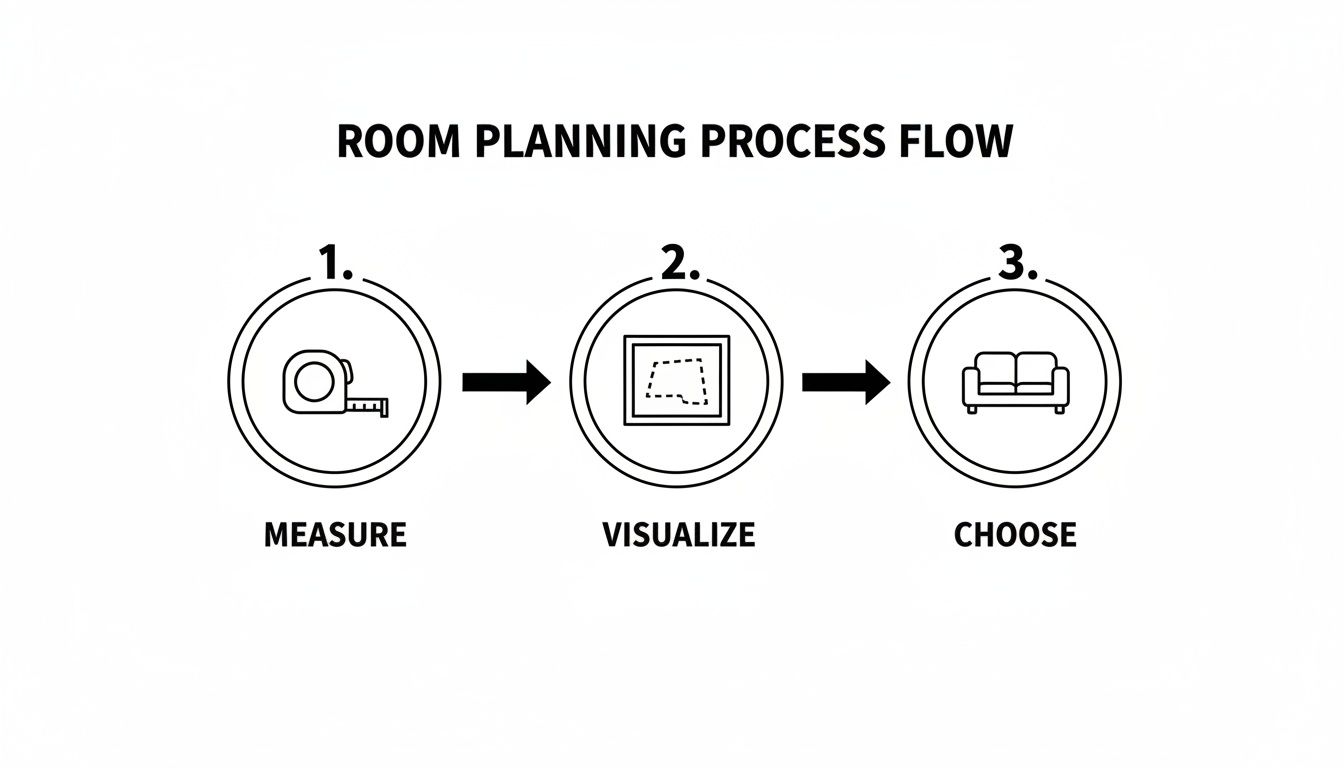
Thinking about traffic flow from the very beginning helps you avoid those costly "oops" moments—like realizing the armchair you love completely blocks the path to the balcony.
The Golden Rules of Furniture Clearance
Think of these as friendly guidelines, not strict commandments. The goal is simply to leave enough "breathing room" around your furniture so no one has to shimmy sideways to get by.
A great starting point is to ensure your main walkways—the high-traffic routes from one doorway to another—are at least 30 to 36 inches wide. This gives people enough space to walk comfortably without bumping into things. If your room is on the smaller side, you can get away with a minimum of 24 inches, but try not to go any tighter.
Pro Tip: Keep the distance between your sofa and coffee table between 16 and 18 inches. This is the sweet spot—close enough to easily set down a drink or prop up your feet, but with enough legroom to feel comfortable.
To make things easier, here's a quick guide to the most common clearance measurements you'll want to keep in mind.
Living Room Furniture Clearance Guide
| Clearance Area | Recommended Distance | Reasoning |
|---|---|---|
| Main Walkways | 30" to 36" | Allows for comfortable, unobstructed movement through the room. |
| Sofa to Coffee Table | 16" to 18" | Close enough for easy reach but provides adequate legroom. |
| Seating to Seating | 4' to 8' | Fosters conversation without feeling too distant or cramped. |
| Side Table to Seat | 2" to 3" | Keeps the table within arm's reach for a lamp or drink. |
| TV to Seating | 7' to 15' (Varies by TV size) | Ensures comfortable viewing without eye strain. |
Following these general guidelines will help you create a layout that not only looks balanced but feels intuitively right when you're using the space.
Anchoring Your Space with Rugs and Light
Once your main furniture placement is sorted, the right area rug and lighting can elevate the entire layout. An area rug is one of the best tools for defining a conversation area and making it feel cohesive. A common mistake we see is choosing a rug that's too small, which can make a room feel disjointed and smaller than it is.
As a general rule, the rug should be large enough so at least the front legs of your sofa and any accent chairs are sitting on it. This visually ties all the pieces together into one unified group.
Lighting is just as crucial. A well-lit room feels more inviting and functional. Instead of relying on a single overhead light, try layering your lighting with a mix of sources:
- Ambient Lighting: This is your main light source, like a ceiling fixture or recessed lighting.
- Task Lighting: Think floor lamps next to an armchair for reading or table lamps on end tables.
- Accent Lighting: This can be a wall sconce highlighting a piece of art or a picture light over a bookcase.
Finally, as you're planning your layout to manage foot traffic, don't forget about the floor itself. It's worth exploring the best flooring for high traffic areas to ensure your surfaces can stand up to daily life. These finishing touches are what transform a collection of furniture into a warm, functional hub for your family.
Bring Your Vision to Life with Design Expertise
Sometimes, even with the best plan, pulling a room together can feel overwhelming. If you're stuck with an awkward layout, planning a remodel, or just want a second opinion, asking for design help is one of the smartest investments you can make for your home.
For our neighbors in Galax, Independence, Hillsville, and the surrounding Southwestern Virginia / Northern North Carolina region, getting that expert eye is easier than you might think. Our Guynn Furniture & Mattress expert design staff is right here, ready to be your guide.
When to Call in a Professional
You don’t have to be knocking down walls to benefit from a designer’s perspective. A pro can be invaluable when you find yourself:
- Feeling Stuck: You know something just isn't working, but you can’t quite put your finger on what it is or how to fix it.
- Facing a Challenge: Working with an unusually shaped room or trying to define zones in a wide-open concept space requires a very specific skill set.
- Wanting to Avoid Costly Mistakes: A design consultation can save you from those expensive "oops" moments, like ordering a sofa that won't fit through the door or choosing a layout that just doesn't flow for your family.
Our own design expert, Debra Williams, offers in-home consultations to create scaled room plans. This lets you see exactly how everything will look and feel before you commit—a lifesaver for the "Aspiring Remodeler" who wants to get it right the very first time.
We believe this service, combined with our Low Price Promise and flexible financing, makes getting that professionally designed look both accessible and stress-free. You can learn more about what to expect when you work with an interior designer in our detailed guide.
A design expert doesn’t just choose furniture; they create a functional, cohesive plan that reflects your family’s lifestyle. It’s about making your home work better for you, every single day.
Common Questions About Designing a Living Room Layout
As a family business that’s been part of the Southwestern Virginia community since 1902, we’ve heard just about every question you can imagine when it comes to designing a living room. Here are the answers to a few of the most common ones we hear from our neighbors in Galax, Hillsville, and Independence.
How Should I Arrange Furniture in a Small Living Room?
When you're working with a smaller or narrow room, the goal is always to create an illusion of space while making sure every piece is functional. A great first move is to place your largest item, usually the sofa, against the longest wall. This immediately opens up the floor and gives you a clear starting point.
Look for furniture with visible legs—like many of the pieces you'll find in our Bassett and Ashley collections. When you can see the floor underneath, it makes the entire room feel larger and less weighed down. Mirrors are another fantastic trick of the trade; they reflect light and create a sense of depth, making any room feel more open and airy in an instant.
A key takeaway for compact spaces is to think vertically and prioritize furniture that feels light, not heavy. Appropriately scaled furniture is crucial for avoiding that overcrowded feeling.
What is the Best Way to Arrange Furniture Around a Fireplace?
A fireplace is a wonderful, natural focal point that you should absolutely embrace. The best way to do this is to create a cozy, conversational area right in front of it. Start by placing your main sofa directly facing the fireplace.
To complete the setup, add two comfortable armchairs opposite the sofa, creating an inviting U-shape. This layout is perfect for encouraging conversation and connection. Just be sure to keep all furniture at least 3 feet back from the fireplace for safety. If you also have a TV in the room, we often suggest placing it on a console table on an adjacent wall. Putting it over the mantle is often too high for comfortable viewing and can lead to a sore neck.
How Big Should My Area Rug Be?
This is easily one of the most frequent questions we get! A common mistake we see is choosing a rug that's too small for the space, which can make the entire room feel disjointed and unfinished.
Think of your rug as the anchor for your whole seating arrangement. A properly sized rug should have at least the front legs of your sofa and any accent chairs sitting comfortably on top of it. This simple rule visually connects all the pieces into one cohesive group, making the room feel far more organized and pulled together.
At Guynn Furniture & Mattress, we're here to help you answer these questions and more, creating a living room layout you'll love for years to come.
- Visit Us: Visit our showrooms in Galax, Independence, or Hillsville to test the comfort for yourself.
- Get Expert Help: Schedule a consultation with our design team to start planning your dream room today.
- Shop Online: Browse our selection online at guynnfurniture.net.

