
How to Measure a Room for Furniture: A Stress-Free Guide for Your Home


Welcome, neighbor! We’ve all been there—that giddy excitement of finding the perfect new piece of furniture, quickly followed by the nagging question: "But will it actually fit?" The secret to shopping with confidence isn't about complex math. It's about doing a little prep work before you even leave the house.
Here at Guynn Furniture, we've been helping our neighbors in Galax, Independence, Hillsville, and the wider Southwestern Virginia and Northern North Carolina region make their houses feel like home since 1902. We've helped countless families avoid the headache of a sofa stuck in a doorway, and we're here to help you, too. Before you fall in love with a new La-Z-Boy recliner or a Bassett dining set, let's take a few minutes to get prepared.
Think of it like gathering ingredients before you start cooking. Having everything ready makes the whole process smooth and surprisingly simple. You don't need a contractor's toolkit, just a few everyday items to get the accurate numbers you need to shop with confidence in our no-pressure atmosphere.
The Must-Have Tools for the Job
Chances are, you already have everything you need tucked away in a drawer somewhere. Let's run through the essentials that will turn this task from a chore into a simple, satisfying checklist.
- Retractable Metal Tape Measure: This is your most valuable player. A metal tape measure that's at least 25 feet long is perfect because it won’t stretch or sag, keeping your wall-to-wall measurements honest. The stiffness also makes it easier to measure ceiling heights without it flopping over on you.
- A Notepad and Pencil: It might feel a little old-school, but sketching a quick, rough floor plan of your room is a game-changer. You can jot down measurements right on your drawing, noting where doors, windows, and outlets are. This little visual map is incredibly helpful when you're standing in one of our showrooms.
- A Smartphone or Camera: Snap a few pictures of the room. It’ll help you remember small details later on, and you can show them to our expert design staff. It gives us a much better sense of your space so we can help you visualize how that new Ashley sofa or Sealy mattress set will look in your home.
A simple sketch of your room with the key measurements written down is the single best thing you can bring with you when you go furniture shopping. It takes all the guesswork out of the equation and lets our team help you find the perfect fit—guaranteed.
While a laser measure can be a neat gadget, it's definitely not a must-have. Your classic tape measure and notepad are more than enough. With these tools, you can shop our large in-stock selection knowing that when you find "the one," it's truly meant for your home.
For more tips on this first step, check out our guide on how to measure furniture before you start.
Mapping Your Room’s Core Dimensions
Alright, you've got your tools. Now it's time to get the numbers that really matter. This part can feel tedious, but trust us, it’s simpler than it looks. We're going to create a basic blueprint of your room's "bones," which will give you the confidence to know exactly what fits before you even set foot in our showrooms in Galax, Independence, or Hillsville.
Think of it like this: a few minutes of measuring now saves you from the major headache of returning a piece that won't fit through the door later.
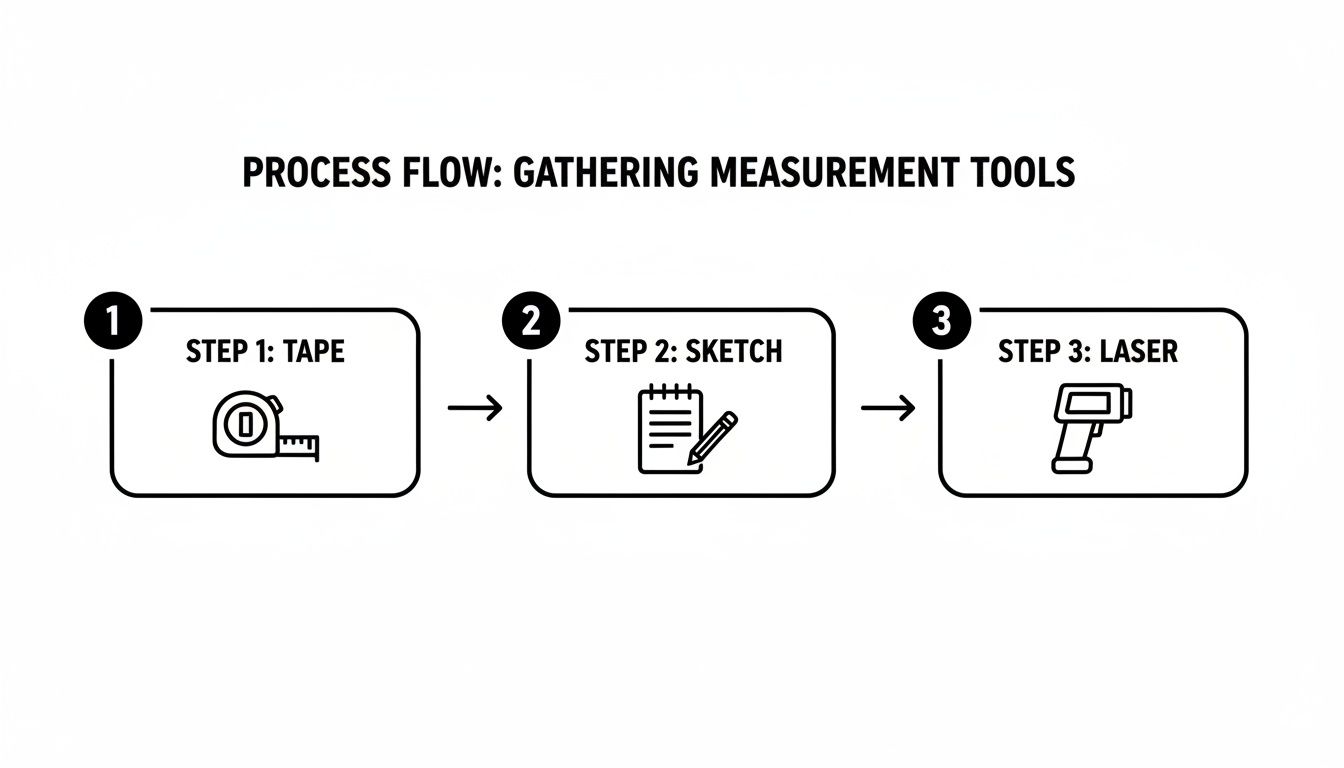
As you can see, a simple tape measure, a sketchpad, and maybe a laser measurer if you're feeling fancy are all you need to get started.
Start with the Basics: Length and Width
First things first, measure the main walls. Run your tape measure from one corner of the room to the other to find the length, then do the same for the adjacent wall to get the width.
Here’s a tip our family has learned over the years, especially for the older homes in our Southwestern Virginia region that have settled over time: measure at three different heights—low, middle, and high. Walls are rarely perfectly straight, so always use the smallest number you get.
Jot these main dimensions down on your notepad. This basic layout is the foundation of your entire plan. If you're curious, you can also use these numbers to calculate your home's square footage for a bigger-picture view.
Don't Forget to Look Up
Next up is the ceiling height—a measurement that's so easy to forget but is absolutely critical, especially for aspiring remodelers trying to visualize their space. A surprising number of furniture mismatches happen because vertical space was completely overlooked.
Measure from the floor to the ceiling in a couple of different spots to get an accurate reading. This number becomes your best friend when you're considering tall pieces like an elegant Bassett bookcase or a stately armoire.
Pro Tip: Your ceiling height is key for visualizing scale. A tall piece can make a room with lower ceilings feel cramped, while a low-profile sofa might get lost in a space with high, vaulted ceilings.
Getting these vertical measurements right is a total game-changer. For more ideas on using height to your advantage, check out our guide on how to make a small room feel big.
Account for Every Obstacle
Finally, walk the room and measure anything that sticks out from the walls or could get in the way. These are the fixed elements you absolutely have to work around.
- Windows and Doors: Measure the width and height of each one, including the frame. Also, make a note of how much wall space you have on either side.
- Light Switches & Outlets: Note their locations so you don’t accidentally block a much-needed power source with the back of a new sofa.
- Radiators & Vents: Measure how far they protrude from the wall. You'll need to leave some clearance here for proper airflow.
- Fireplaces & Mantels: Get the full width and height of the fireplace and the hearth it sits on.
By noting all these little details on your sketch, you're creating a complete map of your space. This is what ensures that the beautiful La-Z-Boy sectional you've been dreaming of not only fits the room but also works perfectly with its existing layout.
Measuring the Delivery Path to Your Room
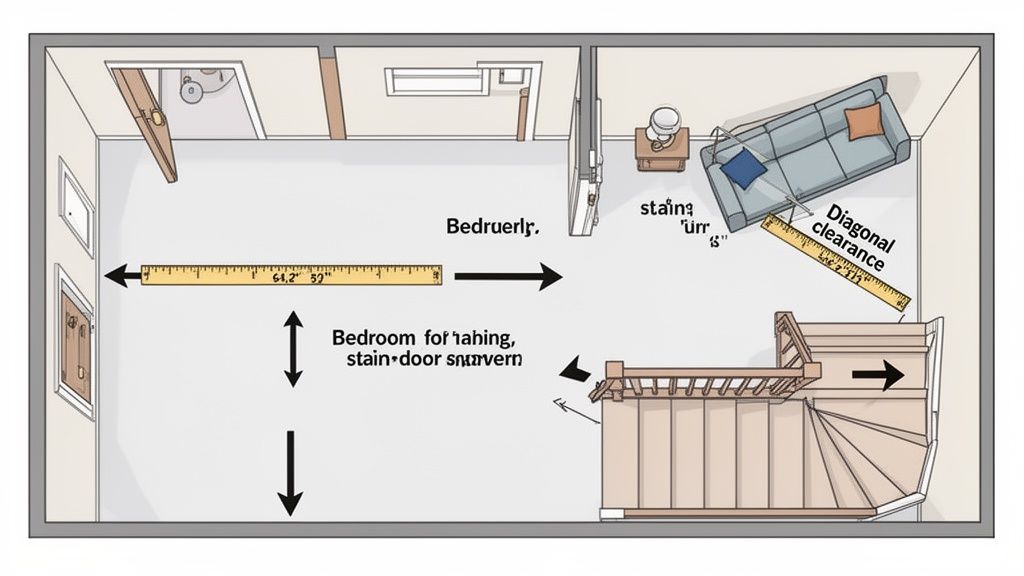
It’s a homeowner's nightmare we’ve seen a time or two: that gorgeous new Ashley bedroom set arrives, only to get stuck in the stairwell. That's why our family always reminds our friends in Independence and the surrounding areas that measuring the room is only half the battle.
You also have to measure the delivery path—every single twist and turn the furniture will take from our truck to its final spot in your home. This simple step ensures your delivery day is exciting, not stressful.
Charting the Course Inside Your Home
Think of this as creating a roadmap for your new furniture. Start at your front door and walk the exact path your new pieces will travel, tape measure in hand.
Along the way, measure the width of every single doorway and hallway. Don’t forget to note any low-hanging light fixtures, tight corners, or architectural features that might get in the way. For stairways, it gets a little more detailed:
- Stairway Width: Measure from the wall to the handrail (or between both handrails if they're on both sides). This is your narrowest point.
- Stairway Headroom: Check the clearance from a step to the ceiling above it, especially where the ceiling slants down.
- Landings and Turns: That spot where the stairs turn? It's often the tightest squeeze. Measure the landing's width, depth, and height to make sure a long sofa or headboard can pivot.
Getting new furniture in often means getting old furniture out. For big jobs, some professional advice on furniture removal and storage in Melbourne can offer helpful logistical insights.
The Diagonal Measurement Trick
Sometimes, a straight-on measurement says a piece won’t fit through a door, but we’ve got a secret weapon: the diagonal measurement. Large, flat items like box springs or tabletops are often tilted to get them through tight doorways.
To check this clearance, measure from the bottom corner of the doorway on the hinge side to the top corner on the knob side. This diagonal line is often the longest possible opening and can be the key to getting a large piece into the room.
This simple trick has saved countless deliveries. It’s the difference between a sofa fitting comfortably through a doorway or not at all. Always measure the diagonal!
Knowing these numbers empowers you while you shop in our showrooms or online. Of course, this is also where our team truly shines. You can learn more about our process on our delivery page, a Free in-home delivery and setup within 60 miles service we’re proud to offer all our neighbors.
We handle the heavy lifting and tricky corners so you can just relax and enjoy your beautiful new furniture.
Planning for Traffic Flow and Living Space
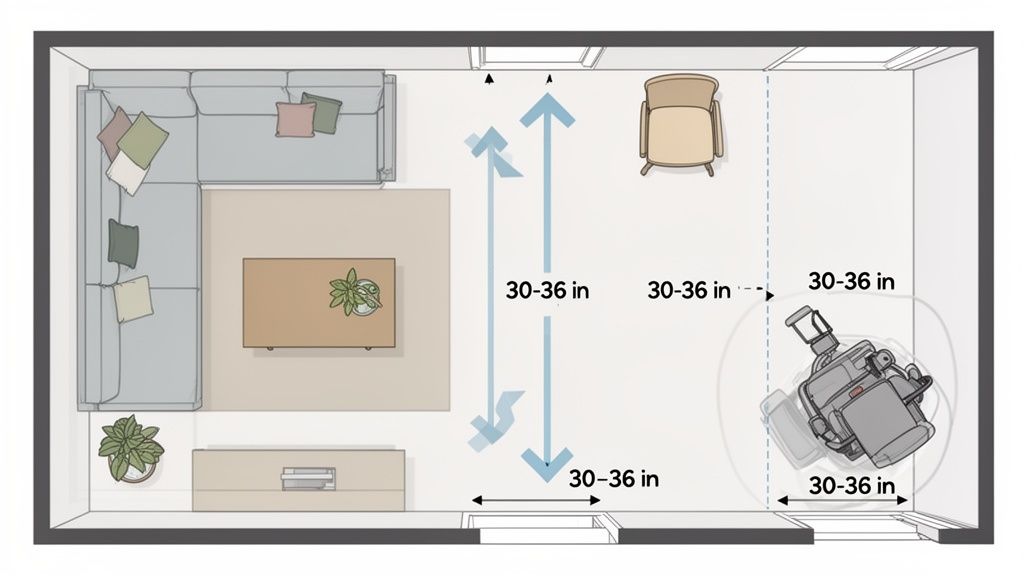
Alright, you've got your room's dimensions and you've confirmed your dream sofa will actually make it through the front door. Now for the part that truly turns a house into a home: planning for real life.
A room can have perfectly-sized furniture and still feel totally cramped if you can't move around. This is where we shift from just fitting furniture into a space to designing a room that’s genuinely functional and comfortable.
It's all about creating "clearance space"—those invisible pathways your family uses every single day. Think about the walk from the hallway to the sofa or from the kitchen to the dining room. You want those paths clear so no one is shimmying sideways past the coffee table.
The Golden Rule of Walkways
The single most important guideline for a comfortable room is leaving enough space for the main traffic paths.
A good rule of thumb is to allow 30 to 36 inches of clearance for any major walkway. This gives everyone plenty of room to move freely without bumping into corners, which is a lifesaver for families with active kids and pets.
For smaller, less-traveled paths—like the space between an accent chair and the wall—you can usually get away with a bit less, around 24 inches. Thinking about traffic flow now helps avoid costly mistakes later. Considering the living and dining furniture market is projected to hit USD 556.29 billion by 2025, planning these pathways ensures your investment is one you’ll love for years.
Spacing Around Your Key Furniture
Beyond the main walkways, certain pieces of furniture just need their own "breathing room" to work correctly. Here are a few common scenarios we see in homes all around Galax and Hillsville:
- Sofa and Coffee Table: You'll want to keep your coffee table about 16 to 18 inches from the edge of your sofa. This is the sweet spot—close enough to set down a drink, but far enough to give you legroom.
- Dining Table and Chairs: To let guests pull out their chairs and sit down comfortably, leave at least 36 inches of space between the edge of your dining table and the nearest wall or piece of furniture.
- Lift Chairs: This one is crucial. A lift chair needs to account for its full range of motion. A La-Z-Boy lift chair, for example, needs significant forward clearance to recline and lift safely, often as much as 65 inches from the wall.
Planning for clearance isn’t just about numbers on a tape measure; it’s about creating a space that feels effortless and inviting. It's the thoughtful spacing that turns a collection of furniture into a comfortable, welcoming living room.
Essential Clearance and Walkway Guidelines
Here's a quick reference guide to help you visualize the space you need for a comfortable, functional room.
| Area or Furniture Piece | Recommended Clearance (Inches) |
|---|---|
| Major Walkways | 30 – 36" |
| Minor Walkways | 24" |
| Sofa to Coffee Table | 16 – 18" |
| Dining Table to Wall/Furniture | 36" |
| Bed to Wall/Dresser | 24 – 30" |
| Desk Chair Push-Back Space | 36 – 48" |
These guidelines are a fantastic starting point. Remember to adjust them based on your family’s unique needs and how you actually live in the space.
Understanding these spacing rules is also key for things like TV placement. For some helpful tips, you can explore our guide on calculating the best placement for your sofa and television. It’s this attention to detail that our expert design staff loves to help with, ensuring your home is both beautiful and perfectly functional for your family.
Putting It All on Paper: Your Final Measurement Plan
Okay, you’ve done the legwork and have all your numbers. Now it’s time to pull everything together into a simple, powerful plan. This is the crucial last step that transforms a jumble of measurements into a clear map for your home. Think of it as your secret weapon for a stress-free shopping trip, whether you visit us in person or browse online.
You don't need to be an artist for this part. Just sketch a rough outline of your room's shape on a piece of paper, noting where the doors and windows are. Then, simply jot down your wall-to-wall measurements right on the sketch. This little drawing will be your best friend when you walk into our showrooms in Galax, Independence, or Hillsville.
Building Your Blueprint for Success
Your sketch is more than just a drawing—it's the blueprint that gives you total confidence when you shop. It lets our expert design team see your space through your eyes, so we can give you the best possible advice on everything from a La-Z-Boy sectional to a complete Bassett dining set.
A truly helpful plan includes all the details we’ve talked about:
- Overall Room Dimensions: The basics—length, width, and ceiling height.
- Architectural Features: The location and size of windows, doors, fireplaces, and any built-ins.
- Obstacles: Don't forget to mark where outlets, light switches, and vents are.
- The Delivery Path: Those critical measurements of hallways, stairways, and doorways leading into the room.
Having this simple, hand-drawn plan with you is the key. It removes all the guesswork and ensures that when you find a piece you love from our large in-stock selection, you know it’s the right one for your home—all backed by our Low Price Promise.
Why This Plan Saves You So Many Headaches
Getting these numbers down on paper does more than just organize your thoughts; it actively prevents some of the most common—and costly—mistakes. Did you know that getting your room measurements right can save you from the hassle of furniture returns? Industry reports show that improper sizing accounts for nearly a third of all returns.
Don't forget the height from floor to ceiling, which is crucial for taller pieces like armoires or bookcases. And for doors and hallways, always note the widths. A staggering 90% of delivery issues happen because of tight entryways.
Here's another one we see all the time: roughly 70% of new homeowners underestimate the diagonal measurements needed for L-shaped sofas, leading to a very awkward fit. You can discover more insights about the living room furniture market to see just how much planning ahead pays off.
To make this whole process even easier for our neighbors in Southwestern Virginia and Northern North Carolina, we've put together a handy checklist. Bring it with you, and our team can help you find the perfect furniture that fits not just your space, but also your family’s lifestyle—a commitment we’ve proudly stood by since 1902.
Your Room Measuring Questions Answered
We get a lot of great questions in our showrooms, from our neighbors in Galax all the way to Hillsville and the wider Southwestern Virginia region. Measuring can feel like a puzzle, but with a little guidance, you can solve it with confidence.
Here are some of the most common questions our family hears about how to measure a room for furniture.
What Are The Biggest Mistakes People Make When Measuring?
By far, the most common mistake we see is forgetting to measure the delivery path. People map out the perfect spot in their living room but completely forget about the hallways, stairs, and doorways the new piece has to travel through. A sofa might fit perfectly in the room, but that’s no use if it can’t make it through the front door!
Another frequent error is overlooking the little things. It’s easy to forget about architectural features like baseboards, bulky window sills, and radiators, all of which can eat into your usable space.
Lastly, many folks only measure the floor and forget about vertical height. This is crucial for taller pieces like armoires, bookcases, or even the beautiful, tall headboards that come with our Sealy and Therapedic mattress sets.
How Do I Measure For An L-Shaped Sectional Sofa?
Sectionals are a fantastic way to maximize comfort and seating, but they absolutely require careful measuring. You’ll need two main measurements for an L-shaped sectional: the overall length of each side, measured from the very back corner out to the end of each arm.
It's also vital to measure the depth of the sofa from front to back. We always recommend sketching this out on your floor plan to see exactly how it will sit in the corner and how it might impact your walkways. Our team can help you visualize how a stunning La-Z-Boy sectional will transform your space using your measurements.
Measuring for a sectional isn't just about length and width; it's about understanding how its shape will define your room's traffic flow. A quick sketch on paper can reveal potential issues before you even start shopping.
Should I Round My Measurements Up Or Down?
This is a great question, and the answer depends on what you're measuring.
For your room's dimensions, you want to be as precise as you can. If a wall isn't perfectly straight (and many aren't!), always use the smallest measurement you get. This gives you a worst-case-scenario number to work with.
However, when you're looking at the furniture piece itself, it’s wise to give yourself a little "breathing room." We suggest leaving at least 2-3 inches of clearance on each side of a large piece. This prevents a room from looking overstuffed and makes it much easier to clean around everything. When in doubt, it’s always safer to have a little extra space than not quite enough.
For more answers to common questions, you can always check our frequently asked questions page.
When Should I Ask For Professional Help?
While these steps will empower you to shop with confidence, there are times when an expert eye is invaluable. If you have an unusually shaped room, are planning a complete redesign, or simply feel overwhelmed by the process, that's the perfect time to ask for a little help.
At Guynn, our Design Services are here for exactly that reason. Our experts, like Debra Williams, can help you create a scaled room plan and select pieces that fit your home and lifestyle perfectly. It’s all part of our no-pressure atmosphere and our commitment to making your home feel just right—a tradition we've proudly upheld since 1902.
We're here to help you turn your vision into a reality, one accurate measurement at a time.
Visit our showrooms in Galax, Independence, or Hillsville to test the comfort for yourself.
Schedule a consultation with our design team to start planning your dream room today.
Browse our selection online at guynnfurniture.net.