How to Plan a Room Layout for a Stylish, Functional Home

It's a feeling we all know: standing in an empty room, wondering where to even begin. For homeowners across Southwestern Virginia, it can feel a little daunting, but you’re not alone. The secret to a beautiful, functional space actually starts long before you move a single piece of furniture. Since 1902, our family has helped countless neighbors in Galax, Independence, and Hillsville turn that blank canvas into a home that truly works for them.
Planning a room layout really boils down to two simple things: figuring out the room's main job, and then taking detailed measurements. This foundation ensures that every piece you choose, from a cozy La-Z-Boy sectional for movie nights to a formal dining set, will fit perfectly and serve your family's needs.
Starting Your Room Layout Plan The Right Way
The first step is always the most important one, and it has nothing to do with furniture styles or colors. It’s all about purpose.
Define Your Room's Core Function
Before you even think about shopping, think about what your family truly needs from this space. Is this going to be a formal living room for hosting guests, or is it the go-to spot for family game nights and kicking back?
The answer changes everything. A cozy family hub, for example, might call for a durable, comfortable sectional from a trusted brand like La-Z-Boy or Ashley. On the other hand, a more formal entertaining space might feature an elegant Bassett sofa. This single decision guides every other choice you'll make. If you want to dive deeper into this first step, you can check out our guide on where to begin with home design.
Measure Everything Twice
Once you know the room's purpose, it’s time to grab a tape measure. This is a simple but absolutely critical step that prevents some major headaches and costly mistakes down the road. And don't just measure the length and width of the walls—get specific.
A detailed measurement plan is your best friend when you're furniture shopping. It removes all the guesswork and ensures that the pieces you fall in love with at the showroom will actually fit through your door and into your home.
Make sure you write down these key numbers:
- Overall room dimensions: The total length and width of the space.
- Doors and windows: Measure their width, height, and exactly where they sit on each wall.
- Architectural features: Take into account any fireplaces, built-in shelving, or awkward corners that stick out.
- Ceiling height: This is especially important if you're considering tall pieces like bookcases or entertainment centers.
Taking these foundational steps ensures that when you find the perfect pieces in our large, in-stock selection, you can feel confident they'll fit beautifully. This careful planning makes the whole process smoother, paving the way for our free in-home delivery and setup within 60 miles of our showrooms.
Creating Your Floor Plan With Classic and Modern Tools
Once you know your room's purpose and have all your measurements, it's time for the fun part: bringing your vision to life. This is where you get to experiment with layouts without lifting a single piece of furniture. A solid floor plan is the bridge between your ideas and a perfectly arranged room.
Think of it as your roadmap. A well-thought-out plan, as detailed in this guide to home layouts and floor plans, ensures everything from a new accent chair to an entire bedroom set will fit just right.
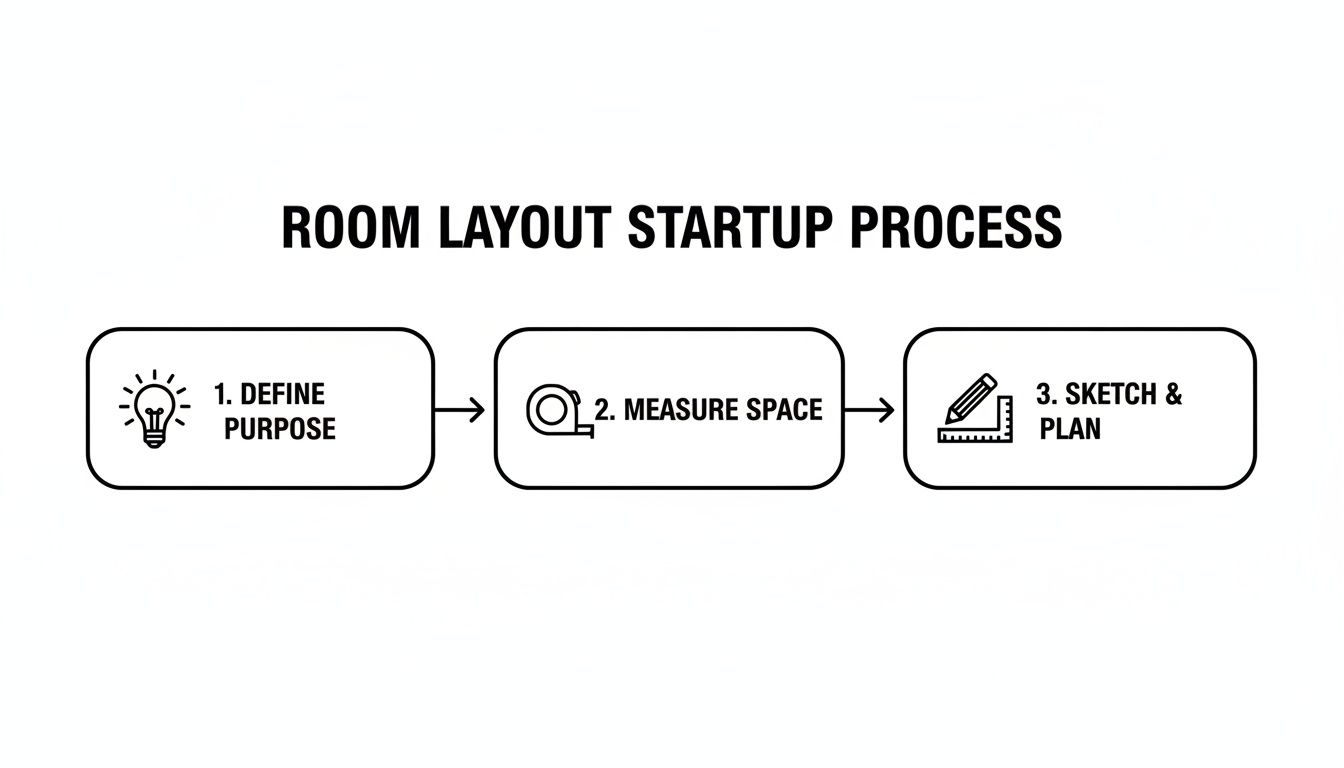
As you can see, the secret to a great layout starts with a clear purpose and precise measurements before you even start sketching.
The Time-Tested Graph Paper Method
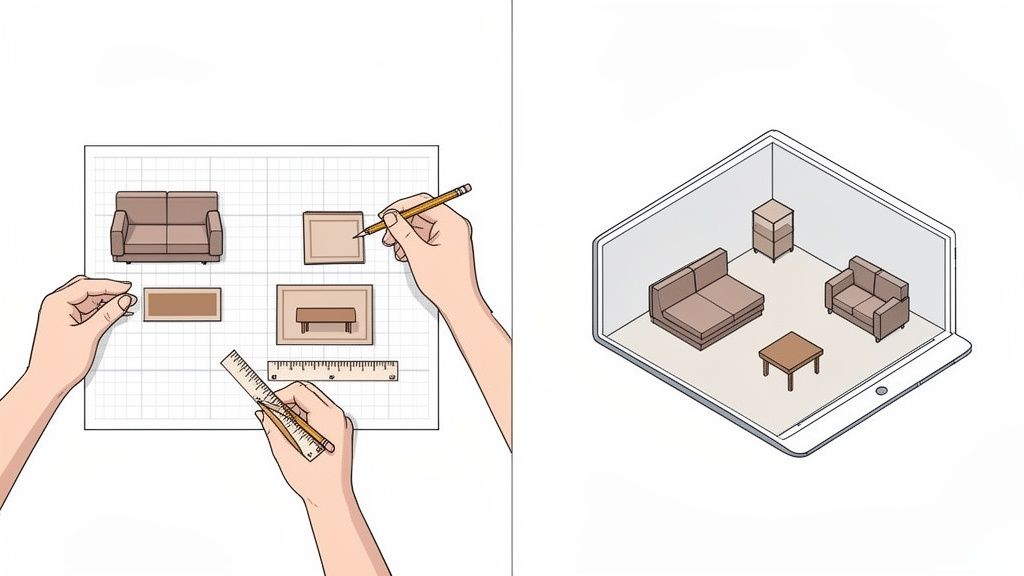
For those who enjoy a more hands-on approach, you can't go wrong with classic graph paper. It’s a simple, tangible way to really connect with your space and get a feel for its scale. All it takes is the paper, a pencil, and your measurement notes.
First, you’ll draw a scaled outline of your room. A common scale is letting one square on the paper equal either six inches or one foot of actual room space. Make sure you carefully add permanent features like windows, doors, and fireplaces. If you need a refresher, our post on how to measure a room for furniture is a great resource.
Next, use a separate sheet to draw your furniture pieces to the same scale and cut them out. Now you can play! Move these little paper cutouts around your floor plan to test different arrangements, check for clear walking paths, and see how everything flows together—no heavy lifting required.
Embracing User-Friendly Digital Tools
If you'd rather work on a screen, there are some fantastic digital room planners out there. These tools let you build a 3D model of your space, giving you a surprisingly realistic preview of how your ideas will look and feel in reality.
You just plug in your room’s dimensions, then drag and drop digital furniture right into the layout. Many of these programs even let you customize furniture sizes to match specific pieces you're eyeing, like a cozy La-Z-Boy recliner or a new Therapedic mattress. Seeing it all in 3D makes it much easier to visualize traffic flow and get the scale just right.
Whether you use old-school graph paper or a modern app, the goal is the same: to be confident that your new furniture will be a perfect fit before our team even arrives for our free in-home delivery and setup.
Both methods have their strengths. The best choice really depends on your project and personal style.
A Quick Look at Room Planning Tools
Deciding between traditional and digital methods? Here’s a quick comparison to help you find the best fit for your room layout project.
| Method | Pros | Cons | Best For |
|---|---|---|---|
| Graph Paper | – Inexpensive and accessible – Helps you connect with the space physically – No tech skills needed |
– Can be time-consuming – Harder to visualize in 3D – Revisions require redrawing |
Hands-on planners and those tackling simpler room layouts. |
| Digital Planners | – Quick to create and easy to change – Provides realistic 3D views – Many tools offer brand-specific furniture models |
– Can have a learning curve – May require a subscription – Less tactile connection |
Visual thinkers, tech-savvy users, and those planning more complex arrangements. |
Ultimately, whether you're sketching by hand or designing in 3D, taking the time to plan will save you headaches down the road and ensure you create a space you truly love.
Arranging Living Room Furniture For Comfort And Flow
The living room is truly the heart of the home, the place where families across Galax, Independence, and Hillsville gather to connect and unwind. Getting this layout right is about more than just aesthetics; it’s about creating daily comfort and effortless flow. We've seen it time and again—a few key layout principles can completely transform how a family uses and enjoys their most important space.
It all begins with identifying your room’s natural focal point. This is the spot your eyes are instinctively drawn to when you walk in. For many homes in Southwestern Virginia, it might be a cozy fireplace, a large window with a beautiful view, or the entertainment center where everyone gathers for movie night.
Once you’ve found it, you can start arranging your main seating around it. This creates a natural, welcoming atmosphere that encourages conversation before a single word is spoken.
Creating Conversational Groupings
The goal of your primary seating is to make it easy for people to talk to each other without shouting across the room. Think about arranging your sofa and chairs so they face each other, either completely or partially. An L-shaped or U-shaped arrangement is a classic for a reason—it just works!
For example, a beautiful La-Z-Boy sectional can anchor the space, with a couple of stylish Ashley accent chairs placed opposite to close the circle. This simple act of turning furniture inward immediately makes a room feel more intimate and functional.
The secret to a cozy living room isn't just comfortable furniture; it's placing that furniture in a way that invites connection. Pulling your sofa away from the wall, even by just a few inches, can make the entire space feel more open and thoughtfully designed.
This approach creates a defined zone for socializing, separating it from the main traffic paths that need to stay clear as people move through the room.
Getting The Spacing Just Right
Practical measurements are what make a layout feel right, not just look right. We know furniture is an investment, and rushing this step is the fastest way to a room that feels cramped or awkward. With decades of experience helping our neighbors, we’ve learned the numbers that matter most.
Proper spacing is particularly crucial for traffic flow. We recommend positioning your sofa 18 to 24 inches from the coffee table—close enough to reach for a drink, but with plenty of legroom. You’ll also want to ensure your main walkways have at least 36 inches of clearance. If you'd like to dive deeper into furniture industry trends, you can explore insights from IBISWorld.
Placing Accent Pieces And Lighting
Once your main seating is in place, it’s time to add the layers that bring the room to life. Accent chairs, side tables, and lighting are what make a layout feel complete and balanced.
Here are a few tips our design team often shares:
- Balance Visual Weight: If you have a large, heavy piece like a sectional on one side of the room, balance it with two smaller chairs on the opposite side. This creates a sense of harmony.
- Create Functional Nooks: Use an accent chair and a small table to create a cozy reading corner near a window or a lamp. It adds purpose to an otherwise empty space.
- Layer Your Lighting: Don't rely on a single overhead light. A good layout includes multiple light sources at different heights—a floor lamp next to a sofa, a table lamp on an end table, and perhaps accent lighting for artwork.
Getting the distances right between your main seating and your TV is also a huge part of creating a comfortable viewing experience. You can use our handy guide to calculate the best placement for your sofa and television to eliminate any guesswork. By considering these details, you design a living room that truly works for your family every single day.
Designing Serene Bedrooms and Inviting Dining Rooms
While the living room is often the hub of daily life, bedrooms and dining rooms have more specific jobs. One is for rest and retreat; the other is for connection and nourishment. Planning a layout for these rooms means thinking differently, prioritizing their unique functions—something our family has helped neighbors with across Southwestern Virginia and Northern North Carolina for generations.
A bedroom should feel like a true sanctuary, a calm space to recharge. A dining room needs to be inviting, encouraging family and friends to linger over a good meal. By focusing on a few key principles for each, you can create layouts that feel just as good as they look.
Crafting a Tranquil Bedroom Layout
Let's be honest: the most important piece in your bedroom is the bed. When you're planning the layout, everything else should revolve around it. The goal is to create a sense of balance and calm that promotes restful sleep, which is why we always recommend starting with bed placement first.
For the most tranquil setup, place your bed against the longest, most solid wall in the room—ideally, the one furthest from the door. This creates a natural focal point and gives you a comforting sense of privacy. Once your bed is positioned, whether it’s a beautiful Bassett frame with a supportive Sealy or Therapedic mattress, the other pieces can fall into place around it.
Prioritizing bed placement makes the rest of the room’s layout feel more intuitive. This simple "bed-first" rule is the secret to ensuring your bedroom is a peaceful retreat, not a cluttered obstacle course.
Proper spacing is the final touch for a serene bedroom. In fact, research shows that residential applications make up a significant portion of the global furniture market, and a huge chunk of that comes from bedroom sets where spacing is absolutely critical. After all, improper spacing is one of the biggest reasons people feel dissatisfied with their layout. For more on these trends, you can discover more insights from Future Market Insights.
Here are a few key measurements to keep in your back pocket:
- Walkways: Aim for at least 30-36 inches of clear space for major pathways, like from the door to the closet.
- Nightstands: Leave about 24-36 inches of space on either side of the bed for nightstands. This gives you enough room for a lamp and your essentials without feeling cramped.
- Dressers: Make sure there’s enough clearance in front of dressers and chests to fully open the drawers, which is typically around 36 inches.
Getting these small details right can make a world of difference. For more specific guidance, check out our dedicated guide on how to arrange bedroom furniture for a deeper dive into creating your perfect sanctuary.
Designing a Welcoming Dining Room
The dining room is where we gather for holiday meals, birthday celebrations, and quiet weeknight dinners. The layout should make these moments feel special and effortless. And the star of this room is, without a doubt, the dining table.
The most critical rule for dining room layouts is making sure there's enough clearance around the table. You want to leave at least 48 inches of space between the edge of your table and the nearest wall or piece of furniture. This gives guests plenty of room to comfortably pull out their chairs and lets others walk behind them without asking anyone to scoot in.
Picking the right size and shape for your table is also key. A round table can be fantastic for encouraging conversation in a smaller, square-shaped room. A long, rectangular table from a brand like Ashley works beautifully in a more formal, rectangular space and is perfect for larger gatherings. The idea is to match the table's scale to the room's proportions, creating a hub that feels both grand and inviting for every occasion.
Common Room Layout Mistakes and How to Avoid Them
Even with the best planning, a layout on paper can sometimes just feel… off. Drawing on our family's experience helping our community since 1902, we've seen a few common pitfalls that are surprisingly easy to sidestep once you know what to look for. Think of this as some friendly advice from a neighbor who’s spent a lot of time rearranging furniture.
Learning how to plan a room layout often means learning what not to do. By understanding a few simple principles, you can plan your space with confidence and create a room that truly feels right from the moment you step inside.
The Problem: Pushing Everything Against the Walls
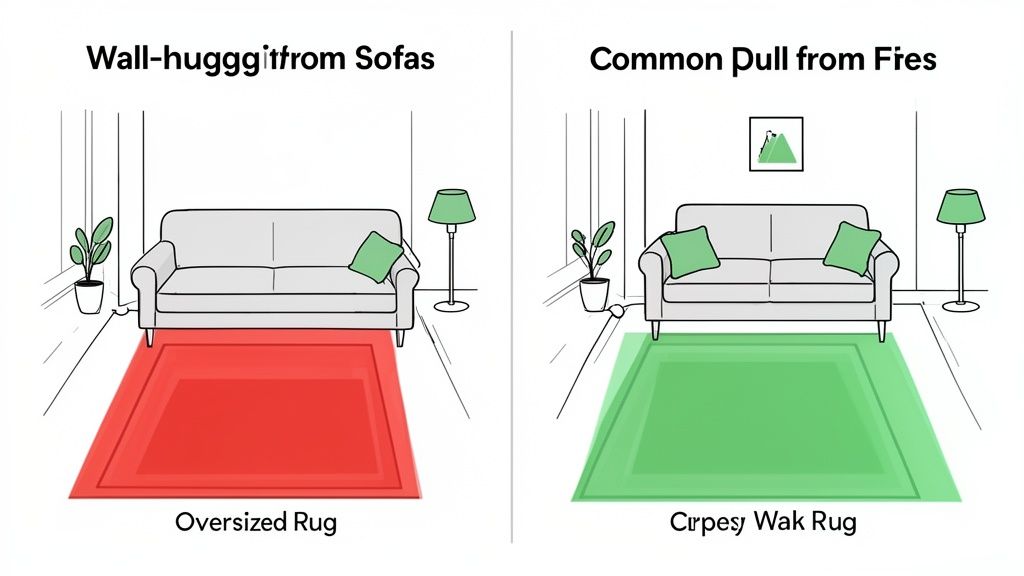
One of the most frequent instincts we see is what designers call "wall-hugging." It makes sense on the surface—pushing everything against the walls seems like it should open up the room and make it feel bigger. But in reality, it often does the exact opposite. You end up with a cold, impersonal space that feels more like a waiting room than a cozy family hub.
The fix? Try pulling your main seating pieces away from the walls, even if it's just by a few inches. This simple adjustment allows the room to "breathe" and instantly creates a more intimate, inviting atmosphere. Floating a La-Z-Boy sofa in the middle of a large room, for example, defines a dedicated conversation area, making the entire space feel more purposeful and thoughtfully designed.
Grouping furniture away from the walls encourages connection and improves the room's overall flow. It’s the secret to transforming a large, empty space into a warm, welcoming environment.
This technique isn't just for big spaces, either. Even in a smaller room, creating a slight gap between your sofa and the wall can give the illusion of more space, making the room feel lighter and less crowded.
Minding Your Scale and Proportions
Another common issue is getting the scale of your furniture wrong. We know how frustrating it is to find a piece you love, only to get it home and realize it’s way too big for the room, or too small and gets lost. A massive sectional crammed into a tiny living room makes the space feel claustrophobic, while a small rug under a large dining table can make the entire setup look unbalanced.
Before you even start shopping, have your room's measurements handy. This is your secret weapon for choosing pieces that are perfectly proportional to the space.
- For Large Pieces: In a smaller room, look for furniture with a lighter visual weight. A Bassett sofa with raised legs, for instance, lets you see the floor underneath, which creates a more open and airy feeling.
- For Area Rugs: A good rule of thumb is that your rug should be large enough for at least the front legs of your sofa and accent chairs to rest on it. This simple trick anchors the furniture and properly defines the seating area.
- For Lighting: Make sure your lamps and light fixtures are the right scale for the furniture they're paired with. A tiny lamp on a large end table will just look out of place.
At Guynn Furniture, we serve families across Galax, Independence, Hillsville, and the wider Southwestern Virginia and Northern North Carolina region. Our expert design staff, including Debra Williams, is always here to help you find pieces with the perfect proportions for your home. With our huge in-stock selection, you can find the right fit for immediate free in-home delivery and setup within 60 miles.
Bringing Your Vision to Life With Expert Design Help
Sometimes, even the most carefully crafted plans just need a second set of eyes. We get it. You might find yourself stuck trying to make different furniture styles work together, or maybe you're planning a whole-home refresh and feel completely overwhelmed.
That’s where we come in. At Guynn Furniture, we believe planning your room layout should be an exciting process, not a stressful one. Our professional design services, led by our talented interior decorator Debra Williams, are here to help take that pressure off your shoulders. We’re not just here to sell furniture; we’re here to help our neighbors in Galax, Independence, Hillsville, and the wider Southwestern Virginia and Northern North Carolina region create homes they absolutely love.
When to Call in a Professional
A design consultation can be a real game-changer, especially when you're facing tricky layout challenges or just need help visualizing the space. Our expert design staff can help you navigate everything from an in-home visit and creating scaled room plans to selecting the perfect paint colors and accessories to tie it all together beautifully.
The way we shop for furniture has changed. While many shoppers want tools to visualize pieces in their space, the value of expert, in-person guidance is more important than ever. A designer's eye can help you maximize your space and bring your vision to life, all while staying within your budget.
Today, shoppers often blend online research with in-store visits. In fact, recent data shows that 40% more people now visit a store first before buying online. You can see how this hybrid approach is shaping how we furnish our homes.
How Our Design Services Work
We tailor our services to fit your family’s unique needs. You might need a full room makeover, or you may just want a little guidance on the finishing touches. Either way, we’re here in a no-pressure atmosphere to offer as much—or as little—help as you need. Our Low Price Promise means you're getting great value, and with our financing options, your dream room is always within reach.
If you're looking for extra inspiration on making your home shine, these 7 expert home staging tips offer some fantastic ideas.
Our goal is simple: to help you create a functional, beautiful home that truly reflects your personality. We've been a part of this community since 1902, and nothing makes us happier than seeing a neighbor’s vision come to life.
Got Questions About Room Layouts? We've Got Answers.
Here in our showrooms across Southwestern Virginia and Northern North Carolina, we get a lot of fantastic questions from our neighbors about planning a room. Thinking through a new layout can bring up a few common puzzles, so we’ve gathered some of the most frequent ones right here for you.
Our family has been helping folks feel right at home since 1902, and these are the insights we find ourselves sharing every single day.
What’s the Absolute First Thing I Should Think About When Placing Furniture?
Before you even think about colors or styles, the very first thing you have to nail down is the room's traffic flow. Seriously. Before you move a single piece, just stand in the doorway and imagine the natural paths people will take.
How do you get from the door to the sofa? From the living room to the kitchen? You’ve got to keep these main arteries clear, or the room will always feel awkward and frustrating.
As a rule of thumb, try to leave at least 30 to 36 inches for your main walkways. Once you’ve mapped out those invisible pathways, you can start building your furniture arrangement around your focal point. This simple step is the secret to a room that’s not just beautiful, but genuinely easy to live in.
How Do I Pick the Right Size Rug for My Living Room?
This is a big one. One of the most common mistakes we see is a rug that’s way too small for the space. A "postage stamp" rug floating in the middle of the floor can make the whole room feel disconnected and thrown together.
Here’s the trick: your rug should be large enough so that at least the front legs of your sofa and any chairs are sitting comfortably on it.
This simple move does something almost magical—it anchors all your furniture, visually pulls the conversation area together, and makes the whole setup feel intentional. It’s a small detail with a huge impact.
Is It Okay to Mix Different Furniture Styles in One Room?
Absolutely! In fact, we encourage it. Mixing styles is how you create a space that feels collected over time and truly reflects your family’s unique story. A home with character always feels more welcoming than one that looks like a single page from a catalog.
The key is finding a common thread to tie the different pieces together. This could be a consistent color palette, a similar wood tone, or even a repeated shape or texture that appears throughout the room.
For instance, you could absolutely pair a sleek, modern Ashley sofa with a more rustic, chunky coffee table if other elements in the room bridge that gap. Our design teams in Galax, Independence, and Hillsville love helping our neighbors find that perfect, balanced mix that feels just right.
Visit our showrooms in Galax, Independence, or Hillsville to test the comfort for yourself. You can also browse our selection online at guynnfurniture.net. To get started on your dream room, schedule a consultation with our design team today