7 Desk Ideas for Small Spaces That Work

A bedroom corner, studio apartment, hallway nook, or shared family room can become a useful workspace without making the entire home feel like an office. The right desk depends on what the room gives you: an open wall, an unused corner, a window seat, or enough storage to keep supplies contained.
These desk ideas for small spaces focus on the specific problem each solution solves, from saving floor space to hiding work completely after the day ends. Practical dimensions matter, too. A desk that looks compact may still feel cramped if it leaves no room for a chair, monitor, or comfortable movement.
Guynn Furniture & Mattress makes the decision easier with a no-pressure atmosphere, expert design staff, and desks available to view in person. The locally rooted retailer has served the community since 1902, carries a large in-stock selection for immediate delivery, and offers free in-home delivery and setup within 60 miles. Guynn serves Galax, Independence, Hillsville, and the wider Southwestern Virginia and Northern North Carolina region. For additional ideas about making room for movement and exercise equipment, see this compact cardio equipment review.
1. Wall-Mounted Floating Desk
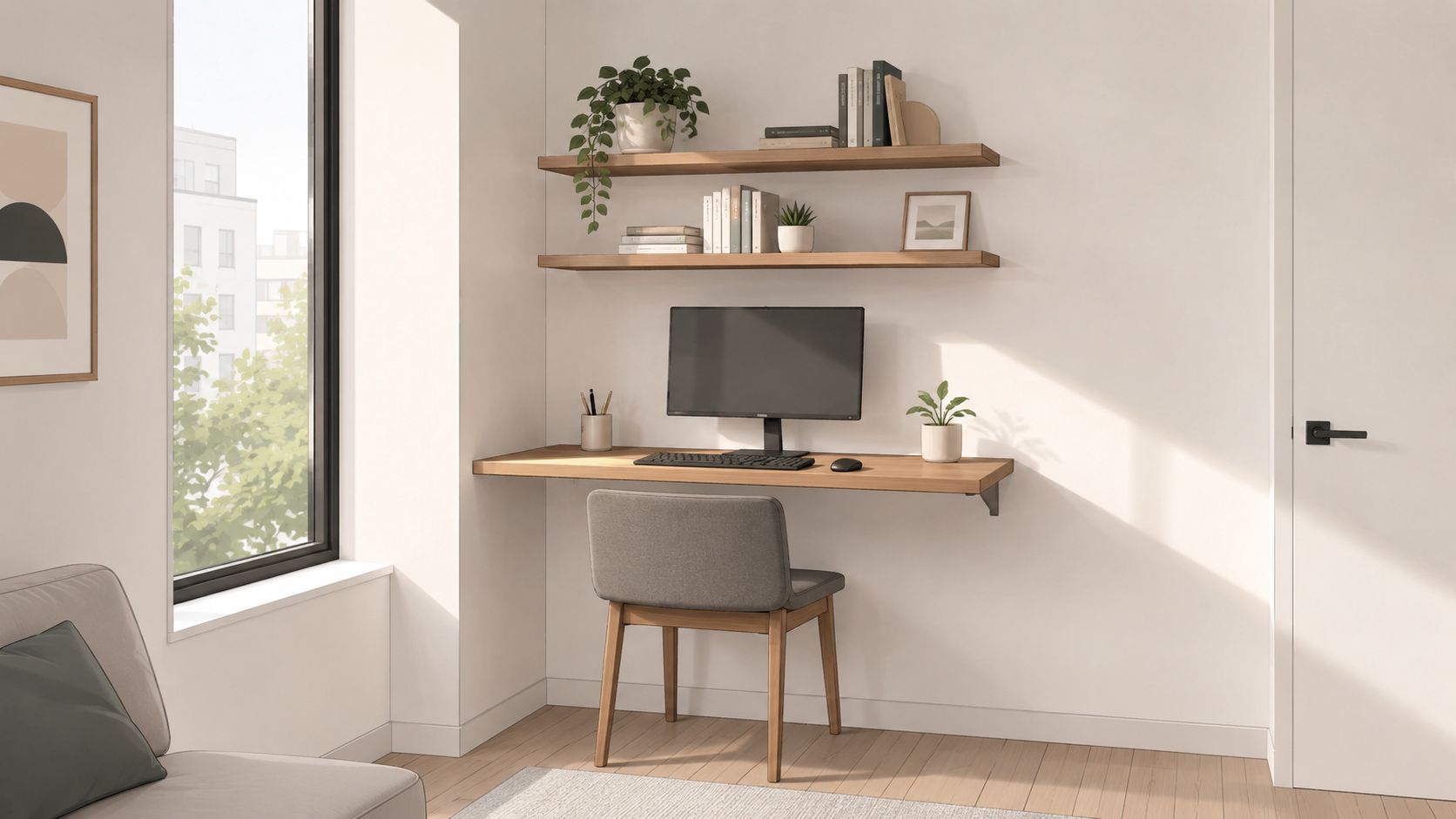
When floor space is tight, a wall-mounted desk keeps the work area useful without adding bulky legs or a deep base. Secured directly to the wall, it suits a bedroom beside a dresser, a studio apartment, or a hallway nook that needs to keep its walking route clear.
A corner-mounted surface can define an unused wall without requiring a separate bookcase. In a bedroom, pair a simple wood desk with floating shelves. A hallway version can hold a laptop, notebook, and lamp, provided the chair can pull out without narrowing the passage.
Make the wall do more work
Set the surface approximately 28 to 30 inches from the floor for a conventional seated setup. Check the height against the chair before final installation, since a comfortable position depends on leg clearance and the user's proportions. Choose enough depth for the intended equipment. A laptop and notebook need less room than a monitor, keyboard, and mouse.
A chair that slides fully underneath helps the room return to its usual purpose after work. Keep outlets accessible, and leave sufficient space behind the screen for a comfortable viewing position.
Use the wall above the desk for supplies instead of crowding the desktop. A shelf can hold books, baskets, and a small lamp. An inspiration board or soft wall lighting adds personality without taking floor area. Guynn's guide to decorating shelves in any room offers practical direction for arranging those vertical elements.
Practical rule: A floating desk saves floor space, but chair movement, outlets, and screen distance still need deliberate planning.
The main trade-off is permanence. Secure wall installation matters, and the desk may not suit renters or households that rearrange furniture often. It also works best for laptop use and light writing unless the surface provides adequate depth for a monitor and keyboard. Guynn's design staff can help assess wall placement, storage, and proportions for your home.
2. Corner Desk With Wraparound Surface
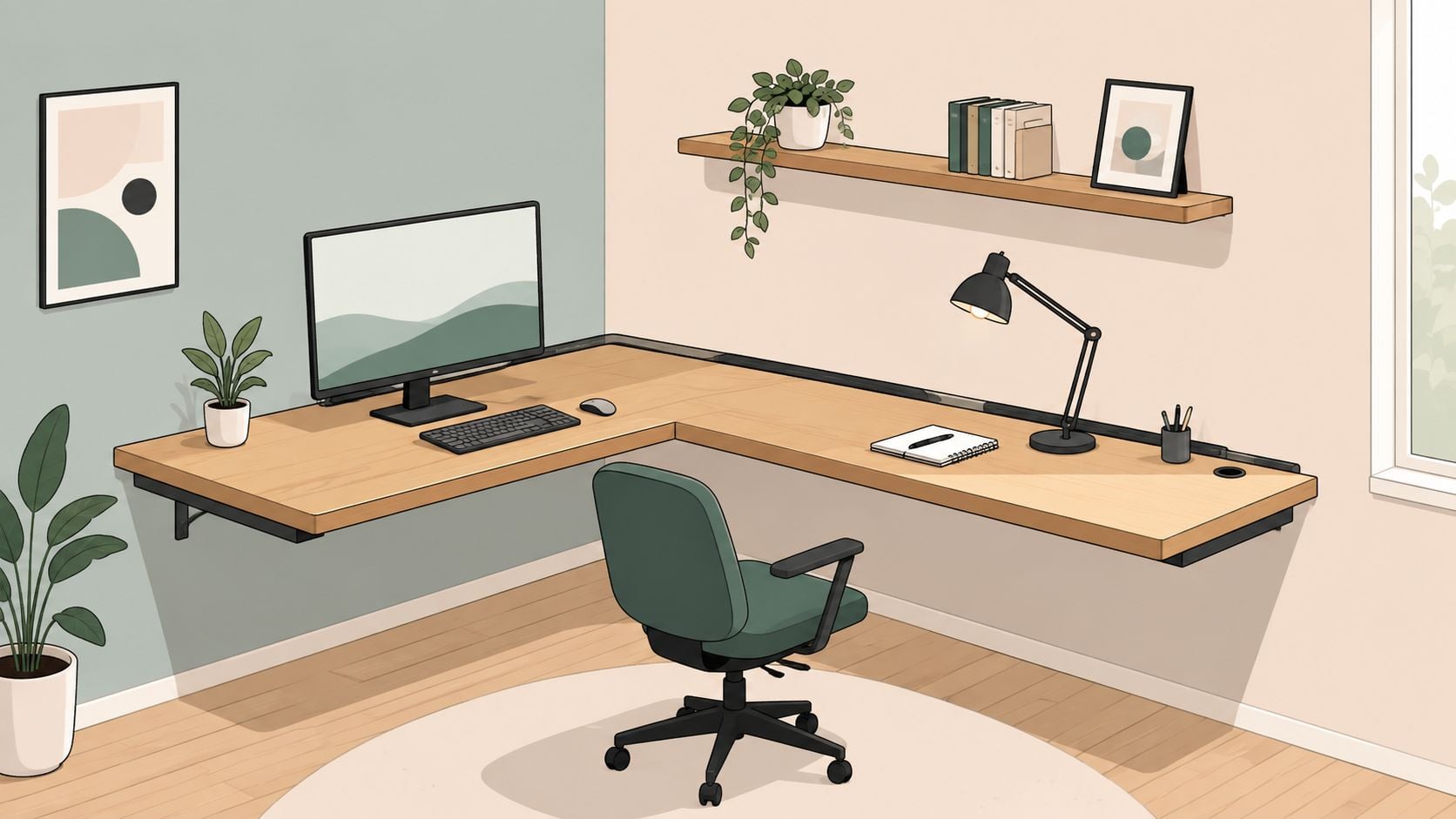
A corner desk solves a different problem: the room has an unused corner, but a straight desk doesn't provide enough working area. An L-shaped or wraparound design uses two walls at once, giving a laptop user, crafter, student, or remote worker separate zones without spreading furniture across the room.
A compact bedroom can use one side for a monitor and the other for writing or paperwork. In a studio apartment, the corner arrangement leaves more room for living and sleeping areas elsewhere. A basement alcove can become a productive creative workspace with room for supplies on one side and active work on the other.
Balance capacity with circulation
A practical small desk commonly falls within 36 to 48 inches wide and 18 to 24 inches deep, while 40 to 47 inches wide is often a useful range for a single-monitor setup, according to this compact desk size guide. An L-shaped piece can offer more usable surface, but each return must be measured carefully so the chair doesn't block a doorway or furniture route.
Position the longer side along the wall with the best natural light. A rotating chair lets the user move between surfaces without constantly pushing the chair backward. Open shelving or a small hutch above the desk can add storage without expanding the footprint.
- Use both surfaces intentionally: Keep the primary screen and keyboard on the section with the best seated position.
- Light each work zone: A task lamp on each section prevents one side from becoming shadowed.
- Protect the corner: Leave enough rear and side clearance for cords, outlets, and chair movement.
- Keep nearby storage vertical: Shelves above the desk reduce the temptation to overload the work surface.
Corner desks are more capable than narrow writing desks, but they're less visually light and harder to relocate. Families considering a broader room arrangement can also review Guynn's corner media console options for ideas about using difficult corners efficiently.
3. Murphy Desk
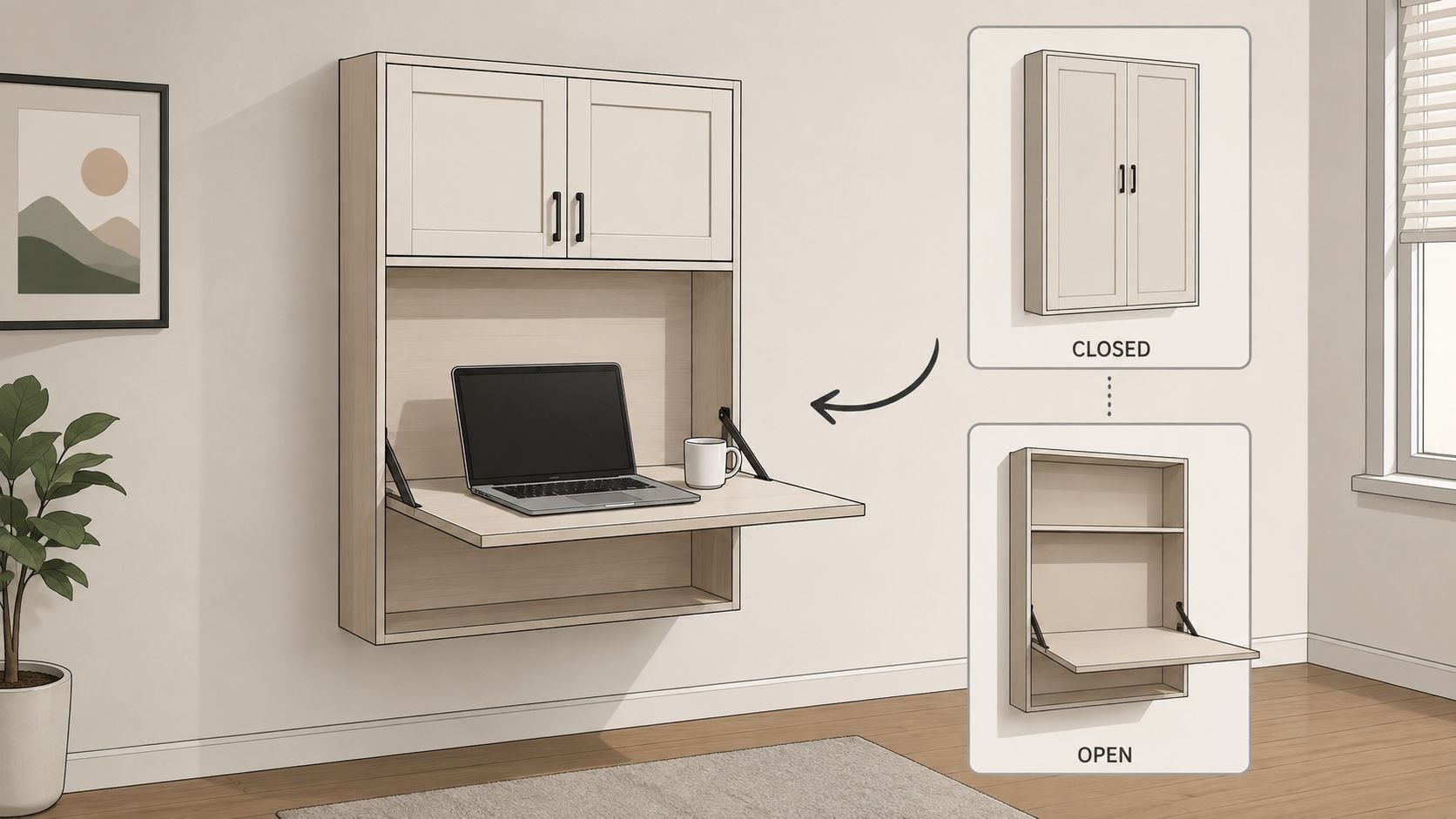
A Murphy desk solves the shared-room problem. It folds against the wall when work is over, allowing a guest room, bedroom, or studio apartment to change functions without leaving a permanent workstation on display.
During work hours, a fold-down surface can support a laptop and writing materials. Afterward, the desk closes and the room can return to a guest space, reading area, or sleeping area. A small bedroom that doubles as an office benefits especially from this changeable format because the work zone doesn't dominate the room all day.
Plan the open and closed positions
Choose a location with natural light and convenient electrical access. A desk that looks tidy when closed can still be frustrating if the user has to stretch cords across the room every time work begins. A console table or storage bench beneath the closed desk can create a useful display area, provided the furniture doesn't interfere with the fold-down mechanism.
The outer face can serve as a bulletin board, whiteboard, or decorative mirror when the desk is closed. A lightweight chair can store beside the unit or slide under a nearby console. For broader planning ideas, Guynn's guide to multifunctional home office furniture addresses the value of furniture that serves more than one purpose.
A fold-down desk is most successful when the closing routine is simple. If clearing the surface takes too long, the desk may remain open more often than expected.
The main compromise is work capacity. A Murphy desk may not suit a large monitor, printer, or long paperwork session unless the design includes adequate depth and storage. It also requires careful installation and enough clear space in front for the open panel and chair.
4. Compact Rolling Desk Cart
A rolling desk cart solves the flexibility problem. Instead of assigning one permanent location, the household can move the workstation to the best-lit or least-busy part of the home, then tuck it away when it's no longer needed.
A bedroom cart might serve as a vanity during the day and a desk in the evening. A living room cart can roll into a closet after work. In a kitchen, it can move to the dining table when the counter becomes busy. Students can use a cart as a combined desk, supply station, and organizer.
Choose mobility without sacrificing stability
Locking wheels are essential. A cart that rolls unexpectedly can make typing uncomfortable and may pull cords from an outlet. Shelves and baskets provide vertical storage, keeping the top surface available for the laptop, notebook, or lamp.
- Secure the work position: Lock every wheel before sitting down.
- Control charging: Place the cart near an outlet or use a suitable power strip for device charging.
- Use the upper shelf wisely: A compact desk lamp can provide focused task lighting without filling the main surface.
- Move with the daylight: Roll the desk toward the brightest comfortable location during the day, then return it to storage afterward.
The convenience comes with a clear trade-off. Rolling carts usually provide less stability and less legroom than a fixed desk, and their storage can become visually cluttered if baskets aren't assigned clear purposes. Guynn's space-saving furniture ideas offer additional ways to keep flexible pieces from overwhelming a shared room.
A cart works best for short sessions, laptop work, homework, or households that need one workspace to serve several people. It may not be the first choice for a dedicated eight-hour office with multiple monitors.
5. Narrow Writing Desk
Hallway alcoves, closet nooks, and window-side gaps share one constraint: limited width. A narrow writing desk can turn these leftover areas into usable workspaces without blocking movement or crowding nearby furniture.
A desk in the 24 to 30-inch width range suits journaling, bill paying, email, and laptop work when the setup stays intentionally simple. In a bedroom, it creates a quiet writing spot. Near an entryway, it gives mail and household paperwork a defined home. Beside a window, it can also make practical use of available daylight.
Know when narrow becomes too narrow
For laptop-only work, a 36-by-18-inch desk is the absolute minimum. A monitor setup needs more room, with 40-by-20 inches as the smallest practical size. Keep 24 inches of clearance in front of the desk so the chair and walking route do not compete for the same space.
Depth often determines comfort more than width. A 16 to 20-inch depth can handle a laptop and note-taking, while a monitor and keyboard generally need 24 inches as a practical minimum. Before buying, check that the screen can sit far enough away for comfortable viewing, with room left for the keyboard and writing materials.
- Keep the surface edited: Limit it to the computer, a lamp, and the writing tools used every day.
- Build upward: Use wall-mounted shelves for books, baskets, and office supplies instead of adding depth.
- Raise smaller devices: A tablet stand or monitor arm can return usable space to the desktop.
- Choose a light finish: White or light wood can reduce the visual weight of a tight nook.
A narrow writing desk saves floor area, yet it places firm limits on equipment and task type. It suits focused laptop work, short writing sessions, and light paperwork better than extensive documents or multiple monitors. Assign nearby storage before the desk arrives, so the small surface does not become the household's catch-all.
Measure doors, circulation paths, and adjacent furniture with Guynn's guidance on measuring a room for furniture. That check helps confirm the desk fits the room and remains comfortable to use.
6. Desk With Built-In Storage and Shelving
When storage is the bottleneck rather than surface area, an integrated desk consolidates the work zone and its supplies into one footprint. Drawers, cubbies, and shelves can replace a separate filing cabinet or bookcase, leaving more floor area for circulation.
This approach suits a small bedroom where books and office materials need a defined home. In an apartment entryway, the same unit can organize mail, bills, and everyday supplies. A student can keep textbooks and personal items nearby instead of spreading organizers across the room.
Treat storage as part of the layout
Match each storage area to how the household uses it. Keep frequently handled items within easy reach, and place occasional supplies on higher or lower shelves. Baskets and decorative boxes help open cubbies look orderly, especially in a living room or shared space where office materials should blend with the decor.
Storage principle: The best compact desk doesn't hold everything. It puts the right things close, hides visual overflow, and keeps the work surface available.
Combine open and closed storage deliberately. Open shelves can display books and decor, while doors, drawers, or bins contain cables, paperwork, and supplies. A lamp may fit on a shelf instead of taking up desktop space, provided it still lights the keyboard and writing area adequately.
The trade-off is weight and visual presence. Integrated storage adds useful capacity, but it can make the desk harder to move and appear larger than a simple tabletop. Check wall height, baseboards, outlets, and nearby furniture before choosing a hutch-style design.
Plan the work surface around the equipment, not only the storage. For a monitor setup, aim for at least 24 inches of depth. 30 inches gives more comfortable clearance for a larger monitor, separate keyboard, and writing materials. Dual 27-inch monitors may require 55 inches of width or more, depending on their stands and viewing arrangement.
A storage desk works best when shelves do not crowd the screen or limit arm movement. Keep heavier books on lower shelves, reserve the desktop for daily tools, and leave enough knee space for the chair. Measure the wall and circulation route with Guynn's guidance on measuring a room for furniture before ordering. That check helps confirm the unit fits the room and remains practical for everyday use.
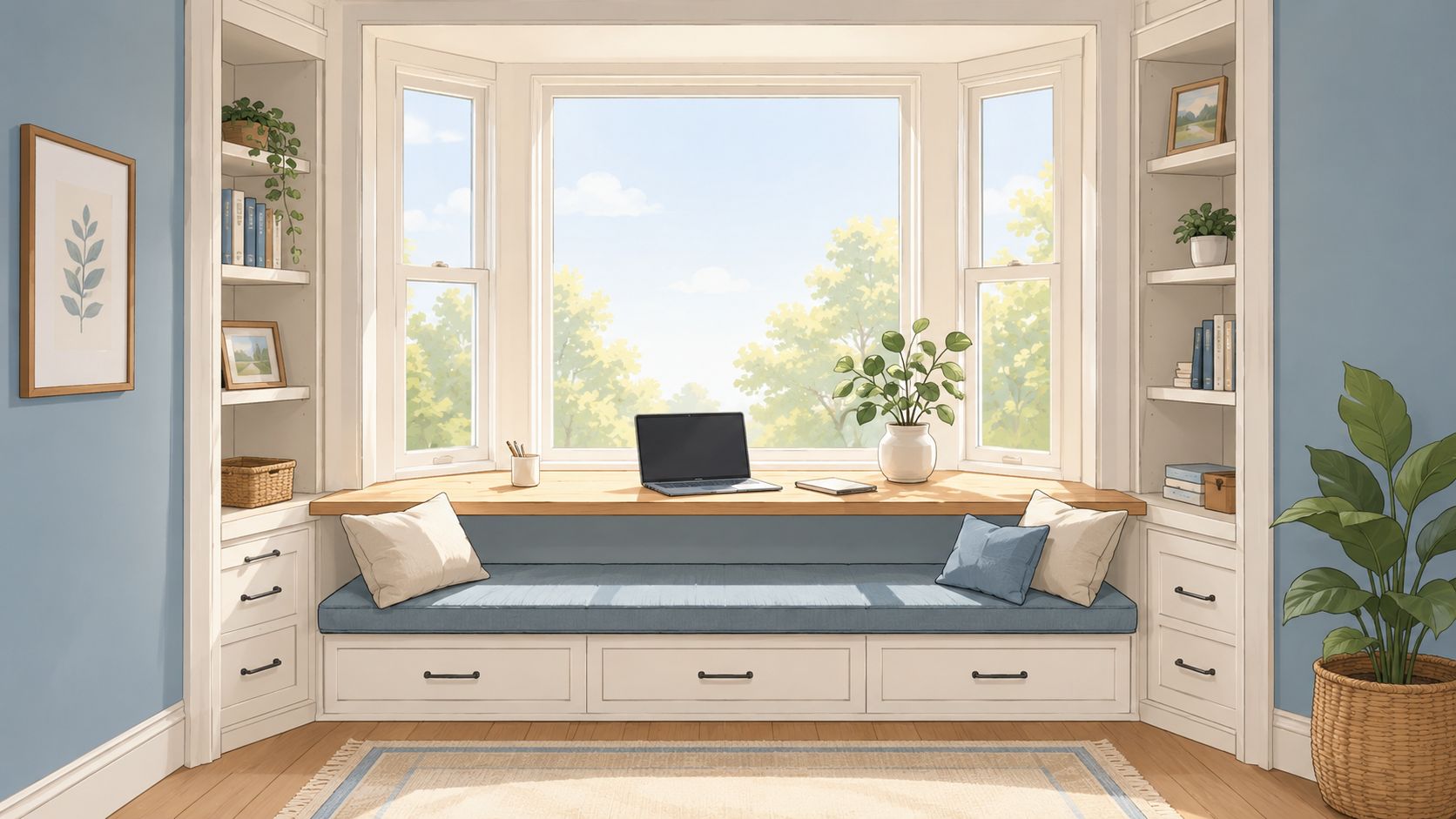
7. Window Seat Desk With Integrated Storage
Bay windows and recessed openings often sit underused. Fitting a desk into one, with storage built into the window seat below, turns an architectural feature into a practical workspace without taking over the room's center.
In a bedroom, the arrangement can support writing, reading, and focused computer work. A living-room window seat can store office supplies while keeping the space suitable for conversation. In a studio apartment or hallway nook, the same approach creates a defined work zone where floor area is limited.
Protect comfort and sightlines
Natural light makes the nook pleasant, but direct sun can cause glare, heat, and shifting brightness. Install adjustable shades or curtains before fixing the final screen position. A compact lamp supports evening work, and a seat cushion makes the bench comfortable for reading or short breaks.
Place the monitor perpendicular to the window when possible, rather than directly facing the glass. Set the screen top at or just below eye level, with a viewing distance of about 20 to 28 inches. This is especially important in a built-in nook, where changing the furniture position later may be difficult.
- Use the bench for storage: Keep supplies beneath the seat or work surface so the desktop remains clear.
- Control glare: Choose adjustable window coverings that let you respond to changing daylight.
- Add flexible comfort: Use a cushion that supports the bench as both seating and a work break area.
- Keep decor purposeful: Place plants or artwork on nearby shelves, leaving the keyboard and writing area unobstructed.
Plan the desk around the window's limitations. Check outlet access, heating or cooling, curtain clearance, and whether the bench provides enough support for longer sessions. If a separate chair is needed, measure its depth and movement before committing to the built-in design.
The main trade-off is customization. A window seat desk can fit the room closely and make unused space productive, but custom work or careful coordination with existing trim may be required. It also fixes the workspace in one location, so confirm that the area suits the household's routines before ordering.
Comparison of 7 Small-Space Desk Ideas
| Item | Implementation complexity | Resource requirements | Expected outcomes | Ideal use cases | Key advantages |
|---|---|---|---|---|---|
| Wall-Mounted Floating Desk | Moderate, requires secure stud mounting or anchors | Low–moderate, desk panel, mounting hardware, basic tools | Space-saving work surface with modern look; supports light equipment | Small bedrooms, studio apartments, renters needing temporary workspace | Maximizes floor space; affordable; clean, minimal aesthetic |
| Corner Desk with Wraparound Surface | Moderate, larger assembly and fit to corner | Moderate, larger tabletop, possible delivery/assembly, cable management | Substantial contiguous workspace for multitasking or dual monitors | Home offices in corners, creators with multiple projects | Efficient use of corner real estate; large usable surface |
| Murphy Desk (Fold-Down Wall Desk) | High, hinged mechanisms, precise installation | High, cabinetry, hardware, professional installation often required | Fold-away workspace that disappears when closed; better work-life separation | Multi-purpose rooms, studio apartments, guest rooms | Hidden when not in use; maximizes living area; integrated look |
| Compact Rolling Desk Cart | Low, minimal assembly, plug-and-play | Low, lightweight frame, locking casters, small footprint | Mobile, stowable workspace with limited surface area | Renters, dorms, intermittent remote work, multi-room use | Highly portable; stores easily; inexpensive |
| Narrow Writing Desk (24–30 in) | Low, simple furniture, easy placement | Low, compact materials, minimal storage | Slim work surface ideal for light computer or writing tasks | Hallways, closet nooks, between furniture, laptop use | Fits very tight spaces; unobtrusive; affordable |
| Desk with Built-In Storage and Shelving | Moderate, bulkier assembly, may need site fitting | Moderate–high, integrated drawers/hutch, larger footprint | Consolidated, organized workspace with ample storage | Home offices, students, anyone needing onsite file/storage | Keeps supplies at hand; reduces need for extra furniture; organized |
| Window Seat Desk with Integrated Storage | High, custom or semi-custom carpentry and installation | High, custom cabinetry, upholstery, site measurements | Bright, built-in workspace that doubles as seating and storage | Bay/window alcoves, homeowners wanting custom solution | Maximizes light and views; dual function seating/storage; design focal point |
Choose the Small-Space Desk That Fits Your Life
The best desk isn't necessarily the smallest one. It is the piece that fits the room's circulation, the user's equipment, and the household's daily habits without creating a new problem.
A floating desk or narrow writing desk works when the priority is the smallest practical footprint. A floating unit keeps the floor open, while a narrow desk can slip into a hallway, bedroom corner, or entryway. Both are strongest for laptop work, writing, and light administrative tasks. They become less suitable when the setup includes a large monitor, separate keyboard, printer, or extensive paperwork.
A corner desk or storage desk makes more sense when the household needs additional equipment or supplies. The corner format uses difficult wall space, and integrated shelving reduces the need for separate storage furniture. These designs offer more capacity, but they can feel heavier and may be harder to relocate.
A Murphy desk is the strongest match for a room that must change functions. It can disappear after work, but the user needs a realistic closing routine and enough nearby storage to clear the surface. A rolling cart offers the most flexibility, especially for renters, students, and shared rooms, although locking wheels and stable placement are essential.
A window seat desk suits households seeking a custom design that combines work, storage, and natural light. It can be beautiful and highly functional, but it deserves careful planning because the location is more permanent.
Before buying, measure more than the desktop:
- Width and depth: Confirm that the surface supports the laptop, monitor, keyboard, and writing materials.
- Chair clearance: Compact desks still need room for the chair to move and for the user to reposition comfortably.
- Screen distance: Keep the monitor at a practical viewing distance and place its top at or just below eye level.
- Outlets and cable routes: Check where power enters the room before choosing a fixed or fold-down desk.
- Doorways and delivery paths: Measure the route from the entrance to the final room.
- Storage needs: Decide what must stay within reach and what can live on shelves, in drawers, or in baskets.
Petite users may need a lower seated desk. Ergonomic guidance for a user who is 5 feet 2 inches tall places a comfortable seated desk height around 24.5 to 25.5 inches, compared with standard desks often measuring approximately 29 inches, creating a potential 3.2- to 5.5-inch gap, according to Eureka Ergonomic's guidance for petite users. A showroom visit makes these comfort differences much easier to notice than an online measurement alone.
Guynn Furniture & Mattress serves Galax, Independence, Hillsville, and the wider Southwestern Virginia and Northern North Carolina region. The team can help households compare desk proportions, finishes, seating, and storage in a no-pressure atmosphere. Guynn also offers a Low Price Promise, matching local competitors and providing a 30-day price guarantee when applicable, along with a large in-stock selection for immediate delivery.
Visit our showrooms in Galax, Independence, or Hillsville to test the comfort for yourself. Schedule a consultation with the expert design staff, including Debra Williams, to start planning a dream room today. Families can also browse Guynn's home office selection online, consider complementary comfort from La-Z-Boy, Ashley, or Bassett, and turn to Sealy or Therapedic in the sleep center when the workspace shares a bedroom.
Guynn's since-1902 history, local service, and free in-home delivery and setup within 60 miles make furniture planning simpler for homes across the region.
Guynn Furniture & Mattress offers compact desks, home office furniture, design guidance, and a large in-stock selection for immediate delivery. Visit Guynn Furniture & Mattress to explore desk ideas for small spaces, connect with the design team, and plan a comfortable workspace for your home.