How to Remove Furniture Stains: Quick, Practical Fixes

A slip of the wine glass, a muddy paw print from a furry friend, or a masterpiece from craft time—it happens in every lived-in home. The moment you see a spill, the key is to act fast, blot instead of rub, and reach for a simple solution. For most fresh spills, a bit of dish soap and cool water is all you need to stop a small spot from becoming a permanent problem.
Your Guide to Tackling Everyday Furniture Stains
From our family to yours, we know that furniture is meant to be enjoyed. Since 1902, we’ve helped families across Galax, Independence, Hillsville, and the wider Southwestern Virginia / Northern North Carolina region create comfortable homes. We also know that life gets messy! A beautiful home is one that’s filled with laughter, kids, and maybe a pet or two, which means spills are just part of the story.
This guide is your friendly first stop for stain removal. That sinking feeling when a cup of juice topples over doesn't have to ruin your day or your favorite armchair. The most critical rule is simple: get to it quickly. Grabbing a clean, dry cloth to blot the spill immediately is your best first defense.
Why You Should Blot and Not Rub
It’s almost a gut reaction to scrub at a fresh stain, but that can be the worst thing to do. Rubbing actually pushes the liquid deeper into the fabric fibers. It can also spread the stain, turning a small spot into a much larger headache.
Blotting, on the other hand, gently lifts the liquid out of the upholstery. It's a much more effective approach.
Our Neighborly Advice: Always blot from the outside of the stain toward the center. This technique helps contain the spill and prevents that dreaded "ring" from forming as the spot dries.
A Quick Reference for Common Spills
Before you grab a cleaner, knowing what you're dealing with is half the battle. Here's a quick cheatsheet for some of the most frequent culprits on fabric upholstery.
Quick Stain Removal Cheatsheet
| Stain Type | First Action (Blot, Scrape, etc.) | DIY Cleaning Solution | Important Tip |
|---|---|---|---|
| Wine | Blot immediately | Mix 1 tbsp white vinegar, 1 tbsp dish soap, 2 cups warm water | Blot, don't rub. Follow with a cold water rinse. |
| Coffee/Tea | Blot with a dry cloth | Mix 1/3 cup white vinegar with 2/3 cup water | For milky coffee, treat the dairy component first. |
| Ink | Dab with rubbing alcohol | Apply rubbing alcohol to a cloth, dab gently | Test on a hidden spot first! Alcohol can damage some fabrics. |
| Grease/Oil | Scrape off excess, sprinkle with cornstarch | A few drops of dish soap on a damp cloth | The cornstarch helps absorb the oil before you clean. |
Remember, this is just a starting point. Always test your cleaning solution on an inconspicuous area of your furniture first to make sure it doesn't cause any discoloration or damage.
Your Go-To Gentle Cleaning Solution
For a surprising number of common household spills, you don’t need harsh chemicals. A simple, universal recipe works on a huge percentage of fresh, water-based stains.
Just mix one tablespoon of clear dish soap with two cups of cool water. Dab it on the spot with a clean cloth, and then gently rinse by blotting with a sponge dampened with plain water. This effective method helps on over 85% of fresh stains, protecting your furniture without damaging the fabric.
Choosing furniture with durable, family-friendly fabrics from brands like Ashley and La-Z-Boy can also make future cleanups much easier. These pieces are designed for real life, which is something we deeply appreciate. For more tips on keeping your whole home fresh, check out our guide on spring cleaning your furniture.
Cleaning Fabric and Microfiber Upholstery
Fabric upholstery brings so much warmth and comfort into our homes, whether it’s a plush Bassett sofa for family movie nights or a cozy La-Z-Boy recliner perfect for unwinding after a long day. But as we all know, life happens, and spills are inevitable. The real secret to tackling them isn't some magic formula—it's knowing your fabric.
Before you even think about cleaning, the very first thing you need to do is find your furniture's cleaning code. It’s usually on a tag tucked away under a cushion or on the frame. Think of it as the instruction manual for your specific piece.
Decoding Your Furniture's Cleaning Codes
Every piece of upholstered furniture comes with a code that tells you exactly what kind of cleaning agent is safe to use. Getting this right is the most critical step in making sure a small spot doesn't turn into a permanent, faded disaster.
- Code "W": This means you can safely use water-based cleaners. This is the most common code you'll find on family-friendly fabrics and opens the door to gentle, DIY solutions.
- Code "S": This code requires solvent-based cleaners only. Water is the enemy here—it can leave behind rings or even cause the fabric to shrink.
- Code "W/S": You've got options! Both water-based and solvent-based cleaners are safe for this type of upholstery.
- Code "X": This is the most delicate of the bunch. It means vacuum only. Don't even think about using water or solvent cleaners. For stains on these pieces, it's always best to call a professional.
And here’s our family's golden rule: always test any cleaner on a small, hidden spot first! This simple check has saved countless cushions and is the best insurance against fading or damage.
Cleaning Water-Safe "W" Code Fabrics
For most families here in Southwestern Virginia and Northern North Carolina, "W" code fabrics are the go-to for their durability and easy care. When a spill happens, you often don't need anything fancy.
A gentle mix of a few drops of clear dish soap in a bowl of cool water is perfect for many fresh stains. Just dip a clean cloth, wring it out really well, and blot the stain gently. Follow up by blotting with a separate cloth dampened with only water to "rinse" the soap out.
Another favorite in our homes is a simple vinegar solution. A 1:1 mix of white vinegar and water, sprayed lightly, can work wonders. In fact, industry data shows that vinegar solutions are successful on up to 75% of common organic stains, making it a powerful and eco-friendly choice. If you're new to fabric care, our guide on understanding upholstery materials can help you choose the best options for your home.
Tackling Tricky "S" Code and Microfiber Stains
What about those tougher, oil-based stains from things like ink or makeup? For those "S" code fabrics, you'll want to grab a dry cleaning solvent. A small amount of rubbing alcohol on a cotton ball is often surprisingly effective for ink spots. Dab gently—never rub—and work from the outside of the stain inward to keep it from spreading.
Microfiber is another popular choice, known for being soft yet durable, but it plays by its own rules. While many microfiber pieces are "W" or "W/S" coded, they are notorious for leaving water rings if you oversaturate them. The trick is to use as little liquid as you can get away with. Rubbing alcohol is often a great choice here because it evaporates so quickly, preventing those pesky water marks.
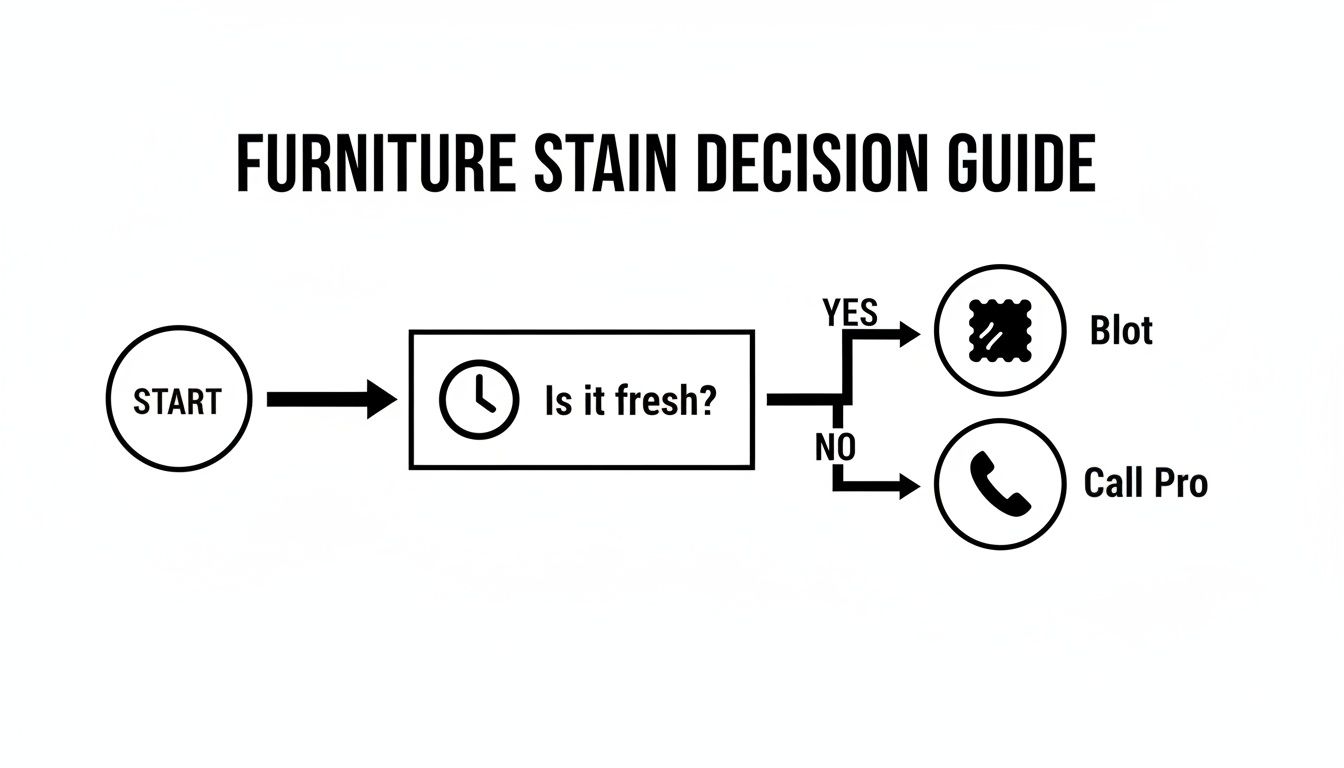
This flowchart gives a great visual of that crucial first step.
Preserving Your Leather and Wood Furniture
Leather sofas and rich wood tables are more than just furniture; they're the future heirlooms of our homes. Pieces like these, from brands such as Bassett, bring a timeless style that, with a little care, can be passed down through generations. But life happens, and a spill on these beloved surfaces can feel a lot more serious than one on fabric.
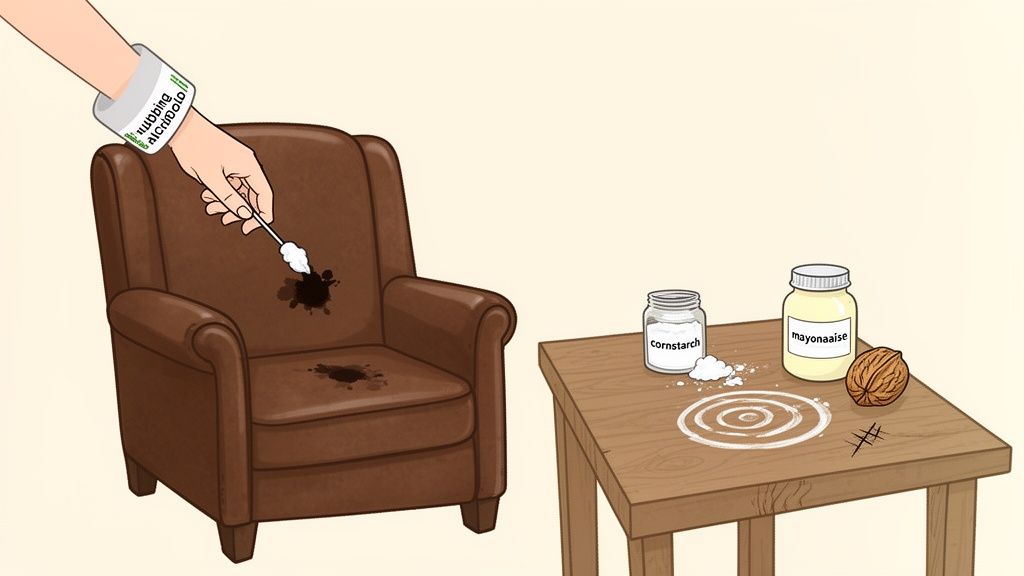
The good news? Knowing how to tackle stains on leather and wood is often simpler than you’d think. It's all about using the right method for the material and avoiding harsh chemicals that can do more harm than good. Let’s walk through some gentle, effective ways to protect these investment pieces.
Gentle Cleaning for Leather Furniture
Before you go after a spot on your leather armchair, you need to know what kind of leather you're working with. Most leather furniture sold today is protected (or finished) leather, which has a topcoat that makes it more stain-resistant. Unprotected (aniline) leather is far more natural and porous, absorbing spills almost instantly, and usually requires a professional's touch.
For the much more common protected leather, a simple solution is almost always the best one.
- Make a mild soap solution: Just mix a few drops of a gentle, moisturizing soap (like a clear dish soap) with distilled water.
- Use a damp, soft cloth: Dip a clean microfiber cloth into the mix and wring it out until it’s barely damp, not dripping wet.
- Wipe gently: Clean the stained area using a light touch and small, circular motions.
- "Rinse" and dry: Follow up with a second cloth dampened with only distilled water to wipe away soap residue. Immediately buff the area dry with a clean, dry towel to prevent water spots.
Pro Tip: Always use distilled water on leather if you can. The minerals in tap water can leave faint white spots on the surface as it dries. This simple swap helps ensure a flawless finish.
For specific accidents, you might need a more targeted approach. A light sprinkle of cornstarch left for a few hours can absorb a fresh greasy spot before you clean. For a dreaded ink mark, carefully dabbing the spot with a cotton swab dipped in rubbing alcohol can often lift the stain—but you absolutely must test this on a hidden area first.
Restoring the Beauty of Wood Furniture
From dining tables in Hillsville to bedroom sets in Independence, wood furniture is a cornerstone of homes in our region. Beyond regular dusting, a few common headaches can pop up: water rings, scratches, and sticky spots.
Don’t panic when you see that milky white ring left by a sweating glass. This just means moisture is trapped in the top layer of the finish, and you can usually draw it out. A surprising home remedy is to apply a small amount of non-gel mayonnaise to the ring, let it sit for about an hour, then wipe it clean. The oils in the mayo help displace the trapped moisture.
For minor scuffs and scratches that haven't broken through the finish, another pantry staple comes to the rescue. Simply rubbing the meat of a walnut over the scratch can "color in" the mark, making it much less noticeable. The nut's natural oils help the imperfection blend right in.
If you're dealing with a sticky residue from a price tag or a kid's craft project, a little mineral oil or even olive oil on a soft cloth can break down the adhesive. Apply it, let it sit for a few minutes, and then gently buff it away. For a deeper dive, our ultimate guide to protecting wood furniture is a great resource.
Caring for quality leather and wood is a way of honoring the craftsmanship that went into them. Since 1902, our family has believed that good furniture, cared for well, becomes part of your family’s story.
Handling Stains on Mattresses and Outdoor Furniture
A truly comfortable home extends beyond the living room sofa. We often forget about the pieces that work the hardest, like our mattresses and outdoor furniture, but they face their own unique set of challenges and deserve just as much care.
From a restorative night's sleep in your bedroom to a relaxing afternoon on the patio, keeping these pieces clean makes all the difference.
Here in our communities across Galax and Hillsville, we know that a good night's sleep is priceless. That’s why we’re proud to carry quality mattresses from brands like Sealy and Therapedic. But even the best mattress can fall victim to accidents or just the natural wear and tear of life.
Protecting Your Mattress Investment
When it comes to mattress stains, the most common culprits are sweat, blood, and urine. These are all protein-based stains, which means they need a specific approach to be broken down effectively.
The absolute key here is to use as little moisture as possible. Saturating a mattress can lead to mildew growth deep within its layers, and that’s a much bigger headache than the original spot.
A combination of hydrogen peroxide and baking soda works wonders here. The peroxide oxidizes the proteins in the stain, breaking them apart so they can be lifted away easily.
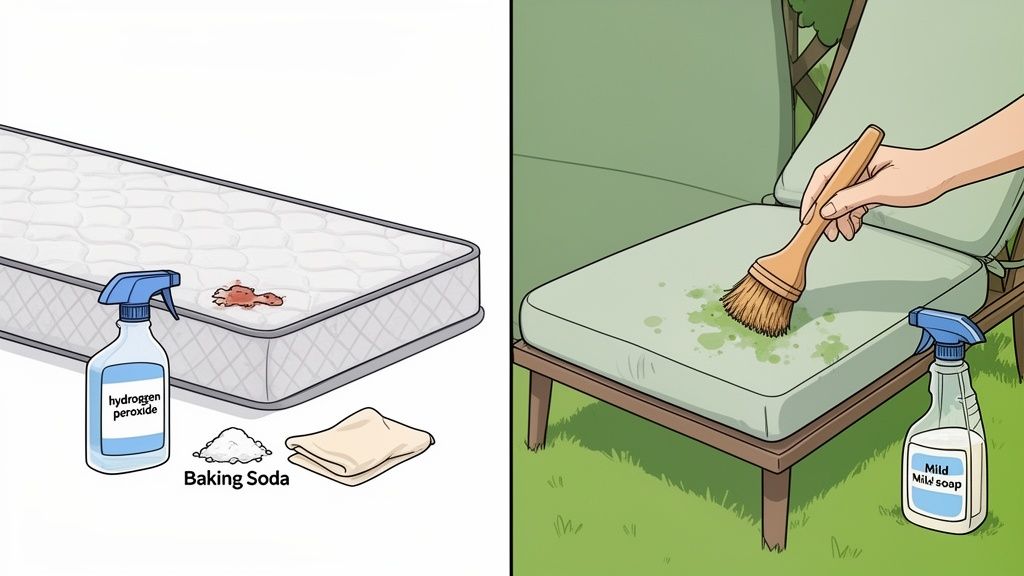
Our Pro Tip: For a simple and powerful mattress stain remover, mix 2 parts hydrogen peroxide to 1 part clear dish soap in a spray bottle. Lightly mist the stain—don't soak it!—then sprinkle a layer of baking soda over the top. You'll see it fizz and bubble as it works. Let it dry completely, and the baking soda will lift the stain out of the fabric. Once it's dry, just vacuum away the residue.
For older stains, 3% hydrogen peroxide on white fabrics can oxidize up to 80% of proteins like blood. Always remember to blot, never scrub. Rubbing can push the stain 60% deeper into the fibers, making it nearly impossible to remove.
For a deeper dive, check out our guide on mattress maintenance and cleaning tips to extend its lifespan.
Caring for Your Outdoor Oasis
Our beautiful corner of Southwestern Virginia and Northern North Carolina is meant to be enjoyed outdoors. Keeping your patio furniture clean ensures it’s always ready for a sunny afternoon or a quiet evening. The biggest issues you'll face out there are mildew, bird droppings, and sunscreen residue.
- For Mildew: Mix a solution of equal parts white vinegar and water. It's a fantastic, non-toxic way to kill mildew on resin, metal, or fabric cushions. Spray it on, let it sit for about 15 minutes, then give it a scrub with a soft brush before rinsing thoroughly with a hose.
- For Bird Droppings: Get rid of any solid material first. After that, a simple solution of gentle soap and water is all you need to scrub the area clean.
- For Sunscreen Stains: These oily stains can be a pain. Start by blotting the spot with a cloth dampened with rubbing alcohol to break down the oils. Then you can follow up by washing it with soap and water.
Just giving your patio set a good cleaning at the start and end of each season will do wonders for preserving it. For really tough, persistent issues like pet accidents, understanding the chemistry behind the stain is crucial. For instance, knowing how to properly get rid of cat pee smell in rugs can offer valuable insights that apply to other porous surfaces, too.
Protecting your entire home investment, inside and out, ensures it remains a welcoming space for your family for years to come.
When to Call in a Professional Cleaner
While our family firmly believes in the power of a good DIY fix, we also know some jobs are just better left to the experts. Knowing when to put down the cleaning cloth and pick up the phone can be the difference between saving a beloved piece of furniture and accidentally causing permanent damage.
It’s not about giving up—it’s about making the smartest choice for your home. Sometimes, the fabric itself is the deciding factor. Delicate materials like silk, velvet, or jacquard have complex weaves and dyes that can be easily ruined by water or even the gentlest solvents. Those are the moments to pause and protect your investment.
Stains That Need an Expert's Touch
Certain types of stains are notoriously stubborn and often require specialized equipment and chemicals to lift safely. Pushing a DIY solution too far on these can actually make the problem worse, setting the stain for good.
It's time to call a pro when you're facing:
- Large or Deeply Set Stains: A small, fresh spill is one thing. An entire glass of red wine that soaked deep into a cushion is a whole different ballgame. Professionals have powerful extraction tools that pull moisture and staining agents from deep within the fibers, something a household machine just can't do.
- Extensive Pet Damage: We love our furry family members, but significant pet urine stains are complex. They contain uric acid crystals that re-activate with moisture, causing those unpleasant odors to return again and again. A professional can use enzymatic treatments that break down these crystals at a molecular level, truly eliminating the problem.
- Unknown Old Stains: If you've discovered a mysterious, set-in stain on a piece of furniture, it's tough to know where to even begin. A professional can identify the substance and use the right method without the risk of making it worse through trial and error.
A Proactive Approach with Our Design Team
Honestly, the best defense against tough stains is a good offense. This means choosing the right furniture and fabrics for your family's lifestyle from the very beginning. Here at Guynn Furniture, we don't just sell furniture; we help you design a home that's both beautiful and practical for your life here in Southwestern Virginia and Northern North Carolina.
Our in-house design team, including our expert design staff like Debra Williams, can guide you through our huge selection of family-friendly performance fabrics. We can help you select a beautiful La-Z-Boy or Bassett sofa that not only looks stunning but is engineered to resist spills and stains, giving you priceless peace of mind.
This thoughtful, proactive approach is a service we've been proud to offer our neighbors since 1902. Choosing the right material upfront can save you countless hours of worry and cleanup down the road. It’s all about creating a no-pressure atmosphere where you can find solutions that truly fit your home.
We believe in making things easy for our community, from expert advice to our Low Price Promise and free in-home delivery and setup within 60 miles. When you need help—either fighting a tough stain or preventing future ones—our family is here for yours.
Your Furniture Stain Questions Answered
Over the years, our family has heard just about every question you can imagine about furniture care in our showrooms across Galax, Independence, and Hillsville. We love helping our neighbors find solutions, and we’ve noticed that many of the same questions come up time and again.
Here are our answers to some of the most common furniture stain questions we hear from families throughout Southwestern Virginia and Northern North Carolina.
Can I Use the Same Cleaner on All Types of Fabric?
That’s a fantastic question, and one we hear often, but the answer is a definite no. Using the wrong cleaner can lead to permanent damage like fading, discoloration, or even weakening the fabric fibers. Think of it like using a harsh floor cleaner on a delicate silk blouse—the results won't be good.
To avoid a disaster, you need to find the cleaning code on your furniture. It's usually on a tag tucked under a cushion and it’s the single most important piece of information you need.
- 'W' is for water-based cleaners.
- 'S' is for solvent-based cleaners only.
- 'W/S' allows for either type.
- 'X' means you should only vacuum the piece.
A gentle soap and water solution that works perfectly on a durable Ashley sofa with a 'W' code could leave a permanent water ring on a delicate armchair marked 'S'. This is why we always say the most important step is to test your chosen cleaner on a small, hidden area first.
What Is the Best Way to Remove Old Set-in Stains?
Old, set-in stains are certainly trickier, but they aren't always a lost cause. With a bit of patience, you can often make a big improvement or even get them out completely. The key is matching the right technique to the type of stain and fabric.
For many mysterious spots on light-colored, 'W'-coded upholstery, a simple paste of baking soda and water can work wonders. Apply it to the stain, let it sit for about 15-30 minutes, and then gently blot it away with a damp cloth. The baking soda is excellent at lifting stains that have settled deep into the fibers.
Another effective method for protein or organic stains is a solution of hydrogen peroxide with a single drop of clear dish soap. Lightly mist the area, let it bubble and work its magic, and then blot it clean. You might need to repeat the process a few times for stubborn spots. If a stain is particularly large, dark, or on a delicate fabric, it's often best to consult a professional to avoid making it worse.
How Can I Prevent Furniture Stains in the First Place?
This is our favorite question because prevention is truly the easiest cleanup of all! Creating a home that is both beautiful and ready for real life is about making smart choices from the start.
First, consider performance fabrics when you're buying new furniture. We've seen incredible advancements in fabric technology, and brands like La-Z-Boy offer amazing options that are inherently stain-resistant and easy to clean. Our design team can show you dozens of beautiful, soft fabrics that are tough enough for kids and pets.
Second, for existing furniture, you can apply a fabric protector spray. This creates an invisible barrier that helps repel spills, giving you more time to blot them up before they can soak in. It’s a good idea to reapply it annually or after a deep cleaning.
A Simple Habit: One of the easiest preventative measures is using coasters for drinks and trays for snacks. It's a small habit that has saved countless wood tables and upholstered cushions in our own homes over the years. Regular vacuuming also helps by removing loose dirt and grit that can break down fibers and contribute to staining over time.
Is It Safe to Use Vinegar or Baking Soda on Furniture?
For the most part, yes! Household staples like white vinegar and baking soda are fantastic, gentle, and affordable cleaners for many 'W' or 'W/S' coded upholstery types. We use them in our own homes all the time.
A solution of equal parts white vinegar and water is excellent for neutralizing odors and tackling many food and pet stains. Baking soda is a miracle worker for absorbing oily spills and is a great deodorizer for your whole piece of furniture.
The key, as with any cleaner, is to always follow a few simple rules: dilute them properly, blot instead of scrubbing, and—most importantly—always test on an inconspicuous spot first to ensure it doesn't affect the fabric's color or texture.
We hope these answers help you feel more confident in caring for the furniture you love. For more information, you can explore other common questions on our frequently asked questions page. And remember, our family is always here to help yours.
Visit our showrooms in Galax, Independence, or Hillsville to test the comfort for yourself. You can also browse our selection online at guynnfurniture.net or schedule a consultation with our design team to start planning your dream room today.