How to Clean a Fabric Sofa: A Guide from Your Helpful Neighbor


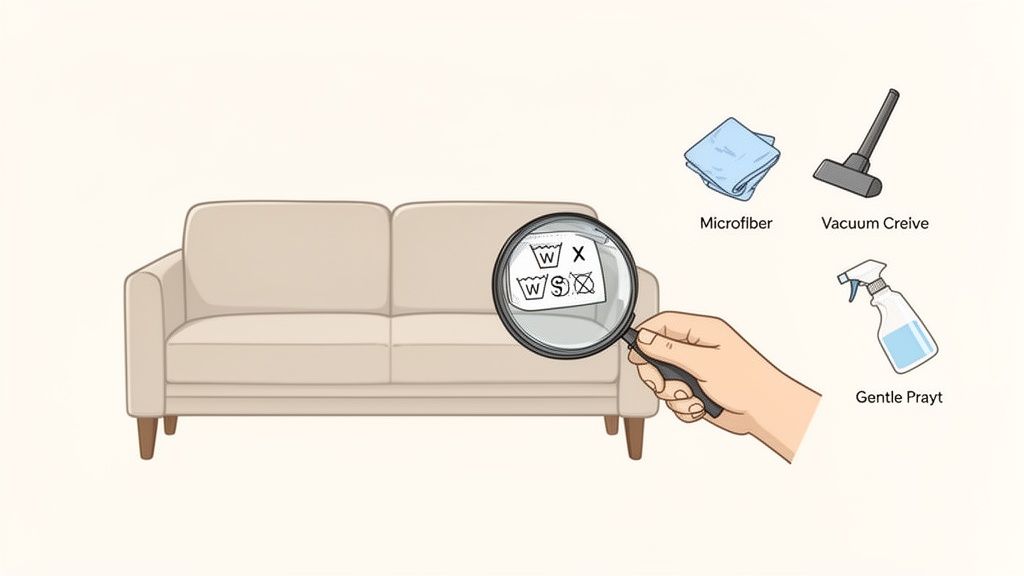
Before you even think about tackling a stain, the very first thing you need to do is a little detective work. Every fabric sofa has a secret weapon in the fight against messes: the manufacturer’s care tag.
This little label, usually tucked away under a cushion or along the frame, holds the key. It's marked with a simple code—W, S, W/S, or X—that tells you exactly what you can and can't use to clean it. Getting this wrong can lead to disaster (think water rings, discoloration, or worse), so this quick check is the most important step you'll take.
Decoding Your Sofa Before You Start Cleaning
A beautiful fabric sofa is more than just furniture. It’s the heart of your living room—the spot where your family gathers for movie nights and lazy Sunday afternoons. Here at Guynn Furniture, we've helped our neighbors in Galax, Independence, Hillsville, and the wider Southwestern Virginia and Northern North Carolina region find that perfect centerpiece since 1902, and we know life's little messes are part of the story.
Whether it's a brand-new La-Z-Boy recliner or a beloved Ashley sectional that's seen years of love, understanding its language will protect your investment.
Fabric Sofa Cleaning Codes At a Glance
Your sofa’s cleaning code is your roadmap. Use this quick reference guide to understand the cleaning code on your sofa's tag before you begin. For a deeper dive into different methods, this ultimate guide to couch cleaning solutions is a fantastic resource.
| Code | What It Means | Safe Cleaning Method |
|---|---|---|
| W | Water-Based Cleaner | You can use water, mild soap, or steam. This is the most common and forgiving code. |
| S | Solvent-Based Cleaner | Use a water-free solvent or dry-cleaning product. Do not use water! |
| W/S | Water or Solvent | You have options! Both water-based and solvent-based cleaners are safe to use. |
| X | Vacuum Only | The most delicate type. Do not use any liquid cleaners, only vacuuming and light brushing. |
These codes ensure you’re using the right approach for your home, whether you're in Southwestern Virginia or Northern North Carolina.
Our Helpful Neighbor Tip: Can't find the tag? Always play it safe and assume your sofa has an 'S' or 'X' code. Test any cleaner—even just plain water—on a small, hidden spot first. The back of the skirt or an area under the frame works great.
Assembling Your Cleaning Toolkit
Once you've cracked the code, putting together the right tools is easy. You don't need a bunch of expensive equipment, just a few household staples to get the job done right.
For most sofas (Codes W and W/S), you'll want to have these items ready to go:
- A vacuum with both an upholstery brush and a crevice attachment.
- A few clean, white microfiber cloths. Using colored cloths is risky, as the dye can sometimes transfer onto your upholstery.
- A bucket or small bowl for mixing your cleaning solution.
- A soft-bristle brush to gently work out stubborn stains.
Prepping with this simple kit means you're ready to handle spills without harming the beautiful Bassett or Ashley sofa you picked out. If you're curious about what makes different fabrics unique, you can learn more by exploring our guide on everything you need to know about upholstery materials. A few moments of preparation really can make all the difference.
The First Step to a Fresher Sofa: Vacuum Thoroughly
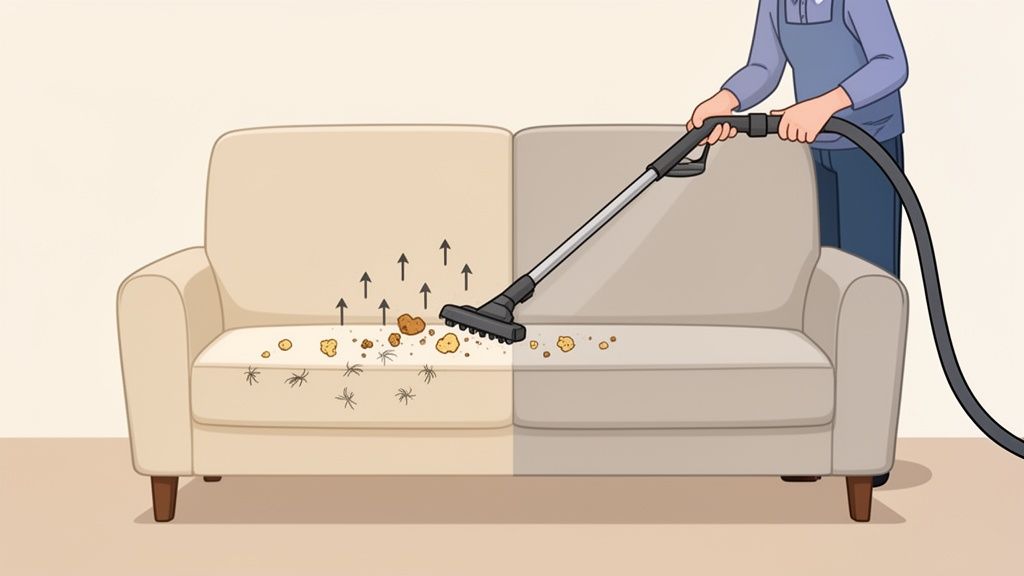
Before you even think about mixing a cleaning solution or tackling a single spot, the most important part of any sofa cleaning is a good, deep vacuuming. Think of it as laying the groundwork for a truly clean sofa. Over time, all the little bits of daily life—dust, crumbs, allergens, and pet dander—work their way deep into the fabric fibers.
This buildup does more than just look messy. It actually acts like fine sandpaper, slowly wearing down the upholstery and dulling its color every time you sit down. A proper vacuuming session lifts out all that damaging grit, which can instantly brighten your furniture and add years to its life.
Why Vacuuming Is Non-Negotiable
Skipping this step is a bit like trying to mop a dusty floor—you just end up pushing the grime around. When you add moisture or cleaner to a sofa that hasn't been vacuumed, all that dry soil turns into a muddy mess. This can make existing stains harder to remove and might even create new ones.
It’s why our expert design staff always reminds homeowners in Hillsville and Independence that a weekly vacuuming habit is the best defense against grime. It's a simple way to protect the investment you made in that beautiful Bassett or La-Z-Boy sofa and keep it looking fresh for years to come.
For more deep-cleaning ideas beyond just your sofa, check out our guide on how to get your home ready for spring.
The Right Way to Vacuum Your Sofa
To get the job done right, you'll need to break out your vacuum's attachments. Don't just run the main floor head over the cushions and call it a day.
Start with the Upholstery Attachment: This is that wide-mouthed tool, often with a fabric strip on it. Work in slow, overlapping rows across every surface—the back, the arms, and even the front skirt. A methodical approach ensures you won't miss a single spot.
Switch to the Crevice Tool: This is your secret weapon for a truly deep clean. Pull off all the cushions and use this long, skinny attachment to get into every single seam, tuft, and corner where crumbs and dust love to hide.
Deal with Pet Hair: If you have furry family members, you know the struggle is real. Before you even turn the vacuum on, try wiping down the fabric with a rubber glove or a squeegee. This simple trick clumps the pet hair together, making it much easier for the vacuum to suck it all up.
A Pro Tip from Our Family: For delicate fabrics or really stubborn pet hair, grab a lint roller or a specialized pet hair brush first. This lifts the surface debris gently, which lets your vacuum focus its power on the deep-down dust and dirt.
This first step doesn't take long, but the impact is huge. Honestly, it's the single most effective thing you can do to maintain the beauty and longevity of your furniture. By making it a regular habit, you're not just cleaning; you're caring for a central piece of your family's life.
Safe and Effective DIY Cleaning Solutions
You don't always need to grab an expensive, specialized cleaner off the shelf to get fantastic results. Here in our family, serving the Southwestern Virginia and Northern North Carolina communities for over a century, we've always appreciated simple, effective solutions. The best cleaning recipes often use gentle ingredients you already have in your kitchen, which is perfect for any family keeping an eye on their budget.
It’s the ideal way to keep your beautiful La-Z-Boy or Bassett sofa looking its best without spending a fortune. From a gentle all-purpose cleaner to a powerful deodorizer, these DIY solutions are easy to mix up and work wonders when used correctly.
The All-Purpose Vinegar Solution
White vinegar is a true cleaning powerhouse. Its mild acidity is perfect for cutting through everyday grime without being too harsh on most fabrics. It’s a fantastic choice for sofas with a "W" or "W/S" cleaning code.
Just mix equal parts distilled white vinegar and lukewarm water in a spray bottle. Give it a good shake to combine, and you're good to go. The vinegar smell might seem a bit strong at first, but don't worry—it disappears completely as the fabric dries, leaving your sofa fresh and clean.
This solution is my go-to for surface-level dirt and minor spills. It’s perfect for routine touch-ups.
Degreasing with Dish Soap
Greasy spots from snacks or takeout are a common headache, but a simple dish soap mix can lift them right out. The trick is to use a clear, dye-free dish soap to avoid any risk of transferring color onto your upholstery.
A great method is to mix one part dish soap with about four parts water. This formula is strong enough to break down oils without being aggressive on the fabric fibers. In fact, upholstery experts note that this simple mix, followed by gentle blotting and air drying, helps prevent 90% of color bleeding issues on compatible fabrics. You can find more details in this global fabric sofa cleaner report.
Dab a small amount of the soapy water onto a clean cloth, then gently blot the greasy spot from the outside in. To "rinse," just blot the area with a new cloth dampened with plain water.
Banishing Odors with Baking Soda
Over time, sofas can absorb odors from pets, food, and just daily life. Before you reach for a chemical spray, give baking soda a try. It’s a natural deodorizer that actually absorbs smells instead of just masking them.
Sprinkle a generous layer of baking soda over the entire surface of your sofa. You can use a soft brush to lightly work it into the fabric. For the best results, let it sit for at least an hour—or even overnight if you're dealing with tougher odors.
Once it's had time to work its magic, just vacuum it all up with your upholstery attachment. You’ll be amazed at how much fresher your sofa smells. For more tips on keeping your home fresh, check out our guide on mattress maintenance and cleaning.
A Crucial Tip from Our Design Staff: No matter which DIY solution you choose, always, always spot-test it first! Apply a tiny amount to an inconspicuous area, like the back of the sofa skirt or under a cushion. Let it dry completely to ensure it doesn't cause any discoloration or damage before you tackle the main event.
This simple safety check is something our expert design staff, including Debra Williams, stresses to every family we work with in Galax, Independence, and Hillsville. It’s the best way to clean with confidence and protect the furniture you love.
A Practical Guide to Treating Tough Stains
Life happens. Even in the most careful homes, a splash of coffee, a muddy paw print, or a tipped glass of wine during a party is inevitable. But those moments don't have to become permanent marks on your beautiful sofa. Think of us as your helpful neighbor—we're here to show you that even stubborn stains can be managed with the right approach and a little bit of confidence.
Knowing how to tackle a specific stain the moment it happens is the key to keeping your furniture looking brand new. Whether it's a treasured La-Z-Boy recliner that’s seen years of family gatherings or a new Ashley sectional for your home in Southwestern Virginia, you can act fast and effectively. It all comes down to understanding the stain itself and knowing the best way to lift it.
The Golden Rule: Act Fast and Blot Gently
If you take away just one thing, let it be this: act immediately. The longer a spill sits, the deeper it soaks into the fabric fibers, making it exponentially harder to remove. But how you act is just as important as how quickly. Always, always blot—never rub or scrub.
Rubbing a fresh stain just grinds it further into the upholstery. Even worse, it can damage the fabric fibers, causing them to fray or fade. Instead, grab a clean, dry white cloth and gently press down on the spill. Work from the outside of the stain inward to contain it. This technique helps pull the liquid up and out of the sofa instead of spreading it around.
Tackling Common Culprits
Different stains require different battle plans. You wouldn't use the same method for a greasy pizza mark as you would for a coffee ring. Here are our go-to methods for some of the most common spills we see in homes across Galax and Hillsville.
Red Wine and Coffee Spills: The second it happens, blot up as much liquid as you can. Next, lightly sprinkle the area with salt or baking soda. This little trick helps draw out even more of the moisture from deep within the fibers. Let it sit for a few minutes, then vacuum up the powder and treat whatever is left with a gentle DIY cleaner.
Grease and Oil Stains: For oily spots from food like pizza or popcorn, your first move is absorption. Sprinkle a generous amount of cornstarch or baking soda directly onto the stain. Let it sit for about 15-20 minutes; this gives it time to pull the grease out of the fabric. Once it's done its job, vacuum it all up.
This decision tree can help you quickly figure out which simple DIY solution is right for the job.
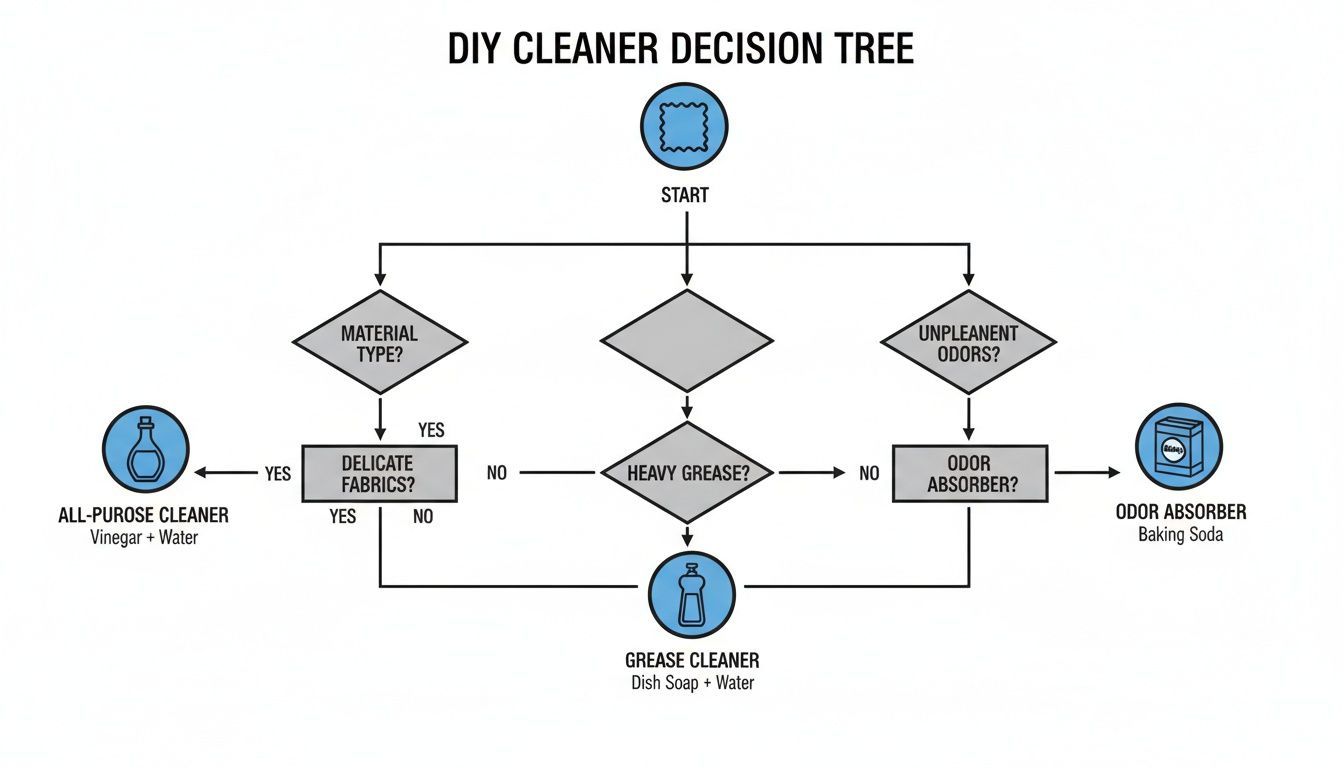
As you can see, simple kitchen staples like vinegar, dish soap, and baking soda are powerful tools when you know how to use them.
Pet Accidents and Lingering Odors
For those of us with furry family members, pet accidents are a familiar challenge. These stains are particularly tricky because you're dealing with both the discoloration and the odor-causing bacteria. For your Bassett sofa, a quick response is everything. Blotting stains within the first 5 minutes can remove up to 85% of the spill. To fight the smell, sprinkle baking soda over the area and let it sit overnight to absorb odors—this can slash bacteria by as much as 70% naturally.
Sometimes, though, those smells can be really stubborn. If you're dealing with a deep-set odor, it's helpful to learn how to permanently eliminate urine odor from upholstery to fully restore freshness.
Our Expert Design Staff's Advice: When treating any stain, always use a minimal amount of cleaning solution. Drenching the fabric can lead to water rings or, worse, push the stain deeper into the cushion. Less is almost always more.
When to Bring in the Professionals
While DIY methods are fantastic for most everyday spills, some stains are best left to the experts. Deeply set ink, large mystery spots, or delicate fabrics (especially those with an "S" or "X" cleaning code) often require a professional touch. If you’ve tried a gentle method and the stain won’t budge, calling an upholstery cleaner is a smart move to avoid causing accidental damage. They have specialized tools and solutions to tackle the toughest jobs safely.
For more insights on keeping your furniture looking great, check out our helpful guide on how to remove common furniture stains. A little know-how can protect your favorite pieces for years of comfort and enjoyment.
Maintaining Your Sofa for Long-Lasting Comfort
Once you’ve got your sofa looking sparkling clean, the real work begins—keeping it that way. Proactive maintenance is the secret ingredient to making sure your favorite piece of furniture stays beautiful and comfortable for years to come. At Guynn Furniture, we've helped our neighbors across Southwestern Virginia protect their investments since 1902, and we know that a little ongoing care goes a very long way.
These simple strategies are all about the long-term health of your sofa, helping you stop problems before they even start. From managing sun exposure to rotating cushions, these habits make a world of difference.
Create a Protective Barrier
One of the smartest things you can do for a newly cleaned sofa is apply a high-quality fabric protector spray. Think of it as an invisible shield for your upholstery. These sprays create a barrier that helps repel spills, giving you a chance to blot them up before they soak in and set forever.
For homes with kids and pets, this step is an absolute game-changer. It buys you precious extra seconds to react when spills happen, which can mean the difference between a quick cleanup and a lasting mark.
Manage Sun Exposure to Prevent Fading
Just like our skin, fabric is vulnerable to sun damage. The sun's ultraviolet (UV) rays are notorious for breaking down the dyes in upholstery, causing those vibrant colors to fade and look washed out. This is especially true for natural fibers like cotton and linen.
You don’t have to keep your living room in the dark, but a little strategic thinking can save your sofa.
- Positioning Matters: If you can, try to place your sofa where it won’t be blasted by direct, intense sunlight all day.
- Use Window Coverings: Blinds, curtains, or even sheer drapes can filter out the harshest rays, especially during peak afternoon hours.
- Rotate Your Sofa: If your room layout allows, occasionally rotating your sofa helps ensure any light exposure is distributed more evenly.
These small adjustments will keep your La-Z-Boy or Bassett furniture looking rich and colorful for many more years. For more seasonal tips, you might find our guide to the fall furniture maintenance checklist helpful.
Fluff and Rotate for Even Wear
Think about it—everyone in the family has their favorite spot on the couch! Over time, this leads to some cushions looking a bit flatter or more worn than others. Regular fluffing and rotating is the simple, effective fix.
Once a week when you’re tidying up, just take a moment to fluff the back and seat cushions. If your cushions are removable and reversible, flip and rotate them. This simple ritual prevents uneven wear, helps the cushions keep their shape, and ensures your sofa feels as comfortable as the day it was delivered.
A Quick Tip from Our Family: Don't forget the throw pillows! Giving them a good fluff and rotation keeps them from getting permanently squashed and adds to the overall fresh, cared-for look of your room.
Consistent care is so much more effective than reacting to damage after it's done. In fact, improper cleaning techniques are a major cause of fabric wear. Some data shows that a staggering 75% of fabric damage comes from incorrect methods—for instance, rubbing a stain instead of blotting can cause 50% more fiber wear. On the flip side, consistent, gentle care can slash the need for major repairs by as much as 35%, a huge benefit for busy families. You can discover more insights about fabric care trends on dataintelo.com.
Taking these small, proactive steps ensures that the sofa you chose for your home in Galax, Hillsville, or Independence remains a source of pride and comfort for years.
Your Sofa Cleaning Questions Answered
We get a lot of wonderful questions from our neighbors who stop by our showrooms in Galax, Independence, and Hillsville. Since we've been helping families in the Southwestern Virginia and Northern North Carolina region find the perfect furniture since 1902, we've heard just about everything! Here are our answers to some of the most common questions about how to clean a fabric sofa and keep it in top condition for years.
How Often Should I Deep Clean My Fabric Sofa?
For most households in our Southwestern Virginia communities, a thorough deep clean once or twice a year is perfect. This keeps your sofa looking and feeling fresh without overdoing it.
However, if your home is a bustling hub with pets, small children, or family members who suffer from allergies, you might find a seasonal deep clean (about four times a year) works better. The real takeaway is that consistent, light maintenance is always better than letting dirt build up. A weekly vacuuming routine is your best friend—it drastically reduces how often you'll need to do a more intensive clean.
As a simple rule, tackle spills the moment they happen and plan a deeper clean whenever the fabric starts to look a bit tired or dull.
Can I Use a Steam Cleaner on My Sofa?
Steam cleaning can be a fantastic, chemical-free way to refresh your upholstery, but it comes with a big "if." You can only use a steam cleaner if your sofa's fabric care tag gives you the green light. This is why checking that little tag is so critical!
- "W" or "W/S" Code: If your tag is marked with one of these codes, it means water-based cleaners are safe. Steam is just water, so you are generally good to go.
- "S" or "X" Code: If you see an "S" (Solvents only) or "X" (Vacuum only), you must avoid steam at all costs. The combination of high heat and moisture can cause permanent damage, like shrinking, water rings, or severe color bleeding.
Our Helpful Neighbor Tip: Even with a "W" code, always test your steam cleaner first. Use the lowest heat setting on a small, hidden spot—like the back of the skirt or under a cushion. Let it dry completely to ensure there's no discoloration before you steam the rest of the sofa.
What Is the Best Way to Remove Pet Odors?
Our furry friends are part of the family, but their signature smells can sometimes linger on our favorite furniture. Fortunately, pet odors are manageable with a few simple, natural tricks.
First, give your sofa the most thorough vacuuming you can. Use your crevice and upholstery tools to get every bit of pet hair, dander, and dirt out of the seams and off the fabric. Once that's done, sprinkle baking soda generously over the entire sofa. Don't be shy with it!
Let the baking soda sit for several hours, or even overnight if you're dealing with a particularly stubborn smell. It works by absorbing and neutralizing the odor-causing particles. Finally, vacuum it all up. For any remaining scent, you can lightly mist the fabric with a 50/50 solution of white vinegar and water. The vinegar smell will disappear as it dries, taking the unwanted pet odors with it.
What Can I Do If My Sofa Has an X Cleaning Code?
Seeing an "X" on your sofa's care tag can feel a bit daunting, but it just means your fabric requires a very specific, gentle touch. An "X" code is the most restrictive—it means you should only use a vacuum for cleaning. You must not apply any water or solvent-based cleaners, as they can cause irreversible staining, shrinking, or texture damage.
Your regular maintenance routine will simply be frequent and thorough vacuuming. If a spill happens, your only move is to blot it immediately with a clean, dry white cloth to absorb as much of the liquid as possible.
If a stain does set in, your safest and best option is to call a professional upholstery cleaner. Be sure to tell them your sofa has an "X" code so they can use the correct dry-cleaning method to treat it safely.
At Guynn Furniture & Mattress, we believe that a beautiful home should also be a comfortable and livable one. We've been helping families in Southwestern Virginia and Northern North Carolina find durable, beautiful pieces from brands like La-Z-Boy, Ashley, and Bassett for generations. We know that life can be messy, and with our large in-stock selection, you don't have to wait to find the perfect piece for your family. And with our Low Price Promise and free in-home delivery and setup within 60 miles, we make it easy.
Visit our showrooms in Galax, Independence, or Hillsville to test the comfort for yourself.
Schedule a consultation with our design team to start planning your dream room today.
Browse our selection online at guynnfurniture.net.