Best Sectional Sofa Pet Friendly Options for 2026


You know the moment. Your dog hops onto the sofa after a walk, your cat picks one corner cushion as its throne, and suddenly the piece you loved starts looking tired long before it should. Fur settles into the fabric. Claws catch on loose weave. One small accident turns into a stain that never fully disappears.
A lot of families across Southwestern Virginia and Northern North Carolina run into the same problem. They want a living room that feels warm and pulled together, but they also want a home where pets can be pets. The good news is that you don't have to choose one or the other. A smart sectional sofa pet friendly setup can give you comfort, durability, and a room that still feels like your style.
Table of Contents
- Your Pet-Friendly Living Room Starts Here
- The Ultimate Guide to Pet-Friendly Fabrics and Colors
- Built to Last What to Look for Under the Cushions
- Finding the Right Fit for Your Family and Home
- Protecting Your Investment with Smart Care
- Your Dream Pet-Friendly Sectional Awaits
Your Pet-Friendly Living Room Starts Here
One Hillsville family described it in a way that probably sounds familiar. They loved their old sofa until their lab decided the chaise was his afternoon nap spot, their cat claimed the arm, and the whole piece started wearing unevenly. What looked like a furniture problem was really a lifestyle mismatch. They didn't need a formal sofa. They needed something built for daily life with pets.
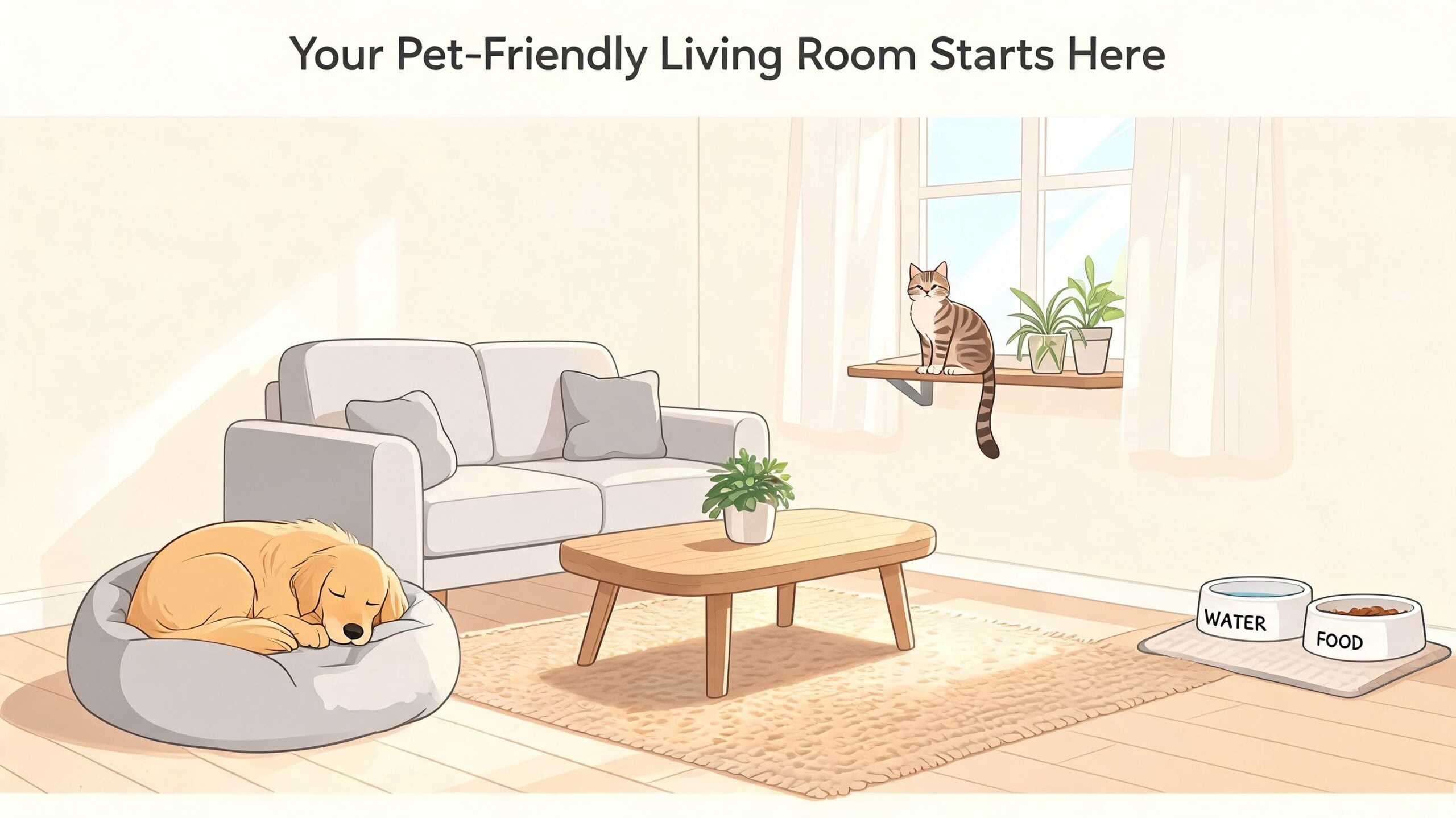
That's why so many pet owners end up happier with a sectional. According to the American Pet Products Association, 51% of U.S. households, approximately 68 million homes, own at least one dog, and sectional sofas often work better in those homes because their L-shaped designs create dedicated zones where pets naturally settle, concentrating wear in one area instead of across the whole sofa, as noted in this APPA-based overview of pet-friendly sectionals.
Why sectionals make life easier
A sectional gives your household a little order without feeling strict. People tend to claim one seat. Pets do the same.
- Dogs often gravitate to the chaise: That can keep the rest of the seating looking fresher.
- Cats like edges and corners: A sectional naturally creates those preferred perches.
- Families get more usable space: Movie nights, naps, and everyday lounging feel less crowded.
Practical rule: If your pet always heads to the same spot, a sectional can work with that habit instead of fighting it.
Around Galax, Independence, and the wider Southwestern Virginia region, we've helped families think through this for generations. Since 1902, local shoppers have wanted the same basic thing. Furniture that feels inviting, holds up, and doesn't make life harder than it needs to be.
Your pet-friendly living room may go beyond the sofa, too. If muddy paws are part of the daily routine, some homeowners also look at outdoor solutions like synthetic turf for residential pet areas to cut down on the dirt and debris that gets tracked inside.
If you're starting your search, our guide to furniture choices for homes with pets can help you think through the bigger picture before you buy.
The Ultimate Guide to Pet-Friendly Fabrics and Colors
Fabric is where most pet-friendly sofa decisions are won or lost. A beautiful sectional can still be the wrong choice if the upholstery grabs every hair, snags easily, or holds onto spills. This is usually where shoppers get overwhelmed, because two sofas can look almost identical from across the room but perform very differently once real life starts.
Why fabric matters more than almost anything else
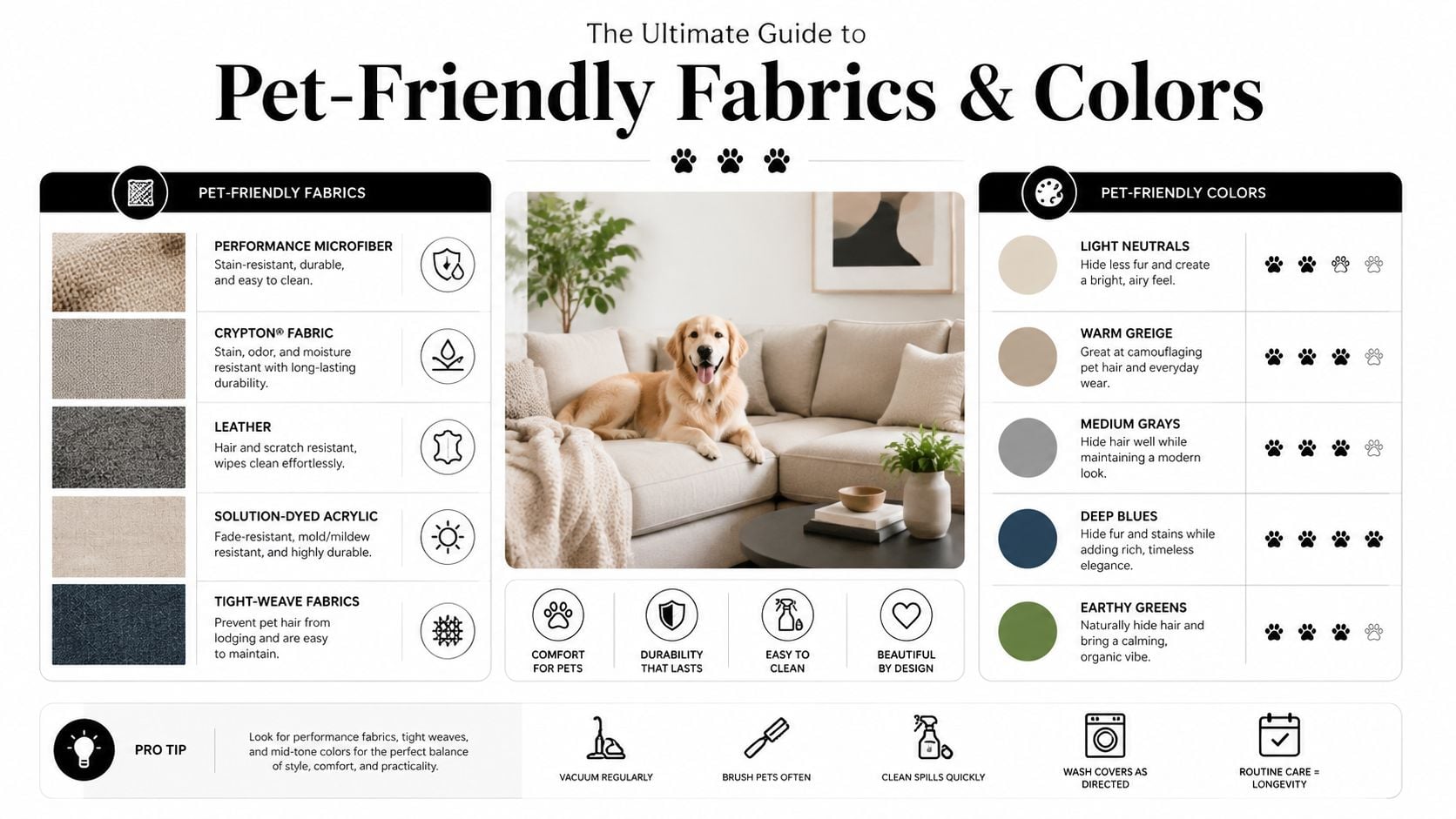
The most useful phrase to remember is tight weave. The best pet-friendly fabrics use high-denier synthetic fibers with a tight weave, which can reduce pet hair adhesion by up to 80% compared to natural fabrics, and modern performance fabrics can repel liquids so you can often spot-clean in under 5 minutes, according to this guide to dog-friendly sectional fabrics.
That matters for everyday reasons:
- Less trapped fur: Hair sits closer to the surface, so vacuuming is easier.
- Fewer snags: Claws have a harder time catching in tightly woven fabric.
- Faster cleanup: Accidents are less likely to soak in right away.
If you've ever wondered why one sofa seems to attract every strand of pet hair while another wipes clean with a lint roller, this is usually the reason.
Pet-Friendly Fabric Comparison
| Fabric Type | Scratch Resistance | Stain Resistance | Easy to Clean | Best For |
|---|---|---|---|---|
| Microfiber | High | High | Very easy | Busy homes with dogs, cats, and kids |
| Performance fabric | High | High | Very easy | Families who want softness with stronger spill protection |
| Leather | Moderate to high | High | Easy | Homes focused on wipe-clean maintenance |
| Chenille | Moderate | Moderate | Moderate | Lower-claw households that still want softness |
| Linen or loose-weave natural fabric | Low | Low | Harder | Better avoided in most pet-heavy homes |
A few plain-English notes help here.
Microfiber is often the easiest starting point. It feels soft, doesn't usually have that cold touch some people dislike in leather, and tends to do a good job with fur and spot cleaning.
Performance fabrics are popular because they balance comfort with practical cleanup. That makes them a strong fit for homes where pets are on the furniture every day.
Leather can work well, especially if your biggest concern is wiping up messes fast. But some families don't love how it feels in every season, and visible claw marks can bother detail-oriented shoppers.
How to choose the right color
Color doesn't make a sofa stronger, but it does make your life easier.
- Match to your pet loosely, not perfectly: A charcoal dog on a pure white sofa will always show up. A heathered gray or warm taupe hides more.
- Mid-tones are forgiving: They disguise stray hair better than very dark or very light solids.
- Small texture helps: Flecks, tonal variation, and soft pattern can hide daily wear better than flat, uniform color.
- Avoid overly delicate looks: If a fabric already looks formal in the store, it may feel stressful at home.
A sectional should let you relax in your living room, not make you nervous every time the dog jumps up.
If you're comparing upholstery options and the terminology starts sounding like a foreign language, this plain-English guide to understanding upholstery fabric helps sort out the basics.
Built to Last What to Look for Under the Cushions
A sofa can look sturdy and still wear out fast. Pets test the parts you don't see. They launch onto the seat, push off the arm, circle before lying down, and repeat those motions every day. That's why a sectional sofa pet friendly design needs more than durable fabric. It needs solid construction underneath.
Why the frame matters
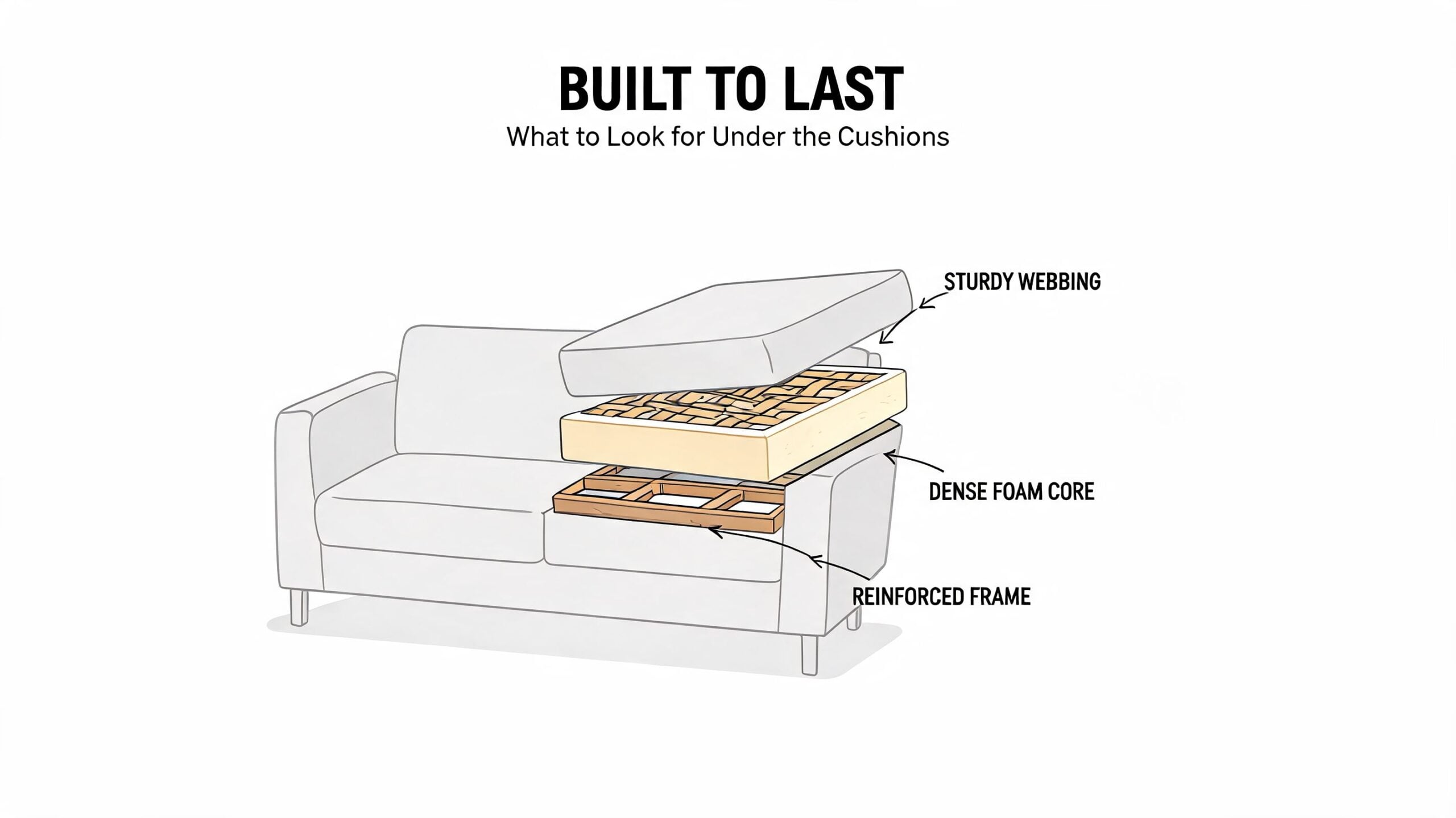
The frame is the skeleton of the whole piece. If it flexes too much, you'll hear creaks, notice wobble, and see cushions lose shape sooner.
Kiln-dried solid wood matters because the drying process helps reduce excess moisture in the wood before the furniture is built. In plain terms, that means the frame is less likely to warp or shift over time than lower-grade materials. For a family with a big dog that jumps on and off the sofa all day, that stability matters.
Bassett and La-Z-Boy are two names many shoppers recognize for this reason. The surface may catch your eye first, but the long-term comfort often comes from the frame and support system hidden below.
What cushion specs actually mean
Cushion terms can sound technical, but the practical takeaway is simple. A firmer, denser cushion usually handles pet traffic better than an overly soft one.
According to this overview of pet-friendly sectional construction, pet-friendly sectionals often feature shorter legs of 4 to 6 inches and firm, high-density foam cushions with a minimum density of 2.0 lb/ft³. That design helps minimize tipping risks from large dogs jumping up and reduces foam compression by 40% over 5 years compared to softer, shallower designs.
Here's what that means in real life:
- Shorter legs feel more planted: They reduce that top-heavy look and lower the chance of wobble.
- Dense foam keeps its shape longer: You don't sink into the same pet-worn spot as quickly.
- Firmer seats resist digging paws better: Especially helpful for dogs that circle before settling down.
Look for a sectional that feels supportive when you sit down the first time. If it already feels overly soft in the showroom, it may not wear the way you hope at home.
Another easy check is seat depth. A deep chaise can be wonderful for lounging, but the seat still needs structure. If the cushion collapses quickly when you press on it, that's a clue to keep looking.
For a simple shopping checklist, this guide to what to inspect in a new sofa or chair helps you evaluate quality without needing industry jargon.
Finding the Right Fit for Your Family and Home
Even a durable sectional can feel wrong if the size or layout doesn't match your room. Many people get tripped up by this. They focus on fabric swatches and arm styles, then discover too late that the chaise blocks a walkway or the corner crowds the whole space.
Start with the room, not the sofa
Before you decide between an L-shape, chaise sectional, or larger setup, study how your room works on an ordinary day.
Ask yourself:
- Where do people walk most often? You don't want the longest section cutting through your main traffic path.
- Where does your pet settle? Near a window, close to the family, or in a tucked-away corner?
- Do you need open floor space? That matters for playtime, dog beds, or making the room feel breathable.
A practical trick is to mark the sectional footprint on the floor with painter's tape. Then live with it for a day or two. Walk around it. Open nearby doors. Notice whether the room still feels comfortable.
Match the sectional to real life
Different homes need different layouts.
For smaller living rooms, a compact L-shape often gives you the sectional feel without swallowing the room. This works well when you want extra seating but still need space for side tables, a pet bed, or easy movement.
For households that lounge every evening, a chaise can be the sweet spot. One end becomes the natural sprawl zone for people or pets, and the rest of the seating stays more structured.
For open rooms, a sectional can help define the living area without adding extra furniture. It creates an anchor, especially if your space flows into dining or kitchen areas.
Local help makes the decision easier
Local, in-person shopping can save a lot of second-guessing. In our area, families from Galax, Independence, Hillsville, and across Southwestern Virginia and Northern North Carolina often want help visualizing scale, fabric, and layout together. An experienced design eye can catch issues before they become expensive frustrations.
At Guynn Furniture & Mattress, shoppers can work with expert design staff, including Debra Williams, to think through room layout, fabric choices, and how a sectional will function with everyday family life. That's especially helpful if you're balancing pets, traffic flow, and a style update all at once.
A few local advantages matter, too:
- Large in-stock options: Helpful if your current sofa has already reached the end of the road.
- Free in-home delivery and setup within 60 miles: That covers many homes across Southwestern Virginia and nearby Northern North Carolina.
- A no-pressure atmosphere: You can sit, compare, and think without feeling rushed.
If you're not sure whether a sectional will fit through the door, around the corner, or within your room, this guide on how to measure furniture before you buy is worth reviewing before you shop.
Protecting Your Investment with Smart Care
A pet-friendly sectional should be easy to live with, but that doesn't mean maintenance takes care of itself. A few simple habits can keep the fabric looking fresher, help cushions wear more evenly, and make cleanup feel routine instead of stressful.
A simple care routine that works
You don't need an elaborate schedule. Consistency matters more than intensity.
- Vacuum regularly: Use a soft brush attachment to lift fur before it settles deeper into the weave.
- Blot spills fast: Press, don't rub. Rubbing can push the mess farther into the fabric.
- Rotate cushions when possible: This helps spread out everyday wear.
- Keep a pet throw nearby: It's easier to wash one favorite blanket than deep-clean the whole sectional constantly.
If you're moving and want to keep the sofa protected during transport or storage, durable sofa protection for home movers can be a practical add-on. Covers like these help shield upholstery from dirt, moisture, and scuffs before the sectional even reaches its new spot.
The fastest way to make a stain permanent is to wait and hope it disappears on its own.
For everyday maintenance, stick to the cleaning guidance that matches your upholstery type. A fabric-safe method for microfiber may not be the right choice for another material. If you want a simple starting point, this guide on cleaning a fabric sofa the right way gives a useful baseline.
Think beyond the price tag
A sofa isn't just a purchase. It's a long-term household tool. For pet-owning families, focusing on value over time often leads to a better result than chasing the lowest upfront cost.
According to this discussion of long-term value in pet-friendly sectionals, some fabrics may save money upfront but can cost double in repairs or cleaning over the life of the sofa, while brands with lifetime warranties on frames and cushions can yield a 2.8x return on investment for multi-pet homes.
That's why warranty details matter. It's also why shoppers often appreciate clear store policies. If price is part of your decision, it helps to know there are local options with a Low Price Promise, local competitor matching, a 30-day price guarantee, and financing choices that make a better-built sectional more manageable.
La-Z-Boy, Ashley, and Bassett are all worth a close look when you want that balance of comfort and durability. And if you're furnishing the whole home, it doesn't hurt to think ahead about connected purchases like Sealy or Therapedic mattresses so the comfort level carries through the house.
Your Dream Pet-Friendly Sectional Awaits
A good pet-friendly sectional doesn't ask you to live cautiously. It lets your home feel like home. The dog can stretch out. The cat can find a corner perch. Your family can relax without wincing at every paw print or tuft of fur.
The big ideas are simple. Choose a fabric that resists hair and messes. Pay attention to the frame and cushion support. Make sure the size works for your room and your daily routines. Then protect your purchase with easy care and smart maintenance.
For families around Galax, Independence, Hillsville, and the wider Southwestern Virginia and Northern North Carolina region, it often helps to see and feel those differences in person. Sit on the cushion. Run your hand across the fabric. Check whether the sectional feels stable, comfortable, and realistic for your home.
If you want a few extra upkeep ideas after you buy, professional furniture grooming tips from Pet Magasin offer helpful reminders for staying ahead of fur and daily buildup.
You don't need a perfect house to have a beautiful living room. You just need furniture chosen with real life in mind.
Visit Guynn Furniture & Mattress to explore pet-friendly sectionals in a no-pressure atmosphere. We've served families since 1902 across Galax, Independence, Hillsville, and the wider Southwestern Virginia and Northern North Carolina region, with free in-home delivery and setup within 60 miles. Visit our showrooms in Galax, Independence, or Hillsville to test the comfort for yourself. Schedule a consultation with our design team to start planning your dream room today. Browse our selection online at guynnfurniture.net.