Entryway Chest of Drawers: How to Choose and Style Yours


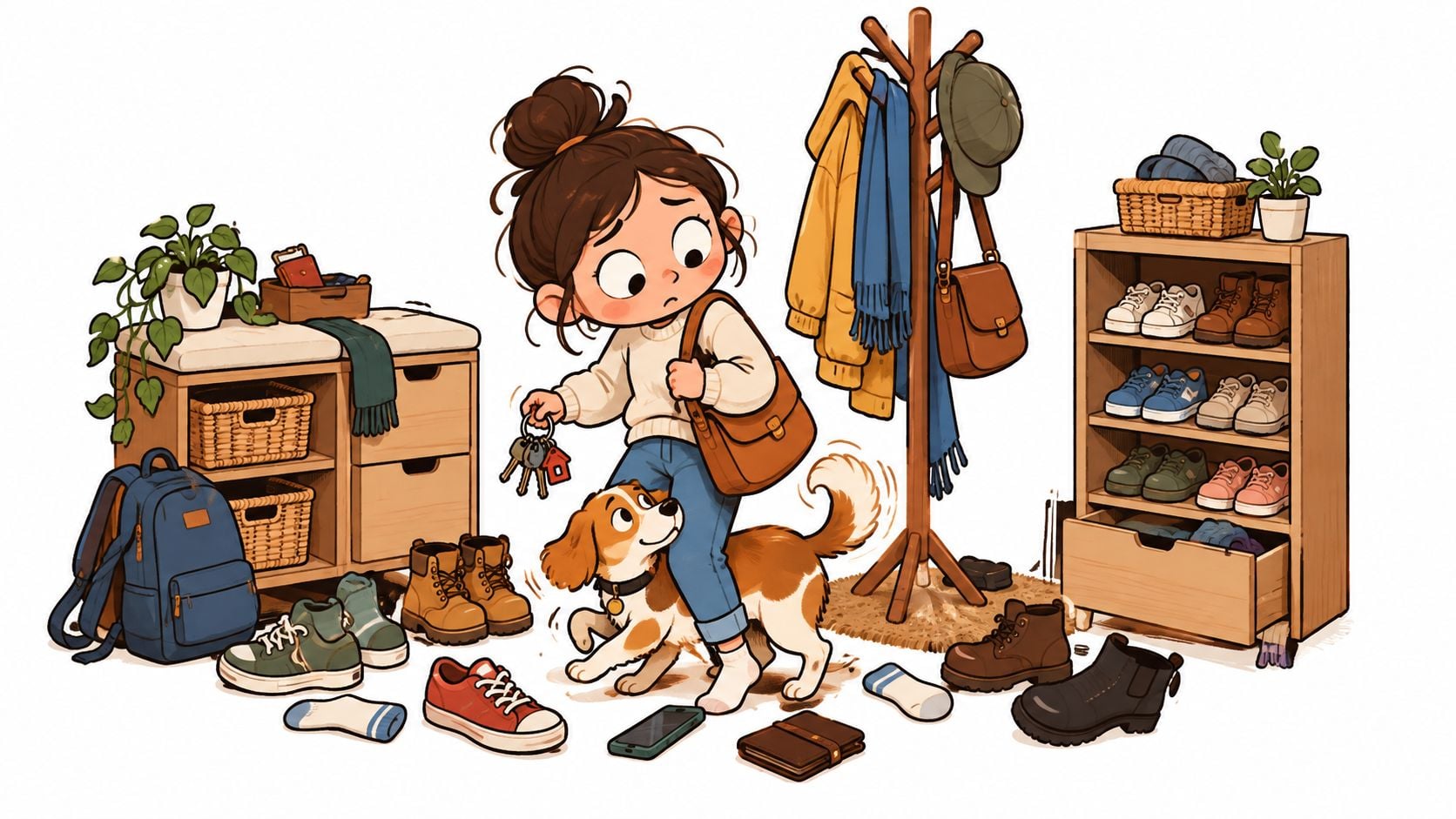
Monday morning starts at the front door. Someone is searching for keys, a child needs a hat, the dog is circling everyone's feet, and yesterday's mail has landed on the nearest flat surface. A coat rack can hold jackets, but it can't sort the small items that make leaving the house feel rushed.
An entryway chest of drawers can create a dependable landing zone for keys, mail, gloves, pet accessories, and seasonal items. The right piece also gives the foyer a finished appearance without sacrificing the clear path your household needs. The important choice isn't whether the chest looks good. It's whether the piece is safe, accessible, deliverable, and useful as your routines change.
Why Your Entryway Needs More Than a Coat Rack
In a busy Southwestern Virginia household, the entryway often handles more work than any other small area in the home. A child drops a backpack near the door, a parent sets down grocery bags, and the dog waits for a leash that has somehow disappeared. Without closed storage, those objects spread across benches, consoles, stairs, and kitchen counters.
A chest of drawers gives each category a home. The top drawer can hold daily essentials such as gloves, dog leads, reusable shopping bags, and sunglasses. Lower drawers can accommodate seasonal accessories, shoe-care supplies, or items used less often. The surface becomes a place for a lamp, mirror, or small tray rather than a permanent pile of mail.
A practical piece with a long history
The chest of drawers developed in Europe during the mid-17th century, evolving from a traditional chest that gained drawers in its lower section. By the 1680s, the form had become a dedicated drawer-based cabinet, often combining three long drawers with two shorter drawers above them. That arrangement separated belongings by category and made them easier to reach without emptying an entire compartment. The Metropolitan Museum of Art documents this development.
The design later expanded into taller forms known in England as tallboys and in America as highboys. American examples from Salem, New York, and Boston show how cabinetmakers adapted the form for colonial homes, using features such as dovetailed joints, turned legs, veneers, and decorative borders. The Metropolitan Museum of Art's American furniture collection provides documented examples.
That history explains why the format still works today. It combines concealed organization, durable construction, and visible design presence in one manageable piece.
Practical rule: The best entryway storage hides routine clutter while keeping the items used every day within easy reach.
Make the surface earn its place
A chest works especially well when the top supports the household's arrival and departure habits. A shallow tray can gather keys and sunglasses, while a mirror offers a last glance before leaving. For ideas about storing soft accessories and household textiles without creating another pile, the That Blanket Co storage guide offers useful organizing inspiration.
The entryway chest should also relate to the rest of the foyer. A traditional wood finish can reinforce a classic home, while a simpler silhouette may suit a renovated space. Guidance on proportion and surface use can be found in this overview of the elements of an entry table.
Measuring Your Space for Real Life Use
You see it all the time in entryways. The chest fits the wall, looks right from the doorway, then causes trouble the first busy morning. A drawer opens into the walking path, someone bends to grab shoes, another person comes in with bags, and the whole area feels tight. That is why measuring an entryway means more than checking wall width.
Start with the room in motion, not the room sitting empty. Measure the narrowest point between the front of the chest and whatever sits opposite it, whether that is a wall, railing, door, or stair feature. Then follow the path people naturally take from the front door to the rooms they use most. A passage that feels acceptable when empty may become difficult when a drawer is fully extended or someone is carrying groceries.
A practical rule is to leave 60 to 90 centimeters, approximately 24 to 35 inches, in front of anything that opens, including drawers. This furniture-clearance guide explains the open-drawer footprint. Count that clearance as part of the chest's working footprint, because your family will use that space every day.
Measure in the order the room is used
Use this checklist as you measure:
- Wall area: Measure the usable width, including baseboards, trim, outlets, switches, and floor registers.
- Chest depth: Record the deepest point, including hardware such as knobs or pulls.
- Open-drawer reach: Mark the full extension of each drawer, then measure what walking space remains.
- Door movement: Check the swing of the front door, closet doors, and nearby interior doors.
- Approach space: Leave a clear floor area of 760 × 1,220 millimeters, or 30 × 48 inches, for wheelchair approach and use, following Canadian accessible-housing guidance. The accessibility guidance defines this clear floor area
- Route width and obstacles: A continuous route works best at 915 millimeters, or 36 inches, wide, and 1,220 millimeters, or 48 inches gives a more comfortable hallway width for many homes. Note thresholds, stair turns, banisters, low fixtures, and narrow corners as you measure.
Real-life trade-offs matter here. A deeper chest may give you more storage today, but a shallower piece often serves the household better over time if it keeps the route easier for children, older relatives, guests, and anyone using mobility equipment.
Before ordering, outline the piece on the floor with painter's tape or paper, then mark the drawer extension too. That quick test shows whether the chest works during actual arrivals and departures, not just on a floor plan.
If you want a fuller measuring process, this guide on how to measure a room for furniture walks through the basics clearly. Measure the furniture, the route, and the way people will live around both.
Choosing the Right Configuration for Your Home
Configuration should follow the entryway's job. A tall, narrow chest concentrates storage vertically and can make sense where floor space is limited. A wider, lower chest offers a more generous surface for a mirror, lamp, tray, or decorative arrangement, but it takes more wall width and may visually dominate a small foyer.
A household with children, pets, and heavy foot traffic may benefit from broad drawers that organize bulky items without requiring constant stacking. A quieter entryway may need only a few shallow drawers for keys, mail, gloves, and accessories. More drawers don't automatically mean better organization. Too many small compartments can encourage random storage and make the top feel crowded.
Compare the common formats
| Configuration | What works well | What can go wrong |
|---|---|---|
| Tall and narrow | Uses wall height and preserves floor width | The top may be hard to reach, and the unit can feel visually heavy |
| Wide and low | Provides a useful surface for a mirror, lamp, and tray | It may narrow the route or leave too little room for open drawers |
| Moderate depth with broad drawers | Balances capacity and accessibility | It may not hold unusually bulky items |
| Modular or adaptable | Can change with moving, remodeling, or household routines | Connectors, charging components, or removable parts need thoughtful maintenance |
The top surface deserves its own decision. A family that checks weather, sorts mail, and gathers keys may need enough room for a lamp and a tray. A household with a narrow passage may be better served by wall lighting and a smaller top. Deep drawers increase capacity, but they also extend farther into the circulation path when opened.
Plan for changing routines
Multifunctional furniture is gaining attention because households want storage, lighting, charging, connectivity, and space efficiency in fewer pieces. Market reporting projects that storage furniture will grow at a 7.6% compound annual rate from 2026 to 2033, while another report states that multifunctional furniture penetration increased 27% between 2021 and 2024. The market overview reports the storage-furniture projection.
Those figures describe a broad market direction, not a reason to buy the largest possible chest. The more useful question is what the piece must do over time:
- Today: Hold keys, mail, gloves, pet gear, and daily accessories.
- After a move: Fit a different wall or serve as bedroom or office storage.
- As technology changes: Provide an accessible charging location without trapping cables.
- As the household ages: Keep commonly used items within comfortable reach.
- During seasonal changes: Accept removable organizers rather than permanent layouts.
A moderately sized chest with flexible inserts and sensible cable management may offer more lasting value than an oversized statement piece. A practical guide to buying chests, dressers, and cabinets can help refine the construction and configuration questions before purchase.
Ensuring Safety and Stability
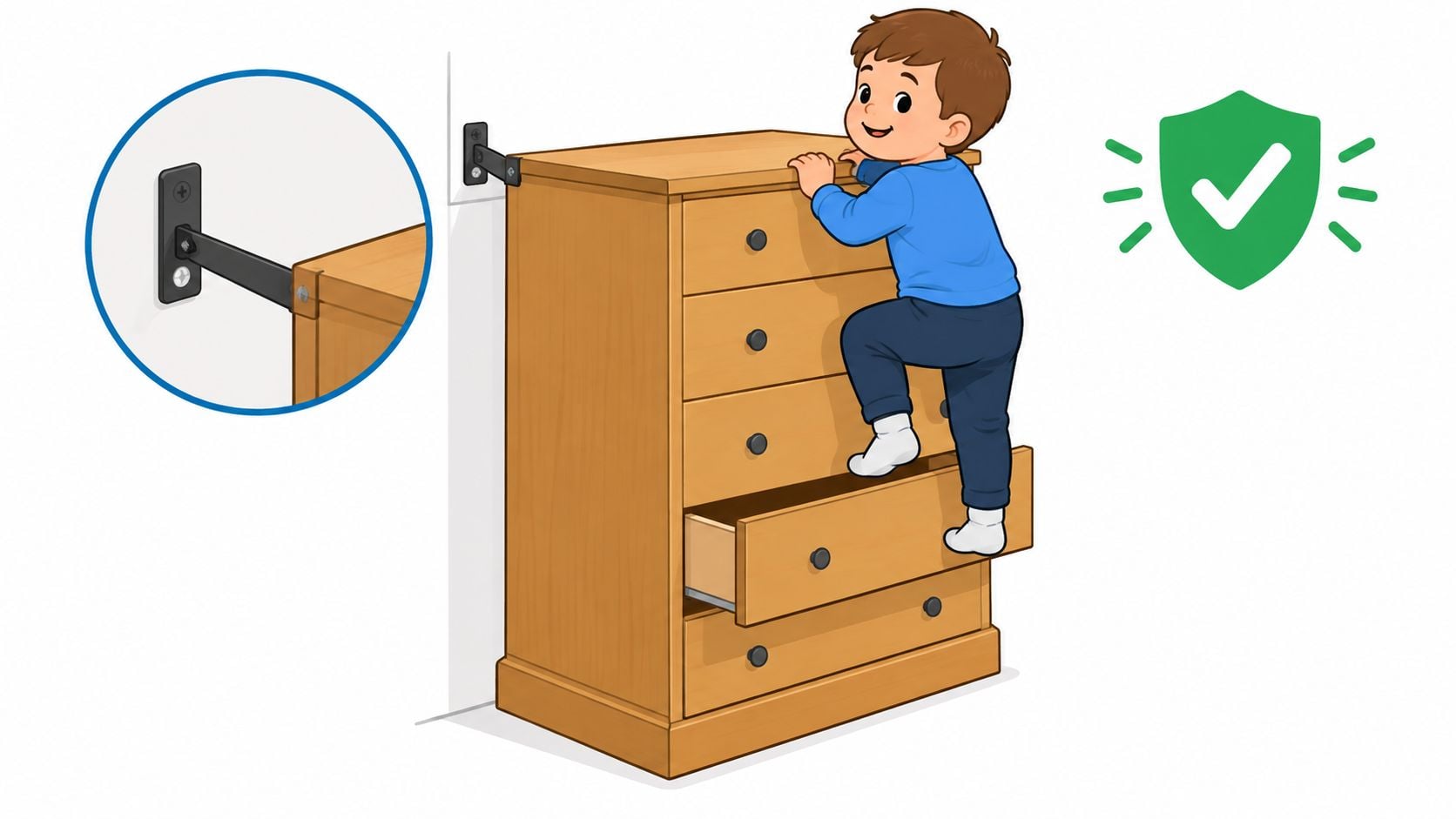
An entryway chest deserves the same safety attention as any other drawer furniture, especially when children or pets live in the home. The U.S. Consumer Product Safety Commission reported 234 fatalities associated with clothing-storage-unit tip-overs from January 2000 through April 2022, including 199 children. The agency also estimated 84,100 related emergency-department injuries from 2006 through 2021, averaging about 5,300 injuries annually. The CPSC safety release provides these figures.
Those numbers make anchoring a basic installation requirement, not an optional accessory.
Use a three-stage safety screen
First, identify the furniture category. U.S. Consumer Product Safety Commission guidance includes chests, dressers, bureaus, and similar drawer furniture among clothing-storage units when they're intended for clothing storage. An entryway chest may be marketed differently, so the intended use and construction matter.
Second, verify stability performance. Covered units must meet the federal clothing-storage-unit stability standard that took effect September 1, 2023. The standard includes a clothing-load test in which enclosed storage is loaded at 8.5 pounds per cubic foot when more than half of the storage volume is extended, with the unit remaining stable for 30 seconds. The CPSC business guidance explains the federal stability requirements.
CPSC guidance also describes tests involving loaded drawers, multiple open drawers, a 10-pound horizontal force applied at the highest handhold up to 56 inches high for 10 seconds, and a carpet test involving a simulated 60-pound child load for 30 seconds. The CPSC FAQ details the stability-screening conditions.
Third, install the restraint correctly. Secure the supplied anti-tip restraint into a structural wall member, check that the chest is level, and confirm that it doesn't rock. The restraint isn't a substitute for a stable cabinet. CPSC states that the unit must pass stability requirements without the anti-tip kit installed, while the kit must meet ASTM F3096 performance requirements.
Favor safer construction features
Families should look for drawer interlocks, substantial rear bracing, a broad or deep footprint, and drawers that can't all extend at once. These features reduce opportunities for a child to create an unstable load, but anchoring remains recommended even when the furniture passes testing.
The installation should be treated as part of the purchase. Professional furniture installation services can help confirm placement, leveling, and restraint attachment, particularly when the wall construction or furniture weight makes do-it-yourself installation uncertain.
Styling Your Entryway with Confidence
Styling works best after function has been settled. A chest that blocks the route can't be rescued by a beautiful lamp, and a crowded surface won't feel welcoming no matter how carefully the objects are arranged.
Begin with the drawer interiors. Assign the top drawer to daily items, place seasonal accessories where they're easy to reach when needed, and reserve the bottom drawer for less frequent supplies. Removable baskets or fabric organizers can keep gloves, scarves, pet accessories, and small household items from sliding into one another.
Build a useful composition
The surface needs visual balance and practical restraint. A mirror helps reflect light and supports a last check before leaving. A lamp can soften an otherwise dark entrance, while a tray gives keys, sunglasses, and mail a defined landing place. If the hallway is tight, wall lighting may preserve more usable surface than a table lamp.
A simple arrangement might include:
- One vertical element: A mirror, lamp, or framed piece that draws the eye upward.
- One practical container: A tray or shallow dish for daily essentials.
- One personal detail: A small photograph, ceramic object, or seasonal accent.
- Open space: Enough unused surface to keep the chest from becoming another drop zone.
The composition should match how the home operates. Families with young children and pets need secure, stable decor rather than fragile objects near the edge. A household that receives frequent deliveries may need the top to remain mostly clear for packages and mail.
Let style support calm
Warm wood can make a rural or traditional foyer feel established, while clean lines can suit a remodeled entrance. Decorative hardware adds character, but pulls should remain comfortable to use and easy to grasp. A mirror's frame, the chest's finish, and nearby flooring should relate without requiring an exact match.
For households searching for artwork that adds personality without consuming floor space, entryway canvas prints can provide a useful finishing direction. The goal isn't to fill every visible surface. A calm entryway usually has a few deliberate elements and enough open space to make arrival feel easy.
The entryway mirror ideas can help with proportion, placement, and the relationship between the chest and the wall above it. A well-styled chest should feel like part of the home's rhythm, not a display that requires constant rearranging.
Delivery and Care Tips
A delivery problem usually shows up at the worst moment. The chest looks right on paper, then gets stuck at the front door or jams at a tight hallway turn while everyone is standing there with no good options.
Check the route before you buy. Measure every opening the chest must pass through, including doorways, hall widths, stairwells, turns, banisters, moldings, thresholds, low light fixtures, and elevators. Then compare the piece's width, height, depth, and diagonal depth to the narrowest point on that path. If the chest has to travel upright to make a turn, the opening height has to clear that dimension. A few careful measurements now can prevent damage to the piece, the walls, and your patience.
Prepare the home before arrival
Clear the path fully before delivery day.
Move rugs, shoes, baskets, boxes, and fragile decor out of the way. Open doors all the way, protect corners that chip easily, and mark the exact wall where the chest will sit so the crew is not shifting a heavy piece back and forth in a busy entry. If you plan to anchor the chest, leave enough access for the installer to reach the wall attachment point without dragging other furniture across the floor.
Guynn Furniture & Mattress offers Free in-home delivery and setup within 60 miles. For an entryway chest, that service matters because proper setup includes more than dropping the piece inside. The chest should be placed, leveled, checked for rocking, and secured so it supports everyday traffic safely from the start.
Protect the finish and the function
Regular care is simple, but it works best when done consistently:
- Dust gently: Use a soft, dry cloth so grit does not scratch the surface.
- Clean cautiously: Skip harsh cleaners that can wear down the finish.
- Manage moisture: Wipe spills quickly, especially on the top and drawer fronts.
- Check hardware: Tighten loose pulls and make sure drawers open and close smoothly.
- Keep restraints secure: Recheck the anti-tip connection after any move or room shift.
- Respect drawer limits: Avoid overloading a single drawer or storing heavy items where children can reach them.
Good care also means using the chest in a way that fits real household patterns. If children grab gloves from the bottom drawer every morning, keep heavier items lower and the top surface clear enough to avoid crowding the entrance. That small adjustment helps the piece stay stable and useful as family routines change.
Guynn has served Galax, Independence, Hillsville, and the wider Southwestern Virginia and Northern North Carolina region since 1902. The store offers a no-pressure atmosphere, expert design help including Debra Williams, and a large in-stock selection for immediate delivery from brands such as La-Z-Boy, Ashley, Bassett, Sealy, and Therapedic. Its Low Price Promise also includes a 30-day price guarantee, which gives value-focused households a clear way to compare.
Visit Guynn Furniture & Mattress in Galax, Independence, or Hillsville to test entryway pieces in person and discuss delivery, anchoring, and room fit. Schedule a consultation with the design team or browse the selection online at guynnfurniture.net.