


Pillow Top Mattress vs Memory Foam Comfort Compared


A couple can agree on almost everything about a bedroom and still disagree at bedtime. One person may want a cloud-like pillow top mattress, while the other prefers the close, body-hugging contour of memory foam. Since a mattress is a major household purchase, that uncertainty can make shopping feel overwhelming and expensive.
The phrase pillow top mattress vs memory foam sounds like a simple choice between two mattress types. It isn't. A pillow top describes an added construction feature, while memory foam describes a material. A pillow top can even contain memory foam, so the more useful question is what the complete sleep system is made of.
A practical ultimate guide for choosing a mattress helps shoppers start with comfort, sleeping position, and support rather than a label alone. Guynn Furniture & Mattress has helped households in Galax, Independence, Hillsville, and the wider Southwestern Virginia and Northern North Carolina region make home-comfort decisions since 1902. The approach is straightforward and no-pressure, with time to understand the feel before making a decision.
The comparison below offers a quick starting point. The sections that follow explain the construction, nightly performance, household fit, shopping questions, and long-term value in plain language.
| Criteria | Pillow Top Hybrid | Memory Foam |
|---|---|---|
| Basic design | Coil-based mattress with a sewn-on comfort layer | All-foam system with a viscoelastic comfort layer |
| Initial feel | Plush, cushioned, and responsive | Contouring, pressure-relieving, and slower to respond |
| Pressure relief | Depends on the pillow-top fill and coil support | Strong contouring around shoulders, hips, and neck |
| Motion isolation | Usually more movement through the coil system | Usually very low motion transfer |
| Ease of movement | Easier to change positions because of bounce | Can feel slower or more enveloping |
| Air movement | Coil cores generally allow more airflow | Dense foam may feel warmer for some sleepers |
| Best match | Combination sleepers and people who like bounce | Couples and sleepers who prefer close contouring |
Introduction Finding Your Perfect Comfort Match
A pillow top mattress can feel inviting the moment someone lies down. The surface has a soft, cushioned welcome, while the support beneath may still feel familiar and springy. Memory foam makes a different first impression. It responds gradually, allowing the body to settle into a shaped cradle rather than resting mainly on a buoyant surface.
That difference matters for a couple sharing a bed. If one partner changes positions often, the other may value memory foam's ability to absorb movement. If both sleepers shift frequently and dislike the sensation of sinking into the bed, a pillow top over coils may feel more natural.
Neither preference is a mistake. The right choice depends on how the bed supports the body, how easily sleepers move, and how the household experiences temperature and nighttime motion.
The label can create confusion
“Pillow top” describes a sewn-on comfort layer, not one particular substance. That layer might use foam, latex, wool, or fiber fill. Memory foam, by contrast, is a viscoelastic material that responds to pressure and body heat, then slowly returns to its shape. A mattress can combine both ideas, such as a coil mattress with a pillow top that contains memory foam.
That construction-first view prevents a common shopping error. A shopper who wants memory foam's pressure relief may find it in a pillow-top hybrid, while someone seeking airflow and bounce may still encounter foam in the upper comfort layer.
A local, practical approach
Guynn's no-pressure atmosphere gives shoppers a chance to compare these sensations in person rather than guessing from product names. The retailer serves homes across Southwestern Virginia and Northern North Carolina, including Galax, Independence, and Hillsville, with a long-standing local connection that began in 1902.
The decision becomes easier when shoppers test both mattresses, ask what fills the upper layer, and pay attention to how the hips, shoulders, and lower back feel after resting in a normal sleeping position.
What Each Mattress Really Is and How It Is Built
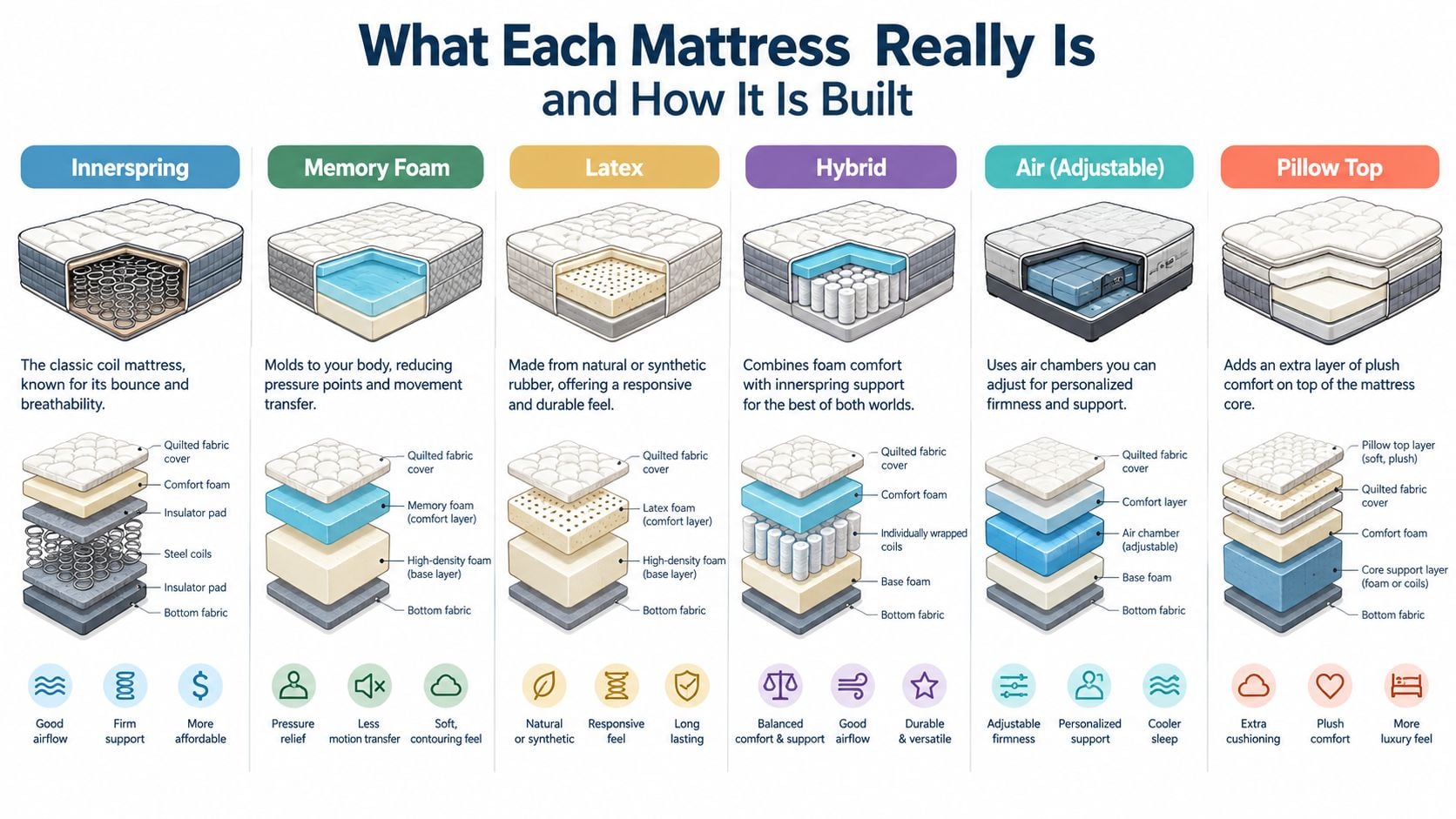
The main construction difference sits beneath the cover. A pillow top mattress usually combines a coil-based support core with a separate cushioned layer sewn onto the surface. A memory foam mattress generally uses polyurethane support layers beneath a viscoelastic comfort layer, creating an all-foam system.
A pillow-top layer usually measures about 2 to 4 inches and isn't attached at the edge to the layer beneath, according to the construction explanation provided by Land of Beds. That separation creates the rounded, cloud-like appearance associated with the style.
Layer by layer
A shopper can visualize the two builds this way:
- Pillow top surface: The top comfort section may contain foam, latex, wool, or fiber fill. Its job is to soften the first contact with the bed.
- Pillow top base: The sewn-on section sits over the mattress body and changes the surface feel without defining the entire support system.
- Coil support core: Innerspring or hybrid coils create lift, responsiveness, and a familiar spring sensation.
- Memory foam comfort layer: Viscoelastic foam responds to heat and pressure, contouring around the body and slowly recovering after compression.
- Polyurethane support layers: Denser foam beneath the comfort layer supplies the mattress foundation in an all-foam design.
That means “pillow top” and “memory foam” aren't opposing categories in every case. A pillow top can use memory foam as its fill, but the coil core still changes the way the whole mattress responds.
Why the support core matters
Two mattresses can feel similarly soft at first and perform differently after a sleeper changes position. Coils typically add bounce and make movement easier. Foam absorbs more movement and lets the body settle more.
The distinction is useful beyond mattress shopping because thoughtful retail and service decisions often depend on understanding the complete system rather than relying on a catchy label. Readers interested in the broader mindset behind building a customer-focused venture can explore how to succeed as an entrepreneur as a related resource.
Guynn carries mattress options from Sealy and Therapedic, including constructions that let shoppers compare cushioning and support in person. A shopper who wants to understand the foam side of the decision can also review what a memory foam mattress is before visiting a showroom.
Head to Head Comfort Support and Everyday Performance
Construction explains why these mattresses behave differently, but nightly comfort comes down to what the sleeper notices. A pillow top may feel plush immediately and make position changes easy. Memory foam may feel steadier and more enveloping, particularly around pressure-sensitive areas.
Performance at a glance
| Criteria | Pillow Top Hybrid | Memory Foam |
|---|---|---|
| Initial feel | Cushioned, plush, and often springy | Close-fitting and gradually contouring |
| Responsiveness | Coils provide noticeable bounce | Slow recovery can create a “settled in” sensation |
| Pressure relief | Depends on the top fill and firmness of the coil base | Consistently strong contouring around pressure points |
| Spinal support | Comes mainly from the coil system and overall firmness | Comes from the foam's ability to conform to the body |
| Motion isolation | More motion may travel through the coils | Movement is absorbed within the foam layers |
| Temperature experience | Air can move through the coil core | Dense foam may retain more warmth for some sleepers |
| Position changes | Usually easier | May require more effort if the sleeper sinks deeply |
Feel and movement
Pillow-top hybrids suit sleepers who want cushioning without losing the lively response of coils. The surface softens contact at the shoulders and hips, while the support core helps the sleeper push off when rolling or getting up.
Memory foam behaves more slowly. The material responds to pressure and heat, so the body gradually creates an impression in the comfort layer. That contour can feel wonderfully secure, but sleepers who like to move freely may find it less convenient.
Practical rule: If a sleeper dislikes the feeling of being held in place, a responsive pillow-top hybrid deserves a close look. If movement from a partner is the bigger concern, memory foam usually has the stronger advantage.
Pressure relief and support
Memory foam's close contouring can distribute contact around the hips, shoulders, and neck. That makes it appealing to side sleepers who feel concentrated pressure on a firmer surface. A pillow top can also cushion those areas, but the result depends heavily on whether the upper layer contains resilient latex, soft fiber, or a contouring foam.
Support isn't identical to firmness. A soft surface can still rest on a supportive core, and a firm-feeling surface can still fail to suit a particular body shape. The mattress firmness guide can help shoppers separate surface feel from the support needed for their preferred sleeping position.
Motion and temperature
Memory foam generally isolates motion more effectively because the material absorbs movement instead of sending it across connected springs. That can help a light sleeper remain undisturbed when a partner turns over.
Pillow-top hybrids generally offer more airflow through the coil base, although the actual temperature experience depends on the comfort materials and cover. A pillow top filled with dense foam may feel warmer than one using more breathable materials. The trade-off is simple: memory foam favors motion control, while coil-based pillow tops often favor airflow and mobility.
Which Mattress Fits Your Sleep Style and Household
A mattress choice becomes clearer when the household starts with real routines. Someone who changes position repeatedly needs a different response from someone who settles into one posture and wants minimal disturbance from a partner.
A decision matrix for everyday sleepers
| Sleeper or household need | More likely fit | Reason |
|---|---|---|
| Side sleeper seeking close cushioning | Memory foam or a plush pillow top | Both can cushion shoulders and hips, depending on the fill |
| Back sleeper | Either, matched to the right firmness | The surface must cushion without allowing excessive sinking |
| Stomach sleeper | A firmer construction | Greater surface stability can help prevent excessive midsection sinking |
| Combination sleeper | Pillow-top hybrid | Coil response makes position changes easier |
| Restless couple | Memory foam | Lower motion transfer can reduce partner disturbance |
| Hot sleeper | Often a breathable coil-based pillow top | Air movement through the core may feel more comfortable |
| Older adult or mobility-focused sleeper | Responsive pillow top | Bounce can make turning and rising simpler |
| Child or guest room | Depends on household use | Ease of movement and broad comfort may matter more than deep contouring |
Matching the bed to the body
Side sleepers often appreciate cushioning at the shoulders and hips, but an overly soft surface can allow the middle of the body to settle too far. Back and stomach sleepers generally need a stable foundation beneath the comfort layer. The useful test isn't whether the mattress feels soft or hard in isolation. It is whether the spine feels naturally supported while the surface cushions the body.
Combination sleepers may prefer a pillow top because coils help the sleeper move from the side to the back or stomach without climbing out of a deep impression. A sleeper who spends most of the night in one position may prefer memory foam's slower, more conforming response.
More guidance on matching comfort to posture is available in how to choose the right mattress for a sleeping style.
Household details matter too
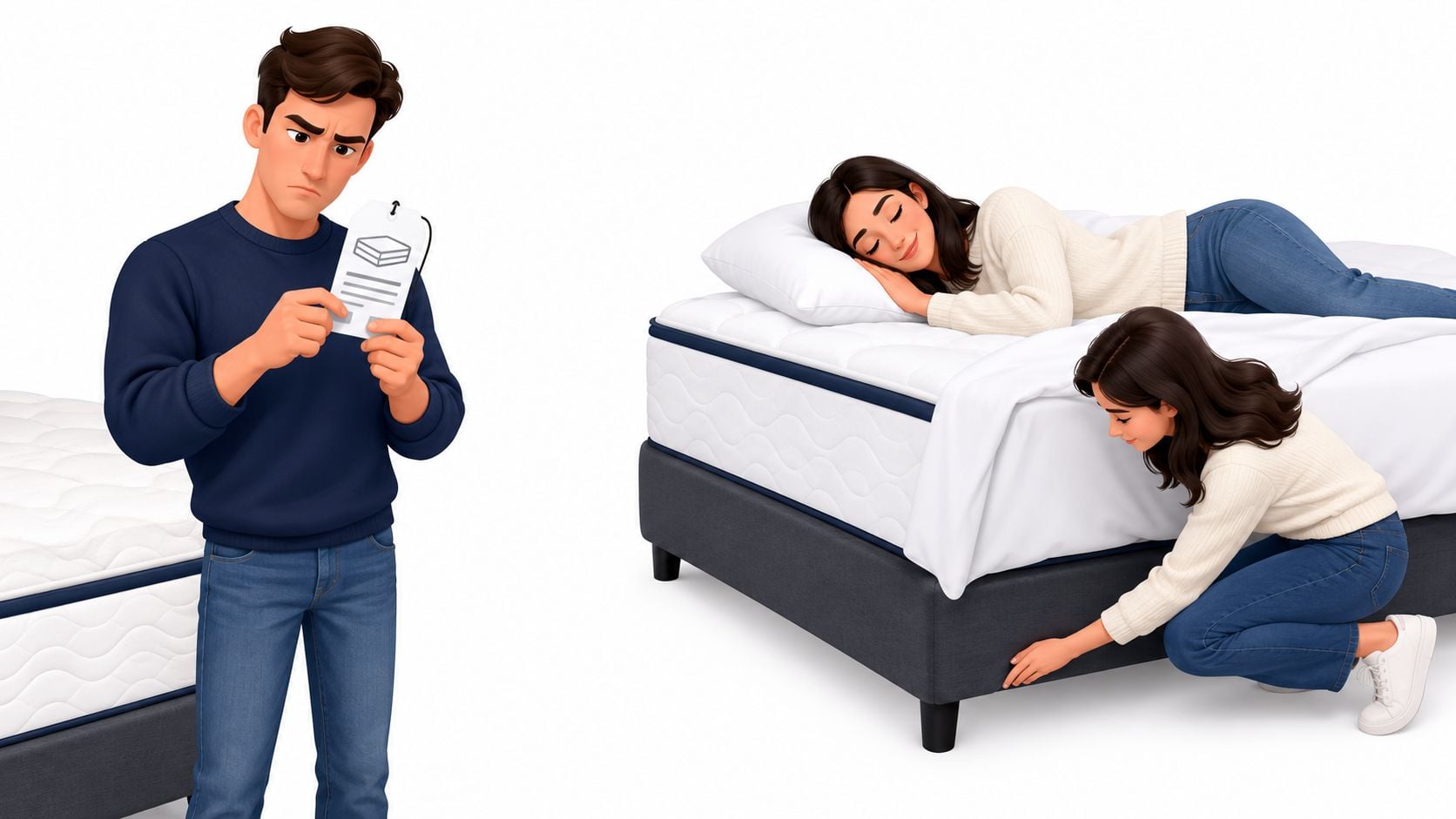
Couples should test a mattress together. One partner can lie still while the other rolls, sits up, or gets out of bed. That simple exercise reveals motion transfer more clearly than trying the mattress alone.
Families with children or pets may value a responsive surface because nighttime movement and shared-bed use are common. Seniors may also appreciate a mattress that makes turning and standing feel less demanding. In homes around Galax, Independence, and Hillsville, access to a large in-stock selection can make this evaluation more practical, especially for households that want immediate delivery rather than waiting through an online-only process.
Smart Shopping Tips Beyond the Label
The most reliable mattress comparison starts with a question retailers sometimes hear too late: What exactly is inside the comfort layer? “Pillow top” tells shoppers how the upper section is attached, but it doesn't identify whether that section uses memory foam, latex, wool, or fiber fill.
The support core deserves equal attention. A plush top over coils will respond differently from a plush top over a denser support system. The cover, edge construction, and overall firmness also shape the experience.
Questions to ask before choosing
A shopper can bring this short checklist into a showroom:
- Ask about the comfort fill: Is the pillow top made with memory foam, latex, wool, fiber fill, or a combination?
- Identify the support core: Does the mattress use innersprings, pocketed coils, hybrid construction, or polyurethane support foam?
- Check the surface response: Does the body settle slowly, or does the mattress push back quickly?
- Test the edges: Can the sleeper sit down and stand up without feeling unstable?
- Consider the foundation: Does the existing bed frame provide the support required by the mattress?
- Review care guidance: What rotation or setup recommendations does the manufacturer provide?
Test for support, not just softness
A showroom test should last long enough to reveal more than the first five seconds of comfort. Each sleeper should lie in a normal position, relax the shoulders, and notice whether the hips sink much lower than the rest of the body. The sleeper should also roll over, sit at the edge, and get up.
A useful test: Comfort answers whether the surface feels pleasant. Support answers whether the body remains balanced while resting.
Bedroom planning can add another layer of complexity. Mattress height affects the bed frame, bedding, bedside furniture, and the visual balance of the room. Guynn's expert design staff, including Debra Williams, can help households coordinate the bedroom around the chosen sleep system rather than treating the mattress as an isolated purchase.

Bedding care also affects the everyday experience. A separate resource on how often to replace bedding can help households think about sheets, protectors, and other sleep-surface items alongside the mattress purchase.
Pricing Durability and Long Term Value in Our Region
Price should be evaluated alongside materials, construction, comfort, and expected use. A lower initial price can feel appealing, but the mattress that offers the right support and remains comfortable for the household may provide better value over time. Precise pricing varies by size, materials, brand, and current inventory, so shoppers should compare the complete build rather than assuming one category always costs more.
Memory foam has become a major mattress category worldwide. One market report values the global memory foam mattress market at $14.1 billion in 2025 and projects it to reach $26 billion by 2034, with a 6.8% CAGR. The same source places memory foam at 38.2% of the global home-use mattress market in 2025. These figures show that foam-based comfort systems are established in the modern market, not a small specialty option. Global memory foam mattress market data
Pillow tops have a different kind of staying power. Industry commentary traces the design's entry into the market to the 1970s, notes softer positioning language by the summer of 1977, and describes growing popularity by the mid-1990s as shoppers sought a more luxurious bed. The style has therefore been part of mattress shopping for decades, rather than being a recent fashion. Historical pillow-top mattress coverage
Value depends on the complete system
Foam comfort may appeal to couples who prioritize motion isolation and close pressure relief. A coil-based pillow top may make more sense for a household that values bounce, airflow, and easier movement. Neither design automatically wins on longevity because material quality, construction, use, and care all influence how the mattress feels over time.
A helpful retailer can make the financial comparison more transparent. Guynn Furniture & Mattress offers a Low Price Promise that matches local competitors and includes a 30-day price guarantee. Flexible financing, including no-interest plans for qualified buyers, can also help eligible households manage a larger purchase without reducing the decision to the lowest upfront amount.
For additional guidance on replacement timing and mattress care, households can review how long a mattress should last. Guynn also carries in-stock Sealy and Therapedic options for shoppers who want immediate delivery, rather than waiting for an online-only order.
Your Next Step to Better Sleep with Guynn
The clearest decision rule is simple. A sleeper who wants deep contouring and low motion transfer will often prefer memory foam. A sleeper who wants plush cushioning with bounce and easier movement will often prefer a pillow-top hybrid. The final choice still depends on the exact fill, support core, firmness, and shared-bed habits.
Testing both feels in person can prevent an expensive mismatch. A shopper can notice whether the shoulders and hips feel cushioned, whether the lower back remains supported, and whether getting up feels easy. Couples can also test movement together, which reveals more than a product description.
Guynn Furniture & Mattress serves Galax, Independence, Hillsville, and the wider Southwestern Virginia and Northern North Carolina region. The business has maintained its local connection since 1902, and its sleep selection includes Sealy and Therapedic mattresses. For the rest of the home, Guynn is a La-Z-Boy Showcase dealer and also offers Ashley and Bassett furniture.

The retailer provides Free in-home delivery and setup within 60 miles, along with a large in-stock selection for households seeking immediate delivery. The atmosphere is designed to help shoppers compare comfort without pressure, whether they already know the preferred construction or need help sorting through the differences.
Visit our showrooms in Galax, Independence, or Hillsville to test the comfort for yourself. Schedule a consultation with our design team to start planning your dream room today. Browse the selection online at guynnfurniture.net.
Guynn Furniture & Mattress offers in-person mattress testing, Sealy and Therapedic options, expert design help, and Free in-home delivery and setup within 60 miles. Visit Guynn Furniture & Mattress to compare pillow-top and memory foam comfort with practical, no-pressure guidance.

