Bar Cart Essentials: A Guide to At-Home Entertaining

Some folks buy a bar cart because they want to entertain more. Others buy one because that empty corner in the living room needs a purpose. Often, it is both.
A good bar cart does more than hold bottles. It creates a welcoming little station in your home, one that says guests can settle in, family can linger after supper, and you can make a simple drink without rummaging through three cabinets. For first-time setup, the trick is not buying everything at once. The trick is choosing well.
The best bar cart essentials come down to three things. A cart that fits your room, a practical mix of bottles and tools, and a setup that works for real life, especially if you have children, pets, or a busy household.
Choosing Your Stage The Perfect Bar Cart for Your Home
The cart matters more than people think. If the cart is too flimsy, too large, too small, or awkward in the room, everything you place on it feels off. Before you worry about spirits, glasses, or garnish jars, choose the piece of furniture that can do the job.
The reason this category keeps showing up in design conversations is simple. Bar carts have moved well beyond novelty status. The market is projected to grow from USD 1.1 billion to USD 2.7 billion by 2034, reflecting a major resurgence in home entertaining and showing that bar carts have become staple furnishings in modern interiors, according to Miller Waldrop’s look at bar cart essentials.
Match the cart to the room first
A bar cart should feel like it belongs there, not like it wandered in from another house.
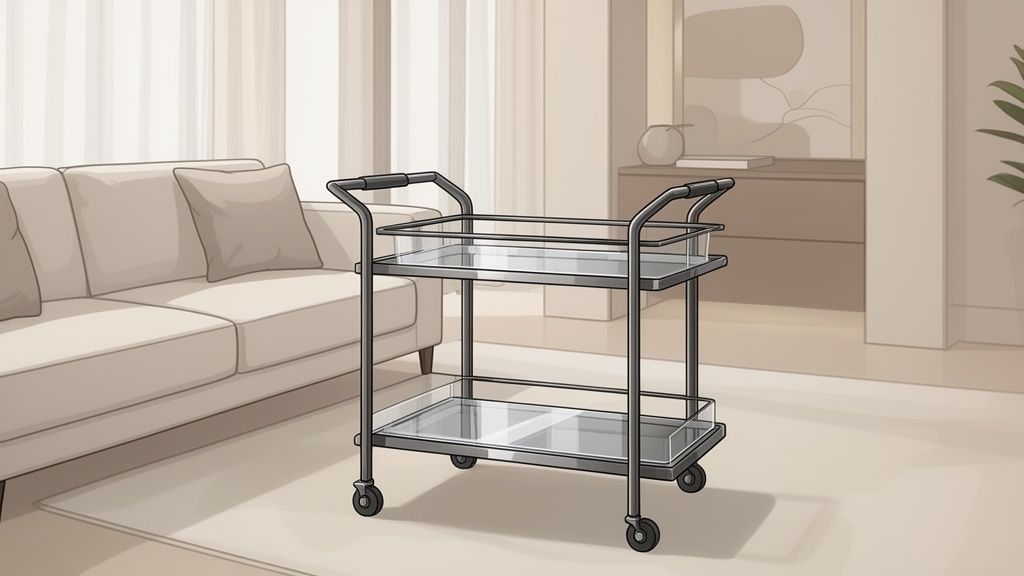
In a cozy living room, a slim cart with two levels works better than a wide statement piece. In a larger dining area or open-concept home, a sturdier cart with visual weight can anchor the entertaining zone and keep the room from feeling scattered.
A few things matter most:
- Scale: Measure the wall, corner, or pass-through space before you shop.
- Material: Wood feels grounded and classic. Metal and glass feel lighter and more modern.
- Mobility: Wheels are handy, but only if you plan to move it. If it will stay parked in one place, stability matters more.
- Shelf style: Open shelves look airy, but they also keep every bottle and accessory visible.
What works and what does not
What works is a cart that serves one clear role. Maybe it is your evening cocktail station. Maybe it is a coffee-and-cordial spot in the dining room. Maybe it is a flexible entertaining cart that rolls where guests gather.
What does not work is treating it like a catchall. Once mail, candles, random remotes, and unopened bottles pile up, it stops feeling intentional.
Tip: If you are debating between a bar cart and a narrow accent piece against the wall, a console table can sometimes solve the same storage and styling problem with a little more stability.
Think about real household traffic
In homes with kids, pets, or frequent company, avoid anything top-heavy or delicate unless you know exactly where it will live. A beautiful cart is still furniture. It has to survive people walking past it, vacuuming around it, and bumping into it during a busy weekend.
The best choice balances charm with common sense. That is what lasts.
The Foundation Stocking Core Spirits and Liqueurs
Most first bar carts get overbought. That is the fastest way to waste money and fill a small cart with bottles you rarely touch.
A better approach is to build around a practical base. A properly stocked cart starts with five core spirits: vodka, gin, bourbon or rye, rum, and tequila. That base can make about 85% of standard cocktails, and adding bitters, simple syrup, and fresh citrus pushes your setup to about 90% of classic recipes, according to Mental Floss’s guide to essential bar cart items.
Start with the bottles you will use
If you already know your household leans one direction, start there.
- Vodka works when you want flexibility. It blends easily and keeps the cart useful for guests with different tastes.
- Gin earns its spot if you like crisp, herbal drinks and classic highballs.
- Bourbon or rye gives you a warm, sturdy option for sipping and for familiar cocktails.
- Rum covers both light, refreshing drinks and richer mixed drinks.
- Tequila brings range, especially if you enjoy citrus-forward cocktails.
You do not need all five on day one. A strong starter cart can begin with two or three favorites, then grow naturally.
Keep the add-ons tight
The supporting bottles matter, but clutter creeps in with them.
A small, smart setup includes:
- Bitters: A little goes a long way.
- Simple syrup: Easy to use and useful in many classic drinks.
- Fresh lemons and limes: They do more for a drink than another novelty liqueur will.
What does not work is buying specialty bottles because one recipe called for them. Unless you know you will use that bottle again, leave it on the store shelf.
A practical stocking mindset
Think of your cart as a working station, not a trophy shelf. The goal is not to impress people with quantity. The goal is to be ready to make a few drinks well.
That means buying better basics instead of more bottles. One dependable bourbon and one dependable gin will serve you better than a crowded row of impulse buys.
The Supporting Cast Essential Mixers and Garnishes
Mixers decide whether your cart feels easy to use on a Tuesday evening or fussy and half-empty by Saturday. The sweet spot is a handful of versatile staples that are simple to restock and do not crowd every shelf.
The short list that earns its keep
Most households do well with a few reliable options:
- Club soda or sparkling water: Clean, flexible, and useful even for nonalcoholic drinks.
- Tonic water: Worth keeping if gin is part of your regular rotation.
- Ginger beer: Strong personality, great for mules and other citrus-forward drinks.
- Simple syrup or honey syrup: Helpful for balancing tart ingredients.
- Bitters: A tiny bottle that adds depth fast.
Fresh citrus deserves its own category. Lemons and limes bring brightness bottled juice cannot match. Keep a small bowl nearby if your cart lives in the kitchen or dining room. If it sits in a warmer living area, store backup fruit in the refrigerator and refill the cart as needed.
Garnishes that feel useful, not fussy
You do not need a garnish tray that looks like it belongs in a hotel bar.
These are enough for most homes:
- Citrus peels or wheels
- Olives
- Cocktail cherries
- Fresh mint when you know you will use it
What works is keeping one or two garnish choices fresh and presentable. What does not work is buying every pretty jar, then discovering half of it has dried out or gone sticky.
Tip: Decant syrups and small mixers into matching bottles only if you are willing to label them and keep them fresh. Pretty storage without upkeep gets confusing fast.
Keep the cart tidy
A bar cart should feel ready, not crowded. Group mixers on one shelf, tools in a small tray, and garnishes in a controlled spot rather than scattered around the top.
If your setup starts looking busy, remove something. The best bar cart essentials are the ones you use regularly and can keep neat without effort.
The Tools of the Trade Your Bartenders Toolkit
Many home setups falter here. People buy attractive bottles first, then try to mix drinks with a kitchen spoon, a measuring cup, and whatever strainer happens to be in a drawer. The result is a mess on the cart and an uneven drink in the glass.
Professionals tend to reverse that order for a reason. Experts recommend buying the tools first. A weighted shaker tin, hawthorn strainer, and proper jiggers are the key pieces. Skipping those basics leads to a 70 to 80% chance of poorly mixed drinks, while using them can lead to a 90% success rate for recreating professional-quality cocktails at home, according to Life Is Suite’s tips for the essential bar cart.
Essential Tools
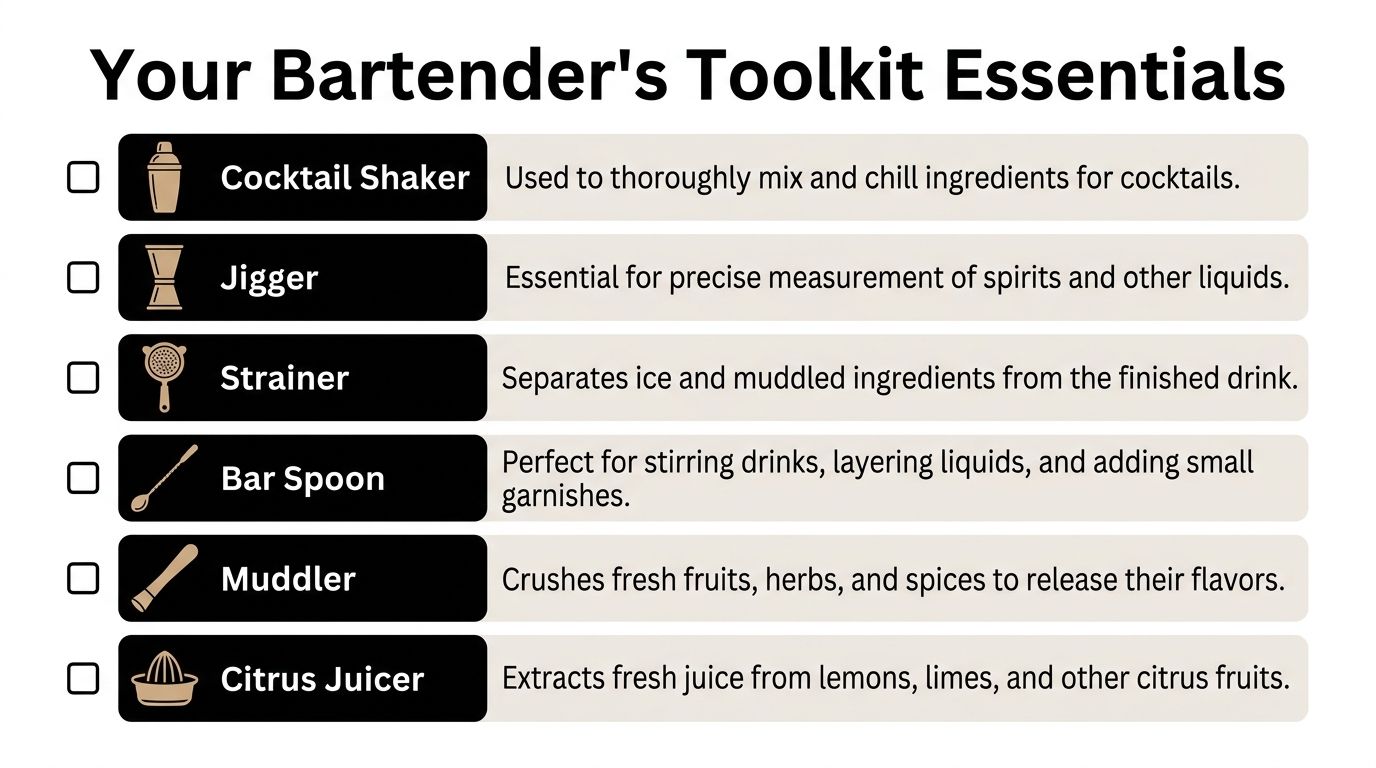
If you buy only a few tools, make them these:
- Weighted shaker tin: This gives you a better seal, better chill, and better mixing than makeshift alternatives.
- Jigger: Measuring matters. A drink that is out of balance by a little can taste completely off.
- Hawthorn strainer: It keeps ice shards and fruit bits out of the final pour.
These three tools solve most beginner frustrations. They also keep prep cleaner, which matters if your cart sits near upholstered seating, wood furniture, or rugs.
The tools that improve daily use
After the basics, add the pieces that make your cart more pleasant to use:
- Bar spoon for stirred drinks and gentle mixing
- Mixing glass for cocktails that should be stirred, not shaken
- Citrus juicer for quick fresh juice without wrestling fruit by hand
- Muddler if you use herbs, fruit, or sugar cubes with any regularity
There is also one overlooked tool that protects furniture more than people realize: a tray or bar mat under your working area. That catches drips before they reach the shelf.
Why the right tools protect the room too
A poorly equipped bar cart does not make weaker drinks. It creates spills, sticky bottles, and wet rings on finished surfaces.
That is one reason styling and function should work together. If you enjoy mixing drinks in the living room, protect the area with coasters and a designated prep spot. If you want more ideas on making decorative surfaces work harder, coffee table styling tips can help you think through trays, spacing, and visual balance.
Key takeaway: The best tool kit is not flashy. It is clean, compact, and easy to reach with one hand while you pour with the other.
Raise a Glass Selecting the Right Glassware
Glassware does two jobs at once. It changes how a drink feels to hold and sip, and it changes how the whole cart looks in the room.
That is why this part is more than decoration. The right glasses make the cart feel finished.

A starter set that covers most homes
You do not need a cabinet full of specialty stems. A practical starter set includes:
| Glass type | Best use | Why it earns space |
|---|---|---|
| Rocks glasses | Neat pours and short cocktails | Sturdy, versatile, and easy to use every day |
| Coupe or martini glasses | Drinks served up | Adds a polished look for guests |
| Wine glasses | Wine, spritzes, and flexible serving | Works beyond the bar cart |
That mix handles most entertaining without crowding the shelves.
Function and style should agree
Heavy cut-glass rocks glasses feel right on a traditional wooden cart. Slim coupes look at home on a lighter metal-and-glass cart. Neither is wrong. They just tell different design stories.
A mismatched collection can still work if the shapes feel intentional. Random giveaway cups, novelty glasses, and pieces with wildly different visual weight tend to make a cart feel accidental.
If you are trying to connect your cart to the rest of the room, think the same way you would about your dining area. Dining room decorating ideas can help you build a more consistent look across nearby spaces.
For family homes, durability counts
If your cart lives in a high-traffic area, reserve your most delicate pieces for higher shelves or special occasions. Everyday glassware should feel comfortable to wash, carry, and replace if needed.
A polished bar cart does not have to be fragile. Often, the most inviting setups are the ones people are not afraid to use.
Making It Your Own Styling Safety and Smart Placement
One household might keep a bar cart in the dining room for holiday hosting. Another might tuck one beside the sofa as a compact evening station. A third might need the whole thing to be attractive, useful, and safely out of reach of a curious toddler and a tail-wagging dog.
That third scenario is more common than many design articles admit. A major gap in bar cart advice involves family safety. Sixty-two percent of families prioritize child-safe entertaining spaces, yet few guides address lockable carts or durable acrylic glassware. The same source also notes a 35% rise in searches for family-first home bars, according to Hostessology’s bar cart essentials guide.
One cart, three real-life setups
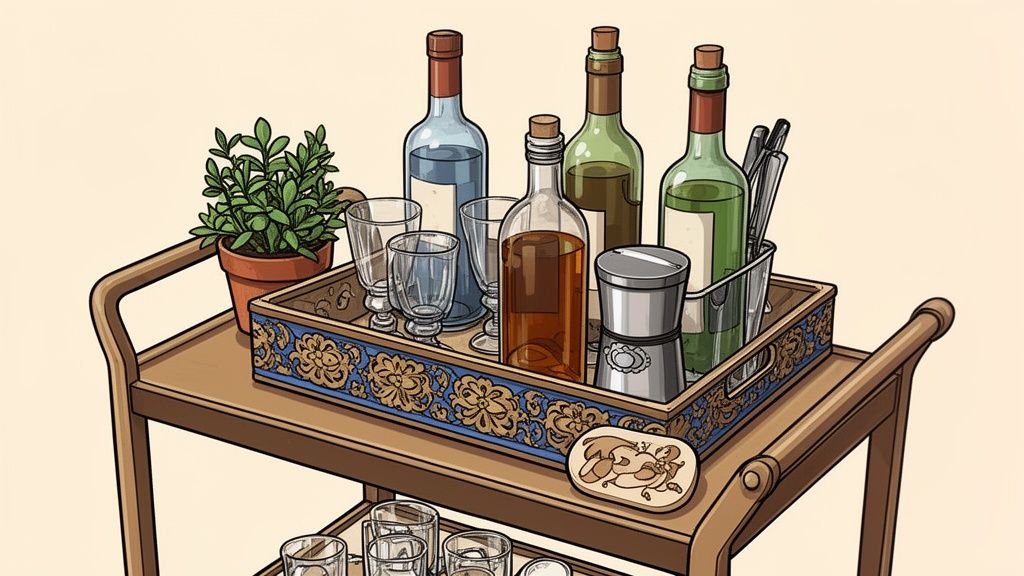
In a quieter home, styling can stay loose and decorative. You might place bottles on the lower shelf, stack coupes on top, and add a candle or small arrangement to soften the look.
In a home with children, the arrangement changes. Spirits go high. Breakable glassware goes high. Tools with points or edges get tucked into a handled tray or closed container so they are not easy to grab.
In a pet-friendly home, stability becomes the first question. A cart near a walkway or zoom-around corner is asking for trouble. Choose a calm spot against a wall, not in the middle of room traffic.
Styling that helps function
The most attractive bar carts follow a few simple habits:
- Use a tray: A tray keeps bottles grouped and visually calmer.
- Add one soft element: A small plant, a bud vase, or linen napkins warm up hard surfaces.
- Leave breathing room: Empty space makes the cart look better and work better.
- Keep everyday items accessible: Put your most-used glasses and mixers where your hand naturally reaches first.
Tip: If a cart looks crowded before guests arrive, it will feel chaotic once you start using it.
Safer choices for busy households
A family-friendly setup can still feel refined. The main difference is that safety is built into the design instead of added later.
Consider these practical moves:
- Place the cart away from rough traffic paths
- Store alcohol and fragile pieces on the top shelf
- Use durable drinkware for casual gatherings
- Choose a cart with secure shelving or a more grounded silhouette
- Keep a cloth nearby for quick wipe-downs
For some homes, the best answer is not a traditional rolling cart at all. It may be a more stationary accent piece with better control over storage and placement.
If you host often, entertaining design tips can help you think through flow, seating, and where a serving station belongs in relation to guests.
Placement should support the room
A bar cart works best where people naturally gather, but not where they bottleneck. Near the dining room makes sense if you host meals often. Near the living room works well for relaxed evenings. In open-concept homes, a cart can help define a social zone without adding bulk.
What does not work is forcing it into the first empty corner you find. A bar cart should serve the room, not interrupt it.
Your Guide to Home Hospitality Starts Here
A well-set bar cart makes home hospitality easier. It gives your room a useful destination and turns entertaining into something calmer and more natural.
The best setups are not the biggest. They are the ones that fit your home, your habits, and the people who live there with you. A sturdy cart, a small lineup of dependable bottles, the right tools, and thoughtful placement will take you a long way.
If you are already thinking about how your cart fits with the rest of your hosting spaces, holiday hosting ideas can help you tie the room together. The same principles apply year-round.
Since 1902, our region has always valued homes that feel welcoming without feeling fussy. A good bar cart follows that tradition nicely.
Frequently Asked Questions About Bar Carts
How can I create a non-alcoholic bar cart
It works beautifully. Stock sparkling water, tonic, ginger beer, flavored syrups, fresh citrus, and a few thoughtful garnishes like mint or rosemary. Use the same shaker, jigger, and glassware you would use for cocktails so every guest feels included.
My home is small. Do I have room for a bar cart
Yes. Look for a narrow profile, a round two-tier cart, or even a compact accent piece that can serve the same purpose. Small homes benefit from going vertical, keeping only the essentials on display, and avoiding oversized bottles or bulky décor.
How do I clean and maintain my bar cart
Wood needs prompt attention. Wipe spills quickly with a soft cloth and use coasters under glasses and bottles when possible. Metal and glass are simpler to maintain with gentle cleaner and regular dusting.
What should stay off the cart
Anything sticky, rarely used, or hard to store neatly. Oversized novelty bottles, expired mixers, random paper items, and clutter from other rooms make a cart feel messy fast. Edit it often.
Do I need wheels
Only if you will move it. Wheels are helpful for flexible entertaining, but a stationary piece feels sturdier in everyday family life.
If you are ready to create a bar cart setup that fits your home and your everyday routine, Guynn Furniture & Mattress is here to help in a no-pressure atmosphere. Our family has served Galax, Independence, Hillsville, and the wider Southwestern Virginia and Northern North Carolina region since 1902. We carry trusted brands including La-Z-Boy, Ashley, Bassett, Sealy, and Therapedic, offer a large in-stock selection for quick delivery, and provide Free in-home delivery and setup within 60 miles. If price is part of the decision, we also offer a Low Price Promise with local competitor matching and a 30-day price guarantee. Visit our showrooms in Galax, Independence, or Hillsville to test the comfort for yourself. Schedule a consultation with our design team to start planning your dream room today. Browse our selection online at guynnfurniture.net.