
Cantilever Umbrella Parts: Guide to Components & Replacement


The first sign is usually simple. The umbrella won't turn, the canopy droops to one side, or the whole frame leans after a gust, and suddenly a piece of patio furniture feels like a mystery project nobody wanted. That's usually when the question shows up, not “Is it broken?” but “Which part failed?”
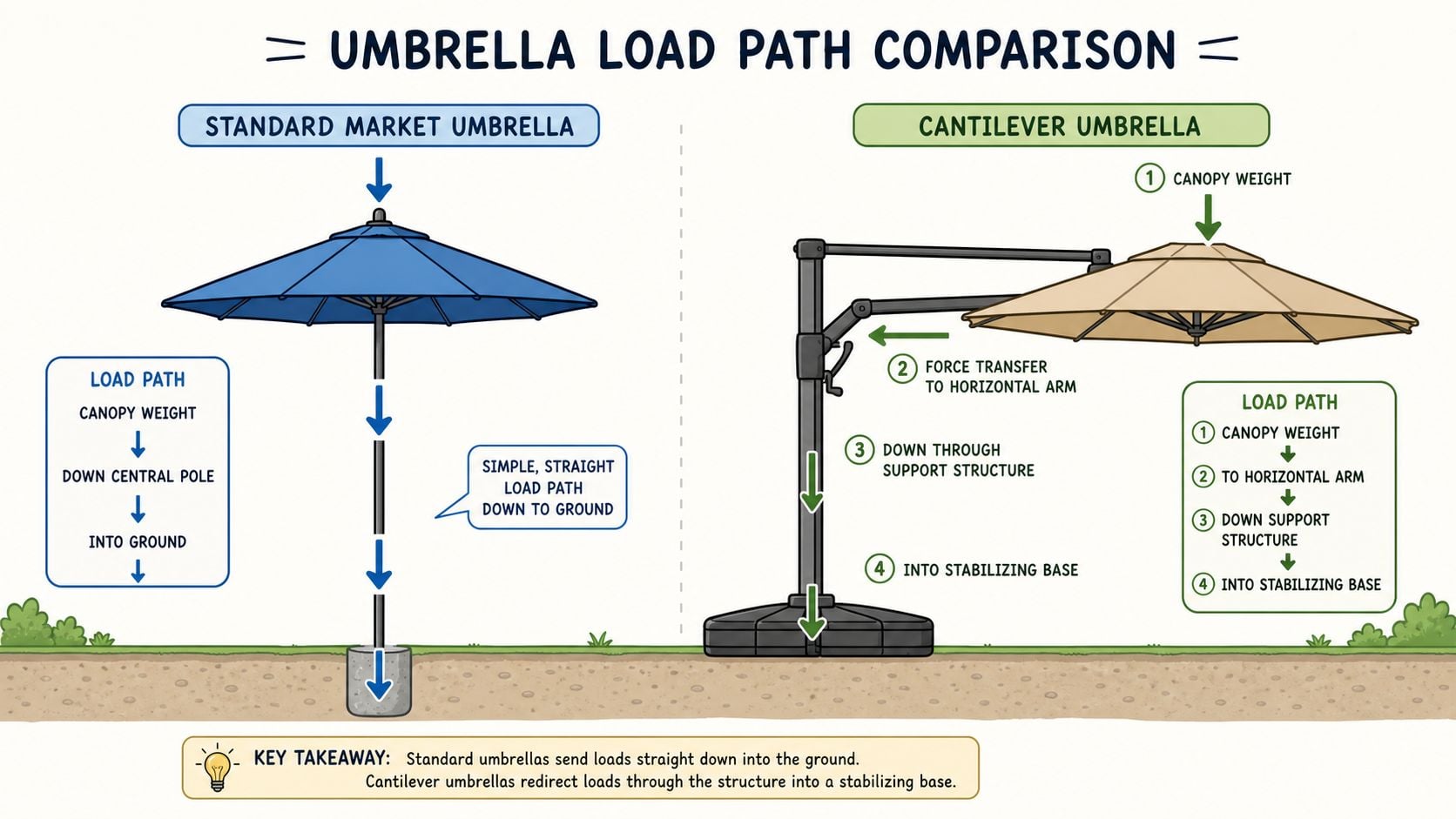
Cantilever umbrella parts are easier to understand once the frame is broken into pieces, and that matters because these umbrellas are built differently from center-pole models. The load is carried laterally through an offset arm, not straight down the middle, so the base, pole, arm, and hardware all work together as one structure circuitblaze.com. When one piece gives out, the whole shade system can feel worse than it really is.
A parts-first approach keeps the problem from turning into a full replacement. It also helps when the manual is gone, the box is long recycled, and the only clue left is a sticker that's half faded. For homeowners in Galax, Independence, Hillsville, and the wider Southwestern Virginia and Northern North Carolina region, that kind of practical identification saves time and a lot of guesswork.
The Moment a Cantilever Umbrella Stops Working
The patio usually gives the first clue before anyone opens a tool drawer. The canopy sags on one side, the crank feels wrong, or the umbrella leaned hard enough in a storm that the base now looks suspiciously small for the job it's doing. That's the moment you might assume the whole unit is finished.
That assumption is often too fast. A cantilever umbrella is made of separate structural and moving parts, and a single failure can make the whole system seem useless even when the rest of the frame is still sound. The key is to slow down and ask which component stopped doing its job, because the answer is often one part, not the entire umbrella.
Practical rule: if the frame still moves but the shade no longer stays where it should, the failure is usually in the hardware path, not the fabric alone.
That small distinction matters because replacement planning gets easier once the problem is named. A frozen crank, a bent arm, a loose hub, or a torn canopy all point to different fixes, and not all of them require a new umbrella. A parts-first approach helps preserve the frame, avoids waste, and gives the homeowner a realistic repair path instead of a panic purchase.
It also keeps the work manageable. A person can compare the symptom to the part, then decide whether the job is a simple swap, a measurement issue, or a structural problem that needs a deeper look. That's the logic this guide follows, so a reader can move from “something's wrong” to “this is the piece to check” without getting buried in jargon.
The Core Parts List and What Each Piece Does
A cantilever umbrella is easier to understand once you stop treating it as one big frame. It is a set of parts that each do a separate job, and the names you need to know are the base, central pole, horizontal support arm, hub, canopy holder, tilt mechanism, and crank handle. Once those pieces are identified, the umbrella becomes a system you can inspect, not a mystery object you have to guess at.
The missing manual problem usually starts here. A homeowner can see that something is off, but the task is matching the loose or damaged part to the shape in front of them, especially if the original box is gone and the label is faded. For ordering replacement hardware for a custom patio layout, that distinction matters because the wrong match wastes time before the repair even begins.
The parts in plain language
- Base. This is the anchor. It keeps the whole frame from tipping and often carries more strain than it looks like it should.
- Central pole. This is the upright mast on the side of the shade. It carries the load down into the base.
- Horizontal support arm. This is the reach piece that extends the canopy over the seating area.
- Hub. This is the joining point where the moving sections meet and pivot.
- Canopy holder. This is the hardware that secures the fabric frame or ribs in place.
- Tilt mechanism. This is the joint that changes the angle of shade without moving the base.
- Crank handle. This is the hand-operated control that opens, closes, or adjusts the umbrella.
The fastest way to tell these parts apart is by where they sit and what shape they have. The base stays on the ground, the pole rises from one side, and the arm reaches outward over the space you want shaded. The hub and canopy holder sit nearer the moving center of the frame, which is also where wear often shows up first. If a repair guide is being used while installing your premium ShadowSpec, the same habit helps, because you can compare each visible piece before loosening anything.
A simple way to keep the names straight is to connect each part to its job. The base prevents tipping. The pole carries the structure. The arm creates the offset reach. The hub and tilt mechanism let the frame move in controlled ways instead of wobbling under stress.
Useful habit: if a reader can point to the part without moving the umbrella, they're already much closer to ordering the right replacement.
That is why the names matter so much. A broken crank handle is a different problem from a damaged tilt joint, and a loose hub is not the same as a cracked arm. Once the parts are separated in the mind, the frame is easier to inspect, measure, and match to the replacement that fits.
Why the Offset Design Changes Everything
A cantilever umbrella is more than a center pole moved off to one side. The moment the support shifts outward, the load path changes too. The canopy pulls on the arm, the arm pushes into the mast, and the base has to resist a sideways force instead of just keeping a pole upright patiofurnituresco.com.
A seesaw gives a plain example. A center-pole umbrella works like a post under the middle of a board. A cantilever umbrella works like holding that board from one end and asking the support to stay steady anyway. That is why the side pole, the arm, and the base have to cooperate closely. When one joint loosens, the whole frame shows it quickly.
That offset layout is also why these umbrellas need parts that match the frame, not just the fabric. A crank handle, a tilt joint, or a base plate may look simple on its own, but each one has to fit the umbrella's geometry and carry stress in the right direction. If the original box is gone and the manual is missing, the challenge is not just naming the part. It is figuring out which version belongs on your exact umbrella before you buy the wrong one.
The engineering point shows up most clearly in larger residential and commercial models, where writeups describe bending moment forces up to 78.8 kNm and shear force up to 63 kN because the canopy load sits away from the support point circuitblaze.com. Those figures explain why these umbrellas need real ballast and why light stands tend to fail early. Larger commercial versions can also reach footprints up to 20′ x 20′ and may weigh as much as 600 lbs to stay stable in wind and under load patiofurnituresco.com.
For a homeowner, the lesson is straightforward. The mast-to-base joint and the arm-to-mast joint are usually the first places to inspect, because that is where the force concentrates. A loose or cracked connection there is a structural problem, not a surface flaw.
For a closer look at how a premium offset umbrella is placed and supported, installing your premium ShadowSpec shows how side-mounted shade systems depend on the right position and support. That thinking also fits designing a balanced patio layout, where the furniture plan and the umbrella footprint have to work together.
Measure Once, Order Once
The first mistake people make is measuring only the fabric. The second is measuring after the umbrella has already bent, rusted, or stretched out of shape. A good parts search starts with the frame itself, because replacement pieces have to match the umbrella's geometry, not just its color or style.
The measurements that actually matter
- Pole diameter. Measure straight across the pole, and skip any rust bubbles or dents.
- Arm length. Measure from the main support point to the point where the canopy hardware begins.
- Pivot geometry. Note where the arm bends and how the joints sit when open.
- Canopy rib length. Measure one rib from center point to tip, not across the whole canopy.
- Hub bolt pattern. Count spacing and note the arrangement of mounting holes.
- Base footprint. Measure the floor space the base occupies, especially if it fits under furniture or a stand.
A tape measure gets most of the job done. A digital caliper helps when the pole size is tight or the fit looks close, because small differences can keep a part from sliding on properly. If a part is rounded, bent, or swollen with corrosion, measure the cleanest section you can find and note the damage separately.
Good replacement habits: write the numbers down together, take one clear photo of the joint, and keep the measurements with the photo on your phone.
That approach is especially helpful when a reader has to compare a store shelf part, a manufacturer diagram, or a repair note from an online guide. A size chart for shade products can help with overall planning, and urbanmancaves.com tips for shade is a useful reminder that size decisions start with the space, not the sales tag. For furniture projects more broadly, measuring furniture the right way uses the same discipline, measure first, buy second.
A simple checklist can make the whole process less stressful:
- pole diameter
- arm length
- hub style
- base footprint
- any visible brand label
- photo of the failed part
That list is short on purpose. It gives a homeowner enough detail to buy with confidence without turning the project into a weekend engineering exam.
The Common Failure Points Ranked by Frequency
The failures that show up most often are usually the ones that look annoying before they look dangerous. A crank starts slipping, a tilt no longer holds, or the canopy sags because the fabric has loosened over time. Those problems are frustrating, but they're not the same as a cracked arm or a damaged base.
What tends to fail first
- Crank handle. This is often the first part to feel worn because it gets regular use. If it slips or binds, the opening system may still be salvageable.
- Canopy fabric. Fading, tearing, and seam wear are common and usually easier to replace than the whole frame.
- Ribs. A snapped or bent rib changes the canopy shape and can make the whole top look uneven.
- Cables. When present, these often cause trouble because they are tied to internal motion and routing.
- Tilt hardware. If the umbrella won't stay at an angle, the joint may be worn or stripped.
- Base. Cracks, instability, or movement at the floor level can turn into a structural issue quickly.
The reason these problems should be ranked separately is simple. Fabric and small motion parts can often be treated as repair work, while structural cracks are a different category altogether. A homeowner can live with a faded canopy for another season, but a damaged arm or loose base connection should not wait for the next storm.
Cables deserve special attention because they're often the most brand-specific component in the entire umbrella. A cable that looks close but routes differently can make the opening system bind or pull unevenly. That is why matching the exact design matters more than guessing by appearance.
Structural warning: if the arm, mast joint, or base connection is cracked, the umbrella needs attention before it gets used again.
That ranking helps separate inconvenience from risk. The canopy might make the umbrella look tired, but the frame parts are the ones that decide whether it stays safe and usable.
Universal Parts vs. Brand-Specific Parts
Some replacement pieces are forgiving. Others are picky enough that a “close enough” fit turns into a return or a broken mechanism. The trick is knowing which camp the part belongs to before the order goes through.
Usually safe as generic replacements
- Canopies. These can often be matched by size class and shape.
- Rib sets. If the length and connection points line up, a replacement can work.
- Crank handles. Many are simple enough to swap if the attachment matches.
- Base wheels. These are usually straightforward if the mounting style is the same.
- Fabric straps. These tend to be basic add-ons with less engineering complexity.
Usually exact-match parts
- Cables. The routing, length, and end fittings often vary by brand.
- Internal tilt hardware. Hidden geometry matters here.
- Hub assemblies. Bolt patterns and pivot points can differ even when the umbrellas look alike.
- Arm-to-mast connectors. These carry force, so exact fit matters.
A good rule is simple. If the part is visible and removable without opening the frame, a generic replacement is often possible. If the part lives inside the arm, inside the hub, or behind a joint, the original maker's dimensions matter much more. That's especially true when the motion is tied to cable tension or multi-position tilt behavior.
For readers sorting through purchase options, outdoor furniture buying basics is a useful reminder that the right product starts with the right fit, not the fastest checkout. The same thinking applies here. A part that seems universal on paper can still fail at the attachment point if the hardware doesn't line up.
The best question to ask is not “Does it look similar?” but “Does it match the mounting points, the motion path, and the measurements already taken?” That's the difference between a smooth repair and a box of unusable parts.
A Four-Season Care Routine That Actually Gets Done
A cantilever umbrella lasts longer when the care routine is small enough to repeat. Nobody keeps up with a maintenance plan that feels like a second job, so the best version is seasonal and short. The goal is to catch wear before it turns into a repair list.
A simple rhythm for the year
- Spring. Rinse the frame, clean the fabric, and check hardware for looseness after winter storage or cover use.
- Summer. Watch for new creaks, uneven tilt, or water pooling on the canopy after rain.
- Fall. Dry the umbrella thoroughly before storing or covering it.
- Winter. Either use a proper cover or break the unit down and store it if snow and ice are a concern.
A once-a-month walk-around is enough for most patios. That walk-around should include the base, the joints, the crank, and the fabric edges. If a bolt starts backing out, the fix is easier now than after a storm has worked on it for a week.
A quick reminder about outdoor protection makes the routine even easier to keep. weatherproofing outdoor furniture follows the same logic, keep moisture off the materials, reduce stress on moving parts, and avoid storing damp fabric. Those habits are simple, but they help the whole setup last longer.
Calm maintenance wins: ten quiet minutes now usually beats a full repair later.
The routine should never feel dramatic. A wipe-down, a look at the joints, and a check for movement in the base are enough to catch the early warning signs. That's the kind of habit people keep.
Field Repairs You Can Do Yourself and the Ones You Should Not
Some fixes are fair game for a patient homeowner. Others belong with the manufacturer or a professional, especially when the repair touches the main structure. Knowing the difference keeps a small problem from becoming a bigger one.
Usually safe to handle at home
- Replace a crank handle. This is often a straightforward swap if the connector matches.
- Change the canopy. If the frame is healthy, a new fabric top can bring the umbrella back to life.
- Tighten hub bolts. Loose hardware can often be corrected with the right tool and a careful hand.
- Replace end caps. These small parts are mostly protective and cosmetic.
- Lubricate moving parts. A light, appropriate lubricant can help joints move more smoothly.
These jobs usually need basic hand tools, a little patience, and a clean place to work. The common mistake is rushing the reassembly and forcing threads that don't want to line up. If a bolt resists, it's better to reset it than strip it.
Stop here and get help
- Welded arm joint work. Structural repairs here are not casual fixes.
- Internal cable replacement. Mismatched routing or tension can create uneven opening.
- Mast-to-base connection repair. That joint carries major load.
- Any crack in the boom or arm. A visible crack is a structural warning, not a cosmetic flaw.
Those repairs need exact alignment and, in some cases, specialized parts. A bad fix can throw the whole umbrella out of balance or make it unsafe in wind. If the structure itself is damaged, replacement of the affected assembly is often the smarter move.
This is also where part identification matters most. A homeowner who knows the exact failed component can ask better questions and avoid buying the wrong fix twice.
Quick Reference Guide for the Whole Article
| Part | Job | Most Common Failure | Replacement Strategy |
|---|---|---|---|
| Base | Anchors the frame | Cracking or instability | Match footprint and mounting style |
| Central pole | Carries the vertical load | Bending or loosening at the joint | Verify diameter and connector type |
| Horizontal support arm | Extends shade outward | Cracks or weld stress | Replace only with exact geometry match |
| Hub | Connects moving sections | Worn pivot or stripped fit | Check bolt pattern and housing style |
| Canopy holder | Secures the canopy frame | Loose fit or broken attachment | Match rib connection points |
| Tilt mechanism | Changes shade angle | Won't hold position | Use exact-match internal hardware |
| Crank handle | Opens and closes the umbrella | Slips or breaks at the connector | Swap only if the attachment matches |
The three measurements that matter most are pole diameter, arm length, and hub bolt pattern. Those three numbers solve more buying mistakes than any guesswork ever will. The one rule that matters most is still the same, cables are almost always brand-specific.
A reader fixing a problem late on a Saturday can use the table to move quickly from symptom to action. If the issue is a loose base or a tired crank, the repair path is often simple. If it's a cable, hub, or structural crack, the safer choice is to stop and match the exact part before going farther.
Ordering the Right Part Without the Runaround
The safest order path is not always the fastest one. If the original brand can identify the part from a model number or photo, that route usually gives the best fit. It can be slower, but it reduces the chance of getting a piece that almost works.
Three ways to shop
- Order from the original maker. Best when the part is hidden, specific, or tied to internal motion.
- Order online with measurements in hand. Useful when the part is visible, simple, and standard.
- Visit a local showroom. Best middle ground when the cable, hub, or crank assembly needs an in-person look.
That last option matters more than people think. A knowledgeable staff member can compare the failed piece to the frame, check attachment style, and catch the mismatch that a quick photo might miss. For replacement planning, getting started with custom order is a useful example of how custom-fit thinking helps when standard parts don't quite line up.
The universal trap is assuming the label tells the whole story. A part may be listed as universal, but the bolts, sleeves, or connectors that hold it in place still have to match. That's why the measurements from earlier in the guide matter so much.
A good final question is practical, not fancy. Does the part match the size, the connector, and the motion path? If the answer is yes, the order is probably on the right track. If the answer is uncertain, it's smarter to pause than to buy the wrong piece twice.
Guynn Furniture & Mattress helps local homeowners make confident choices for their homes, and that includes outdoor comfort questions like choosing the right replacement-fit furniture and accessories. With a long history since 1902, free in-home delivery and setup within 60 miles, and a no-pressure atmosphere, it's a dependable place to get real help for your patio and your whole home. Visit Guynn Furniture & Mattress to explore what's available and connect with a team that serves Galax, Independence, Hillsville, and the wider Southwestern Virginia and Northern North Carolina region.