Your Guide to the Perfect Corner Media Console


You know the corner I mean. It’s the one that never quite works.
Maybe your TV stand sticks too far into the room. Maybe the cords collect in a little nest behind the screen. Maybe the corner sits empty because every piece you’ve tried looks too flat, too wide, or just plain off. That’s a common problem in homes around Galax, Hillsville, Independence, and across Southwestern Virginia and Northern North Carolina, especially in living rooms that need to feel comfortable without wasting space.
A corner media console solves a problem that a regular rectangular stand often can’t. It turns a forgotten corner into a useful focal point, gives your television and components a real home, and helps the whole room feel more balanced. Interest in this kind of furniture keeps climbing too. The entertainment centers and TV console market is projected to reach USD 5,573.2 million by 2033, which reflects growing demand for space-saving home entertainment furniture and online shopping convenience, according to Data Insights Market’s entertainment centers and TV console report.
If your living room feels a little awkward right now, you’re not behind. You’re just at the stage where the room needs a smarter piece of furniture. And if you’re also trying to make a smaller room feel open, this guide to best furniture for small living rooms is worth a look too.
The Perfect Solution for That Awkward Corner
Some corners become storage by accident. A lamp lands there. Then a basket. Then a stack of things you mean to put away later.
The TV corner can go the same way. A stand that’s too long crowds the walkway. One that’s too shallow looks skimpy. A wall-mounted screen without a base underneath can leave the room feeling top-heavy and unfinished. That’s usually when people realize the issue isn’t the décor. It’s the furniture fit.
Why a corner setup works
A corner media console is built to use space that often gets ignored. Instead of pushing a flat cabinet across one wall, you’re letting the room’s shape guide the layout.
That helps in a few practical ways:
- Better floor flow. The room can feel easier to walk through because the cabinet tucks into space that isn’t always useful for larger pieces.
- A more settled focal point. The TV and storage work as one zone instead of looking like separate pieces pushed together.
- A cleaner family room. Game systems, remotes, streaming boxes, and speakers can stay in one place instead of spreading across the room.
A room usually feels awkward for a reason. In many homes, the reason is scale, not style.
Why more homeowners are considering one
Home entertainment has changed. A television is rarely the only item in the setup now. Many households also need room for a soundbar, streaming device, gaming console, or extra storage for cords and accessories.
That’s part of why corner media consoles appeal to so many households in Southwest Virginia. They can make a den, family room, or smaller living room feel intentional without asking you to redesign everything around the TV.
They also fit the way many local homes are used. A lot of folks want one room that can handle movie night, ballgames, kids’ devices, and everyday relaxing. The right corner piece doesn’t just hold a television. It helps the room work harder while still feeling cozy.
What Exactly Is a Corner Media Console
A corner media console is a TV stand designed to sit neatly into a corner instead of stretching flat across a wall. The back is usually angled or shaped to meet the walls more naturally, and the front is often wider than the rear so you still get usable storage and a stable top surface.
That shape is what makes it different. A standard media console can be forced into a corner, but it often wastes space behind it or juts too far into the room. A corner unit is made for that location from the start.

What it usually includes
Most corner media consoles combine open display space and closed storage. That mix matters because many consumers want easy access to electronics without leaving everything visible.
You’ll often see features like these:
- Open center shelves for cable boxes, streaming devices, or a soundbar
- Cabinet doors for movies, manuals, remotes, and items you’d rather hide
- Wire openings in the back panel to keep cables from spilling all over the floor
- A shaped top wide enough for a television while still fitting a corner footprint
If you’ve ever wondered how this differs from other accent pieces, this quick guide on what is a console table used for helps clear up the difference. A console table is usually decorative or light-duty. A media console is built for electronics, storage, and everyday use.
Why the shape matters in real homes
In a smaller room, every inch counts. In a larger room, the challenge is often balance. A corner media console can help with both.
A few examples:
| Room situation | What a corner media console helps with |
|---|---|
| Narrow living room | Frees up walking space along the walls |
| Open family room | Creates a clear TV zone without overpowering the room |
| Older home with tricky layout | Uses an underused corner more naturally |
| Multi-use room | Keeps media storage contained in one spot |
This is why many people end up choosing one after trying other arrangements first. The room starts to feel less like a puzzle.
How it became part of modern living rooms
This kind of furniture didn’t appear out of nowhere. The need for dedicated media furniture grew with home entertainment itself. The first home video game console designed to play on a television was the 1972 Magnavox Odyssey, and later the Atari 2600 sold 30 million units during its life-cycle, helping create demand for furniture that could hold televisions and related equipment, as noted in Wikipedia’s history of video game consoles.
Once homes started adding more entertainment gear, furniture had to keep up. A simple table was no longer enough. Families needed spots for screens, speakers, games, and storage.
Styles you’ll commonly see
Corner media consoles aren’t locked into one look. That’s where some shoppers get tripped up. They hear “corner unit” and picture something bulky or outdated.
In practice, the style range is broad:
- Traditional wood looks suit homes with classic furniture, warm finishes, and a lived-in feel
- Clean-lined modern pieces work well with simpler rooms and lighter color palettes
- Mixed-material designs can soften the look of electronics by blending wood tones with sleeker details
The best choice is usually the one that matches how the rest of your room already feels. If your home leans timeless and cozy, a substantial wood console often looks right. If your room is lighter and more pared down, a simpler profile may fit better.
How to Measure for a Perfect Fit
Most frustration with a corner media console starts before the furniture ever arrives. The piece looked right online or in a showroom, but once it’s in the room, the angle feels wrong, the TV overhangs, or the cabinet blocks an outlet.
Good measuring solves most of that.
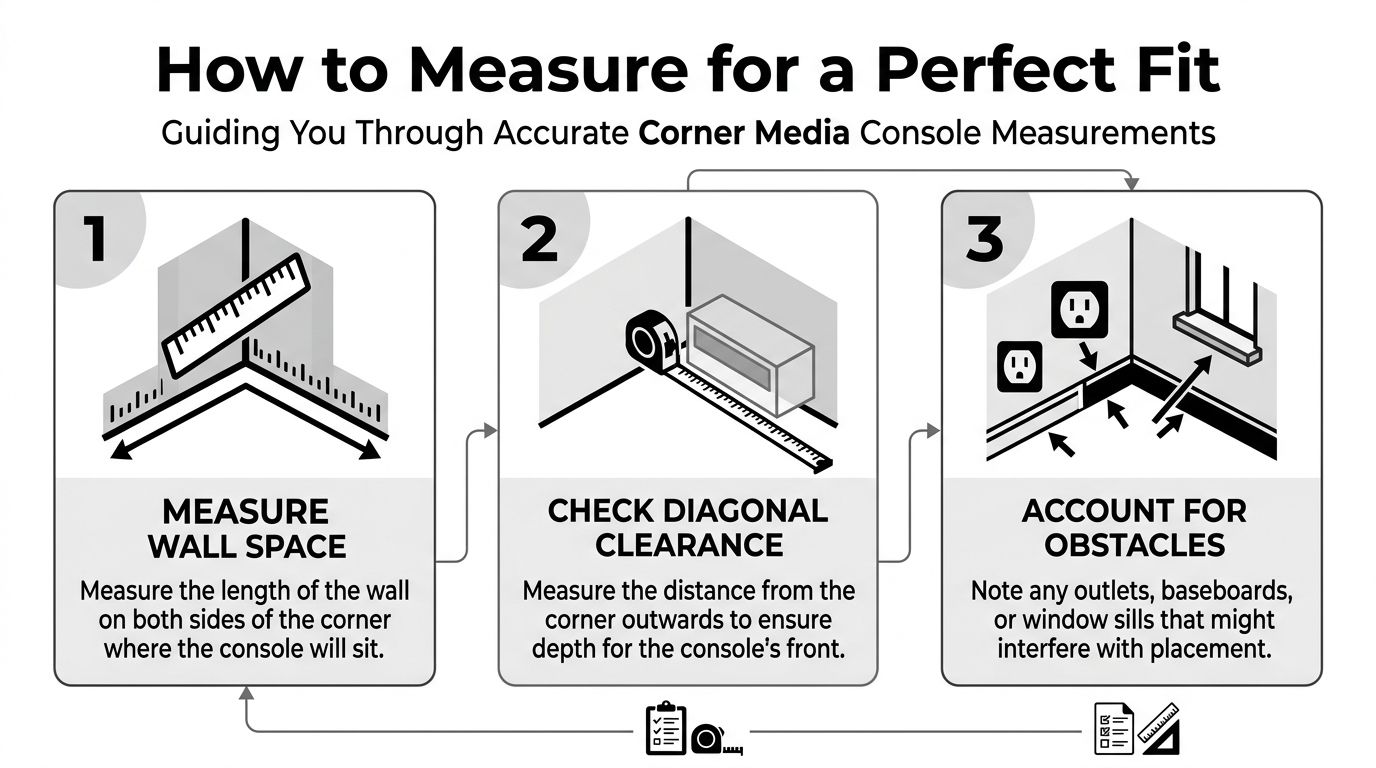
If you want a broader measuring refresher before you shop, this guide on how to measure furniture is a helpful starting point.
Start with the corner, not the TV
Many people measure the television first. That makes sense, but the room has the final say.
Take a tape measure and check these three points:
Measure each wall from the corner outward.
This tells you how much side-to-side room the console can realistically occupy.Measure how far the console can project into the room.
That helps you avoid blocking a walkway or making the seating area feel tight.Look for obstacles.
Baseboards, outlets, floor vents, window trim, and door swing can all affect fit.
Write those numbers down. Don’t trust memory on this one.
Measure the TV by width
Here, people often get confused, focusing mostly on diagonal screen size. TVs are sold by diagonal screen size, but furniture fit depends more on actual width.
A television can sound modest by label and still be wider than you expect once it’s sitting on a stand. So check the manufacturer’s product specs for the TV’s real width, including the base if you’re not mounting it.
Practical rule: When choosing a corner media console, the TV width matters more than the diagonal screen number.
You’ll also want to think about visual balance. If the TV and cabinet are nearly the same width, the setup can look cramped. A bit of extra cabinet width usually looks more grounded.
Don’t forget what lives under the TV
A corner media console isn’t just for the screen. It also has to handle the equipment that makes your setup work.
Look at everything that needs shelf space:
- Soundbar
- Streaming box
- Game console
- Cable or satellite box
- Receiver or amplifier
- Media baskets or small storage bins
Some items need open access for remote signals. Others need deeper shelves than people expect. A receiver, for example, may need more breathing room than a slim streaming box.
A simple checklist helps:
| Item to measure | Why it matters |
|---|---|
| Width | So it doesn’t overhang the shelf or block doors |
| Depth | So cords and plugs fit behind it |
| Height | So the shelf opening doesn’t pinch the unit |
| Vent space | So electronics don’t trap heat |
Leave room for airflow
Heat is easy to ignore because you don’t see it. But your electronics feel it.
Professional-grade media furniture is designed with ventilation in mind. AV components can generate significant heat, and proper clearance can help extend equipment life by 2 to 3 years when you leave 4 to 6 inches for airflow, according to BDI’s Corridor 8175 corner TV stand information.
That matters even more in a corner because two nearby walls can limit air movement.
Here’s the plain-language version:
- Don’t cram a receiver tight against the back panel.
- Don’t pack every shelf opening completely full.
- Don’t assume “it fits” means “it’s safe for long-term use.”
Check the shelf job, not just the cabinet size
A console can be the right outer size and still fail the test if the shelf openings don’t suit your gear.
When you shop, pay attention to:
- Shelf height for taller components
- Shelf depth for power cords and venting
- Door style if you need remote access through the front
- Cable management openings to reduce clutter
Some homeowners also like to reserve one shelf or cabinet section for things that migrate into the living room anyway, such as chargers, manuals, or extra remotes. That little bit of planned storage keeps the top of the console from becoming a catch-all.
A quick measuring routine that works
If you want the short version, do this before you buy:
- Measure both walls from the corner
- Measure allowable depth into the room
- Measure TV width
- Measure each media component
- Note outlets and trim
- Plan for airflow behind electronics
That ten-minute routine can save you from buying a piece that technically fits but doesn’t function well once your room is in everyday use.
Choosing Materials for Durability and Style
A corner media console has to do two jobs at once. It needs to look good in your living room, and it needs to hold up when life gets messy.
That second part doesn’t get enough attention. A lot of furniture advice talks about style, color, or trend. But families with kids, dogs, cats, or regular weekend traffic usually ask different questions. Will this scratch easily? Will it show every fingerprint? Will it still look decent after years of use?
Online conversations show a real content gap around those concerns, especially questions about scratch resistance and stability in busy homes, as noted in this piece on corner TV stands for small living rooms from FITUEYES.
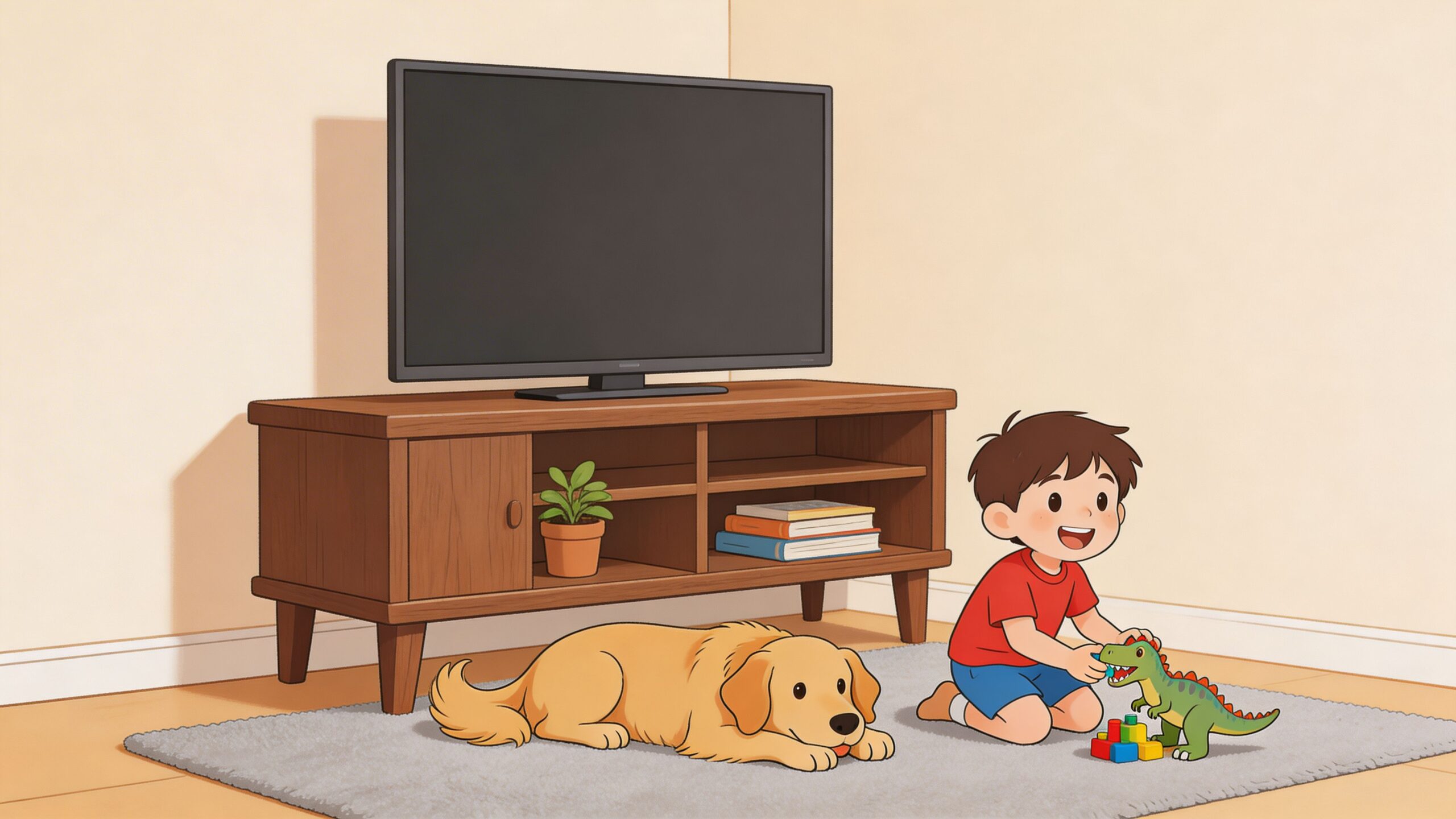
If you want a deeper look at wood construction before narrowing your options, this guide on choosing the right hardwood for longevity and style is useful.
Solid wood for the long haul
Solid wood appeals to a lot of Southwest Virginia homeowners because it feels dependable. It has weight, character, and a warmth that fits traditional, rustic, and classic rooms.
Why people choose it:
- It often ages gracefully
- Minor wear can be less distracting than on slick synthetic surfaces
- It suits homes where furniture is expected to stay for years, not just a season
It’s also a good match for buyers who’d rather invest once and live with the piece for a long time.
The tradeoff is simple. Solid wood can cost more, and some finishes will still show dents or scratches depending on color and texture. But if longevity matters most, this is often the material people come back to.
Veneers for a polished look
Wood veneers sit in the middle for many households. They offer a furniture-grade appearance without requiring the same budget as heavier all-solid-wood construction.
A veneer can be a smart choice when you want:
- A cleaner, more refined furniture look
- Consistent finish across visible surfaces
- Better value than some premium solid wood pieces
The key is construction quality. A well-made veneered console can look handsome in a living room. A poorly made one may not wear as well over time. That’s why seeing the piece in person matters.
Laminates for easier everyday care
For busy households, laminates deserve more respect than they often get. They can be practical, low-fuss, and easy to wipe down after the normal wear of daily life.
That makes them appealing if your living room is the center of everything. Snacks, pets, homework, game controllers, and visitors all tend to pass through this zone.
Laminates can make sense when your priority list looks like this:
| Priority | Material that often fits well |
|---|---|
| Low maintenance | Laminate |
| Classic furniture feel | Solid wood |
| Upscale appearance on a moderate budget | Veneer |
| Family room that takes regular abuse | Laminate or textured wood finish |
If your living room handles real family traffic every day, pick the finish you’ll still like after the first scratch.
Match the material to your household
A good corner media console isn’t automatically the most expensive one. It’s the one that fits your home life.
Think about your household in plain terms:
- If you have young kids, easy-clean surfaces and sturdy construction matter more than delicate detailing.
- If you have pets, darker or more textured finishes may hide day-to-day wear better than smooth glossy ones.
- If you want heirloom feel, wood construction may be worth the extra thought and budget.
- If you’re furnishing on a tighter plan, a well-built laminate or veneer piece can still serve you well.
Shoppers sometimes feel pressure to choose the “best” material in the abstract. That usually leads to regret. The better question is, “What material makes sense for our home?”
Style still counts
Durability doesn’t mean giving up the look you want. A practical family-room console can still feel warm, well-suited, and attractive.
Try to match the finish to the rest of the room:
- Medium and darker wood tones often fit more traditional homes
- Lighter finishes can brighten smaller rooms
- Clean lines help a corner piece feel less bulky
- Closed storage helps the room look calmer even when life isn’t
When style and durability work together, the furniture disappears in the best way. It supports the room instead of demanding attention.
Styling a Console for Your Southwest Virginia Home
A corner media console can do more than solve a layout problem. It can help the room feel rooted. That matters in homes across Southwest Virginia, where many people want comfort first, but still want the room to look thoughtful.
In Galax, Hillsville, Independence, and nearby communities, a lot of living rooms lean warm rather than flashy. You’ll see wood tones, soft upholstery, family photos, quilts, lamps with substance, and pieces that feel collected over time. A corner console can fit that beautifully.

Build around comfort, not clutter
One mistake people make is treating the console top like a storage shelf. Once too many objects land there, the TV wall starts looking busy.
A better approach is to keep the styling simple:
- A lamp if the console is wide enough and the screen placement allows it
- A small plant or greenery for softness
- One or two personal items, such as framed photos or pottery
- Baskets below or nearby if you need hidden storage
If you’re working on the whole TV wall, this guide on how to decorate the wall behind a TV can help you avoid that crowded look.
A room example that feels local
Think about a comfortable den in a ranch home outside town. There’s a recliner in the spot where someone reads every evening. The sofa faces the TV. Traffic moves through one side of the room, and the corner near the windows is the only place the television really works.
A corner media console can anchor that room without making it feel stuffed. Add a textured basket beside it, a warm lamp across the room, and one or two natural accessories on top, and the whole space starts to feel finished.
For homeowners getting a room ready to feel more polished for guests, this article on staging a living room has good ideas for simplifying visual clutter and creating balance.
Think about sightlines and access
This matters even more in a forever home. A lot of seniors in regions like Southwestern Virginia look for corner units in compact homes, but there’s still not much practical guidance on pairing them with recliners or mobility needs for comfortable viewing, as discussed in Foter’s low corner TV stand page.
That means layout deserves extra attention.
A few things to watch:
- Viewing angle should feel natural from the main seat, not twisted
- Walk paths should stay clear around recliners, side tables, and mobility aids
- Glare from windows should be checked before the TV is locked into place
- Reach matters if you use cabinets for everyday devices
A good layout lets the room feel easy to live in. You shouldn’t have to work around your TV stand every day.
Keep the styling grounded
Southwest Virginia homes often look best when they don’t try too hard. The most inviting rooms usually have a little breathing room.
Try this formula:
- Start with the console.
- Add the television and any needed soundbar.
- Place one useful decorative item.
- Step back and stop before the top gets crowded.
That restraint is what keeps a corner media console from looking like an afterthought. It becomes part of the room’s rhythm instead.
How Guynn Furniture Makes Your Purchase Simple
Buying a corner media console sounds straightforward until you start comparing sizes, finishes, storage types, and delivery details. That’s where many people get stuck. They don’t need more pressure. They need clear help.
That’s one reason local shopping still matters in this category. A media console isn’t a throw-in item. It has to fit the room, hold the right equipment, and feel right with the rest of your furniture.
Real help when the room is hard to picture
Some shoppers know exactly what they want. Others know the corner is a mess and need someone to help sort it out.
That’s where design support makes the process easier. Guynn Furniture & Mattress has served this region since 1902, and that long history shows up in how they work with people. The atmosphere is neighborly and no-pressure, which matters when you’re trying to make a smart decision instead of a rushed one.
For more complicated rooms, Debra Williams and the expert design staff can help with room planning, scaled layouts, and coordinating the piece with your seating, tables, and wall space. That’s especially helpful if you’re pairing a console with a La-Z-Boy recliner, Ashley upholstery, or Bassett case goods and want the room to feel pulled together.
You can see the finish before you commit
This is a big advantage over online-only shopping. With a corner media console, photos don’t always tell you enough.
In person, you can check:
- The finish color in real light
- The door style and storage layout
- The scale next to other living room furniture
- The overall build so you know whether it feels sturdy
Guynn also keeps a large in-stock selection, which means many shoppers don’t have to wait around wondering when the room will finally come together.
Value without the guesswork
Budget matters. Many families are balancing what they want with what makes sense right now.
Guynn’s Low Price Promise helps take some anxiety out of that process. They match local competitors’ advertised prices and offer a 30-day price guarantee. That’s the kind of policy that makes comparison shopping feel less stressful.
And if you’d rather spread out the purchase, flexible financing options are available, including no-interest plans for credit-qualified customers. That helps value-minded shoppers furnish the room they want without feeling boxed in.
Delivery matters more than people think
A corner media console isn’t always fun to move. It can be heavy, awkward, and easy to bump into a doorway or wall.
That’s why free in-home delivery and setup within 60 miles is such a practical benefit. For customers in Galax, Independence, Hillsville, and the wider Southwestern Virginia and Northern North Carolina region, that means less lifting, less guessing, and less hassle getting the piece placed correctly.
Here’s what that helps avoid:
| Common problem | Why local setup helps |
|---|---|
| Piece won’t fit the way you imagined | Placement can be adjusted in the room |
| Heavy cabinet is difficult to move safely | Delivery team handles the lifting |
| Assembly or setup is frustrating | In-home setup saves time and strain |
| You’re worried about damaging walls or floors | Experienced delivery reduces the risk |
A whole-home perspective helps
A media console rarely lives alone. It usually sits beside other decisions. Recliners, sofas, rugs, lamps, mattresses for the guest room, and future updates all connect over time.
That’s another benefit of working with a family-run store serving this region. You can shop across categories and coordinate with trusted brands like La-Z-Boy, Ashley, Bassett, Sealy, and Therapedic instead of trying to piece the home together from random sources.
The process feels simpler because it is simpler.
Find Your Perfect Corner Piece Today
The right corner media console can change more than one corner. It can improve the way your whole room works.
When the size is right, the material fits your household, and the styling stays simple, the room feels calmer. The TV area looks intentional. The storage starts doing its job. And that awkward corner finally earns its keep.
For homeowners across Galax, Hillsville, Independence, and the wider Southwestern Virginia and Northern North Carolina region, this kind of piece makes a lot of sense. It respects the space you have, supports the way your family lives, and can blend into everything from a traditional den to a more updated living room.
If you’ve been stuck between “good enough for now” and “I’m not sure what to buy,” you don’t have to stay there. Seeing the finish in person, checking the storage, and comparing sizes side by side usually clears up the confusion fast.
A corner media console isn’t a small decision. But it also doesn’t have to be a hard one when you can measure carefully, think carefully about your household, and choose a piece that fits both your room and your routine.
Visit Guynn Furniture & Mattress to make the process easy. Our family has been serving Galax, Independence, Hillsville, and the wider Southwestern Virginia and Northern North Carolina region since 1902 with a warm, no-pressure atmosphere. Visit our showrooms in Galax, Independence, or Hillsville to test the comfort for yourself. Schedule a consultation with our design team to start planning your dream room today. Browse our selection online at guynnfurniture.net.