Beds for Storage: Maximize Space & Style

Your bedroom should be the one room that helps you exhale. But for a lot of families around Galax, Independence, Hillsville, and the wider Southwestern Virginia and Northern North Carolina region, it turns into the place where extra blankets land, shoes collect, and laundry baskets seem to multiply overnight.
That’s usually when people start looking at beds for storage.
A storage bed isn’t just a bed with a few extra drawers tucked underneath. It’s a practical way to give everyday items a real home without crowding the room with more furniture. If your dresser is packed, your closet is working overtime, or your home has one of those older bedrooms with great character but limited floor space, this kind of bed can make the room feel calmer and easier to live in.
We’ve been helping local families furnish their homes since 1902, and one thing hasn’t changed. Customers don’t want a sales pitch. They want clear answers. They want to know what will fit, what will last, and what will make life simpler.
Sometimes the smartest bedroom change starts with one piece that does two jobs well. If you’re also rethinking closets, built-ins, or overflow storage in other parts of the house, these smart storage solutions can spark ideas beyond the bedroom too. And if you’re sorting through clutter before buying anything new, our guide on how to eliminate clutter with bedroom solutions is a helpful place to start.
Your Guide to Smarter Bedroom Storage
A storage bed works by using space that often goes underused. Instead of leaving the area under the mattress empty or hard to reach, the bed turns that footprint into organized storage.
That sounds simple, but it helps with a real problem. Bedrooms collect bulk fast. Spare sheets, winter blankets, out-of-season clothes, extra pillows, photo albums, and even gift wrap all need a spot. If they don’t have one, they end up in corners, on chairs, or stacked on top of the closet shelf where nobody can reach them easily.
A good storage bed doesn’t just hide clutter. It changes how the room functions day to day.
For many households, the appeal is less about looks and more about ease. You’re not adding another chest, another cabinet, or another obstacle to walk around. You’re using the space where the bed already sits.
That’s why beds for storage appeal to so many different households:
- Families with kids: Extra bedding, stuffed animals, and seasonal clothes need accessible storage.
- Older homes owners: Bedrooms may be charming, but they don’t always have large closets.
- Downsizers and new movers: One furniture piece doing double duty can simplify the whole room.
- Value-focused shoppers: Combining sleeping space and storage can reduce the need for another bedroom piece.
Some people love the tidy look. Others just want the room to stop feeling full. Both are valid.
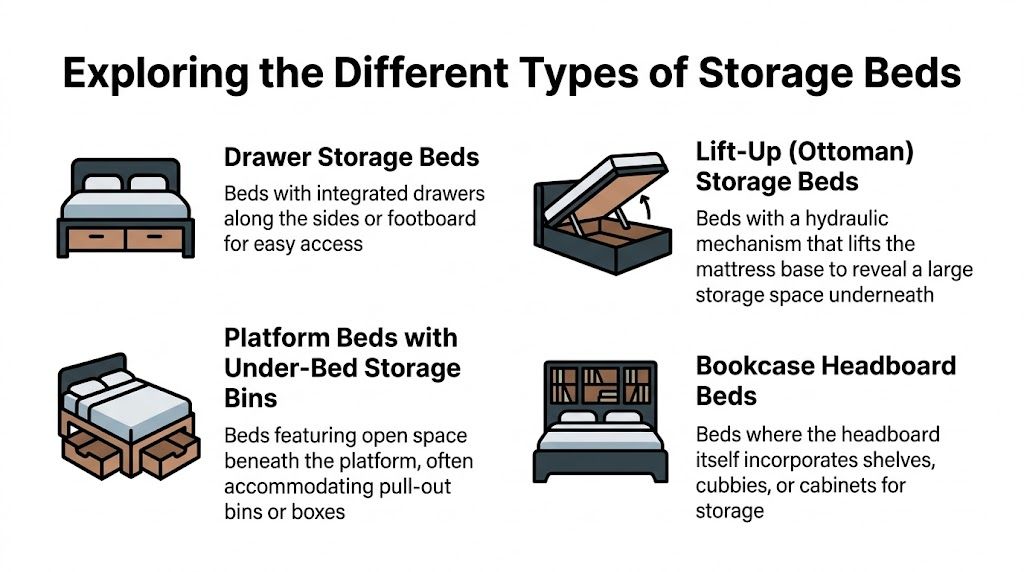
Exploring the Different Types of Storage Beds
A storage bed is a little like choosing the right kind of pantry. The best setup depends on what you need to store, how often you reach for it, and how much room you have to open, lift, or slide things out.
That matters even more in real homes around SW Virginia. Many older houses have smaller bedrooms, tighter walkways, and closets that were never designed for today’s storage needs. A bed that looks great online can feel awkward fast if a drawer bumps into a dresser or a lift-up frame hits a low window ledge.
Drawer storage beds
Drawer beds are the most familiar option. The frame includes built-in drawers along the sides, the footboard, or both, so storage works much like a dresser built into the bed.
For families, this style often makes the most day-to-day sense. Kids can learn where extra pajamas go. Guest sheets stay in one predictable spot. You do not have to lift a mattress to reach anything.
They are usually a good fit for:
- Everyday items: Sheets, pillowcases, sleepwear, folded clothes
- Guest spaces: Linens stay close to the bed they belong to
- People who like categories: Separate drawers make sorting simpler
The big question is clearance. Drawers need room to open fully. In an older home with narrow bedroom paths, that can be the deciding factor. Durability matters too. If children are opening and closing drawers often, look for solid drawer construction and runners that feel steady, not flimsy.
If you want to see this style in a more traditional design, the Flynnter queen sleigh bed with 2 storage drawers is a clear example of how built-in storage can blend into a classic bedroom set.
Lift-up storage beds
Lift-up beds open from the top and reveal one large storage area under the mattress. Instead of several smaller compartments, you get one broad space for bigger items.
This style works well for things you do not need every morning. Extra comforters, winter blankets, keepsake bins, and guest bedding are common examples. If drawer beds are like kitchen cabinets with dividers, lift-up beds are more like a storage chest hidden under the mattress.
One practical point trips people up. The mattress and lift mechanism have to work together. A very heavy mattress can make the bed harder to raise and lower, and over time that can put more strain on the hardware. Lift-up beds also need enough open space above the frame for comfortable access.
These are often a strong match for:
- Seasonal bedding: Quilts, comforters, spare pillows
- Bulky soft goods: Throws, blankets, guest linens
- Less-frequent storage: Keepsakes, luggage, backup bedding
In a tighter room, lift-up beds can solve a problem drawer beds cannot. They do not need side clearance. But they do ask more of the person using them, which is worth considering for older adults, younger kids, or anyone who wants quick one-handed access.
Platform beds with under-bed storage bins
Some platform beds keep things simple. They leave open space underneath so you can slide in baskets, bins, or low-profile containers.
This setup gives you flexibility, which many families appreciate. Storage needs change. A room that holds toys this year may need space for teen clothes, college keepsakes, or holiday linens a few years from now. With bins, you can swap the system out without replacing the bed.
This type often suits:
- Shoppers who want flexibility: Containers can change as needs change
- Secondary bedrooms: Less wear from daily use
- Budget-minded households: A simpler way to add storage without built-in hardware
The tradeoff is appearance. If the bed sits high enough to show the bins, the room can look busy unless the containers match and fit neatly. Dust can also be more of a factor than with enclosed drawers.
Bookcase headboard beds
Some beds place the storage up top instead of down below. A bookcase headboard includes shelves or cubbies in the headboard, which keeps smaller items within arm’s reach.
This can be a smart solution in homes where under-bed access is limited by rugs, tight spacing, or other furniture. It is also useful for kids’ rooms, where bedtime books, a lamp, and a few favorite things need a home that is off the floor but easy to reach.
Good uses include:
- Readers: Books, glasses, chargers
- Kids and teens: Small items stay contained
- Compact rooms: Storage is added without another small case piece
Bookcase headboards do not replace the capacity of drawers or a lift-up base, but they can solve a different kind of clutter. They help with the little things that tend to collect on nightstands, window sills, or the floor.
Which type suits your routine
The easiest way to narrow your options is to match the bed to the items you store, not the items you think you might store someday.
| Storage need | Usually works best |
|---|---|
| Clothes and linens you reach for often | Drawer storage bed |
| Bulky seasonal bedding | Lift-up storage bed |
| Flexible, removable storage | Platform bed with bins |
| Bedtime essentials and display items | Bookcase headboard bed |
Style still matters, of course. So does how the bed will hold up in a busy household. Brands like Ashley and Bassett offer storage beds in traditional, casual, and updated looks, which gives families a better chance of finding something that fits both the room and the routine.
Weighing the Pros and Cons for Your Family
Storage beds solve a real problem, but they aren’t perfect for every household. It helps to view them realistically.
The biggest advantage is convenience. Instead of spreading storage across multiple pieces, you keep it close to where you already use it. That can make morning routines smoother and keep the room from feeling crowded.
For many families, the visual calm matters too. When blankets, off-season clothes, or extra linens have a designated place, the whole bedroom tends to feel less hectic.
Why families like them
Some benefits show up right away. Others show up a few weeks later when the room is easier to keep picked up.
- Less visible clutter: Items go inside the bed instead of on chairs or in piles.
- Better use of square footage: The bed footprint does more work.
- Cleaner room flow: Fewer standalone storage pieces can mean fewer visual interruptions.
- Useful in shared bedrooms: Kids’ rooms and guest rooms often benefit most from hidden storage.
The tradeoffs people don’t always consider
A storage bed is a more complex piece of furniture than a standard frame. More moving parts can mean more wear over time.
As noted in this article about storage bed buying considerations and durability gaps, storage beds with hydraulic-lift mechanisms and integrated drawers experience more wear on hinges, springs, and runners compared to traditional frames. That doesn’t mean they’re a bad idea. It means the construction details matter more.
A few concerns come up often:
- Heavier build: These beds can be harder to move once assembled.
- More parts to maintain: Drawers, runners, hinges, and lift hardware need occasional attention.
- Cleaning can be different: With enclosed bases, you may not have the same easy sweep-under access as an open frame.
- Kid and pet wear: Repeated slamming, climbing, and rough use can test hardware faster.
In active homes, the question isn’t just “How much can this bed hold?” It’s “How will it hold up to daily life?”
That’s the part many online guides skip. Families with children, pets, or frequent guests need to think beyond the first week of ownership.
How to think about long-term value
A well-chosen storage bed can still be a smart buy. The key is matching the mechanism to your habits.
If you want something opened several times a day, smooth drawer operation matters. If you plan to store bulky bedding and access it less often, a lift-up design may fit better. And if your household is rough on furniture, it’s worth paying attention to sturdier hardware and simple maintenance.
At the practical level, long-term value often comes down to three things:
- Use the right storage type for your routine
- Avoid overloading moving parts
- Choose a design your room can support
That kind of planning helps a storage bed feel like a solution, not one more thing to work around.
Key Buying Considerations Before You Choose
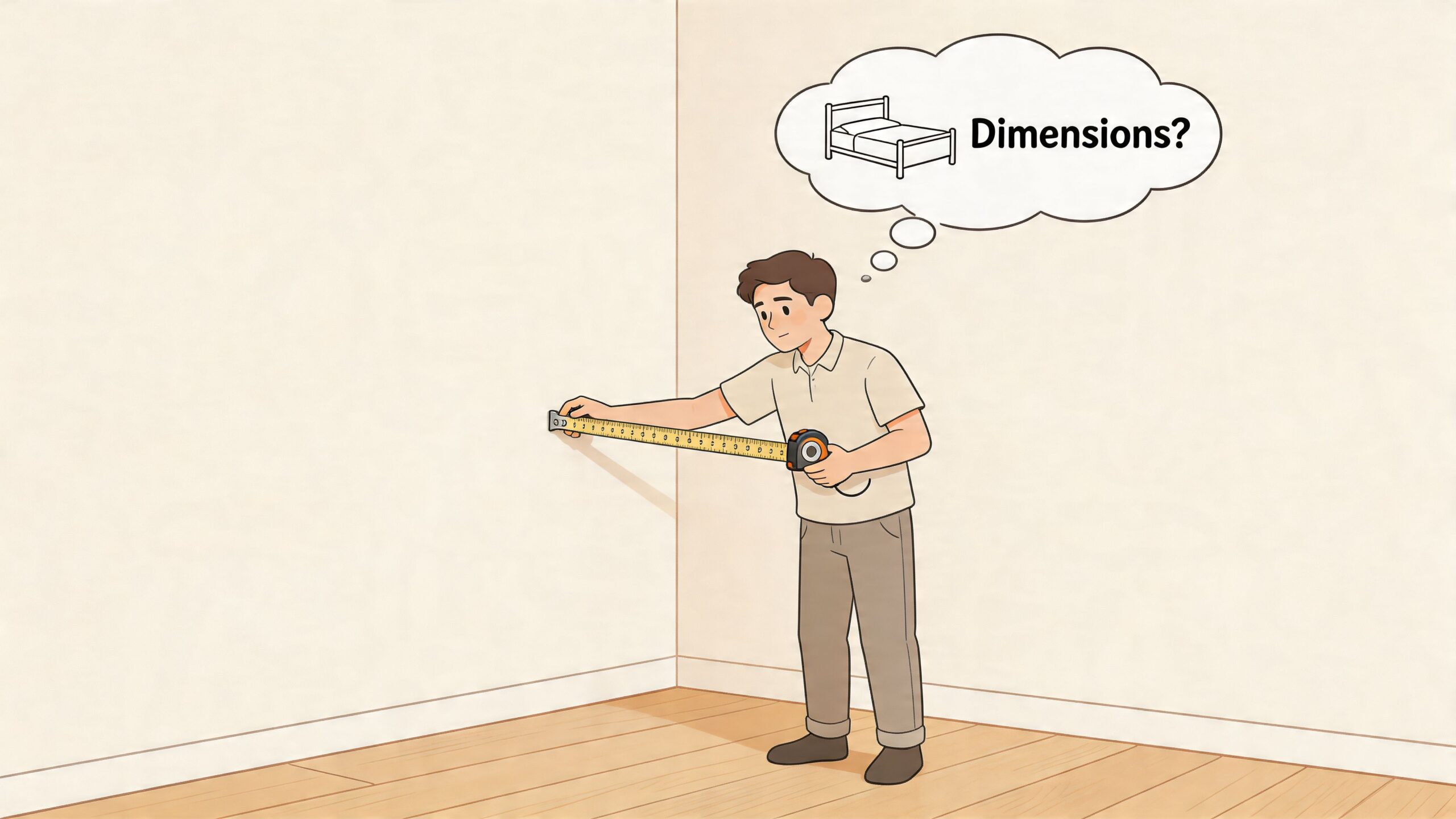
A storage bed has to fit your room, your mattress, and the way your household lives. Careful measuring helps avoid frustration.
Start with room clearance
Many people measure for the mattress size and stop there. That’s the most common mistake.
According to this guide on drawer storage bed clearance requirements, storage beds with drawers require 18 to 24 inches of clearance on each side for full operation. The same source notes that a queen bed with drawers on both sides needs a room width of at least 96 to 108 inches, or 8 to 9 feet, to be fully functional.
That matters in older homes across Southwestern Virginia, where bedrooms can have tighter wall spacing, radiators, baseboard heaters, or narrow walking paths.
Before you buy, measure:
- The wall-to-wall width
- The walking space beside the bed
- Nearby nightstands
- Door swing and closet doors
- Any low windows, sloped ceilings, or built-ins
If your room is tight on one side, a drawer bed may still work if drawers open only where you have access. If side clearance is limited all around, another style may make more sense.
Check the mattress before choosing a lift bed
Lift-up beds introduce a second layer of planning. The mattress isn’t just sitting on the frame. It affects how the lifting system performs.
For hydraulic lift-up beds, the mattress should ideally stay under the thickness covered earlier. In everyday terms, that means you’ll want to pair the frame with a mattress that the mechanism can handle comfortably.
Shoppers often get tripped up, picking the bed first and assuming any mattress will work. It’s better to think of the bed and mattress as a pair.
A simple checklist helps:
- If you prefer a tall, heavy mattress: Lean toward drawer storage instead of lift-up.
- If you want a lift mechanism: Ask about mattress thickness and overall feel before finalizing.
- If comfort is the priority: Test the full combination together, not just each piece separately.
Sealy and Therapedic mattresses can be especially helpful to compare in person because firmness, profile, and overall heft vary from model to model.
Measure the room first. Match the mattress second. Choose the storage mechanism third.
That order prevents a lot of expensive surprises.
Think about what you’re storing
The right bed depends on what’s going inside it.
If you’re storing folded clothes, kids’ pajamas, or extra pillowcases, drawers usually feel more natural. If the goal is to tuck away bulky comforters or luggage, a lift-up compartment often uses the interior space more effectively.
Ask yourself these questions:
| Question | Why it matters |
|---|---|
| Do I need daily access or seasonal access? | Frequent use favors easy-open storage |
| Are the items bulky or small? | Big items fit better in one open compartment |
| Do I like categories or one large storage zone? | Drawers organize differently than lift space |
| Will kids use it too? | Simpler access may be easier for shared rooms |
For more planning ideas, our article on features to know in bedroom furniture storage can help you think through the smaller details that affect everyday use.
Match the bed to the style of your room
Function matters, but a bed still anchors the whole bedroom.
Storage beds now come in a wide range of looks, including upholstered panels, rustic wood finishes, sleigh silhouettes, and cleaner modern lines. That means you can still coordinate with existing pieces or build around a full collection.
A few style pairings tend to work well:
- Traditional rooms: Sleigh beds, richer wood tones, framed headboards
- Casual farmhouse spaces: Weathered finishes and simple hardware
- Soft, cozy bedrooms: Upholstered headboards and quieter fabric textures
- Modern spaces: Platform-style profiles with simpler lines
Bassett and Ashley both offer bedroom collections that can help storage furniture blend in rather than stand out as purely practical.
Don’t forget the household itself
The room isn’t the only thing to measure. Your routine matters just as much.
If the bed will be used by a child, teen, older adult, or guest, ease of opening becomes important. If pets sleep nearby, think about whether drawers will bump pet beds or block traffic paths. If you move often, a more complex storage frame may take more effort to disassemble and set up again later.
Those aren’t glamorous details. They’re the ones that make a piece feel right after the delivery truck leaves.
Storage Bed vs a Traditional Dresser
This choice comes up all the time. Is it better to buy one bed that stores things, or keep a regular bed and add a dresser?
The answer depends on the room, but in smaller bedrooms, a storage bed often wins on efficiency.
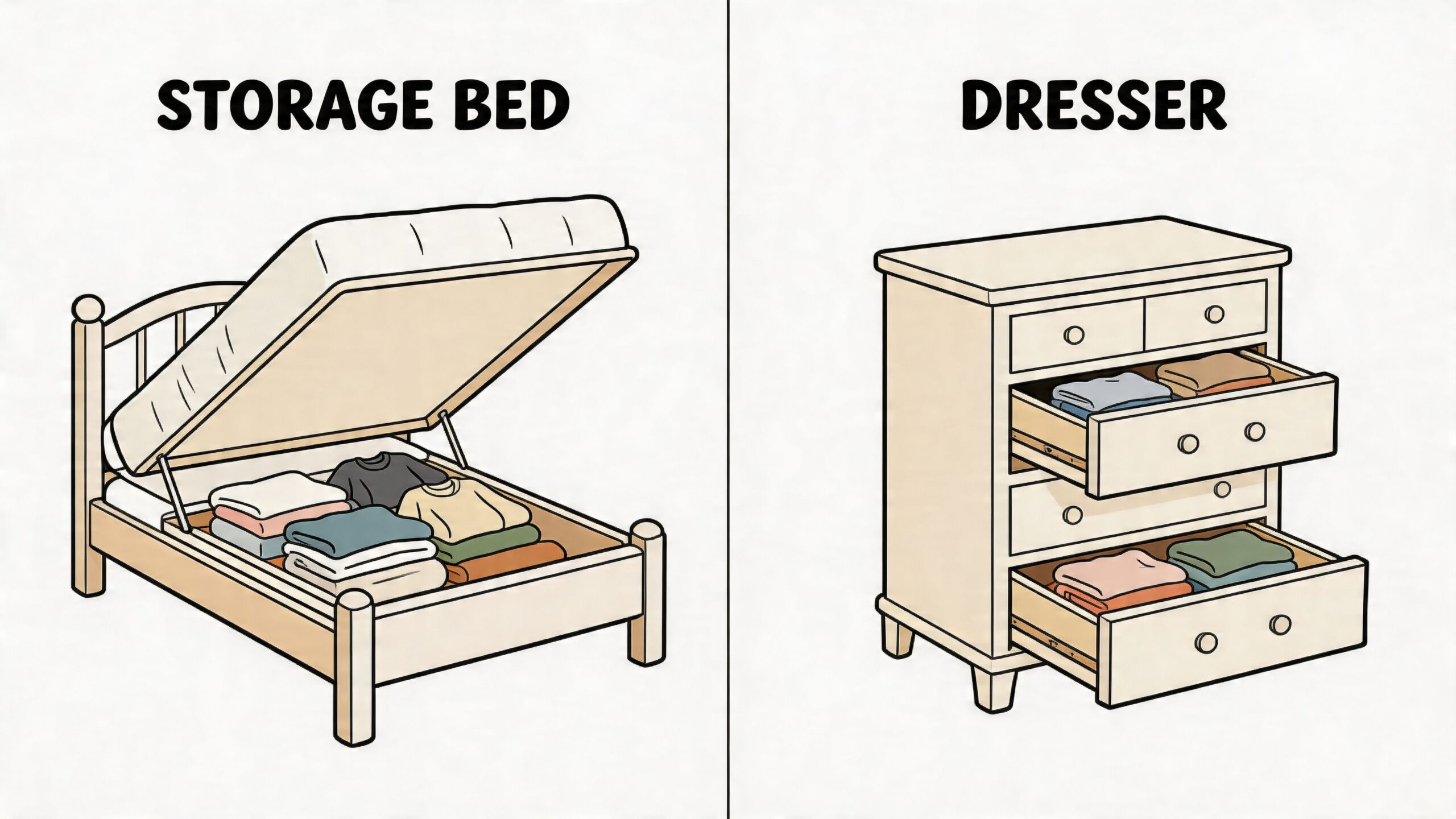
According to this overview of storage bed space savings, a storage bed can save up to 20 to 25 square feet of floor space compared to a traditional bed and a separate dresser. That reclaimed space can function like a small reading corner or a compact home office nook.
That’s a meaningful difference in a bedroom where every walkway matters.
Why the bed often makes better use of space
A traditional setup spreads storage across multiple surfaces. You have the bed. Then you add a dresser. Sometimes you still add a chest. Before long, the room starts working against itself.
A storage bed consolidates some of that need into one footprint.
That can give you room for things people want in a bedroom:
- An open path around the bed
- A chair by the window
- A pet bed that isn’t in the way
- More breathing room overall
Where a dresser still makes sense
This doesn’t mean dressers are obsolete. They still serve a purpose, especially for households that want more vertical storage or need quick access to folded clothes every day.
A dresser may still be the better choice if:
- You have a large bedroom with extra wall space
- You want shared access for two people at once
- You prefer seeing all clothing categories at a glance
- You already own a bed you love and just need more storage
If you’re comparing those options, our guide on what to look for when buying chests, dressers, and cabinets can help you weigh the tradeoffs more carefully.
Thinking about value, not just price
For value-focused shoppers, the key comparison isn’t only the ticket price. It’s what the furniture lets you avoid buying later.
One piece that combines sleeping and storage may reduce the need for another large case good. It may also make a room function better without forcing you to rearrange everything else. That’s especially useful for first homes, guest rooms, and bedrooms that don’t have generous closets.
If your room feels crowded now, adding another standalone piece may solve one problem while creating another. A storage bed can sometimes be the cleaner answer.
How We Help You Find the Perfect Fit
You pick out a storage bed online, measure the mattress, and feel ready. Then the real questions show up. Will the drawers open beside your nightstand? Will the frame fit a tighter bedroom in an older SW Virginia home? Will it stand up to kids climbing in and out every day?
That is usually the moment a storage bed stops being a picture on a screen and starts becoming part of real life.

For shoppers in Galax, Independence, Hillsville, and across Southwestern Virginia and Northern North Carolina, Guynn Furniture & Mattress helps people sort through those practical details in person. That includes bedroom furniture, mattresses, and design guidance based on room size, daily routines, and how a home is built. In this part of the region, that matters. Older houses often have narrower walkways, less forgiving room layouts, and closets that were never designed for modern storage needs.
A good fitting process starts with plain, useful questions. The goal is not to show you more options. The goal is to narrow the field to beds that make sense for your family.
What support looks like in real life
We usually begin with how the room works day to day.
A primary bedroom has different demands than a guest room. A child’s room often needs sturdier construction and simpler access. A room used by grandparents may need storage that is easier to reach without bending and lifting too much.
Then we talk about what needs to go inside the bed. Extra quilts, kids' toys, off-season clothes, and spare sheets all take up space differently. Drawer storage works a lot like kitchen cabinets. It keeps everyday items easy to reach. Lift-up storage works more like an attic hatch. It gives you a larger hidden area, but it is usually better for things you do not need every morning.
The room itself gets equal attention. We look at clearance beside the bed, traffic flow at the footboard, and whether the frame will feel balanced with the rest of the furniture. If you want help pulling all of that together, our bedroom planning and design services can give you a second opinion on layout, scale, and coordinating pieces.
The right bed should fit the room you actually have, not the one you wish the blueprint had given you.
Why local service still matters
Storage beds are heavier and more complicated than a basic frame, so the shopping experience matters after the purchase too. Delivery, setup, and clear answers about how the bed operates can save a lot of frustration.
Local families often tell us they value a few simple things:
- Straight answers about fit. Whether a bed suits a narrow room, an older home, or a child’s bedroom matters more than a polished sales pitch.
- A chance to test construction in person. You can feel how drawers glide, check corner stability, and compare whether a bed feels built for long-term use.
- Help matching the bed to the mattress. That is especially useful with storage designs that have moving parts or height limits.
- Options that are available without a drawn-out wait. If the room needs to function better soon, timing matters.
For many households in our area, that kind of guidance brings some calm to the process. You are not just choosing a style. You are choosing how the room will work for years.
Your Storage Bed Checklist and FAQs
A checklist helps when you are standing in a bedroom with a tape measure in one hand and a dozen bed options in your head. It keeps you focused on how the bed will live in your home, especially in older SW Virginia houses where wall space, floor slope, and tighter rooms can change what works.
A practical buying checklist
- Measure the room as it is today: Include baseboards, window trim, heating vents, and the space needed to walk around the bed comfortably.
- Match the storage style to your routine: Drawers suit items you grab often. Lift-up storage suits bulkier things you use less often, like extra quilts or winter blankets.
- Consider the intended users: A child, teenager, guest, or older adult may each need a different kind of access. Easy operation matters just as much as storage volume.
- Check mattress compatibility: Some lift-up beds work best with mattresses that are not overly thick or heavy, so the mechanism stays easier to raise and lower over time.
- Look at construction, not just appearance: Smooth drawer glides, steady corners, and solid hardware usually tell you more about long-term value than fabric color or headboard shape.
- Choose storage with a purpose: If you already know what will go inside, the bed is more likely to stay organized instead of turning into a hidden junk drawer.
- Ask how setup and care work: A storage bed has more parts than a standard frame, so clear instructions and proper assembly make a difference.
One simple rule helps here. Buy for your daily habits, not for your best intentions.
Common questions
Are beds for storage good for everyday use
Yes, if the design fits how your family lives. Drawer beds are often easier for daily items because access is quick and familiar. Lift-up beds can hold a lot, but they usually make more sense for things you do not need every morning.
What should I store inside a storage bed
Soft, bedroom-related items are usually the easiest choice. Extra sheets, comforters, blankets, guest linens, and off-season clothing fit well and are less likely to strain the storage space. Keeping like items together helps you find things fast.
Can I use any mattress on a lift-up storage bed
Not always. Some lift systems work better with mattresses that stay within a certain weight and height range. If the mattress is too thick or heavy, lifting can feel awkward and the mechanism may wear faster. Checking the bed maker's guidelines before you buy saves frustration later.
How do I help a storage bed last longer
Use it the way you would use a good set of kitchen drawers. Open it gently, do not overload it, and pay attention if anything starts rubbing, sticking, or sitting unevenly. Small problems are much easier to fix early than after hardware has been forced out of line.
Can a storage bed replace all bedroom storage
Sometimes. In a guest room or a child's room, it may cover most of what you need. In a primary bedroom, many families still prefer at least one dresser or chest for easier clothing access and better day-to-day organization.
If you want to compare options in person, Guynn Furniture & Mattress has showrooms in Galax, Independence, and Hillsville where shoppers can test storage beds, check how they open, and see which styles feel practical for their space.