First Home Essentials Checklist: A Room-by-Room Guide

The day you get the keys is exciting right up until you realize you're standing in an empty house with a dozen boxes, no shower curtain, and nowhere comfortable to sit. That's normal. Most first-time homeowners feel a mix of pride, stress, and a quiet sense that every purchase suddenly matters more.
A good first home essentials checklist helps you slow down and make better choices. Instead of buying everything at once, you buy what helps you live well now and what will still serve you years from now, especially if this is the home you hope to grow into with kids, pets, guests, and everyday wear and tear.
Table of Contents
- Welcome Home Your Guide to Getting Started
- The First Week Survival Kit Essentials to Buy Now
- Furnishing Your Living Room for Lasting Comfort
- Creating Your Ultimate Bedroom Sanctuary
- Smart Shopping Tips for a Durable Home
- Your Partner in Home Comfort Since 1902
Welcome Home Your Guide to Getting Started
Walking into your first home for the first time feels big. The rooms echo a little, the to-do list gets long fast, and even simple choices can feel heavier than they did in an apartment. A lamp isn't just a lamp anymore. It has to fit the room, work with your routine, and hold up over time.
That's why a prioritized list matters. According to the National Association of Home Builders, new homeowners spend an average of nearly $12,000 on alterations, furnishings, and repairs during the first year, so planning purchases in order can help you manage those costs with less stress (NAHB data highlighted by PODS).
Start with function before style
The first mistake many buyers make is trying to finish the whole house at once. That usually leads to rushed decisions, duplicate purchases, and furniture that looked fine online but doesn't work in real life.
A calmer approach looks like this:
- First, make the home livable: Focus on sleep, bathing, eating, lighting, and basic storage.
- Next, buy anchor pieces: The sofa, mattress, bed, and dining seating shape your daily life more than accessories ever will.
- Then, fill in around them: Rugs, tables, lamps, extra seating, and decor can come after you've lived in the space a bit.
Practical rule: If an item affects your sleep, back, daily meals, or safety, move it to the top of the list.
Think like a homeowner, not a temporary renter
A forever-home mindset changes what you buy. You stop asking, “Will this get us through the move?” and start asking, “Will this still make sense after muddy shoes, holiday guests, a dog on the couch, or a child doing homework at the coffee table?”
That's also when outside help becomes useful. Along with local planning, practical moving guidance like this expert Georgina relocation advice for new buyers can help you think through the moving side of the transition, not just the shopping side. For organization on the home setup side, this new homeowner organization guide is a helpful place to start.
The First Week Survival Kit Essentials to Buy Now
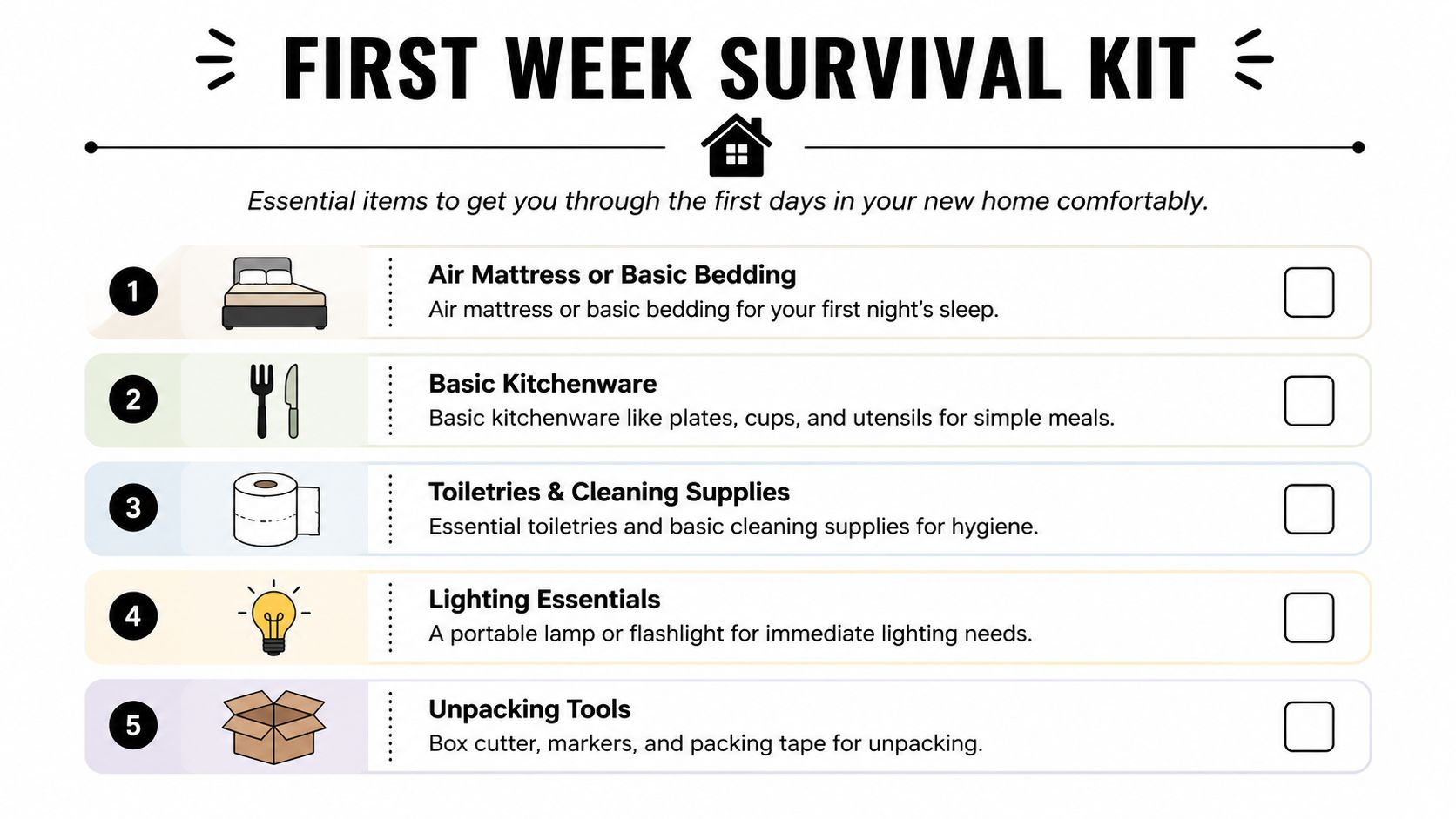
The first week is about function, not perfection. You need enough in place to sleep well, eat easily, clean up, and find what you need without opening every box in the house.
What you need on day one
Keep these items together in a clearly marked group so they don't disappear into the garage or guest room.
- Sleep basics: Mattress or temporary bedding, pillows, sheets, blanket, and a bedside lamp.
- Bathroom basics: Shower curtain, liner, bath towels, hand towels, soap, toilet paper, and a bath mat.
- Kitchen basics: A skillet or saucepan, spatula, a few plates, cups, utensils, dish soap, sponge, and coffee supplies.
- Light and power: Flashlights, batteries, phone chargers, and a couple of easy-to-reach lamps.
- Unpacking tools: Box cutter, marker, tape, trash bags, and paper towels.
A lot of people underestimate how tiring the first few nights are. If you can get one room working properly, make it the bedroom. A real mattress and basic bedding do more for your mood than almost anything else in those first days.
Keep the kitchen simple
You do not need a fully stocked dream kitchen right away. You need enough to make breakfast, heat soup, cook pasta, and clean up afterward. That's it.
A practical starter setup usually includes:
| Item | Why it matters in week one |
|---|---|
| One pan or pot | Handles most simple meals |
| Two to four place settings | Keeps dishes manageable |
| Coffee maker or kettle | Restores normal routine fast |
| Food storage containers | Helps with leftovers and takeout |
| Dish towel and soap | Prevents immediate clutter |
If you're setting up a compact freezer or trying to keep the kitchen organized from the start, small tools can help more than people expect. This guide to best stackable ice molds is a good example of the kind of practical detail that makes a new kitchen easier to live with.
Unpack for routine first. The boxes labeled “everyday” should open before the ones labeled “decor.”
For the overflow that shows up almost immediately, a few smart habits from this clutter-solving guide can save your counters and floors from becoming a holding zone for the next month.
Furnishing Your Living Room for Lasting Comfort
The living room becomes the center of the house before you even mean for it to. It's where people land after work, where guests gather, where pets stretch out, and where children build forts out of throw pillows. That's why the first major piece here matters so much.

A common pattern goes like this. A family falls in love with a sofa because of the color or the photo online. It arrives, and suddenly the walkway is cramped, the arm height feels awkward, or the fabric doesn't fit life with a dog and two kids. The living room feels off, even though the piece itself isn't “wrong.”
Start with the seat everyone will use
For most homes, the hero piece is the sofa or sectional. If you're furnishing for everyday family life, comfort and scale come before trend.
Look for these signs of a smart choice:
- Comfort you can live with: Sit depth, back support, and arm height should match how your family relaxes.
- Fabric that forgives real life: Performance fabrics are easier to live with when snacks, paws, and spills are part of the picture.
- A shape that fits the room: A sectional can anchor an open layout beautifully, but only if it leaves easy walkways and doesn't crowd the entry path.
If your taste leans classic comfort, La-Z-Boy is worth considering, especially for households that want seating they'll use for years. If you want flexible, family-friendly style, Ashley often gives buyers more options in silhouettes and finishes.
Build the room outward, not all at once
Once the main seating is chosen, the rest of the room gets easier. You can see what table height feels right. You'll know whether you need one end table or two. You can decide if a rug should define the whole space or soften the seating area.
A practical order looks like this:
- Sofa or sectional
- Coffee table
- One or two lamps
- End tables
- Rug
- Accent chair or storage piece
Buy the foundation first and live with it for a bit. The room will tell you what's missing.
Measure before you commit
Good intentions often go sideways. Buyers measure the wall but forget the doorway, the turn in the hallway, or how far a recliner extends when it's open.
Before you buy, check:
- Room width and depth
- Doorways and stair openings
- Distance between seating and television
- Clear walking paths
- Space for side tables and lamps
For more practical ideas on arranging a comfortable, usable room, this roundup of living room essentials can help you sort the must-haves from the nice-to-haves.
Creating Your Ultimate Bedroom Sanctuary
The bedroom shouldn't be treated like the room you finish last. It's the room that gives back to you every single day. If the bed is too small, the mattress is wrong, or storage doesn't work, you feel it immediately and then keep feeling it.

This is one place where buying “for now” often turns into buying twice. A too-small bed might seem practical at closing time, when every dollar matters. A few months later, it often feels like the one shortcut that wasn't worth it.
Why mattress size matters more than people expect
A Sleep Foundation study found that 37% of first-time homebuyers regret choosing an undersized bed, and that decision contributes to a 28% increase in sleep disruption. The same source notes the importance of choosing the right size and quality, including options such as Sealy models with over 1,000 coils for motion isolation (Sleep Foundation data highlighted by Redfin).
That lines up with what many homeowners figure out the hard way. The bed has to fit not just the room, but the life you're living in it. If one person reads late, if a pet curls up at the foot, if kids wander in on Saturday morning, extra space matters.
Build a room that supports rest
The best bedrooms don't just look tidy. They make your routine easier at night and calmer in the morning.
Here's a durable, sensible setup:
- Mattress first: Sealy and Therapedic are solid places to start if comfort and support are the priority.
- A proper bed frame: It supports the mattress and sets the visual tone of the room.
- Nightstands that function: Enough surface for a lamp, phone, glasses, and a book.
- A dresser that fits your habits: Drawers should match what you fold and store.
- Soft lighting: Overhead light alone rarely makes a bedroom feel restful.
Choose pieces you won't outgrow
Bassett is a good fit for buyers who want bedroom furniture with a more lasting feel. A sturdy dresser and matching nightstands often make more sense than piecing together temporary storage that doesn't age well.
A bedroom also benefits from restraint. You don't need to crowd it with extra benches, decorative shelving, or oversized accent pieces right away. You need enough furniture to support sleep, storage, and a sense of calm.
A peaceful bedroom usually has fewer pieces, better pieces, and room to move around them.
If you're trying to match scale, storage, and style without making an expensive mistake, this guide on how to select the perfect bedroom furniture is worth keeping open while you plan.
Smart Shopping Tips for a Durable Home
A well-furnished home rarely comes from buying fast. It comes from buying carefully. The families who feel happiest with their choices usually do three things well. They measure, they choose materials that fit their household, and they protect the budget without dropping to throwaway quality.

Measure more than the room
A tape measure saves a lot of frustration. Measure walls, yes, but also entryways, turns, staircases, and the swing space around doors. If you're planning several rooms at once, scaled layouts from expert design staff can prevent expensive guesswork, especially in open-concept homes where one oversized piece throws off the whole flow.
Choose fabrics for the life you actually have
A 2025 ASPCA report says 70% of U.S. households own pets, and 40% experience pet-related furniture damage in the first year of homeownership. The same source says choosing durable, pet-resistant performance fabrics can prevent an average 25% increase in replacement costs (ASPCA data referenced here).
That doesn't mean your home has to look utilitarian. It means your fabric choice should match your household.
- If you have pets: Favor tightly woven, easy-clean performance fabrics.
- If you have young children: Mid-tone fabrics often wear daily life more gracefully than very light or very dark ones.
- If this is your forever home: Choose durability before novelty. You'll enjoy the room more if you aren't worried about every paw print or spilled juice cup.
Spend where replacement would hurt
Some pieces are worth stretching for because replacing them is disruptive. Mattresses, sofas, recliners, and bedroom storage usually fall into that category. Accent tables and decor can wait.
For local buyers in Galax, Independence, Hillsville, and the wider Southwestern Virginia and Northern North Carolina region, one practical option is Guynn Furniture & Mattress, which offers in-stock furniture, a Low Price Promise with local competitor matching and a 30-day price guarantee, plus free in-home delivery and setup within 60 miles. That combination can make it easier to buy durable pieces now instead of settling for short-term fixes.
For more budgeting and comparison advice before you commit, this smart furniture shopping guide is a useful next step.
Your Partner in Home Comfort Since 1902
A first home doesn't come together in a weekend. It comes together one practical decision at a time. Start with the pieces that help you rest, gather, and settle in. Then give yourself room to learn how your home wants to function.
Families across Galax, Independence, Hillsville, and the wider Southwestern Virginia and Northern North Carolina region often need more than a shopping list. They need clear guidance, durable options for real life, and a no-pressure atmosphere where they can take their time and ask honest questions. That's especially true when kids, pets, budgets, and long-term plans all have to fit under one roof.
Since 1902, our family has been part of that process for generations of local homeowners. We believe good furniture should feel comfortable, fit your life, and arrive without adding more stress to moving week. That's why in-stock selection, expert design staff, trusted brands like La-Z-Boy, Ashley, Bassett, Sealy, and Therapedic, and free in-home delivery and setup within 60 miles matter so much.
Visit Guynn Furniture & Mattress to make your first home feel lived-in, comfortable, and ready for the years ahead. Visit our showrooms in Galax, Independence, or Hillsville to test the comfort for yourself. Schedule a consultation with our design team to start planning your dream room today. Browse our selection online at guynnfurniture.net.