What to Look For When Buying a Sofa: Expert Guide

You open your laptop to compare sofas for twenty minutes, and an hour later you still cannot tell which one is built to last. The photos are polished. The descriptions all promise comfort. What they do not show you is what your hands and ears can catch in a showroom.
That gap is what makes sofa shopping stressful.
A sofa does a lot of heavy lifting in a home. It holds movie nights, afternoon naps, visiting relatives, the dog that was never supposed to get up there, and the spot where everyone lands after a long day. Because it gets used so hard and so often, it helps to shop with a simple plan.
The good news is that you do not need design training or furniture jargon to choose well. You need to know how to test a sofa in person. Push on the arms. Lift a front corner slightly. Sit down, then stand up. Listen for squeaks. Notice whether the seat keeps its shape or gives way too fast. Shopping online can help you narrow options, but a showroom visit lets you judge the things that matter over years of use.
If you live in Galax, Independence, Hillsville, or nearby, that hands-on approach can save you from an expensive mistake and help you feel much more confident before you buy.
Your Guide to Finding the Perfect Sofa
We’ve seen the same pattern for years. A family walks in with screenshots on their phone, a rough idea of color, and one big question. “How do we know if this one is any good?”
That’s the right question.
A good sofa isn’t just about style. It’s about fit, support, fabric, and construction you can trust after the first few months of ownership. Since 1902, Guynn has been part of this region’s homes and routines, and that long history has taught one simple lesson. People feel better about a furniture purchase when they can slow down, ask questions, and test it for themselves in a no-pressure atmosphere.
Practical rule: Never buy a long-term sofa based on looks alone. Sit on it, touch it, inspect it, and listen to it.
If you’re wondering what to look for when buying a sofa, think of the process in four layers:
- Space first. Will it fit your room, doorway, and daily routine?
- Construction next. Is the frame strong enough for years of use?
- Comfort after that. Do the cushions support how you sit?
- Upholstery last. Can the fabric handle your household?
That order matters because a beautiful sofa that won’t fit through the door is still the wrong sofa. So is a soft sofa that feels great for thirty seconds but loses support too quickly.
You don’t need fancy design vocabulary to shop well. You need a tape measure, a little patience, and a willingness to do an in-person “test drive” the same way you would with a car.
Start at Home Planning Your Space and Style
A common sofa-buying mistake happens before you enter a showroom. Someone falls in love with the look of a sofa online, then discovers it swallows the room, blocks a walkway, or refuses to make the turn down the hall.
A little planning at home prevents that headache. It also makes your showroom visit far more useful, because you can spend your time testing comfort and construction instead of guessing about size.
Measure twice, relax once
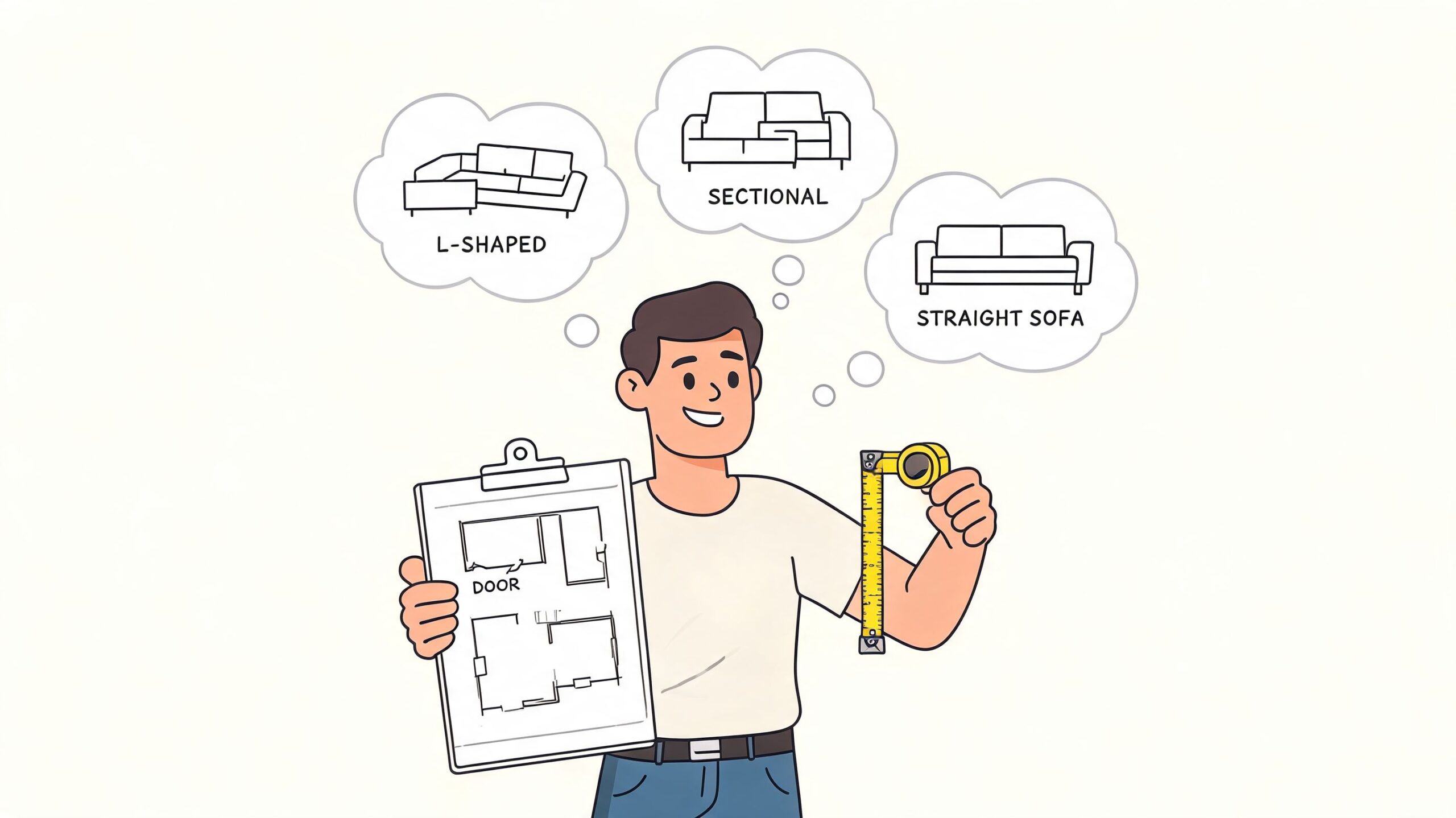
Start with the space the sofa will live in every day. Measure the wall, then measure how far the sofa can come into the room without pinching traffic flow between tables, chairs, and doorways. A sofa works like a parked car in a garage. If it technically fits but leaves no room to move around it, it is not a good fit.
Then measure the delivery path. This is the step many shoppers skip.
Check these before you shop:
- Room width and depth. Know the maximum size your room can handle comfortably.
- Doorways and stairwells. Measure the narrowest opening, not just the front door.
- Hallways and turns. Corners and low ceilings often create the primary delivery problem.
- Windows, trim, and sightlines. A tall back or bulky arm can make a room feel closed in.
If you are furnishing a cottage, bungalow, townhouse, or another compact room, looking at RBA Home Plans' collection of small homes can sharpen your eye for scale. Smaller homes usually look better with furniture that leaves visible floor space and does not crowd every edge of the room.
Match the sofa to the way your home actually works
Style matters, but daily use matters more.
A showroom can help you judge comfort with your own body, but you still need to arrive knowing how the sofa will be used. A home with young kids needs something different from a formal sitting room. A couple who reads every evening needs something different from a family that piles in for movie night. If someone in the home has knee, hip, or balance concerns, seat height and seat depth can matter as much as color.
Ask yourself a few plain questions:
- Who uses the sofa the most?
- Do you sit upright, lounge, nap, or all three?
- Do pets climb on it?
- Will you need to stand up easily from it every day?
- Does the room serve one purpose or several?
Those answers give you a filter before you ever test a sofa in person. They also help you know what to check once you are in the store. For example, if easy standing matters, you will want to sit down and rise several times in the showroom instead of doing one quick sit and calling it good.
Bring a simple shopping packet
You do not need a designer's binder. A few practical notes are enough.
Bring:
- Your measurements
- A few photos of the room
- A photo of nearby pieces, like your rug, chairs, or coffee table
- A short list of must-haves
- A note about who will use the sofa most
That packet makes the in-store process calmer and clearer. At Guynn, we often see shoppers relax as soon as they put real numbers next to the sofa in front of them. Guesswork drops away. Good questions get easier to answer. If you want to prepare before your visit, Guynn’s guide on how to plan a room layout is a helpful starting point.
One last tip. Wear shoes you can slip off easily if you like to tuck your legs up when you sit. That sounds small, but in a showroom, little real-life habits tell you a lot. The more realistically you test a sofa, the better your odds of loving it at home years from now.
The Foundation of Quality Decoding Frames and Suspension
A sofa can look great under showroom lighting and still be built like a folding chair in a nice jacket. The parts that decide how it holds up are mostly hidden, which is why this part of the shopping trip matters so much.
Online, you get a photo and a short spec sheet. In the store, you get something better. You can press, lift, sit, listen, and ask direct questions before the sofa ever enters your home.

What kiln-dried hardwood actually means
The frame is the sofa’s backbone. If that backbone is weak, the prettiest fabric in the world will not save it.
A well-built frame is often made of kiln-dried hardwood with corner blocks, dowels, and screwed joints helping hold everything square and steady. As noted in Cullen’s Home Center’s sofa buying guide, kiln-drying removes excess moisture from the wood, which helps reduce warping and cracking over time. That matters in places like Southwestern Virginia, where humidity can rise and fall with the seasons.
If those terms sound technical, use a simpler translation. You want wood that has been dried properly and joined in a way that resists wobbling.
Listen for these construction terms when you talk with a salesperson:
- Kiln-dried hardwood
- Corner-blocked
- Doweled joints
- Screwed construction
If the explanation is mostly “stapled,” “glued,” or “it’s sturdy,” keep asking.
How to inspect the frame in person
You do not need to see inside the sofa to learn a lot about it. Your hands can tell you more than a product tag.
Start with a simple test routine:
- Lift one front corner a few inches. A stronger frame usually feels solid and controlled, not loose or twisty.
- Press firmly on each arm. The arm should feel stable, not like it wants to sway outward.
- Sit down, shift side to side, and rise again. Listen for squeaks, pops, or creaks.
- Look underneath if the base is visible. You may spot corner blocks, support rails, or signs of lighter construction.
- Ask direct questions. “Is the frame hardwood, plywood, or mixed materials?” will get you a clearer answer than “Is this good quality?”
At Guynn, we often encourage shoppers to slow down here. A sofa should feel quiet and settled when you test it. If it already sounds tired on the showroom floor, it will not improve at home.
If you want a clearer feel for the wood terms you may hear while shopping, Guynn’s guide to choosing the right hardwood for longevity and style is a useful reference.
Springs matter more than many shoppers expect
The suspension system sits under the cushions, but it does a lot of the daily work. It helps spread weight, absorb movement, and keep the seat from feeling uneven too soon.
Two spring systems come up often. Eight-way hand-tied springs are widely viewed as a higher-end construction method because the springs are tied together in multiple directions for balanced support. Sinuous springs are more common and can perform well, but quality varies depending on the gauge of the metal, spacing, and how the system is reinforced.
A quick comparison helps:
| Suspension type | What it tends to feel like | What to ask |
|---|---|---|
| Eight-way hand-tied | Balanced, supportive, often more tailored | “Is this eight-way hand-tied?” |
| Sinuous springs | Common, comfortable in many sofas, depends on build quality | “How is the spring system reinforced?” |
This is one of those details shoppers cannot judge well from a polished online listing. In person, you can feel whether the support stays consistent across the seat.
A showroom test that reveals a lot
Sit in one spot first. Then move to the corner seat or the center seat if it is a sofa. Shift your weight. Sit forward. Sit back. Put a hand on the arm as you stand up.
Notice what happens.
A well-made sofa usually feels steady through all of that. The support should feel fairly even, without a sudden dip, a hard bar underneath, or a springy bounce that throws you back up. If one seat feels different from the next, ask why. Sometimes there is a good reason in the design. Sometimes it is a sign to keep looking.
That is the value of an in-store visit. You are not relying on adjectives like “supportive” or “well-crafted.” You are checking the frame and suspension with your own eyes, hands, and ears.
The Secret to Lasting Comfort Choosing Cushions and Fill
You feel cushion quality with your body, not with a product description.
A sofa can feel wonderfully soft for the first thirty seconds and become tiring an hour later. Long-term comfort usually comes from a better balance of support, spring-back, and shape retention. The goal is simple. You want a seat that welcomes you in, then still supports you after a movie, a long visit, or a quiet evening with a book.
Learn what is inside the cushion
Cushions tend to fall into a few common constructions, and each one has a different personality in the showroom.
- All-foam seats usually look clean and crisp. They often suit shoppers who like a more structured seat and less day-to-day fussing.
- High-resiliency foam is worth asking for by name. Industry guidance from the Polyurethane Foam Association explains that higher-quality foam choices are designed to offer better support and durability over time.
- Foam wrapped in feather or down often gives you that softer top layer with firmer support underneath.
- Feather-heavy or very plush fills can feel cozy right away, but they often need regular fluffing to keep their shape.
The easiest comparison is a mattress-topper idea. A supportive core does the essential work. The softer wrap changes the first impression.
Match the feel to the way you actually sit
Buying the wrong cushion often starts with buying for a fantasy version of your life.
If you sit upright to read, watch television, or chat with family, a firmer and slightly more supportive cushion usually feels better day after day. If your household sprawls, naps, and curls into corners, you may enjoy a softer top feel and a deeper seat. Neither choice is automatically better. The better choice is the one that fits your habits without asking your body to adapt.
Seat depth matters here too, but personal testing matters more than any rule of thumb. A seat that feels relaxed to one person can feel like a climb out to another.
| Cushion feel | Often suits | What to check in person |
|---|---|---|
| Firmer and supportive | Reading, conversation, easier standing | Does it feel hard or comfortably supportive after several minutes? |
| Balanced medium feel | Mixed everyday use | Does it hold you up without feeling stiff? |
| Plush and sink-in | Lounging, napping, movie nights | Do you sink too far, and is it easy to get back up? |
Use your hands, not just your eyes
This part trips up a lot of shoppers online. You can see color on a screen. You cannot judge resilience through a photo.
In the store, unzip a cushion if the design allows and ask what is inside. Press down firmly in the center of the seat cushion, then on the front edge where people slide in and out. Good cushioning should recover without looking tired right away. Lift the cushion. Heavier is not always better, but a cushion with some substance often feels more stable than one that is light and airy.
Then listen.
A cushion should settle without noise. If the seat makes a crunchy, hollow, or overly loose sound when you sit and shift, ask the salesperson what materials are creating that feel. At Guynn Furniture, this is the kind of hands-on comparison we encourage because it removes the guesswork.
Stay seated long enough to notice the truth
A quick sit tells you almost nothing.
Sit the way you sit at home for at least several minutes. Sit upright first. Then scoot back. Rest your arm on the armrest. Cross your legs if that is normal for you. Lean a little to one side. Stand up without using momentum. A good sofa should feel comfortable in all of those positions, not just the first one.
You can also borrow a tip from window-shopping decisions in other parts of the home. Just as homeowners compare light control and privacy before choosing types of shades for Tampa Bay, sofa shoppers should compare how different cushion builds feel under real use, not showroom looks alone.
If you are sorting through sizes, seat styles, and layouts at the same time, Guynn’s guide to sofa and sectional features to compare before you buy can help you narrow the field.
La-Z-Boy seating can be especially useful for this kind of side-by-side comfort test because differences in cushion feel often show up within a few minutes of sitting, shifting, and standing.
Living with Your Sofa A Guide to Upholstery and Durability
You notice upholstery only after you live with it for a while.
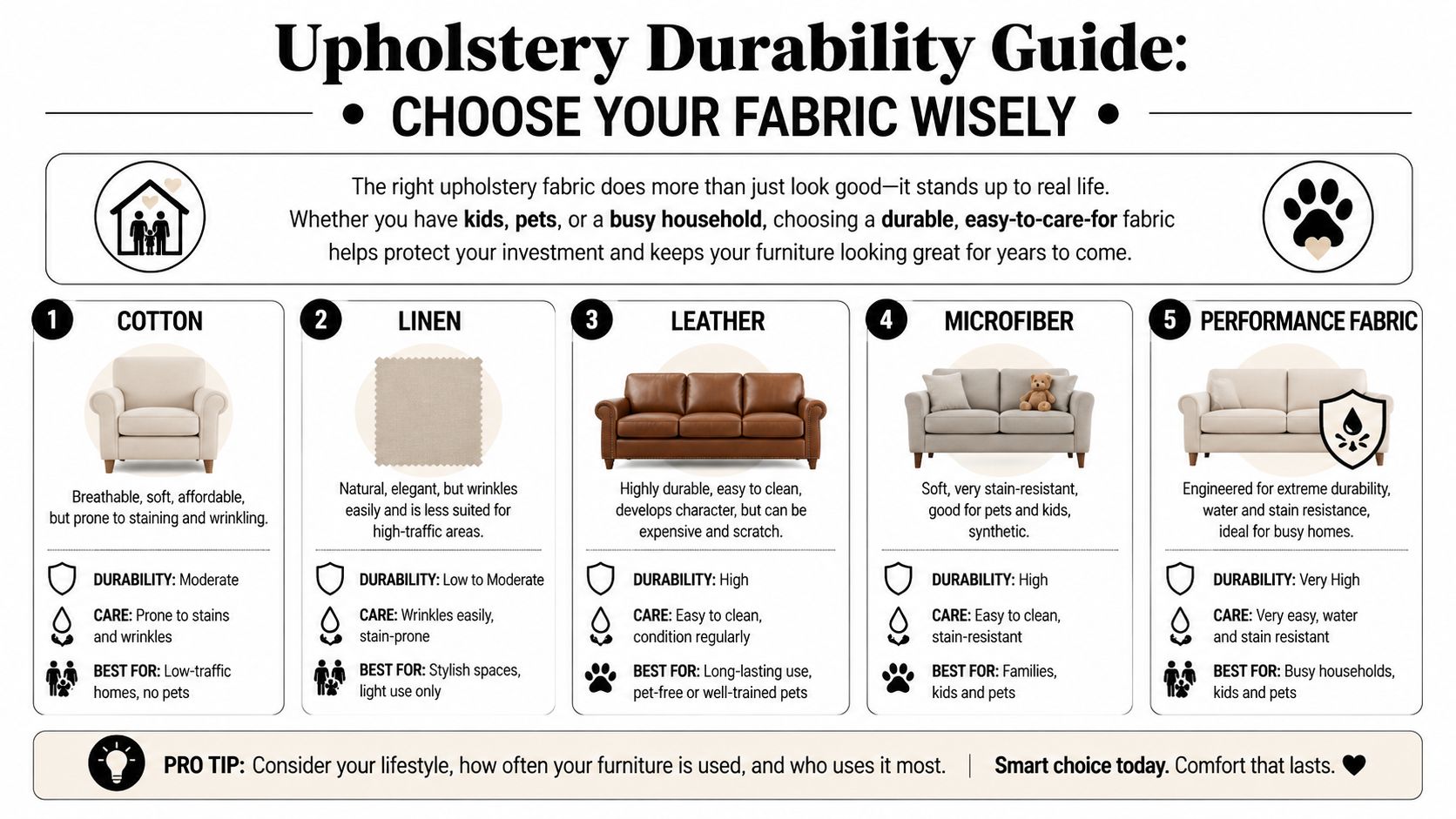
Day one is about color and texture. Month six is about whether dog hair clings to it, whether spills wipe up without drama, and whether the arms still look neat where everyone grabs them. That is why this part of sofa shopping deserves a slow, hands-on check in the showroom. A screen can show color. It cannot show how a fabric reacts when you rub it, press it, or sit on it in the same spot three times.
If your home has kids, pets, frequent company, or one room that gets used morning to night, start with durability. Style still matters. Daily life gets the final vote.
Learn the durability score
One of the handiest terms to ask about is the double rub count.
It works like a wear test for fabric. Higher counts generally point to fabric that can handle more daily friction from sitting, shifting, and getting up. Lower counts are often better suited to lighter-use rooms. If the number sounds technical, do not let that intimidate you. A good salesperson should be able to explain whether a fabric is meant for quiet occasional use or busy family life.
In the store, ask three simple questions:
- What is the rub rating?
- Is this fabric recommended for heavy residential use?
- How does it handle spills, pet claws, and direct sunlight?
Those questions usually tell you more than a pretty swatch ever will.
How the main fabric categories compare
No upholstery material solves every problem. Each one has strengths, weak spots, and a certain kind of upkeep.
Natural fabrics
Cotton and linen often feel soft and welcoming. They can give a sofa a relaxed, casual personality that many shoppers love.
They also tend to show wrinkles, wear, or spotting a little faster in hard-working rooms. If you love the look, test it thoroughly. Rub the seat edge with your hand. Pinch the fabric lightly between your fingers. Ask how it will look after regular use, not just after delivery day.
Synthetics and performance fabrics
Microfiber, polyester, and other performance fabrics are often the practical workhorses on a showroom floor. Busy households usually appreciate them because they resist visible wear better and are often easier to clean.
This is a good category to test with your hands. Brush the fabric in different directions. See whether it changes shade easily, holds lint, or feels tightly woven. If you have pets, that small test can save a lot of frustration later.
Leather
Leather can wear beautifully over time, but not every leather behaves the same way. Some finishes show scratches more quickly. Others hide everyday scuffs better and clean up with less fuss.
Press the arm gently with your thumb. Run your hand across the seat. Look at the surface from more than one angle under the showroom lighting. Good leather should feel substantial, not thin or papery. If you are comparing terms and finishes, Guynn’s guide to everything you need to know about upholstery materials gives helpful background before or after your visit.
What to touch, press, and inspect in the showroom
An in-store visit really earns its keep.
Start with the seat deck and front rail area. Run your hand across the front of the cushion and the fabric just below it. You are checking for ripples, loose tension, and early puckering. Then press on the arms in the spots people naturally grab when they sit down or stand up. Those are stress points, and they tell you a lot about how the upholstery is put together.
Next, look closely at seams and welting. Stitching should look even and secure, not loose, wavy, or strained at the corners. Rub one small area of fabric between your fingers. A tighter weave usually feels more stable. A loose weave can be beautiful, but it may snag more easily in active homes.
Then listen.
As you sit and shift, pay attention to the sound of the fabric and the way it recovers. You do not want covers that twist, bunch, or look rumpled after a few normal movements. At Guynn Furniture, we encourage shoppers to do exactly this because it turns upholstery from a guessing game into something you can judge with your own eyes and hands.
Sunlight changes upholstery over time, so window coverage matters more than many shoppers expect. Resources like types of shades for Tampa Bay can be useful when you are thinking about how bright rooms may affect fading, glare, and fabric wear.
Pick for your household, not just the showroom
A sofa has to look good on ordinary weekdays, with laundry baskets nearby, pets circling the room, and somebody eating takeout a little too close to the arm.
This quick guide can help:
| Household type | Upholstery direction |
|---|---|
| Kids and pets | Performance fabric, microfiber, tightly woven synthetics |
| Low-traffic formal room | Linen blends, lighter textures, style-first options |
| Classic everyday room | Leather, textured woven synthetics, durable blends |
| Sunlit space | Ask extra questions about fading and care |
Bassett and Ashley can be especially helpful to compare in person because you can move from one upholstery feel to another in a few steps. That side-by-side testing is hard to replace online, and it often makes the right choice much clearer.
Making a Smart Investment Budgeting and Finding Value
A sofa budget can feel stressful because the price tag is easy to see, but the actual value is hiding underneath the fabric and inside the cushions.
In the showroom, you can sort that out with your own hands.
Two sofas can look nearly identical from ten feet away and land in very different price ranges. The difference often shows up when you sit down, stand back up, press on the seat deck, or lift the front corner slightly to feel how solid the frame is. A lower price sometimes reflects simpler construction, thinner foam, or lighter support parts. A higher price is only worth it if you can feel and verify what you are paying for.
What different price ranges usually mean
Price usually follows construction quality, but it should never be judged by the tag alone. A smart shopper treats the showroom like an inspection station.
Here is a practical way to read value in person:
- Lower price point often calls for closer inspection. Press the arms, sit in the same spot twice, and listen for squeaks or shifting.
- Middle range often gives many families the best balance of comfort, support, and expected lifespan.
- Higher investment makes sense when the frame feels steady, the suspension stays supportive, and the cushions recover well after use.
That hands-on check matters because hidden shortcuts rarely introduce themselves on day one. They show up months later as sagging seats, loose arms, or a sofa that never quite feels comfortable again.
Judge the cost across years of use
A sofa works like a pair of work boots. If you use it every day, durability changes the math.
For a busy family room, it helps to ask a simple question: how will this feel after hundreds of evenings, movie nights, naps, and guests? Sit on the sofa the way you live. Lean into the corner seat. Push off the arm as you stand. If the piece already feels strained on the sales floor, it will not improve at home.
If you’re moving and trying to make room in the budget, DIYAuctions' furniture selling tips may help you decide what to keep, what to sell, and how to clear space before buying something new.
Value includes confidence after the sale
Sticker price is only one part of a good purchase. Clear policies, honest answers, and the chance to compare several models side by side also matter.
At Guynn Furniture, shoppers can test sofas in person and ask practical questions about construction, delivery timing, and financing before making a decision. Guynn’s Low Price Promise includes matching local competitors’ advertised prices and a 30-day price guarantee. Flexible financing, including no-interest plans for credit-qualified customers, can also make a better-built sofa more realistic without forcing a rushed choice.
A large in-stock selection can save money in less obvious ways too. Waiting months for a replacement sofa, or settling for a quick online purchase because the old one failed, often costs more in frustration than shoppers expect.
The best value is a sofa that fits your room, holds up to daily life, and feels solid when you test it in person.
The Guynn Advantage Why Shopping Local in Virginia Matters
Buying a sofa should feel more like getting good advice from a knowledgeable neighbor than defending yourself in a sales pitch.
That’s one reason local shopping still matters.
For families in Galax, Independence, Hillsville, and across Southwestern Virginia and Northern North Carolina, a showroom visit gives you something a product page never can. You can sit for the full test. You can push on the arms, inspect the tailoring, compare support levels, and ask someone standing right there what’s inside the cushion and under the fabric.
That hands-on step is not optional when you’re making a long-term furniture decision.
Why local service changes the experience
A local store can solve problems before they become regrets.
- You can compare in person. La-Z-Boy, Ashley, Bassett, Sealy, and Therapedic each serve different comfort and style needs.
- You can ask practical questions. Delivery path, room fit, support level, stain resistance, and financing all get answered face to face.
- You can plan the whole room. Design guidance helps if the sofa is part of a larger refresh.
- You can skip the heavy lifting. Free in-home delivery and setup within 60 miles removes a lot of stress.
That service radius matters for households throughout the region, especially when the sofa is large, the entry is tight, or the room needs thoughtful placement on arrival.
A relationship, not just a receipt
Since 1902, Guynn has served this area through changing styles, changing homes, and changing family needs. That history isn’t just a line on a sign. It shows up in how people want to shop now. They want honest help, clear pricing, and a no-pressure atmosphere where they can think.
For a purchase as personal as a sofa, that approach still matters.
Come Find Your Perfect Sofa Today
You don’t need to memorize every furniture term before you shop. You just need to know how to test what matters.
Measure your space. Sit long enough to notice real comfort. Check the frame and suspension. Ask about cushion fill. Touch the fabric. Look for durability that matches your household, not just a color you like in a photo.
If you want to make your next step simple, start with our store locations so you can choose the showroom that’s most convenient for you. Then bring your room measurements, a few photos, and your questions.
Visit our showrooms in Galax, Independence, or Hillsville to test the comfort for yourself. Schedule a consultation with our design team to start planning your dream room today. Browse our selection online at guynnfurniture.net.
At Guynn Furniture & Mattress, we help families across Southwestern Virginia and Northern North Carolina shop with confidence, compare comfort in person, and bring home furniture that fits real life.