Best Mattress For Combination Sleepers: Our Top Picks


You might be reading this after another restless night. You started on your back, rolled to your side, ended up halfway on your stomach, and woke up feeling like you never quite settled in. That pattern is common, and it doesn't mean you're “bad at sleeping.” It usually means your mattress isn't keeping up with the way your body rests.
We meet a lot of neighbors across Southwestern Virginia and Northern North Carolina who describe the same thing. They don't stay in one position. They shift to ease shoulder pressure, move off their lower back, or turn because they're warm. When a mattress is too soft, they feel stuck. When it's too firm, their hips and shoulders complain.
The good news is that this is a solvable problem. The best mattress for combination sleepers is designed to do two jobs at once. It cushions the parts of you that need relief, and it gives you enough support and bounce to move without a struggle.
If you're also trying to understand why sleep quality matters so much, this short guide to deep and restorative sleep is a helpful companion read. And if you want a few simple steps you can use tonight, our own article on 3 things you can do to start sleeping better today is a good place to begin.
Your Guide to a Restful Night's Sleep
A combination sleeper usually has a familiar routine, even if it doesn't feel like one. You lie down on your back to unwind. A little later, your shoulder wants more cushioning, so you turn to your side. Sometime before morning, your hips shift again and you land in another position. By sunrise, you may not remember all the turning, but your neck, back, or shoulders often do.
That kind of sleep can feel frustrating because the mattress needs to respond to changing needs through the night. Side sleeping asks for give around the shoulders and hips. Back sleeping asks for level support through the middle. Stomach sleeping usually needs a flatter, firmer feel so the hips don't sink too far.
Why this feels harder than it should
Many shoppers assume they need to “pick a side” and shop only for back sleeping or side sleeping. That advice leaves combination sleepers stuck in the middle. The goal isn't choosing one position. It's finding a mattress that stays comfortable while you rotate through several.
Some people don't need a softer bed or a firmer bed. They need a mattress that adjusts quickly when they move.
That's where clear guidance matters. Mattress shopping can feel expensive, confusing, and full of buzzwords. Families in Galax, Independence, Hillsville, and the wider Southwestern Virginia and Northern North Carolina region tell us the same thing all the time. They want plain language, honest help, and a no-pressure atmosphere.
A local approach that makes sense
Since 1902, our family business has helped local households furnish their homes with comfort in mind. That history matters because mattresses aren't impulse purchases. They're long-term comfort decisions, and the goal is often to get them right the first time.
If you've been comparing mattress-in-a-box options online and still feel unsure, you're not alone. Reading reviews helps. Feeling a mattress under your own shoulders, hips, and back is often what finally brings clarity.
Understanding Your Combination Sleeper Profile
Some people know right away that they're combination sleepers. Others don't realize it until they think about how often they wake in a different position than they started.
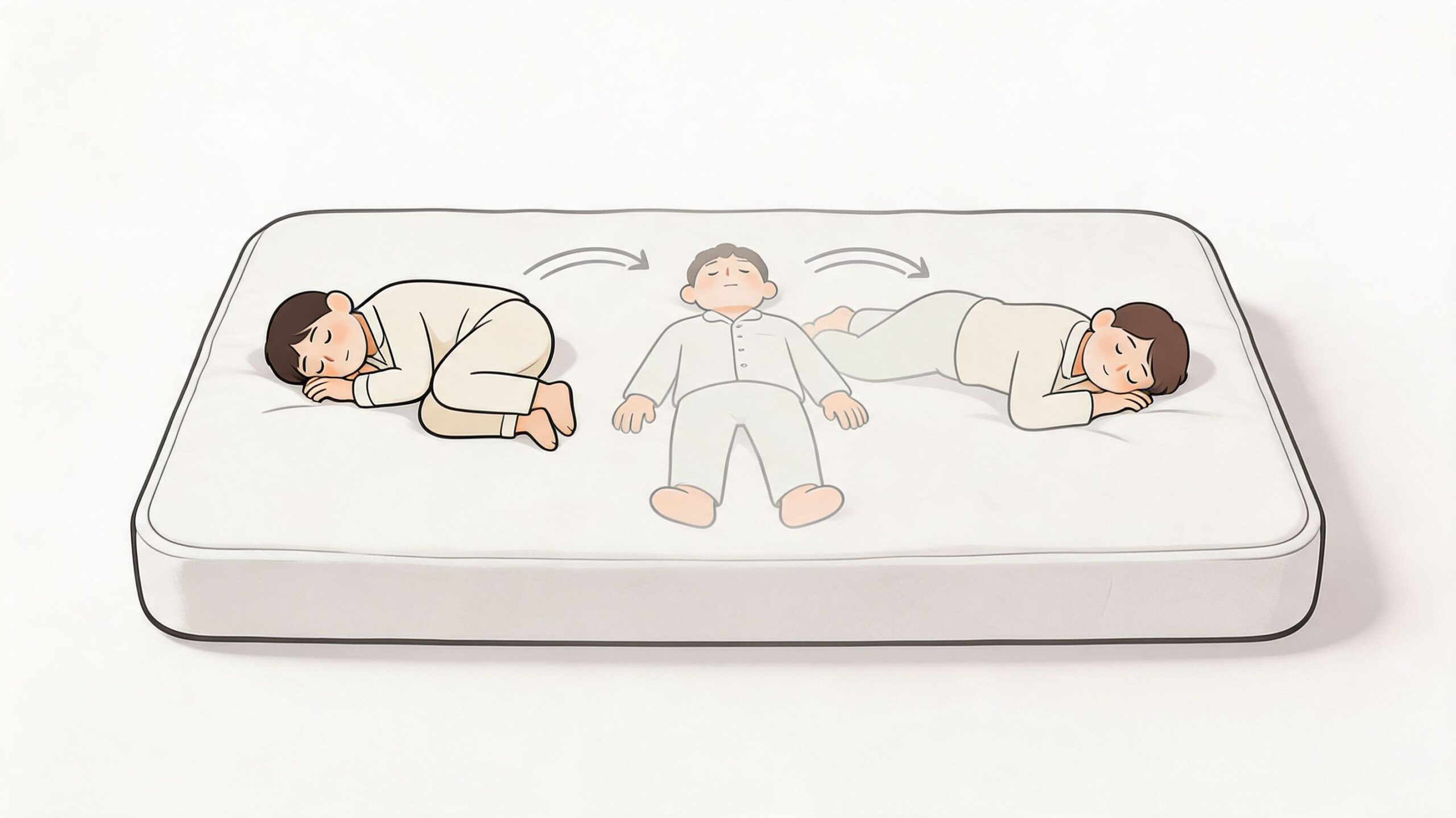
If that sounds like you, you're in good company. The key difference is simple. A single-position sleeper can shop for one main need. A combination sleeper needs a mattress that handles several needs without creating a new problem every time they turn.
For a deeper look at matching mattress feel to your habits, our guide on how to choose the right mattress for your sleeping style can help you sort out your starting point.
Signs you may be a combination sleeper
You probably fit this profile if a few of these sound familiar:
- You fall asleep one way and wake up another. Your body keeps searching for relief or support.
- Your shoulder gets sore on your side. Then you move to your back to escape pressure.
- Your lower back gets tight after back sleeping. So you roll again.
- You feel comfortable at first, but not for long. The mattress works in one position, then loses the plot in the next.
What each position asks from a mattress
A combination sleeper's mattress has to be versatile. It's like a good pair of shoes that has to work for walking, standing, and climbing stairs. One position alone might forgive a mattress flaw. Several positions won't.
| Sleep position | What your body usually needs | What goes wrong on the wrong mattress |
|---|---|---|
| Side | Cushioning at shoulders and hips | Pressure points, numb arms, sore hips |
| Back | Even support through the spine | Hips dipping or lower back strain |
| Stomach | A flatter, firmer surface | Midsection sink and spinal stress |
Why “average comfort” often misses the mark
Many mattresses feel fine for five minutes in one position. Combination sleepers need a mattress that still feels balanced after turning. That's a much higher bar.
Practical rule: If a mattress only feels good when you hold one exact position, it probably isn't the right fit for a restless sleeper.
That’s why a generic recommendation rarely works. The best mattress for combination sleepers has to blend cushioning, support, and easy movement in one surface.
The Sweet Spot of Firmness and Responsiveness
Firmness gets most of the attention, but it only tells part of the story. The other half is responsiveness, which is how quickly a mattress adjusts when you move. Combination sleepers need both.
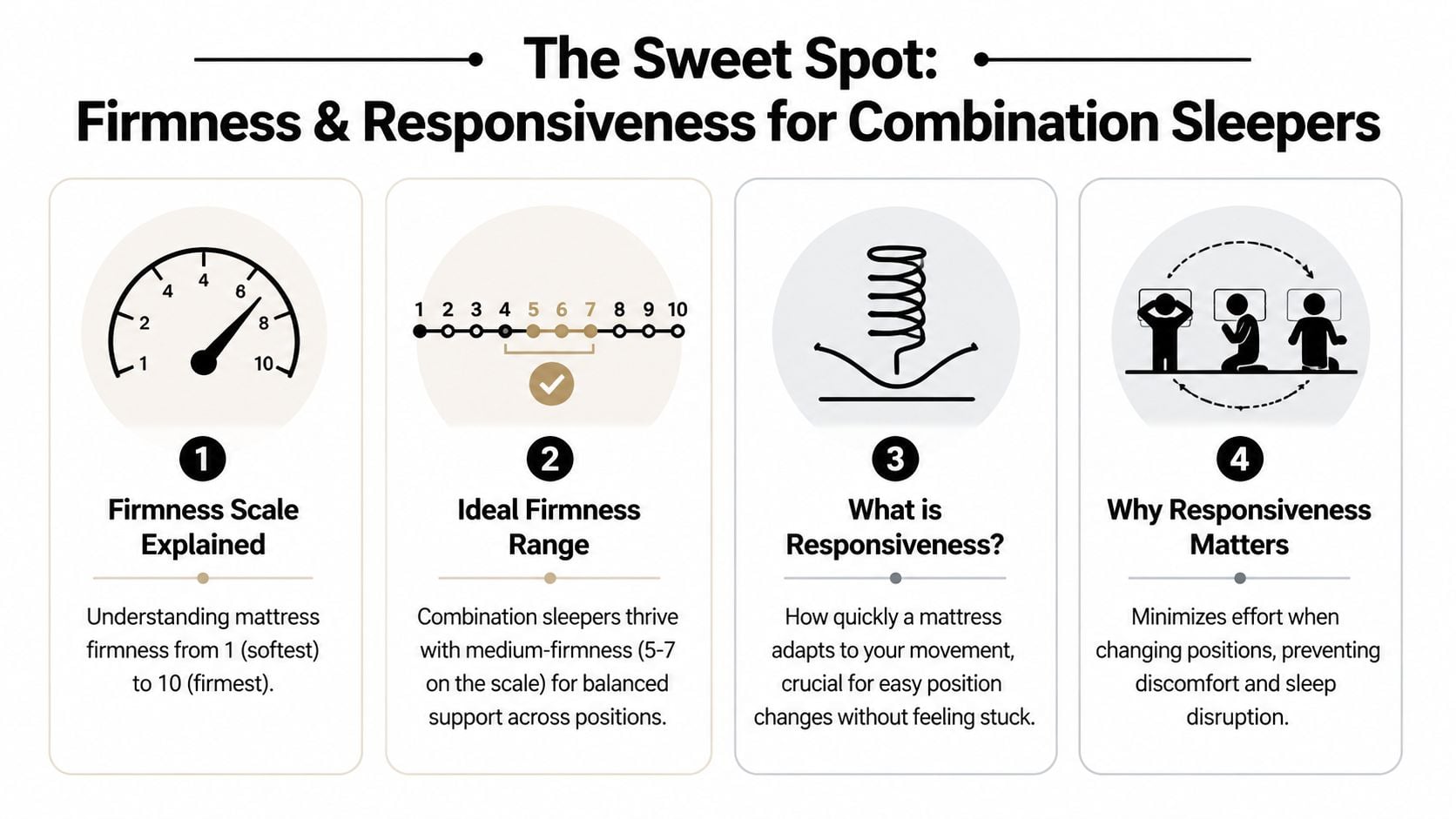
A simple way to think about it is baking. Firmness is like the structure of the cake. Responsiveness is how springy it feels when you press the top. If the cake is all structure and no softness, it feels dry. If it's all softness and no structure, it collapses. Mattresses work the same way.
What firmness actually means
Most brands use a scale from 1 to 10, with 1 being very soft and 10 being very firm. For combination sleepers, the sweet spot often lands in the middle. According to Mattress Clarity's guidance on combination sleepers, mattresses with 4+ in multi-position pressure relief benchmarks and a medium-firm feel in the 6 to 7 out of 10 range tend to work well because they distribute weight more evenly.
That middle zone matters because it can support your back without beating up your shoulders. It can also keep your hips from sinking too far when you shift onto your stomach.
For a fuller explanation of the scale itself, take a look at our mattress firmness guide. It can make showroom testing a lot easier.
Why responsiveness changes everything
A mattress can have the “right” firmness and still be wrong for a combination sleeper if it's too slow to react. If you've ever tried turning on a bed and felt like you had to climb out of a body-shaped dip, that's low responsiveness.
Responsive mattresses feel more like a surface that helps you move. Less responsive mattresses feel more like a surface that holds onto you. Some sleepers love that deep hug. Frequent movers usually don't.
Mattress Clarity also notes that the responsive bounce from pocketed coils can support 30 to 50% faster position changes versus slow-sinking memory foam in this category of testing. That doesn't just sound nice on paper. It usually translates to less effort when rolling from side to back or back to stomach.
A quick feel guide
Use this as a simple starting point when you're shopping:
Too soft for many combination sleepers
Your hips sink, your back drifts out of line, and turning takes effort.Too firm for many side-back sleepers
You stay lifted, but your shoulders and hips don't get enough relief.Balanced medium-firm feel
You get enough cushion to relax and enough pushback to move easily.
If you change positions a lot, don't judge a mattress only by how it feels while lying still. Judge how it feels when you roll.
What confusion sounds like in the store
People often say, “I want soft, but supportive.” That's not contradictory. Usually what they mean is this: they want pressure relief at the surface, but they don't want the mattress to swallow them.
That mix is exactly why the best mattress for combination sleepers often isn't the softest bed in the room or the firmest one. It's the bed that lets your body settle without trapping it.
Decoding Mattress Types for Easy Movement
Mattress type gives you the clearest clue about how a bed is likely to move, contour, and recover. For combination sleepers, that matters more than fancy fabric names or marketing phrases.
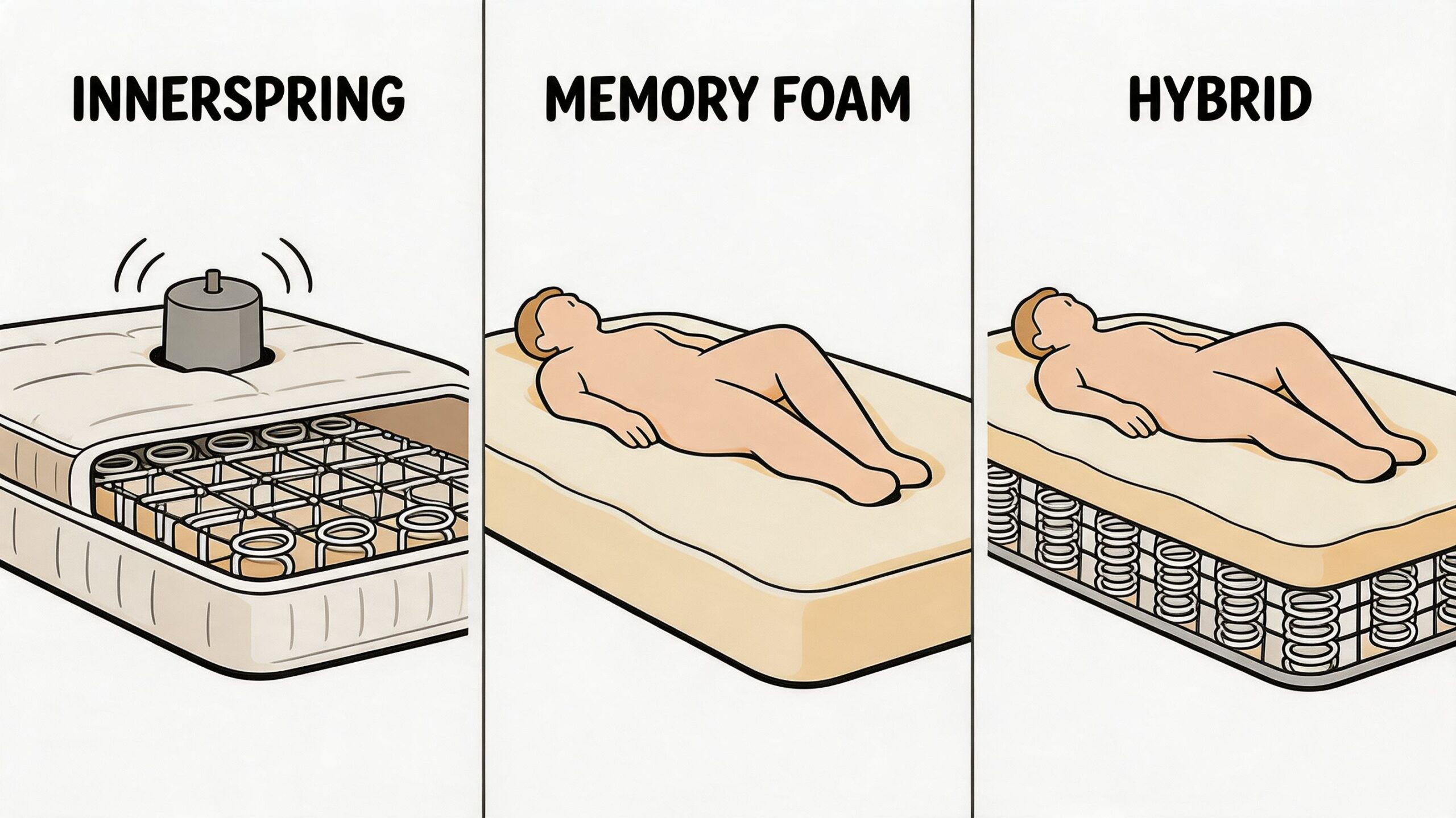
When shoppers compare models online, it helps to explore our mattress collection or other organized category pages just to see how these types are grouped. The names vary by brand, but the core construction usually falls into three buckets: hybrid, memory foam, and innerspring.
Hybrid mattresses
Hybrid mattresses combine coils underneath with comfort layers on top. For many combination sleepers, that's the most practical recipe because it blends support, pressure relief, and movement.
A 2026 consensus summary from Sleepopolis says expert testing of over 370 mattresses identified hybrid models as the top choice for combination sleepers. The same source says zoned support hybrids reduce tossing and turning by 23% compared to traditional memory foam, which is especially relevant for the 55% of Americans reporting poor sleep from position shifts.
Why that works in plain language:
- Coils add bounce. That makes turning easier.
- Comfort layers soften impact. Your shoulders and hips don't take the full load.
- Zoned support can help alignment. Firmer support under heavier areas can keep the body from sagging unevenly.
If you're comparing constructions in more detail, our article on what is a hybrid mattress breaks down the basics.
Memory foam mattresses
Memory foam shines at pressure relief. It molds around the body and can feel wonderfully calming when you first lie down. For some combination sleepers, especially lighter ones, that contouring can still feel comfortable.
The trade-off is movement. Some memory foam beds respond more slowly, which can create that “stuck” sensation people complain about. If you toss and turn a lot, deep sinkage can turn a simple position change into a small workout.
Innerspring mattresses
Traditional innerspring beds usually feel springier and more lifted. They can be great for people who hate sinking into a mattress and want a flatter, easier-moving surface.
The catch is comfort at the pressure points. Some innersprings don't provide enough contouring for side sleeping, especially around the shoulders and hips. That can make them feel supportive but not forgiving.
A side-by-side comparison
| Mattress type | What combination sleepers often like | Where it can fall short |
|---|---|---|
| Hybrid | Balanced support, easier movement, better versatility | Feel varies by foam thickness and coil design |
| Memory foam | Strong contouring and pressure relief | Can feel slow or sticky when turning |
| Innerspring | Quick response and a lifted feel | May lack enough cushioning for side sleeping |
A mattress type doesn't guarantee comfort, but it does tell you how the bed is likely to behave when you move.
In showrooms, this comparison becomes much clearer because you can feel the difference in real time. That's especially helpful when you're deciding between Sealy and Therapedic models that may look similar on paper but move very differently under your body.
Key Features for Uninterrupted Sleep
Once you've narrowed the mattress type, a few features make the difference between “pretty good” and “I slept through the night.” For combination sleepers, three matter most: edge support, motion isolation, and cooling.
Edge support
Edge support is how stable the perimeter feels when you sit or lie near the side. This matters more than many shoppers expect.
If you use the whole mattress surface, scoot toward the edge during the night, or sit on the side to get dressed in the morning, weak edges can be annoying fast. The bed can feel smaller than it is, and the perimeter may compress more than the center.
For older adults, couples, and anyone who likes a stable seat while getting in and out of bed, edge support is a practical feature, not a luxury.
Motion isolation
If one partner moves a lot, the other partner usually feels it unless the mattress absorbs that motion well. For couples, this is one of the biggest quality-of-life issues.
According to Mattress Nerd's review of mattresses for combo sleepers, hybrid mattresses can cut motion transfer by 30 to 50% thanks to individually pocketed coils under foam layers. That matters because 68% of couples report sleep disturbances from a partner moving.
A simple way to picture motion isolation is this: if your partner rolls over, a good mattress keeps that movement more contained instead of sending a wave across the bed.
Cooling
Combination sleepers often notice heat because they move enough to wake themselves when the bed feels stuffy. Cooling features can help the surface feel more comfortable through the night.
Look for signs like breathable covers, more airflow through the mattress, and foams that don't feel dense and closed-off. Cooling doesn't have to mean cold. It usually means the mattress is less likely to trap warmth around you as you shift.
One often-overlooked detail
Cleanliness affects comfort too. If you're keeping a mattress for years, regular care matters. For readers wanting a practical reference on upkeep, this guide to reliable mattress cleaning in London offers a useful example of what professional mattress cleaning typically involves.
A mattress can have the right feel on day one and still disappoint if its edges collapse, motion carries too far, or the surface sleeps hot.
For many families, these “secondary” features end up being the reasons they love a mattress long after the first week.
The Guynn Advantage for Local Shoppers
Buying a mattress online can be convenient. It can also leave you guessing. You can read reviews, compare descriptions, and study firmness labels, but none of that tells you exactly how a mattress will feel when your shoulder settles in, your hips turn, and your back tries to stay level.
That gap matters even more for combination sleepers because movement is part of the test. You don't just need to know whether a mattress feels comfortable while lying still. You need to know whether it lets you roll naturally.

A local showroom solves that problem in a very practical way. You can try the mattress the way you sleep. You can compare a more buoyant surface against one with deeper contouring. You can feel the edge support instead of trusting a product description to define it for you.
Why in-person testing matters for durability too
Online reviews often talk about comfort in the first few weeks. Long-term build quality is harder to judge through a screen. A 2025 study discussed in this mattress durability review found that 28% of combo sleepers report sagging after 3 to 5 years. That's one reason an in-person visit matters. You can inspect stitching, edge stability, surface recovery, and overall construction before you buy.
For shoppers comparing trusted brands such as Sealy and Therapedic, that hands-on step can be reassuring. You can press on the comfort layers, sit at the side, and notice how quickly the mattress regains shape.
What local shoppers usually appreciate most
In our region, people often want more than a boxed mattress dropped at the door. They want a straightforward process and a real person to ask when they have questions.
A showroom visit helps with that because you can:
- Compare feel side by side. What seems “medium” online can feel very different in person.
- Check movement for yourself. Roll, turn, and shift the way you do at home.
- Ask practical questions. Not sales talk. Real questions about support, delivery, setup, and fit.
- See other home options while you're here. Many households shopping for better sleep are also updating bedrooms, recliners, or full-room comfort with brands like La-Z-Boy, Ashley, and Bassett.
Guynn Furniture & Mattress serves Galax, Independence, Hillsville, and the wider Southwestern Virginia and Northern North Carolina region, with a no-pressure atmosphere, free in-home delivery and setup within 60 miles, and a Low Price Promise that matches local competitors and includes a 30-day price guarantee. Since 1902, that local model has given families a way to shop without feeling rushed.
The simplest reason this works
Mattresses aren't abstract when you're standing on a showroom floor. A few minutes of real testing can answer questions that hours of scrolling can't.
That matters for value seekers, traditionalists, seniors, and busy families alike. You want to know what you're bringing into your home. You want it to feel right on night one and still make sense years later.
How to Test a Mattress Like an Expert
A showroom visit goes better when you know what to do. Visitors often lie down for a minute, bounce once, and make a fast judgment. Combination sleepers need a more realistic test.
Our guide on how to choose a mattress adds more detail, but this short checklist will give you a strong start.
A simple in-store checklist
Wear comfortable clothes
Stiff jeans or bulky outerwear can distract you from what the mattress feels like.Try your real positions
Start the way you usually fall asleep. Then turn to your second-most common position. If you sometimes end up on your stomach, test that too.Stay put for a while
Give each mattress enough time for your body to settle. Quick impressions can be misleading, especially on softer comfort layers.Roll instead of just lying still
Combination sleepers need to test movement. Turn from side to back. Back to stomach. Side to side. Notice whether the mattress helps or hinders you.Sit on the edge
This tells you a lot about entry, exit, and usable sleep surface.
If you share the bed
Bring your partner if possible. That makes it easier to notice whether one person's movement ripples across the mattress and whether both of you feel supported in your usual positions.
When couples test together, one person should move normally while the other stays still and pays attention to what travels across the bed.
Questions worth asking in the store
- How does this model compare to a firmer or softer version?
- Does this bed feel the same near the edge as it does in the center?
- Is this construction likely to feel more lifted or more contouring?
A good mattress test isn't complicated. It just needs to look like your real night, not a showroom pose.
Frequently Asked Questions
Can a combination sleeper use an all-memory-foam mattress
Yes, some can. The main question is whether the foam lets you move comfortably. If you like a close, contouring feel and you don't mind a little more sink, memory foam may still work for you.
Where people run into trouble is response speed. If turning feels like effort, the mattress may be too slow-moving for your sleep style. Combination sleepers who change positions often usually prefer a surface with more lift and quicker recovery.
What firmness is best if I change positions all night
“Medium-firm” is a good starting point, but it isn't a universal answer. Body weight changes how a mattress feels.
According to Sleep Doctor metrics summarized here, sleepers under 130 lbs often need a softer 5 out of 10 firmness for enough contouring, while sleepers over 230 lbs often do better with a 7 out of 10 or firmer feel to help keep the hips from sinking too much and throwing off alignment.
What if my partner is a strict side sleeper and I'm a combination sleeper
Look for balance. In many couples, one person needs better pressure relief while the other needs easier movement. A medium to medium-firm hybrid often makes sense because it can cushion shoulders while still staying responsive enough for frequent turning.
This is one situation where in-person testing really helps. Both partners can lie down together, switch positions, and decide whether the mattress feels fair to both people.
Do heavier sleepers need something different
Usually, yes. Heavier sleepers often need a firmer and more supportive surface so the middle of the body doesn't sink too far. Very plush beds can feel comfortable at first but less stable through the night.
If durability is a concern too, pay close attention to edge strength, how quickly the surface recovers after pressure, and whether the mattress still feels level when you move around on it.
I'm lightweight. Should I avoid firmer hybrids
Not automatically, but many lightweight sleepers find very firm beds less forgiving. If you don't sink in much, you may miss out on the pressure relief your shoulders and hips need, especially when side sleeping.
That doesn't mean you need a soft mattress. It means you should test carefully and make sure the comfort layers engage with your body.
Is a hybrid always the best mattress for combination sleepers
Not always, but it's often the easiest place to start because it tends to balance movement and comfort well. Some shoppers prefer the steady lift of innerspring. Others like the contour of foam more than expected.
The “best” mattress is the one that keeps you aligned, lets you move naturally, and still feels comfortable in the positions you use most.
How do I know if a mattress is too soft for me
Watch what happens around your hips and lower back. If you feel like your middle sinks lower than the rest of you, or if turning takes effort, the mattress may be too soft for your body and sleep style.
A mattress can feel cozy in the first minute and still be too soft over the course of a full night. That's why movement testing matters.
Is trying mattresses in person still worth it if I've already read a lot of reviews
Absolutely. Reviews can narrow the field, but they can't replace your own body. Your shoulders, hips, and back don't read product pages the same way your eyes do.
For combination sleepers, the final decision usually gets easier once you can feel firmness, responsiveness, edge support, and motion control for yourself.
Visit Guynn Furniture & Mattress to explore mattresses in a no-pressure atmosphere and test the comfort for yourself. We serve Galax, Independence, Hillsville, and the wider Southwestern Virginia and Northern North Carolina region with Sealy and Therapedic options, a large in-stock selection for immediate delivery, free in-home delivery and setup within 60 miles, and a Low Price Promise with a 30-day price guarantee. Visit our showrooms in Galax, Independence, or Hillsville to test the comfort for yourself. Schedule a consultation with our design team to start planning your dream room today. Browse our selection online at guynnfurniture.net.