Bench Seat Depth: A Guide to Perfect Comfort


You sit down on a bench that looks perfect in the showroom photo. A few minutes later, you’re scooting forward, your back isn’t touching the backrest, and your legs feel awkward. Or maybe the opposite happens. The bench feels so shallow that you perch on the edge like you’re waiting at the doctor’s office.
That “something feels off” problem often comes down to one small measurement. Bench seat depth.
It sounds technical, but it affects daily life in a very real way. It changes how you eat dinner, tie your shoes in the entryway, read by a window, and gather with family on busy weeknights. In homes across Galax, Independence, Hillsville, and the wider Southwestern Virginia and Northern North Carolina region, it’s one of those details that can subtly make a room easier to live in.
The Unspoken Secret to Comfortable Seating
We’ve all had that moment. You sit on a dining bench and feel like your feet don’t land quite right. Or you pause on an entryway bench to pull on your shoes and realize the seat is so narrow you don’t want to lean even a little.
A bench can be beautiful and still feel wrong. That’s why bench seat depth matters more than commonly realized.
Consider the experience of wearing shoes that are too big. You can still walk in them, technically. But every step feels less secure, less natural, and more tiring than it should. A bench that’s too deep or too shallow works the same way. You can sit on it, but your body keeps adjusting because the fit isn’t right.
That’s one reason families often love a bench at first glance, then feel unsure after living with it. The style may be spot on. The finish may match the table. But comfort depends on proportion.
At our family furniture stores, we’ve seen this with dining spaces, mudrooms, breakfast nooks, and window seats alike. People usually don’t walk in asking about bench seat depth. They ask why one bench feels easy and another feels awkward. Depth is often the answer.
If you’ve ever compared bench comfort to sofa comfort, some of the same ideas apply. Our guide on what to look for in your new sofa or chair touches on that bigger idea of fit, support, and real-life use.
A bench isn’t comfortable because it looks soft or stylish. It’s comfortable when your body settles into it without fighting the shape.
Since 1902, our family has helped neighbors furnish homes with comfort in mind, not just appearance. Bench seat depth may seem like a small detail, but it can change how a room feels every single day.
What Is Bench Seat Depth and Why It Matters
Bench seat depth is the distance from the front edge of the seat to the backrest. If the bench doesn’t have a back, it’s the full seating surface from front to back.
That’s the simple definition. The reason it matters is even simpler. Your body needs enough seat under your thighs to feel supported, but not so much depth that the front edge presses where it shouldn’t or pushes you away from the back support.
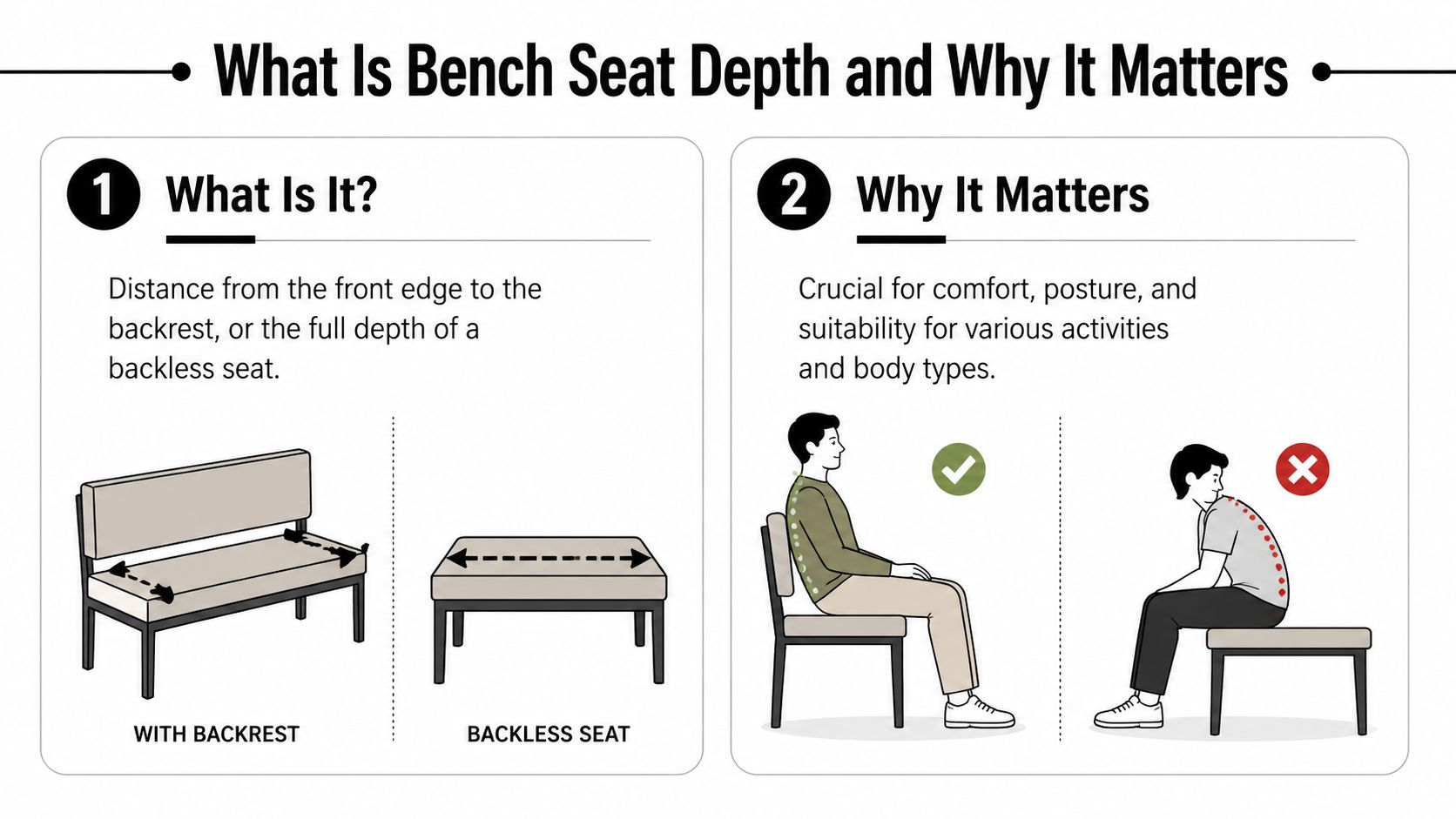
The basic idea
A good way to think about depth is to compare it to the seat of a car. If the seat is too short, you don’t feel supported. If it’s too long, you can’t sit back comfortably. A bench works the same way.
Across the furniture industry, the standard bench seat depth is 15 to 20 inches (38-50 cm), and dining benches usually narrow to 16 to 18 inches, with an average of 17.5 inches (44 cm) according to Slone Brothers’ bench seat depth guide.
Those numbers aren’t random. They’re meant to match how most adults naturally sit.
What proper depth does for your body
When bench seat depth is right, a few things happen almost automatically:
- Your thighs feel supported without the seat crowding the back of your knees.
- Your feet can rest more naturally on the floor.
- Your back can use the backrest instead of hovering forward.
- You don’t fidget as much because your posture feels settled.
When the depth is off, people often blame the cushion, the wood, or the whole bench. But depth is often the hidden culprit.
Why dining benches need special attention
Dining is different from lounging. At a table, you want to sit upright, stay close enough to eat comfortably, and avoid that hunched-forward position that makes a meal feel longer than it should.
That’s why a dining bench usually shouldn’t be as deep as a window seat or a lounge bench. In a dining room, the goal isn’t to sink in. The goal is to support conversation, posture, and easy reach to the table.
Practical rule: If you have to perch near the front edge to eat comfortably, the bench is probably too deep for dining use.
This comes up often with families shopping Ashley or Bassett dining collections. The bench may look right next to the table, but if the depth isn’t suited to meals, the whole setup feels less comfortable over time.
Backed benches and backless benches feel different
Depth also works differently depending on whether the bench has a back.
A backed bench invites you to sit in one primary posture. A backless bench gives you more freedom to shift, turn, and sit from either side. That’s one reason a backless bench can sometimes handle a different feel even when the dimensions look similar on paper.
Bench seat depth isn’t a tiny detail. It’s one of the core measurements that tells your body, “you can relax here,” or “you’ll need to keep adjusting.”
How to Measure Bench Seat Depth Correctly
Measuring bench seat depth is easy once you know where to start. A tape measure is enough. What matters is measuring the part your body will use, not just the outer frame.

For a bench with a back
Place the end of the tape measure at the front edge of the seat. Measure straight back to the point where the seat meets the backrest.
Don’t measure the entire outside depth of the furniture piece. That outer number can include the frame, the back structure, or trim that doesn’t affect how you sit.
For a backless bench
Measure from the front edge straight to the back edge of the seat surface.
This is usually more straightforward because the whole top is usable seating space.
Don’t forget cushion compression
A common pitfall for shoppers is that a bench can look deep enough, but once you sit down, thick upholstery changes the feel.
If the bench is upholstered, do this:
- Sit down or press the cushion the way body weight would.
- Measure the space you’re left with.
- Pay attention to where your back lands, not just where the fabric begins.
That gives you the usable depth, not just the frame depth.
If a cushion is plush, the bench may feel smaller in real life than it looked in the tag description.
This is especially helpful when you’re comparing pieces online and in person. Our furniture measuring guide can help with the bigger picture of checking fit before delivery.
A quick showroom check
If you’re in a showroom, don’t just tap the bench with your hand. Sit all the way back. Then ask yourself:
- Can your back rest naturally?
- Do your knees feel crowded?
- Are you sliding forward?
- Does the cushion push you out of position?
Those answers tell you more than a product card ever will.
The Goldilocks Zone for Every Room
The right bench seat depth depends on what the bench needs to do. A bench for dinner isn’t built for the same kind of comfort as a bench for reading by a window. One supports posture. The other invites you to settle in.
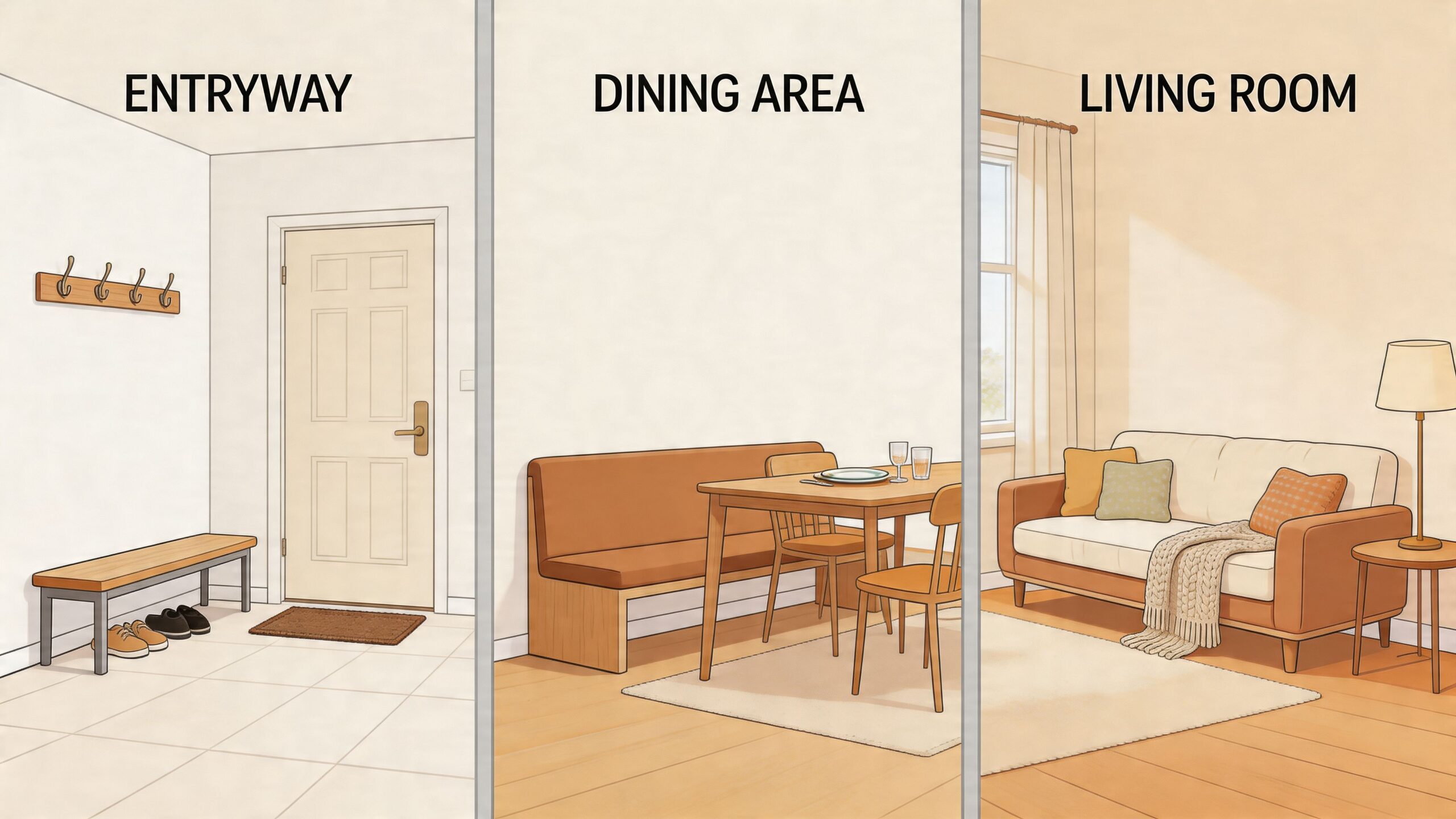
Dining benches
Dining benches need a balanced feel. You want enough support under your legs, but you also need to stay close to the table without leaning forward through the whole meal.
The Project for Public Spaces notes that backed benches work well at 12 to 18 inches, while for home use dining and kitchen banquettes are best at 17 to 20 inches for posture and table access for 95% of adults, as outlined in PPS guidance on movable seating.
For many dining rooms, that means the best bench seat depth feels neat, supportive, and a little more upright than people expect. If it feels like a mini sofa, it’s probably too deep for everyday meals.
A few dining signs to watch for:
- Good fit: You can sit close to the table with your back feeling supported.
- Too deep: You scoot forward and stop using the backrest.
- Too shallow: You feel perched and keep shifting your weight.
Ashley dining benches often fit homes where people want a practical, everyday solution that works for family meals, homework, and holiday overflow seating.
Entryway benches
An entryway bench has a different job. It’s there for short sits, quick transitions, and often tighter spaces.
In these spots, slimmer is usually smarter. A deep bench in a narrow hall can feel like a parked wheelbarrow in the walkway. It may look nice against the wall, but it steals movement space and makes the room feel crowded.
For entryways, think about ease:
- slipping shoes on
- setting down a bag
- helping a child with boots
- giving a grandparent a stable place to pause
A shallower bench often works better because it supports those brief everyday moments without overpowering the room.
Window seats and lounge benches
Depth can become more generous. A window nook, reading corner, or relaxed living area benefits from a bench that gives you room to settle in.
A lounge bench should feel welcoming in a different way than a dining bench. You may want space for pillows, a softer back cushion, or room to pull one leg up and read for a while.
That’s where comfort-driven styles can overlap with brands people already associate with relaxing rooms, such as La-Z-Boy. The mood is different. You’re not trying to stay upright over a plate. You’re trying to exhale.
The best bench seat depth matches the behavior of the room. Eat upright. Pause briefly. Lounge deeply.
Backless benches in open spaces
Backless benches can be more flexible than backed benches. You can sit from either side, turn a bit, and use them in the middle of a room or at the foot of a bed.
PPS notes that backless benches can be deeper, up to 30 inches, because they allow more varied sitting positions. That doesn’t mean every home bench should be that deep. It means the design gives you more freedom.
In a home, deeper backless benches often make sense only when the bench is meant for relaxed, multipurpose use rather than formal seating.
A simple room-by-room comparison
| Room or use | How the bench should feel | Depth direction |
|---|---|---|
| Dining room | Upright, easy to reach the table from | Lean toward the dining range |
| Entryway | Quick, stable, space-conscious | Usually shallower |
| Window seat | Cozy, cushioned, relaxed | Usually deeper |
| Open living area | Flexible, casual, movable in feel | Depends on whether it’s backed or backless |
When families in Galax, Independence, Hillsville, and surrounding Southwestern Virginia homes are planning a nook or bench wall, room layout matters as much as the bench itself. Our room measuring guide for furniture placement can help you sort out clearances before you fall in love with a piece that’s too bulky for the space.
Beyond Depth Other Factors in Bench Comfort
Bench seat depth does a lot of the heavy lifting, but it doesn’t work alone. Comfort comes from how several details work together.
A bench can have an appropriate depth and still feel off if the cushion is too thick, the back angle is wrong for the room, or the material doesn’t suit the way your family uses it.
Knee angle and support
One reason depth matters so much is how it affects your legs. A bench seat depth of 16 to 18 inches supports a natural 90-110 degree knee flexion angle, which helps prevent pressure on the back of the knee, according to Groen’s guide to bench seat depth.
That sounds technical, but the feeling is simple. Your legs rest comfortably, and you don’t feel cut off at the knee.
Groen’s also notes that depths exceeding 20 inches can cause deep thigh compression, elevating intramuscular pressure by 30-50 mmHg during prolonged sitting. For a dining setup, that’s a real reason not to assume deeper always means more comfortable.
Cushion thickness changes everything
A thick cushion can make a bench feel softer, but it also changes where you sit.
Here’s what often happens:
- Firm, thinner cushions keep the seating experience more predictable.
- Plush, thicker cushions can reduce your usable depth and push your body forward.
- Soft back pillows may be cozy in a nook but frustrating at a dining table.
This is why two benches with the same listed depth can feel very different in person.
Back angle and purpose
A dining bench with a more upright back supports meals and conversation. A more relaxed back angle makes better sense in a nook or den.
That distinction matters with brands and styles people know well. Bassett benches in dining spaces often need to work with tables and daily routines. A casual upholstered bench in a sitting area can allow a more relaxed posture because the activity is different.
Don’t judge a bench by one measurement alone. Judge how the depth, cushion, and back support work together when you actually sit down.
Materials affect the experience
Material changes comfort in a practical way, too.
- Solid wood feels firm, stable, and clean-lined.
- Upholstered benches feel softer and warmer, especially in breakfast nooks.
- Textured fabrics can add grip, which some families prefer for daily use.
- Smooth surfaces may look sleek but feel less anchored when you sit and shift.
If you’re comparing fabric choices, our guide to upholstery materials for everyday living can help you think through feel, care, and durability.
Comfort is rarely about one hero feature. It’s about how the parts cooperate.
Find Your Perfect Fit at Guynn Furniture
Reading about bench seat depth helps. Sitting on the bench helps more.
That’s why in-person testing matters so much, especially when you’re choosing a piece for everyday use. A bench may look ideal online and still feel wrong for your posture, your table, or the way your family naturally sits.

What to test in the showroom
When you try a bench in person, don’t stop at “it seems fine.” Give it a real test.
Sit for a few minutes and notice:
- Your posture: Are you upright without strain?
- Your legs: Do they feel supported instead of crowded?
- Your reach: Could you comfortably use this at a table?
- Your habits: Would your family enjoy sitting here every day?
A product such as the St. Michael bench gives you a good example of the kind of piece where dimensions, style, and real-life use need to line up.
Why local guidance helps
Some homes need more than a quick sit test. Breakfast nooks, bay windows, combo entry-dining spaces, and family rooms with tricky traffic patterns often benefit from another set of eyes.
That’s where expert design staff can help. Debra Williams and our design team regularly help homeowners think through proportion, room flow, and how a bench will live alongside tables, rugs, and surrounding seating.
For shoppers in Galax, Independence, Hillsville, and the wider Southwestern Virginia and Northern North Carolina region, that kind of guidance can take a lot of stress out of the process. Furniture is a meaningful purchase. It should feel considered, not rushed.
The practical side of shopping close to home
People also want the logistics to be simple. That matters.
We keep a large in-stock selection available for immediate delivery, which is helpful when you don’t want to wait on an online-only timeline. We also offer free in-home delivery and setup within 60 miles, so you don’t have to wrestle a bench into place yourself.
If budget is part of the decision, we try to keep that straightforward too. Our Low Price Promise includes matching local competitors and a 30-day price guarantee, and financing options are available for shoppers who want flexibility.
Since 1902, our family has served this region with a no-pressure atmosphere. That’s still how we approach it. Comfort first, good questions second, and no hard sell.
Create Your Comfortable Home With Us
A bench may seem simple, but the right one can change how a room works. Meals feel easier. Entryways feel more useful. Quiet corners become places people want to sit.
That’s why bench seat depth matters. It helps turn a bench from “something to fill the wall” into a piece your family uses every day with real comfort.
If you’re replacing an older bench while refreshing your space, it can also help to plan what happens to the piece you’re moving out. For households looking to donate usable furniture, Emmanuel Transport's furniture donation list is a practical resource to review.
Our family has been helping neighbors create comfortable homes since 1902. We serve Galax, Independence, Hillsville, and the wider Southwestern Virginia and Northern North Carolina region with the same approach we’d want in our own shopping experience. Helpful answers, honest guidance, and room to make the right decision for your home.
Visit our showrooms in Galax, Independence, or Hillsville to test the comfort for yourself. Schedule a consultation with our design team to start planning your dream room today. Browse our selection online at guynnfurniture.net.
Visit Guynn Furniture & Mattress to explore dining, living room, bedroom, and mattress options from brands such as La-Z-Boy, Ashley, Bassett, Sealy, and Therapedic. Stop by our showrooms in Galax, Independence, or Hillsville, or connect with our team for design help, free in-home delivery and setup within 60 miles, and a comfortable no-pressure shopping experience.