Mastering Dinner Plate Size: Guide to Perfect Portions

A lot of people run into the same surprise. You bring home a beautiful set of plates, set the table, and suddenly everything feels off. The plates crowd each other, the table looks smaller than it did in the store, and the cabinet shelf barely closes.
That small detail matters more than most of us expect.
Dinner plate size affects how your table looks, how comfortable meals feel, how much food gets served, and even whether your dining room works smoothly on an ordinary Tuesday night. In homes around Hillsville, Galax, Independence, and the wider Southwestern Virginia and Northern North Carolina region, that matters because the dining room often has to do a lot. It hosts quick breakfasts, holiday dinners, school projects, and coffee with neighbors.
Families have been piecing homes together thoughtfully for generations around here. Since 1902, local homeowners have known that comfort usually comes from the little choices being right. Plate size is one of those choices. It touches storage, seating, wellness, and style all at once.
Welcome to Your Dining Room A Helpful Introduction
You might be standing in your kitchen right now with a tape measure in one hand and a stack of dishes in the other. Maybe you're replacing an older set, maybe you're setting up a first home, or maybe you're finally updating the dining room you've meant to tackle for years. Either way, dinner plate size can feel like a tiny decision until it starts affecting everything else.
One family might choose oversized plates because they look elegant on a display shelf. Then they get home and notice that weeknight meals seem heavier, their table feels cramped, and the dishwasher loads less neatly. Another family might keep using smaller plates they inherited and realize those plates fit their routines beautifully.
That confusion is normal. Plates are sold as simple tabletop pieces, but they interact with cabinets, chairs, serving bowls, table width, and how people eat.
A well-chosen plate doesn't just hold dinner. It shapes the whole experience around the table.
The good news is that you don't need to overthink it. A few clear ideas can make the choice much easier.
Why this topic feels surprisingly personal
Dinnerware sits right at the intersection of daily habit and home design. It's practical, but it's also emotional. The plates you use show up in family photos, birthday dinners, and quiet meals after a long day.
That's why many readers get stuck between two questions:
- What looks best: Large plates can feel more formal and dramatic.
- What works best: Smaller or more moderate plates often fit tables, cabinets, and ordinary meals more comfortably.
Both questions matter. The best answer usually isn't the biggest plate or the trendiest one. It's the size that fits your room, your meals, and your household.
Why Dinner Plate Size Matters More Than You Think
You set the table for a weeknight dinner, carry in the serving bowls, and suddenly the table feels tighter than it looked in the store. Plates overlap napkins. Glasses inch too close to elbows. The meal is the same one your family always enjoys, but the whole setup feels a little crowded.
That is why plate size matters.
A dinner plate is not just a surface for food. It sets the scale for the entire dining experience, from how full a meal looks to how comfortably everyone fits around the table. It also affects whether your Bassett dining table feels gracious and balanced or packed too tightly for everyday use.
Dinner plates have grown over time. As noted earlier, plates that once felt standard now look smaller beside many modern 11 to 12 inch designs. A change of an inch or two may sound minor, but it works like putting larger frames around the same picture. The food can look smaller, the place setting can spread wider, and the room each person needs at the table can increase fast.
That visual effect matters at mealtime. A moderate serving of pasta, chicken, or roasted vegetables often looks just right on a moderate plate. Put that same serving on a much larger plate and it can appear skimpy, even when the portion has not changed. For many households, that subtle cue leads to adding a little more food without noticing.
Plate size also shapes the room itself. In homes around Hillsville, families often need dinnerware to do several jobs well. It should look nice for company, fit the cabinet, load into the dishwasher without a puzzle, and leave enough elbow room for everyday meals. Oversized plates can make each of those jobs harder.
Here is where the decision reaches beyond the dish cabinet:
- Table comfort: Bigger plates claim more space, which can make a dining table feel crowded faster.
- Presentation: The right size helps food look generous and organized instead of sparse or squeezed.
- Family routines: Plate size can gently influence how much food people serve themselves.
- Storage: Wide rims and large diameters take up more shelf and dishwasher space.
- Hosting: Guests need room for flatware, glasses, serving bowls, and conversation, not just the plate.
For hosts, proportion matters just as much as color, pattern, or centerpiece choice. If you enjoy gathering friends and family, our guide to holiday hosting ideas for your dining space can help you plan a table that feels welcoming without feeling cramped.
Practical rule: Choose dinner plate size as part of the whole dining setup, not as a separate purchase.
A larger plate can still be the right choice for a formal meal or a holiday spread. The key is seeing what that choice changes. Plate size affects how food looks, how people serve themselves, how place settings fit on the table, and how easily everything stores away after dinner.
Once you view the plate as part of the full dining system, the right size becomes much easier to spot.
The Anatomy of a Perfect Place Setting
A place setting can look more complicated than it is. There's no need for a dozen specialty plates. They just need to know which pieces do what.
The easiest way to clear up the confusion is to separate the decorative layer from the everyday layer.
The main plate types
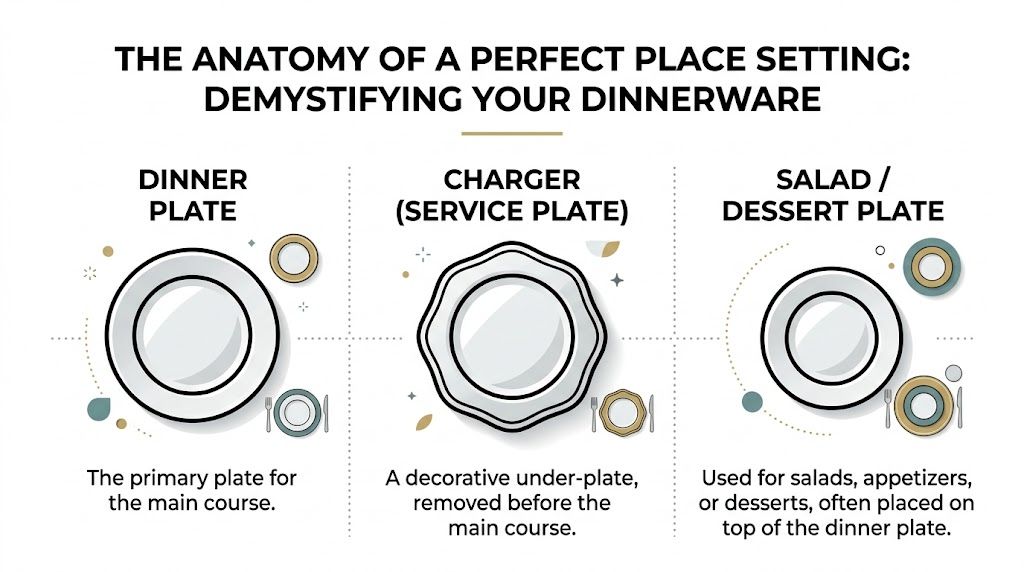
A dinner plate is the working plate. It's the one that carries the main meal.
A charger sits underneath in more formal settings. It adds presence and helps frame the place setting, but it isn't the plate people usually eat from. A salad plate is smaller and often rests on top of the dinner plate before the meal begins. A dessert or bread plate is smaller still and supports side items or the final course.
Here's a simple comparison.
Standard Plate Sizes and Uses
| Plate Type | Typical Diameter (Inches) | Typical Diameter (cm) | Primary Use |
|---|---|---|---|
| Charger | 11-13 | 28-32 | Decorative base plate for formal settings |
| Dinner Plate | 10-12 | 25-30 | Main course |
| Salad Plate | 8-9 | 20-23 | Salads, appetizers, or lighter courses |
| Dessert or Bread Plate | 6-8 | 15-20 | Bread, dessert, or small sides |
How to build a set without overbuying
Many households do best with a flexible mix instead of a fully formal collection. That often means:
- Everyday dinner plates: The plates you'll use most often for weeknight meals.
- Smaller companion plates: Helpful for salads, sandwiches, desserts, or children's meals.
- Optional chargers: Best for holidays, celebrations, or a more layered look.
If you enjoy styling the full room, not just the tabletop, this roundup of dining room accessories that complete the space pairs nicely with plate planning.
If your table is casual most of the year, start with everyday function. Add decorative layers only if you'll use them.
Where people usually get tripped up
The most common mistake is buying by appearance alone. A wide-rimmed plate may look elegant in the box but leave less usable space for food than expected. Another common mix-up is assuming a charger is necessary for a finished table. It isn't. Plenty of attractive place settings use only a dinner plate and a smaller accent plate.
The goal isn't to copy formal etiquette. It's to choose pieces that make your table feel natural and useful.
Matching Plates to Your Dining Table
The plate and the table need to cooperate. If they don't, every meal feels a little more crowded than it should.
Standard dinner plates in the 10 to 12 inch range require a minimum table surface of 24 to 30 inches per person to prevent crowding, according to this table-setting measurement guide. That same source notes that a table that's too small for its plates can lead to a 15% to 20% increase in diner discomfort and a higher risk of spills during family meals.

A simple way to measure your setup
If you're checking whether your current table works, start with these steps:
Measure the plate diameter
Include the full rim, not just the center food area.Count the place settings
Think about how many people eat there most often, not just holiday maximums.Check each person's width
If each diner doesn't have enough surface area, elbows, glasses, and serving spoons start competing for space.Notice the center of the table
A table can seem big enough until you add a pitcher, a casserole dish, or a basket of rolls.
What this means in real homes
A narrower table can still work beautifully with moderate-size dinnerware. That's often the sweet spot for everyday living. A very large plate on a compact table may look elegant in a catalog photo, but in real life it can crowd utensils and make everyone feel boxed in.
That's especially true if you use cloth napkins, placemats, or shared dishes. The more layers you add, the more valuable good spacing becomes.
For readers choosing a new table, this guide to finding the right dining table dimensions is a helpful next step.
Choosing harmony over maximum size
People often think a bigger table setting looks more impressive. Sometimes it does. But comfort usually comes from proportion.
A balanced setup often includes:
- A plate that leaves breathing room
- Utensils that don't hang off the edge
- Enough center space for serving dishes
- Chairs positioned so diners can move naturally
When all those pieces line up, the room feels calmer. Meals last longer, conversations flow better, and cleanup is less stressful.
Plates Portions and Your Familys Health
Most of us serve food by eye. We don't weigh every scoop of mashed potatoes or count every bite of pasta. That's why plate size has such a strong effect on everyday eating.
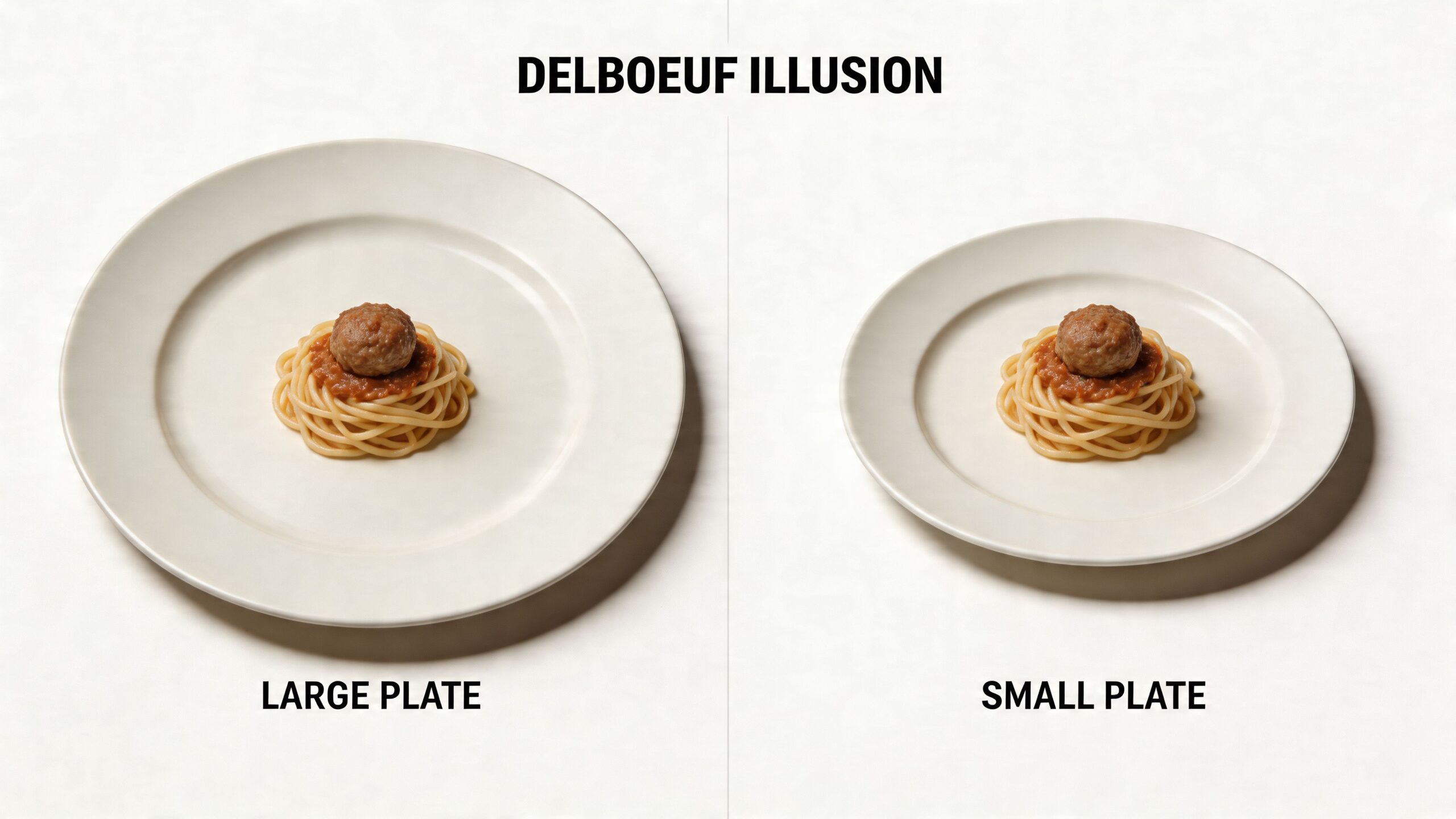
One reason is the Delboeuf illusion, a visual effect that makes the same portion look smaller on a larger plate. According to this dinner plate size explanation, people tend to serve 20% to 30% more food on 12-inch plates compared to 10-inch plates, and a 10-inch plate is ideal for a 500 to 700 calorie meal without seeming empty.
What the illusion looks like at home
Set the same serving of spaghetti on two different plates. On the larger one, the pasta sits in the middle with a wide ring of open space around it. On the smaller one, that same serving looks more complete.
Nothing changed except the frame around the food.
That matters because many families judge portions by appearance first. If the plate looks too empty, they add more. Over time, that can affect both food budgets and eating habits.
A smaller visual frame can make an ordinary serving feel satisfying instead of skimpy.
A useful pairing with meal planning
Plate size works best when it supports the rest of your routine. If your household is trying to reduce last-minute takeout, limit waste, or make weeknights run more smoothly, pairing smaller plates with thoughtful scheduling often helps. Some families find that a simple calendar system improves menu planning success because it connects portioning, grocery shopping, and mealtime expectations in one place.
A more efficient kitchen also makes mindful serving easier. This article on making your kitchen work better day to day is useful if your prep space, storage, or workflow needs attention.
This isn't about strict rules
Using a smaller plate doesn't mean every meal has to look restrained. It just gives your eyes a better reference point. For many households, that's enough to make meals feel balanced without turning dinner into a math exercise.
That's why dinner plate size belongs in the wellness conversation. Not as a gimmick, but as a quiet design choice that supports better habits.
Practical Plate Advice for Your Home
The right dinner plate size depends on who's using it and how the home works day to day. A retired couple, a family with young children, and a first-time homeowner usually need different things.
One helpful benchmark comes from this comparison of plate sizes over the years, which notes that switching from a 12-inch to a 9-inch plate can reduce the amount of food served and eaten by an average of 29%. That won't make every home choose a 9-inch plate, but it does show how much influence this decision can have.

For families with children
Families often benefit from plates that feel sturdy, stack easily, and don't dominate the table. Moderate sizes usually make it easier to serve balanced meals without overwhelming younger kids.
A few practical signs you've chosen well:
- The plate fits the dishwasher neatly
- Kids can carry it without awkward tilting
- The table still has room for cups, napkins, and serving bowls
For seniors and smaller households
Lighter, more manageable plates can be easier to lift, carry, and store. Many older adults also prefer a setting that feels tidy rather than oversized.
That doesn't mean giving up style. A classic plate with a comfortable diameter can still look welcoming on a nicely set table, especially with a placemat, cloth napkin, or a small accent piece.
For first homes and value-minded buyers
If you're building a set from scratch, versatility matters more than quantity. Start with dinner plates and smaller companion plates that can handle breakfast, lunch, dessert, and casual guests.
A few households also like adding one specialty piece for prep or serving. For example, a handmade stoneware garlic grate plate can be a practical extra if you cook often and enjoy pieces that pull double duty.
Smart buying habit: Choose dinnerware that earns its cabinet space on ordinary weekdays, not just on holidays.
The style shift toward smaller plates
Some homeowners are moving back toward more moderate dinnerware because it feels calmer, more useful, and easier to live with. That makes sense. A plate doesn't have to be oversized to feel gracious.
When the scale is right, the whole room works better. Storage is simpler. Table settings look balanced. Meals feel more intentional.
Find Your Perfect Fit at Guynn Furniture
Dinner plate size influences more than the dish in front of you. It affects the table beneath it, the room around it, and the habits that grow from meal to meal.
A good choice usually lands in the middle of three needs. It should look right in your home, fit comfortably on your table, and support the way your household eats. That's true whether you're hosting Sunday lunch in Hillsville, serving weeknight supper in Galax, or refreshing a dining space anywhere across Southwestern Virginia or Northern North Carolina.
There's also a broader shift toward thoughtful dining. According to this look at plate trends and mindful dining, mindful dining is described as a significant 2025 to 2026 trend, and some brands have seen sales of 9.5-inch plates increase by as much as 15% as shoppers look for dinnerware that supports healthier portion control.
Your Next Steps
| Action | Description |
|---|---|
| Check your current plates | Measure the full diameter and see how they fit your table, cabinets, and dishwasher |
| Review your table spacing | Make sure each diner has comfortable room for utensils, glassware, and shared dishes |
| Think about your everyday meals | Choose a size that works for normal breakfasts and dinners, not only special occasions |
| Build gradually | Start with versatile basics, then add smaller accent plates or formal pieces if needed |
| Match the room, not just the pattern | Keep the scale of plates in line with the size of your table and dining area |
A calm, practical way to decide
If you're still torn, lean toward the size you'll use most often. Everyday comfort usually beats occasional drama.
For more help thinking through scale and proportion, this guide to picking the right dining room table is a smart companion read.
The goal isn't perfection. It's a dining setup that feels easy, attractive, and natural every time people gather around it.
Guynn Furniture & Mattress has been helping neighbors create comfortable homes since 1902, with a warm, no-pressure atmosphere that makes planning easier. If you're furnishing a dining room in Galax, Independence, Hillsville, or anywhere across Southwestern Virginia and Northern North Carolina, our expert design staff can help you think through table scale, seating, and the details that make a room work. We carry trusted brands including La-Z-Boy, Ashley, Bassett, Sealy, and Therapedic, offer a large in-stock selection for immediate delivery, and provide free in-home delivery and setup within 60 miles. If price matters, our Low Price Promise means we'll match local competitors and back your purchase with a 30-day price guarantee. Visit our showrooms in Galax, Independence, or Hillsville to test the comfort for yourself. Schedule a consultation with our design team to start planning your dream room today. Browse our selection online at guynnfurniture.net.