Mid Century Modern Desks: A Buyer’s & Styling Guide

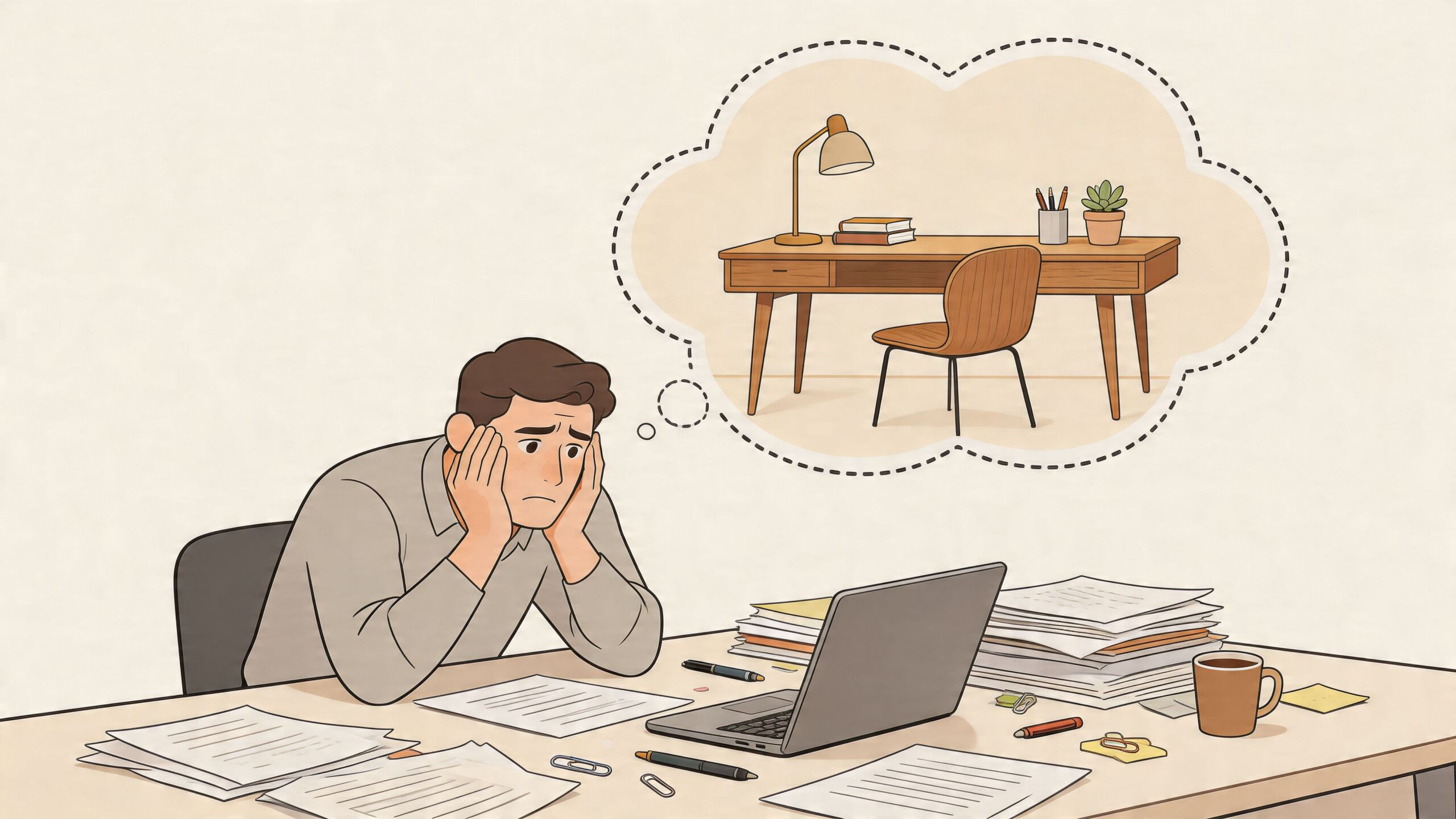
Trying to work from the kitchen table again? Maybe the laptop fits, but the paperwork doesn’t. Maybe you’ve carved out a corner in the guest room, but it still feels more like a storage spot than a place where you can focus. That’s a common problem in homes across Galax, Independence, Hillsville, and the wider Southwestern Virginia and Northern North Carolina region.
A lot of families want the same thing from a home office. They need a desk that works hard during the day, but they also want it to look like it belongs in the rest of the house. That’s why so many people keep coming back to mid century modern desks. They’re simple without being plain, useful without feeling bulky, and stylish in a way that doesn’t go out of date.
At Guynn, we’ve been helping families furnish their homes since 1902, and we know furniture shopping can feel like a lot. You might be comparing styles, worrying about quality, or trying to make a room do double duty. We’re here in a no-pressure atmosphere to help you sort through it.
If you’re gathering ideas, it can help to see a range of silhouettes and storage options in one place. A roundup like The Best Mid Century Modern Office Desks gives a useful look at how this style shows up in real workspaces.
You can also pair those ideas with practical planning tips from our guide to home office furniture ideas, especially if you’re fitting an office into a bedroom, den, or open living area.
Your Guide to Finding the Perfect Home Office Desk
A mid century modern desk often solves a very modern problem. It gives you enough workspace for daily tasks while keeping the room feeling open and calm. That balance matters when your office is part of your home, not a separate commercial space.
Some readers hear the phrase and think it sounds formal or hard to define. It’s easier to spot than most furniture categories. You’ll usually notice clean lines, lighter-looking frames, gentle curves, and details that serve a purpose instead of adding clutter.
A good desk should help the room breathe, not make it feel crowded.
For many households, that’s the primary appeal. A mid century modern desk can sit beside traditional pieces, newer upholstered seating, or family furniture you already own and still feel at home.
What Exactly Is a Mid-Century Modern Desk
The phrase Mid-Century Modern, often shortened to MCM, sounds like design-school language, but the idea is straightforward. Writer Cara Greenberg coined the term in her 1984 book, which helped popularize furniture and interiors from the 1940s to 1960s. The style peaked from 1945 to 1970 and focused on functionality and mass-producibility for a growing middle class, building on earlier modernist ideas in a more accessible way, as noted in this history of mid-century modern furniture.
The look in plain language
If you’ve ever looked at a desk and thought, “That feels neat, light, and easy to live with,” you were probably looking at some version of this style.
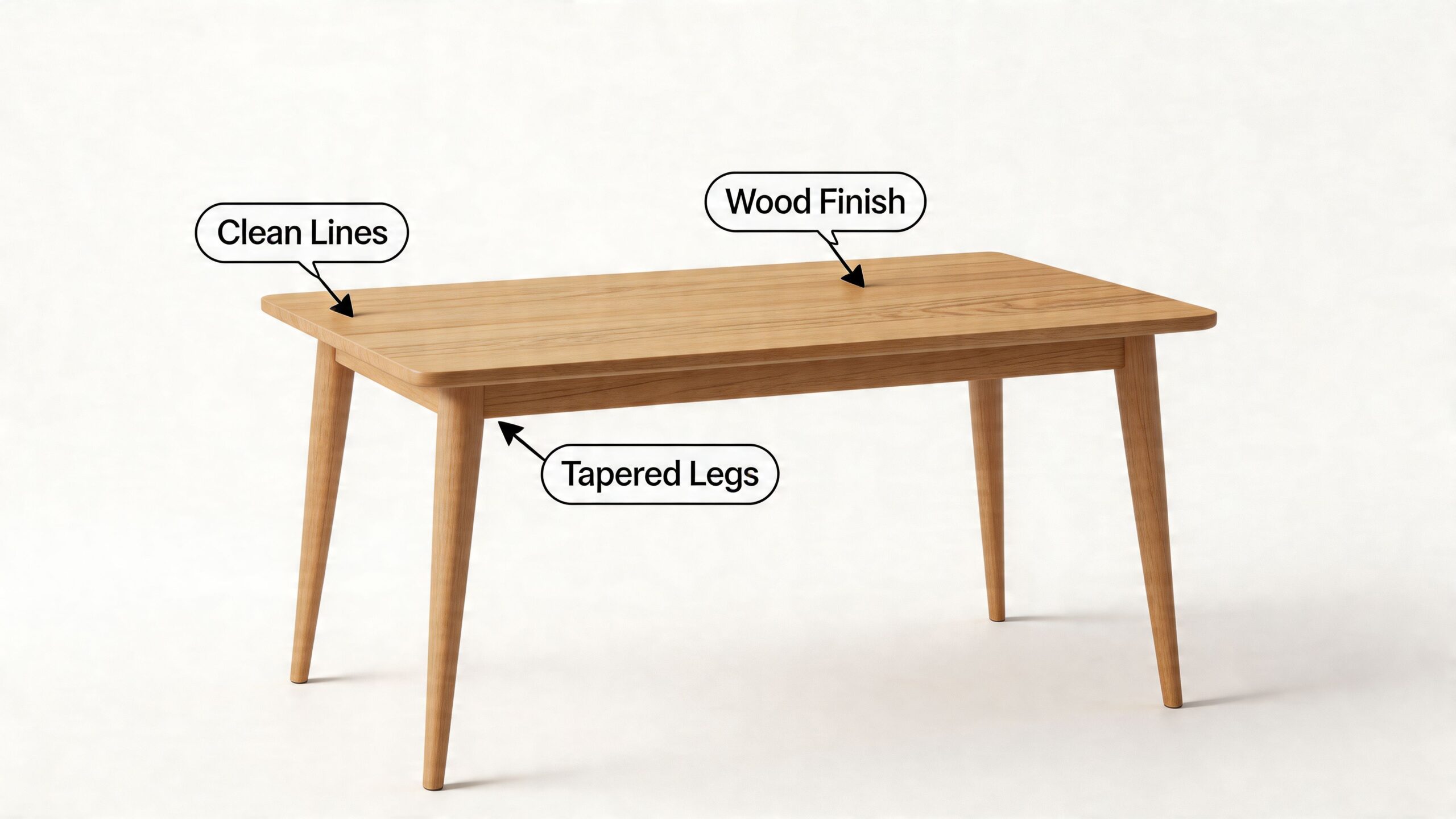
Here are the features people notice first:
- Clean lines mean the shape is easy to read. There isn’t a lot of carving, trim, or extra ornament.
- Tapered legs give the desk that lifted, airy look instead of a heavy blocky base.
- Organic shapes soften the geometry. Think rounded corners, gentle curves, and edges that feel less stiff.
- Useful storage is built in without turning the desk into a giant cabinet.
- Warm wood tones help the piece feel welcoming, even when the design is spare.
That mix is why mid century modern desks still work so well in today’s homes. They don’t ask the whole room to match them perfectly.
Why the style appeared when it did
After World War II, families needed furniture that could fit new homes, new routines, and tighter floor plans. Designers responded with pieces that were practical, attractive, and easier to produce for everyday households.
That’s a big reason this style feels so sensible even now. It wasn’t created just to look good in a magazine. It was made for real life.
A few historical details help explain the look:
- New materials changed furniture design. Plywood, fiberglass, plastic, and teak made sleek forms easier to build.
- Suburban growth shaped room sizes. Families needed furniture that worked in efficient spaces.
- Function came first. Storage, durability, and easy use mattered as much as appearance.
For desks, that often meant a writing surface with a slim profile, a few thoughtfully placed drawers, and legs that visually opened up the floor underneath.
How to tell if a desk feels truly mid century modern
You don’t need to memorize designer names to recognize the style. Ask a few simple questions:
- Does the shape look uncluttered?
- Are the legs slim or angled rather than thick and heavy?
- Do the drawers feel integrated into the design instead of tacked on?
- Would it still look appropriate in a living room, bedroom, or study?
If the answer is yes to most of those, you’re likely in mid century modern territory.
Some desks are “mid century modern” because they copy the look. Others share the same design logic, which is often more important for everyday use.
That matters when you’re shopping. Some families want a faithful vintage-inspired silhouette. Others want the cleaner lines and practical layout.
Materials you’ll see most often
Wood is the heart of the look. Walnut, teak, oak, and other hardwoods fit the style well because they bring warmth to a sleek shape.
You’ll also see pieces that combine wood with engineered materials. That isn’t automatically a bad thing. What matters is how well the desk is made, how stable it feels, and whether the finish suits your home.
If you’d like a broader look at how furniture styles compare, our furniture style guide can help you place mid century modern beside traditional, farmhouse, and transitional looks without getting lost in jargon.
Exploring Common Types of MCM Desks
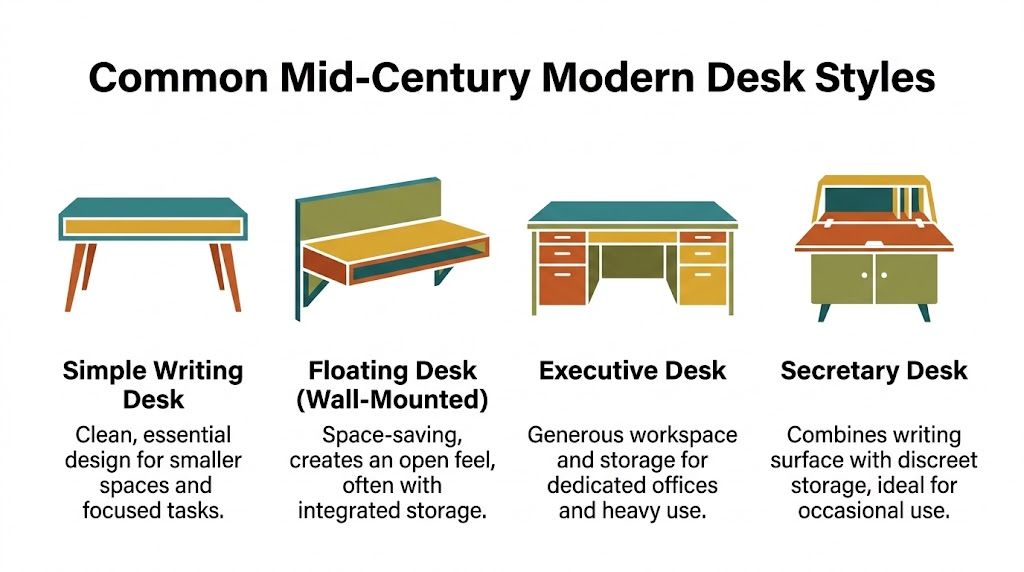
Not every household needs the same desk. One person needs a quiet place for bills and email. Another needs room for notebooks, a monitor, and files. Mid century modern desks come in several common forms, and the differences matter more than people expect.
Furniture from 1945 to 1970 was shaped by post-war suburban life, with sleek forms and multi-functional storage suited to efficient spaces. By the 1950s and 1960s, the style influenced over 90% of furniture stores worldwide, which helps explain why these desk layouts still feel familiar and useful today, according to this look at the history of Danish furniture.
Four desk types you’ll see most often
Simple writing desk
This is the cleanest version. It usually has an open area underneath, a slimmer top, and little to no storage.
It works well for:
- Smaller rooms
- Laptop-based work
- Students or occasional home-office use
This style is often the easiest to place in a bedroom, hallway nook, or shared living space because it doesn’t visually crowd the room.
Executive desk
This one gives you more surface area and more storage. It feels more substantial and usually works best in a dedicated office.
It fits households that need:
- A larger work zone
- Multiple drawers
- A desk that stays set up full-time
If you use paper files, desktop equipment, or want a stronger visual anchor in the room, this style makes sense.
Secretary desk
A secretary desk is compact and often includes hidden or enclosed storage. Some have a fold-down front or an upper section that keeps supplies tucked away.
This style is handy when:
- The office shares space with another room
- You want clutter out of sight
- You need a work surface, but not all day long
It’s a smart pick for homes where the office corner also needs to look tidy in the evening.
Floating or wall-mounted desk
This version saves floor space and creates a very open look. It can be a strong choice in apartments, hallways, or compact bonus rooms.
It’s especially helpful for:
- Tight layouts
- Minimalist rooms
- Families trying to keep a room from feeling heavy
If storage matters, many people pair this desk type with nearby shelving or a small cabinet.
Mid-Century Modern Desk Types at a Glance
| Desk Type | Typical Dimensions (W x D) | Best For | Storage Profile |
|---|---|---|---|
| Simple Writing Desk | Compact to medium, slim depth | Everyday laptop work, homework, small rooms | Minimal drawers or open design |
| Floating Desk | Compact, wall-saving footprint | Tight spaces, airy layouts | Usually light built-in storage |
| Executive Desk | Medium to large, deeper surface | Dedicated home offices, heavier daily use | Multiple drawers and broader work surface |
| Secretary Desk | Compact footprint with vertical storage | Shared rooms, occasional work, hiding clutter | Enclosed compartments and discreet storage |
How to choose your type without overthinking it
A simple rule helps.
- If the room is doing double duty, start with a writing desk or secretary desk.
- If you work from home every day, look harder at executive styles and smarter storage.
- If your room feels cramped already, floating designs can preserve visual space.
Practical rule: Match the desk to the way the room behaves, not just the way the desk looks in a photo.
If storage is the sticking point, a guide focused on a home office desk with storage can help you think through drawers, cubbies, and hidden organization before you buy.
Choosing Quality Materials and Lasting Construction
A mid century modern desk earns its keep in quiet ways. The shape may look light and simple, but that simplicity puts the workmanship out in the open. There are fewer places to hide weak materials, sloppy joinery, or a thin top that will not wear well over time.
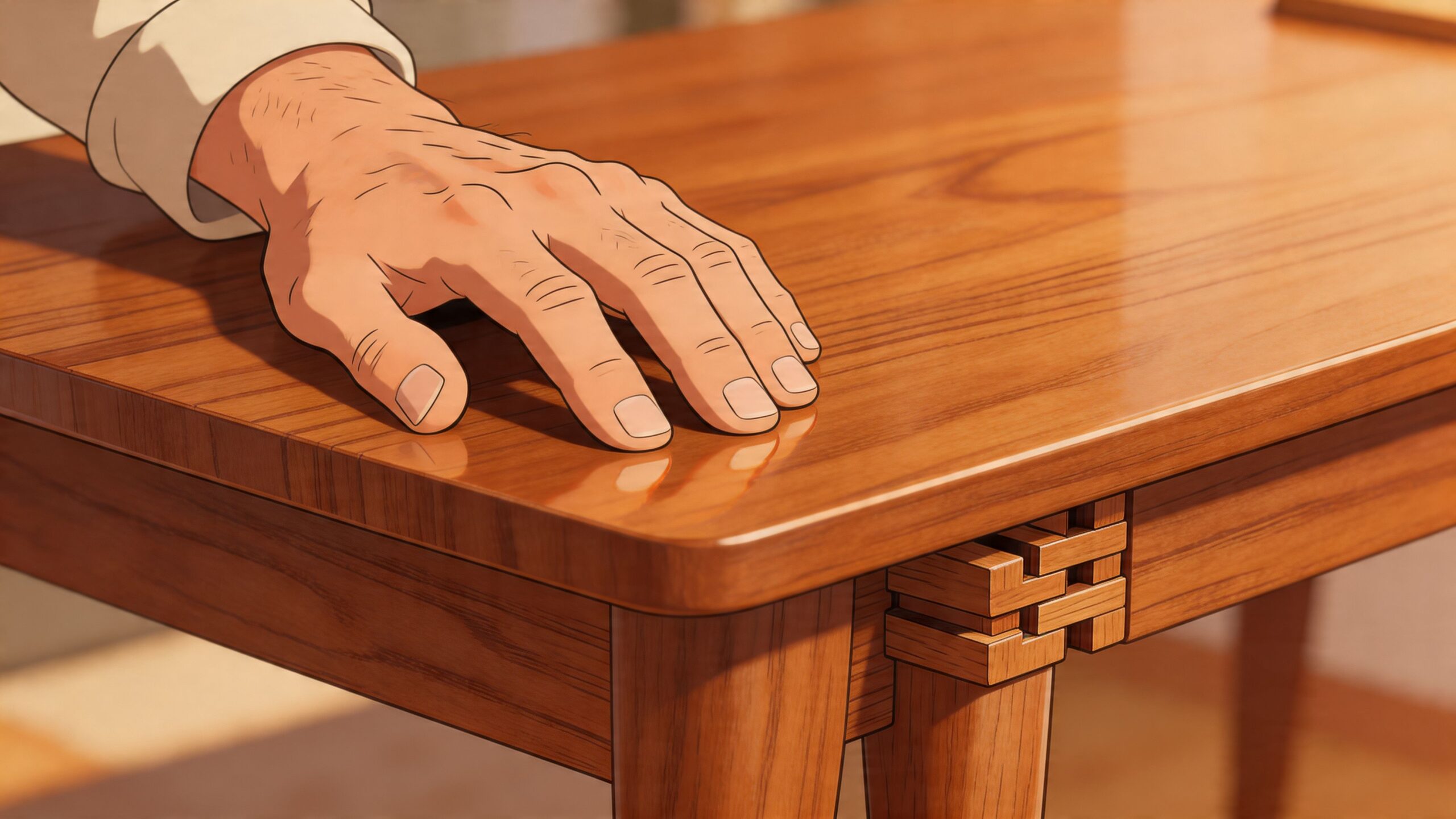
That is why this style rewards a closer look before you fall for the finish.
A good desk should feel settled and balanced, almost like a well-built porch rocker that sits flat on the floor without any fuss. Tapered legs are a classic mid-century detail, but the shape alone does not guarantee quality. What matters is how securely those legs are attached, how well the frame holds its shape, and whether the desk stays steady when you rest your arms on it or pull out a drawer.
What to inspect first
Color usually grabs attention first. Families shopping in our part of Southwestern Virginia often start there too. But if you want a desk that still feels dependable years from now, look at construction before stain.
Check these areas closely:
Leg attachment
Give the desk a gentle nudge. It should feel planted, not shaky or loose.Top material
Press lightly across the surface. A well-made top feels solid and supported from end to end, not hollow or springy in the middle.Drawer movement
Open each drawer all the way, then close it again. Good drawers glide evenly and line up neatly when shut.Back and underside details
Turn your attention to the parts shoppers often miss. Clean finishing underneath and along the back usually signals better overall care in the build.
Why wood choice matters
Wood choice affects more than appearance. It influences how the desk handles daily use, small bumps, changing humidity, and the weight of your work setup.
Walnut and oak are popular in mid-century modern furniture for good reason. They bring warmth and character, and they also tend to hold up well in busy households. If your desk will see coffee mugs, chargers, notebooks, homework, and the occasional dropped set of keys, the species and construction start to matter fast.
If you want a clearer explanation of how different woods age and wear, our guide to choosing the right hardwood for longevity and style breaks it down in plain English.
Quality shows up in the little things
Well-made furniture often feels easy to live with because nothing is fighting you. The frame stays square. The surface feels firm. The drawers meet evenly. The finish feels smooth instead of thick or plasticky.
Those details may sound small, but they add up to long-term value.
That matters for anyone setting up a home office with a real job to do, not just a nice look for a photo. A desk with sound materials and careful construction can handle years of regular use more gracefully, which often makes it a smarter buy than a cheaper piece that needs replacing too soon.
Bassett is one example of a brand families often consider when they want classic craftsmanship paired with livable design. For shoppers exploring Danish Modern-inspired looks, the Copenhagen Writing Desk is one option available through Guynn Furniture & Mattress that fits naturally into this style conversation.
The simplest desks often ask the most from their construction. If the materials are good and the build is sound, you can usually feel it right away.
Designing for Comfort An Ergonomic Home Office
A handsome desk won’t help much if your shoulders are up by your ears after an hour. Comfort is where a pretty workspace becomes a useful one.
Some mid century modern desks are especially practical because the design keeps the area underneath more open. Desks with floating tops or offset drawers can increase usable workspace by 25-30% over traditional designs and often preserve 21-24 inches of knee clearance, which supports OSHA ergonomic guidance and can help reduce strain in a home office, as described in this desk layout reference.
Comfort starts below the desktop
People often focus on desktop size and forget what’s happening underneath. Knee space matters. So does where a drawer sits.
A few details make daily work easier:
- Open legroom helps you sit naturally instead of twisting around a center drawer.
- Offset storage keeps supplies nearby without pushing your chair too far back.
- A clear front edge gives your arms a better resting position while typing.
If you already own an office chair, measure it before you shop. Our guide on how to measure furniture can help you avoid the common mistake of buying a desk that looks right but sits wrong in real life.
Pair the desk with the right chair
Many home offices frequently experience this issue. A desk can have beautiful lines, but if the chair doesn’t support your back and height properly, you’ll feel it quickly.
That’s why it helps to test seating in person. As a La-Z-Boy Showcase dealer, we regularly help families compare office seating with comfort in mind, not just style. A supportive chair can make a larger difference in your day than another drawer ever will.
Simple setup habits that help
You don’t need a complicated ergonomic system. Following a few basics often yields better results:
- Keep frequently used items within easy reach.
- Center your main screen in front of you.
- Let your feet rest comfortably on the floor or a support.
- Choose a desk shape that doesn’t force you to angle your body.
If your body has to adapt to the furniture all day, the furniture is asking too much.
For more personalized assistance, our expert design staff, including Debra Williams, can help plan a workspace that fits both your room and your routine.
Styling Your Mid-Century Modern Desk
Once the desk is in place, the room still needs to feel finished. That’s where many people get stuck. They know they like the desk, but they’re not sure what belongs around it.
The good news is that mid century modern desks are easy to live with because they mix well. You can lean into the style or soften it with other pieces already in your home.
Keep the desk as the visual anchor
A mid century modern desk usually looks best when the area around it isn’t overcrowded. Let the shape of the desk do some of the decorating.
Try building around it with:
- A warm table lamp with a simple profile
- A framed print or abstract artwork rather than a busy gallery wall
- One plant or natural accent to add softness
- A storage piece with clean fronts instead of ornate trim
If your room already has traditional furniture, don’t assume the desk won’t work. The warmth of wood often helps bridge styles.
Color and texture matter more than matching sets
Many readers think they need a perfectly coordinated office suite. You don’t. In fact, the room often feels more natural when the desk is paired with pieces that complement it rather than copy it.
Think in layers:
- Wood tone gives the space warmth
- Fabric upholstery softens the sharper lines
- Metal accents add a little contrast
- Neutral walls help the desk stand out without shouting
Ashley pieces can mix in nicely when you want surrounding storage, occasional seating, or accents that keep the room relaxed instead of overly formal.
A few styling combinations that work well
Here are three easy directions people tend to like:
Clean and minimal
Keep decor light, use a simple chair silhouette, and limit desktop accessories.Warm and collected
Pair the desk with a rug, soft window treatments, and a wood bookcase or cabinet.Blended family room office
Add the desk to a den or spare bedroom with comfortable seating and closed storage so work materials can disappear when not in use.
A styled desk should still feel ready for real work. If every inch is decorated, the desk has stopped being a desk.
If you want help pulling the whole room together, Debra Williams and our design team can help with layout, finishes, and the details that make the space feel complete.
Bringing Your Perfect Desk Home with Guynn Furniture
By the time most shoppers narrow down a desk, they’re juggling a few bigger questions. Is vintage worth it? Is a reproduction the better fit? How do you balance style, value, and long-term use?
That vintage-versus-new decision matters. Authentic pieces from the 1940s to 1960s can hold different long-term value than newer reproductions, and factors like wood type, original construction methods, and overall authenticity help separate a collector’s piece from a mass-produced one, as discussed in this overview of mid-century desk buying considerations.
When vintage makes sense
Vintage can be a wonderful choice if you enjoy original character and you’re comfortable with a more selective buying process. You’ll want to pay close attention to wood species, hardware, drawer fit, and whether the piece has been repaired well.
For some households, though, a newer desk is the more practical answer. You get the look you want with more predictable condition and often an easier path for matching other furnishings in the room.
Why local shopping helps
This is one of those categories where seeing the desk in person can save you frustration. Finish color, leg stability, drawer feel, and scale all read differently in a showroom than they do on a screen.
That’s especially helpful for families in Galax, Independence, Hillsville, and the wider Southwestern Virginia and Northern North Carolina area who want a no-pressure atmosphere and straightforward guidance.
Here’s where local service makes the process easier:
- You can test the construction yourself instead of guessing from photos.
- You can compare in-stock options if you don’t want to wait on long shipping timelines.
- You can ask about room planning if the office shares space with a guest room or den.
- You can get help weighing custom options through custom furniture planning made simple.
Practical support matters too
Price matters to families, and so does peace of mind. We match local competitors and offer a 30-day price guarantee, which helps Value Seekers shop with more confidence. We also offer financing options for qualified buyers.
And when the desk is chosen, you don’t have to wrestle it into the house yourself. We offer free in-home delivery and setup within 60 miles, which is a real help across our regional service area.
Start Building Your Dream Office Today
Mid century modern desks have stayed relevant for good reason. They combine clean design, practical storage, and a lighter visual footprint that works well in real homes. For many families, that’s exactly the mix a home office needs.
The right desk should support your routine, fit your room, and still look good years from now. That’s true whether you’re creating a quiet work corner, upgrading a full office, or trying to make a shared space feel more organized.
If the process still feels overwhelming, that’s okay. Furniture shopping doesn’t have to be stressful when you have a local team that listens, explains things clearly, and helps you compare options without pressure.
Visit Guynn Furniture & Mattress to explore ideas for a comfortable, stylish home office. Visit our showrooms in Galax, Independence, or Hillsville to test the comfort for yourself. Schedule a consultation with our design team to start planning your dream room today. Browse our selection online at guynnfurniture.net.