Coverlet vs Quilt: Your Ultimate Bedding Guide

You’re standing in the bedroom aisle, or scrolling late at night, looking at bedding that all starts to blur together. One set says quilt. Another says coverlet. One looks cozy. One looks crisp. Both look good in the photo, and suddenly a simple bedroom refresh feels more complicated than it should.
That confusion is common. Bedding names get used loosely, and plenty of shoppers in Southwestern Virginia and Northern North Carolina tell us the same thing. They know what they want their room to feel like, but they’re not always sure which layer fits their home, their climate, or their family routine.
A big part of the confusion comes from the fact that coverlet vs quilt isn’t just a style question. It’s also about warmth, care, weight, durability, and how your bed gets used every day. If you’ve got kids piling on the bed, pets claiming their favorite corner, or laundry that needs to be practical, the difference matters.
Choosing the Perfect Bedding for Your Home Can Be a Dream
A bedroom should feel restful, not like one more decision you have to overthink. But bedding is personal. Some people want a bed that feels full, soft, and traditional. Others want a cleaner, lighter look that still feels finished.
That’s usually where the coverlet vs quilt question starts. A quilt often looks familiar right away. It has that classic layered appearance many of us grew up with. A coverlet tends to look smoother and more fitted, which makes people wonder if it’s decorative only, or if it can hold up in real life.
The answer depends on how you live.
If your bedroom runs warm for much of the year, if you wash bedding often, or if you want something that lays neatly without a lot of bulk, a coverlet may make more sense than you first expect. If you want more built-in warmth and a fuller bed presentation, a quilt may be the better fit.
A simple way to start is by looking at your bedding as a working system, not a single purchase. Your sheets, mattress protector, top layer, and seasonal extras all play a role. If you want a helpful foundation before choosing your top layer, this guide to bedding, mattress protectors, and comforters can make the whole setup easier to picture.
Start with your routine: If you wash often, sleep warm, or live with pets, practicality matters just as much as appearance.
Before we get into the finer points, it helps to know why quilts and coverlets developed so differently in the first place. Their history explains a lot about how they still function today.
A Tale of Two Bedcovers The Story of Quilts and Coverlets
The difference between quilts and coverlets didn’t begin in a modern bedding catalog. It goes back to two very different traditions in American homes.
From the early 1600s to the mid-19th century, coverlets and quilts represented distinct bedding traditions in America. Coverlets dominated as the primary pre-quilt bedcover because of their professional weaving craft, while quilts evolved from luxury imports into more common domestic production, as described by the Fine Arts Museums of the Middle West blog on quilts and coverlets.
How coverlets got their start
Coverlets arrived in the 18th century through male European professional weavers from places like Britain, Germany, and Ireland. They set up looms in regions including New England, the Mid-Atlantic, Appalachia, and the Midwest. That matters because coverlets were woven cloths, not pieced-together layers.
In practical terms, that woven origin still shows up today. A coverlet usually feels lighter, flatter, and more structured on the bed. It drapes without the loft you get from batting.
Some early American coverlets were made in New England using overshot patterns. Later, the Jacquard loom changed production by allowing more complex designs through punched cards. That helped make ornate woven coverlets more accessible before the Civil War.
How quilts became household favorites
Quilts followed a different path. The first colonists brought quilting skills from Europe in the early 1600s, but quilts were initially luxury items made from expensive imported cloth. Over time, especially as the U.S. cotton industry grew in the early 19th century, patchwork quilting became more widespread.
That domestic history shaped the quilt’s personality. Quilts often carry a sense of handwork, layered construction, and warmth, both visual and physical. They also became social objects through quilting bees and community sewing.
A lot of the “feel” people notice first in a quilt or coverlet comes from history. One began with weaving. The other grew through piecing and stitched layers.
For homeowners with Appalachian roots, that history still feels close to home. A woven coverlet connects naturally to regional traditions of practical craftsmanship, while a quilt often speaks to warmth, memory, and a more cushioned bed.
If you enjoy pulling a bedroom together around that kind of personality, this look at bedroom styles for every personality can help you match bedding to the mood you want your room to have.
Coverlet vs Quilt A Detailed Comparison for Your Home
A quilt and a coverlet can look similar at a glance, the same way two jackets can both go on your bed but serve very different jobs once real life gets involved. The difference shows up in how they are built, how they wash, how they hang on the bed, and how well they hold up in a busy home.
| Feature | Quilt | Coverlet |
|---|---|---|
| Construction | Three-layer stitched design with top, batting, and backing | Single-layer woven construction without batting |
| Warmth | Higher insulation | Lighter and more breathable |
| Drying time in humidity | Slower to air dry | Faster to air dry |
| Bed coverage | Typically reaches the floor | Usually hangs partway down the sides |
| Look | Fuller, cozier presence | Cleaner, more neat silhouette |
| Best fit | Cooler months and cozy styling | Warm weather, layering, and simple styling |
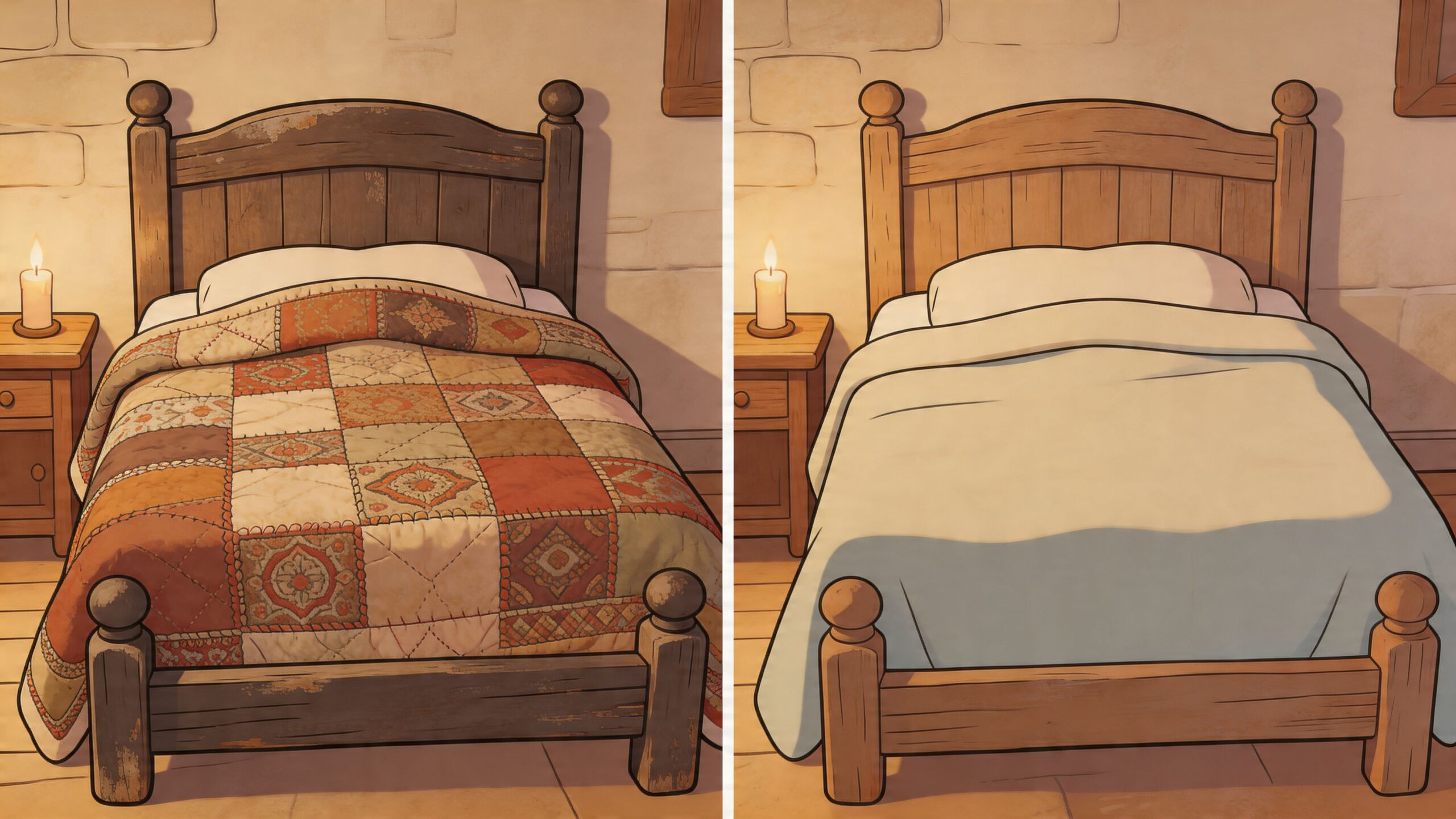
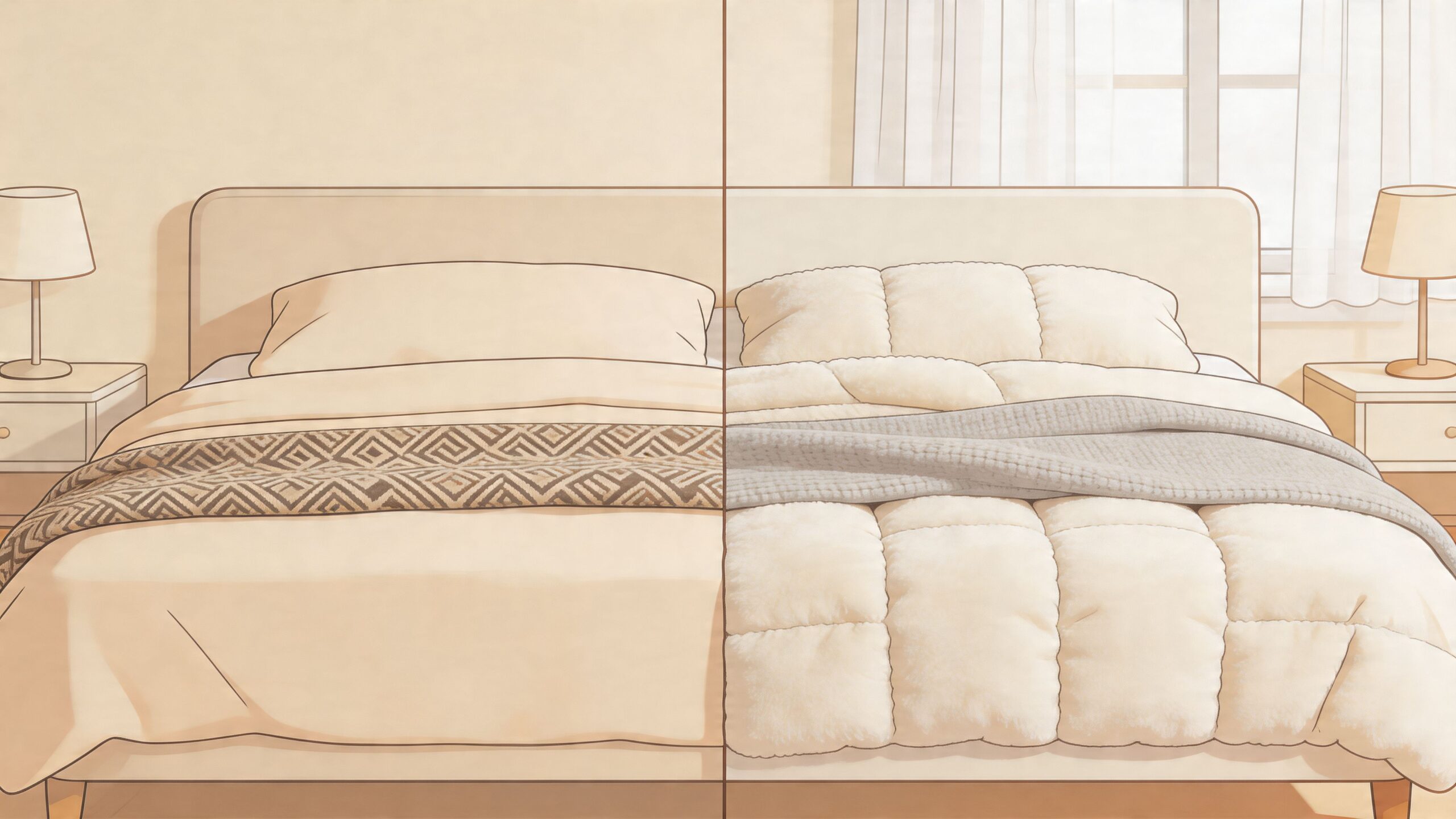
The visual below gives a quick snapshot before we break each point down.

Construction changes everything
Start with the build.
A quilt has three parts stitched together. You have a top fabric, a middle batting layer, and a backing fabric. That middle layer is what gives a quilt its cushioned feel and extra warmth.
A coverlet is usually a single woven layer without batting. It sits flatter, feels lighter in the hand, and has less bulk to wrestle with on wash day.
That may sound like a small construction detail, but it affects daily use in a big way. In a home with kids, dogs, or cats jumping up and down, fewer layers often mean less fuss. If you want more ideas for a home that stands up to family life, this guide to kid-friendly and pet-friendly furniture follows the same practical thinking.
Warmth and climate suitability
Quilts usually hold more warmth because of that inner layer. Coverlets allow more airflow because they do not have the same built-in padding. A coverlet vs quilt comparison from Tip Top Furniture also notes that quilts generally insulate more, while coverlets stay lighter and cooler.
For Southwestern Virginia, that matters more than many bedding guides admit. A bedroom in January can feel very different from that same room in July. Upstairs rooms can stay warmer. Older homes can have chilly corners. Sun-facing bedrooms can heat up fast in the afternoon.
So the better question is not just, "Which one is warmer?" It is, "Which one will feel comfortable for more of your year?"
If you sleep cold, use less heat at night, or want a bed that feels snug right away, a quilt often makes better sense as the main top layer. If you sleep warm, deal with humid nights, or like to adjust your layers as the seasons shift, a coverlet usually gives you more flexibility.
Drying and maintenance at home
Many families make their final decision at this point.
A quilt can take longer to wash and dry because the batting holds more moisture. A coverlet, with less bulk and no padded center, is usually simpler to launder and quicker to get back on the bed. In a humid part of Virginia, that difference can feel very real after a spill, a muddy paw print, or a surprise stomach bug in the middle of the night.
A coverlet also tends to be easier to shake out, fold, and store. That makes it practical for households that rotate bedding often or need a quick backup layer for guests.
Sizing and how the bed looks
The drop is different too.
A coverlet usually stops partway down the sides of the bed, while a quilt often gives fuller coverage. That changes the whole appearance of the room. A coverlet shows more of the bed frame or skirt and gives the bed a tidier, more pulled-together look. A quilt creates a softer, more settled appearance with more visual weight.
That matters if your bedroom is smaller, if you want to show off a nice bed frame, or if you prefer bedding that does not look heavy in the room.
A coverlet tends to suit:
- Bedrooms with a lighter, tidier look
- Layered beds with sheets, blankets, or a folded accent at the foot
- Homes where the bed gets remade often and you want a simpler top layer
A quilt tends to suit:
- Traditional bedrooms with a fuller bed presentation
- Cozy spaces where the bed is meant to look soft and inviting
- Shoppers who want one substantial top layer instead of several lighter ones
Materials and feel in plain language
Your hands usually notice the difference before your eyes do.
Quilts often feel soft, padded, and gently structured. Coverlets usually feel flatter, more woven, and lighter to move around. For families and pet owners, that feel can affect more than comfort. Textured stitching and batting in a quilt can be lovely, but they can also mean more surface for fur to cling to and more bulk to manage during cleaning. A coverlet's simpler build often makes everyday upkeep easier.
Neither option is the right answer for every home.
The better choice depends on how your bedroom gets used. If your bed is mostly a calm place for sleeping and reading, a quilt may give you the comfort and coziness you want. If your bed has to survive kids climbing on it, pets curling up at the foot, and frequent washing through muggy seasons, a coverlet often earns its keep faster.
Beyond Warmth Which Is Best for Families and Pets
Warmth gets most of the attention in bedding articles. Real households care about something else too. They want to know what still looks good after repeated washing, weekend lounging, pets at the foot of the bed, and kids treating the mattress like a play zone.
That’s where the conversation shifts.

Why coverlets often win in high-traffic homes
For high-traffic households, batting in quilts can shift or compress after 50 to 100 washes, which can lead to lumpiness. By contrast, single-woven coverlets resist wear better, and their smoother surfaces can shed pet hair up to 40% more easily than textured quilts, according to this quilt vs coverlet overview from Peacock Alley.
That one point clears up a lot of confusion for families. A quilt can be lovely, warm, and comfortable. But if your bed gets used hard, the very construction that gives a quilt its softness can also become its weak spot over time.
A coverlet doesn’t have an inner batting layer to bunch up. That simpler build makes it easier to maintain a more consistent look after regular use.
Everyday examples that matter
Think about these common situations:
- Pets sleep on the bed: A smoother woven surface is easier to tidy up than a more textured quilted top.
- Kids climb in with snacks or books: Fast washing and drying can matter as much as style.
- Guest rooms double as family overflow rooms: Bedding needs to look put together without a lot of fuss.
- Older adults want lighter layers: A less bulky top layer can be easier to handle during bed-making.
In busy homes, the bedding that looks best on day one isn’t always the bedding that works best six months later.
That doesn’t mean quilts are a bad choice for families. It means they’re often better for households that prioritize warmth and a cozy look, and don’t mind more careful maintenance. Coverlets tend to fit homes where the bed sees a lot of action and has to recover quickly.
If durability is already part of how you shop for your home, the same thinking applies well beyond bedding. This guide to kid-friendly and pet-friendly furniture follows that same real-life approach.
A practical pairing many families like is a durable top layer with a supportive mattress underneath. In that kind of setup, long-wearing options from sleep brands like Sealy and Therapedic make sense because the whole bed is working together for daily comfort, not just a showroom look.
Styling Your Bedroom Layering with Coverlets and Quilts
Once you stop treating coverlet vs quilt as an either-or question, your bedroom gets easier to style. Many of the best-looking beds use both. One does the visual groundwork. The other adds warmth, texture, or a seasonal shift.
A simple layering formula that works
If you want a bed that looks finished but not overdone, start here:
- Base with sheets you enjoy sleeping in. Don’t build a beautiful bed on a layer that feels wrong.
- Add a coverlet as the main visible layer if you want a smooth, polished appearance.
- Fold a quilt at the foot of the bed for extra texture and easy pull-up warmth at night.
- Use pillows to bridge the look so the bed feels intentional, not stacked at random.
This setup works especially well in homes where temperatures shift through the year. The bed still looks complete on warmer nights, and the extra quilt is ready when you need it.
Matching the layer to the room style
A few style pairings make the decision easier:
- For a cleaner room: Choose a coverlet with minimal pattern and let the bed frame and nightstands carry more of the visual weight.
- For a traditional bedroom: Let a quilt become the main feature, especially if you like a softer, more inviting look.
- For a mixed style home: Use a coverlet most of the year, then bring in a quilt seasonally for warmth and color.
This is also where furniture matters. A richly detailed bed from Bassett may pair beautifully with a quieter coverlet. A simpler upholstered bed from Ashley may benefit from the texture and visual presence of a quilt. If you love comfort-first bedroom planning, La-Z-Boy pieces elsewhere in the home often reflect that same preference for softness and ease.
Don’t forget the practical layers
Good styling isn’t only about the bed’s top view. It includes how your room works with daily life.
If pets are part of the picture, washable accessories matter. Some families also like keeping separate pet bed covers nearby so fur, dirt, and daily wear stay more contained across the room.
A well-styled bedroom feels easier to live in. The best layers are the ones you won’t resent washing, straightening, or using every day.
If you want more ideas for mixing pillows, throws, and finishing touches, this guide to accessorizing the bed of your dreams is a helpful next step. And for homeowners planning a bigger refresh, expert design staff such as Debra Williams can help connect the bedding, bed frame, lighting, and case pieces into one cohesive room.
Making the Right Choice for Your Southwestern Virginia Home
The right bedding choice usually becomes obvious once you match it to the way your household lives.
For the Traditionalist, a quilt often feels right. It has visual warmth, familiar substance, and a sense of heritage that suits homes where comfort and longevity matter. If your bedroom leans classic and you want the bed to feel like the heart of the room, a quilt can be a satisfying fit.
For the Value Seeker, a coverlet often gives more flexibility. It works well for day-to-day use, feels less bulky, and fits homes where easy care matters. If you want one layer that looks polished and handles regular life without much fuss, a coverlet is hard to beat.
For the Aspiring Remodeler, the choice may come down to silhouette. Coverlets give a neater line and tend to support a cleaner design plan. Quilts bring more texture and visual fullness. If you’re building a bedroom around furniture, wall color, and accessories, the top layer should support that direction instead of competing with it.
For the Regional Neighbor in Galax, Independence, Hillsville, or the wider Southwestern Virginia and Northern North Carolina region, the most practical answer may be both. Our homes see warm stretches, cool nights, and seasonal swings that reward flexibility. A coverlet can carry much of the year, while a quilt steps in when the room needs more warmth and softness.
A short decision guide can help:
- Choose a quilt if your main priority is warmth and a fuller, cozier bed.
- Choose a coverlet if you want breathable comfort, easier upkeep, and a sleek aesthetic.
- Choose both if you want a bedroom that adapts well through changing seasons.
That’s often the best answer for real homes. Not the strict rule. The flexible one.
Your Perfect Bedroom Awaits at Guynn Furniture & Mattress
Choosing between a coverlet and a quilt gets easier when you can see the textures in person, feel the weight, and picture how each layer will work in your own bedroom. That’s especially true if you’re furnishing a forever home, updating a guest room, or trying to balance comfort, durability, and value for a busy family.
At Guynn Furniture & Mattress, we’ve helped families across Galax, Independence, Hillsville, and the wider Southwestern Virginia and Northern North Carolina region make those choices with confidence since 1902. Our approach is simple. We offer a no-pressure atmosphere, a large in-stock selection for faster delivery, and trusted brands like La-Z-Boy, Ashley, Bassett, Sealy, and Therapedic that help you build a bedroom around real comfort.
If budget matters, we make that straightforward too. Our Low Price Promise means we match local competitors and offer a 30-day price guarantee. If convenience matters, we provide free in-home delivery and setup within 60 miles.
Some shoppers know exactly what they want. Others want help pulling the whole room together. Both are welcome. If you’re planning more than bedding, this guide on how to select the perfect bedroom furniture is a useful starting point before you visit.
The best bedroom decisions usually happen when you can compare options side by side, ask questions, and take your time. That’s how neighbors help neighbors, and it’s still how we believe home shopping should feel.
Visit Guynn Furniture & Mattress to explore bedroom essentials in a no-pressure atmosphere. Visit our showrooms in Galax, Independence, or Hillsville to test the comfort for yourself. You can also schedule a consultation with our design team to start planning your dream room today, or browse our selection online at guynnfurniture.net.