Dining Table for 6 People: SW Virginia’s Guide 2026


Sunday supper is getting crowded. One child brings a friend, grandparents stop by after church, and the table that once felt just right suddenly feels tight around the elbows. That's usually when families start asking the same question. What size dining table works for six people without swallowing the whole room?
That question matters in real homes across Galax, Independence, Hillsville, and the wider Southwestern Virginia and Northern North Carolina region. Dining rooms here often do double duty. They host weeknight meals, holiday pies, homework, card games, and the occasional neighbor who stays longer than planned. A dining table for 6 people has to do more than fit six bodies. It has to support real family life.
Furniture shopping can feel like a big decision because it is one. A table sits at the center of daily routines for years. That's why it helps to slow down, look at the room realistically, and think about how the table will be used most of the time. Families planning the whole space often also benefit from a practical guide to kitchen and dining room lighting, because the right light can make a dining area feel warm and usable long after the dishes are cleared.
Readers looking for a little inspiration before choosing a table shape or style may also enjoy these design tips for effortless entertaining. Good entertaining rarely starts with perfection. It starts with a room that feels welcoming and easy to use.
Table of Contents
- Gathering Your Family Around the Perfect Table
- The First Rule of Dining Tables Measure Your Space Not Just the Table
- Finding the Right Shape for Your Room and Family
- Materials and Styles for Southwestern Virginia Homes
- Perfect Pairings Chairs Benches and Extendable Tables
- Your Investment Budget Durability and Long Term Care
- The Guynn Difference Your Local Partner in Home Comfort
Gathering Your Family Around the Perfect Table
A dining table earns its place slowly. It holds rushed weekday breakfasts, birthday candles, school projects, and those meals that turn into long talks after the plates are empty. For many households, a dining table for 6 people is the sweet spot because it feels generous without being oversized for everyday living.
That's why this choice can feel more personal than expected. Families aren't just comparing wood finishes or chair backs. They're trying to picture Thanksgiving sides, pizza night, and whether everyone can sit down comfortably without somebody balancing a plate at the counter.
What makes six seats so practical
Six seats usually work well for a wide mix of households:
- Growing families: Parents, children, and a guest can all sit together without dragging in folding chairs.
- Couples who entertain: The table stays useful on ordinary days but still handles friends and relatives.
- Multi-use rooms: Dining rooms often become homework stations, laptop spots, and puzzle tables between meals.
A good dining table doesn't just fill a room. It supports the rhythm of the household.
There's also an emotional side to this purchase. A table becomes part of family memory. That's one reason local shoppers often prefer to sit down, touch the finish, and test the spacing instead of guessing from a screen.
A local decision, not just a style decision
Homes across Southwestern Virginia often blend practical layouts with traditional comfort. Some families want a classic wood table that feels right at home for decades. Others need something flexible that fits an open kitchen and dining area. Since 1902, local furniture guidance in this region has always mattered because neighbors shop with real-life concerns in mind. Will it fit the room, suit the home, and hold up to daily use?
That kind of question deserves calm, plainspoken advice. Not pressure. Just clear help in choosing a table that feels right when family gathers around it.
The First Rule of Dining Tables Measure Your Space Not Just the Table
The biggest mistake shoppers make is simple. They measure the table they want, but not the room it has to live in. A dining table for 6 people may sound modest, yet the room around it often decides whether it feels comfortable or cramped.
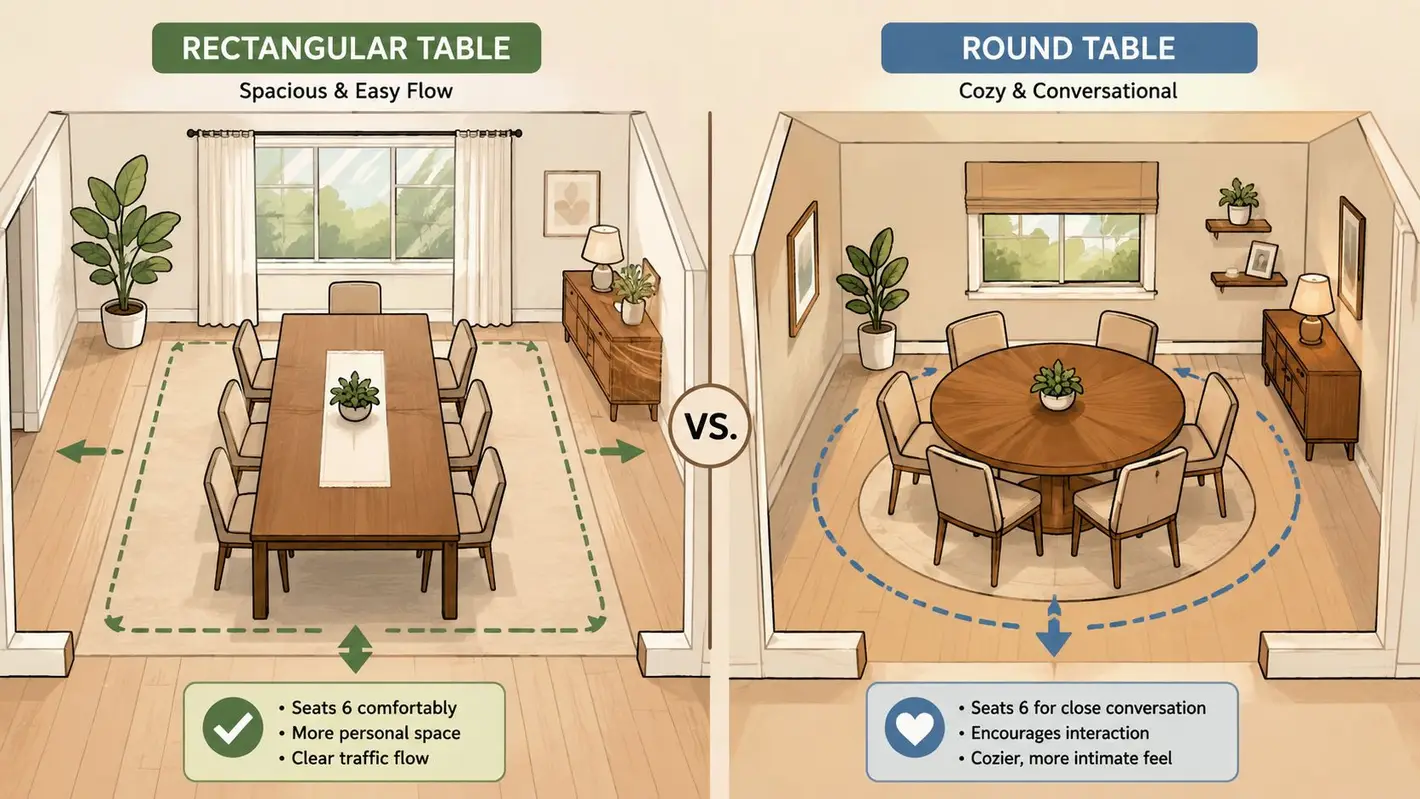
A practical starting point helps. Industry guidance commonly uses 24 inches of table edge per person, and for a rectangular table that usually means at least 60 inches of usable length for six diners, with many standard options landing around 72 inches long by 36 to 40 inches wide. Standard dining height also usually falls around 28 to 30 inches, and planners recommend leaving about 36 inches between the table edge and walls or obstacles so chairs can slide and people can move around more easily, as noted in this dining table sizing reference.
The room-fit reality
This is the part many online guides skip. The table size on paper is only half the story. Neutral design guidance says to leave about 36 inches of clearance between the table edge and walls or circulation paths, and a 60- to 72-inch rectangular table often needs at least a 10-by-12-foot room for workable clearance, according to this room-fit guide for family dining spaces.
That's why a table can look perfect in a product photo and feel awkward once it's at home. Chairs need room to pull back. People need to pass behind seated diners. Serving dishes need a place to land without every setting feeling squeezed.
Practical rule: Measure the room first, then subtract the space needed for chair movement and walkways. The leftover area is the true table zone.
A simple measuring routine
Readers can avoid a costly misstep with a few plain steps:
- Measure the room width and length. Include anything that sticks into the space, such as radiators, built-ins, or a large sideboard.
- Mark the clearance area. Painter's tape on the floor works well because it shows how far the table edge can extend.
- Set chairs into the plan mentally. The table doesn't stand alone. Every seat needs pull-out space.
- Walk the traffic path. If people cut through the dining area to reach the kitchen, patio door, or hallway, that traffic matters.
Families planning larger gatherings or occasional overflow seating may also find it useful to read about outfitting events with the right table, especially when trying to understand how seating density changes as guest counts rise.
Those who want a more detailed planning worksheet can also review this dining table size guide, which helps translate room dimensions into practical furniture choices.
Where people usually get tripped up
A few trouble spots come up again and again:
- Open-plan spaces feel bigger than they function. Traffic behind chairs can make a table feel tighter than the room dimensions suggest.
- Bigger doesn't always seat better. A larger table can reduce comfort if the room gets pinched around the edges.
- Shared dishes need space too. Capacity isn't the same as comfort.
The right fit should let the room breathe. If the space feels easy to move through before the table arrives, family meals will feel easier too.
Finding the Right Shape for Your Room and Family
Shape changes the whole experience of a dining room. Two tables can seat the same number of people and still feel completely different in conversation, traffic flow, and visual weight.
A round dining table for 6 people is often the easiest shape for conversation. Nobody sits at the far end, and the curve softens the room. Furniture guidance says a round table for six is comfortably sized at 54 inches in diameter, with 60 inches considered spacious, and the common market range for six-seat round tables is 48 to 60 inches in diameter, according to this round dining table size overview.
Rectangular tables
Rectangular tables remain the classic choice for a reason. They work especially well in longer rooms and help define a dining area in open layouts.
They also tend to suit families who like a familiar seating pattern. Two on each side, one at each end, and everybody knows where to settle in. For traditional homes around Southwestern Virginia, that shape often feels natural and grounded.
Round tables
Round tables shine in square rooms and in homes where conversation matters as much as capacity. The shape can also make a tighter room feel less rigid because there are no corners interrupting movement.
They're a solid pick when the dining area is visible from the kitchen and needs to feel softer. Families with young children often appreciate that a round top has gentler lines and a more casual social feel.
Round tables often feel more welcoming for everyday meals because every seat stays part of the conversation.
Oval tables
Oval tables sit in the middle, both in their design and stylistically. They bring some of the soft edges of a round table but still stretch comfortably through longer rooms.
For households that want a more formal look without the harder corners of a rectangle, oval can be a comfortable compromise. They also tend to blend well with transitional interiors that mix classic and updated pieces.
A helpful visual guide for comparing layouts is this article on maximizing dining space with table shapes and seating arrangements.
A quick shape comparison
| Shape | Often works best in | Everyday feel |
|---|---|---|
| Rectangular | Longer rooms, open layouts | Traditional, structured |
| Round | Square rooms, tighter layouts | Social, softer, relaxed |
| Oval | Rooms needing softer lines with length | Balanced, flexible |
The best shape is the one that fits both the floor plan and the household's habits. A family that hosts often may prefer the clearer serving space of a rectangle. A smaller household that values conversation may feel more at home around a round top.
Materials and Styles for Southwestern Virginia Homes
Material changes how a table looks on day one, but it also changes how it ages after years of meals, sleeves, backpacks, and holiday centerpieces. In Southwestern Virginia homes, that matters. Many families want a dining table that feels settled and lasting, not temporary.
Solid wood and wood-rich looks
Solid wood has long appealed to the traditional buyer because it brings warmth, character, and a sense of permanence. Grain variation, knots, and tone shifts give each table a little personality. In homes with classic, farmhouse, or mountain-inspired interiors, that natural look often feels right at home.
Wood-rich designs also fit the regional preference for furnishings that don't look overdesigned. A table should feel comfortable in the room, not like it's trying to steal the show. Bassett is one brand often associated with this kind of grounded, lasting style, while Ashley offers many approachable options for families seeking affordable style.
Veneers and practical family use
Well-made veneers can make a lot of sense for busy households. They allow for polished finishes, consistent color, and a furniture look that can fit both traditional and updated spaces. For some buyers, that balance of appearance and value is exactly the point.
This isn't a lesser choice when the construction is thoughtful and the table suits the room. It's a different path. The right answer depends on how the table will be used, the style of the home, and what kind of upkeep the family is comfortable with.
The best material choice usually comes down to daily life. A beautiful table still has to handle real use.
Matching local style without forcing it
Southwestern Virginia homes often lean toward a few familiar looks:
- Traditional rooms: Richer wood tones, shaped legs, and classic ladder-back or upholstered chairs.
- Modern farmhouse spaces: Lighter finishes, simpler lines, and a welcoming, lived-in feel.
- Transitional homes: Clean silhouettes with warm surfaces that bridge old and new.
The finish matters as much as the shape. A dark wood table can anchor a formal room, while a weathered or lighter finish can brighten a kitchen dining area. The same table size may look heavy in one finish and airy in another.
Families wanting a closer look at construction and wood choices can explore this guide on choosing the right hardwood for longevity and style.
Brand fit matters too
Local shoppers often want to compare not just style, but feel. Some prefer the comfort-forward tradition they already know from names like La-Z-Boy in other rooms of the house. Others gravitate to dining collections from Ashley or Bassett that coordinate with the rest of the home. The same practical mindset usually carries through to bedrooms as well, which is why trusted names like Sealy and Therapedic remain part of the broader conversation when families furnish the whole house.
Since 1902, regional furniture buying has always carried that long-view mindset. People want a piece that fits the home today and still feels right years from now.
Perfect Pairings Chairs Benches and Extendable Tables
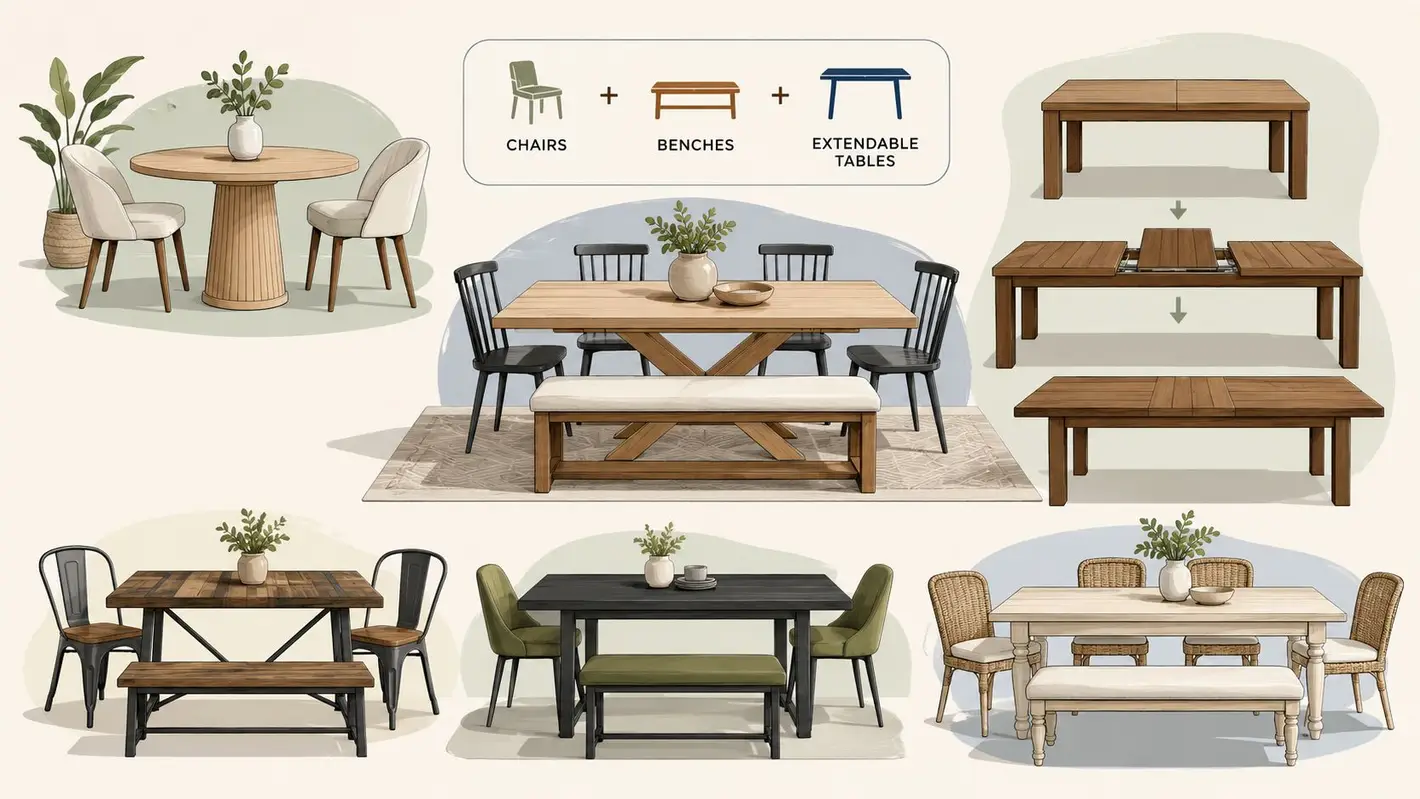
A table may be the centerpiece, but seating decides how the room lives. The right pairing can make a dining table for 6 people feel cozy, flexible, or more polished without changing the table itself.
Choosing the seat style
Different seating solutions solve different household problems.
- Upholstered chairs: These add softness and comfort for long meals, homework, or visiting after dinner.
- Wood chairs: They bring a classic look and often suit families who want a cleaner, more traditional setup.
- Benches: They can be a smart answer for kids, flexible seating, or tighter wall-side placement.
A bench changes the mood of a room quickly. It feels casual and welcoming, and it can slide under the table when not in use. That helps in homes where every inch of walkway counts.
When an extendable table makes more sense
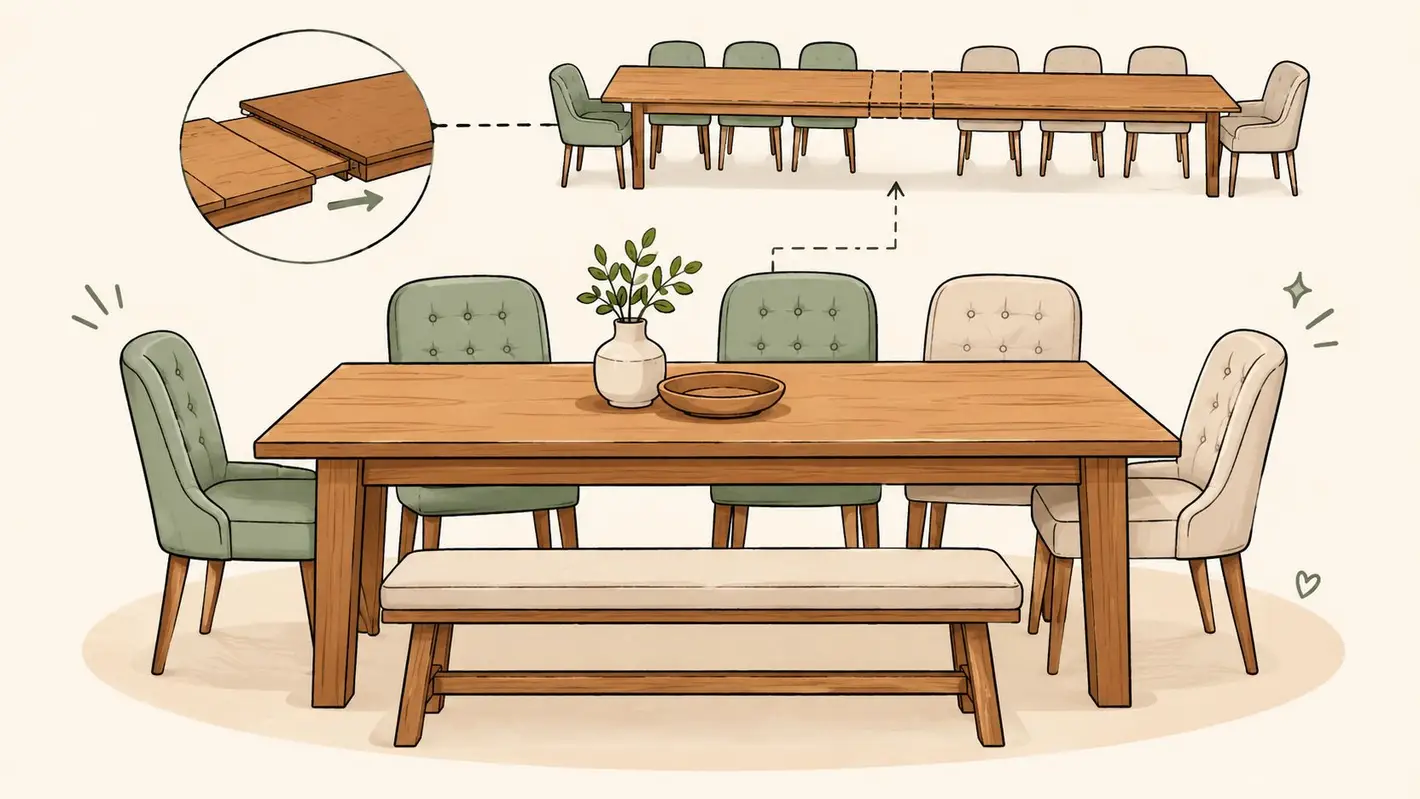
Not every household needs six seats every single day. That's where flexible design becomes useful. Current guidance notes growing interest in expandable and space-saving solutions, including drop-leaf and extendable tables that can serve six when opened but save space day to day. It also points out that a fixed 6-seat table may be the wrong answer for households that only need six seats occasionally, as explained in this guide to dining table dimensions styles and layout ideas.
That advice matters because many families overbuy. They picture the largest holiday meal and shop for that one day, even though most of the year the table seats fewer people.
A smart pairing strategy
A few combinations tend to work especially well:
- Rectangle plus mixed chairs: Good for households that want a more collected, lived-in style.
- Round top plus all side chairs: Keeps the footprint visually light and conversation-friendly.
- Table plus bench on one side: Helpful when children, guests, or casual family meals are part of everyday life.
Those comparing seat heights, back support, and upholstery options can use this guide on how to choose dining chairs.
A dining set should match the way the household eats most days, not only the way it entertains a few times a year.
That simple shift in thinking often leads to better choices. A room that works well on Tuesday night is usually the room that still feels right at Thanksgiving.
Your Investment Budget Durability and Long Term Care
A dining table is both a design choice and a household investment. Price usually reflects a mix of material, construction, finish, table size, and the kind of seating included. The challenge isn't finding the lowest number. It's finding long-term value that fits the family's budget and daily habits.
What affects value
Several things tend to matter most when shoppers compare options:
- Material quality: Solid wood, quality veneers, and sturdy joinery usually affect both appearance and lifespan.
- Construction details: A table that feels steady, balanced, and well-finished tends to inspire more confidence.
- Daily use level: A formal dining room and an everyday kitchen dining area place very different demands on furniture.
Affordable quality matters more than flashy features. A family that uses the table constantly may be better served by a simpler, durable design than by a more delicate style that creates worry every time a backpack lands on it.
Care matters after the purchase
Even a durable table benefits from regular care. Most households do well when they keep the routine simple.
- Wipe spills promptly: Moisture and food residue are easier to manage before they settle into the finish.
- Use placemats or trivets: Heat and abrasion can wear on surfaces over time.
- Clean gently: A soft cloth and mild routine care usually go farther than harsh products.
- Lift, don't drag: Moving a table carefully helps protect joints and floors.
A dining table ages better when the family treats care as a habit, not a rescue plan after damage appears.
Budget help should feel straightforward
Furniture shopping gets stressful when buyers feel they have to choose between quality and affordability. A no-pressure buying process helps more than any sales pitch. Clear financing options, honest pricing, and plain answers about materials all make the decision easier.
For local families, that often means looking for a store that will explain tradeoffs without rushing the conversation. Guynn Furniture & Mattress is one local option that offers dining furniture along with a Low Price Promise, which includes matching local competitors and a 30-day price guarantee, plus financing options for qualified buyers. That kind of transparency can help a household make a calmer decision.
The goal isn't to spend more. The goal is to buy once, buy thoughtfully, and bring home a table that still feels like a wise choice years later.
The Guynn Difference Your Local Partner in Home Comfort
Buying a dining table should feel manageable. Families already have enough to think about between room size, finish choices, chair comfort, budget, and delivery logistics. The process gets easier when local help is available from people who understand the homes and lifestyles in this part of the country.
Why local service changes the experience
For shoppers in Galax, Independence, Hillsville, and the wider Southwestern Virginia and Northern North Carolina region, local furniture buying solves several practical problems at once.
- Real testing matters: Families can sit at the table, check chair comfort, and judge scale in person.
- Design help reduces guesswork: Expert design staff, including Debra Williams for more complex room planning, can help with scaled layouts and coordinated choices.
- Delivery is simpler: Free in-home delivery and setup within 60 miles removes one of the biggest headaches from the process.
That last point matters more than many buyers expect. A dining set isn't a small parcel left on the porch. It's a major piece for the home, and proper setup can make the whole experience feel easier from the start.
The comfort of a no-pressure atmosphere
Many people delay furniture shopping because they don't want to feel cornered. They want time to compare shapes, touch finishes, talk through room dimensions, and go home to measure one more time if needed.
That's where a neighborly approach stands out. A no-pressure atmosphere gives families room to think. It also makes it easier to ask the simple questions that really matter. Will this shape block the walkway? Will these chairs feel comfortable after dessert? Will this finish still look right if the room gets repainted next year?
Why history still matters
A business that has served the region since 1902 carries a certain kind of trust. Not because age alone solves everything, but because long roots usually reflect a steady way of doing business. Local households tend to value that. They want fair answers, dependable service, and furniture that suits real life.
Large in-stock selection also helps. When a family is ready to furnish the room, immediate delivery is often more practical than waiting around and hoping an online order looks the same at home as it did on a screen.
For many homeowners, that combination is what makes the choice feel less overwhelming. Practical advice. Regional service. Clear pricing. Delivery that doesn't become another chore. And a team that treats the purchase like an important part of the home, because that's exactly what it is.
A dining table has a way of becoming part of family history, so it's worth getting the fit, feel, and function right. Visit the showrooms in Galax, Independence, or Hillsville to test the comfort for yourself, or browse the selection online at Guynn Furniture & Mattress. Those planning a full room can also schedule a consultation with the design team to start shaping a dining space that works beautifully for everyday life.