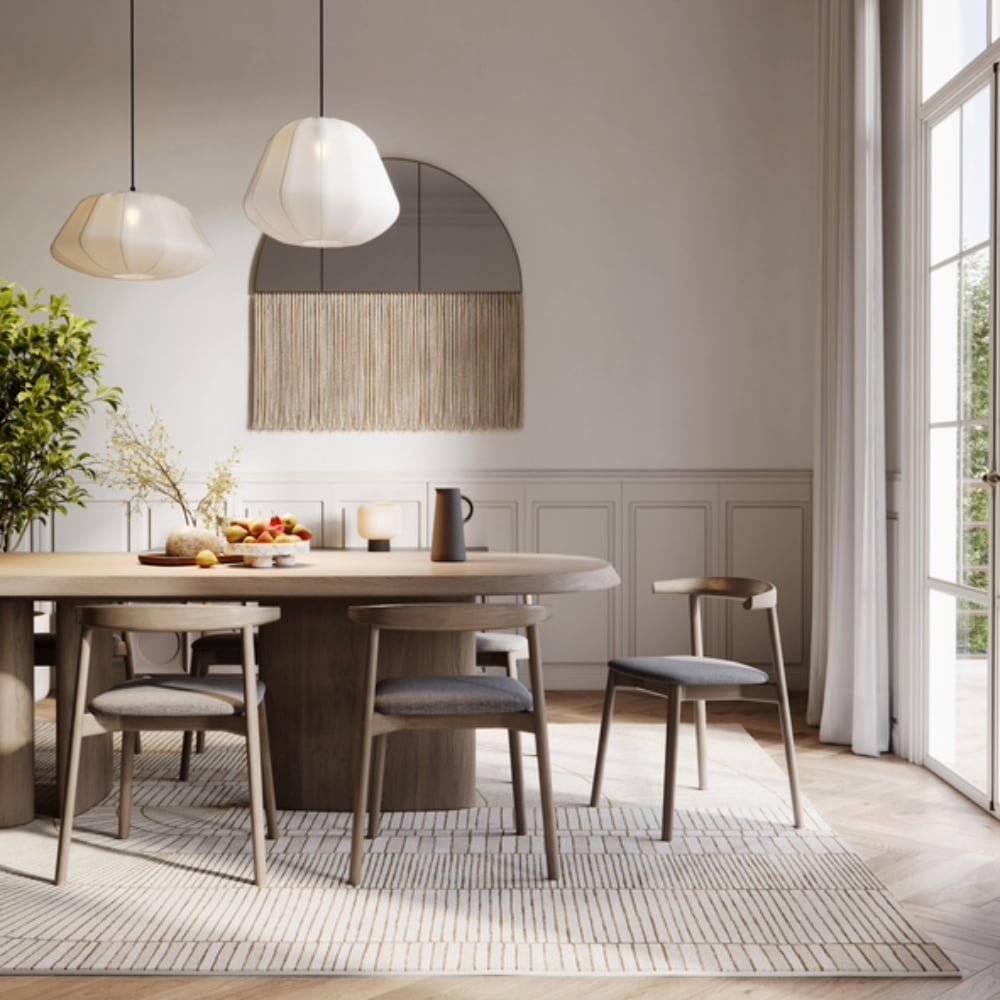
Modern Farmhouse Dining Table Buying Guide for 2026


A family stands in the dining room with a tape measure, a phone full of inspiration photos, and one practical concern: will a modern farmhouse dining table leave enough room for everyone to sit, move, and live comfortably? The long plank table looks beautiful online, but an older farmhouse, open-plan kitchen, or modest dining room may need a different answer.
The right choice depends on more than distressed paint and trestle legs. Table dimensions, chair clearance, construction, finish, maintenance, and everyday seating all matter. Families in Galax, Independence, Hillsville, and the wider Southwestern Virginia and Northern North Carolina region can test those details in person rather than guessing from a screen.
Guynn Furniture has helped local families make these decisions since 1902. The same practical approach still works today: measure first, choose for real household habits, and treat style as the finishing layer. A useful starting point is this guide to dining room decorating ideas, especially for anyone furnishing a room that needs to serve both weeknight meals and holiday gatherings.
Picture the Modern Farmhouse Table in Your Home
A six-person household might picture a broad rectangular table under a simple chandelier. Then the tape measure comes out. The wall is closer than expected, the chairs need room to pull back, and the walkway to the kitchen runs directly behind one end. A table that looked generous in a photograph can make the room feel blocked once people are seated.
That's why the most useful question isn't, “Which table looks most like the inspiration photo?” It's, “What needs to happen around this table every day?” A child may need space to climb into a chair. Someone carrying a casserole may need a clear path from the kitchen. A guest may sit at the end, where a trestle base can either provide comfortable legroom or get in the way.
Start with the room's real routine
Older homes across Southwestern Virginia often have dining rooms with unusual doorways, uneven wall lines, or a central passage that must stay open. Open-plan kitchens create a different problem. The table may technically fit, but its visual footprint can crowd the kitchen work zone or compete with a nearby island.
Before shopping, households should note:
- Daily seating: Count the people who use the table most often, not just holiday guests.
- Movement paths: Mark doors, cabinets, islands, and the route between the kitchen and dining area.
- Chair behavior: Account for chairs being pulled out, pushed back, and sometimes left at an angle.
- Storage needs: Decide whether serving pieces, linens, and everyday dishes need a sideboard nearby.
A showroom visit helps because families can sit at the table, test the knee space, and see whether the finish feels welcoming rather than overly distressed. The Galax, Independence, and Hillsville showrooms give local shoppers a place to compare proportions without turning the decision into a high-pressure exercise.
Choose a table for life, not a photograph
A modern farmhouse dining table should make the room feel settled and useful. It can have a plank-style top, warm neutral finish, simple legs, or a trestle base, but those features should support the household rather than dictate the layout.
The same principle helps traditionalists who want lasting furniture, remodelers trying to visualize a finished room, and value-conscious families balancing style with budget. An expert design staff can help translate a preferred look into a workable arrangement, including support from Debra Williams when a scaled room plan would make the decision easier.
What Modern Farmhouse Style Actually Looks Like
A modern farmhouse table should feel at home in a real Southwestern Virginia house, whether that means an older farmhouse, an open-plan kitchen, or a modest dining room. The style brings in natural wood and familiar farmhouse warmth, then trims away the heavy bulk of purely rustic furniture and the exposed metal often associated with industrial designs.
Look for simple structure with lived-in texture. Plank or breadboard tops, trestle or pedestal bases, turned legs, and square legs can all work. Soft distressing and warm neutral finishes add character, while deep gouges and excessive aging make the piece look staged.

Judge the whole table, not the decoration
The strongest farmhouse tables rely on proportion. A decorative edge cannot rescue a top that feels too thick, or a base that steals knee room in a compact dining area.
A useful review starts with five details:
- Tabletop: Plank construction, visible grain, or a breadboard edge provides the farmhouse reference.
- Base: Trestle, pedestal, turned, and square-leg designs suit the style, provided diners have usable knee space.
- Finish: Natural oak, warm white, muted brown, gray-washed, and two-tone finishes can fit the room.
- Distressing: Light wear marks look current. Deep gouges dominate the surface.
- Shape: Rectangular tables are traditional, but round, drop-leaf, and extendable designs often fit Southwestern Virginia homes better.
Shaker simplicity gives the style much of its modern appeal. Clean lines pair well with upholstered chairs, while visible grain and softened edges keep the room relaxed. Vintage chairs, ladder-back seating, Parsons chairs, and painted benches can all work when their scale is deliberate. In a smaller room, a round or drop-leaf table may preserve circulation better than the familiar long rectangle.
Guynn Furniture & Mattress showroom pieces offer different combinations of finish, base design, and seating, making visual weight easier to judge in person. Sit down, check your knees, and view the table beside the chair style you may use.
Make the surrounding room part of the decision
Flooring, cabinetry, lighting, wall color, and nearby storage change how a tabletop reads. Before choosing a tone, browse farmhouse floor styles and consider whether the floor is warm, pale, or gray.
Warm flooring often suits a softer painted base with a natural top. Pale cabinetry may need stronger grain or a richer stain so the dining area does not look washed out. For more shape options, review these dining room table styles before settling on a finish.
Sizing Your Table to Your Room and Your Family
A table's advertised seating capacity is only useful when diners have enough elbow room and chairs can move freely. A practical planning rule allows at least 24 inches of table edge per diner, while wide farmhouse chairs or armchairs may need closer to 30 inches to avoid crowding, according to this farmhouse table sizing guidance.
Table width matters just as much. A surface around 36 to 40 inches wide gives place settings room on both sides and leaves space for serving dishes in the middle. Forty-two inches or more works better for large platters, while 32 to 36 inches can suit a breakfast nook or compact dining area. Standard dining height is approximately 30 inches, generally paired with chairs or benches having 18- to 19-inch seats, as outlined in this farmhouse table size guide.
Measure the clearance, not just the tabletop
Keep at least 36 inches between the table edge and the nearest wall, cabinet, or furniture so chairs can slide out and people can circulate. A more comfortable 42 to 48 inches allows someone to walk behind seated guests without squeezing through, as explained in this room-clearance guide.
A six-person table commonly measures about 63 to 72 inches long and 31 to 36 inches wide, but the room must accommodate the chairs and walkways too. A footprint near 10 by 12 feet or larger may be needed for a six-person arrangement with usable circulation, based on practical compact-dining guidance at Homestyler.
| Table Size | Seats Comfortably | Minimum Room Footprint | Best For |
|---|---|---|---|
| 48 to 60 inches | Four diners | Measure for 36-inch clearances on every active side | Compact dining rooms and breakfast areas |
| 63 to 72 inches | Six diners | A room near 10 by 12 feet may be needed with chairs and walkways | Typical family dining |
| 72 inches | About six diners | Allow clearance for pulled-out chairs and circulation | Open-plan kitchens with regular family meals |
| 96 inches | About eight to ten diners, depending on leg placement and end seating | Requires generous circulation around the full perimeter | Larger rooms and occasional entertaining |
Match the shape to the room
A long rectangle works well when the room has a clear central axis. It becomes awkward when a doorway interrupts one end or when chairs must share space with an island. A round table improves conversation and circulation in a compact room, while a drop-leaf design can open only when needed.
An extendable table is often the sensible compromise for a family that needs daily efficiency and occasional hosting capacity. A design staff member, including Debra Williams, can sketch a scaled room plan before purchase. Families can also use the dining table size guide to organize measurements before visiting a showroom.
Choosing the Right Material for Real Family Life
Solid wood has the emotional appeal many families want from a farmhouse table. It feels substantial, can often be repaired or refinished, and develops character through use. It also responds to indoor moisture because wood is hygroscopic, meaning it absorbs and releases moisture as humidity changes.
That movement happens primarily across the grain rather than along it. Wider and thicker boards move more, so broad solid planks need construction details such as elongated fastener holes, figure-eight fasteners, or breadboard ends that allow seasonal expansion instead of locking the top rigidly to the base. Woodworking guidance recommends lumber at approximately 8 to 12% moisture content for indoor furniture, consistent with typical conditioned interiors, as explained by Lee Valley's guidance on wood movement.

Compare the materials honestly
Quality veneer over an engineered substrate can offer a stable surface and a lower-cost path to a convincing wood appearance. It can suit families who want consistent finish color, extension leaves, or less seasonal movement. The trade-off is that deep sanding and refinishing may be more limited than with solid lumber.
Hardwood plywood, MDF, and particleboard are not interchangeable. Their performance depends on construction, edge treatment, hardware, and the quality of the surface finish. If a table contains regulated composite wood, buyers should ask whether those components meet TSCA Title VI requirements. The U.S. EPA lists formaldehyde-emission limits of 0.05 parts per million for hardwood plywood, 0.11 ppm for MDF, 0.13 ppm for thin MDF, and 0.09 ppm for particleboard, and applicable products sold in the United States have required TSCA Title VI labeling since March 22, 2019, according to the EPA composite-wood standards.
Reclaimed wood brings authentic variation, but density, old fastener marks, color, and finish behavior can differ from board to board. That character is appealing for a room with warm cabinetry, and households planning a kitchen update may want to browse warm wood cabinetry ideas before selecting a tabletop tone.
Match construction to household habits
- Toddlers and busy families: A durable, cleanable finish and repairable surface matter more than perfect uniformity.
- Dinner-party hosts: A wider top, stable base, and easy-care finish support serving dishes and repeated cleanup.
- Pet owners: A forgiving finish and visible grain can disguise minor marks better than a flawless, single-color surface.
- Long-term owners: Solid wood or repairable veneer can make sense when the table is expected to stay through several room updates.
Ashley and Bassett may differ in their use of solid components, veneers, engineered substrates, and finish systems. The useful question isn't which label sounds most authentic. It's whether the construction matches the family's maintenance habits and expectations, as outlined in this guide to wood furniture and hardwood selection.
Pairing Chairs, Benches, and Sideboards
In an older Southwest Virginia farmhouse, a long rectangular table can leave chairs blocking a doorway or crowding the kitchen path. Start with the room's actual clearances, then choose seating that fits daily movement. A coordinated mix usually feels more natural than a perfectly matched dining set. Let the table carry the farmhouse reference, while chairs, benches, and storage add comfort and personality.
Measure the space behind every seat, not just the tabletop. Wide chairs and armchairs need more room at the table edge than narrow ladder-back chairs. If seats collide when pulled out, change the seating plan before replacing the table.

A bench saves visual space along one side and handles changing household needs well. Place it against a wall or beneath a window, where it will not interfere with a main walkway. Adults may find it less comfortable during long meals, and a thick apron or trestle base can reduce legroom. Check both before choosing one for a narrow dining room.
Upholstered end chairs soften a substantial tabletop. Parsons chairs create a calmer, more deliberate room, while ladder-back chairs keep the farmhouse character visible. Painted chairs can work with natural wood when another feature repeats the color or tone, such as a sideboard finish, light fixture, or floor.
Choose the arrangement according to the room:
- Long table: Use matching side chairs with upholstered end chairs.
- Compact room: Put a bench on the wall side and slimmer chairs opposite it.
- Open-plan kitchen: Echo the kitchen finish without matching every cabinet.
- Casual family space: Pair a durable table with comfortable, wipeable seating.
Before buying a complete arrangement, use this guide to choose dining chairs and compare seat width, height, and clearance.
A sideboard should support the table without narrowing the room. A small piece can disappear beside a broad top, while an oversized cabinet may pinch the walkway. Measure its depth against the passage people use most.
Use the cabinet for linens, serving pieces, or dishes that would otherwise fill kitchen space. Its finish can differ from the table, but connect at least one detail, such as height, wood tone, or hardware. In a modest room, that shared detail is enough. A traditional table with contemporary chairs also works when you want farmhouse warmth without making the room overly rustic.
Finishes, Construction Details, and Long-Term Care
Choose the finish for the work your table will face. Matte surfaces give a relaxed farmhouse look and conceal some visual variation. Satin finishes show the grain more clearly and create a slightly more polished appearance. Light distressing can disguise small marks, but it will not protect wood from spills, heat, or standing moisture.
A quality conversion or catalyzed finish usually resists moisture better than bare oil. Still, use placemats and coasters under hot dishes, wet glasses, and serving bowls. Good care protects the finish far more effectively than aggressive polishing.
Look underneath before you buy
The underside reveals whether the table was built for real wood movement. Ask how the top attaches to the apron or base, then inspect the joinery instead of relying on a “solid wood” label.
Breadboard ends can help manage movement across a wide tabletop when they are properly constructed. Figure-eight fasteners and elongated fastener holes allow the top to shift while keeping it secured to the base. Dovetailed aprons may show careful craftsmanship, while corner blocks can strengthen the connections between the apron and legs.
Practical rule: Solid wood is only the starting point. The joinery must give the tabletop room to expand and contract through seasonal changes.
Placement affects the table's service life. Keep it away from radiators, wood stoves, fireplaces, HVAC outlets, direct sunlight, and exterior doors. Relatively stable indoor humidity helps limit cupping, splitting, joint separation, and cracked finish. That matters in older Southwestern Virginia homes, where heating and changing weather can put extra stress on furniture.
Use a short care routine
Wipe the surface with a soft, slightly damp cloth and dry it immediately. Do not let water air-dry on the tabletop. Coasters, prompt cleanup, and steady indoor conditions protect the finish better than frequent heavy polishing.
A repairable table can remain useful through children, pets, spills, and later refinishing. That long service life often makes it a stronger sustainability choice than a piece marketed as “eco-friendly” but discarded after an early failure. A 2025 U.S. survey of 1,500 adults found that 57% were likely to buy furniture labeled sustainable. 48% would do so only if the price increase were small, and 27% worried about durability and quality, according to Furniture Today's survey coverage. European research found durability important or very important to 95.5% of respondents, while about 19% were willing to pay more for sustainability.
For a local purchase, Guynn Furniture & Mattress offers showroom selection, free in-home delivery and setup within 60 miles, and a 30-day price guarantee. Those details support a careful, one-time investment, provided the table's construction and room fit hold up under close inspection.
Your Local Buying Game Plan
A good purchase can be organized into a short checklist. The point isn't to rush. It's to remove the guesswork before a table enters the home.
Measure before visiting
Record the room length and width, then mark every doorway, cabinet, island, vent, and traffic path. Subtract the clearance needed for chairs and walking, not just the space occupied by the tabletop.
Write down two seating numbers:
- Everyday capacity: The people who sit at the table most days.
- Occasional capacity: Guests who arrive for holidays or larger meals.
Then choose the shape that fits the room. A rectangle suits a dedicated dining room with a clear axis. A round, drop-leaf, or extendable table often serves a compact room or open-plan kitchen better.
Test the shortlist in person
Visit the Galax, Independence, or Hillsville showroom and narrow the choice to two or three tables. Sit in every intended seat, check knee clearance, pull the chairs out, and walk behind them. Open extension leaves if available, and inspect the surface from standing and seated height.
Ask direct questions about:
- Wood species and construction: Find out whether the top is solid wood, veneer, plywood, MDF, particleboard, or a combination.
- Movement control: Ask how the top attaches to the base and whether the design accommodates seasonal change.
- Composite compliance: Verify TSCA Title VI compliance for applicable composite components.
- Finish care: Confirm what cleaners, heat protection, and spill response the manufacturer recommends.
- Warranty and parts: Ask what happens if hardware, leaves, or seating components need replacement.
A separate Woodstock Furniture & Mattress Outlet guide to buying a dining room table can provide another practical checklist for organizing the visit.
Use local help when the room is difficult
Debra Williams and the expert design staff can help with scaled room planning, finish coordination, and seating layouts. Guynn offers in-house financing and Lendmark options for credit-qualified buyers, with no minimum purchase required. Its Low Price Promise matches local competitors and refunds the difference within 30 days when the conditions apply.
The store also carries a large in-stock selection for immediate delivery, which helps families who don't want to wait on an online-only order. Before choosing, households should confirm delivery access, stairways, door widths, and the exact room where the table will be placed.
Visit our showrooms in Galax, Independence, or Hillsville to test the comfort for yourself, with Free in-home delivery and setup within 60 miles available for qualifying purchases. Schedule a consultation with our design team to start planning your dream room today, or browse the current selection at Guynn Furniture & Mattress.