Transitional Style Bedroom Furniture Explained Simply

A bedroom makeover can leave a homeowner stuck between two extremes. One bed feels too ornate, with carved details and heavy finishes. Another looks so stark and angular that the room loses its warmth. For homes in Galax, Independence, Hillsville, and the wider Southwestern Virginia and Northern North Carolina region, transitional style bedroom furniture offers a comfortable middle ground, traditional enough to feel familiar and clean enough to feel current.
That balance doesn't mean choosing bland furniture. It means pairing a classic silhouette with simpler lines, warmer materials, and enough breathing room for everyday life. A softly upholstered headboard might sit beside straightforward wood nightstands, while a restrained dresser provides useful storage without dominating the room.
Furniture shopping can feel overwhelming, especially when a bedroom must work for children, pets, guests, limited space, or changing needs. A no-pressure atmosphere helps. Guynn Furniture & Mattress has served local households since 1902, and its expert staff can help shoppers compare comfort, scale, finishes, and delivery options without rushing the decision.
Introduction to Transitional Style for Your Bedroom
A homeowner may walk into a showroom looking for a bedroom set that will last, then discover that every option seems to speak a different design language. One set has ornate trim and pronounced curves. Another relies on sharp edges, glossy surfaces, and almost no decoration. Neither feels quite right for a restful Southwestern Virginia home.
Transitional style solves that tension through proportion and restraint. It keeps the comfort and familiarity of traditional furniture while removing visual weight that can make a bedroom feel crowded. The result is a room that feels settled rather than staged, polished without looking precious.
Consider a panel bed with a softly shaped headboard, a six-drawer dresser with plain drawer fronts, and two matching nightstands in a warm wood finish. The pieces have enough structure to feel substantial, but they don't compete with bedding, artwork, or the room's architecture. That combination works in a farmhouse-influenced home, a recently remodeled space, or a first home where furnishings need to adapt over time.
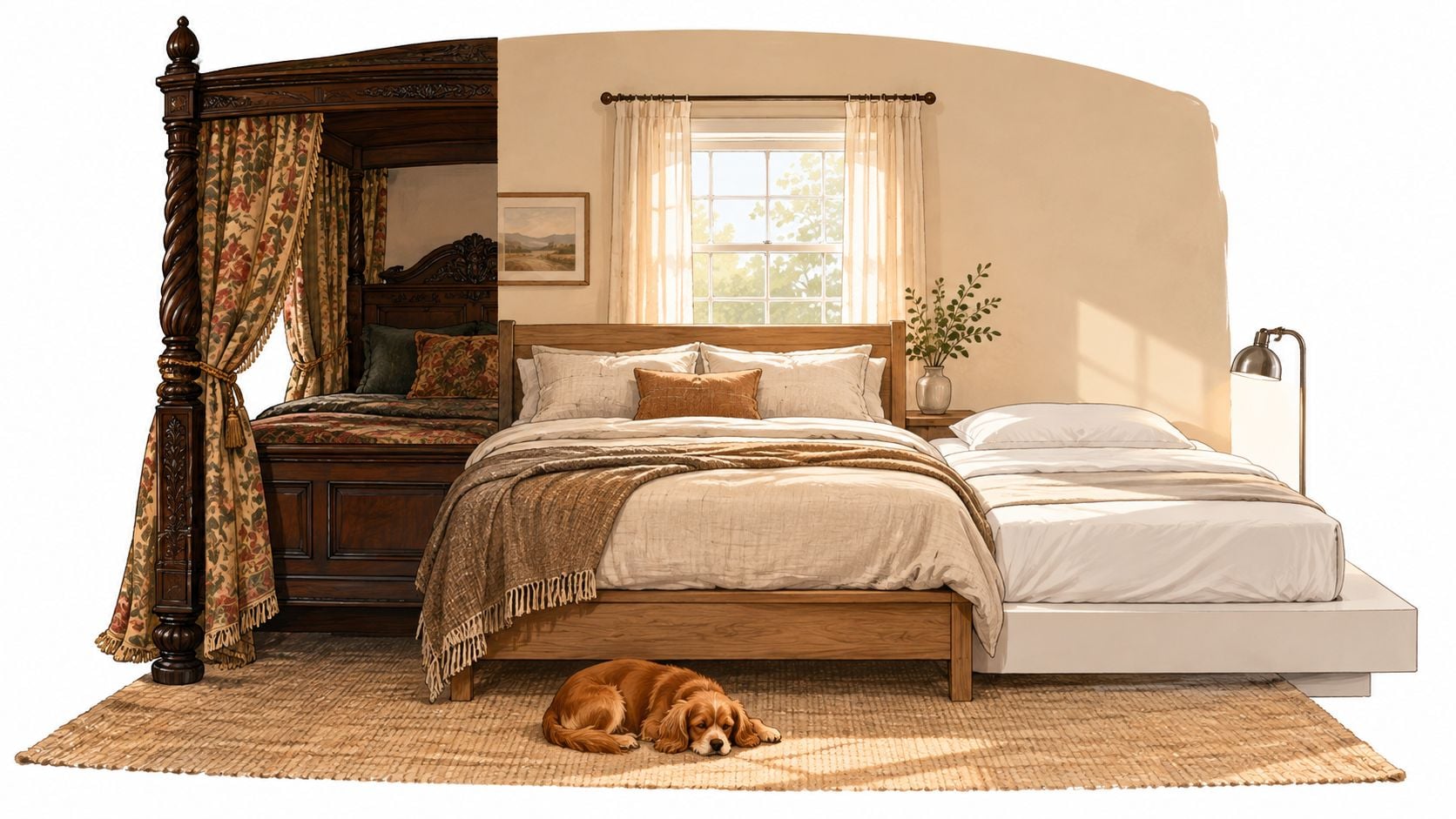
The style also gives families room to make practical choices. A storage bed can handle extra blankets, a durable upholstered headboard can soften a large wall, and a well-built dresser can serve a child now and a guest room later. The furniture doesn't need to match perfectly, but the shapes and finishes should share a calm visual rhythm.
Why local guidance helps
Online photos rarely show true scale, drawer movement, fabric texture, or mattress height. In a showroom, shoppers can sit against a headboard, open drawers, compare wood tones, and see whether a nightstand leaves enough space beside the bed.
A useful starting point is Guynn's furniture style guide, followed by an in-person look at pieces that fit the room's measurements and the household's habits. The goal isn't to force a label onto a bedroom. It's to make buying decisions easier.
The practical takeaways are straightforward. Readers can learn how to recognize the style, arrange it comfortably, select finishes that hold up, and update it for 2026 without turning the bedroom into a passing trend. Whether the room is compact, spacious, newly remodeled, or furnished on a careful budget, transitional pieces can provide a dependable foundation.
What Transitional Style Really Means
A bedroom in a Southwestern Virginia home may need to feel welcoming, orderly, and ready for daily use. Transitional style meets those needs by combining the familiar comfort of traditional furniture with the cleaner outline of contemporary pieces. The result is a room that can grow with changing tastes, family routines, and practical storage demands.
The term has a historical meaning as well. In period furniture, it generally describes the shift from late Rococo toward early Neoclassicism in France. Historical design references place the core Transition era around 1750 to 1775, when designers moved from elaborate curves toward symmetry, straighter lines, and more restrained ornamentation. Bedroom furniture followed that shift. Canopies gave way to simpler bed forms, straight tapering legs replaced cabriole legs, and fluted details reduced the emphasis on highly curved profiles.
Those ideas still help explain the modern style. Transitional furniture keeps the balance and craftsmanship associated with traditional design, then pares back decoration so the overall shape feels easier to live with.
Modern interiors use the word more broadly, describing a bridge between traditional and contemporary design. The approach became more visible in the late 1960s, as homeowners paired traditional furnishings with modernist architecture. It later returned to focus as people looked for familiar, timeless rooms after the Covid-19 pandemic, as described in an explanation of transitional style.
A simple way to visualize the blend
A familiar recipe served on a clean plate captures the idea. The recipe provides comfort and recognition, while the presentation removes unnecessary fuss. Transitional bedroom furniture follows the same pattern.
- A traditional influence may appear in an upholstered headboard, warm wood, subtle tufting, or a gently rounded edge.
- A contemporary influence may show up in plain drawer fronts, crisp rails, tapered legs, restrained pulls, or an uncluttered arrangement.
- The transitional result comes from keeping both influences in proportion.
This balance is deliberate. The room can feel soft without seeming old-fashioned, and orderly without becoming cold. In 2026, warmer woods and curved forms can refresh the look while the restrained proportions keep it timeless.
Why bedrooms suit the style
Bedrooms must support rest, storage, movement, and personal comfort. Transitional furniture provides a clear structure for arranging beds, dressers, and nightstands, while leaving room for layered bedding, lamps, artwork, and personal objects. In a busy household, that calm structure also makes it easier to choose durable finishes, practical drawers, and pieces that accommodate children or pets.
For a closer comparison, Guynn's guide to contemporary versus traditional design styles clarifies where transitional furniture sits between the two approaches.
How to Spot Transitional Bedroom Furniture at a Glance
A quick showroom check can reveal whether a bedroom piece suits transitional style. Start with shape first, decoration second, and finish third. The furniture should feel composed, like a well-proportioned room where every element has space to work.
Start with the outline
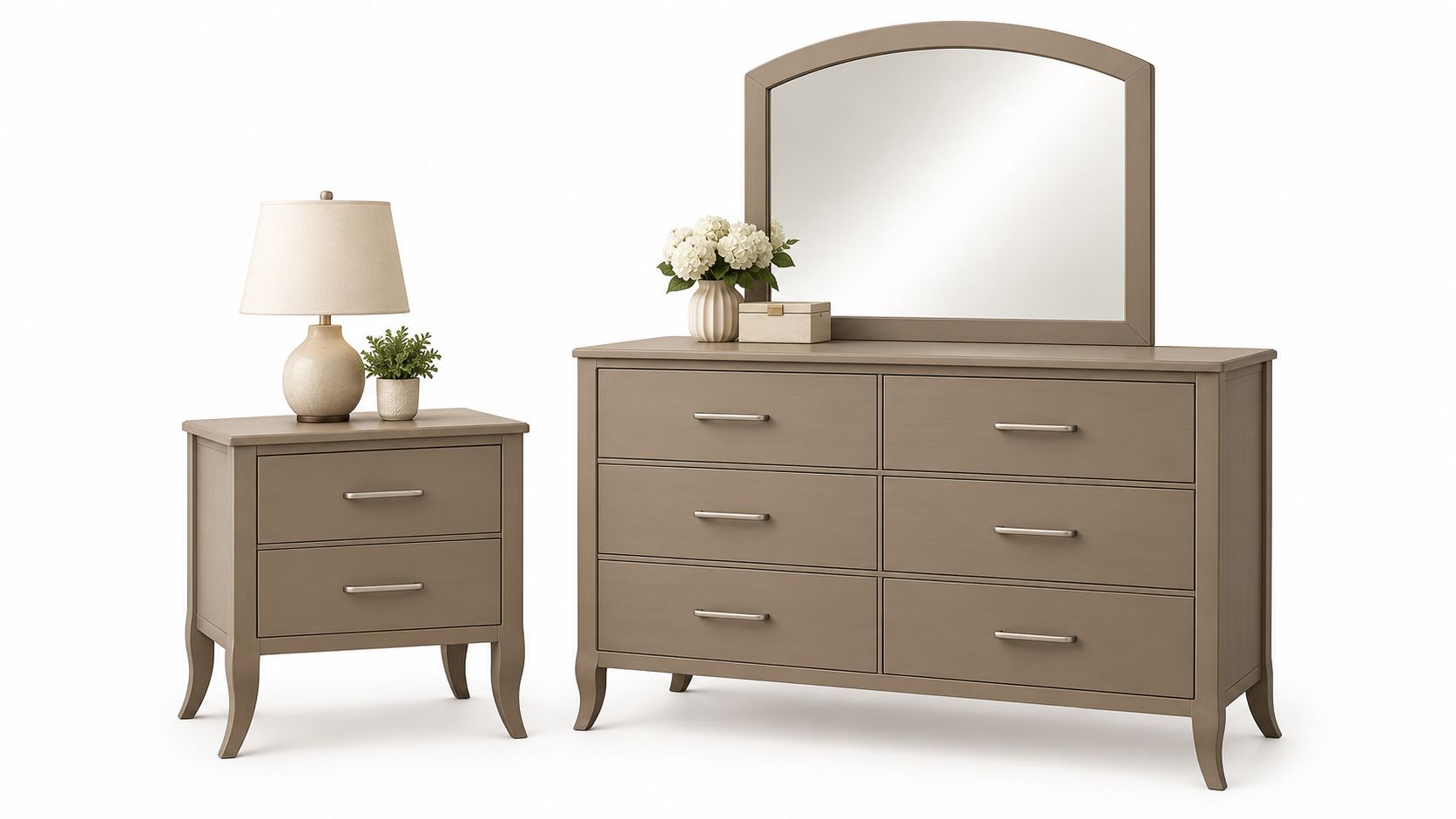
Look for furniture that joins crisp lines with softened, familiar curves. A headboard might use a rectangular frame around gently rounded upholstery. A dresser can keep a straight case while easing its corners. A nightstand may have a simple box shape with tapered legs or subtly curved drawer fronts.
The outline should feel calm and intentional. Dramatic carving, heavy scrollwork, or an ornate crown pushes a piece toward traditional styling. A severe profile, reflective finish, or strongly industrial hardware gives it a more contemporary direction. Curved forms are a useful 2026 update, especially when the overall proportions remain restrained.
Look for visual quiet
Clean silhouettes and limited ornament keep the style easy to live with. Transitional bedroom pieces often have plain drawer fronts, modest hardware, and finishes that allow the wood or upholstery to carry the design.
Warm neutrals are common:
- Greige and taupe soften a room without introducing a strong color.
- Oatmeal and beige work naturally with linen, wool, and cream bedding.
- Light gray supports a cooler palette when wood or upholstery adds warmth.
- Warm white helps a smaller bedroom feel open and easy to coordinate.
The goal is coordination, not identical surfaces. Calm large pieces leave room for texture, lighting, artwork, and personal accents. That balance can be especially helpful in Southwestern Virginia homes, where a bedroom may need to feel comfortable through changing seasons.
Notice how materials share the work
Wood, linen, wool, glass, and metal can appear together without making the room feel crowded. Wood provides visual weight. Upholstery softens the bed. Glass keeps a lamp or mirror feeling lighter. Metal works best in restrained pulls, lamp bases, or small accents.
Let one material lead. Warm wood can anchor the bed and nightstands, while linen bedding and a small amount of metal add contrast. This approach also helps with practical buying decisions. A durable wood finish may suit children or pets, while washable or hard-wearing textiles can make upholstered pieces easier to maintain.
Use this showroom checklist
Before buying, ask:
- Is the shape clean but not severe? Look for straight lines balanced by softened edges or upholstery.
- Is the ornament restrained? Simple fronts and modest details usually signal transitional design.
- Does the finish feel warm and flexible? Greige, taupe, beige, oatmeal, gray, and natural wood coordinate with many room palettes.
- Will the scale suit the room? Check the dresser width, bed height, and walking space before choosing a complete set.
- Can the piece work with existing furniture? A nightstand should relate to the bed without requiring a perfectly matched suite.
- Does it provide useful storage? Smooth drawers and adequate capacity matter when the room serves everyday family life.
- Would the room still feel comfortable without accessories? Strong transitional furniture does not depend on excessive decoration.
Heavily carved bed frames, busy patterns, and elaborate window treatments can move a bedroom toward traditional styling, as noted in practical transitional design guidance. Use this bedroom furniture selection guide to apply the checklist to your room dimensions, storage needs, and daily routines.
Styling and Layout Tips That Make the Look Work
A transitional bedroom feels balanced because each piece has a job. The bed establishes the focal point, the nightstands create visual stability, and the dresser supplies storage without becoming a second centerpiece. Layout should come before decoration.
Build the room around the bed
Start by placing the bed where it has a clear relationship to the door and the room's main sightline. Leave enough passage around it for daily movement, and avoid choosing a headboard so tall or heavy that it overwhelms the wall.
An upholstered or minimally framed headboard pairs especially well with warm wood bedside tables. The upholstery softens the bed, while the wood keeps the room connected to the natural character common in local homes.
Use symmetry where it helps
Matching nightstands and coordinated lamps create a quiet visual anchor. Symmetry is useful beside the bed because it makes the sleeping zone feel intentional, even when the rest of the room contains a collected mix of art, baskets, or seating.
That doesn't mean every object must match. The nightstands can share a finish while the lamps bring a small difference in shape, or the lamps can match while the tables vary slightly in texture. The important point is that the bed wall should feel settled rather than accidental.
Practical rule: Keep the largest bedroom pieces calm and let smaller objects provide personality.
Layer texture, not clutter
Transitional styling benefits from tactile layers. A smooth wood surface can sit beside linen bedding, a wool throw, a woven rug, and a softly upholstered bench. These materials add depth without relying on loud color or busy pattern.
A restful bedroom also needs visual breathing room. Guidance on creating a mindful bedroom for rest and relaxation can help households think beyond appearance and consider how lighting, textiles, and object placement affect the room's atmosphere.
Check scale before color
A beautiful dresser still feels wrong if it blocks a walkway or dwarfs the bed. Use the room's largest dimensions to determine the furniture footprint, then choose finishes and accessories.
- Small bedroom: Favor a clean-lined bed, narrow nightstands, and storage that uses vertical space.
- Long bedroom: Place the dresser where it doesn't create a tunnel between the bed and doorway.
- Large bedroom: Add a bench or compact chair only if it preserves clear circulation.
- Shared bedroom: Choose drawers and surfaces that reduce bedside clutter.
Homeowners planning a remodel can use Guynn's bedroom furniture layout ideas as a starting point. Debra Williams and the expert design staff can also help create a scaled plan, coordinate finishes, and visualize how a new set will work with existing walls, windows, and flooring.
Smart Buying Guide for Scale Budget and Everyday Life
A transitional bedroom in Southwestern Virginia may need to handle muddy shoes, pet hair, changing storage needs, and uneven room proportions. The furniture should fit through the doorway, suit the mattress, hold daily belongings, and remain comfortable for children, guests, or older adults. Start with function, then choose the design details.
Compare the main decisions
| Buying Factor | What to Look For | Why It Matters |
|---|---|---|
| Room scale | Measure walls, doorways, windows, and walking paths | Prevents a bed or dresser from making the room feel crowded |
| Mattress compatibility | Confirm the bed size and support requirements | Helps the mattress sit correctly and securely |
| Construction | Stable joinery, solid hardware, and well-supported frames | Reduces loosening, sagging, and premature replacement |
| Finish performance | Surfaces that resist everyday wear and color change | Keeps casegoods looking consistent with regular use |
| Upholstery | Fabric suited to the household's cleaning and wear needs | Helps families and pet owners manage daily messes |
| Storage | Drawers, chests, or under-bed compartments with practical access | Keeps clothing and bedding organized without extra furniture |
| Comfort | Supportive headboard, usable drawer height, and easy access | Makes the room more comfortable for daily routines |
Furniture standards guidance covers concerns such as abrasion resistance, light fastness, rub fastness, ergonomics, structural durability, strength, safety, and stability under applicable requirements, as summarized by DIN's timber and furniture standards guidance. For a household, those terms become practical questions: Do the joints feel secure? Can the finish handle repeated cleaning? Will the fabric tolerate the way the room is used?
Match the budget to the role
Give the largest share of attention to the pieces that affect sleep and daily movement. The bed and mattress influence nightly comfort and support, while a dresser and nightstands mainly need useful storage, coordinated finishes, and a sensible footprint.
Approachable casegood lines can provide transitional character without requiring every piece to be elaborate. Comfort-focused upholstery makers may suit shoppers choosing a padded headboard or bedroom bench. Trusted mattress makers offer different sleep surfaces, so the mattress can be considered alongside the bed rather than treated as an afterthought.
Guynn Furniture & Mattress offers a Low Price Promise and a 30-day price guarantee. Its in-stock selection can also support quicker delivery than an item that must first be ordered. Buyers can review the retailer's smart furniture shopping guide before visiting a showroom, especially when they need to set priorities before spending.
Think about the household, not just the room
Children and pets make fabric texture, cleaning needs, drawer hardware, and exposed corners part of the buying decision. A tightly woven or easy-care surface may be easier to maintain than a delicate one. Stable drawers and securely supported frames matter when furniture receives frequent use.
Households planning for aging in place may prefer easy drawer access, a manageable bed height, clear paths, and supportive sleep products. These requirements fit transitional design naturally. A calm room can still be practical.
A useful analogy is to treat each piece like a dependable household tool. The dresser should open easily, the nightstand should hold what is needed at bedtime, and the bed should feel stable every night.
For shoppers in Galax, Independence, Hillsville, and the wider Southwestern Virginia and Northern North Carolina region, free in-home delivery and setup within 60 miles can reduce the work of placing larger furniture. Delivery support is helpful when stairways, narrow entries, or existing floors make setup difficult. The finished room should feel comfortable in use, not only attractive in a showroom.
Keeping Transitional Current in 2026 Without Chasing Trends
A transitional bedroom can feel current in 2026 without looking like a showroom built around one short-lived idea. Recent 2026 bedroom trends coverage points toward warmer wood tones, rounded furniture, layered texture, and softer minimalism. For homes in Southwestern Virginia, these updates also need to suit real rooms, changing seasons, and everyday use.
The simplest approach is to keep the main pieces calm and update one or two details. A bedroom should work like a favorite jacket: familiar enough to wear often, with a fresh texture or shape that keeps it from feeling dated.
Warm the foundation
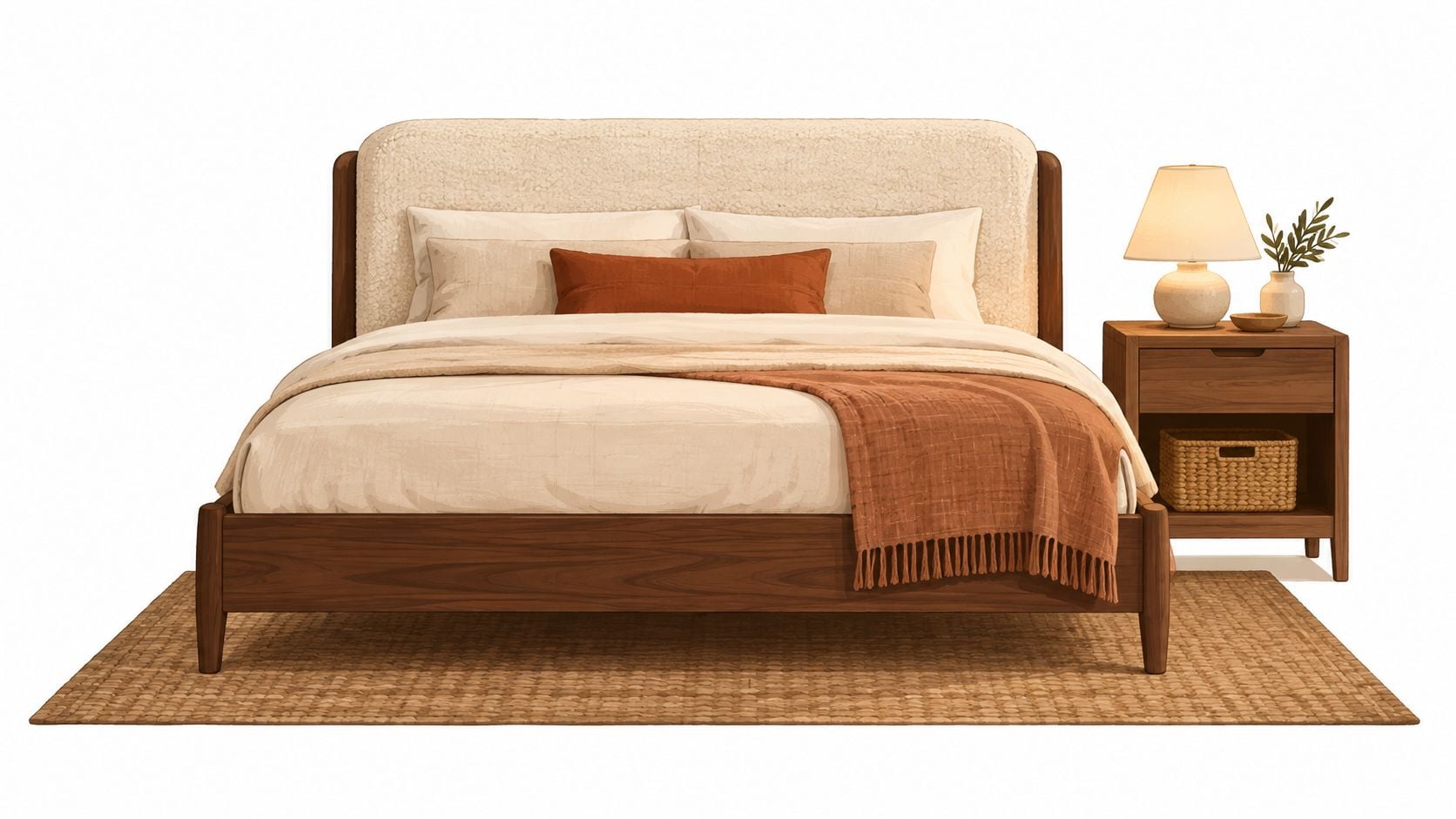
Walnut and other rich wood finishes add depth where pale, cool furniture may feel flat. A walnut-toned panel bed or dresser can anchor the room, while oatmeal bedding, taupe upholstery, and warm metal accents keep the palette comfortable rather than heavy.
Texture adds interest, especially in bedrooms with simple walls and flooring. Burl and boucle can provide that change in small doses. A boucle bench or upholstered headboard may feel fresh without requiring every surface to use the same fabric.
Curved forms offer another gentle update. A rounded nightstand, barrel chair, or softened headboard can balance a straight dresser. The contrast works like mixing a handwritten note into a neatly organized file. The room stays orderly, but it feels less rigid.
Update one category at a time
Choose one area to refresh while the rest of the room provides continuity:
- Panel bed: Select warmer wood or a gently softened frame, then keep the nightstands simple.
- Dresser: Choose a richer finish or tactile veneer with straightforward drawer fronts.
- Nightstands: Add a curved profile to soften a strongly rectangular bed.
- Upholstered piece: Use boucle or another textured fabric as an accent.
- Textiles: Layer cream, oatmeal, taupe, and natural fibers for depth without visual clutter.
Make storage part of the design
A storage bed can help when closets are limited or a bedroom serves more than one purpose. Under-bed compartments hold blankets, seasonal clothing, or guest linens while keeping the visible furniture footprint controlled. That matters in smaller rooms, where excess case goods can make walking paths feel tight.
A collected mix may also suit a Southwestern Virginia home better than a completely matching set. Let pieces share a finish family, scale, or shape language without requiring identical hardware. This gives the room room to change gradually as needs change.
Choose durable basics first. A timeless bed, a well-constructed dresser, and one current texture can remain useful as colors and accessories shift. Warmer woods and curved forms then refresh the room for 2026 while preserving the calm, practical character that makes transitional furniture last.
Find Your Perfect Transitional Bedroom at Guynn Furniture
Choosing transitional style bedroom furniture becomes easier when shoppers can see the proportions, touch the materials, and test comfort before committing. Guynn Furniture & Mattress offers a no-pressure atmosphere for households comparing beds, dressers, nightstands, upholstered pieces, and mattresses in person.
The company has served the region since 1902, with showrooms serving Galax, Independence, Hillsville, and the wider Southwestern Virginia and Northern North Carolina area. Its large in-stock selection supports immediate delivery, and free in-home delivery and setup within 60 miles helps households avoid the heavy lifting.
Expert design staff, including Debra Williams, can help with room planning, finish coordination, scaled layouts, and the practical details that online images can't answer. Shoppers can also compare La-Z-Boy, Ashley, Bassett, Sealy, and Therapedic selections while keeping comfort and durability in the same conversation.
A well-chosen transitional bedroom should feel comfortable today, adaptable tomorrow, and calm every night.
Visit our showrooms in Galax, Independence, or Hillsville to test the comfort for yourself. Schedule a consultation with our design team to start planning your dream room today. Browse the selection online at guynnfurniture.net.
Guynn Furniture & Mattress can help local households choose transitional bedroom furniture that fits their space, budget, and everyday routines, with design guidance, in-stock options, and free in-home delivery and setup within 60 miles. Visit Guynn Furniture & Mattress to begin comparing comfortable, durable pieces for a bedroom that feels current without losing its timeless welcome.