60 X 80 Mattress Guide: Sizing, Frames, and Buying Tips


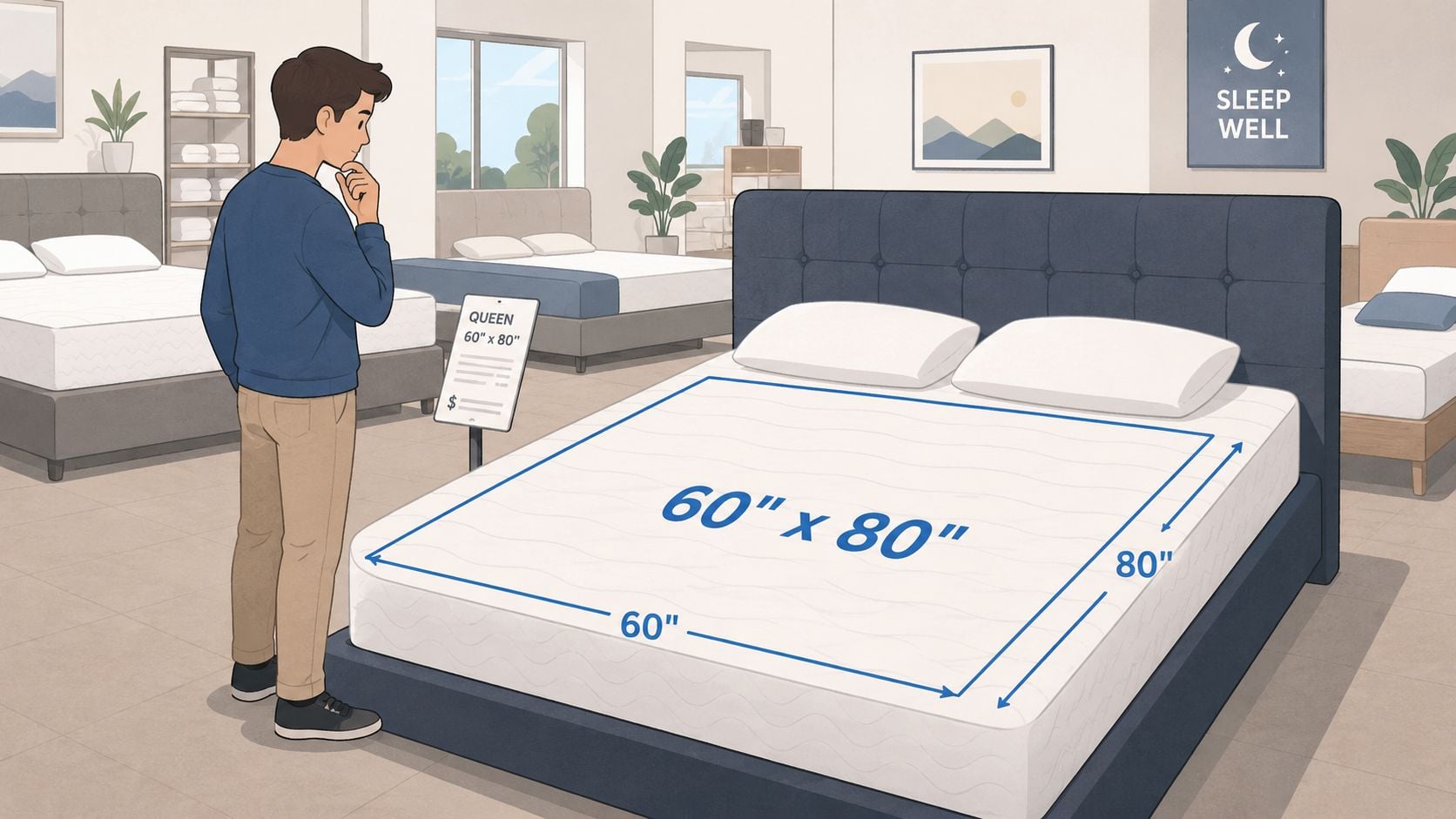
Standing in a mattress showroom, plenty of people have the same quiet question, which bed size fits the way they sleep and the room they already have? A 60 x 80 mattress is the standard U.S. queen size, and that simple label matters more than it first seems. It affects how much space two people get, what sheets fit, and whether a bedroom still feels open after the bed arrives.
In plain terms, 60 inches wide by 80 inches long gives a sleep surface of about 33.3 square feet. That's why queen has stayed the most common mattress format in the market, and why it's such a familiar choice for couples and primary bedrooms. For many households, it's the middle path, roomy enough to feel civilized, but not so large that it takes over the whole room.
That middle-ground appeal is part of why queen shipments rose from 37% in 2010 to 41.4% in 2018 in U.S. market summaries (HowStuffWorks on bed sizes getting bigger). A later consumer guide puts queen at about 47% of U.S. mattress sales. The numbers point to the same thing, queen is the size many shoppers land on after they compare space, comfort, and room fit.
What a 60 x 80 Mattress Means
A shopper can stand in front of a row of beds and still feel unsure, because the label is simple but the choice reaches into the whole room. A 60 x 80 mattress is the standard queen size, which means it measures 60 inches wide and 80 inches long. That is the number to keep in mind when sheets, frames, and floor space start talking to each other.
A queen is easier to picture than a number
A queen works like a familiar piece of bedroom real estate. Its sleep surface is about 33.3 square feet, so it gives two adults enough room to lie down without feeling crowded, while still leaving the room some breathing room when the rest of the furniture is chosen well.
Practical rule: if one bed has to serve as a couple's everyday sleep space and the main piece in the room, queen is usually what people mean when they say they want “something comfortable, but not huge.”
That is also why queen has become the default for many primary bedrooms. U.S. mattress market summaries show queen taking a larger share of shipments over time, while twin and full lost ground (HowStuffWorks on bed sizes getting bigger). In plain terms, shoppers kept choosing the size that split the difference between comfort and footprint.
If the room is already cut up by windows, closet doors, or a dresser, that middle-ground quality matters even more. A queen gives a practical answer to a common question, will this feel like a real bed for two, without making the rest of the room feel squeezed?
A local showroom visit makes that easier to judge. A tape measure can tell you the mattress is a queen, but standing beside one lets you see how the edges sit, how much walking room remains, and whether the frame choice leaves enough space for bedding and bedside furniture. That is the point where the number on the tag becomes a bedroom decision, not just a size label.
The next questions are the ones that usually trip people up, whether the size on the tag is exact, how queen compares with other beds, and what the room needs to look like for the bed to feel right.
Nominal Size vs Actual Size and Why It Matters
The label on the mattress tag is the starting point, not always the whole story. A 60 x 80 mattress is treated as a standard queen size, but real-world mattresses can vary by about 1 to 2 inches depending on the manufacturer, and spec sheets may allow tolerance ranges (Reddit discussion on exact 60 x 80 fit tolerances). That small gap doesn't sound like much until a fitted sheet feels too snug or a frame lip catches the edge of the mattress.
Why the label and the tape measure can disagree
Think about a 2×4 at the hardware store. The name suggests one thing, but the finished piece isn't two inches by four inches in the hand. Mattress sizing works a little like that, the name is the standard, while the actual finished measurements can shift slightly from one maker to another.
That's why the better shopping habit is to treat nominal size and actual size as two different things. The nominal size tells a shopper the category, while the actual measurement tells the shopper whether a fitted sheet, platform cutout, or bed frame will behave the way it should once the mattress is in the room.
A few fit points matter most:
- Fitted sheets: If the mattress runs a little larger than expected, the corners can fight back when the sheet goes on.
- Foundation lips: A base with a tight edge can make a queen feel like it's “almost” the right size, which is a problem when the mattress needs to rest cleanly inside it.
- Platform-bed openings: A recessed frame cut too closely can leave no margin for the mattress to settle naturally.
Measure the mattress, not just the label, if the bed frame has tight rails, a deep inset, or a decorative lip.
A quick checklist helps avoid the usual headaches:
- Measure width and length: Confirm the space meant for the mattress, not just the outer frame.
- Check depth too: Sheet pockets and bed skirts care about thickness as much as width.
- Look at corners: Rounded corners can fit differently than square ones.
- Compare before delivery day: A few minutes with a tape measure can save a lot of wrestling later.
The safest habit is simple. Measure twice and trust the actual numbers, not just the label. That mindset matters most when the bed frame, bedding, or platform opening leaves very little room for error.
How the 60 x 80 Queen Compares to Other Sizes
A 60 x 80 queen lands in the middle for a reason. It gives two sleepers enough elbow room for normal movement, while still leaving the bedroom feeling usable instead of bed-dominated. That middle ground is why a queen often feels like the practical answer for a primary bedroom, a guest room that needs to do double duty, or any setup where one person wants extra space without jumping all the way to a king.
At a glance
| Mattress Size Comparison | Width x Length | Best For |
|---|---|---|
| Twin | 38 x 75 | Single sleepers, kids, tight rooms |
| Full | 53 x 75 | Solo sleepers who want more room |
| Queen | 60 x 80 | Couples, primary bedrooms, versatile use |
| King | 76 x 80 | Couples who want the most personal space |
The difference is easy to feel once you stand beside the beds. A twin and a full work well for one sleeper, but a queen adds the extra width that makes shared sleep less cramped and makes bedding choices more forgiving. A king adds even more space, yet it also asks more from the room, the frame, and the rest of the layout.
Shoppers also tend to notice that queen bedding is easy to match because the size is so common. If you are trying to line up layers without guessing, a quick way to find the right queen blanket can save a lot of trial and error. That matters because a blanket that looks fine on paper can still feel short at the corners or too bulky once it is folded on the bed.
A queen can also be the safer choice when the room has furniture in it, not just a mattress. If nightstands, dresser drawers, or a clear path around the bed matter, queen usually leaves more breathing room than a king does. For a local sizing reference that keeps the measurements straightforward, the queen bed size guide is a useful place to compare the label to the actual footprint.
Rule of thumb: choose queen when you want the most flexible middle ground, king when personal space is the priority, and full or twin when the room is tight or the sleeper is solo.
That way of choosing keeps the decision grounded in daily use. The right bed is the one that fits the people, the bedding, and the frame without making the bedroom feel crowded every time you walk through it.
Room Size, Clearance, and Layout Planning
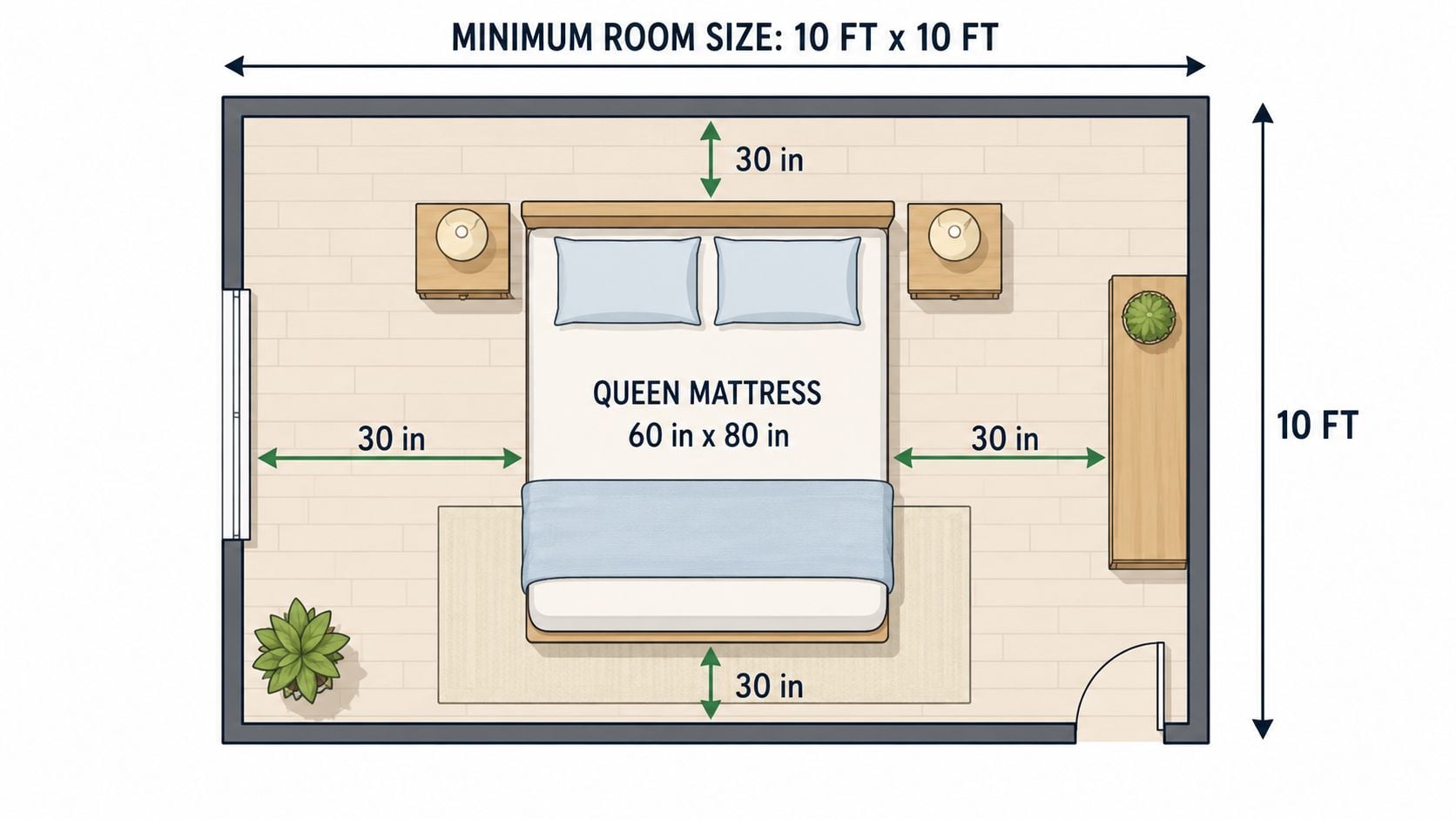
A queen can feel right on the sales floor and crowded at home. The bed is only part of the picture, because nightstands, lamps, dresser drawers, and walking paths all need room too. A 60 x 80 mattress often fits best in a room that gives it some breathing space, and many layout guides point to about 10 x 10 feet as a bare minimum. A 10 x 12 feet room usually feels easier to live with once the bed has to share space with furniture and daily movement.
What the extra room buys
A midsize sedan versus an SUV in a one-car garage. Both can fit, but one leaves more room to open doors, carry bags, and avoid bumping into walls. A 10 x 10 room can hold a queen, but a 10 x 12 room gives more usable air around the bed, which matters once the rest of the bedroom comes into play.
The difference shows up in everyday use, not just on paper.
- Leave side clearance: About two feet on each side helps with making the bed and stepping in and out without turning sideways.
- Keep the foot open: Extra room at the end of the bed helps drawers open and keeps the room from feeling pinched.
- Allow wall breathing space: A few inches behind the headboard helps the bed sit cleanly, especially if wall art or molding is involved.
- Sketch the footprint: Mark the mattress, nightstands, and any dresser on paper before the bed is delivered.
If you are planning a bedroom refresh, floor choice can change how roomy the space feels once the bed is in place. The right surface affects how the bed reads in the room, how traffic flows, and how finished the whole space feels, so this guide to master bedroom flooring ideas can help you think through the room as a whole.
If the room feels crowded on paper, it usually feels crowded in real life too.
Before you order, it helps to measure the room the same way you would measure for any large piece of furniture. A practical local guide on how to measure a room for furniture walks through that process in plain terms, which makes it easier to check clearances before delivery day.
A short-queen can solve a niche room shape, but that is usually a special case, not the default answer. For most households, the standard 60 x 80 remains the safest bet because bedding, frames, and room planning all tend to align around it. That makes it easier to choose a frame, place nightstands, and keep the room comfortable to live in, not just to look at.
Mattress Types, Brands, and What to Test in Store
Size gets a shopper in the right aisle, but comfort is what decides whether the bed gets kept. A 60 x 80 queen can be built in several ways, and each one feels different under the body. The main constructions are innerspring, memory foam, hybrid, and latex, and each one changes how the bed responds to pressure, movement, and sleep position.
Comfort starts with construction
Innerspring beds usually feel bouncier and more open. They suit sleepers who like a traditional feel and a bit more push-back under the body. Memory foam tends to contour more closely, which can feel especially appealing to side sleepers who want pressure relief at the shoulders and hips.
Hybrid beds mix foam comfort with a coil base, so they often appeal to people who want both cushioning and support. Latex usually feels more resilient and responsive, which can be useful for sleepers who want less sink and a quicker rebound when changing position.
A showroom visit matters because the body notices details a spec sheet can't capture. Foam softness, coil responsiveness, edge feel, and motion transfer become obvious only after lying down for a few minutes. A local store also makes it easier to compare a mattress with an adjustable base, which can be useful for readers who want more positions for reading or resting.
The 60 x 80 queen is available through the sleep center at Guynn Furniture & Mattress, where shoppers can compare Sealy and Therapedic, and also consider a La-Z-Boy adjustable base if flexibility is part of the plan. The store's role as a La-Z-Boy Showcase adds another comfort option for rooms that need more than a mattress alone.
A simple comfort test in the showroom
A useful in-store routine is short and direct:
- Lie down on your normal sleep side: That tells the truth faster than sitting on the edge.
- Roll once or twice: If the bed fights movement, that matters for real sleep.
- Check the shoulders and lower back: Those are the spots that usually reveal fit problems first.
- Notice the edge support: It matters when people sit to put on shoes or reach for a bedside table.
For readers who want a closer look at frame matching for foam beds, this guide on bed frames for memory foam can help narrow down the right support style. Large in-stock selections also make immediate delivery possible, which avoids the waiting game that often comes with boxed-bed shopping.
The smartest move is usually simple. Try the bed in person, compare a few feel profiles, and let the body make the final call.
Buying Locally, Financing, and Delivery Made Simple
Mattress shopping gets easier when the store acts like a guide instead of a pressure machine. A good visit should include help with measurements, frame matching, and comfort selection, not a hard push toward the priciest option on the floor. That no-pressure atmosphere matters, especially when the bed has to work for a real household and a real budget.
Ways local buying reduces stress
Flexible payment options can make a queen mattress easier to bring home without delay. Guynn Furniture & Mattress offers in-house financing and Lendmark financing, including no-interest plans for credit-qualified buyers with no minimum purchase, which gives value-conscious shoppers another path to a quality setup. For financing details, the store's own mattress financing options page is the place to start.
Price protection matters too. The Low Price Promise matches local competitors' advertised prices on the spot and includes a 30-day price guarantee after purchase. That gives buyers a clear safeguard if they're comparing options across town and want to keep the process straightforward.
Delivery can be the detail that saves the whole day. The store provides free in-home delivery and setup within 60 miles, including the heavy lifting and packaging removal. That service is especially helpful with a queen mattress, because stairs, tight hallways, and awkward turns are where a simple purchase can become a wrestling match.
Practical rule: when the bed is large, the delivery plan matters almost as much as the mattress itself.
For shoppers in Galax, Independence, Hillsville, and the wider Southwestern Virginia and Northern North Carolina region, local service keeps the process manageable. Expert design help from staff like Debra Williams can also tie the mattress into the rest of the bedroom, which is useful when a room needs coordination, not just a new sleep surface.
The benefit of local shopping is simple, there's a person to ask if the frame doesn't fit, the room layout needs adjusting, or the mattress decision still feels uncertain. A quick visit or an online browse can move the process forward without adding pressure.
Caring for Your 60 x 80 Mattress for the Long Haul
A 60 x 80 queen mattress holds up best when care becomes part of the routine, the same way a good set of tires lasts longer with steady pressure checks and rotations. A little attention now keeps the surface more even later, which matters because a queen size gets used in the same spots night after night. Rotate the mattress every few months so wear spreads more evenly across the surface. Use a washable protector, especially if spills, pets, or allergies are part of daily life.
A mattress also needs the right base under it. If the foundation does not match the mattress type, the bed can lose support sooner than it should, even if the mattress itself is well made. That is why checking the frame and support system matters just as much as checking the comfort layer.
Small habits that prevent bigger problems
Seasonal deep cleans are a good time to vacuum the surface and inspect the seams. Dust and debris build slowly, and a quick vacuum keeps the sleep surface cleaner without much effort. A gentle once-over also helps you spot loose stitching, small stains, or early sagging before they turn into larger problems.
A few care habits are especially worth keeping in mind:
- Use a protector: It helps shield the mattress from stains and everyday messes.
- Match the support: The base or frame should suit the mattress type, not just the room style.
- Avoid folding the mattress: If a mattress was not made to bend that way, folding can damage it.
- Check the warranty path early: Knowing who to call makes support easier if a problem comes up.
A good care routine also includes the small print. If you want a fuller walk-through, this guide to mattress maintenance and cleaning tips to extend its lifespan is a helpful companion. Warranty rules can be just as practical, since a local showroom team can often help sort out support questions without the delay that comes from shipping a mattress far away.
Guynn Furniture & Mattress has been serving the region since 1902, when the Guynn family started as a country store trading fair value for quality goods. That history does not make a mattress last longer by itself, but it does mean shoppers have a place to return to when they want help from people who know the product and the community.
A mattress lasts longer when the support stays right, the surface stays protected, and the owner notices small problems early.
Visit Guynn Furniture & Mattress to compare queen mattresses, check fit, and get help from a local team that serves Galax, Independence, Hillsville, and the surrounding region. Visit our showrooms in Galax, Independence, or Hillsville to test the comfort for yourself. Schedule a consultation with our design team to start planning your dream room today. Browse our selection online at guynnfurniture.net.