
Buying a Pillow That Suits You: A Friendly Guide


A shopper can spend several minutes in a bedding aisle pressing pillows flat, lifting them for weight, and reading labels that all seem to promise better sleep. One feels too soft, another seems too tall, and a third looks comfortable until the shopper remembers waking with a stiff neck. The confusion is understandable because buying a pillow isn't really about choosing the most impressive label. It starts with the person who'll sleep on it, the position that person uses, and the mattress underneath.
Pillows have supported sleepers for thousands of years. One historical account traces their earliest recorded use to Mesopotamia around 7,000 BC, showing how an old idea has developed into a highly segmented modern product category with different fills, shapes, lofts, and support levels (a brief history of the pillow). Today, the U.S. pillows market was valued at USD 3.25 billion in 2024 and is projected to reach USD 4.77 billion by 2032, with a projected 5.07% CAGR from 2025 to 2032 (U.S. pillows market data).
The helpful approach is simple. Start with the sleeper, narrow the choices by material and loft, then test the feel on a bed. That process is easier in a no-pressure atmosphere, where a shopper can ask questions and compare pillows without feeling rushed.
Why Buying a Pillow Feels Harder Than It Should
A shopper named Sandra recently stood in front of a wall of pillows with one practical goal, replace the flat pillow that had been on her bed for too long. She squeezed a soft model, pushed down on a firmer one, and read terms such as cooling, supportive, contouring, and hypoallergenic. After several minutes, she still couldn't tell which pillow would keep her comfortable through the night.
The problem wasn't a lack of choices. It was the order of the decision. Sandra had started with products instead of asking how she sleeps. Sleep position, body shape, temperature preferences, allergies, and mattress feel can matter more than a brand name or a polished package.
A side sleeper, for example, usually needs enough height to fill the space between the shoulder and the head. A stomach sleeper often needs much less height, while a back sleeper generally needs balanced support that keeps the head from tipping forward. Consumer Reports also recommends judging real firmness by compressing a pillow to about half its original thickness, because a label alone doesn't always show how the pillow will respond (Consumer Reports pillow buying guidance).
The sleeper comes first
Before comparing fills, a shopper can answer a few questions:
- Sleep position: Is the person mostly on the side, back, stomach, or moving between positions?
- Body geometry: How broad are the shoulders, and how much does the body sink into the mattress?
- Temperature: Does the sleeper prefer a warm, cozy feel or more airflow?
- Sensitivity: Are allergies, dust, dander, or material preferences part of the decision?
- Bed feel: Does the mattress feel plush, balanced, or firm?
The fill still matters, but it works together with loft and firmness. A memory foam pillow may feel supportive to one sleeper and too dense to another. A soft down pillow may feel inviting at first but may not provide enough structure for someone who needs more elevation.
Practical rule: The right pillow is the one that supports the sleeper's head and neck in the actual position used at night, not the one with the most persuasive packaging.
A family-owned showroom can make this process feel more like a conversation in a living room than a test of technical vocabulary. In Galax, Independence, and Hillsville, Guynn's staff can help shoppers begin with sleeping habits and compare comfort from there. The company has served local households since 1902, and its no-pressure atmosphere gives customers room to decide at their own pace.
Pillow Types and Materials Worth Knowing
A pillow's material shapes what happens under the head. Some fills collapse and can be reshaped, some hold a steady contour, and others combine softness with spring. The right place to begin is the sleeper's preferred feel, then consider how that material supports the head and neck.
Down and down-alternative
Down feels soft, light, and moldable. The sleeper can move the fill by fluffing or shaping the pillow, which suits anyone who enjoys a relaxed, nest-like surface. Down can also feel breathable, though it may need regular fluffing to keep its shape.
Down-alternative uses synthetic fibers to imitate down's softness without feathers. It can suit value shoppers and people looking for a hypoallergenic-style option. The exact feel depends on the fiber construction and cover. Some designs feel airy and loose, while others are packed more densely for added support.
Memory foam and latex
Memory foam responds to pressure and contours around the head and neck. It can suit sleepers who prefer shaped, stable support instead of a pillow that shifts easily. Open-cell and gel-infused designs are sometimes used to address heat concerns, but the surface feel still depends on density and cover fabric. For a broader explanation, see what memory foam means in sleep products.
Latex generally feels buoyant and responsive. It pushes back rather than slowly settling around the head, then changes shape quickly as pressure moves. That springier response can appeal to sleepers who want support without foam's deeper hug.
Hybrid construction
Hybrid pillows combine materials, such as a shaped core with a softer outer layer. The result can balance structure and cushioning. A hybrid may suit someone who likes foam's stability but wants a more adjustable or comfortable surface.
The cover deserves attention as well. Fabric, stitching, ventilation, and internal construction can change the experience even when two pillows share the same broad fill category. A smooth cover may feel different against the skin, while ventilation can affect how warm the pillow feels.
| Material | Feel | Best For | Allergy-Friendly | Price Range |
|---|---|---|---|---|
| Down | Soft, moldable, airy | Shoppers who enjoy a flexible, plush feel | Depends on construction and care | Varies |
| Down-alternative | Soft to supportive, adjustable | Value shoppers and those avoiding feathers | Often available in hypoallergenic-style designs | Varies |
| Memory foam | Contouring, stable, pressure-responsive | Sleepers who prefer shaped support | Depends on cover and construction | Varies |
| Latex | Buoyant, responsive, supportive | Sleepers who want quicker response | Depends on materials and cover | Varies |
| Hybrid | Mixed feel, balancing structure and softness | Shoppers who want more than one response | Depends on the combined materials | Varies |
A showroom test turns these descriptions into something easier to judge. The same material can feel different at different densities, so a pillow that looks similar on a shelf may compress, rebound, and support the neck in another way. In Guynn Furniture & Mattress showrooms serving Galax, Independence, and Hillsville, shoppers can compare those responses in person and choose based on how the pillow feels under their own head, not just its label.
Matching Loft and Firmness to Your Sleep Position
You arrive at the showroom thinking you need a “medium” pillow, then notice that the same label can feel completely different under your head. Start with your sleeping position, because your shoulders, neck, and the space between them set the first useful target.
Loft is the pillow's height before your head compresses it. Firmness describes how much resistance it gives under pressure. They work together, like the height of a step and how firmly that step holds you. A tall pillow may collapse quickly, while a shorter pillow can stay supportive.
Low loft is less than 3 inches, medium loft is 3 to 5 inches, and high loft is more than 5 inches before compression, according to pillow loft classifications. These ranges help you begin, but shoulder width, body shape, and personal comfort still determine the final fit.
Side sleepers
Side sleeping leaves a wider space between the outer shoulder and the head. A higher effective loft usually fills that space better. A common starting range is 4 to 6 inches, with firm to medium-firm support, according to position-based pillow guidance. If the fill compresses too easily, the head may tip downward during the night.
Check the line from your neck through your spine. The pillow should fill the gap without forcing your head upward.
Back sleepers
Back sleepers often start with medium loft and moderate support. A range around 3 to 4 inches can provide a useful starting point within the broader medium-loft category of 3 to 5 inches. The head should stay level with the spine instead of being pushed toward the chest.
Stomach sleepers
Stomach sleepers generally need a low, softer pillow. A starting range of 1 to 3 inches can limit the amount the neck bends backward. Some people sleep more comfortably without a pillow under the head, depending on the mattress and their own comfort.
| Sleep Position | Ideal Loft | Firmness Level | Notes |
|---|---|---|---|
| Side | About 4 to 6 inches | Firm to medium-firm | Fill the shoulder-to-head gap |
| Back | About 3 to 4 inches | Medium | Keep the head aligned with the spine |
| Stomach | About 1 to 3 inches | Soft | Limit neck extension |
Your weight also changes how a pillow behaves. A heavier sleeper may sink farther into a soft design and need more resistance. A lighter sleeper may feel lifted too high by that same pillow. Use the position-based range as a starting point, then judge the actual support.
For a plain-language refresher on how bed support affects comfort, see this mattress firmness guide.
Ergonomic research describes a pillow as part of a sleep system that supports the head and neck, helps preserve the cervical spine's natural curve, and spreads pressure across the area (ergonomic pillow research). In Guynn Furniture & Mattress showrooms serving Galax, Independence, and Hillsville, you can begin with the range for your sleeping position, then test whether your head stays level and your neck feels supported.
How Your Mattress Changes the Right Pillow
A pillow and mattress form a team. The same pillow can feel too tall on a plush mattress and too flat on a firm one because the body settles to a different depth before the head reaches the pillow.
On a plush mattress, the shoulders and hips may sink more. A lower-loft pillow can help keep the head from being pushed upward. On a medium mattress, a mid-loft pillow often provides a balanced starting point. On a firm mattress, the body stays more raised, so a thicker or more supportive pillow may be needed to fill the remaining space.
| Mattress Feel | Side Sleeper | Back Sleeper | Stomach Sleeper |
|---|---|---|---|
| Plush | Firmer support with enough loft to resist flattening | Lower to medium loft | Low, soft loft |
| Medium | Medium-high loft, adjusted for shoulder width | Medium loft | Low loft |
| Firm | Higher, supportive loft | Medium to higher loft if needed | Very low, soft loft |
A side sleeper on a softer bed may benefit from a fill that resists flattening. A stomach sleeper on a firm bed may need an especially low and flexible option so the neck doesn't angle upward. An adjustable base changes the equation again because raising the head changes the line from the shoulders to the neck.
The most reliable test happens on a bed with a similar feel to the one at home. A shopper can bring details about the mattress, or compare pillows on several display beds, then notice whether the head stays level while lying in the usual position. A broader bedroom-comfort approach is available in this guide to creating a sleep sanctuary with coordinated lighting, temperature, mattress, and bedding.
Trying Pillows the Smart Way In the Showroom
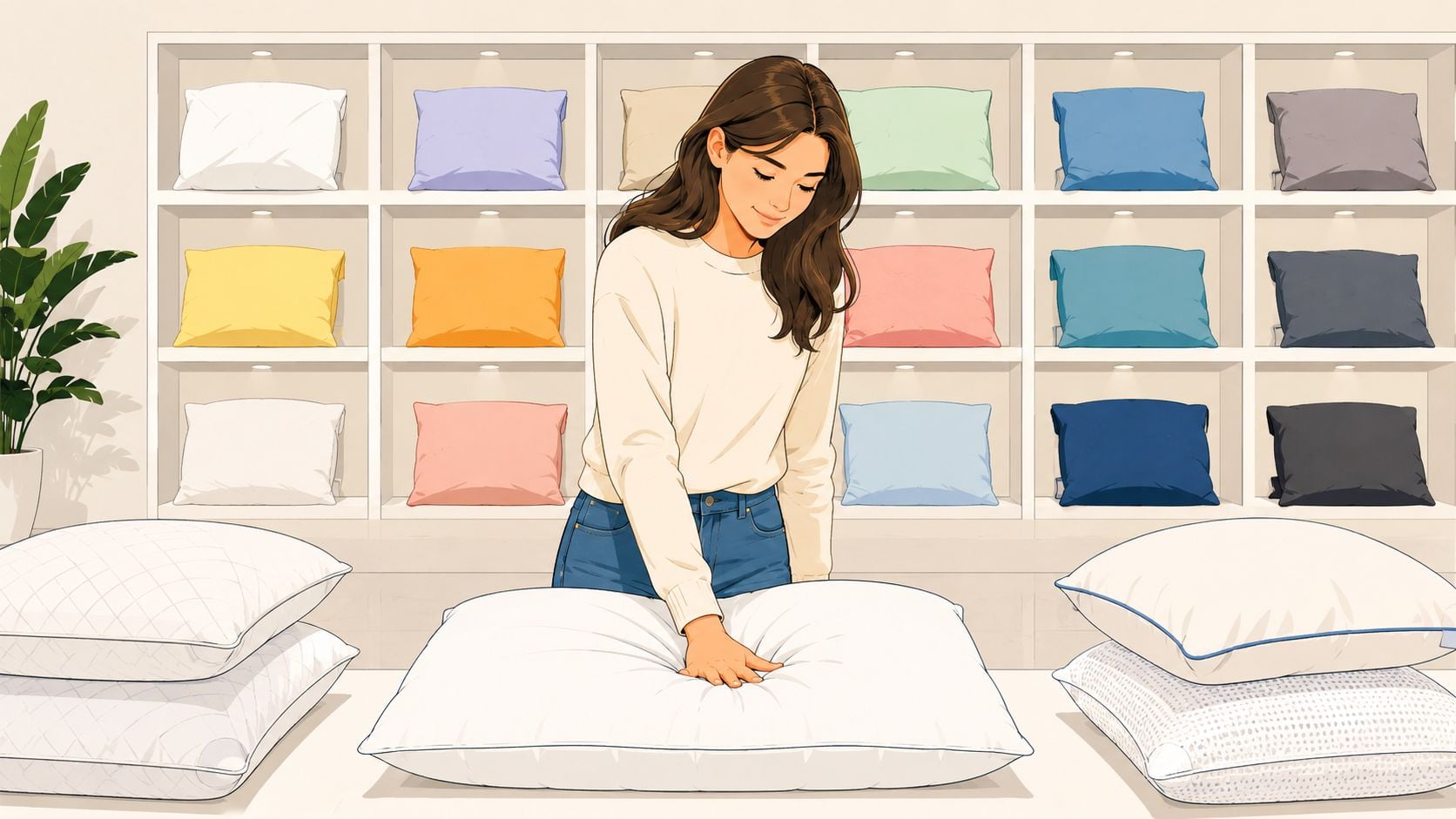
A showroom wall can make every pillow look alike, but a short routine brings the differences into focus. The goal isn't to perform a perfect test. It's to recreate familiar sleeping conditions closely enough to notice support, pressure, and alignment.
A practical tryout routine
- Press the pillow: Stand at the display and compress the pillow with one hand. Release it and watch how quickly it returns to shape. A quick rebound usually indicates more resistance, while a pillow that stays compressed may feel softer.
- Lie in the normal position: Use a display bed and settle into the position used most often at home. A shopper should allow enough time to notice the initial feel and the way the neck settles, rather than making a decision after a quick touch.
- Check head angle: The chin shouldn't tilt sharply toward the chest or drift upward. The head should feel level with the rest of the body, with the neck supported instead of forced into a curve.
- Compare the same model: Ask to test a lower and higher loft in the same general construction. That isolates height as a factor and prevents the shopper from confusing material changes with loft changes.
- Test a second position: Side sleepers can roll onto the back, and back sleepers can turn to the side. A pillow needs to remain useful when the body shifts during the night.
A preferred pillowcase can help with fabric judgment. Comfortable sleepwear also matters because a thick shirt collar or bulky clothing can alter how the neck feels against the pillow. The shopper doesn't need to bring a complicated checklist, just an understanding of the usual sleeping position and the willingness to compare.
Showroom habit: Start with alignment, then judge softness. A plush surface can feel pleasant for a moment, but support determines whether the pillow remains comfortable after the head settles.
Local shoppers can use this same calm process when finding a neighborhood furniture store for personal comfort testing. Guynn Furniture & Mattress has a dedicated sleep center with pillow options, including products from trusted bedding brands such as Sealy and Therapedic. Customers can compare choices in person rather than waiting for an online purchase that may not match the description.
Care, Allergies, and Knowing When to Replace
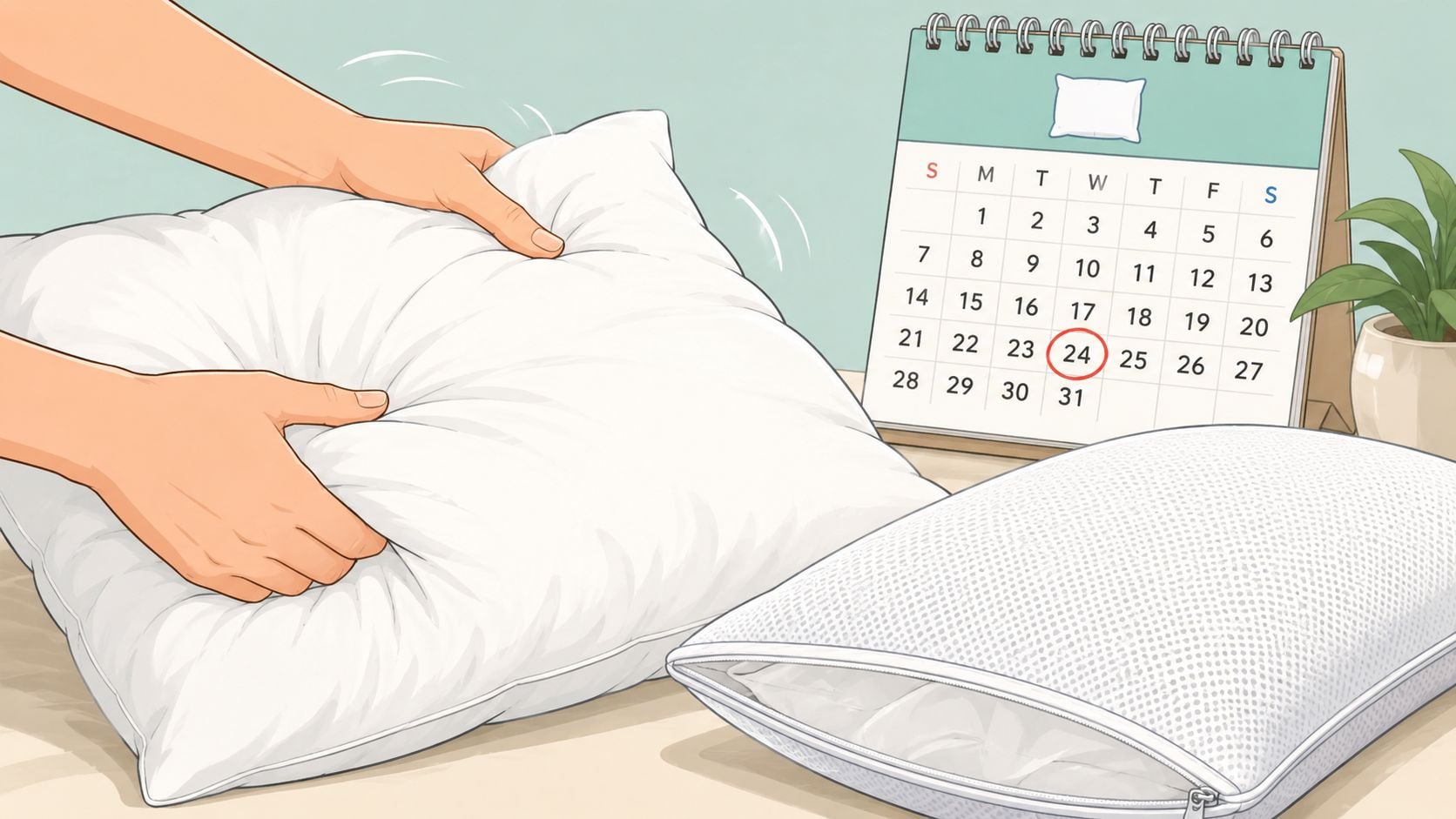
A pillow's useful life depends on its fill, cover, and care routine. Fluffing helps flexible fills maintain their shape, while protective covers limit the buildup of oils, sweat, dust, and dander. Bedroom air quality matters as well, and a practical overview of common indoor pollution sources can help households identify contributors beyond the pillow itself.
Down and down-alternative pillows generally benefit from regular fluffing and a breathable protector. An occasional airing can help freshen them, but care instructions should always control whether sunlight, washing, or drying is appropriate. Memory foam and latex shouldn't be placed in a washing machine. A removable washable cover and careful spot cleaning make those materials easier to maintain.
Signs that support has faded
A pillow may need replacing when it:
- Loses its shape: The fill no longer returns after being fluffed.
- Develops lumps: Uneven areas create pressure or leave parts of the neck unsupported.
- Keeps an odor: A persistent smell remains after reasonable airing and cover care.
- Causes new stiffness: Neck or shoulder discomfort appears without another clear change.
- Fails the fold test: If a pillow folds in half and stays folded, much of its original support may be gone.
Many everyday pillows last around two to three years, latex can last up to four years, and high-quality down may last longer with proper care. These are broad expectations rather than guarantees, because construction and maintenance make a substantial difference. Allergy-sensitive shoppers can look for tightly woven protectors, washable covers, and fills designed with allergy concerns in mind.
A dust- and allergen-conscious bedroom routine should include the pillow, mattress, bedding, and surrounding surfaces. Guynn's practical guidance on maintaining a dust- and allergen-free bedroom can help households build that routine without treating the pillow as an isolated item.
Budgeting, Warranties, and Local Service Perks
A sensible pillow budget starts with use rather than a price label. A guest-room pillow used occasionally has different demands from the primary pillow used every night. The useful comparison is the support, materials, cover construction, care requirements, and expected durability received for the purchase.
A shopper should also read the warranty before assuming it covers ordinary flattening. Warranty language may distinguish a manufacturing defect from normal wear, and some policies offer a trial period while others don't. Coverage may provide a full replacement at first, a prorated replacement later, or no benefit when the issue results from improper care.
| Price Tier | Typical Price | Expected Lifespan | Warranty |
|---|---|---|---|
| Entry-level | Lower-cost option | Depends on fill and use | Review terms carefully |
| Mid-range | Moderate investment | Depends on construction and care | May include limited coverage |
| Premium | Higher upfront investment | May offer more durable materials | Terms vary by manufacturer |
A higher price doesn't automatically mean a better match. A premium pillow can still be wrong if its loft doesn't suit the sleeper, while a well-matched value option can provide comfortable support. The best value comes from choosing the right construction first and then comparing prices among suitable options.
Financing as a planning tool
Financing can make sense when a household is furnishing a complete bedroom rather than replacing one pillow. A true promotional 0% APR plan charges no interest during a defined promotional window, commonly 12, 18, or 24 months, provided the balance is paid within that period. If the balance remains after the promotion, standard terms may apply, so shoppers should confirm the timeline, payment requirements, and conditions before agreeing.
Guynn offers a Low Price Promise that matches local competitors' advertised prices and provides a 30-day price guarantee. The company also provides free in-home delivery and setup within 60 miles, serving Galax, Independence, Hillsville, and the wider Southwestern Virginia and Northern North Carolina region. A large in-stock selection can support faster delivery than an online-only purchase, while expert design staff, including Debra Williams, can help coordinate bedding and bedroom choices when the project extends beyond one pillow.
Bringing It All Together
The clearest path to buying a pillow begins with the sleeper. Identify the usual position, consider the mattress feel, choose a material that offers the desired response, and narrow the options by loft and firmness. Then test the pillow on a bed, preferably one that resembles the bed at home.
A side sleeper may begin with higher loft and firmer support. A back sleeper may start with a medium loft, while a stomach sleeper may need a low, soft option. Those starting points aren't rigid rules, but they keep the search focused and make showroom comparisons more useful.
The right pillow isn't necessarily the most expensive or the most heavily advertised. It's the one that keeps the head and neck supported, works with the mattress, and still feels comfortable after a real tryout. Shoppers in Galax, Independence, and Hillsville can bring a familiar pillow for comparison and ask the team to help identify what feels different.
Guynn's family-owned approach combines a no-pressure atmosphere with a broad in-stock selection, sleep products from Sealy and Therapedic, and access to the complete La-Z-Boy collection as a Showcase dealer for broader home-comfort projects. The company serves households across Southwestern Virginia, Northern North Carolina, and nearby communities, with free in-home delivery and setup within 60 miles.
A pillow is a small part of a bedroom, but it supports the head for many hours at a time. A thoughtful test can turn a frustrating purchase into a comfortable nightly improvement.
Visit Guynn Furniture & Mattress in Galax, Independence, or Hillsville to test pillow comfort in person and compare options with a helpful local team. Shoppers can also schedule a consultation with the design team for a complete bedroom plan or browse the selection online at guynnfurniture.net.

