Furniture for Narrow Doorways: Expert Tips 2026


A family finds the right sofa, picks the color, measures the wall, and starts to feel settled before the piece even arrives. Then somebody looks at the front door, then the hallway, then the turn into the living room, and the whole mood changes. That sinking question shows up fast. Will it fit?
That worry is common for a reason. A recent survey found that 68% of homeowners have faced issues moving furniture through narrow doorways (survey reference). Older homes, tighter apartments, narrow halls, sharp corners, and low stair landings can turn a simple delivery into a stressful puzzle.
Families across Southwestern Virginia and Northern North Carolina have dealt with this for generations. Since 1902, local furniture expertise has mattered because the primary challenge often isn't choosing what looks good in the showroom. It's choosing what works in a real home. Furniture for narrow doorways starts with clear thinking, careful measuring, and a few practical tricks that save time, money, and frustration.
Table of Contents
- That Sinking Feeling When You Know It Won't Fit
- The Measure Twice Buy Once Rule
- Mastering the Art of the Pivot and Angle
- Prepping Your Home for a Smooth Delivery
- Smart Furniture Choices for Challenging Spaces
- When to Let Our Family Help Yours
That Sinking Feeling When You Know It Won't Fit
You find the sofa you have been hunting for. The color is right, the cushions feel good, and you can already see it in your living room. Then delivery day comes, the piece reaches the doorway, and everybody goes quiet for a second. That is the moment homeowners remember for years.
It happens more often than people expect, especially in older homes, apartments, and houses with sharp hallway turns. A narrow doorway can turn a smart purchase into a stressful afternoon if nobody checked the full path early. Around here, we see that problem all the time, and it usually starts with one simple mistake. The shopper falls in love with the furniture before checking how it will get inside.
Why so many households run into this
Many homes were built for a different era of furniture. Doorways can be tighter, hallways can pinch in at the wrong spot, and stair rails can steal the few inches that matter most. Modern furniture is often deeper, taller, and more heavily padded, so the mismatch shows up fast.
The doorway is only part of the story.
A sofa has to pass through the whole route, not just the front entry. That means the porch, the storm door, the hall, the corner by the stairs, and the room where the piece will finally sit. It works a lot like carrying a full sheet of plywood through a workshop. The opening may look wide enough at first glance, but the turn is what gets you.
That is one reason local furniture stores still matter. A good local team has heard the same worried questions before and can help you choose a piece that fits your home from the start, instead of dropping a large box at the curb and leaving you to work through the problem alone. If you want a practical checklist before shopping, our guide on how to measure furniture for delivery helps you catch trouble spots early.
Some families run into this during a move and need a short-term plan while they sort out the room. Anyone dealing with that may find cost of furniture storage UK useful as a real-world example of what temporary storage planning can involve while larger furniture decisions are being made.
Relief starts with the right approach
The good news is that a tight doorway does not automatically mean giving up on comfort or style. In many cases, the answer is better prep, better measurements, or a better furniture choice.
That is the part many online shoppers miss. A product page may list width and depth, but it cannot look at your stair landing, your inside corner, or the trim around your basement door. A local store can. That kind of guidance saves returns, scrapes on the wall, and the sinking feeling that comes from realizing the problem too late.
Furniture for narrow doorways starts with a simple idea. Buy for the room, but also buy for the path.
The Measure Twice Buy Once Rule
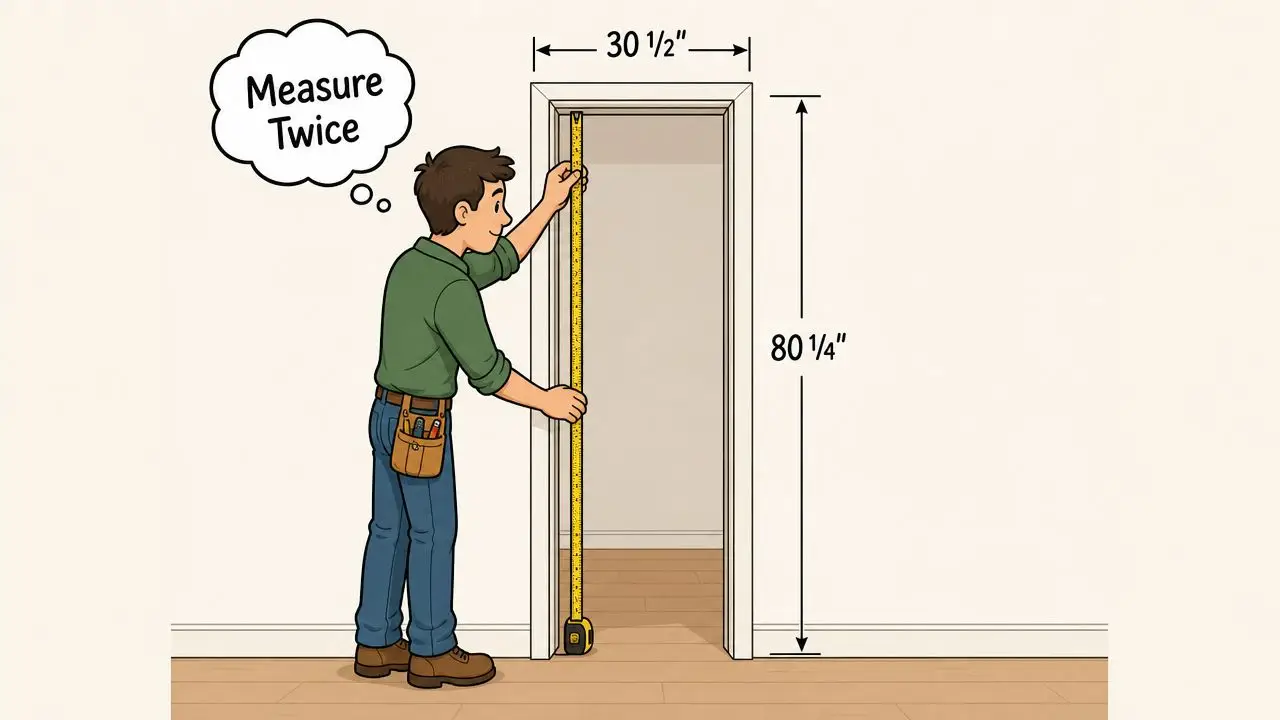
The tape measure does more to prevent delivery-day stress than any sales pitch ever could. Before anyone shops for shape, fabric, or color, the home needs a path map.
Start with the whole path
Measuring only the front door is a start, but it's not enough. The furniture has to travel from outside to the exact room where it will live.
Use a tape measure and check each point along the route:
- Front entry width: Measure the narrowest clear opening, not the trim outside the frame.
- Door height: Height matters when a piece needs to tilt upright.
- Hallway width: A long sofa may fit through a door and still get stuck in the hall.
- Corners and turns: Measure the space available to swing or pivot the piece.
- Stair openings: Look at wall clearance, railings, and ceiling slope.
- Room entry points: Interior doors can be tighter than the main entrance.
A detailed walkthrough helps homeowners avoid the most common mistake. They focus on one opening and miss the pinch point farther inside.
What to write down before shopping
A few notes on a phone can work, but a simple list works better when comparing dimensions in a store or online. Helpful measurements include:
- Opening width with the door fully open
- Opening height from floor to frame
- Depth of nearby hall space
- Distance from the doorway to the next wall
- Any obstacle that can't move, such as railings or built-in trim
Practical rule: Measure the path first, then measure the furniture, then measure the packaging if it ships boxed.
That last part trips people up all the time. For a more complete checklist, homeowners can use this furniture measuring guide to organize room and access measurements before buying.
A good measurement routine feels small, but it changes everything. It turns furniture shopping from guesswork into a clear yes, no, or maybe.
Mastering the Art of the Pivot and Angle
A sofa can be wider than a doorway and still make it through. That sounds backward until the angle comes into play.
Why the diagonal matters
Think about sliding a large book through a narrow slot. If the book goes straight in, it jams. Turn it, tilt it, and suddenly there's room. Furniture works the same way.
The useful measurement here is the diagonal of the doorway space. A simple way to think about it comes from the formula A² + B² = C². In plain language, the width and height of the opening create a longer diagonal line, and that diagonal may give enough room for part of the furniture to pass through when tilted.
Homeowners don't need to become mathematicians. They just need to know that a doorway is more generous on the diagonal than it is straight across.
A smart test looks like this:
- Measure the clear width of the doorway.
- Measure the clear height.
- Compare those against the furniture's height, depth, and diagonal profile.
- Consider how the piece behaves when tipped on its end or side.
A piece that looks impossible at a flat angle may move through smoothly when lifted and rotated with control.
Check the turning space
The doorway is only half the problem. The other half is the pivot zone, the open space needed to rotate the piece before or after it passes through.
A narrow hall can ruin an otherwise good plan. A sofa might clear the frame but fail the turn because the far wall blocks the angle needed to rotate it into place.
Use this quick comparison:
| Area to check | What matters most |
|---|---|
| Door opening | Clear width and height |
| Just inside the door | Room to stand the piece up |
| Hallway bend | Space to rotate one end first |
| Final room entrance | Enough room to lower and align the piece |
For families trying to picture all of this before purchase, room layout planning tips can help connect measurements with the actual movement path.
The pivot is where many near-success stories fail. When homeowners account for both the opening and the turn, they shop with much more confidence.
Prepping Your Home for a Smooth Delivery
The easiest delivery is the one that has already been prepared for. A little work ahead of time can create the extra breathing room that makes the difference.
Simple prep that creates breathing room
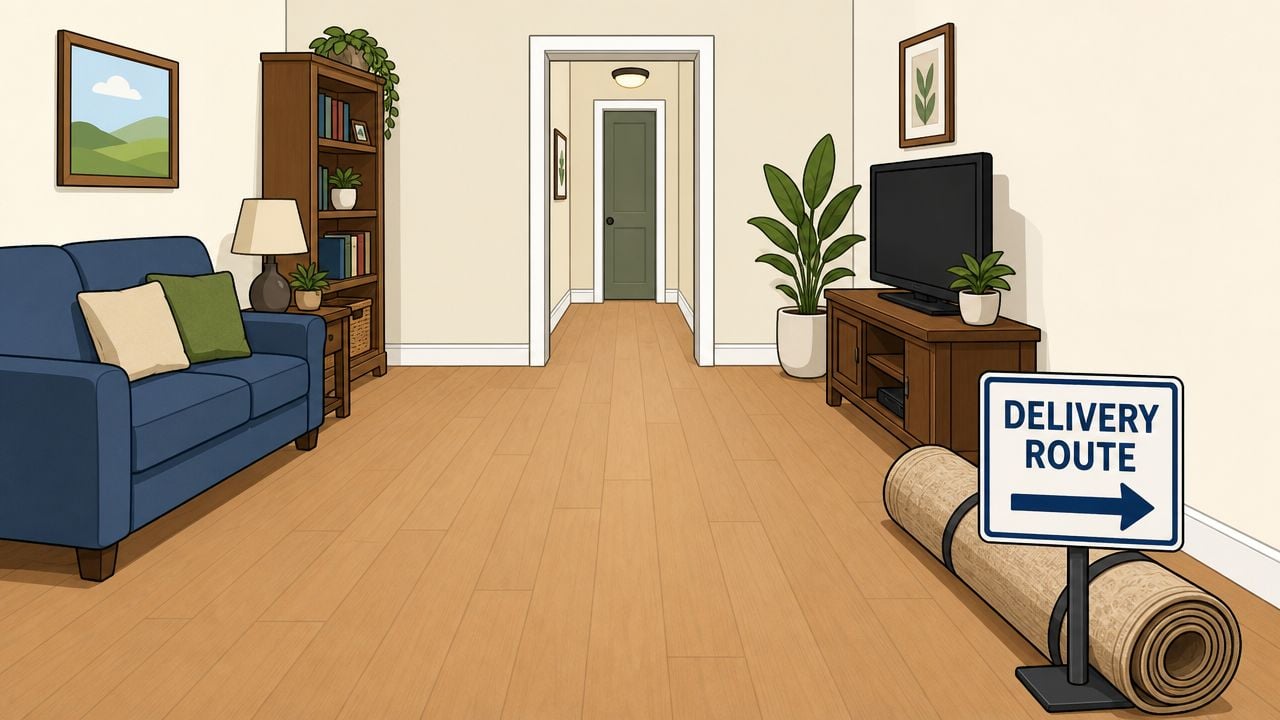
A tight fit often becomes manageable when homeowners remove small obstacles. The furniture hasn't changed, but the path has.
Useful steps before delivery include:
- Take the door off the hinges: This can create a bit more usable width by removing the door slab from the swing path.
- Open every door fully: Don't leave half-open doors stealing maneuvering space.
- Move rugs and runners: Slipping hazards make a hard carry even harder.
- Clear side tables, lamps, baskets, and plants: Narrow paths feel even narrower when clutter crowds the edges.
- Set pets and children in another room: A carry path needs full attention and clean footing.
Some households also remove the doorstop trim if it's easy to replace and if extra clearance is needed. Small details like that can matter in older homes.
Protect the house and the furniture
Prep isn't only about fit. It's also about preventing dents, snags, and scraped paint.
Try these precautions:
- Wrap vulnerable corners: Furniture edges catch first.
- Pad nearby walls if the turn is tight: A blanket can save a wall and the furniture finish.
- Bag loose hardware: If legs or cushions come off, keep every part together.
- Check the weather path: Wet porches, muddy entries, and slick steps make handling harder.
For homeowners managing a larger move at the same time, expert relocation strategies can help organize the bigger picture around delivery day.
Anyone wondering what a more hands-on delivery experience involves can review white glove delivery details to understand the level of prep and setup that may make the process easier.
Good delivery prep doesn't feel dramatic. It feels calm. That's the point.
Smart Furniture Choices for Challenging Spaces
Sometimes the best solution isn't better lifting. It's better buying. Furniture for narrow doorways works best when the piece is chosen with the entry path in mind from the start.
What to look for before buying
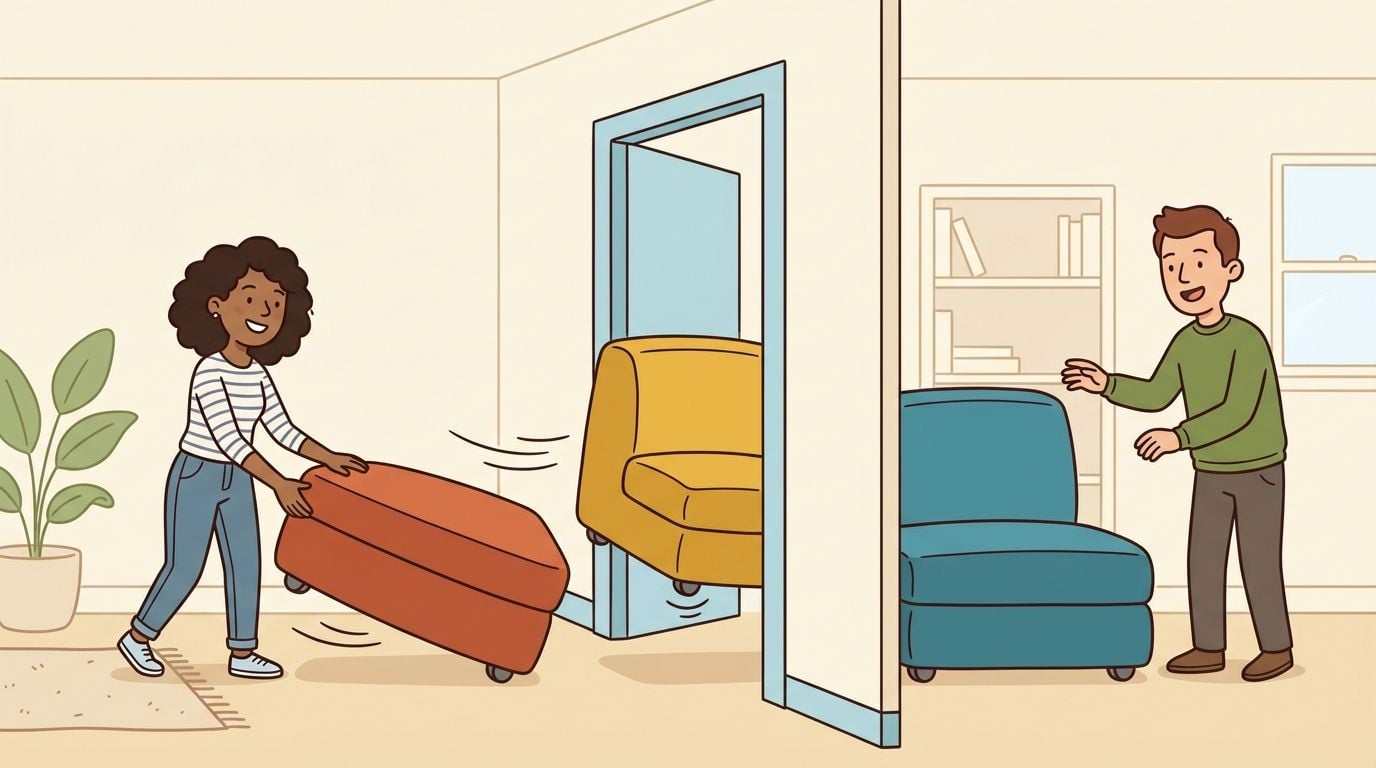
The most helpful features are often the least flashy. They don't change the style much, but they change the delivery outcome a lot.
Shoppers should look for pieces with:
- Removable legs
- Detachable backs or arms
- Modular construction
- Sectional designs that split into smaller units
- Boxed or flat-packed delivery formats
- Clear packaging dimensions listed before purchase
That last item deserves special attention. For apartments with narrow doorways, typically 28 to 32 inches wide, modular sofas are a gold-standard, with success rates exceeding 90% when packaging dimensions are verified against door measurements prior to purchase. The key phrase there is packaging dimensions. Many people check the sofa size and forget that the box may be the primary obstacle.
Styles that solve the problem from the start
Smart design meets practical living. Many attractive pieces are built to enter homes in parts, then come together neatly inside the room.
Consider these categories:
- Modular sofas: Good for apartments, older homes, and upstairs rooms. Individual sections are easier to carry and turn.
- Recliners with removable backs: A helpful option when comfort matters but access is tight.
- Apartment-scale sofas: Shorter lengths and slimmer profiles make them easier to angle.
- Storage ottomans and compact accent seating: These add function without adding delivery headaches.
- Beds and dining pieces designed for assembly in-room: Better for tight stairways and upper floors.
A smart room also needs balance. A smaller sofa may pair beautifully with the right chair, ottoman, or console rather than forcing one oversized piece to do everything. Homeowners exploring broader interior design principles for your home can use those ideas to build a room that feels complete without overcrowding the access path or the floor plan.
For anyone furnishing a compact room, space-saving furniture ideas can help narrow the search toward pieces that fit both the room and the route into it.
This approach also gives value-minded shoppers an edge. A piece that fits properly on day one is less likely to bring extra delivery stress, return trouble, or replacement costs later.
When to Let Our Family Help Yours
Some furniture challenges stop being a DIY puzzle and start becoming a risk. A heavy sleeper sofa, a narrow stair turn, or a piece that must be lifted upright in a cramped landing can push past what two people should reasonably attempt.
When DIY stops being smart
A few situations usually call for experienced help:
- Tight staircases with low overhead clearance
- Long, heavy pieces with awkward weight distribution
- Multiple turns between the entry and final room
- Delicate finishes or freshly painted walls
- Homes where doors, trim, or railings may need special care
There's no pride in forcing a move that damages the house or injures somebody. The smartest move is often the one that protects both people and property.
Professional planning also helps shoppers who feel overwhelmed before they buy. An expert can look at the room, consider traffic flow, and choose pieces that fit the home without crowding it. For more complex spaces, expert design staff, including Debra Williams, can help create a room plan that feels comfortable, functional, and realistic.
Why local help changes the whole experience
A local store still matters. Families in Galax, Independence, Hillsville, and the wider Southwestern Virginia and Northern North Carolina region often want more than a box at the curb. They want real guidance, a no-pressure atmosphere, and somebody who understands that every home has its own quirks.
That support is especially helpful for traditional shoppers who value long-term comfort, remodelers trying to visualize a finished room, and value seekers who don't want mistakes to get expensive. Local expertise also helps when timing matters. A large in-stock selection can mean immediate delivery instead of a long wait for an online-only guess.
When price enters the conversation, transparent policies matter too. A low price promise, local competitor matching, and a 30-day price guarantee help shoppers feel steadier about a major purchase. Trusted brands such as La-Z-Boy, Ashley, Bassett, Sealy, and Therapedic also give families a wider range of comfort and style choices without losing the benefit of local guidance.
One service detail matters a great deal here. Guynn Furniture & Mattress provides free in-home delivery and setup within a 60-mile radius of its stores in Galax, Independence, and Hillsville, Virginia, serving Southwestern Virginia and Northern North Carolina (delivery policy). For households facing narrow entries, that kind of support can remove a lot of the stress from the process.
Homeowners who already have a concern about an order, delivery, or setup can use the service request page to get help with the next step.
The best narrow-doorway plan is simple. Measure carefully. Choose flexible furniture. Prep the home. Ask for help before a hard job becomes a bad one.
Visit Guynn Furniture & Mattress to make the process easier from the start. Families across Galax, Independence, Hillsville, Southwestern Virginia, and Northern North Carolina can count on a no-pressure atmosphere, helpful guidance, and trusted comfort backed by a legacy that goes back to 1902. Free in-home delivery and setup within 60 miles, a large in-stock selection for immediate delivery, top brands including La-Z-Boy, Ashley, Bassett, Sealy, and Therapedic, and a low price promise with local competitor matching and a 30-day price guarantee all help take the guesswork out of shopping. Visit our showrooms in Galax, Independence, or Hillsville to test the comfort for yourself. Schedule a consultation with our design team to start planning your dream room today. Browse our selection online at guynnfurniture.net.