Innerspring Mattress Guide for Better Sleep


Mattress shopping can leave even careful shoppers staring at labels that seem to speak another language. Coil counts, gauges, comfort layers, firmness ratings, and motion isolation all matter, but none of those terms helps much when a sleeper wakes up hot, sore, or stuck in the same position all night.
An innerspring mattress remains a practical answer for many homes because it offers responsive support, open airflow, and a familiar lifted feel. The right choice isn't necessarily the bed with the most coils. It's the mattress whose coil type, wire thickness, comfort layers, and edge construction fit the sleeper's body and daily routine.
Why the Classic Innerspring Mattress Still Reigns Supreme
A sleeper who feels trapped in a slow-moving foam bed may notice the difference immediately after trying a coil-based mattress. Instead of sinking in and needing effort to turn over, the sleeper rests more on top of the surface. The springs push back as the body moves, which can make changing positions and getting out of bed feel more natural.
Hot sleepers often appreciate the open structure, too. Spaces around the coils allow air to move through the support core, while dense solid foam can feel less ventilated. That doesn't mean every innerspring mattress feels cool to every person, since the padding and cover still influence comfort, but coil construction gives the bed a useful airflow advantage.
A design with staying power
The commercial story of the innerspring mattress reaches back to the 19th century. A commonly cited milestone came in 1871, when German inventor Heinrich Westphal created an innerspring mattress with interconnected steel coils. Steel coil springs had already been patented for chair support in 1857, so mattress makers were building on earlier spring technology rather than starting from nothing. These historical details are documented in the New York Times account of innerspring bedding.
The design didn't become a household standard overnight. Historical accounts indicate that broad popularity took roughly 60 years, with mass production accelerating after World War I and especially during the 1920s. One report describes production growing from 16,000 units in 1920 to about 8,000,000 mattresses per year later on, a vivid example of how a specialized invention became an everyday product.
That history matters because traditional doesn't mean irrelevant. Recent industry estimates place innerspring mattresses at 45% of the U.S. mattress market in 2023, according to market data on innerspring mattress share. The same source reports 48 million innerspring units out of 145 million total worldwide mattress shipments in 2024, or about 33% by volume, along with an average coil count increase from 720 to 840 coils per unit.
Familiar comfort without outdated thinking
The modern shopper has more choices than earlier generations did. A traditional interconnected coil bed can still provide a firm, buoyant feel, while individually wrapped coils can add more independent movement and pressure response. Comfort layers can also include cooling foams or breathable fibers, creating a more updated surface without losing the airflow and responsiveness of the spring core.
The useful question isn't whether innerspring mattresses are old-fashioned. It's whether a particular construction gives a sleeper enough support, comfort, and temperature control for real life.
Understanding the Anatomy of a Coil Bed
An innerspring mattress has two main jobs. The coil support core acts like the engine, carrying body weight and providing lift. The comfort system acts like the padding on a well-made chair, softening contact points so the sleeper doesn't feel the steel directly.
The support core and comfort layers work together, but they shouldn't be confused. A mattress can have a durable coil unit with a surface that feels too thin, or plush padding that feels comfortable at first but doesn't provide the support a sleeper needs.
Start with the steel, not the sales headline
Coil count describes how many springs are inside the mattress, but it doesn't tell the whole story. Coil shape, steel quality, connection method, wire thickness, perimeter reinforcement, and upholstery all affect the final feel.
Coil gauge is especially important. The gauge range commonly used in innerspring mattresses is 12.5 to 17, with 12.5 as the thickest wire and 17 as the thinnest, according to the Sleep Foundation's innerspring mattress guidance. Lower-gauge wire generally feels stiffer and is typically more durable, while higher-gauge wire tends to feel softer and may fatigue sooner under repeated loading.
A shopper comparing two beds can use this simple framework:
- Thicker wire: Often creates a firmer, more supportive feel and can suit heavier sleepers.
- Thinner wire: Usually provides more compliance and a softer response, though the construction may be more vulnerable to long-term fatigue.
- Reinforced perimeter: Helps the edges feel steadier for sitting, sleeping, or getting dressed.
- Comfort layers: Determine how much cushioning the shoulders, hips, and other pressure points receive.
Practical rule: A larger coil count doesn't automatically make a mattress better. The coil system has to match the sleeper, and the comfort layers have to remain comfortable over time.
A homecare mattress may use a different set of priorities, such as ease of care and compatibility with a specific bed system. For readers researching that category, the homecare bed mattress from DME Superstore offers a useful example of how mattress construction can vary by application.
For a broader comparison of traditional coil construction and newer layered designs, shoppers can also review Guynn's innerspring versus hybrid mattress guide. The central lesson stays simple: the number printed on a product label is only one part of the build.
Comparing the Four Main Coil Types
Coil types can sound technical until they're connected to ordinary sleep experiences. Some designs create a unified, bouncy surface. Others allow each spring to react more independently. Couples, side sleepers, seniors, and families may value different results.
| Coil Type | Shape & Design | Best For | Motion Isolation |
|---|---|---|---|
| Bonnell | Hourglass-shaped coils connected by wire helicals | Shoppers who prefer classic firmness and straightforward construction | Limited |
| Offset | Hourglass-style coils with offset connections that flex at the hinge points | Sleepers seeking traditional support with a more responsive contour | Moderate |
| Continuous | Rows formed from a single length of wire | Shoppers who value consistent support and a stable surface | Limited |
| Pocketed | Individual fabric-wrapped coils that move independently | Couples, pressure-sensitive sleepers, and shoppers seeking targeted support | Better than connected systems |
Bonnell coils keep the classic feel
Bonnell coils are the oldest classic innerspring style in common use. They have an hourglass shape and connect through wire helicals, creating a coordinated support grid. References trace the design to 19th-century carriage or buggy-seat springs, as described in the historical mattress overview on Wikipedia.
In real life, Bonnell construction usually feels springy and uniform. When one sleeper moves, the connected structure can pass more of that movement across the bed. That may not bother a solo sleeper, a guest-room shopper, or anyone who enjoys a noticeable bounce, but it can be less comfortable for couples with different schedules.
Offset coils add a hinged response
Offset coils resemble Bonnell coils but use connections that allow the springs to flex more at designated points. That hinged action can help the surface respond to the body without abandoning the familiar stability of an interconnected unit.
The feel depends on the full mattress build. A well-padded offset design may feel more accommodating than a basic traditional coil bed, while a firmer version can still suit back or stomach sleepers who prefer to remain lifted.
Continuous coils focus on unified support
Continuous coils form rows from a single wire rather than relying on many separate coil units. This approach creates a stable, consistent base and can feel firm beneath the body. Since much of the structure works together, motion may travel more readily than it does through individually wrapped coils.
A continuous system can make sense for shoppers who value steadiness over contouring. It's also a reminder that a mattress needs to be evaluated as a complete product, not by one construction term alone.
Pocketed coils move independently
Pocketed coils, also called wrapped or encased coils, place each spring inside its own fabric pocket. The coils can compress and recover independently instead of moving as one connected grid. Guidance on pocketed coils compared with Bonnell coils commonly highlights improved motion isolation and pressure relief from this independent movement.
That design can be especially helpful when one partner turns, rises, or settles into bed while the other remains asleep. It may also give shoulders and hips more targeted support. Pocketed coils don't guarantee perfect comfort, though. Wire gauge, coil layout, upholstery, and edge support still determine whether the mattress feels right.
For shoppers comparing foam and spring sensations, Guynn's memory foam versus innerspring guide can help clarify the difference between sleeping on a responsive surface and sinking more deeply into a contouring one.
Real-World Pros and Cons for Everyday Sleepers
An innerspring mattress earns its place in a bedroom through practical details that shoppers notice at night and during the day. Airflow, movement, edge strength, and surface comfort all matter more than a technical label by itself.
Where coil beds work especially well
The open space around a coil core encourages ventilation. A sleeper who regularly wakes up warm may prefer that breathable structure, particularly when the comfort system uses materials that don't hold excessive heat.
Edge support also deserves more attention. Reinforced perimeter coils can help the sides feel stable when a sleeper sits down to put on shoes, rises in the morning, or uses the full width of the mattress. This can be valuable for seniors, people with mobility concerns, and anyone who dislikes the sensation of rolling toward a soft edge. Sleepopolis' innerspring mattress guidance also identifies airflow and reinforced edge support as recurring strengths of coil-based construction.
A responsive surface offers another practical benefit. Sleepers who change positions often generally don't have to work against a deep, slow-moving cradle. The bed responds quickly, which can make ordinary movements feel less restricted.
Where the compromises appear
Connected coils can transfer movement. A sleeper who tosses and turns may disturb a partner more on a basic interconnected design than on a pocketed system. Couples should test this directly rather than assuming that every innerspring mattress behaves the same way.
Surface durability can also differ from core durability. Thinner comfort layers may soften, compress, or lose their original feel before the steel support system stops working well. That's why shoppers should press across the center and edges, inspect the materials, and ask how the bed is built instead of judging only by its initial showroom impression.
An innerspring mattress isn't automatically the right answer for every pressure-sensitive sleeper. Side sleepers may need more cushioning around the shoulders and hips, while some sleepers prefer a closer contour than a traditional coil surface provides. A design that combines coils with modern cooling foam or breathable natural fibers can offer more cushioning while preserving much of the spring core's airflow.
Sleep comfort also connects with other nightly concerns. Readers exploring how bed support and sleep posture may relate to snoring can consult Guynn's guide to choosing a mattress for snoring concerns. The mattress won't replace medical guidance, but a comfortable, supportive sleep surface can be part of a more thoughtful bedroom setup.
Matching Firmness and Support to Your Sleep Style
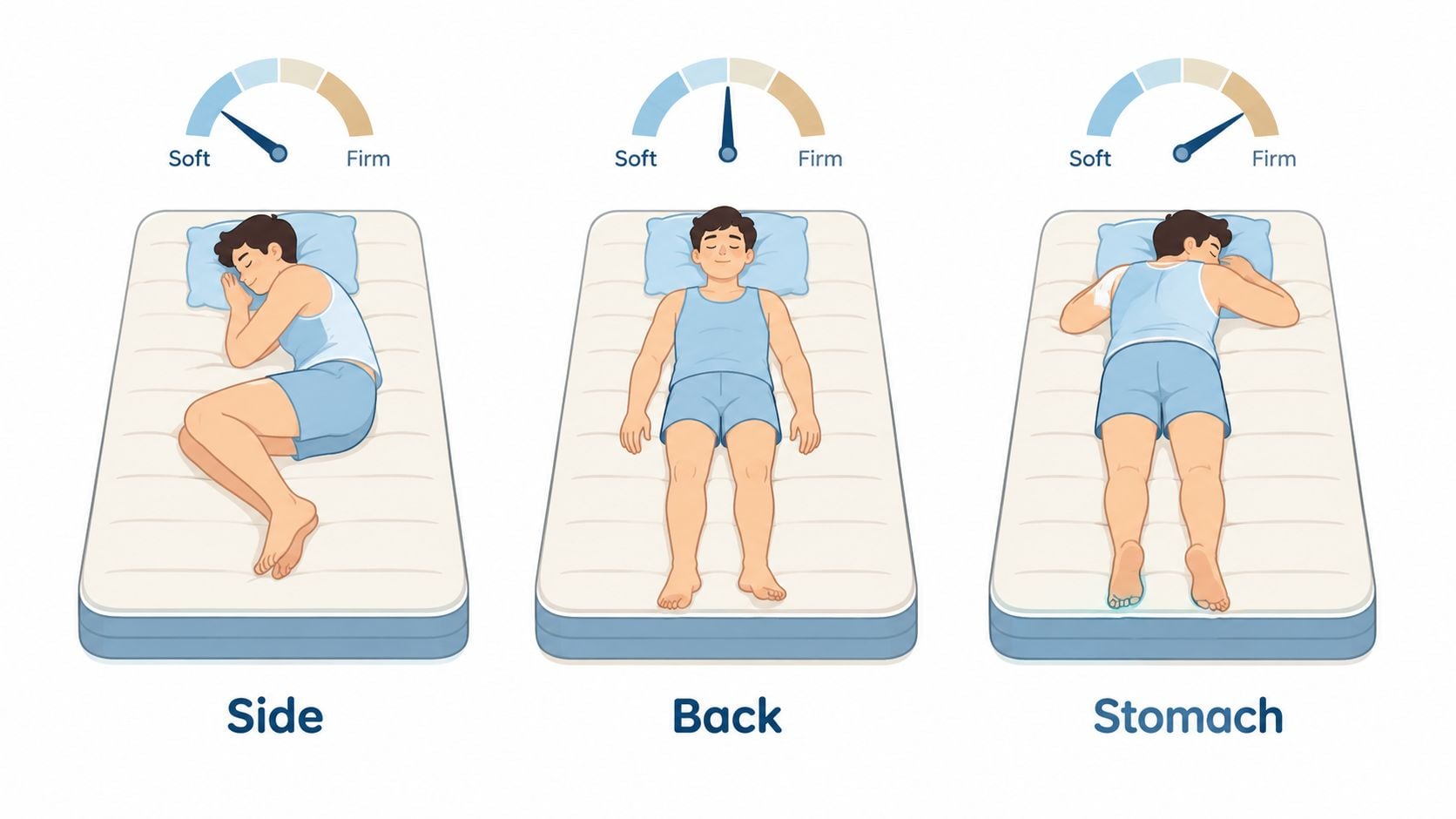
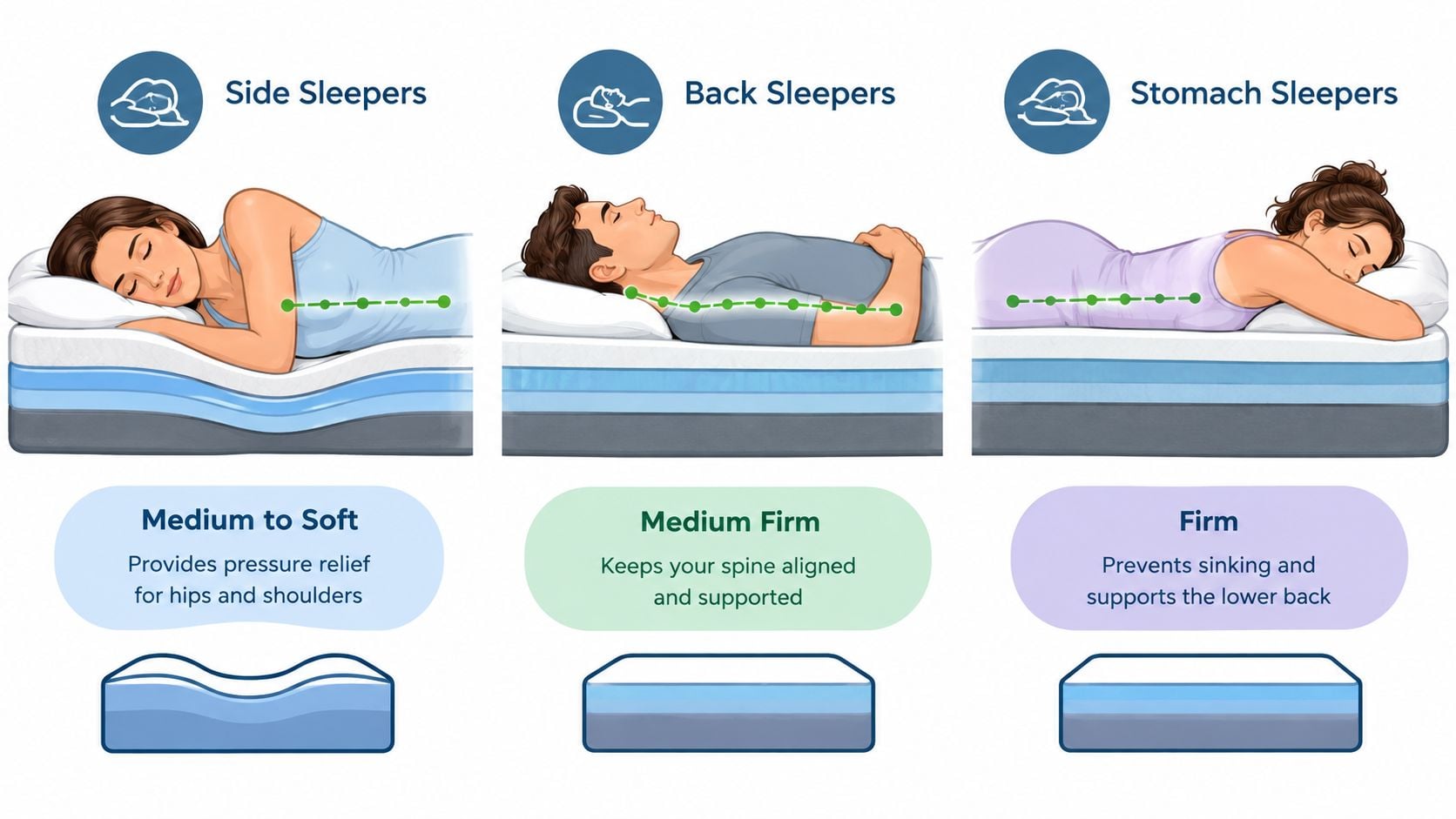
Firmness should follow the sleeper's position, body shape, and comfort preferences rather than a generic label. A mattress marked “firm” can feel different from one manufacturer to another, so the most reliable evaluation combines the written specifications with time spent lying on the actual bed.
Side sleepers need room at the shoulders and hips
Side sleeping places more concentrated pressure on the shoulder and hip areas. A comfort layer with enough give can let those areas settle slightly while the coil system supports the body underneath. If the surface is too hard, the shoulder may feel compressed. If it's too soft, the body may sink unevenly.
Side sleepers shouldn't choose the softest mattress automatically. The support core still needs to prevent excessive sagging, and the edge should feel stable if the sleeper uses the outer portion of the bed.
Back and stomach sleepers need steady lift
Back sleepers often prefer a surface that supports the lower back without allowing the hips to drop too far. Stomach sleepers generally need especially reliable support beneath the midsection so the body stays aligned rather than dipping into the mattress.
Lower-gauge coils, such as construction in the 13 to 14 gauge range, are generally better suited to heavier sleepers or those who want firmer support, while 15 to 17 gauge coils tend to feel more compliant, according to the Sleep Foundation's explanation of coil gauge. The gauge is only part of the decision, since upholstery and coil layout change the final sensation.
Lifestyle matters as much as sleep position
A family mattress has to handle more than quiet nighttime rest. Children may climb across it, pets may settle near the edge, and adults may sit on the side while getting ready. Strong perimeter construction and a sturdy coil system can make those everyday demands easier to manage.
A showroom test can follow this short routine:
- Lie in the primary sleep position. The shoulders, hips, and lower back should feel supported without a sharp pressure point.
- Change positions naturally. The body shouldn't feel trapped or forced to push through a deep impression.
- Sit on the edge. A stable edge should feel dependable rather than sloped or unstable.
- Test movement with a partner. Couples should take turns turning and sitting up to judge how much motion travels.
- Stay long enough to notice discomfort. A quick hand press can't reveal how the bed supports a full body.
A detailed mattress firmness guide from Guynn can help shoppers organize those observations before visiting a showroom.
The Guynn Furniture Difference for Local Shoppers
Online research helps shoppers understand coil construction, but a mattress still has to feel right under a real body. A local showroom gives sleepers the chance to compare firmness, edge support, surface cushioning, and movement response without relying only on product descriptions.
Guynn Furniture & Mattress carries trusted sleep brands including Sealy and Therapedic, alongside a broader home-furnishing selection that includes La-Z-Boy, for which the store is a Showcase dealer, as well as Ashley and Bassett. The company has served its community since 1902, giving traditionalists and first-time homeowners a long-standing local place to discuss bedroom comfort.
A practical visit can answer questions quickly
A shopper who can't decide between interconnected and pocketed coils can lie on both styles and compare the difference. A couple can test motion isolation together. A senior can check whether the edge provides enough support for sitting and standing. Those simple tests often reveal more than another hour of reading mattress descriptions.
The store also maintains a large in-stock selection for immediate delivery. That matters to households replacing a worn bed, furnishing a new home, or preparing a guest room on a schedule, especially when an online-only order would require waiting for shipment.
Service continues beyond the mattress
Bedroom planning can involve more than choosing the sleep surface. Debra Williams and the expert design staff can help shoppers coordinate a mattress purchase with bedroom furniture, colors, layouts, and the rest of the home. Design support can be useful when a new bed needs to fit an existing room or when a remodel calls for a complete, coordinated arrangement.
The local service area includes Galax, Independence, Hillsville, and the wider Southwestern Virginia and Northern North Carolina region. Shoppers within the service range can receive free in-home delivery and setup within 60 miles, helping the new mattress arrive and get arranged without the heavy lifting.
Price-conscious households also have a clear policy to consider. Guynn's Low Price Promise matches local competitors, with a 30-day price guarantee that supports shoppers who want value without sacrificing a local buying experience. Financing options may also be available for qualified customers, so households can ask about current terms directly rather than assume every purchase must be paid for at once.
A useful local shopping experience gives sleepers three things online listings can't provide alone: a physical test, a knowledgeable conversation, and help getting the purchase into the home.
Your Next Steps to a Perfect Night of Rest
The strongest mattress decision usually begins with a short list of personal priorities. A shopper who sleeps hot may put airflow first. A couple may care most about motion isolation. A senior may focus on edge support, while a side sleeper may need more cushioning at the shoulder and hip.
The coil count can provide context, but it shouldn't lead the decision. Coil type, gauge, perimeter reinforcement, and comfort layers give a more useful picture of how an innerspring mattress will feel and how it may fit a household's routine.
A simple showroom checklist
Before visiting, shoppers can write down:
- Primary sleep position: Side, back, stomach, or a combination.
- Temperature preference: Whether the sleeper often feels warm overnight.
- Movement needs: Whether turning and getting out of bed should feel especially easy.
- Partner concerns: Whether motion transfer has disturbed either sleeper in the past.
- Edge use: Whether sitting on the side is part of the morning routine.
- Room plans: Whether the mattress purchase is part of a larger bedroom refresh.
During the visit, each sleeper should spend enough time on likely candidates to notice pressure, support, and ease of movement. There's no benefit in choosing a bed quickly if the surface feels comfortable for only a moment.
A restful bedroom also depends on habits beyond the mattress. Readers seeking broader, noncommercial ideas for improving sleep can explore this natural sleep guide from VitzAi.com. For shoppers who want a more complete framework for comparing mattress materials and support levels, Guynn's ultimate mattress selection guide offers another planning resource.
A no-pressure atmosphere makes the process easier. Staff can answer questions, point out construction differences, and give shoppers time to compare without turning a personal comfort decision into a race. That approach is especially helpful for families, older adults, first-time homeowners, and anyone who feels overwhelmed by online mattress terminology.
Visit our showrooms in Galax, Independence, or Hillsville to test the comfort for yourself. Schedule a consultation with the design team to start planning a dream room today. Browse the selection online at guynnfurniture.net.
Guynn Furniture & Mattress offers innerspring mattresses from trusted brands, in-stock options for immediate delivery, and knowledgeable help with firmness, coil construction, and bedroom planning. Visit Guynn Furniture & Mattress to compare comfort in person, ask practical questions, and find a mattress that fits the way the household sleeps.