Latex Mattress vs Memory Foam: Which Is Right for Your Home


A couple walks into a mattress showroom after another restless night. One partner wakes with a sore shoulder and wants the deep cushioning of memory foam. The other sleeps hot, changes positions often, and doesn't want to feel trapped in the bed. Both are looking at a latex mattress vs memory foam and wondering whether the more expensive option will feel better at home.
That uncertainty is understandable. Mattress shopping can feel overwhelming and expensive, especially when marketing terms blur the difference between materials. The useful answer isn't that one mattress suits everyone. The right choice depends on how each person sleeps, how much heat the bedroom holds, whether pain relief matters most, and how long the household expects to keep the bed.
Guynn Furniture & Mattress has helped families around Galax, Independence, Hillsville, and the wider Southwestern Virginia and Northern North Carolina region make comfort decisions for generations. With a no-pressure atmosphere, a local showroom makes it possible to test the feel instead of guessing from a screen. The comparison below keeps the decision practical, with special attention to the trade-offs people notice at night and over years of ownership.
Choosing the Right Mattress for Your Home
A mattress has to work for the household, not just win a materials argument. A side sleeper with aching hips may need pressure relief more than bounce. A stomach sleeper may need a surface that resists excessive sinkage. A couple with different schedules may care most about motion isolation, while a warm sleeper may consider temperature the deciding factor.
The first step is separating marketing language from personal experience. “Supportive” can mean firm and buoyant to one shopper, yet gently conforming to another. “Cooling” can describe a cover or a surface treatment, but the underlying material still influences how the bed responds to body heat.
Practical rule: The mattress that feels impressive for two minutes may not be the mattress that feels supportive after a full night.
A helpful showroom conversation starts with four questions:
- Sleep position: Does the sleeper spend most of the night on the side, back, stomach, or move between positions?
- Temperature: Does the sleeper wake warm, sweat, or throw off covers?
- Pain and pressure: Are shoulders, hips, lower back, or joints the main concern?
- Household priorities: Does the bed need strong motion dampening, long service life, or a lower initial cost?
For shoppers who want a broader preparation checklist, Guynn's ultimate guide for choosing a mattress offers another useful starting point. The key is to discuss actual sleep habits rather than choosing based on a material label alone.
A calm way to narrow the field
Latex generally suits people who want an immediate, buoyant response. The sleeper feels more on top of the mattress, with easier repositioning and less of the slow sink associated with viscoelastic foam. Memory foam usually suits people who want close contouring, pressure relief, and a quieter surface when a partner moves.
Neither preference is a design flaw. Some sleepers find latex lively and freeing, while others find its response too bouncy. Some find memory foam comforting, while others dislike the sensation of sinking into one place.
The local advantage
A mattress is part of the bedroom, and the bedroom is part of the home. Guynn's long history, dating to 1902, gives traditionalists a familiar local resource, while expert design staff, including Debra Williams, can help homeowners think through the entire room when a new bed is part of a larger remodel.
The decision should also include delivery, setup, and future flexibility. A large in-stock selection can provide immediate delivery, unlike an online-only purchase that requires more waiting and more guesswork. Financing and a clear local price policy can also make a significant purchase easier to plan without turning the visit into a sales pressure exercise.
How Latex and Memory Foam Are Actually Made
Latex and memory foam can both cushion the body, but their manufacturing methods create very different nighttime trade-offs. Latex is built for quick response and easier movement. Memory foam is designed to soften under heat and pressure, then contour closely around the sleeper. That difference affects pressure relief, sleep temperature, and how much effort it takes to turn over.
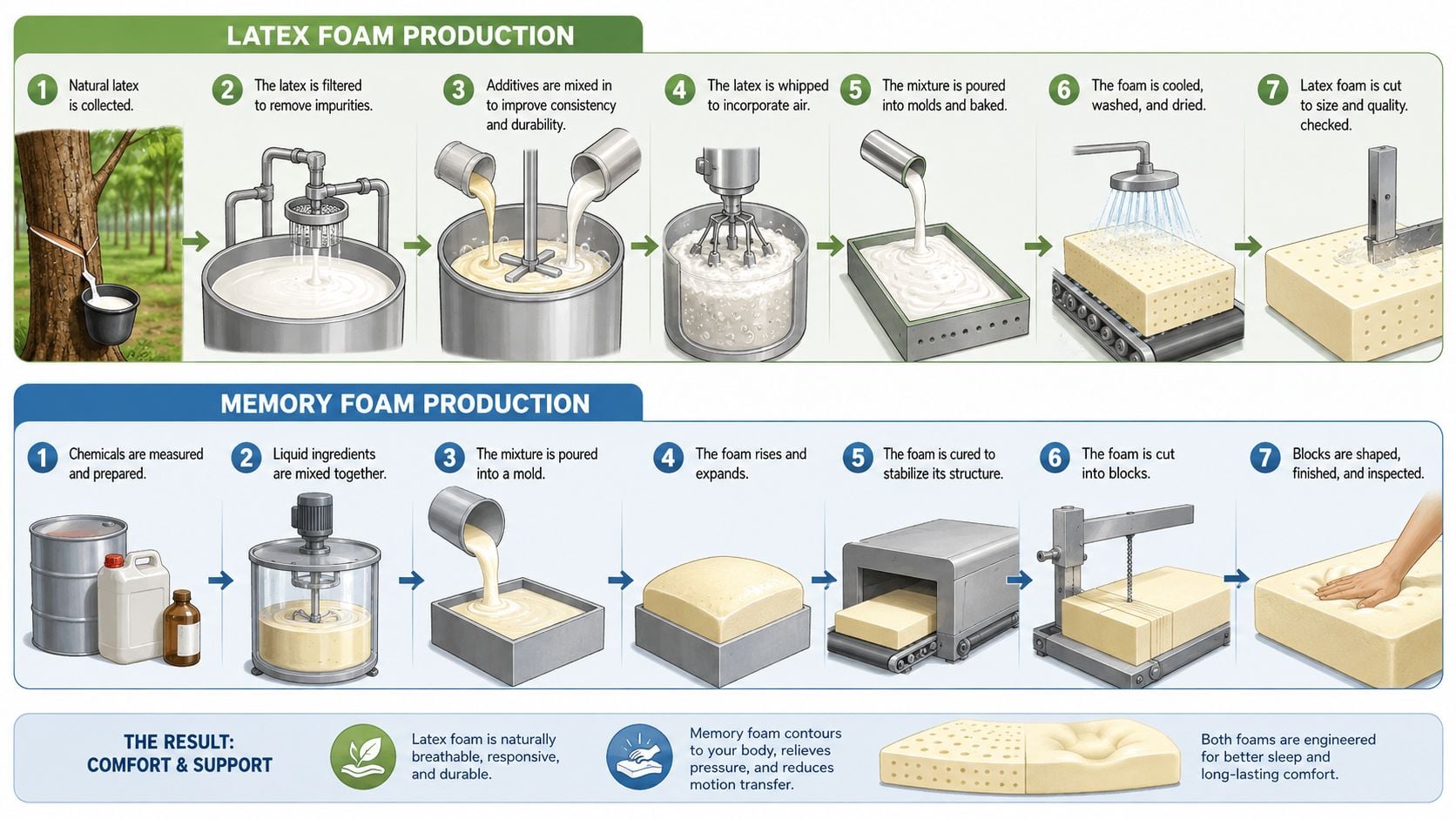
Latex starts with rubber processed into foam. The older Dunlop method was developed in the 1920s, the first latex mattresses appeared in the early 1930s, and Talalay latex followed in the 1940s. Latex therefore represents the older commercial mattress technology by roughly 60 years, as described in this history of the mattress industry.
Dunlop and Talalay in plain language
Dunlop latex is poured into a mold and cured with heat. It is typically denser and more substantial, making it a practical choice for a supportive base or for sleepers who prefer a firmer, steadier surface.
Talalay latex adds vacuum treatment and flash freezing before curing. The result is often more consistent, softer, and buoyant. You do not need to memorize the factory steps, but ask which process produced the latex layer. A dense layer can offer stronger support, while a softer layer may provide a more responsive comfort surface.
Latex may be natural, synthetic, or blended. Those labels describe the ingredients, not the complete mattress. Ask which type is used in the comfort and support layers before assuming every latex model will feel or wear the same way.
Why memory foam hugs the body
Memory foam began as NASA-funded temper foam in 1966. It reached commercial bedding later, with the first consumer memory foam mattress appearing in 1991 and introduction to the United States market following in 1992. Memory foam is the newer mattress material, and its slower recovery remains the feature shoppers notice most.
The foam is polyurethane modified to create a viscoelastic response. Heat and pressure soften it, letting the material contour around the shoulders, hips, and other pressure points. Once the sleeper moves, the foam recovers more slowly than latex.
That construction creates a molded, cradling sensation rather than immediate pushback. It can ease pressure for side sleepers and people with sensitive joints, but the close fit may feel warm or make repositioning harder. Shoppers who want a clearer explanation can read this guide to what a memory foam mattress is.
Construction affects the bedroom experience
The material label is only part of the decision. Covers, support cores, layer thickness, and ventilation all change the final feel. A memory foam mattress with airflow features may sleep differently from a dense traditional design, while a plush latex comfort layer can feel very different from a firm all-latex build.
These details matter when pain relief conflicts with sleeping temperature. Memory foam often gives stronger contouring, while latex usually makes movement and heat management easier. Choose the construction that matches the problem you want to solve, rather than paying for a material name alone.
Sheets can change surface comfort too, especially when a memory foam mattress already feels warm. This guide to cooling sheets for memory foam can help complete the sleep setup.
Comparing Feel, Cooling, Motion, and Durability
A mattress can feel comfortable in the showroom yet create problems at night. One sleeper may value deep cushioning for sore shoulders, while another wakes because the bed holds heat. Latex and memory foam solve those needs differently, so compare the sensations you will notice after several hours, not only the first impression.
| Feature | Latex Mattress | Memory Foam Mattress |
|---|---|---|
| Feel | Responsive, buoyant, easier to move on | Close-contouring, cradling, slower recovery |
| Cooling | Generally cooler and more temperature-stable | More likely to retain warmth |
| Motion isolation | Minimal contouring and less complete dampening | Among the strongest materials for motion isolation |
| Durability | Usually the more resilient long-term material | Can lose support gradually with use |
| Pressure response | Gentle contouring with pushback | Deep contouring around pressure points |
| Allergies and emissions | Certification and material composition should be checked | Foam certification can help shoppers compare emissions |
Feel and repositioning
Latex responds as soon as your weight shifts. It compresses beneath the body, then springs back quickly when you roll over or sit up. That lively response suits combination sleepers, people who dislike a stuck sensation, and anyone who wants getting in and out of bed to feel easy.
Memory foam changes shape more gradually. Its close cradle can cushion the shoulders and hips, which appeals to many side sleepers. The trade-off is slower repositioning. If turning already feels difficult, a conforming foam mattress may make the problem more noticeable.
Cooling and temperature stability
Latex usually gives warm sleepers the better starting point. Its lighter contouring leaves more room for air around the body, while memory foam wraps more closely around heat and pressure. Latex also tends to keep a steadier feel as room conditions change. Memory foam can soften with body warmth and feel firmer in a cooler room.
Those material differences matter more than marketing language. Cover fabric, ventilation, layer thickness, and the support core also affect whether a mattress sleeps warm. For practical bedding and construction advice, see Guynn's guide to finding the best cooling mattress for hot sleepers.
Memory foam's temperature response helps create its enveloping comfort, yet that same closeness can feel stifling to a naturally warm sleeper. Latex usually offers easier heat management, especially for people who dislike feeling surrounded by the mattress.
Motion and couples
Memory foam is the stronger choice when limiting partner movement comes first. Its close contouring absorbs more of the motion created when one person turns, sits up, or gets out of bed. Couples with different schedules should give this feature serious weight.
Latex feels more active and transfers more of the movement associated with its bounce. That does not rule it out for couples. Partners who move often, change positions easily, or prefer a responsive surface may find latex more comfortable. Test the mattress together, because motion comfort depends on how much movement each sleeper creates and notices.
Durability and household use
Latex generally holds its response longer and resists permanent impressions better than memory foam. A well-built latex mattress can make sense for a primary bedroom, a heavier sleeper, or a household where the bed receives daily use. Its resilience helps the surface recover after repeated compression, although construction quality still determines the result.
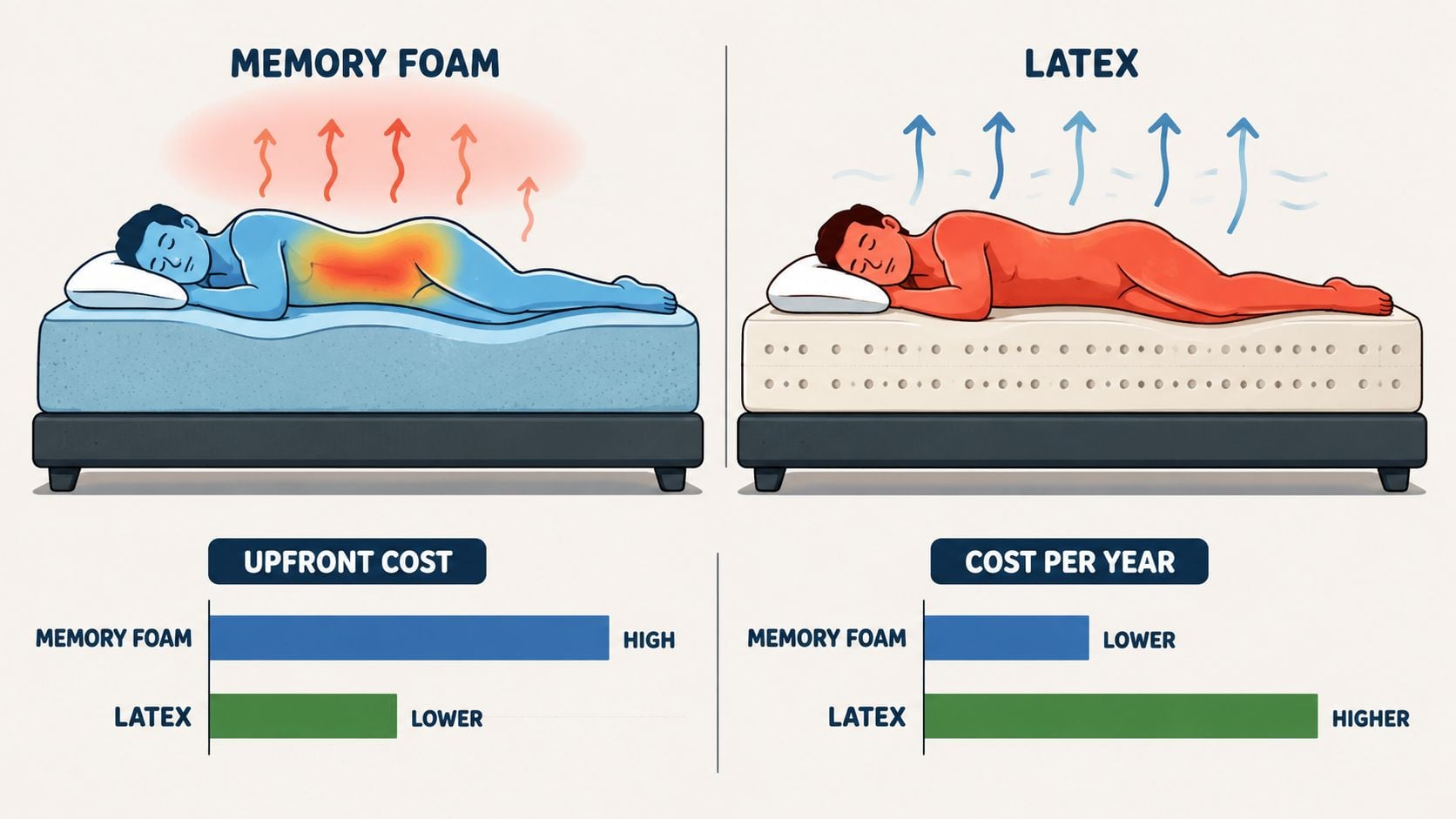
Memory foam can gradually lose support and develop visible sagging as it ages. Density, layer design, foundation quality, and daily use all affect that process. A lower initial price does not automatically make it the better value if the mattress needs replacing sooner. Compare expected service life with the purchase cost to judge long-term cost per year.
Allergies and emissions
Anyone with a known latex allergy should discuss the material before choosing a latex mattress. Every shopper should check the actual composition and certifications rather than relying on broad claims that a product is “clean” or “natural.”
CertiPUR-US applies to polyurethane foam and sets a total VOC emissions threshold under 0.5 ppm. GOLS applies to natural latex and requires at least 95% certified organic latex by weight. Conventional polyurethane and memory foam can release VOCs for at least one year, and some products may continue releasing them for several years. A foam ratings and emissions guide explains why certification and material details deserve a place on the shopping checklist.
Pain Relief, Sleep Temperature, and Long-Term Value
A sleeper who wakes with sore hips may need deeper cushioning. A sleeper who wakes hot may need a more breathable surface. That nightly trade-off drives the latex mattress vs memory foam choice more than bounce or showroom feel.
Memory foam usually gives stronger contouring around the shoulders and hips, which can ease pressure for side sleepers. Latex keeps the body closer to the surface, supports easier movement, and generally feels cooler. Choose the material that solves your actual sleep problem, not the one that feels impressive for a few minutes.
Neither material treats a medical condition. Mattress comfort can affect sleep, but persistent discomfort deserves professional attention. People dealing with the relationship between chronic pain and insomnia may need more than a mattress change, especially when pain continues after replacing the bed.
Pain relief depends on the sleeper's shape
Memory foam's close contouring can reduce pressure around sensitive areas. It suits side sleepers whose shoulders and hips feel compressed on a firmer surface, particularly when they prefer a slow, cushioned response.
Latex offers a different kind of relief. It conforms to the body without letting the sleeper sink as much, so it suits people who want support while changing positions easily. Shoppers focused on back comfort can also review Guynn's guide to helping back pain with the right mattress.
Use the bed as a test of alignment. If the hips sink too far, the lower back can feel strained in the morning. If the shoulders and hips do not settle enough, side sleeping can create pressure. The right firmness supports the sleeper's shape without twisting the body or forcing it into a rigid position.
Cooling can matter as much as cushioning
Memory foam's close hug can feel comfortable at bedtime, yet that same close contact may hold more body heat. Latex usually gives sleepers a cooler, more stable surface. Hot sleepers should favor latex unless pressure relief from memory foam clearly outweighs the risk of overheating.
A mattress that reduces pain but repeatedly interrupts sleep with heat is not a successful choice. Likewise, a cooler mattress that leaves the shoulders and hips aching has missed the main need. Judge both comfort and temperature after lying in each position you use overnight.
Ownership value is more than the sticker price
Current guidance commonly describes latex as costing about twice as much upfront as memory foam while lasting longer. The practical question is whether the household values a longer service life enough to justify the initial purchase.
Latex can make financial sense in a primary bedroom used every night for many years. Its higher starting cost is easier to defend when support retention and replacement timing matter. Memory foam can suit a guest room, a tighter initial budget, or a buyer who expects to move or replace the mattress before a long ownership cycle ends.
Ownership question: Is the household buying the lowest initial cost, or the fewest mattress replacements over time?
Check warranty terms, construction, bedroom use, and personal comfort before deciding. Latex's potential longevity does not help if its buoyant feel bothers you. Memory foam's lower entry cost does not help if heat or discomfort leads to an early replacement.
Who Should Choose Latex and Who Should Choose Memory Foam
The best recommendation becomes clearer when the sleeper type is stated plainly. Latex is the better starting point for hot sleepers, combination sleepers, stomach sleepers, and people who want a responsive surface that should retain support over a long ownership period.
Memory foam deserves the lead for side sleepers who prioritize deep cushioning, couples who need the strongest motion isolation, and shoppers who prefer a slow, enveloping feel. It can also be the more approachable choice when the initial budget matters more than extended durability.
Latex makes sense for these sleepers
- Warm sleepers: Latex is generally the cooler, more temperature-stable choice.
- Combination sleepers: Fast recovery makes turning and repositioning easier.
- Stomach sleepers: Responsive support can help prevent excessive hip sinkage.
- Long-term buyers: Resilient latex is better suited to shoppers planning to keep a primary mattress for many years.
- People who sleep on top of the bed: The buoyant feel avoids the deeper cradle of memory foam.
A latex mattress isn't automatically right for every person with back pain. Firmness, body shape, and sleep position still matter, and the surface should feel supportive rather than rigid.
Memory foam makes sense for these sleepers
- Side sleepers with pressure concerns: Close contouring can cushion shoulders and hips.
- Couples with restless partners: Stronger motion isolation can reduce nighttime disturbance.
- Cradle-seeking sleepers: Memory foam offers the deeper hug that some people find relaxing.
- Budget-conscious shoppers: Memory foam generally has the lower initial purchase cost.
Known latex allergies require special care. A shopper with that history should disclose it before testing products and consider alternatives recommended by a qualified professional.
How to test without rushing
A showroom test should resemble sleep, not a quick sit. A shopper should bring the pillow normally used at home and spend at least 10-15 minutes in the usual sleep position before making a judgment. That specific testing period is practical guidance for evaluating pressure, support, and the effort required to move.
The test should include more than one position if the sleeper changes positions at night. Partners should lie down together and take turns moving, because motion isolation feels different when both people are on the mattress.
A useful checklist includes:
- Settle into the usual position. Notice whether the shoulder, hip, and lower back feel supported.
- Change positions naturally. Ask whether movement feels easy or delayed.
- Test the edge. Sit and lie near the perimeter to assess confidence getting in and out.
- Let both partners move. One person should turn while the other pays attention to disturbance.
- Think beyond tonight. A bed should suit the household's likely needs for the next 7-10 years, not only the first impression.
Testing Mattresses Locally and Bringing One Home
Shoppers in Galax, Independence, Hillsville, and the wider Southwestern Virginia and Northern North Carolina region have a practical reason to test mattresses locally. A showroom lets couples compare pressure relief, temperature feel, movement, and edge confidence without relying entirely on descriptions.
Guynn Furniture & Mattress carries trusted sleep brands such as Sealy and Therapedic, along with mattress options relevant to different comfort preferences. The store also carries La-Z-Boy as a Showcase dealer, plus Ashley and Bassett for broader bedroom furnishing needs.
A local purchase can simplify the transition from showroom to bedroom:
- In-home setup: Free in-home delivery and setup within 60 miles.
- Price protection: A Low Price Promise that matches local competitors and includes a 30-day price guarantee.
- Payment flexibility: Financing options can help qualified shoppers manage the purchase.
- Immediate availability: A large in-stock selection supports immediate delivery instead of the waiting period associated with many online-only purchases.
For shoppers searching for local mattress stores near you, the most useful next step is an unhurried test with both partners present. The no-pressure atmosphere matters because comfort decisions need time. Expert design staff, including Debra Williams, can also help coordinate the mattress with a larger bedroom update, from layout planning to bedding and finishing details.
Guynn Furniture & Mattress offers in-person mattress testing, trusted sleep brands, flexible financing, and free in-home delivery and setup within 60 miles for households comparing latex and memory foam. Visit Guynn Furniture & Mattress in Galax, Independence, or Hillsville, schedule a consultation with the design team to start planning a dream room, or browse the selection online at guynnfurniture.net.