Performance Fabric Dining Chairs a Smart Choice for Families


Family dinners rarely go exactly as planned. A plate gets passed too quickly, a dog noses under the table, and someone reaches for grape juice just a little too fast. For many households, that's the moment when beautiful upholstered dining chairs start to feel like a risky choice.
That tension is real in homes across Galax, Independence, Hillsville, and the wider Southwestern Virginia and Northern North Carolina region. Families want chairs that feel welcoming and look polished, but they also need furniture that can handle weeknight spaghetti, holiday desserts, and everyday life with kids and pets. After serving local homes since 1902, that balance between comfort and durability is one of the most common concerns in the dining room.
Welcome to Worry-Free Dining
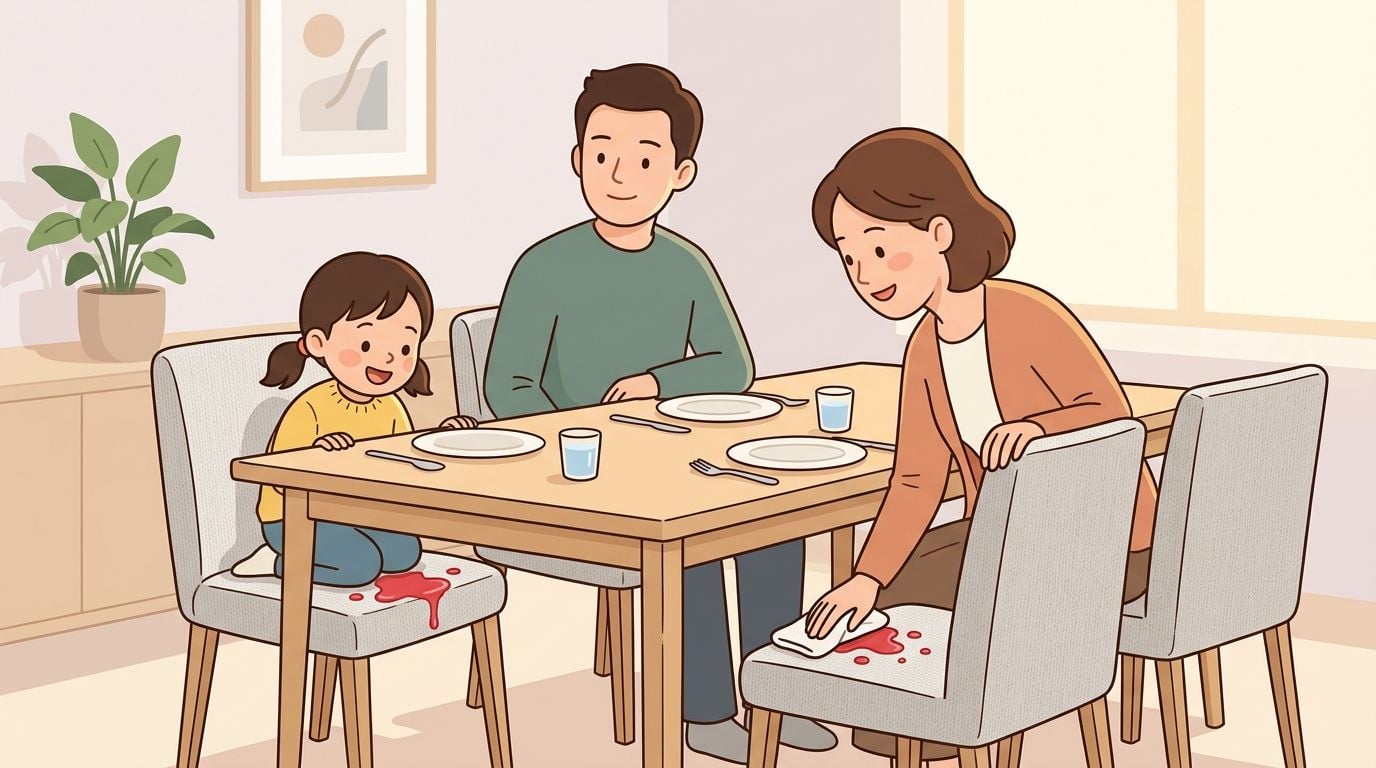
A family sits down for dinner on a Tuesday night. The chairs look great, the room feels warm, and everybody's finally in one place. Then the grape juice tips over.
On a traditional upholstered chair, that little accident can turn into a rush for towels, stain remover, and crossed fingers. On performance fabric dining chairs, it's often a much calmer moment. The spill stays near the surface long enough to clean up, and dinner can keep moving.
That kind of peace of mind helps explain why interest in these materials keeps rising. The global market for furniture performance fabric was valued at $4.8 billion in 2025 and is projected to grow significantly, reflecting a major shift in what families are looking for: furniture that combines style with real-life resilience, according to Dataintelo's furniture performance fabric market report.
Why families keep looking for a better option
Dining chairs work hard. They aren't just there for holiday meals or company. They hold up through homework, coffee breaks, card games, and quick lunches between errands.
That's why many households start searching for upholstery that can:
- Handle spills with less stress so a tipped drink doesn't ruin the evening
- Stand up to repeated use in a room that sees daily traffic
- Still feel soft and inviting instead of stiff or overly practical
- Fit the look of the home whether the room leans classic, casual, or updated
Practical rule: The best dining chair fabric isn't the one that looks perfect in a showroom. It's the one that still looks good after family life gets hold of it.
Some readers also like layered protection. For households wanting extra ideas to protect chairs from spills and pets, slipcover guidance can be useful alongside a stronger upholstery choice. Families sorting through broader household needs may also find help in this guide to kid-friendly and pet-friendly furniture.
In real homes, worry-free dining isn't about making the room formal or untouchable. It's about choosing chairs that let people relax, linger, and live in the space.
What Exactly Is a Performance Fabric
A lot of shoppers hear the term "performance fabric" and assume it is marketing language. In plain English, it means upholstery made for real use. It is designed to handle the kind of daily wear that shows up around family tables in Southwestern Virginia, where chairs may see breakfast before school, supper after ball practice, and a dog nosing around for dropped crumbs in between.
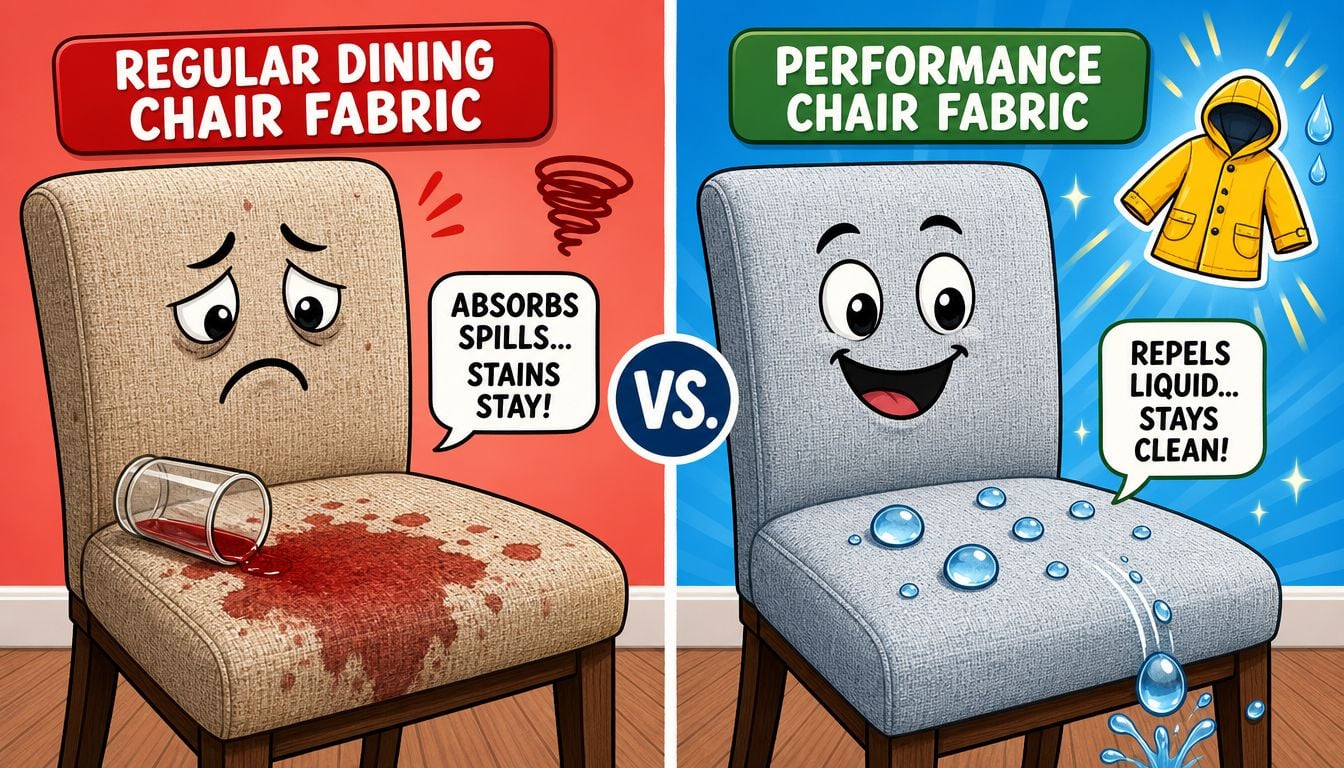
Instead of acting like a sponge, this fabric is usually made to slow down how quickly liquid and grime settle in. That gives you a better window to blot a spill, wipe the surface, and move on with your day. For busy households, that extra time can make the difference between a quick cleanup and a stain that keeps staring at you all week.
What makes it different
Many performance fabrics get their protective qualities from the way the fibers are made or treated during production, rather than from a light surface coating alone. That matters because dining chairs face repeated rubbing, shifting, and cleanup. A fabric that is engineered for those conditions tends to keep doing its job longer.
In practical terms, performance fabrics often offer:
- Better resistance to spills so drinks are less likely to soak in right away
- Stronger abrasion resistance for chairs that get used every day
- Improved stain release so common food messes are easier to clean
- More dependable color hold in bright rooms with regular sunlight
If those terms feel a little technical, the simple version is this. The fabric is built with family life in mind. Kids slide into their seats. Pets brush against chair legs and cushions. Someone always seems to spill salsa, coffee, or sweet tea at the worst moment. Performance upholstery is meant to hold up through that kind of repeat traffic without feeling stiff or overly practical.
Some shoppers also assume performance fabric all feels the same. It does not. You can still find soft textures, well-defined looks, and styles that suit traditional homes, newer spaces, or that comfortable in-between look many homes in our area have. If you want a clearer picture of how weave, texture, and fiber content affect the feel of a chair, this guide to upholstery materials and fabric types is a helpful next step.
The short version is reassuring. Performance fabric dining chairs are made for homes where people live. They are a practical choice for families who want a dining room that looks welcoming on Saturday night and still makes sense on Monday morning.
Performance vs Traditional Dining Chair Fabrics
Some traditional fabrics are beautiful. Cotton can feel familiar, linen can look airy, and textured upholstery can give a dining room real character. The challenge is that dining rooms ask more from fabric than many people expect.
A dining chair doesn't just need to look nice from across the room. It has to handle crumbs, repeated scooting, clothing friction, and the occasional splash of sauce or coffee. That's where performance fabric dining chairs usually separate themselves from more traditional options.
Where the daily difference shows up
The first difference is cleanability. Traditional fabrics often absorb spills quickly, which can leave a small accident feeling like a major problem. Performance fabrics are built to slow that process down, giving households a better chance to blot and clean before the stain settles in.
The second difference is wear. Dining chairs face more direct abrasion than many people realize because everyone shifts, leans, and slides in and out. Traditional upholstery may still work well in lower-stress settings, but a busy dining area asks for stronger fabric.
Traditional fabric can still be a fine choice in a lower-use room. In a high-use dining space, durability usually matters as much as color or style.
Fabric Showdown Performance vs Traditional Upholstery
| Feature | Performance Fabric (e.g., Crypton, Revolution) | Traditional Fabric (e.g., Cotton, Linen) |
|---|---|---|
| Spill response | Liquids are more likely to stay near the surface long enough for cleanup | Liquids often soak in faster |
| Abrasion resistance | Usually built for repeated sitting and movement | Can show wear sooner in active dining spaces |
| Cleaning routine | Often easier to spot clean with mild methods | May need faster intervention and more caution |
| Peace of mind | Better suited for kids, pets, and frequent meals | Better suited for lighter use or more formal rooms |
| Feel and appearance | Available in many soft and stylish textures | Often prized for natural texture and classic character |
| Upfront cost | Can cost more initially | May start lower, depending on fabric and construction |
The trade-off most families weigh
This choice often comes down to priorities. If the dining room is mostly decorative or used occasionally, a traditional fabric may still suit the space. If the chairs get used every day, practical performance usually wins.
Some sources in this category note that performance fabrics are designed for contract-grade durability and can outlast traditional cotton upholstery in demanding settings. That's part of why so many families, especially those with children or pets, lean toward these fabrics for dining chairs instead of saving them only for living rooms.
That doesn't mean style gets lost. Many updated dining collections from brands carried in local furniture stores, including names such as Ashley and Bassett, give households upholstery choices that feel current and comfortable while still leaning durable.
For most family homes, the question isn't whether traditional upholstery can work. It can. The better question is whether it matches the way the room is used.
How to Choose the Right Performance Dining Chairs
Saturday supper is running late. A child slides into the chair with spaghetti on the fork, the dog circles under the table, and somebody bumps a glass. In a family home, dining chairs do more than look nice. They need to handle real life in Southwestern Virginia, where meals often turn into homework time, holiday gatherings, and long visits with neighbors.
Color still matters. But your first question should be simpler: will this chair hold up to the way your household lives?

Start with fabric durability ratings
One of the most helpful terms to know is double rubs. It measures how well a fabric handles repeated friction before it starts to show wear. If that sounds technical, here is the plain-English version: every time someone scoots in, shifts during dinner, or the family dog brushes past the seat, the fabric is being tested a little.
For dining chairs used every day, a higher double rub count usually points to a fabric better suited for busy households. The label "performance" helps, but the rating gives you a clearer picture of what the chair may handle over time.
That matters for families around here. A chair in a formal dining room that sees holiday meals has a very different job than a chair used nightly after soccer practice, church, or school events. The more active the room, the more useful those durability specs become.
Check the chair like a whole piece, not a fabric sample
A strong upholstery fabric cannot make up for a chair with a weak frame or poor seat support. Good dining chairs work like a good pair of work boots. The outer material matters, but the structure underneath does the heavy lifting.
As you shop, pay attention to:
- Frame stability, so the chair stays solid instead of loosening over time
- Seat comfort, especially if your family lingers at the table
- Fabric texture and seams, since some details are easier to live with and clean than others
- Chair scale, so seat height, width, and arm clearance fit your table and room
A quick sit-test tells you a lot. If a chair feels shaky in the showroom, it rarely improves at home.
Match the chair to the people who use it
This is the step shoppers skip most often. They buy for the photo, not for the household.
A home with young kids may do best with a forgiving weave and a shape without too many fussy details. A home with pets may benefit from fabrics that do not seem likely to catch claws or hold onto fur. Empty nesters who host occasionally may care more about shape, cushioning, and the way the chair complements the room. None of those choices are wrong. The best pick is the one that fits your daily pattern.
If you feel torn between styles, it helps to compare chairs the same way you would compare vehicles. One may look sharper. Another may fit the roads you drive every day. Dining chairs work the same way.
Ask practical questions before you buy
A good showroom visit should answer more than "Do I like this color?"
Ask how the fabric is expected to wear, how the seat is built, and whether the chair feels easy to keep up with in a busy home. For general upholstery cleanup habits, Neat Hive Cleaning's sofa guide offers useful basics that also help shoppers understand what kinds of fabrics tend to be easier to live with.
Budget deserves a clear-eyed look too. A better-made chair can cost more at the start, but many families find that replacing a worn or wobbly chair is more expensive in the long run.
If you want a helpful starting point before you shop in person, this guide on how to choose dining chairs for your table and room can help you narrow down size, style, and fit.
Simple Care for a Long-Lasting Look
One reason people choose performance fabric dining chairs is simple. They want less panic when something spills.
That doesn't mean no care is needed. It means the care is usually more manageable. Quick action still matters, but the cleaning process is often straightforward enough for a busy household to handle without feeling overwhelmed.
What to do right after a spill
The first response makes the biggest difference.
- Blot, don't scrub. Use a clean cloth or paper towel to lift liquid. Scrubbing can push the spill deeper or rough up the fabric surface.
- Work from the outside in. This helps keep the stain from spreading wider than it already is.
- Use mild moisture carefully. A lightly damp cloth is often enough for many fresh spills.
- Repeat in short passes. Gentle, patient blotting usually works better than one aggressive cleaning attempt.
For common dining messes, the approach stays similar:
- Coffee or juice. Blot first, then use a small amount of mild soap and water if needed.
- Sauce or ketchup. Lift solids gently before blotting the remaining spot.
- Red wine. Act fast, absorb what's sitting on the surface, then follow the fabric care instructions from the manufacturer.
The goal isn't to attack the fabric. It's to remove the mess while keeping the upholstery intact.
Good habits that help chairs age well
Routine care matters just as much as emergency cleanup.
A few simple habits can go a long way:
- Vacuum lightly now and then to remove crumbs and dust from seams
- Rotate use when possible so the same chair doesn't take all the wear
- Check manufacturer guidance before using stronger cleaners
- Treat stains early because older spots are harder to remove than fresh ones
Readers who want a broader refresher on upholstery care may appreciate Neat Hive Cleaning's sofa guide, which walks through gentle cleaning principles that also help with many upholstered seating situations. For dining-room accidents specifically, this local guide on how to remove furniture stains is a useful bookmark.
Performance fabric doesn't make a chair maintenance-free. It makes maintenance feel much more realistic for everyday life.
Find Your Perfect Chairs Here at Home
Saturday dinner is over. One child is still tracing circles on the seat with sticky fingers, the dog has brushed past the chair legs twice, and you are already wondering how those chairs will look a year from now. That is the ultimate test for dining furniture in Southwestern Virginia. A chair has to feel good, suit your room, and hold up to everyday family use.
That is why seeing dining chairs in person still makes such a difference. A screen can show color and dimensions. It cannot tell you whether the fabric feels cozy or slick, whether the seat has enough support for a long meal, or whether the chair feels sturdy enough for a busy household.
For families in Galax, Independence, Hillsville, and nearby communities, shopping close to home solves a few common headaches at once. You can sit in several chairs back to back, compare fabric textures under normal lighting, and ask practical questions about wear, cleanup, and fit. It is a little like trying on shoes. The measurements matter, but the feel matters too.
A good local showroom also helps connect fabric specs to real life. If you have kids who climb into chairs with snacks, or pets that treat the dining room like part of their daily route, you need more than a pretty silhouette. You need upholstery that makes sense for your home, and guidance from people who have helped local families sort through the same concerns for generations.
Guynn has been serving this region since 1902, and that history matters because furniture shopping can feel overwhelming. Some shoppers want reassurance that they are buying from a business that will still be here after delivery day. Others want help pulling together a room that looks warm and lived-in, not stiff or overdone. If you are planning the full space, this complete guide to dining room decor can help with art and finishing touches.
Local shopping also makes it easier to match the chair to the way you live:
- Busy families can test seat comfort, fabric feel, and chair stability before bringing anything home
- Pet owners can look closely at weave and texture to spot fabrics that are more forgiving in daily use
- Remodelers can compare tones against wood finishes, flooring, and wall colors
- Practical buyers can ask about available options, delivery range, and setup without guessing
If you want a clear example of what that balance can look like, this Cannon Valley upholstered chair shows how comfort-minded dining seating can still suit a hardworking home.
The best chair is more than the one that photographs well. It is the one that fits your table, your routine, and the people gathering around it. Shopping nearby gives you a better chance of getting that choice right the first time.