8 Sectional Sofa Layout Ideas for Your Home


Finding the Perfect Fit: How to Arrange Your Sectional Sofa
Choosing a sectional sofa is exciting. It promises cozy movie nights, easier holiday hosting, and a living room that finally feels made for real life. Then the big question shows up fast. Where should it go?
That's where many homeowners get stuck. A sectional can make a room feel welcoming and organized, or it can crowd the walkway, cover a window, and make the whole space feel harder to use. Furniture shopping can also feel expensive and overwhelming when a piece is this important. Families want to get it right the first time.
Guynn Furniture & Mattress has helped neighbors across Galax, Independence, Hillsville, and the wider Southwestern Virginia and Northern North Carolina region furnish their homes since 1902. In that time, one thing has stayed the same. The best sectional sofa layout ideas aren't about chasing trends. They're about matching the room, the traffic flow, and the way a family lives.
This guide gets straight to the layouts that work. It covers practical options for small rooms, open-concept homes, media spaces, and everyday family rooms, along with a few design rules that keep a sectional from feeling too big or badly placed. For more inspiration beyond the sofa itself, this guide to creating a stylish living room offers helpful ideas for finishing the space.
Table of Contents
- 1. The Classic L-Shaped Sectional
- 2. The U-Shaped Sectional for Maximum Seating
- 3. The Chaise Sectional with a Sleeper
- 4. The Modular Sectional Mix-and-Match
- 5. The Apartment-Friendly Compact Sectional
- 6. The Elegant Curved Sectional
- 7. The Ultimate Comfort Sectionals with Recliners
- 8. The Sectional with Chaise Lounge End
- 8 Sectional Sofa Layouts Comparison
- Bring Your Vision to Life with Guynn Furniture
1. The Classic L-Shaped Sectional
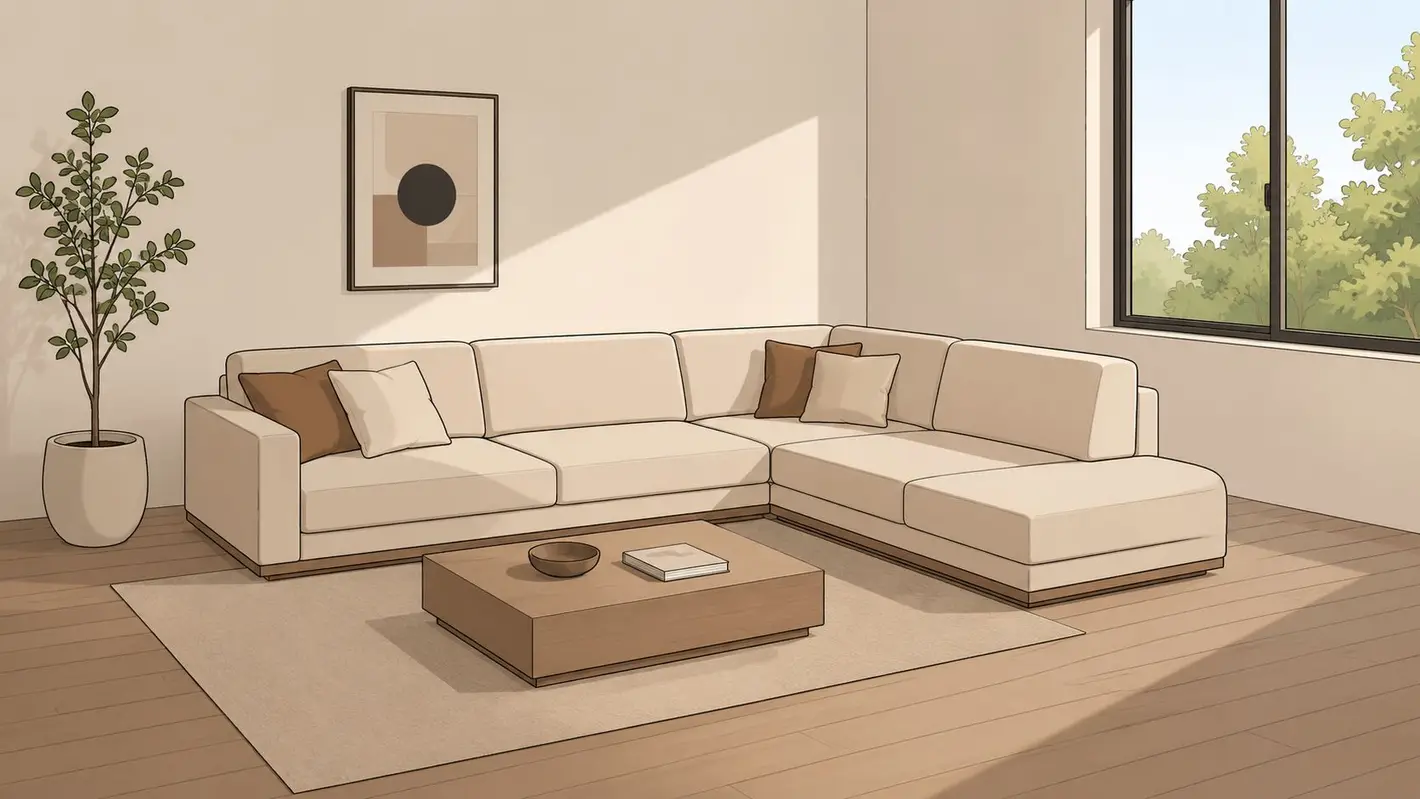
The L-shaped sectional is still the safest bet for many homes, and there's a reason it keeps showing up in the best sectional sofa layout ideas. It fits naturally into corners, defines a seating area without needing extra chairs, and gives a family one comfortable place to gather. In bonus rooms, open living areas, and finished basements, this layout usually solves more problems than it creates.
For smaller living rooms, corner placement remains especially effective. One arrangement guide notes that tucking a sectional into a corner creates an L-shape that opens the center of the room and can maximize usable floor space compared to wall-parallel placements, which is why this setup works so well in tighter homes and dens according to Castlery's sectional arrangement guide.
Why this layout stays popular
The trade-off is simple. An L-shape is versatile, but only if the chaise lands on the correct side. A left-facing chaise that points into a doorway will frustrate a household every day, no matter how attractive the sofa looked in the showroom.
That's why measurements matter before style choices. Families shopping in Galax, Independence, or Hillsville often do best when they bring photos and dimensions, then compare them against a model in person. Guynn's expert design staff, including Debra Williams, can help map the room and avoid the common mistake of choosing a sectional that looks right online but sits wrong in the home.
Practical rule: The chaise should support the room's natural flow, not interrupt it.
A few placements consistently work well:
- Corner fireplace rooms: The long side can face the focal point while the chaise softens the edge of the seating area.
- Open-concept family rooms: The sectional can define the living zone without making the kitchen feel cut off.
- Bay window spaces: The shorter return often fits neatly alongside the architectural feature.
- Media rooms: An L-shape gives strong sight lines without taking over the whole room.
Families comparing styles from La-Z-Boy, Ashley, or Bassett often find the L-shape gives the easiest balance of comfort and flexibility. It's also a smart starting point before reading Guynn's own Sectionals 101 buying guide. With a large in-stock selection, immediate delivery is often possible, and free in-home delivery and setup within 60 miles makes the final placement much easier.
2. The U-Shaped Sectional for Maximum Seating
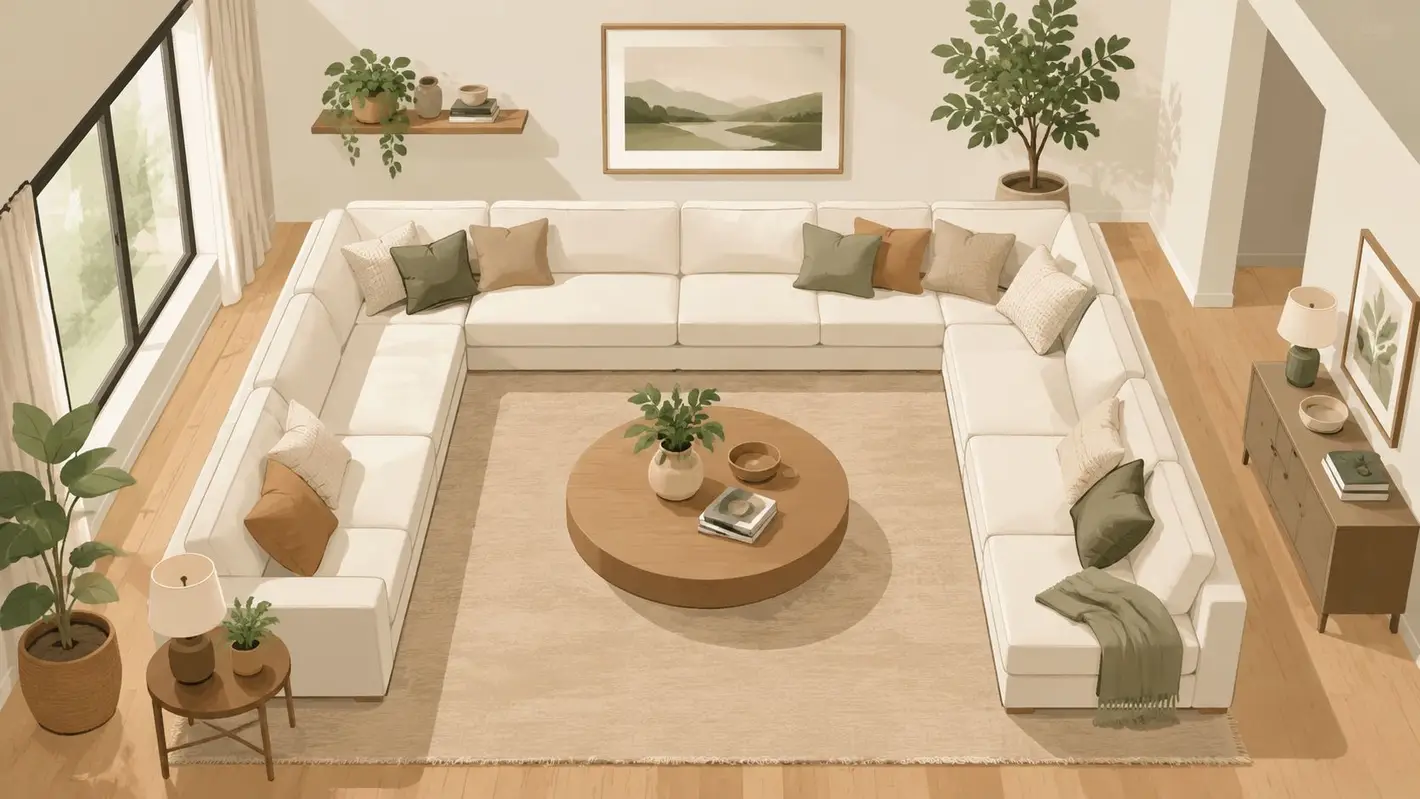
Saturday evening in a larger family room often looks the same across Southwestern Virginia and Northern North Carolina. Kids stretch out for a movie, grandparents want a supportive seat, and somebody pulls in a dining chair because the sofa fills up first. A U-shaped sectional solves that problem better than almost any other layout.
It works especially well in homes around Galax, Mount Airy, and Elkin where the living room has become the main gathering spot for holidays, ball games, and everyday visiting. Instead of scattering seating around the room, the U-shape keeps everyone connected and usually reduces the need for extra accent chairs.
The trade-off is space. This layout needs a room with real width, not just square footage on paper. In many homes, a U-shaped sectional feels best when people can still pass around it comfortably and reach the coffee table from all three sides without squeezing through.
Where a U-shape makes sense
Rooms with one strong focal point usually handle this layout best. A fireplace wall, a large TV, or a finished basement set up for entertaining all give the sectional a clear purpose. In open-concept homes, a U-shape can also anchor the living area and keep it from drifting into the kitchen or dining space.
Narrow dens are a different story.
If the returns push into doorways or force people to cut through the center of the seating area, the room will feel crowded every day, even if the sectional technically fits. I usually tell shoppers to measure for the full footprint, then measure the walking paths separately. Both numbers matter.
A few checks help before you commit:
- Leave usable walkways: Aim for enough clearance that people can move around the sectional without turning sideways or bumping the corners.
- Match the scale to the room: A large U-shape belongs in a room that can visually carry it. High backs and overstuffed arms can make a medium room feel smaller fast.
- Plan the center zone: Round or square ottomans usually work better than oversized rectangular coffee tables because every seat needs easy reach.
- Know how you host: For game nights, reunions, and multigenerational households, the wraparound seating is a real advantage.
This is also a smart place to think about function, not just size. Some families want a U-shape with storage, a wedge, or power reclining ends. Others need a cleaner profile that keeps the room lighter. Guynn can help sort through those choices, especially if you are comparing family-room comfort with a more refined look from the La-Z-Boy Showcase collection. For homes that need flexible pieces beyond one large sofa, our guide to choosing multi-functional furniture for modern homes is a useful next step.
For households that entertain often, this layout can be the most welcoming seat in the house. Guynn's design team can sketch out the arrangement before purchase through help like living room layout planning, and Guynn's Low Price Promise means any local competitor's advertised price is matched on the spot or refunded within 30 days. That matters when you are buying a sectional that will set the tone for the whole room.
3. The Chaise Sectional with a Sleeper

A chaise sectional with a sleeper is one of the most practical choices for homes that need one room to do two jobs. By day, it functions like a relaxed family-room sectional. By night, it becomes guest space without the need for a dedicated spare bedroom.
This layout makes sense in mountain cabins, multipurpose bonus rooms, and homes where grown children, grandparents, or weekend guests visit from time to time. It's especially useful for value-focused households that want furniture to work harder, not just look good.
Where the sleeper earns its keep
The biggest mistake with a sleeper sectional isn't the mattress choice. It's forgetting the opening clearance. A room may hold the sectional just fine, then become unusable once the bed extends.
That's why the floor in front of the chaise has to stay relatively open. Coffee tables that are too large, heavy storage trunks, or tightly grouped accent chairs can turn a helpful sleeper into a hassle no one wants to use. A good layout leaves enough room for quick setup without moving half the room around.
The best sleeper sectional is the one guests can open without asking the whole house to help.
A few practical ways to make this layout work better:
- Test the mechanism in person: A smooth opening motion matters more than expected.
- Think about overnight privacy: In open spaces, place the sleeper where guests won't feel exposed.
- Protect the flooring: Sliders can help when the mechanism needs room to extend.
- Choose durable upholstery: Guest furniture often gets heavy use in bursts.
For families shopping this category, comfort testing matters. Guynn's large in-stock selection lets shoppers compare options from trusted brands in person, and multi-functional furniture ideas for modern homes can help narrow the right fit. Free in-home delivery and setup within 60 miles also removes the hardest part of bringing a sleeper sectional home.
4. The Modular Sectional Mix-and-Match
A modular sectional works well for families whose rooms, routines, or budgets may change over time. Instead of buying one fixed shape and hoping it still works years from now, homeowners can start with a core arrangement and add pieces later.
That flexibility makes modular styles appealing for young families, frequent movers, and homes that host everything from movie nights to holiday gatherings. It's also one of the smarter sectional sofa layout ideas for households that want a custom feel without locking into one exact configuration forever.
How modular pieces solve changing needs
The strength of modular furniture is also its risk. Because the pieces can move, they can also drift, separate, or get rearranged into layouts that don't feel cohesive. The best modular rooms still need a plan.
An emerging design move for open-concept spaces is to use modular ottomans as flexible connectors between sections. Designer styling guidance highlights how repositioning the ottoman to the middle or side can open space and improve the room's visual connection, a useful tactic that many standard layout guides skip in this sectional styling video discussion.
That kind of flexibility is what makes modular sectionals so useful in real homes. One month the ottoman may act as a bridge for lounging. The next month it may sit off to the side for easier traffic flow during a family gathering.
- Start small: A smaller first setup often leaves room to grow intelligently.
- Save the layout plan: Photos and diagrams help recreate favorite arrangements.
- Check the connectors: Loose sections make the whole sofa feel less stable.
- Unify the look: Matching pillows and throws help separate pieces read as one design.
For households planning in phases, financing can make the process easier. Guynn offers in-house financing and Lendmark Financial Services, and the showroom includes major comfort and style names like La-Z-Boy, Ashley, and Bassett. That gives families across Galax, Independence, Hillsville, and the wider region room to build a sectional over time without pressure.
5. The Apartment-Friendly Compact Sectional
Compact sectionals prove that a small room doesn't need to settle for less comfort. In apartments, first homes, upstairs dens, and cozy secondary living rooms, a right-sized sectional often works better than trying to squeeze in a sofa and extra chair.
The catch is proportion. A compact sectional should still leave clear movement paths and shouldn't dominate the walls. Smaller spaces need furniture that behaves well.
Small room moves that make a big difference
For small living rooms, many homeowners instinctively push the sectional hard into the corner. Sometimes that's the right call, but not always. Design guidance for small rooms notes that leaving 6 to 12 inches between the sectional and the wall can create a more spacious feel while protecting the needed 30 to 36 inches of walking space for two people to pass comfortably, according to 2Modern's small living room sectional layout ideas.
That little gap can make a room feel less boxed in. It also helps with baseboards, curtains, and outlet access.
Neighborly advice: In a tight room, a slim profile usually matters more than a dramatic silhouette.
A compact sectional works especially well when paired with furniture that stays visually light:
- Low-profile tables: Nesting tables are easier to move than a bulky coffee table.
- Light or neutral upholstery: Softer tones can help the room feel more open.
- Vertical storage: Shelving and wall-mounted pieces free up floor space.
- A storage ottoman: It adds function without asking for another chair.
Before buying, families should measure more than the room. Hallways, stairwells, and door openings can stop a sectional before it ever reaches the living room. Guynn's room-planning advice in this guide on how to measure a room for furniture is a helpful starting point, and this article on selling furniture before a move can help homeowners clear space before a new piece arrives. For shoppers who want affordable options without sacrificing comfort, Guynn's Low Price Promise and no-pressure atmosphere make compact shopping much easier.
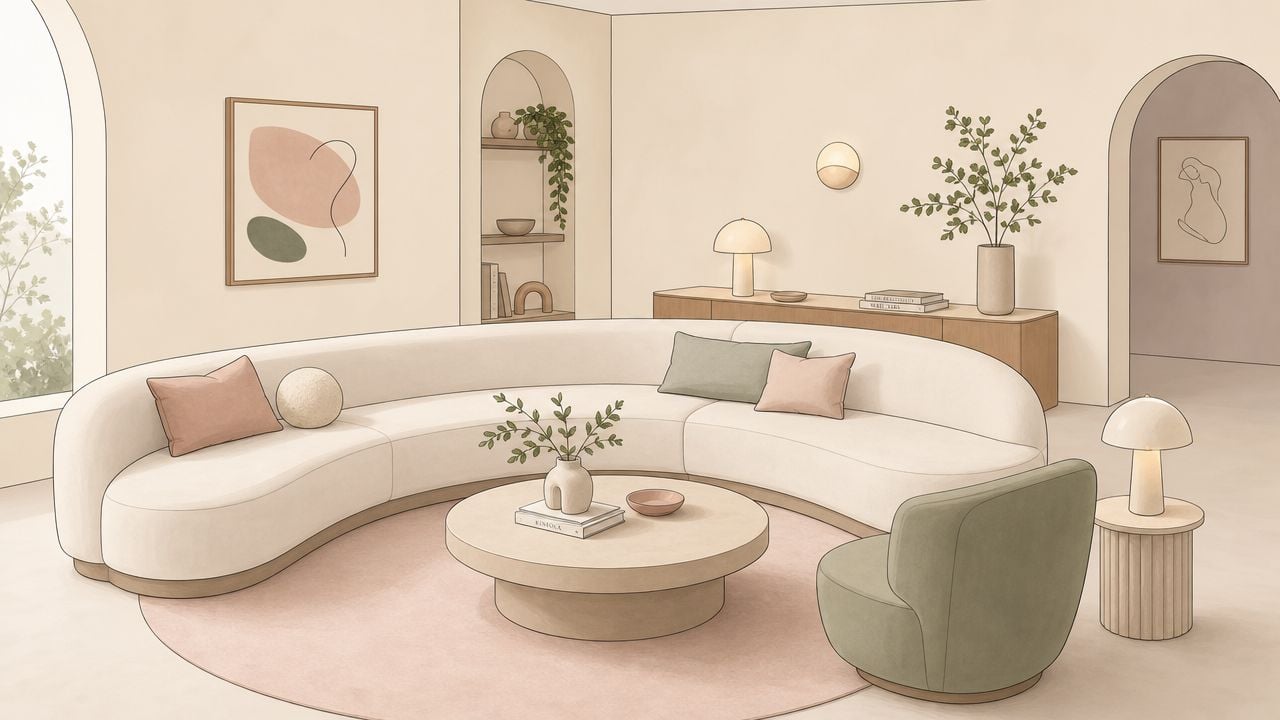
6. The Elegant Curved Sectional
A curved sectional suits the family that wants the room to feel welcoming the minute guests walk in. In many homes around Southwestern Virginia and Northern North Carolina, that means a living space that softens boxy walls, wood floors, and straight fireplace lines without giving up everyday comfort.
This layout asks for more floor space than a standard L-shape, but it gives something back. It creates a natural conversation area, relaxes the look of the room, and often makes a larger space feel less stiff. I usually suggest it for open living rooms, front sitting rooms, or homes with enough clearance to let the shape show.
Placement matters more here than with a square-corner sectional.
A curved sectional rarely looks right shoved tightly into a corner. Leave a little air around it so the silhouette reads clearly from more than one angle. In open-concept homes, that often means floating it slightly off the wall and using a rug to anchor the seating area. In older regional homes with defined rooms, it may work best centered on a fireplace, a bank of windows, or a focal table rather than aimed straight at a large media console.
The supporting pieces need restraint too. Round and oval coffee tables usually fit the shape better than a chunky square table. Slim accent chairs, lighter side tables, and a floor lamp with a simple profile keep the room balanced instead of crowded.
A curved sectional tends to work especially well in:
- Open-plan living rooms: It helps define the seating zone without harsh lines.
- Homes with architectural detail: Arched openings, bay windows, and curved stair lines pair naturally with this shape.
- Conversation-first rooms: Guests can face each other more comfortably than they can on some TV-centered layouts.
- Larger family spaces: The curve can fill a broad room more gracefully than several scattered seats.
There is a trade-off. Curved sectionals are less forgiving if the room is narrow, and they take more planning around walkways. A good rule is to protect your main traffic path so nobody has to squeeze between the sofa and the coffee table on the way to the kitchen, hallway, or back door. In busy family homes, that small planning step makes the room easier to live with every day.
For local shoppers, this is the kind of layout worth testing in person. Guynn Furniture can help compare scale, fabric, and table shapes so the sectional fits the room instead of overpowering it. If you are considering a more polished, design-forward living room, a curved sectional can be a beautiful choice when the proportions are right.
7. The Ultimate Comfort Sectionals with Recliners
A sectional with built-in recliners is for households that care less about formal styling and more about daily comfort done right. In media rooms, family dens, and homes with comfort-focused shoppers, this layout often becomes the most-used seat in the house.
It's also where product details matter. Reclining sectionals can include power controls, supportive seating, USB charging, and comfort features that make a difference for long evenings at home. For many families, La-Z-Boy is the first brand that comes to mind here, and as a La-Z-Boy Showcase dealer, Guynn gives local shoppers in Galax, Independence, Hillsville, and nearby communities the chance to test comfort in person instead of guessing from a screen.
Comfort planning before delivery day
The layout itself is straightforward. The planning around it isn't. Recliners need proper clearance, access to outlets for powered models, and enough room for people to walk by without brushing into open footrests.
In open-concept spaces, floating the sectional can also help define the living zone. Layout guidance from Kloter Farms notes that floating a sectional away from the walls helps create a visual boundary between the living room and nearby dining or kitchen areas, with an area rug acting as the anchor in this open-concept sectional layout article.
That matters because recliner sectionals are usually deeper and visually heavier than standard models. They look best when the room gives them a clear zone instead of letting them spill into everything else.
“Test the comfort for yourself” matters most in this category, because the mechanism, seat depth, and back support all feel different from one model to the next.
A few buying and placement points are worth remembering:
- Check outlet access: Hidden cords are always better than stretched ones.
- Open every seat before buying: One smooth recliner doesn't guarantee the whole sectional feels right.
- Choose practical upholstery: Performance fabrics and leather can simplify upkeep.
- Plan for electronics: A protection plan can be worth considering on powered pieces.
For many comfort-focused buyers and Traditionalists alike, Guynn's no-pressure atmosphere really helps. It gives shoppers time to compare what feels supportive, what looks right, and what fits their daily routine.
8. The Sectional with Chaise Lounge End
A chaise-end sectional fits the way many families really live. One person stretches out with a book, another claims the corner for movie night, and the room still keeps a cleaner profile than a bulky motion piece. For homes in Southwestern Virginia and Northern North Carolina, it is often one of the easiest layouts to live with day after day.
It works especially well in bonus rooms, casual living rooms, and den spaces where comfort matters but floor space still needs to stay usable. I often recommend this layout for households that want a true lounging seat without stepping up to a full recliner sectional.
Getting the chaise side right
The chaise should sit on the quieter side of the room. If it points into the main path to a hallway, entry, or kitchen, people will brush past feet and the whole layout will feel cramped. Put it near a window, beside a lamp table, or on the end with the best view of the TV or fireplace, and that seat usually becomes the favorite spot fast.
Scale matters here, too. In many local homes, a chaise sectional works best when the room can give it enough open floor in front so the extended seat does not crowd a coffee table or cut off traffic. As a practical rule, keep the walk path clear on the non-chaise side and make sure the person using the chaise can sit or recline naturally without twisting toward the focal point.
A few details make a big difference:
- Leave breathing room at the chaise end: The lounge seat needs open space to feel relaxing, not boxed in.
- Protect the traffic path: Keep the chaise away from the side people use to cross the room.
- Check actual lounging depth: Some look long in photos but feel short once you sit down.
- Plan the side table early: A chaise user still needs a place for a drink, phone, or reading lamp.
This style is a strong fit for shoppers who want casual comfort and a cleaner silhouette. At Guynn Furniture, including our La-Z-Boy Showcase collection, it is easy to compare left-arm and right-arm chaise options in person, check how the depth feels, and see which layout makes sense for your room size, traffic flow, and daily routine. For many households, that hands-on test saves a costly mistake and leads to a sectional that gets used every day.
8 Sectional Sofa Layouts Comparison
| Sectional Type | Implementation Complexity | Resource Requirements | Expected Outcomes | Ideal Use Cases | Key Advantages |
|---|---|---|---|---|---|
| The Classic L-Shaped Sectional | Low, fixed configuration, easy placement | Moderate, corner space (~10×12), standard delivery | Maximizes corner seating; defines living area | Family rooms, open-concept spaces, corners | Versatile, space-efficient, cozy gathering hub |
| The U-Shaped Sectional for Maximum Seating | High, careful planning and placement | High, large footprint (~14×16+), higher cost, white‑glove setup | Maximum seating; central conversation/entertainment hub | Great rooms, media rooms, large family spaces | Most seating capacity; promotes interaction |
| The Chaise Sectional with a Sleeper | Moderate, needs clearance and mechanism access | Moderate–High, sleeper mechanism, storage, pricier than basic models | Dual-purpose seating + occasional guest bed | Studios, guest-hosting homes, multi-use rooms | Saves space by combining sleeper and seating; storage included |
| The Modular Sectional (Mix-and-Match) | Moderate, requires planning for phases and connectors | Variable, buy-as-you-go; higher per-seat cost, connection hardware | Highly adaptable layouts that evolve over time | Growing families, renters, flexible entertaining spaces | Reconfigurable, scalable, easy to transport |
| The Apartment-Friendly Compact Sectional | Low, small footprint, simple placement | Low, smaller dimensions (75–90"), budget-friendly | Comfortable seating without overwhelming small rooms | Apartments, condos, studios, first homes | Space-saving, affordable, easier to move |
| The Elegant Curved Sectional | High, specialized sourcing and layout planning | High, premium cost, specific room geometry needed | Design-forward focal point with improved sightlines | Contemporary lofts, architectural spaces, circular rooms | Sculptural aesthetic; encourages intimate conversation |
| The Ultimate Comfort: Sectionals with Recliners | High, electrical planning and mechanical access | High, power outlets, maintenance, higher price | Personalized reclining comfort; home-theater experience | Home theaters, families prioritizing comfort, seniors | Integrated power, massage/heating, USB and storage features |
| The Sectional with Chaise Lounge End | Low–Moderate, fixed chaise placement to consider | Moderate, deeper depth (40"+), room for leg extension | Dedicated lounging spot while retaining social seating | Family rooms, living rooms, reading nooks | Affordable lounger option; combines relaxation and seating |
Bring Your Vision to Life with Guynn Furniture
Choosing the right sectional layout is about more than filling a corner. It's about making the room easier to live in. A good sectional supports the way a family watches movies, hosts relatives, reads in the afternoon, or moves through the house without bumping into furniture.
That's why the best sectional sofa layout ideas always come back to a few basics. The room needs clear traffic flow. The sectional needs the right scale for the space. The shape has to match how the home is used, not just how it looks in a photo. When those pieces line up, the room starts to feel settled.
Guynn Furniture & Mattress has helped families make those decisions since 1902. Across Galax, Independence, Hillsville, and the wider Southwestern Virginia and Northern North Carolina region, homeowners have relied on that long history because furniture shopping feels better when it comes with real guidance and a no-pressure atmosphere. Some shoppers want a dependable L-shape for a family room. Others want a U-shaped sectional for a busy household, a compact option for a smaller home, or a recliner sectional that delivers serious comfort.
Guynn also makes the process easier in practical ways. The showrooms offer a large in-stock selection for immediate delivery, so customers can often avoid the long delays that come with waiting on uncertain inventory. Free in-home delivery and setup within 60 miles takes the strain out of getting a large sectional home and placed correctly. For shoppers focused on value, Guynn matches local competitors and offers a 30-day price guarantee. That kind of transparency matters when a sectional is a major purchase.
For more specific help, Guynn's expert design staff, including Debra Williams, can help homeowners work through room dimensions, scaled layouts, color choices, and overall flow. That's especially useful when the room is open-concept, unusually shaped, or shared by several family members with different needs. And because comfort doesn't stop in the living room, many customers also explore trusted bedroom brands like Sealy and Therapedic while they're planning a full home refresh.
The right sectional is out there. Sometimes it's a classic corner L-shape. Sometimes it's a modular setup that can evolve over time. Sometimes it's the chaise that turns one side of the room into everyone's favorite seat.
- Visit our showrooms in Galax, Independence, or Hillsville to test the comfort for yourself in a no-pressure atmosphere.
- Schedule a consultation with our design team to start planning your dream room today.
- Browse our selection online at guynnfurniture.net and see our large in-stock inventory ready for immediate delivery.
For neighbors across Southwestern Virginia and Northern North Carolina, Guynn Furniture & Mattress offers the kind of help that makes sectional shopping feel manageable. Families can visit the showrooms in Galax, Independence, or Hillsville, explore trusted brands like La-Z-Boy, Ashley, Bassett, Sealy, and Therapedic, and get honest guidance, free in-home delivery and setup within 60 miles, and support from an expert design team that knows how real homes work.