Sheet Thread Count Explained: A Simple Buying Guide

Buying sheets often starts with a simple goal. Find something soft, comfortable, and worth bringing home. Then the package starts shouting numbers and terms like thread count, percale, sateen, Egyptian cotton, long-staple, and cooling weave, and the whole thing suddenly feels harder than it should.
That confusion is common. A shopper might stand in the bedding aisle comparing two sets that look similar, only to wonder why one says 300 thread count, another says 800, and a third promises luxury without saying much at all. Bedding labels can make a basic home decision feel like a quiz.
Good sheet thread count explained in plain language can take that stress out of the process. A few core ideas make the whole category easier to understand, and once those ideas click, it becomes much easier to choose sheets that suit the way a bedroom should feel.
Welcome to the Confusing World of Bed Sheets
A familiar scene plays out every week. Someone walks into a bedding department needing fresh sheets for a guest room, a main bedroom refresh, or a new mattress. Within minutes, the label reading starts. One package highlights thread count. Another leads with cotton type. A third focuses on weave, and the shopper is left trying to decode what actually matters.
That moment is especially frustrating because sheets feel personal. They touch skin every night, affect temperature, and shape whether a bed feels crisp, smooth, airy, or cozy. Marketing language often makes the choice sound more technical than it needs to be.
A better approach starts with one simple truth. Thread count matters, but it doesn't tell the whole story.
For anyone trying to pull a full bed together, details beyond the sheets matter too. Bedding layers, pillows, coverlets, and visual styling all change the finished feel of the room, which is why a practical resource like bed accessorizing ideas for a dream bed can help connect comfort with appearance.
Why the labels feel harder than they should
Several bedding terms get lumped together as if they mean the same thing. They don't.
- Thread count describes fabric density.
- Fiber quality affects softness, strength, and wear.
- Weave changes the feel against the skin.
- Material influences warmth, airflow, and texture.
A shopper comparing only one of those details can miss the bigger picture.
Bed sheets are a lot like a good loaf of bread. The ingredient quality, the method, and the final texture all matter. One number on the label can't tell the whole story.
What helps most
Confidence usually comes from learning how to ask better questions, such as:
- Will these feel cool or warm
- Will they stay smooth after regular washing
- Are the numbers on the label meaningful or inflated
- Does this set fit the home's comfort preferences
Those questions lead to better purchases than chasing the highest number on the package.
What Is Thread Count Anyway
Thread count is a measurement, not a magic score. Technically, sheet thread count is defined as the total number of vertical (warp) and horizontal (weft) threads woven within a single square inch of fabric, and a sheet should be at least 200 thread count to be considered good quality because lower counts create loosely structured cotton fabric that is more prone to tearing, according to Christy's thread count explanation.

A simple way to think about it is fabric density. If a square inch of cloth contains more threads, that fabric is woven more tightly. That doesn't automatically make it better, but it does describe how packed the threads are.
A simple visual example
Think of thread count like tiles on a floor. A room with more tiles in the same space has a denser pattern. But if the tiles are poor quality, badly cut, or poorly installed, the higher number doesn't improve the floor. Sheets work in a similar way.
The same principle shows up in sewing and quilting terms too. For readers who like understanding how thread labels can vary across textiles, the On Pins & Needles thread guide gives useful context on how thread specifications can be described differently depending on the use.
What thread count does and doesn't say
Thread count can help establish a starting point, but it has limits.
- What it does tell shoppers. The number gives a basic sense of how many threads are woven into the fabric.
- What it doesn't guarantee. It doesn't promise softness, breathability, or durability on its own.
- Why the floor matters. Under 200 thread count, cotton sheets are more likely to feel loose and less sturdy for everyday use.
Practical rule: Use thread count as one checkpoint, not the final verdict.
For anyone building a more comfortable bed overall, layering matters alongside the sheet set. A practical look at bedding, mattress protectors, and comforters can help connect the fabric choice to the whole sleep setup.
Why a Higher Number Is Not Always Better
The biggest myth in bedding is simple. Higher thread count must mean better sheets. That sounds logical, but it isn't reliably true.
A well-made 300-thread count sheet can outperform a 600-thread count sheet when the lower-count set uses better cotton and stronger construction. In fact, a 300-thread count sheet made from long-staple Egyptian or Pima cotton can be more luxurious and durable than a 600-thread count sheet made from short-staple or blended cotton because fiber length and weave integrity matter more than density alone, as noted in this Guynn Furniture profile reference on sheet quality.
Fiber quality changes everything
Long-staple cotton uses longer fibers. Those longer fibers can be spun into smoother, stronger yarns. That usually leads to fabric that feels cleaner, wears better, and stays pleasant over time.
Short-staple cotton is different. It can still be usable, but it tends to produce rougher yarns and can lose that fresh feel sooner. This is one reason two sheet sets with very different comfort levels can sit side by side with impressive-looking labels.
The multi-ply trick
One place shoppers get tripped up is inflated thread counts. Some manufacturers use multi-ply yarns, which means thinner strands are twisted together and then counted in a way that makes the thread count sound higher than the actual woven structure suggests.
That's why very high numbers can be misleading. A giant number on a package may reflect label math more than better sleep.
- Single-ply construction usually gives a cleaner apples-to-apples comparison.
- Inflated counts often sound luxurious but don't necessarily feel lighter, cooler, or longer-lasting.
- Real quality comes from the cotton, the weave, and honest construction.
A lower number with better fiber often feels better in the bed than a bigger number chosen for the shelf tag.
What shoppers should notice first
Before getting impressed by a number, it helps to look for:
- Cotton description such as long-staple
- Weave type like percale or sateen
- Construction language that suggests single-ply rather than inflated counting
- Feel in the hand if the fabric can be touched before buying
Care plays a role too. Anyone trying to protect that soft feel over time can use a practical sheet care routine, and how often sheets should be changed is a useful place to start.
How Weave Affects the Feel of Your Sheets
Once thread count makes sense, the next piece usually clicks fast. Weave often changes the day-to-day feel of sheets more noticeably than shoppers expect.
Two cotton sheet sets can use similar fibers and still feel completely different because the threads are woven in different patterns. That's why one set feels crisp and airy while another feels smooth and drapey.
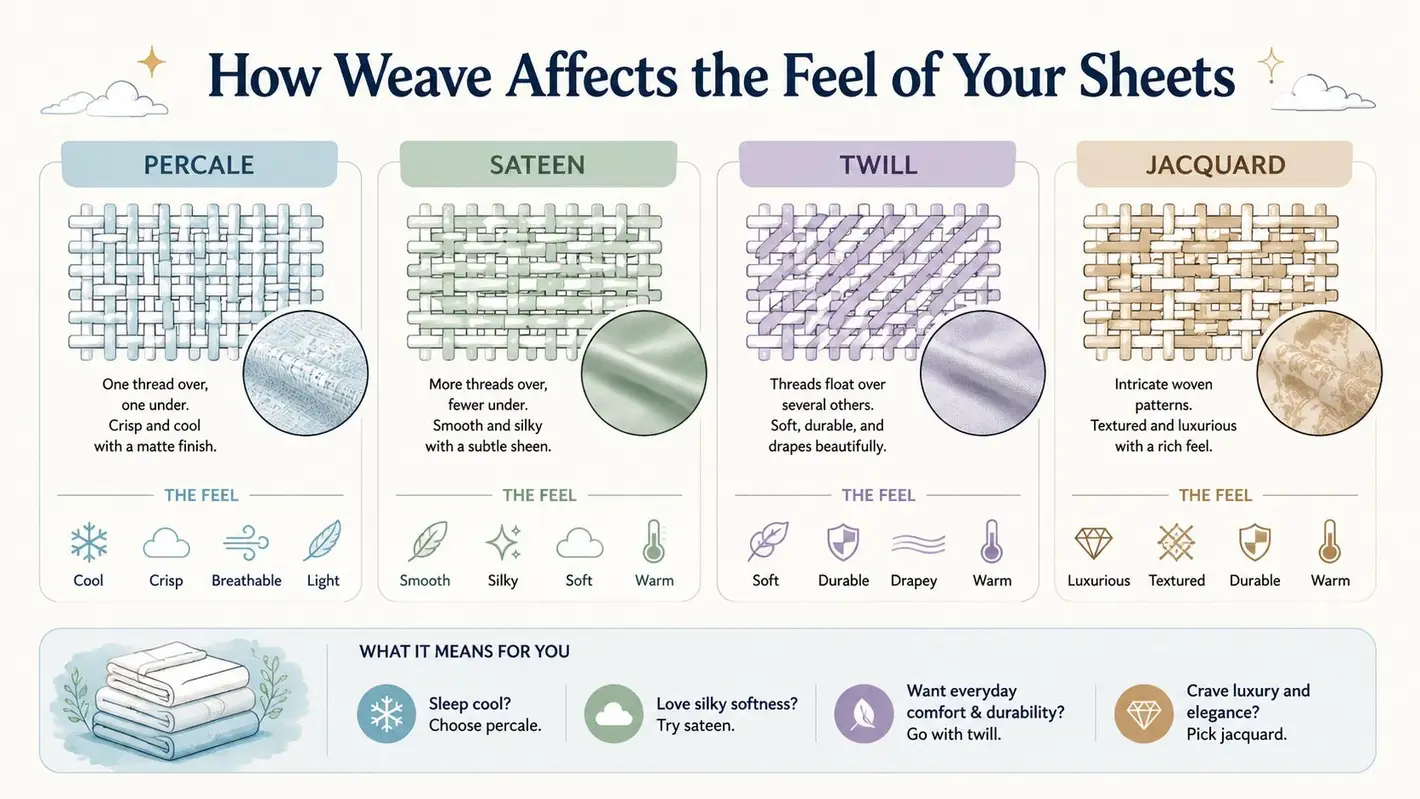
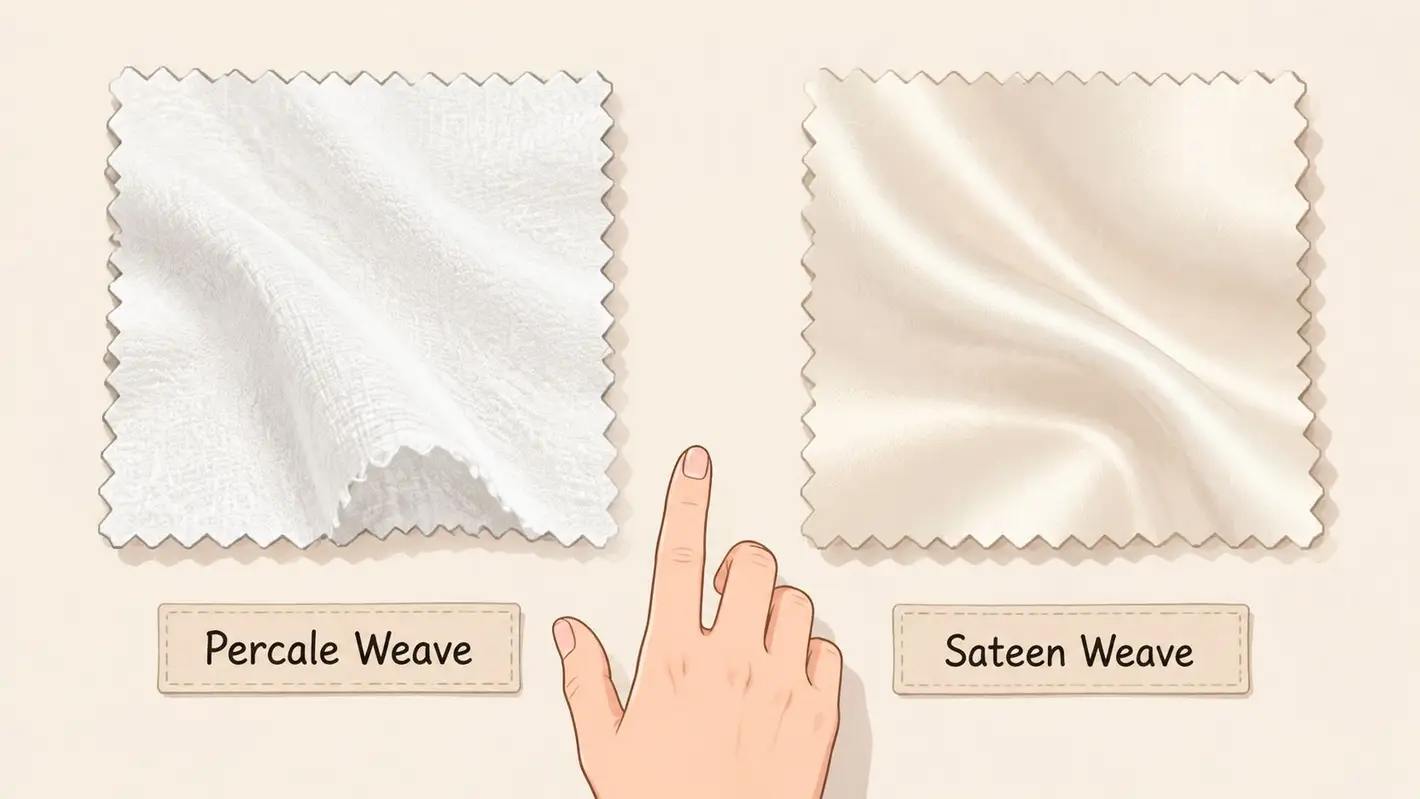
Percale feels crisp and breathable
Percale is the sheet many people associate with a fresh, cool bed. It usually feels light, matte, and clean against the skin, almost like a freshly pressed cotton shirt.
Expert textile benchmarks identify 200 to 400 thread count as the optimal range for percale-weave cotton sheets, according to NapLab's thread count guide.
For readers who want a deeper plain-English look at that texture, More Sewing's percale guide does a nice job describing why percale feels crisp rather than slippery.
Sateen feels smoother and warmer
Sateen has a softer surface and a gentler sheen. It tends to drape more fluidly across the bed, which many people read as cozy or polished.
The same expert benchmarks place sateen's best performance at 300 to 600 thread count because its smoother surface structure can handle a higher density without giving up breathability, as outlined in the earlier NapLab thread count reference. Since that source should only appear once, the key takeaway here is straightforward. Sateen often suits sleepers who want softness first.
The weave answers a different question than thread count. Thread count asks how dense the fabric is. Weave asks how the fabric will feel.
Which one suits the bedroom best
A side-by-side comparison helps:
| Weave | Typical feel | Often suits |
|---|---|---|
| Percale | Crisp, cool, breathable | Warm sleepers, guest rooms, people who like a fresh hotel-like bed |
| Sateen | Smooth, soft, slightly warmer | Cooler sleepers, layered beds, anyone who wants a softer drape |
Bedding texture also affects how the whole room comes together visually. For anyone coordinating layers beyond the fitted and flat sheet, coverlet vs. quilt differences can make the finishing choices much easier.
A comfortable bed usually comes from matching the weave to the sleeper, not from chasing the loudest package claim.
Your Practical Guide to Choosing the Right Sheets
A good shopping plan doesn't need to be complicated. Most sheet decisions get easier when shoppers stop asking, “What's the highest thread count available?” and start asking, “What fabric and feel fit this bed best?”
One of the clearest practical guidelines is this. Hot sleepers are recommended to choose percale sheets with a 200 to 300 thread count for maximum breathability, while cooler climates often benefit from sateen sheets with a 300 to 600 thread count for warmth and softness, and the push toward extremely high thread counts is widely treated as a marketing myth in Good Housekeeping's sheet thread count guidance.
Recommended Thread Count Sweet Spots
| Fabric Type | Ideal Thread Count Range | Best For |
|---|---|---|
| Cotton Percale | 200 to 400 | Crisp feel, everyday use, breathable comfort |
| Cotton Sateen | 300 to 600 | Smoother touch, softer drape, a cozier bed |
| Linen | 80 to 130 | Relaxed texture, naturally thicker yarn feel |
A simple label-reading checklist
The smartest sheet shoppers usually scan for a handful of details.
- Fiber first. Look for wording that clearly identifies the material, especially cotton quality if it's listed.
- Weave second. Percale and sateen describe feel in a way that the thread count alone can't.
- Construction details. Single-ply wording is often more meaningful than a giant number on the front label.
- Sleep style match. Warm sleepers and cool sleepers often need different sheet personalities.
A few real-world buying scenarios
A guest room usually benefits from a broadly comfortable choice. A breathable percale cotton set in the appropriate range often feels fresh and easy for many sleepers.
A primary bedroom can be more personal. Someone who likes a cool, crisp bed may prefer percale, while someone who wants a smoother hand and a little more warmth may be happier with sateen.
Buying shortcut: If the package leads with an oversized number and says very little about fiber or weave, it deserves a closer look.
If the fabric feels good, suits the season, and uses honest materials, that's usually a better purchase than a set chosen for a flashy label.
Find Your Perfect Bedding at Guynn Furniture
Online bedding advice often leaves shoppers with more tabs open and less confidence. That's why real-world guidance matters. Feeling the difference between crisp percale and smoother sateen in person clears up what pages of marketing copy often don't.
For many homes, the practical sweet spot lands in a balanced range rather than at the extreme top end. High-quality sheets with optimal comfort and durability consistently perform best at 300 to 600 thread count when they use single-ply, long-staple cotton construction, where fiber quality and weave matter more than inflated numbers, according to Journee Mondiale's thread count guide.
Why in-person bedding shopping still helps
Touch answers questions fast.
- Texture becomes obvious. Crisp and airy feels different from soft and silky within seconds.
- Weight becomes clearer. Some sheets feel light and cool. Others feel smoother and more substantial.
- Marketing loses its grip. Once the hand can compare fabrics directly, the label matters less than the actual feel.
That kind of clarity is especially valuable for households in Galax, Independence, Hillsville, and the wider Southwestern Virginia and Northern North Carolina region, where many shoppers want lasting comfort, practical value, and help from someone who isn't rushing them.
A local store advantage that online labels can't offer
A no-pressure atmosphere gives shoppers room to compare options without guessing. That matters for the traditionalist who values long-term quality, the remodeler who wants the bed to fit the room, the value seeker trying to buy wisely, and the regional neighbor who wants dependable local service.
Since 1902, Guynn Furniture & Mattress has served families across the region with a helpful-neighbor approach. The store carries trusted names such as La-Z-Boy as a Showcase dealer, along with Ashley, Bassett, Sealy, and Therapedic, and it backs that selection with free in-home delivery and setup within 60 miles, a large in-stock selection for immediate delivery, and a Low Price Promise that matches local competitors and includes a 30-day price guarantee.
For homes that need more than a sheet set, Guynn Furniture & Mattress online also connects shoppers with a broader look at bedroom furnishings and support from expert design staff, including Debra Williams, for pulling an entire room together.
Visit Guynn Furniture & Mattress to explore bedding and bedroom comfort in a no-pressure atmosphere. Neighbors from Galax, Independence, Hillsville, and across Southwestern Virginia and Northern North Carolina can count on helpful guidance, a large in-stock selection, and free in-home delivery and setup within 60 miles. Visit our showrooms in Galax, Independence, or Hillsville to test the comfort for yourself. Schedule a consultation with our design team to start planning your dream room today. Browse our selection online at guynnfurniture.net.