Your Guide to the Transitional Dining Room Table

A lot of households reach the same point with the dining room. They don't want a table that feels stiff and overly formal, but they also don't want something so sleek that it looks cold the rest of the week. The same surface has to work for takeout containers, school projects, birthday cakes, and holiday meals with the good dishes.
That's where a transitional dining room table usually makes sense. It sits in the middle. It feels polished without asking the room to behave like a showroom, and it gives a home enough flexibility to grow, host, and change over time.
For families in Galax, Independence, Hillsville, and across Southwestern Virginia and Northern North Carolina, that choice can still feel hard at first. Furniture shopping often comes with too many finishes, too many shapes, and too many style labels. A helpful starting point is learning what to look for, what to measure, and how to tell when a table will fit everyday life. Readers who want a broader planning starting point may also find this guide on designing a dining room from the ground up useful.
Table of Contents
- The Search for the Perfect Not-Too-Formal Table
- What Exactly Is a Transitional Dining Table
- Your Practical Guide to Choosing the Right Table
- How to Style Your Transitional Dining Room
- Making Your Investment Last for Generations
- Find Your Table Here at Home in Virginia
The Search for the Perfect Not-Too-Formal Table
One family might love the look of a classic pedestal table but worry it will feel too fancy for everyday use. Another might lean toward a simpler rectangular top but hesitate because it seems too plain for Thanksgiving dinner. Many individuals are not choosing between “formal” and “casual.” They're trying to find one piece that does both without making the room feel confused.
That's why the search often takes longer than expected. A dining table isn't just another piece of furniture. It becomes a landing spot for daily life. Mail gets sorted there. Grandchildren color there. Neighbors pull up chairs there after church, ball games, or a long workday. The right table has to feel welcoming through all of it.
A transitional dining room table answers that problem in a very practical way. It keeps enough familiar structure to feel grounded, but it avoids the heavy details that can make a room feel formal all year long. For many households, that balance is the sweet spot.
A good dining table shouldn't make a family choose between beauty and usefulness.
That's also why so many shoppers get relieved once they can finally put a name to the look they've been trying to describe. They don't want ornate carving. They don't want something sharp and severe. They want warm, simple, adaptable, and pulled together.
For a region like Southwestern Virginia and Northern North Carolina, that approach makes even more sense. Homes often mix heirloom pieces, newer seating, painted cabinetry, wood floors, and family keepsakes collected over time. A table that can bridge those elements tends to feel more natural than one that demands the entire room match it exactly.
What Exactly Is a Transitional Dining Table
A transitional dining table is a blend of traditional and contemporary style. That's the clearest definition, and it helps remove a lot of the mystery around the term. It isn't old-fashioned, and it isn't starkly modern. It borrows enough from both to feel settled and current at the same time.
A simple way to define the style
One useful rule comes from industry guidance on transitional dining tables. Transitional spaces work best when one style is slightly dominant, commonly described as a 60:40 traditional-to-modern balance. That keeps the room from looking split down the middle. The table usually becomes the anchor, while chairs, lighting, or art introduce contrast.
For readers who are still sorting out where their tastes fall on that spectrum, this comparison of contemporary vs. traditional design styles can make the differences easier to see.
A helpful way to think about it is this:
- Traditional gives the table familiarity. The shape feels established, comfortable, and easy to live with.
- Contemporary gives the table restraint. The lines are simpler, and the details don't crowd the room.
- The mix makes it versatile. It can sit with upholstered host chairs, simpler side chairs, or a bench without looking out of place.
Some readers also enjoy seeing how other designers approach creating a modern dining space, especially when they're trying to sharpen their eye for line, shape, and visual calm.
What to look for in the details
The technical hallmarks are straightforward. Transitional dining tables are typically known for clean silhouettes, minimal ornamentation, and neutral finishes. That means the eye notices the shape first, not busy carving or decorative trim.
Common signs that a table leans transitional include:
- Clean edges: The outline looks crisp rather than heavily embellished.
- Limited ornament: There may be shaping in the base or apron, but it stays subtle.
- Neutral finish colors: White, gray, espresso, and natural wood are typical examples.
- Flexible styling: The table works with more than one kind of chair and doesn't force a single design direction.
Practical rule: If a table seems too ornate for modern chairs and too sharp for classic chairs, it's probably not transitional.
This style often solves a problem people can feel but not always explain. In mixed interiors, some furniture creates “style conflict.” A very carved table can overpower a simpler room. A highly geometric table can jar against traditional trim and older homes. A transitional dining room table softens that tension by staying edited.
That's why it's often described as the best of both worlds. It doesn't ask the room to pick a side. It helps the room feel more cohesive.
Your Practical Guide to Choosing the Right Table
Shoppers usually make better choices when they start with the room itself instead of a favorite finish or a pretty product photo. A table can look perfect online and still feel too large, too small, or too visually heavy once it lands in the home.

Start with the room, not the table
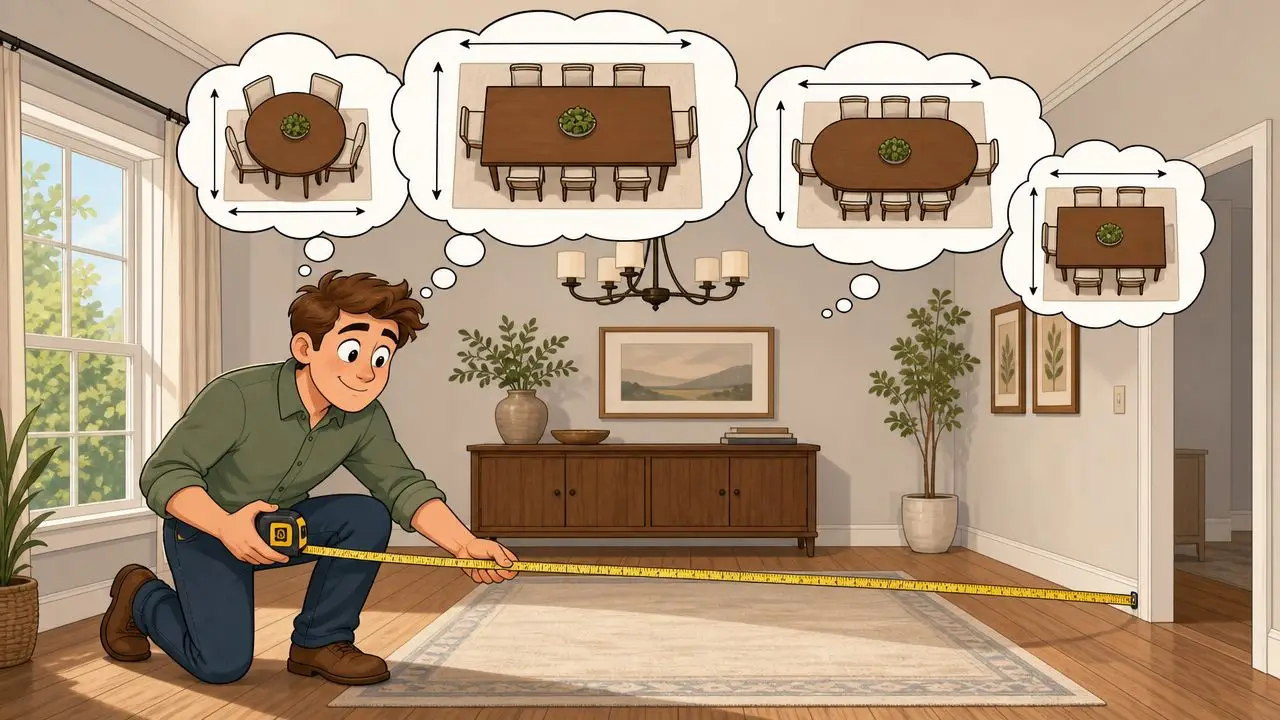
The first step is simple. Measure the room and mark the table footprint on the floor with painter's tape. That quick exercise shows whether chairs can slide back comfortably and whether people can move around the table without squeezing.
Readers who want extra help sorting out proportions can use this guide to dining table heights and how they affect fit.
A short checklist keeps this process manageable:
Measure the dining area
Check the actual usable space, not just the room's widest points.Tape out likely shapes
A rectangle, round top, or extension format can feel very different in the same room.Think about daily traffic
Walkways to the kitchen, doors, and nearby storage matter as much as the table itself.Plan for real seating
Count the people who eat there most often, then think about occasional guests.
A second part of the decision is visual weight. Even when two tables take up similar floor space, one may feel much heavier. Thick legs, a dark finish, or a bulky base can make a modest room feel crowded. Lighter shaping and a quieter finish usually help a transitional dining room table sit more comfortably.
Choose materials and function together
Material choice should match how the room is used. Families with regular homework sessions, craft time, or frequent entertaining often want a surface that's easy to maintain and not too precious to use.
A practical way to evaluate options is to ask what matters most:
| Priority | What to look for |
|---|---|
| Everyday durability | Stable construction, easy-care finish, sturdy joinery |
| Warm appearance | Natural wood tones or softly neutral finishes |
| Flexible hosting | Extension features or expandable design |
| Mixed-chair compatibility | A simple profile that won't clash with different seating |
The broader dining table market has expanded a great deal. According to this history of dining table evolution, homeowners can now find customizable tables that can seat up to 12 or more diners. That helps explain why transitional designs have become so useful. A single table can serve quiet family meals most of the year and still stretch for larger gatherings when needed.
That flexibility matters for value. A household may not host a crowd every week, but it's comforting to know the dining room can step up when birthdays, reunions, or holiday meals come around.
A few buying notes help keep expectations realistic:
- Solid wood appeal: Many shoppers like the character and long-term feel of wood construction.
- Quality veneers: These can also be a sensible choice when finish consistency and affordability matter.
- Extension leaves: They're worth considering for homes that need one room to do several jobs.
- Finish tone: Neutral finishes usually age more gracefully with changing wall colors, rugs, and chair fabrics.
For shoppers comparing options locally, Guynn Furniture & Mattress offers dining furniture from brands such as Ashley and Bassett, along with a large in-stock selection, financing options, and a low price promise with a local price match and 30-day price guarantee. That kind of support can help when a family wants to compare construction, finish, and function in person rather than guessing from a screen.
How to Style Your Transitional Dining Room
Styling a transitional dining room works best when the table stays the calmest element in the space. It anchors the room, and the surrounding pieces add personality without crowding it.
A styled room doesn't need many moving parts. It needs the right few.
Mix chairs without making the room feel random
Many readers get stuck. They like the idea of mixed seating, but they worry the room will look mismatched. The easiest solution is to repeat one element so the variety still feels intentional.
That could mean:
- Matching color family: Upholstered end chairs and simpler side chairs can share similar warm or neutral tones.
- Repeated shape: Curved chair backs can connect different materials.
- Consistent finish: Wood tones don't have to be identical, but they should feel compatible.
A transitional dining room table often looks especially comfortable with upholstered host chairs at the ends and simpler chairs along the sides. That mix creates contrast, but it still feels orderly.
A room looks collected when the pieces relate to one another. It looks chaotic when every piece tries to be the star.
Readers who enjoy merchandising and room presentation may find this FurnitureConnect guide to staging helpful for thinking about balance, spacing, and focal points.
Finish the room with light, texture, and restraint
Once the chairs are set, three details usually complete the space.
Lighting above the table
A fixture should visually center the dining area and support the table's shape. A cleaner chandelier or pendant usually suits transitional rooms better than something heavily ornate.A rug with quiet pattern
Texture often works harder than busy print in this style. The rug should soften the room and define the zone without competing with the table.A restrained centerpiece
Flowers, a bowl, or a low arrangement can add life without blocking conversation or making the table feel permanently decorated.
For readers who want to layer in finishing touches, this guide to dining room accessories that go beyond the table offers useful ideas.
Some households also need help pulling the whole room together, especially if the dining space opens into a living area or kitchen. In those cases, expert design staff, including Debra Williams, can help sort out chair pairing, paint direction, rug scale, and accessory balance so the final room feels calm rather than crowded.
A transitional space should feel edited, not empty. That's the line to aim for.
Making Your Investment Last for Generations
A dining table lasts longer when care becomes routine instead of occasional. That doesn't require complicated products or a fussy schedule. It comes down to a handful of consistent habits.

Simple care habits that matter
A few basic practices protect most dining surfaces well:
- Wipe spills promptly: Moisture left in place can damage finish over time.
- Use mats and trivets: Heat and rough-bottomed items can mark the surface.
- Dust with a soft cloth: Grit can act like fine sandpaper if rubbed across the top.
- Lift instead of drag: Decor, serving pieces, and centerpieces should be picked up rather than slid.
Tables with wood tones or veneers often benefit from gentle, routine cleaning instead of heavy product use. The goal is preservation, not shine at any cost.
Worth remembering: The safest daily habit is usually the simplest one. Keep the surface clean, dry, and protected from heat.
Why this piece deserves attention
The dining table has carried special weight in the home for a long time. A major shift came in the 1860s to 1870s, when the adoption of service à la Russe changed dining tables from buffet-style displays into cleaner settings for individual place settings, flowers, and glassware. That change helped establish the modern table as a presentable surface for both function and display.
That history fits the appeal of a transitional dining room table today. It still serves daily needs, but it also helps set the tone of the room. It's where a home welcomes guests, marks milestones, and creates ordinary memories that matter more with time.
For households that value furniture with staying power, good care isn't just about maintenance. It's about protecting a piece that will likely host years of meals, conversations, and celebrations.
Find Your Table Here at Home in Virginia
Online browsing can help narrow a style. It can't tell a shopper whether a finish feels too dark in person, whether a chair seat is comfortable, or whether a table edge feels right for daily use. That part still happens best in a showroom.
For households in Galax, Independence, Hillsville, and the wider Southwestern Virginia and Northern North Carolina region, shopping locally makes the decision easier in practical ways. A family can compare shapes, wood tones, and extension styles side by side. They can also ask questions in a no-pressure atmosphere, which matters when a table is expected to work for years.
A local store also helps with the parts people usually underestimate:
- Real-time availability: Large in-stock selections can shorten the wait for homes that need furniture soon.
- Guided problem-solving: Staff can help sort out room size, seating needs, and finish compatibility.
- Delivery logistics: Setup matters just as much as purchase when the piece is heavy and central to the room.
Readers furnishing smaller dining areas may also appreciate these ideas for dining tables that work well in compact spaces.
Since 1902, families in this region have looked for furniture that feels dependable, comfortable, and suited to real homes. That same practical mindset still matters today. Many shoppers also want to know the rest of the home can be coordinated at the same time, whether that means dining pieces, La-Z-Boy seating, Ashley or Bassett furniture, or mattresses from Sealy and Therapedic for other rooms in the house.
The service details matter too. Free in-home delivery and setup within 60 miles removes a major headache. Financing options can make a larger purchase easier to manage. If price comes into the conversation, the local price match and 30-day price guarantee give families a clear, transparent framework.
A transitional dining room table tends to work best when it's chosen in person, with room details, lifestyle, and surrounding pieces all considered together. That's especially true for homes that blend older character with newer updates, which is common throughout this region.
For families ready to narrow the choices and see what feels right at home, Guynn Furniture & Mattress offers a practical next step. Visit the showrooms in Galax, Independence, or Hillsville to test the comfort for yourself. Schedule a consultation with the design team to start planning a dream room today. Browse the selection online at guynnfurniture.net.