Bench with Basket Storage: A Local Buyer’s Guide


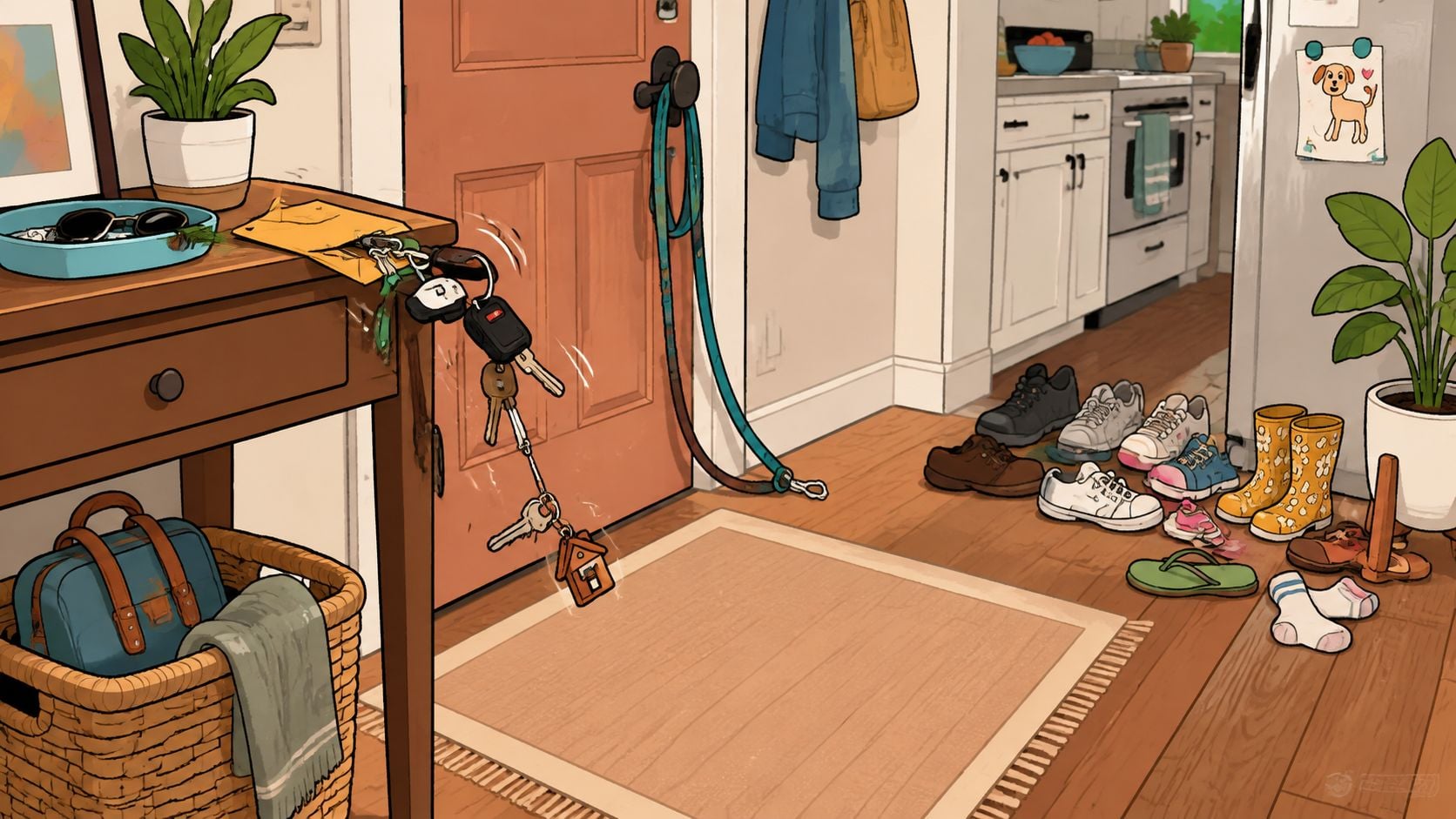
Keys slide off the narrow table, the dog leash hangs from the doorknob, and a line of shoes slowly creeps toward the kitchen. By the time everyone leaves for school, work, or errands, the entryway has become the place where every small item goes to disappear.
A bench with basket storage gives those habits a home. Shoes can stay low and close to the door, scarves and leashes can land in removable baskets, and mail can be sorted before it reaches the kitchen counter. For families across Galax, Independence, Hillsville, and the wider Southwestern Virginia and Northern North Carolina region, that simple change can make a back door, mudroom, or side entry work much harder.
Why a Bench With Basket Storage Solves Real Entryway Chaos
A busy entryway doesn't need more decoration. It needs fewer decisions.
A parent comes through the door carrying groceries and a child's backpack. A dog needs to go outside again. Someone is already looking for gloves, while another person is trying to sit down and pull off muddy boots. A storage bench gives each of those routines a nearby landing place without requiring a major renovation.
Storage that follows real household behavior
The most successful entryway furniture works with the way people already drop things. Open cubbies make everyday shoes easy to grab. Baskets catch the loose items that don't have a natural home, such as:
- Pet gear: Leashes, brushes, waste-bag rolls, and small towels.
- Cold-weather accessories: Gloves, scarves, hats, and earmuffs.
- Grab-and-go items: Reusable totes, umbrellas, chargers, and sports accessories.
- Household overflow: Mail waiting to be sorted, cleaning cloths, or small packages.
That division matters. Shoes usually need quick access, while softer accessories benefit from being contained. A basket can hide visual clutter without forcing a household member to open a door every time they leave.
A helpful entryway clutter solution starts by assigning storage to the first and last five minutes of the day. The bench becomes a place to sit, remove shoes, and reset the room before the clutter travels farther into the home.
Practical rule: Store the items used most often in the easiest-to-reach basket or cubby. Storage only works when the family can use it without slowing down.
Why the bench earns its floor space
A chair offers seating. A basket offers containment. This piece does both while giving the entryway a visual boundary for daily mess.
The category also fits a durable furniture direction. The global storage bench market was valued at $2.1 billion in 2025 and is projected to reach $2.8 billion by 2034, with a projected 5.2% compound annual growth rate. Wooden storage benches represented 38.5% of the market in 2025, according to the storage bench market overview. That makes the bench with basket format more than a passing decorating idea. It belongs to a broad furniture category built around seating, organization, and compact-space utility.
What a Bench With Basket Storage Actually Is
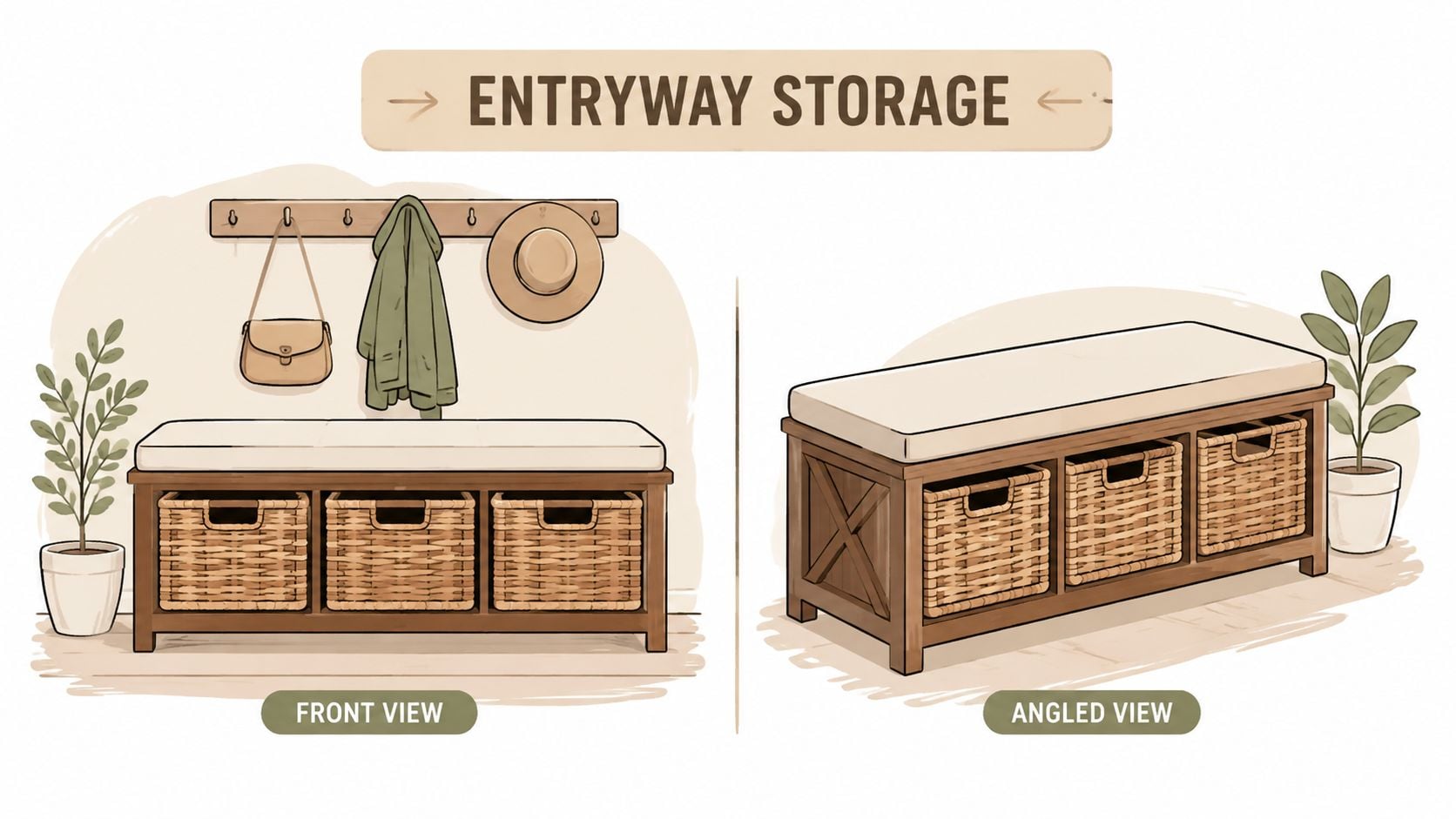
A bench with basket storage combines a seated surface with compartments underneath. Those compartments may hold removable baskets, fixed woven bins, drawers, or open cubbies. The purpose is straightforward, hide or organize the things that collect near a door while giving someone a comfortable place to sit.
The best choice depends less on appearance than on what the household does with its belongings. A family that kicks off shoes and grabs them again later needs fast access. A household trying to hide visual clutter may prefer drawers or baskets that slide fully into a frame.
The main configurations
Fixed-basket cabinets place baskets inside a built frame. They create a finished, coordinated appearance, but replacement baskets may need to match the original dimensions.
Open-cubby benches leave the compartments visible and use separate baskets as flexible inserts. This arrangement works well when the owner wants to change colors, labels, or contents by season.
Lift-top benches hide a larger hollow area beneath the seat. They can hold bulkier items, but the lid requires a free hand and functional hinges. They aren't the first choice for children who need quick shoe access.
Drawer-and-shelf hybrids combine drawers with open areas. Drawers conceal smaller personal items, while shelves or baskets handle shoes and larger accessories.
Matching the design to the doorway
An entryway bench often acts as a command center in an open floor plan. It can separate the drop zone from the living area without creating a wall. In a narrow foyer, a shallow cubby unit usually makes more sense than a deep lift-top model. In a mudroom, a wider bench can support individual baskets for different family members.
The bench also fills a different role than a console table. A reader considering both may find this explanation of what a console table is used for useful, especially when deciding whether the room needs a writing surface, display space, seating, or concealed storage.
A practical test is simple. If items are forgotten once they're hidden, use open baskets or cubbies. If visible clutter makes the room feel unsettled, choose baskets that slide farther inside or drawers that close completely.
Main Types and Materials Worth Knowing
Materials determine how a bench looks, how it handles daily wear, and how easy it is to maintain. Natural fibers bring warmth, while solid wood provides a sturdier visual foundation. Painted engineered materials can offer a clean cottage or modern finish, and metal frames suit homes that need a lighter footprint.
A side-by-side comparison
| Type | Common Materials | Best For | Watch For |
|---|---|---|---|
| Woven basket bench | Seagrass, water hyacinth, rattan, wood frame | Warm farmhouse, coastal, or relaxed rooms | Fibers can shed, snag, or hold odors if damp |
| Solid-wood frame | Oak, pine, mango, rubberwood | Active households and traditional interiors | Finish still needs protection from wet footwear |
| Painted storage bench | MDF, laminate, painted wood | Cottage, transitional, and modern spaces | Engineered surfaces may swell if moisture reaches seams |
| Metal-frame bench | Steel or powder-coated metal with baskets or shelves | Narrow mudrooms, utility entries, garage doors | Hard surfaces can feel less inviting without a cushion |
| Upholstered-top bench | Wood or metal base, foam, performance fabric | Comfortable shoe removal and softer rooms | Fabric needs prompt cleaning and protection |
| Lift-top or drawer hybrid | Wood products, hardware, fabric, or laminate | Concealing larger or less-used items | Hinges and drawer slides need careful use |
Woven baskets are excellent for lighter, flexible storage. Their breathable construction suits shoes, scarves, and pet accessories, though damp boots should sit on a tray rather than directly inside. A removable liner makes cleaning easier and prevents small items from falling through gaps.
Solid-wood frames are the strongest visual choice for a long-lived entryway. They pair naturally with traditional furnishings and can stand up well to children when the finish is maintained. Readers comparing construction details can review this guide to choosing wood furniture for longevity and style.
Details that separate sturdy baskets from decorative ones
Hand-woven baskets often have more visible texture and variation. Machine-made versions may offer a more uniform shape. Neither is automatically better, but the base should feel firm, the sidewalls should hold their shape, and the handles should attach securely.
A liner helps contain small objects and makes seasonal cleaning less frustrating. Reinforced bases matter when a basket gets pulled out repeatedly. For a household that will store shoes, the basket needs enough width to avoid forcing footwear sideways and enough structure to resist bowing.
Sizing and Placement for Tight Entryways
Your household's entryway has a daily pattern. Shoes get kicked off, leashes need a quick grab, and gloves disappear into whatever basket sits closest to the door. Measure the space before choosing a finish. A bench that blocks the door swing or narrows the walking route creates a new problem.
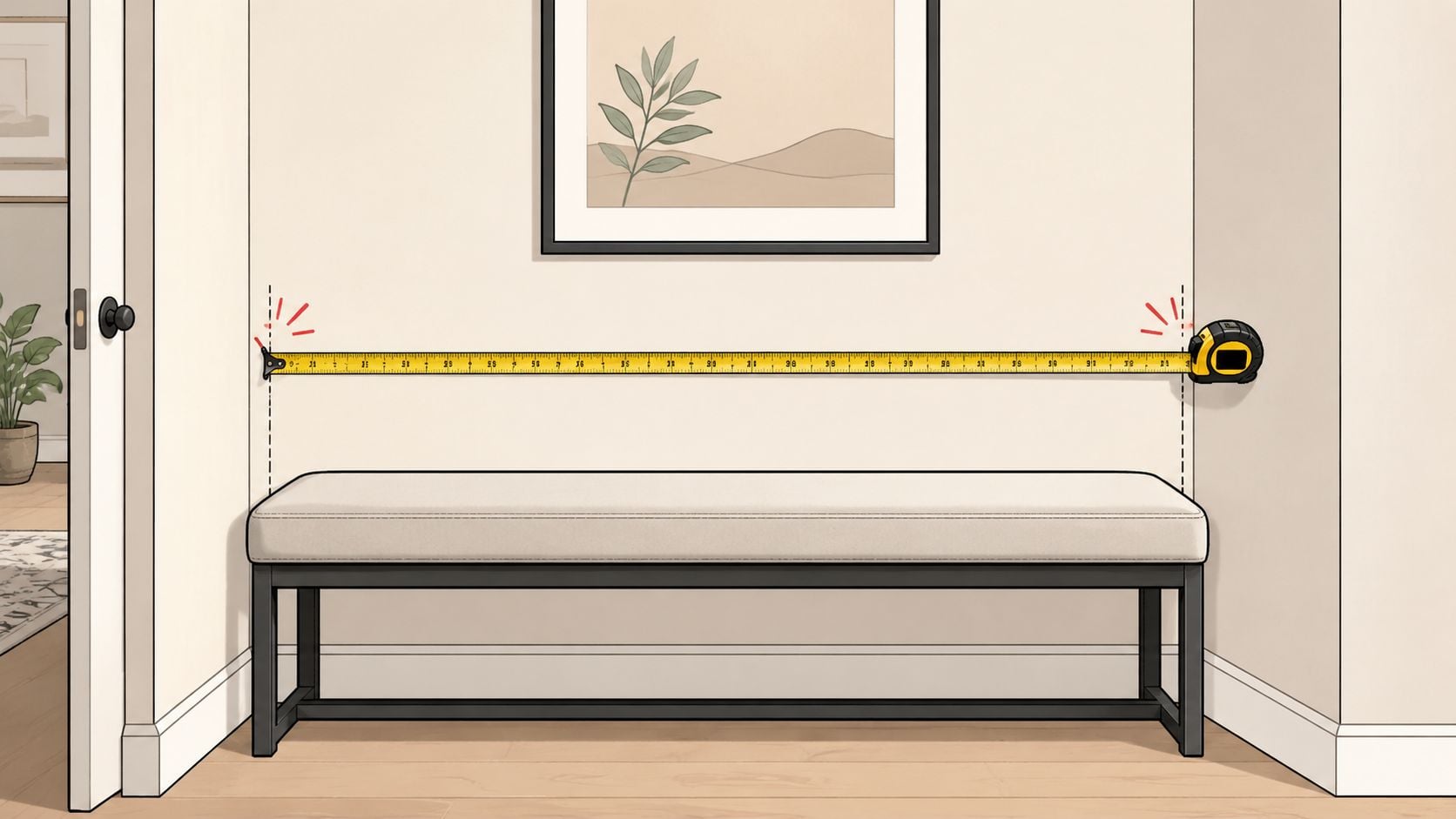
Start with the clear wall width, then leave 4 inches from each end so the frame does not crowd trim, switches, or a door casing. Measure from the wall to the nearest walking path as well. General bench geometry guidance places a comfortable seat height at 17 to 19 inches, a tight-entryway depth at 12 to 15 inches, and front circulation at about 36 inches.
A measuring checklist
- Wall width: Measure the clear span, not the full wall.
- Bench depth: Choose a shallow unit for a narrow foyer. Choose more depth only when the baskets need extra room.
- Seat height: The 17 to 19 inch range supports comfortable shoe removal.
- Front clearance: Keep 30 to 36 inches where people sit, stand, and tie shoes.
- Door movement: Leave about 24 inches beside the door so the frame and baskets do not interfere with its swing.
- Vertical space: In a mudroom, a shelf about 6 to 12 inches deep can hold hats and gloves without taking floor space.
Use this bench seat depth guide to judge comfort when a narrow entryway forces a compromise. The seat must support a secure sitting position without projecting into the walking lane.
Placement that prevents daily frustration
Put the bench on the longest uninterrupted wall in a mudroom. Place baskets holding leashes, totes, or other grab-and-go items nearest the entry side. Store less-used items farther from the door, where they will not interrupt movement or get forgotten behind daily essentials.
For a household that needs quick access, a bench with a 150-pound seat rating and a separate 40-pound-per-basket limit is a reasonable minimum. Check the load limits before assigning baskets to shoes, bags, or heavier gear.
If the bench is taller than it is deep, anchor it according to the manufacturer's instructions. Pulling out a full basket or leaning forward can shift the center of mass, so treat a tall bench-and-storage unit as furniture that needs stable placement, not as freestanding décor.
Honest Pros and Cons to Weigh Before You Buy
At the entryway, a bench becomes a landing spot for real household behavior. Shoes get kicked off, bags are dropped, and small items disappear into whatever container sits closest. A bench with basket storage can bring order to that routine, but only if its materials, access, and weight limits match your home. For broader guidance on choosing furniture that serves more than one purpose, see this multi-functional furniture guide for modern homes.
Where the format performs well
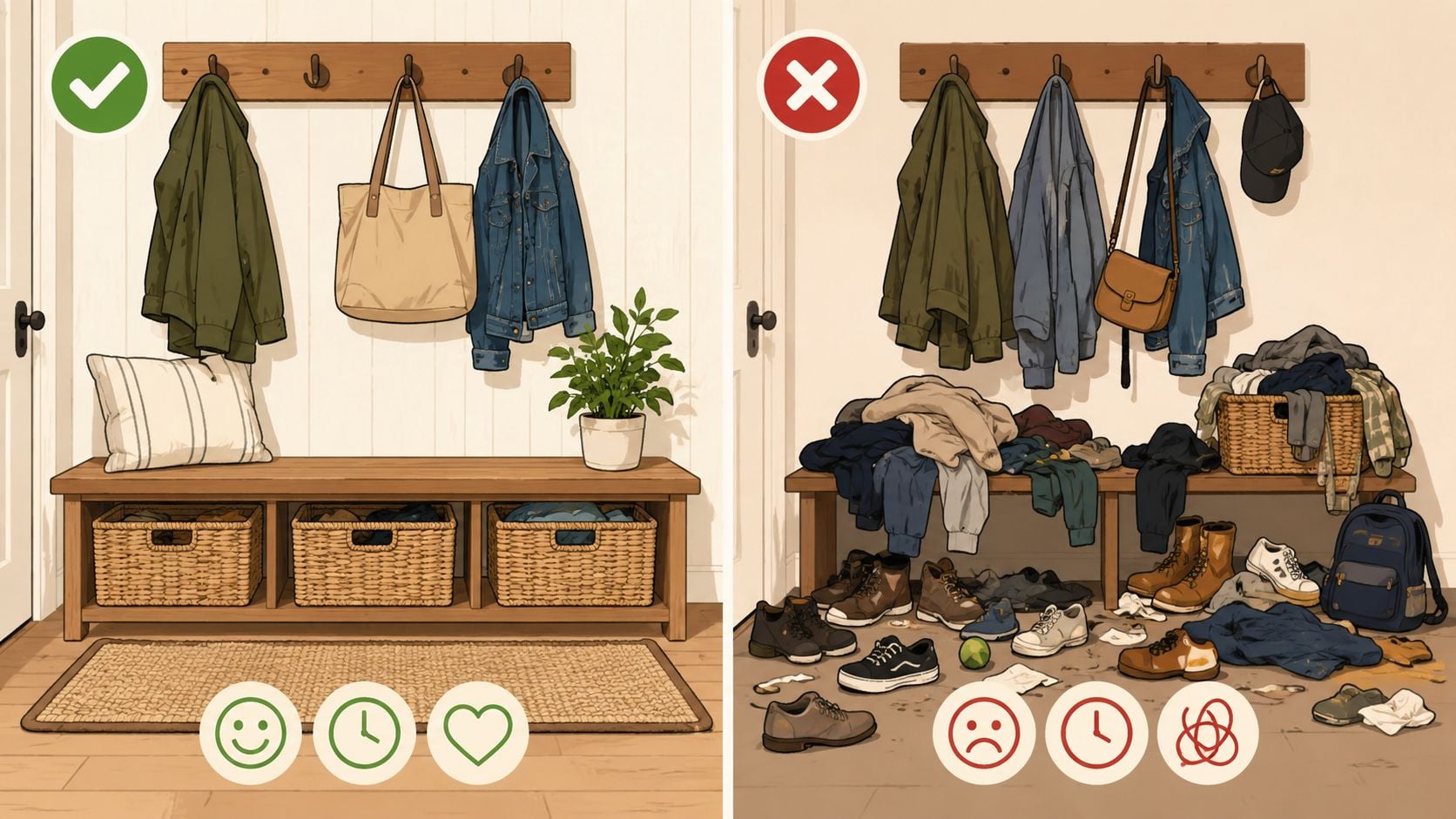
The seat solves a practical problem. Children can sit to pull on boots, adults can steady themselves while tying shoes, and guests do not need to brace against a wall. Baskets collect loose accessories instead of letting them spread across the floor, and you can reassign them when household needs change.
Woven baskets soften hard flooring, doors, and trim. A solid frame keeps the piece visually grounded, while a cushioned top makes the entry more inviting. The best setup gives every frequent item a clear destination, including the things family members usually toss down and forget.
Market data shows continued interest in storage furniture designed for compact, durability-focused spaces. The outdoor storage bench segment was estimated at $2.1 billion in 2025 and is projected to reach $2.8 billion by 2034, with a projected 5.2% CAGR. Plastic and resin represented 42.3% of that segment in 2025, while Asia Pacific held 38.5% of revenue share, according to the outdoor storage bench market data. These figures cover a wider category, yet they support the practical appeal of combining a seat with storage.
Where buyers get disappointed
Budget models often use engineered wood. That material can work well in a dry foyer, but wet boots may expose unfinished edges to moisture and cause swelling. Natural-fiber baskets can hold odors when damp items are left inside, so give wet gear another drying place.
Open baskets show their contents. They look orderly when you control what goes in, then quickly become collection points for mail, toys, and random clutter. Drawers conceal mess more effectively, though their hardware adds weight, cost, and another part that can need repair.
Lift-top designs provide hidden capacity, but their hinges receive repeated stress. If your family needs shoes several times a day, open cubbies are the better choice. Do not make every departure depend on clearing and lifting the seat.
Weight capacity deserves careful reading
Manufacturers commonly list separate ratings for the seat and each drawer or basket compartment. The frame must support the person sitting down, while basket sides, runners, or handles carry localized weight. Check both figures before assigning storage for shoes, books, bags, or dense equipment.
Some buying guidance recommends a 300-pound or higher seat rating for regular adult use and separate basket ratings of 25 to 44 pounds per compartment in higher-traffic family spaces, as described in the entryway storage bench buying guidance. Treat those limits as instructions, not suggestions. Keep unusually heavy items out of baskets unless the manufacturer specifically approves them.
Styling, Cleaning, and Everyday Maintenance
The bench should look finished without becoming too precious to use. The seat needs one comfortable accent, not a collection of objects that must be moved every time someone sits down.
A lumbar pillow or folded throw in a durable performance fabric adds softness. A small plant or a shallow key tray can provide personality. The practical target is to keep roughly 70% of the seat clear, so the furniture remains ready for shoes, bags, or a tired family member.
A seasonal basket rhythm
Basket storage works best when its contents change with the household.
- Winter: Scarves, gloves, hats, and boot accessories belong in the easiest-to-reach baskets.
- Spring: Gardening gloves, lightweight jackets, and reusable bags can move forward.
- Summer: Sunscreen, pool towels, sandals, and outdoor accessories become more useful.
- Autumn: Pet towels, umbrellas, heavier socks, and transitional layers take priority.
Labels help families return items to the same place. A simple word or picture label can help children use the system without asking where every object belongs.
Cleaning that protects the materials
Woven baskets should be vacuumed weekly with a brush attachment. That lifts dust from the fibers without rough handling. A barely damp microfiber cloth works well on wood or painted frames, and wiping those surfaces every two weeks prevents grime from becoming harder to remove.
Every six months, the baskets should be emptied completely. Vacuum the interior cubbies, inspect the basket bases, and check the frame for scuffs, loose hardware, or moisture marks.
Maintenance habit: Wet boots belong on a boot tray in front of the bench, never inside a woven basket. The tray catches melting snow and salt before they reach the storage compartments.
Felt pads under the legs protect hardwood and tile from small shifts. Upholstered seats need prompt attention after spills, while removable basket liners should be cleaned according to their care instructions. These small habits preserve both the function and the welcoming look of the entryway.
Smart Questions to Ask and How Guynn Helps
A furniture showroom should make testing easy. A buyer shouldn't have to guess whether a bench feels comfortable, whether a basket pulls smoothly, or whether the finish will fit the rest of the room.
Before purchasing, a household should ask:
- Seat capacity: What is the tested weight rating, and does it support regular adult use?
- Basket limits: How much can each compartment hold, and are the limits different from the seat rating?
- Basket construction: Are the baskets woven, molded, lined, or reinforced at the base?
- Finish durability: Can the frame handle the scuffs and moisture common at the household's entry?
- Hardware quality: Do drawer slides and hinges move smoothly without binding?
- Warranty terms: What does the warranty cover, and what care does it require?
- Delivery logistics: Can the delivery team manage narrow halls, stairs, and a tight doorway?
- Payment choices: Are financing options available if the household wants to spread out the purchase?
Guynn Furniture & Mattress can make that evaluation more practical through a local showroom experience. Shoppers can sit on a bench, open baskets, test a lift mechanism, and compare finishes without the pressure of an online-only purchase. The store carries home furnishings from brands including La-Z-Boy, Ashley, Bassett, Sealy, and Therapedic, and it operates as a La-Z-Boy Showcase dealer.
For a household coordinating an entire entryway or adjacent room, expert design staff and Debra Williams can help with placement, finishes, and room coordination. Published examples of local furniture retail also describe complimentary designer support that can include one-on-one consultations and coordination around delivery and installation, as shown in furniture design service information.
Guynn states that it provides free in-home delivery and setup within 60 miles of its stores in Galax, Independence, and Hillsville, serving Southwestern Virginia and reaching into Northern North Carolina, according to its delivery and assembly information. The company also has a long local history dating to 1902, offers in-house financing, maintains a large in-stock selection for immediate delivery, and backs its value promise by matching local competitors and offering a 30-day price guarantee when pricing applies.
A no-pressure atmosphere matters when the right choice depends on comfort, measurements, and daily habits. The helpful shortcut is to bring room dimensions, photographs of the entryway, and a list of the items that usually land by the door.
Visit Guynn Furniture & Mattress to compare storage benches, test comfort, and get practical guidance for the entryway. Visit the showrooms in Galax, Independence, or Hillsville, or schedule a consultation with the design team to start planning a more organized room today.