8 Home Decor Ideas for Small Homes from Our Experts


Making a small home work usually starts the same way. You walk in after a long day, set your keys on the nearest surface, and suddenly every corner feels full. Shoes pile up by the door. Mail lands on the table. A room that felt cozy during the showing starts to feel tight in everyday life.
Good decorating fixes that. The right home decor ideas for small homes help you store what you use, choose furniture that fits, and make each room feel easier to live in. Tiny homes, which some define as being under 600 square feet, have become more popular for that reason. People want homes that feel manageable, comfortable, and intentional.
At Guynn Furniture & Mattress, we help homeowners in Galax, Hillsville, Independence, and nearby communities make those decisions every day. Our team has been doing it since 1902, and we’ve seen the same pattern over and over. Small spaces improve fast when you stop buying filler pieces and start choosing furniture with a clear job.
That usually means being more selective, not spending more. A storage ottoman will serve you better than an accent bench that only takes up floor space. A loveseat sized for your living room will look better and feel better than a sectional that crowds every walkway. If you want practical starting points before you shop, these space-saving furniture ideas for small homes will help you narrow your options.
If you feel stuck, get in the store and ask for help. Guynn’s in-person design guidance, room planning help, and lineup of trusted brands give you real solutions you can see, test, and bring home with confidence.
These are the ideas we recommend most often for first-time homeowners, downsizers, and anyone who wants a smaller house to feel open, useful, and welcoming.
1. Multi-Functional Furniture with Built-In Storage
If a piece doesn’t earn its spot, skip it.
That’s the simplest rule for a small home. Your coffee table should offer more than a place for remotes. Your ottoman should hide blankets, games, or kids’ toys. Your guest seating should help with storage or overnight sleeping.
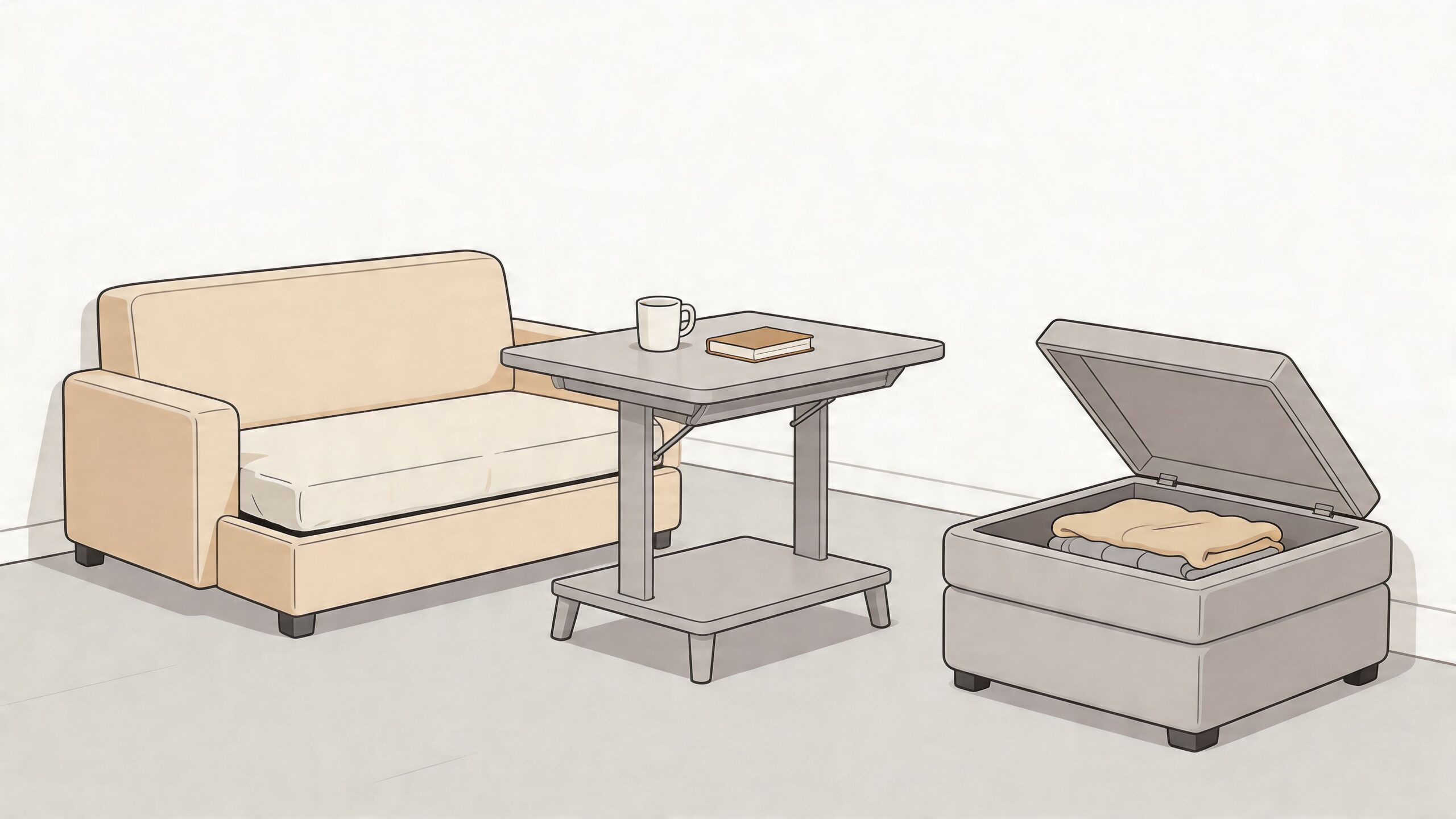
In a smaller living room, we often recommend lift-top coffee tables, storage ottomans, and sleeper sofas first. They reduce clutter without adding more furniture. That matters because reclaimed function makes a room feel easier to live in from morning to night.
Pick pieces that solve daily problems
A family room in Hillsville might need to handle movie night, homework, and the occasional overnight guest. One well-chosen sleeper sofa from Ashley can handle seating by day and guest space by night. A La-Z-Boy loveseat with a center console gives you hidden storage and charging access without needing an extra side table.
If your bedroom is tight, a storage bench at the foot of the bed can hold extra linens and still work as a seat while you get dressed.
A few practical favorites:
- Lift-top coffee tables: Raise the surface for meals, laptops, or puzzles without adding a desk.
- Storage ottomans: Tuck away blankets, pet toys, and seasonal décor while keeping sightlines clean.
- Sofa beds: Turn an office or den into a guest room without crowding the home year-round.
- Drawer beds: Keep extra bedding or off-season clothing out of the closet and out of sight.
Practical rule: Hidden storage works better than open storage when you're trying to make a room feel calmer.
Before you buy, measure your room, your doorway, and your traffic paths. Expanded furniture can take more space than you expect once a bed is pulled out or a top is lifted.
If you want ideas that fit your floor plan, our team can help you sort through space-saving furniture ideas without guessing. That’s especially helpful when you want one piece to do two or three jobs well.
2. Vertical Storage and Wall-Mounted Solutions
You know the feeling. The floor is clear after a quick cleanup, but the room still feels crowded because every surface is doing too much. In a small home, the fix is usually on the wall, not on the floor.
Wall-mounted storage gives a room shape and function without adding the heavy footprint of another cabinet or bookcase. Floating shelves, peg rails, narrow wall organizers, and tall ladder pieces keep daily items accessible while protecting your walking space. That matters in smaller living rooms, home offices, and bedrooms where every inch has to earn its keep.
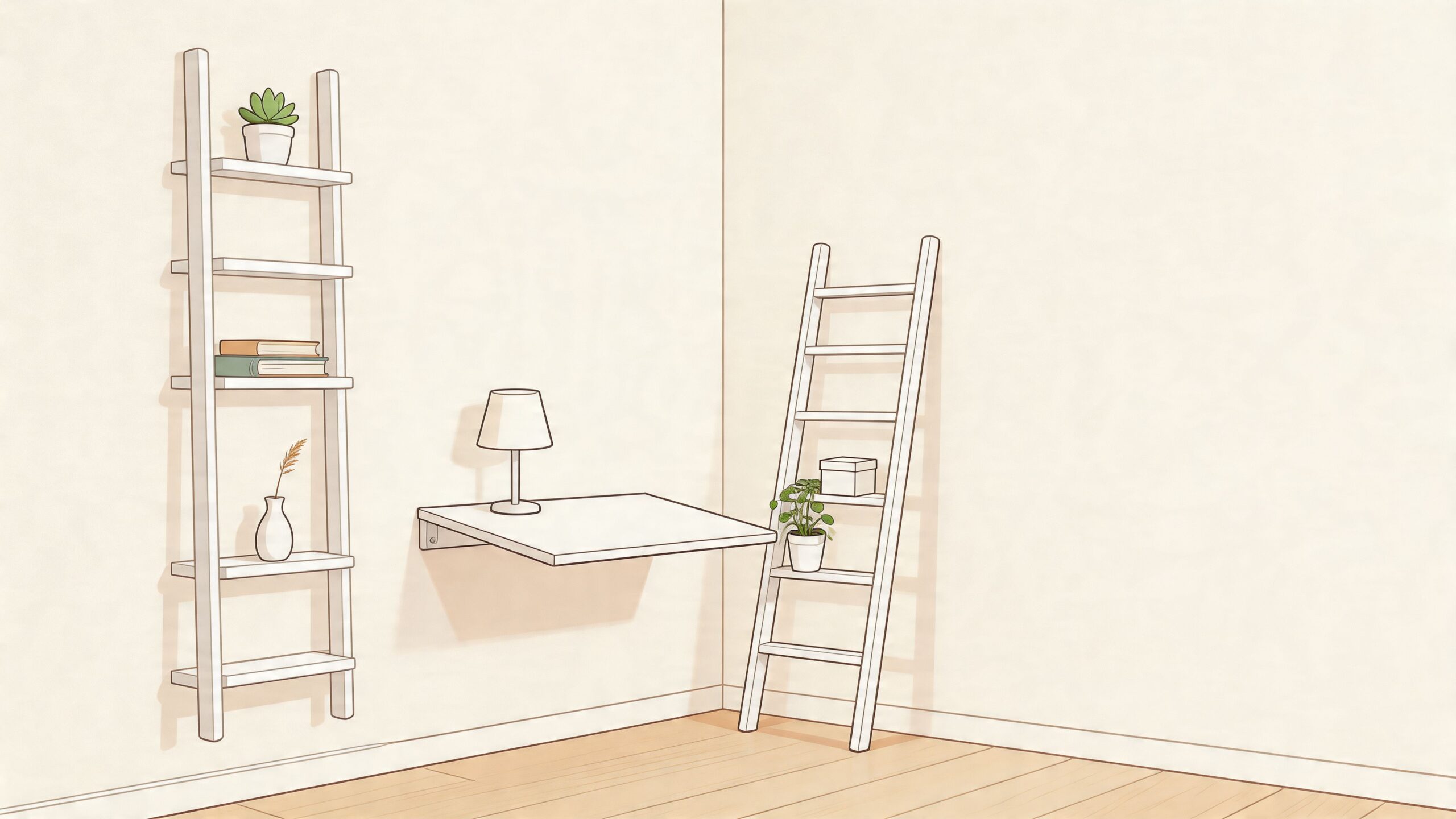
Build upward before you add another piece
A tight office in Independence works better with one slim desk and storage above it than with a wide desk plus a bulky bookcase. In bedrooms, a pair of wall shelves can handle lamps, books, and chargers, which lets you skip oversized nightstands. In a dining nook, a tall narrow cabinet or corner shelf keeps serving pieces close without squeezing the table area.
This is also one of the easiest updates to tailor with help from Guynn Furniture & Mattress. If you are pairing wall storage with a compact desk, accent cabinet, or scaled-down bedroom pieces from brands like Ashley or Liberty, the in-store team can help you choose furniture that does not fight your layout. That kind of guidance saves you from buying one more piece that looks right in the showroom and feels too large at home.
A few rules make vertical storage look better fast:
- Keep everyday items between waist and eye level.
- Use upper shelves for lighter décor and less-used pieces.
- Mix baskets or closed boxes with open shelving to cut visual noise.
- Choose shelf finishes that blend with the wall or nearby furniture.
Renters can use the same strategy. Freestanding ladder shelves, narrow étagères, and removable wall systems give you the vertical benefit without a full built-in project.
If you want the room to feel taller and calmer, leave part of each shelf open. Empty space helps storage look intentional. For more practical ideas that work in real homes, see these tips on making a small room feel big without crowding it.
Plants also belong in this conversation. A hanging planter or wall-mounted pot adds life without stealing table space, and these stunning vertical gardens are a good example of how to bring greenery upward in a clean, controlled way.
3. Light Colors and Strategic Mirrors for Visual Expansion
You walk into a small room after a long day, and it feels tight before you even sit down. In many homes, the problem is not the square footage. It is heavy finishes, dark sightlines, and too little light bouncing around the room.
Start with the surfaces your eye notices first. Walls, rugs, curtains, and larger furniture pieces should stay light and quiet. Soft white, warm cream, pale greige, and light taupe usually work better than bright stark white because they keep the room open without feeling cold. If you are shopping locally, Guynn Furniture & Mattress can help you match those lighter tones to real pieces on the floor, whether that means an Ashley sofa, a La-Z-Boy recliner, or a bedroom set with a softer wood finish from Bassett or Broyhill.
Mirrors help, but placement matters more than size. Put one where it catches daylight from a window or picks up lamplight in the evening. A mirror across from laundry piles, toy baskets, or a crowded kitchen counter will make the room feel busier, not bigger.
A few pairings work especially well in small homes:
- Warm white or light greige walls with natural wood furniture
- Cream or light gray upholstery with a low-contrast rug
- White trim and ceiling with soft neutral curtains
- One large mirror above a dresser, console, or entry bench
Keep the palette simple. Too many color changes chop up the room and make it feel smaller.
If you are updating a bedroom, this approach works especially well with scaled-down pieces and lighter finishes. Guynn’s team can help you build that look with furniture that fits the room instead of crowding it, and their guide to stylish small bedroom solutions that actually save space is a useful place to start. For more ideas on layout and product choices, this roundup of space-saving furniture for small bedrooms adds practical inspiration.
For family homes, choose light fabrics you can live with. Performance upholstery, washable rugs, and medium-tone wood accents keep the room bright without making you nervous about daily wear. That is usually the sweet spot.
4. Compact Bedroom Furniture and Space-Saving Bed Solutions
You feel this problem the second you try to walk around the bed without bumping a dresser, nightstand, or laundry basket. In a small home, the bedroom has to stay restful without wasting precious floor space.
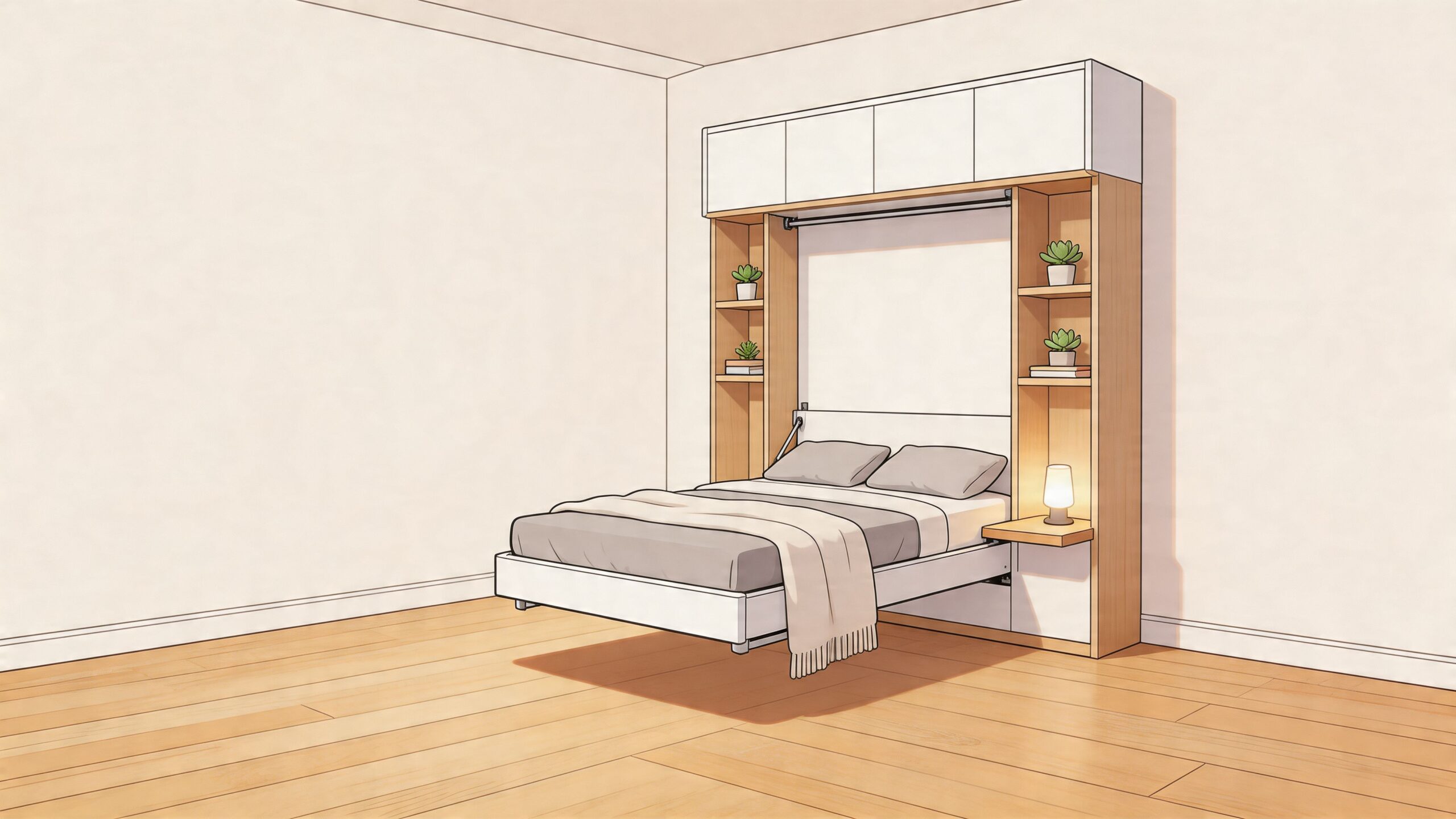
Start with the bed, because it sets the tone for everything else in the room. A bulky frame with a tall footboard can make a bedroom feel tight fast. A lower-profile platform bed from Ashley or Broyhill usually looks cleaner and leaves the room feeling more open. If storage is short, skip the basic frame and choose a bed with built-in drawers.
Murphy beds also deserve a hard look, especially in guest rooms, home offices, or bonus rooms that need to do double duty. They free up the floor during the day and make one room far more useful. If you want ideas before you shop, this guide to space-saving furniture for small bedrooms shows several smart layouts and furniture types.
A few setups work especially well in smaller bedrooms:
- Platform beds with drawers: Great for off-season clothing, extra bedding, or anything crowding the closet.
- Bookcase or shelf headboards: Useful if a full nightstand will not fit on both sides.
- Wall-mounted bedside shelves: They keep the floor cleaner and make vacuuming easier.
- Sealy or Therapedic mattresses paired with scaled-down frames: Comfortable, practical, and easier to fit in tighter rooms.
The biggest mistake is forcing full-size bedroom sets into rooms that cannot handle them. Buy by function, not by matching collection. A bed, one properly scaled nightstand, and a narrower chest often serve a small bedroom better than a traditional suite.
If you want help narrowing it down, Guynn’s design staff can walk you through stylish solutions for small bedrooms and show you pieces in person. If your challenge is keeping the room useful without making it feel busy, their advice on personalizing a small space without creating clutter is a smart next read.
5. Minimalist Décor and Intentional Clutter Reduction
A small room can handle personality. It can’t handle too much visual noise.
That’s why some of the best home decor ideas for small homes have nothing to do with buying more. They come from editing what’s already there. Fewer objects on surfaces. Fewer tiny accents competing for attention. Better storage for the things you need but don’t want to see every day.
Curate the room instead of filling it
If you walk into a living room and every table holds accessories, every wall has décor, and every shelf is packed, the room will feel smaller no matter how nice the pieces are.
Start by clearing the obvious extras. Then add back only what earns its place.
- Choose one strong focal point: A large artwork, a mirror, or a beautiful lamp does more than five little accessories.
- Keep tabletops mostly open: A lamp and one tray can be enough.
- Use closed storage for busy items: Chargers, paperwork, toys, and remotes don’t need to stay visible.
- Repeat materials sparingly: Wood, metal, and upholstery look better when they’re balanced instead of layered endlessly.
A simple example. In a small dining area, use one centerpiece, not a cluster. In an entryway, a mirror and a narrow bench may be all you need. In a bedroom, let the bedding be the statement and keep the nightstands mostly clear.
“If you love it, display it well. If you don’t use it and don’t notice it, store it or let it go.”
This approach also protects your budget. It’s better to invest in a few lasting pieces from Ashley, Broyhill, or La-Z-Boy than to keep cycling through trendy items that only add clutter.
If you like a cleaner look but still want warmth, mastering minimalism without feeling cluttered is a good place to start.
6. Strategic Lighting and Layered Light Design
You walk into a small room at night, flip on the ceiling light, and the whole space feels tighter. The corners disappear. The seating area looks flat. The room that felt decent during the day suddenly feels cramped.
Lighting fixes that faster than people expect.
A single overhead fixture rarely does enough in a small home. It throws light from one spot, leaves shadows where you do real life, and makes the room feel one-note. Layered lighting solves the problem by spreading light across the room at eye level, table height, and floor level.
Start with three jobs for light: brighten the room, support daily tasks, and soften the edges.
A smart setup usually includes:
- A ceiling fixture for overall light
- A table lamp near the sofa, reading chair, or desk
- A floor lamp in a dim corner
- Bedside lamps or wall sconces for evening use
Natural light still matters. Keep window areas open, skip heavy drapes if privacy allows, and avoid putting tall furniture in front of the glass. If you already have mirrors in the room, place them where they catch daylight or lamp light so the room feels brighter without adding glare.
Bulb choice matters too. Warm light works better in living rooms and bedrooms because it feels comfortable and lived-in. Cooler light has its place in laundry rooms, bathrooms, or work areas, but it can make a small seating area feel stark.
In Galax and nearby homes, one of the easiest upgrades is replacing one oversized lamp with two smaller, better-placed sources. The result is usually immediate. The room feels calmer, more balanced, and easier to use after dark.
If you want help getting the mix right, Guynn Furniture & Mattress can help you pair lighting with the furniture already doing the heavy lifting in your space. A slimmer end table may make room for a better lamp. A properly scaled accent chair can open up a dark corner that needs light. That kind of in-person problem-solving is often what turns a small room from dim and crowded into warm and comfortable.
7. Smart Furniture Scale and Proportion
You bring home a sofa that looked perfect in the showroom. Then it lands in your living room, blocks half the walkway, and makes the whole space feel tighter by the hour.
That problem is usually about scale, not style.
Small homes need furniture with the right footprint, the right height, and enough breathing room around it. A piece can be beautiful and still be wrong for the room. In tighter spaces, a few inches of extra depth on a sofa or dresser can change how the whole room works.
Buy for the room you have
Start with the pathways. If people have to turn sideways to get past the coffee table or squeeze between the bed and dresser, the furniture is too large or too numerous.
A narrow living room often works better with a loveseat and one well-sized chair than a bulky sectional. A compact dining area usually feels easier to move through with a round table. In a smaller bedroom, lower-profile dressers and nightstands keep the room from feeling top-heavy.
Online photos hide scale all the time. Go test the piece in person. Sit in the chair. Check the arm height. Measure the seat depth. Ask how far the recliner extends when fully open. That hands-on step saves a lot of regret.
A few rules make shopping easier:
- Choose lower-profile silhouettes so more wall stays visible.
- Check depth carefully because deep seating eats floor space fast.
- Protect walkways around beds, sofas, and dining chairs.
- Skip filler furniture and use fewer pieces that fit well.
If you need help sorting out sizes before you buy, Guynn Furniture & Mattress can help you compare floor models, brand by brand, and map out what fits your room. That matters when you are mixing lines like La-Z-Boy, Bassett, and Ashley, where proportions can vary more than people expect. Their team can also help you plan a room layout that fits your space so you are choosing furniture for your actual home, not a showroom floor.
8. Multipurpose Rooms and Flexible Living Spaces
In a small home, one room often has to do two jobs. Sometimes three.
That’s normal. A guest room becomes a home office. A dining area doubles as a work zone. A living room turns into sleeping space when family visits. Flexible rooms aren’t a compromise. They’re often the smartest part of the house.
Create zones that shift easily
Start with the room’s main job, then support the second one without fighting the first. If the room is mainly a living room, keep the seating comfortable first and add guest sleeping through a sleeper sofa or daybed. If it’s mainly a bedroom-office combo, make sure work storage closes up neatly before transitioning to its bedroom function.
The gap between renter-friendly ideas and homeowner solutions matters here too. Renters make up 35 to 40% of U.S. households, and many can’t install permanent dividers, pocket doors, or built-ins. Freestanding shelves, portable desks, nesting tables, and removable wallpaper are much better fits for that stage of life.
Neighbor advice: If a room changes function during the day, make cleanup part of the design. Closed storage makes the switch much easier.
Helpful choices include:
- Sleeper sofas for living room guest space
- Expandable tables for dining and work
- Freestanding dividers to separate zones
- Portable nesting tables that move where you need them
- Lightweight chairs or benches that can shift with the room
If you’re trying to fit work, sleep, storage, and daily life into one space, our team can help you map it out with how to plan room layout. A good layout often solves more than buying another piece ever will.
8-Point Small-Home Decor Comparison
| Solution | Implementation complexity 🔄 | Resource requirements ⚡ | Expected outcomes 📊 | Key advantages ⭐ | Tips 💡 |
|---|---|---|---|---|---|
| Multi-Functional Furniture with Built-In Storage | Moderate, convertible/mechanical parts and occasional maintenance | Moderate upfront cost; occasional servicing; delivery/installation recommended | High space efficiency; reduced visible clutter | Maximizes utility per item; fewer separate purchases; flexible use | Measure doors/hallways; test mechanisms; choose neutral finishes; check weight capacity |
| Vertical Storage and Wall-Mounted Solutions | Low–Moderate, careful measuring and secure anchoring required | Low–Moderate cost; anchors, brackets, possible pro install for heavy units | Frees floor area; creates perceived height and openness | Affordable, reconfigurable, good for displays and accessible storage | Plan heights, use proper anchors for loads, mix open and closed storage |
| Light Colors and Strategic Mirrors for Visual Expansion | Low, paint and mirror placement; minimal installation | Low cost (paint, mirrors); occasional refreshes | Strong visual expansion; brighter, airier rooms | Most cost-effective way to enlarge perception of space | Use warm neutrals vs. stark white; place mirrors near windows; layer warm accents |
| Compact Bedroom Furniture and Space-Saving Bed Solutions | Moderate–High, murphy/loft beds need precise installation | Moderate–High cost for mechanisms; structural/wall considerations; pro install often required | Frees large floor swaths; enables multi-function bedrooms | Transforms bedrooms into multi-use spaces; built-in storage reduces extra pieces | Measure carefully; consider mattress compatibility; prefer professional installation |
| Minimalist Décor and Intentional Clutter Reduction | Low, requires time, decision-making, and habit changes | Low cost (time and organizing supplies); may need concealed storage | Visual calm, easier cleaning, clearer focus | Reduces upkeep and spending; highlights fewer quality pieces | Start with declutter purge; adopt one-in/one-out; use closed storage for excess |
| Strategic Lighting and Layered Light Design | Moderate, planning layout; possible electrical work for fixtures/dimmers | Moderate cost for fixtures, dimmers, LED bulbs; possible electrician | Increased depth and functionality; adaptable mood settings | Enhances perceived space and task performance; energy savings with LED | Use 3–4 light layers, install dimmers, place lamps in corners, use warm color temp |
| Smart Furniture Scale and Proportion | Low–Moderate, requires accurate measuring and selection | Low–Moderate; may need custom or apartment-scale pieces | Balanced rooms with improved traffic flow and perceived space | Prevents overcrowding; allows multiple functional pieces | Leave ~18" circulation space; test paper templates; choose shallow-depth pieces |
| Multipurpose Rooms and Flexible Living Spaces | High, careful zoning, storage planning, and frequent reconfiguration | Moderate cost for convertible/mobile furniture and efficient storage | Maximum utility from limited square footage; adaptable to changing needs | Cost-effective alternative to larger homes; highly adaptable | Define zones with rugs/lighting, use rolling/convertible furniture, keep storage accessible |
Your Small, Stylish Home Awaits
Creating a home you love isn’t about how much square footage you have. It’s about using that space with intention. Small homes can feel warm, open, practical, and beautiful when the furniture fits, the layout makes sense, and the room isn’t carrying more than it should.
That’s why the best home decor ideas for small homes are usually the simplest ones. Choose furniture that works harder. Use your wall space. Keep colors light where you want openness. Pick bedroom pieces that give storage back. Let lighting soften the room. Be honest about scale. And if a room needs to do more than one thing, design it that way on purpose instead of fighting it.
For many families across Galax, Independence, Hillsville, and the wider Southwestern Virginia and Northern North Carolina region, the hardest part isn’t wanting a better space. It’s figuring out what will fit, what will hold up, and what’s worth spending money on. We understand that. Shopping for furniture can feel expensive and a little intimidating, especially when you’re trying to avoid mistakes.
That’s why we keep things simple at Guynn Furniture & Mattress. Since 1902, we’ve helped local families furnish their homes in a no-pressure atmosphere. If you want comfort-focused seating, you can try La-Z-Boy in person. If you’re comparing styles and value, you can look at Ashley, Bassett, and Broyhill. If your bedroom needs an update, you can test Sealy and Therapedic mattresses for yourself instead of guessing online. If your space is tricky, Debra Williams and our expert design staff can help you think through scaled plans, finishes, and practical layouts.
We also know convenience matters. We offer free in-home delivery and setup within 60 miles, a large in-stock selection for quicker delivery, and a Low Price Promise with local competitor matching plus a 30-day price guarantee. That helps take some pressure off when you’re making decisions for your home.
Ready to get started?
- Visit our showrooms in Galax, Independence, or Hillsville to test the comfort for yourself.
- Schedule a consultation with our design team to start planning your dream room today.
- Browse our selection online at guynnfurniture.net.
If you’re ready to make your small home feel more comfortable and more functional, visit Guynn Furniture & Mattress. We serve Galax, Independence, Hillsville, and the wider Southwestern Virginia and Northern North Carolina region with expert design help, trusted brands, free in-home delivery and setup within 60 miles, and a no-pressure shopping experience.