A Guide to a Lift Chair for Elderly Loved Ones


A lot of families reach the same moment in a quiet, ordinary way. A parent leans forward in a favorite chair, presses hard on the armrests, rocks once or twice, and still struggles to stand. Everyone in the room notices it. No one wants to embarrass them. Everyone wants them safe.
That's why a lift chair for elderly loved ones often becomes more than a furniture decision. It becomes a home decision, a comfort decision, and a dignity decision. For families across Galax, Independence, Hillsville, and the wider Southwestern Virginia and Northern North Carolina region, the goal usually isn't to make life feel more medical. It's to help daily life feel easier again.
Furniture shopping can feel complicated when mobility is part of the conversation. A helpful guide matters. Families in this region have leaned on local experience since 1902, and a no-pressure atmosphere still matters when the choice feels personal.
More Than Just a Chair An Investment in Independence
A son notices his mother no longer gets up easily after supper. A daughter sees her father pause before standing because his knees don't trust the movement. The concern isn't only about comfort. It's about whether home still feels safe.

A lift chair can change that moment. Instead of asking a loved one to give up independence, it supports the independence they still have. The chair looks familiar in a living room, but it adds steady help during one of the hardest daily movements.
Why families often wait too long
Many older adults don't want help until they truly need it. They may say they're “doing fine,” even when getting out of a chair has become tiring or unsteady. Family members often feel torn between respect and concern.
A good mobility choice doesn't take control away. It gives control back in a safer form.
That's one reason a lift chair feels different from many other assistive products. It doesn't announce itself loudly. It offers support in a way that still feels like home.
A positive step, not a setback
For households planning for long-term comfort, a lift chair often fits into broader aging in place home modifications such as better lighting, safer flooring, and easier room layouts. The chair becomes part of a whole-home approach to staying comfortable at home longer.
Families also tend to compare lift chairs with standard recliners before making a decision. A practical starting point is this guide to recliner chairs for elderly family members, especially for readers trying to tell the difference between comfort furniture and mobility support.
In Southwestern Virginia, where many households care for older relatives at home, this choice is personal. It helps when the process feels simple, local, and respectful.
What Is a Lift Chair and Why Does It Help
A lift chair for elderly users looks a lot like a comfortable recliner. The big difference is inside. An electric motor tilts the entire seat platform forward and upward, helping guide the user from sitting to a near-standing position while reducing strain on the body, as described in this overview of how lift chairs work.
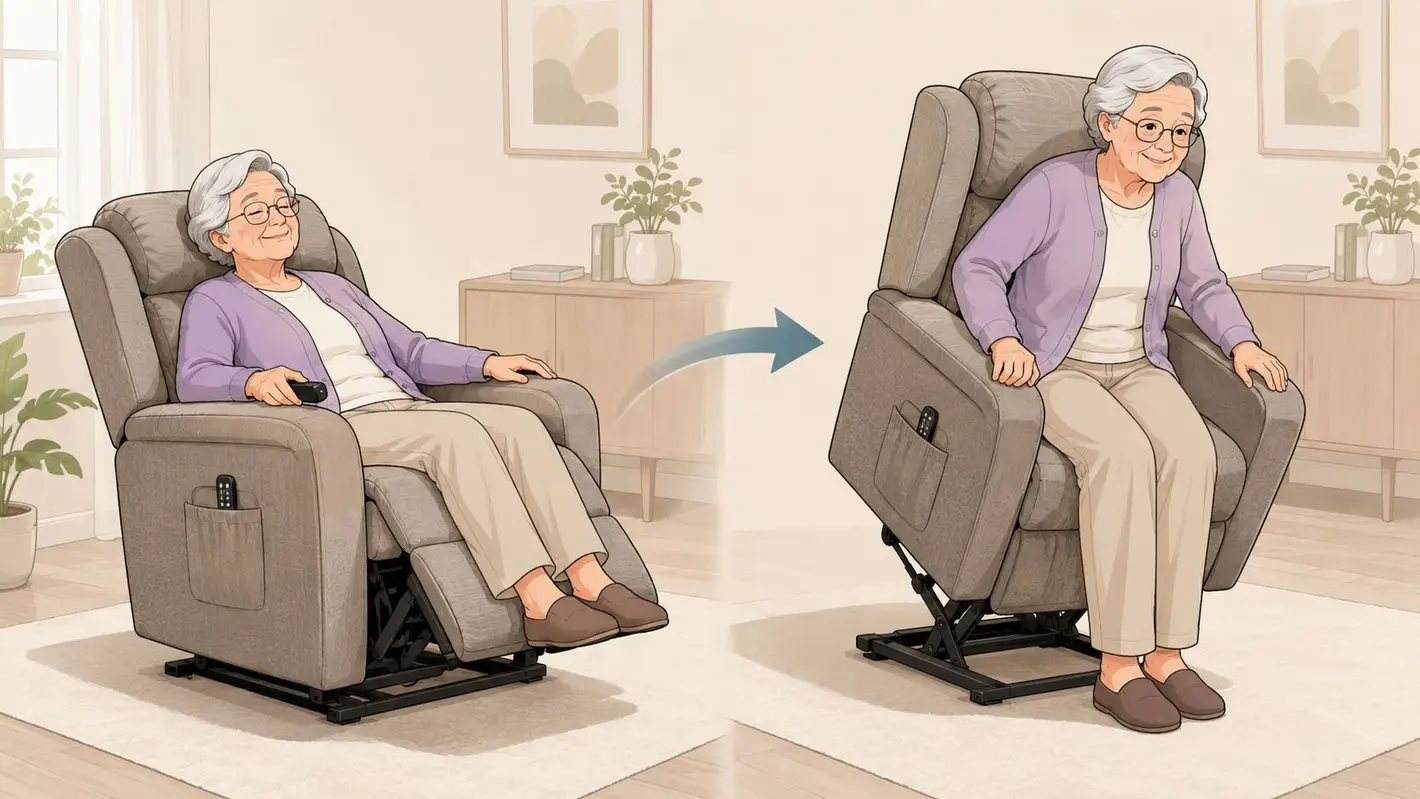
That movement matters because standing up is often the hardest part of sitting. Knees, hips, balance, and core strength all have to work together at once. When one part struggles, the whole movement can feel shaky.
The gentle-hand idea
The easiest way to picture a lift chair is this. It acts like a gentle, steady hand under the whole body rather than forcing someone to push hard with their legs or arms.
That support can lower fear in a very practical way. Elderly users with mobility limitations experience a 40% higher risk of falling when attempting to rise from standard armchairs without mechanical assistance, according to this supporting reference. For many families, that's the primary reason a lift chair moves from “nice idea” to “important safety feature.”
What help looks like in daily life
A lift chair can be useful when someone:
- Pushes hard on armrests and still can't stand smoothly.
- Avoids getting up because the movement feels tiring or unsteady.
- Feels stiff after sitting through a meal, church service, or television program.
- Needs support after surgery or with a neurological condition, where controlled movement is important.
Clinical research adds an important detail. A lifting seat may not make the full sit-to-stand movement faster, but it can reduce the flexion angle and joint moment at the knees and hips, which means less physical strain during the transition, according to this research summary on sit-to-stand mechanics.
Practical rule: A lift chair doesn't promise speed. It supports safer, less stressful movement.
That distinction helps families set realistic expectations. The benefit isn't rushing someone to their feet. The benefit is helping them rise with more stability, less strain, and more confidence.
Exploring Different Types of Lift Chairs
Not every chair serves the same routine. Some people want help getting up after reading or watching television. Others need a chair that supports long afternoons, regular naps, or even overnight rest. The right type depends less on bells and whistles and more on how the chair will be used from morning to night.
La-Z-Boy, Ashley, and other trusted collections often offer different lift options with different comfort profiles. As a La-Z-Boy Showcase dealer, Guynn Furniture & Mattress carries lift recliners along with other living room seating options, which gives families a way to compare feel, fit, and motion in person without rushing the decision.
Lift Chair Types at a Glance
| Chair Type | Recline Capability | Best For |
|---|---|---|
| 2-position | Slight recline with lift assistance | Reading, conversation, television, basic daily support |
| 3-position | Deeper recline that works well for resting | Lounging, afternoon naps, longer periods of sitting |
| Infinite-position | More customizable positioning | Users who want highly adjustable comfort and may spend many hours in the chair |
How each type fits real life
A 2-position chair works well for someone who mostly wants standing help and a comfortable upright seat. It's often the easiest model for first-time buyers to understand because it keeps things simple.
A 3-position chair suits the person who treats the chair as a main seat during the day. It offers a deeper recline, which can make napping much more comfortable.
An infinite-position chair offers more precise adjustment. This type can make a difference when a person wants to fine-tune back and leg angles for long stretches of seated time.
Space matters too
Chair type isn't only about body comfort. It's also about room layout. In smaller homes, dens, or bedrooms, a wall-friendly design can make placement easier. This overview of a wall hugger lift chair is useful for families trying to save floor space without giving up function.
A short list can help narrow the choice:
- Choose 2-position when the main priority is easier standing and a familiar recliner feel.
- Choose 3-position when naps are part of the daily routine.
- Choose infinite-position when the chair will be used for long periods and adjustability matters more.
- Look at room size early so the chair fits the home as comfortably as it fits the person.
The right chair should match a person's day, not just the product tag.
That's often the point where confusion clears. Families don't need every feature. They need the chair type that fits the loved one's routine.
Choosing the Right Fit and Features for Your Home
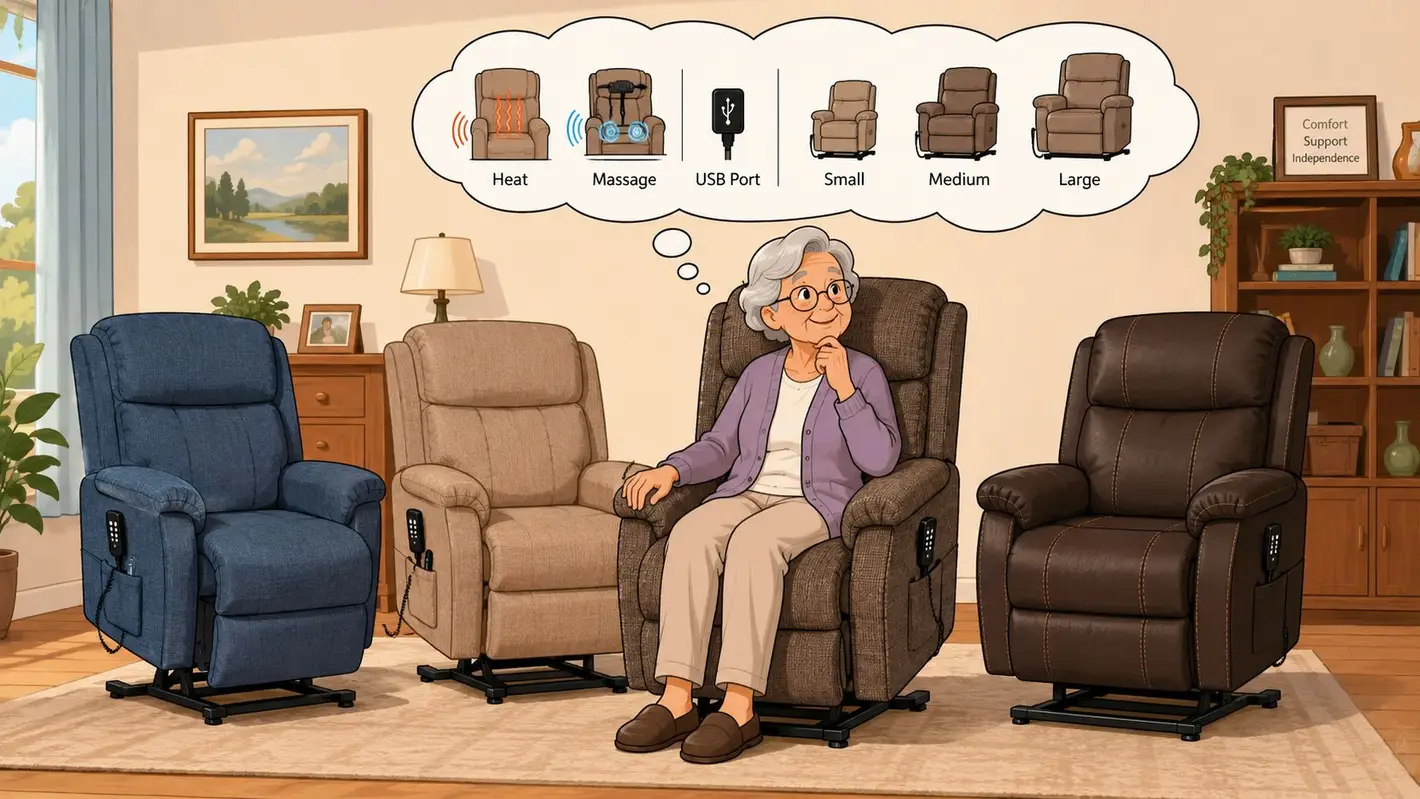
A lift chair can have the right motor and still feel wrong if the fit is off. Good sizing helps the user sit comfortably, place both feet well, and use the lifting motion safely. It also helps the chair look like it belongs in the room instead of taking it over.
Start with body fit
One simple check tells a family a lot. When seated, the user's feet should rest comfortably on the floor and the knees should bend naturally. Guidance for older adults in care settings notes that chair height for older women should not exceed 431 mm, and a range of 380 to 457 mm can help fit a wider variety of users, based on this seat height and safety discussion.
That doesn't mean every home needs to measure in millimeters. It means seat height matters more than many shoppers expect.
Use this quick checklist:
- Seat height: Feet should rest flat without dangling.
- Seat depth: The user should sit back comfortably without the chair edge pressing hard behind the knees.
- Seat width: There should be room to sit naturally without feeling squeezed.
- Arm height: Arms should rest comfortably so pushing and repositioning feel secure.
Then measure the room
Families often focus on the person and forget the path into the home. Doorways, hall turns, and nearby tables all matter.
A few practical checks make setup easier:
- Check the wall clearance needed for reclining.
- Measure walking paths around the chair so caregivers or family members can move easily.
- Think about outlets because the chair needs power.
- Plan the viewing angle if the chair will face a television or fireplace.
Comfort features that matter
Features should support daily life, not distract from it. Some households want a simple remote and easy-clean upholstery. Others care about extras such as heat, massage, or USB charging.
Fabric choice matters more than people think. A busy home may prefer durable, easy-to-clean upholstery. A formal sitting room may lean toward a style that blends with existing furniture from lines such as Bassett or Ashley. In bedrooms or recovery spaces, comfort can pair naturally with supportive sleep products from Sealy or Therapedic.
For households trying to picture everything in place, Debra Williams and the expert design staff can help with layout, scale, and coordination. That kind of guidance often reduces second-guessing before the chair ever arrives.
Understanding Cost Financing and Overall Value
Price is often the hardest part of the conversation. Families want to do the right thing, but they also have a budget, other household costs, and questions about what really adds value. A lift chair is easier to understand when the focus shifts from sticker shock to daily usefulness.
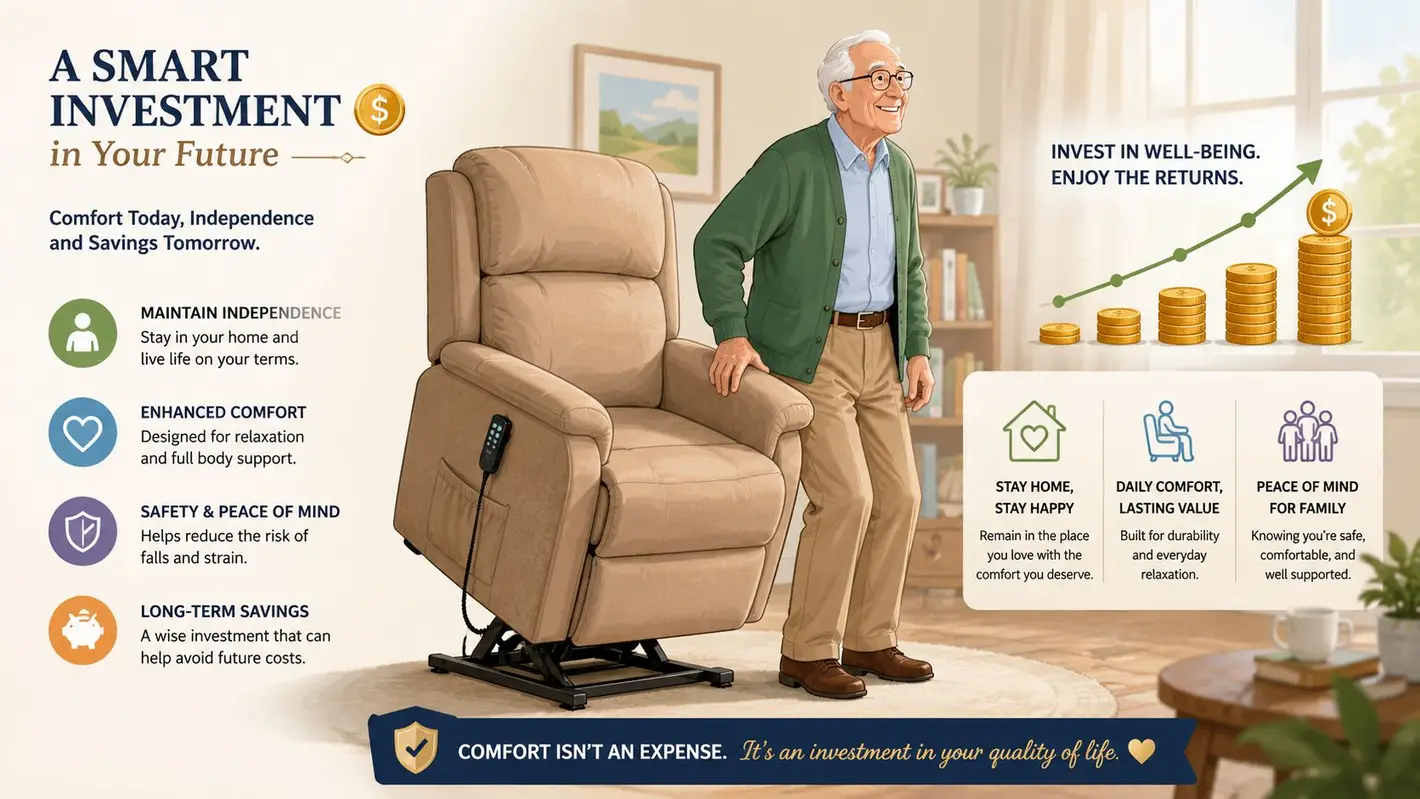
The broader need is clear. The global lift chair market for elderly individuals was valued at approximately USD 2.99 billion in 2024 and projected to reach USD 3.19 billion in 2025, with another estimate placing the market at USD 4.19 billion in 2024 and projecting USD 9.74 billion by 2034 at an 8.1% CAGR, according to this lift chair market overview. That growth reflects the same thing families see at home. More households are looking for practical support that helps older adults stay independent.
What affects cost
Two lift chairs can look similar at first glance and still differ meaningfully in value. Cost usually changes based on:
- Chair mechanism: More positioning options often mean a more advanced internal system.
- Size and fit: Larger or more specialized models may cost more.
- Upholstery choice: Fabric and finish can change both maintenance needs and pricing.
- Added features: Heat, massage, or other upgrades can affect the final total.
Families comparing options can also review this guide to lift chair costs to understand common pricing factors before visiting a showroom.
Medicare, financing, and delivery savings
Medicare can help in some cases, but the rules are narrow. Medicare coverage for seat lift mechanisms is strictly limited to patients with severe arthritis or a severe neuromuscular disease who can't stand up from a standard chair without assistance, and it requires a provider's Letter of Medical Necessity, according to the CMS Medicare coverage policy.
That's important because many families assume Medicare covers the whole chair. Usually, coverage only applies to the lifting mechanism when strict medical requirements are met.
A few value points often matter just as much as the chair itself:
- Low Price Promise: Local competitors' prices are matched, with a 30-day price guarantee.
- Flexible financing: Payment options can make a needed purchase easier to manage over time.
- Large in-stock selection: Immediate delivery is often possible, which matters when waiting isn't ideal.
- Free in-home delivery and setup within 60 miles: This service can eliminate an average $150 to $220 third-party moving fee for lift chair buyers in the region, based on this delivery savings reference.
A fair value isn't only the purchase price. It's also the setup, the timing, and the help after the sale.
For value seekers, that last point often changes the math.
Why Buying Local Matters for Your Peace of Mind
A lift chair purchase doesn't end when the truck leaves. That's where many families in rural communities run into the primary issue. They may have found a chair, but now they need delivery that fits the home, answers about operation, and reliable help if something changes later.
That challenge is especially relevant in this region. Current coverage often overlooks the critical gap in long-term maintenance and repair accessibility for lift chairs in rural markets like Southwestern Virginia, where users face extended wait times for specialized technicians, according to this discussion of repair access gaps.
Why local support changes the experience
A local purchase can make the process feel less uncertain because the family has a place to return to, call, or visit. That matters when the chair is part of a loved one's daily routine.
A local store also offers practical advantages:
- In-person testing: The user can sit, recline, and try the lift before deciding.
- Faster availability: In-stock models can be delivered sooner than made-to-order or distant inventory.
- Regional understanding: Delivery teams already know the homes, roads, and room layouts common in Southwestern Virginia and Northern North Carolina.
- Ongoing connection: Questions after setup are easier to handle when the team is nearby.
Local roots still matter
Families in Galax, Independence, Hillsville, and the surrounding area often prefer to buy from businesses that have stayed part of the community over time. A company that has served the region since 1902 signals something steady. Not flashy. Steady.
That's especially comforting with a product tied to health, comfort, and daily confidence. Readers who want to explore nearby options can start with this guide to local furniture stores near them.
Buying local isn't only about geography. It's about knowing who will pick up the phone when the chair becomes part of everyday life.
That peace of mind is hard to measure, but families feel it right away.
Your Questions Answered by Our Family
A few questions come up almost every time. The answers below keep things plain and practical.
Frequently Asked Questions
| Question | Answer |
|---|---|
| Can an elderly parent sleep in a lift chair overnight? | Some people do, especially if the chair offers deeper or more adjustable reclining. The better question is whether the chair fits the person's body well and supports the way they rest. |
| How much space is needed behind the chair? | That depends on the chair design. Some need more clearance to recline, while wall-friendly models are made for tighter rooms. Measuring the room before purchase helps avoid surprises. |
| Is the remote hard to use? | Most lift chair remotes are designed to be simple. Large buttons and straightforward movement controls are common, which helps users who want clear operation. |
| What's the best fabric for daily use? | Durable, easy-clean fabrics are often the most practical for busy homes. The right choice depends on whether the priority is softness, simple cleanup, or matching existing furniture. |
| Can the chair fit through an older home's doorway? | Sometimes yes, sometimes no without planning. Measuring doorways, hallways, and turns ahead of delivery is one of the smartest steps a family can take. |
| Is a lift chair only for severe mobility issues? | Not always. Many households consider one when standing has become stressful, tiring, or less steady, even before a crisis happens. |
| Does the chair look too medical for a living room? | Many lift chairs are styled to blend into traditional or updated rooms. Fabric, arm shape, and scale can make a big difference in how residential the chair feels. |
| Should the family bring the user to the showroom? | If possible, yes. Comfort and fit are easier to judge in person than from a photo. Testing the movement often makes the decision much clearer. |
A sensitive furniture purchase should never feel rushed. The right lift chair for elderly family members supports comfort, safety, and confidence all at once. It should also fit the room, the budget, and the everyday rhythm of home.
Guynn Furniture & Mattress offers a no-pressure atmosphere for families working through these decisions in Galax, Independence, Hillsville, and the wider Southwestern Virginia and Northern North Carolina region. Free in-home delivery and setup within 60 miles, a large in-stock selection for immediate delivery, trusted brands such as La-Z-Boy, Ashley, Bassett, Sealy, and Therapedic, and a Low Price Promise with a 30-day price guarantee can make the process simpler. Visit our showrooms in Galax, Independence, or Hillsville to test the comfort for yourself. Schedule a consultation with our design team to start planning your dream room today. Browse our selection online at Guynn Furniture & Mattress.