Sectional Sofas Best Quality: 2026 Buyer’s Guide


Scrolling through sectional options online can wear anyone out. One sofa looks plush, another looks stylish, and then the product descriptions start tossing around terms that don't always mean much in real life. For many families, the hard part isn't finding a sectional they like. It's figuring out which one will still feel good, fit the room, and hold up to everyday living.
That's why “sectional sofas best quality” is such a useful question. A sectional is where people stretch out after work, gather for movie night, and pile in with kids, guests, and pets. It's a big purchase, and most homeowners in Galax, Independence, Hillsville, and across Southwestern Virginia and Northern North Carolina want honest guidance, not pressure. Since 1902, local families have looked for that kind of practical help close to home. For shoppers who want a little extra local perspective before they visit a showroom, this neighborly guide to finding the best local furniture stores is a useful starting point.
Table of Contents
- Welcome Neighbor Finding Your Perfect Sectional Starts Here
- The Anatomy of a Quality Sectional What Lies Beneath
- Decoding Comfort How It's Built for How You Live
- Choosing the Right Fabric For Your Family and Four-Legged Friends
- Measure Twice Buy Once A Perfect Fit for Your Room
- The Guynn's Promise Your Checklist for a Confident Purchase
- Your Dream Living Room is Waiting
Welcome Neighbor Finding Your Perfect Sectional Starts Here
Most shoppers start with the color, the shape, or the photo that catches their eye. That's normal. But the true difference between an average sectional and a high-quality one usually isn't visible from across the room.
A sectional works a lot like a house. The fabric is the paint color. The shape is the curb appeal. What matters most over time is the foundation underneath. If the frame is weak or the seat support isn't built well, a sectional can look fine on day one and still disappoint once daily life moves in.
That's where many people get stuck. A sofa may feel soft in a showroom for a few minutes, but softness alone doesn't equal quality. The better question is whether it's built to keep its comfort and shape through years of family use.
For homeowners across Galax, Hillsville, Independence, and the wider Southwestern Virginia and Northern North Carolina region, that kind of guidance matters. Shopping should feel calm, clear, and practical. It should feel like talking with someone who wants the furniture to suit the home, not just close a sale.
A well-chosen sectional supports the way a household lives. It doesn't just fill a corner.
Families drawn to classic comfort often lean toward trusted names such as La-Z-Boy and Bassett because construction matters as much as style. The same goes for value-focused shoppers looking at Ashley. The goal isn't to chase trends. It's to understand what “best quality” means before sitting down to choose.
The Anatomy of a Quality Sectional What Lies Beneath
Why the inside matters more than the cover
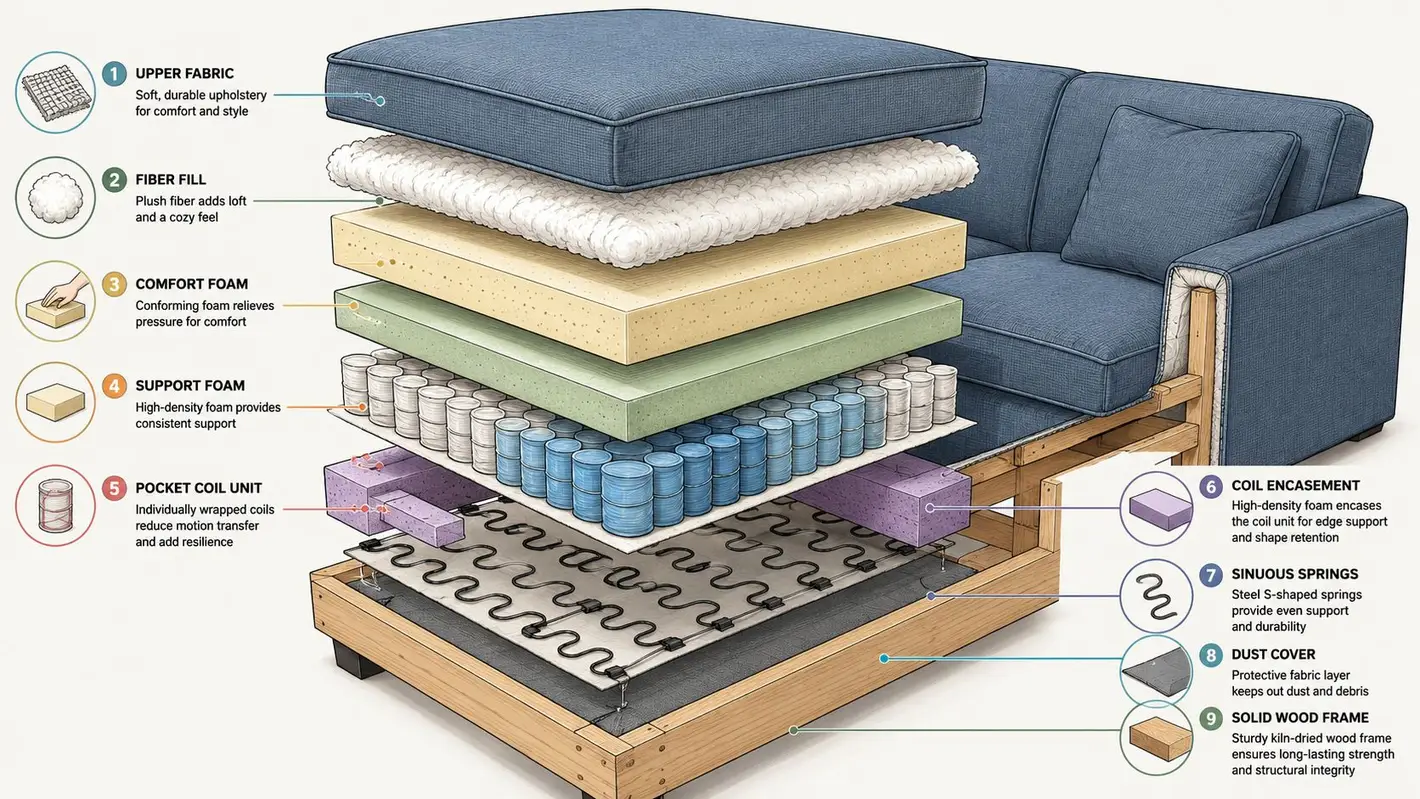
The strongest clue to sectional sofas best quality is hidden under the upholstery. A well-made sectional should use a solid kiln-dried hardwood frame and high-resiliency foam cushions. With proper care, that type of build can last 15 years or more, according to this quality sectional construction guide.
That matters because the frame does the quiet work every single day. It absorbs weight, resists twisting, and helps the sectional keep its shape. Kiln-dried hardwood is important because the drying process helps reduce moisture that can lead to warping later. In plain terms, it gives the sofa better bones.
Many shoppers focus on color first and construction second. That order usually needs to be flipped. A beautiful sectional with weak internal build can become a frustration. A strong sectional with the right build details tends to reward the buyer for years.
For readers who like seeing how upholstery layers, padding, and support components come together, this overview of materials for sofa construction gives helpful background before stepping into a store.
What shoppers should ask in the showroom
The easiest way to shop smarter is to ask direct questions. Not fancy questions. Useful ones.
- Ask about the frame: Is it made with solid kiln-dried hardwood, or something lighter and less stable?
- Ask about the seat cores: High-resiliency foam generally holds shape better than lower-grade fills.
- Ask what supports the seats underneath: The support system under the cushions affects both feel and long-term durability.
- Ask how the sectional is meant to age: A good sofa should look lived in, not worn out.
Some shoppers feel awkward asking about construction. They shouldn't. A good retailer expects those questions. In fact, they're often the questions that separate a quick impulse buy from a confident one.
Practical rule: If a shopper can describe the frame, cushion fill, and seat support after the store visit, that shopper is much less likely to regret the purchase.
This is also where familiar craftsmanship-focused brands earn trust. In many homes, a sectional from a well-established maker feels better after years of use because the internal structure was taken seriously from the start. Shoppers who want a deeper list of what to inspect can use this guide on what to look for when buying a sofa before heading to the showroom.
Decoding Comfort How It's Built for How You Live
Seat feel is a package not a single feature
Comfort can be confusing because shoppers often describe it with one word. Soft. Firm. Deep. Cozy. In reality, comfort comes from a combination of parts working together.
A key buying guide notes that the distinction in comfort and durability comes from the suspension and cushion package, not just the upholstery. That same guide explains that seat depth usually falls around 21 to 28 inches for standard sitting, while 28 to 35 inches suits more lounging-oriented comfort, as outlined in this sectional comfort guide.
That helps explain why one sectional feels right for conversation and another feels better for naps. A shallower seat tends to support a more upright posture. A deeper one invites stretching out. Neither is automatically better. The right choice depends on how the household uses the room.
Matching comfort to real life at home
A family room sofa has a different job than a formal sitting area. That's why comfort testing should mirror daily life.
Consider these common scenarios:
| Household habit | What to pay attention to |
|---|---|
| Reading or chatting upright | A standard seat depth and supportive back can feel more balanced |
| Movie nights and lounging | A deeper seat often feels more relaxed and casual |
| Kids climbing in and out | Cushions should recover shape instead of looking rumpled quickly |
| Pet-friendly seating | Fabric feel matters, but the cushion support underneath matters too |
Shoppers also benefit from sitting on a sectional more than once in the store. Sit upright first. Then lean back. Then try the corner seat if the sectional has one. The corner often reveals whether the design is usable or just visually impressive.
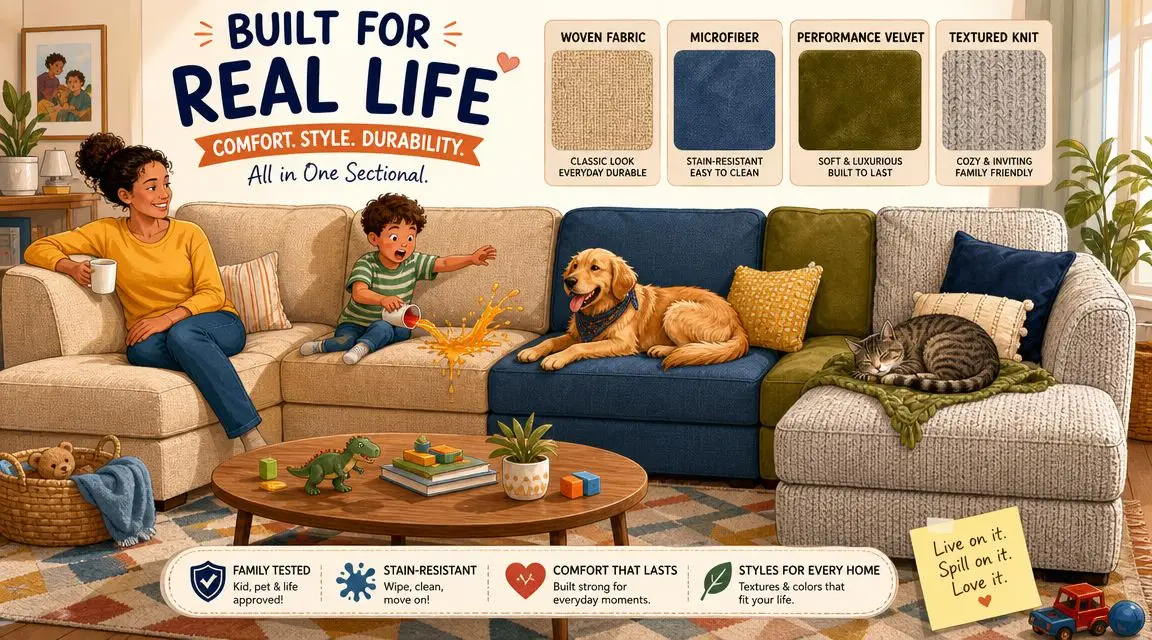
Leather and fabric choices play into comfort too. Full-grain leather is considered the highest-grade leather option, while performance fabrics are widely favored for resisting stains and abrasion without giving up softness, as noted in the same earlier comfort guide. For homes with pets, active kids, or frequent guests, performance fabric often makes everyday ownership simpler.
A useful next read for anyone comparing seat feel, support, and upholstery side by side is this ultimate sofa buying guide for the living room.
Choosing the Right Fabric For Your Family and Four-Legged Friends
How fabric choice changes daily life
The best fabric isn't the one with the fanciest name. It's the one that fits the household.
In a quiet room used mostly for visiting, a shopper may care most about texture, richness, and a refined appearance. In a family room where snacks, pets, and everyday traffic are part of life, easy maintenance usually climbs to the top of the list. That's where performance fabrics often make sense. They're built for real use and tend to be easier to live with.
Leather has its own appeal. It looks timeless, wipes clean easily, and can suit both traditional and updated rooms. Some families love how it ages. Others prefer the softer, more casual feel of woven upholstery. Neither choice is wrong. The practical question is how much maintenance the household is willing to accept.
Homes with dogs, cats, or busy grandchildren usually do better when durability wins the argument over trendiness.
A simple way to narrow the options
A fabric decision gets easier when shoppers start with lifestyle instead of color.
- If the living room doubles as snack central: Performance fabric is often the easiest answer.
- If the room is for grown-up relaxing: Leather may offer the refined appearance and simple wipe-clean routine many people want.
- If softness matters most: Textured fabric can feel warm and inviting, especially in relaxed family spaces.
- If long-term upkeep feels overwhelming: Looking ahead at caring for your sofa fabric can help buyers choose a surface they'll be comfortable maintaining.
Fabric selection is also one of the moments when in-person shopping pays off. Seeing a swatch online isn't the same as touching it, comparing it under normal lighting, and thinking through daily use. Shoppers in Southwestern Virginia and Northern North Carolina often appreciate working through those details with expert design staff, especially when mixing style with durability.
For anyone who wants a stronger feel for upholstery categories before visiting, this guide to upholstery materials helps make the options easier to sort.
Measure Twice Buy Once A Perfect Fit for Your Room
The measuring step that prevents regret
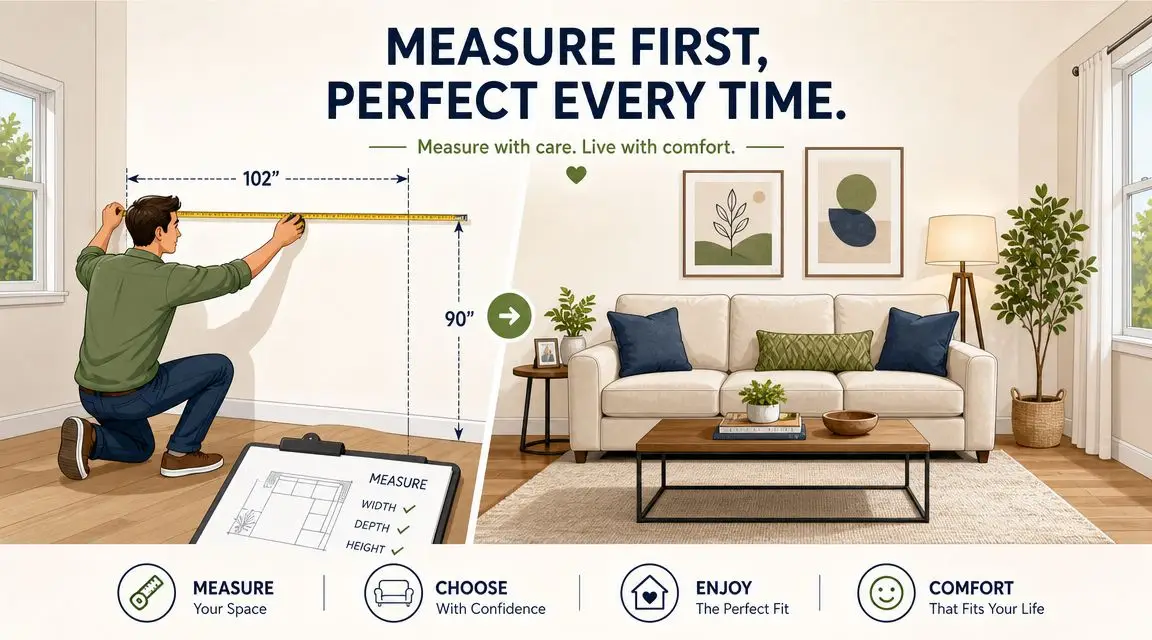
A high-quality sectional still feels wrong if it overwhelms the room. Fit matters just as much as comfort.
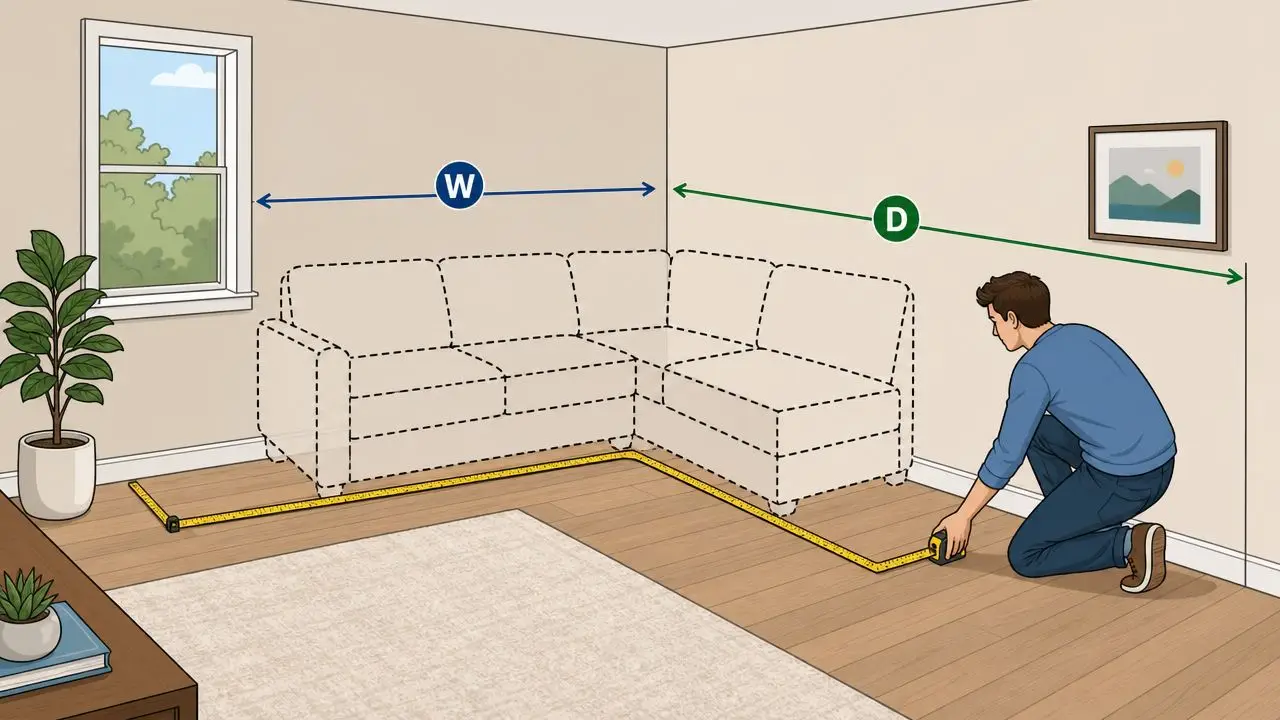
One practical benchmark from a furniture buying guide is to leave about 36 inches of clearance in walkable areas so people can move comfortably around the sectional. That same guide also advises shoppers to check for a clip system that locks modular pieces together so they don't drift apart during use, as noted in this sectional size and fit guide.
That clearance number helps with one of the most common mistakes. People measure the wall and stop there. But a sectional doesn't just need to fit against a wall. It needs to share space with foot traffic, tables, doorways, and the natural path people take through the room.
A simple floor test can clear up a lot of confusion. Painter's tape works well for outlining the sectional footprint on the floor. Once the shape is taped out, household members can walk around it, pass between it and nearby furniture, and get a quick sense of whether the room still breathes.
Why modular details matter too
Modular sectionals can be especially useful for households that expect change. A move, a remodel, a growing family, or a different room layout can all make flexibility more valuable than people realize at first.
Editorial coverage has given growing attention to modular sectionals with reconfigurable or replaceable parts, especially for shoppers who want seating that can adapt rather than force a single permanent setup. That idea doesn't guarantee better value for every buyer, but it does raise a smart question. Will this sectional still work if the home changes?
A few fit checks help:
- Entry path: Measure doors, hallways, and stair turns, not just the final room.
- Room use: Decide whether the sectional is for conversation, TV watching, or a little of both.
- Traffic flow: Respect the walking path first, then the seating plan.
- Connection details: If it's modular, make sure the pieces secure together properly.
For shoppers who don't want to figure all of that out alone, design help can make the process much easier. Guynn Furniture & Mattress offers design services through Debra Williams and the in-store team, including room-planning help for shoppers in Galax, Hillsville, Independence, and the broader region. A good measuring guide also helps before that visit. This room measuring guide for furniture is a practical place to start.
The Guynn's Promise Your Checklist for a Confident Purchase
A confident sectional purchase usually comes down to a short list of smart questions. Not dozens. Just the right ones, asked in the right order.
A smart showroom checklist
This checklist helps shoppers stay focused when several sectionals start blending together on the showroom floor.
- Check the frame first: Ask what's inside before falling in love with the fabric.
- Sit the way the room will be used: Upright, leaning back, feet up, corner seat. Real comfort shows up through use, not just a quick sit-down.
- Press on the cushions: They should feel supportive and recover well, not collapse and stay flattened.
- Look at the sectional shape in relation to the room: A beautiful layout in the store can feel too bulky at home if scale isn't right.
- Ask whether the style is available from in-stock inventory: That matters for shoppers who don't want to wait longer than necessary.
The best buying checklist is the one that keeps a shopper from making an emotional decision too early.
Where value shows up beyond the sofa itself
Quality isn't only about what's built into the sectional. It also shows up in the buying experience around it.
For many households in Southwestern Virginia and Northern North Carolina, value means the purchase feels straightforward from start to finish. That includes clear pricing, a helpful explanation of options, and practical support once the sofa is chosen.
A local buyer may want to confirm:
- Low Price Promise: Local competitor pricing can be matched, with a 30-day price guarantee after purchase.
- Delivery support: Free in-home delivery and setup within 60 miles removes a lot of stress.
- Regional service area: That matters for families in Galax, Independence, Hillsville, and nearby communities.
- Related home needs: Some shoppers furnishing a whole room also want coordinated pieces from lines such as La-Z-Boy, Ashley, or Bassett, plus sleep options from Sealy and Therapedic.
This is also where local showroom shopping has an edge over guessing from a screen. A shopper can test a sectional, compare fabrics in person, ask about support systems, and get help visualizing the whole room in a no-pressure atmosphere.
Since 1902, that practical kind of service has mattered just as much as the furniture itself.
Your Dream Living Room is Waiting
A sectional is more than a seating choice. It shapes how a room feels on an ordinary Tuesday night, during a holiday visit, or when everyone ends up in the same spot to wind down.
That's why the phrase sectional sofas best quality matters so much. It isn't really about chasing a label. It's about choosing strong construction, comfort that fits the household, fabric that suits real life, and a layout that belongs in the room instead of taking it over.
Families across Galax, Independence, Hillsville, and the wider Southwestern Virginia and Northern North Carolina region don't need more confusion. They need clear advice, honest answers, and the chance to try furniture in person without pressure. That's still the simplest path to a confident decision.
Visit Guynn Furniture & Mattress to explore sectional options in a no-pressure atmosphere. Visit the showrooms in Galax, Independence, or Hillsville to test the comfort for yourself. Schedule a consultation with the design team to start planning a dream room today, or browse the selection online at guynnfurniture.net.