Cottage Style Couch Your Guide to Cozy Comfort


You come home, set down your keys, and look at the couch you’ve been meaning to replace. Maybe it’s too stiff. Maybe it’s too formal. Maybe it just never gave your living room that settled, welcoming feeling you wanted in the first place.
That’s where a cottage style couch often feels different. It doesn’t try too hard. It softens a room, invites people to sit down, and helps a house feel lived in, warm, and calm.
For many families across Southwestern Virginia and Northern North Carolina, that matters. Older farmhouses, mountain homes, remodeled ranches, and small-town family rooms all need furniture that feels relaxed instead of fussy. A cottage sofa can do that beautifully, especially when you understand what makes the style work and how to choose one that fits your space.
Creating a Haven of Comfort in Your Home
A cozy room usually starts with one piece that sets the tone. In many homes, that piece is the sofa. If the couch feels welcoming, the whole room feels easier to enjoy. If it feels cold or oversized or out of place, the room never quite comes together.
A cottage style couch speaks to people who want comfort without giving up character. It feels familiar. It feels gentle. And it fits especially well in homes where you want the living room to support everyday life, not just look nice when nobody’s using it.

Why this style still feels timeless
Cottage furniture isn’t a passing look. According to the history of cottage furniture, painted settees and related pieces surged in popularity across the East Coast from 1830 to 1890. In 1850, Andrew Jackson Downing wrote in The Architecture of Country Houses that an entire bedroom suite could cost the same as a single mahogany wardrobe, helping make elegant furniture accessible to the middle class.
That history helps explain why cottage style still connects with so many people today. It has always balanced beauty and practicality. It wasn’t only for show. It was meant to bring approachable comfort into everyday homes.
A good cottage room doesn’t feel staged. It feels like people belong there.
That’s also why this style works so well for readers trying to define their own look. If you’re still sorting out your personal decor style, cottage design gives you a friendly middle ground between formal tradition and casual comfort.
What people usually get wrong
Some shoppers hear “cottage” and think it means overly themed furniture, lots of florals, or a room that looks stuck in the past. It doesn’t have to mean any of that.
A cottage style couch can be:
- Simple and neutral, with soft fabric and easy lines
- Light and airy, with gentle color and relaxed texture
- Family-friendly, built for afternoon naps, movie nights, and daily use
If your goal is a room that feels softer and more inviting, a cottage sofa gives you a strong place to start. For more inspiration on pulling that feeling together, this guide on how to create a cozy living room offers practical ideas that pair well with cottage style.
Decoding the Cottage Style Couch Key Features
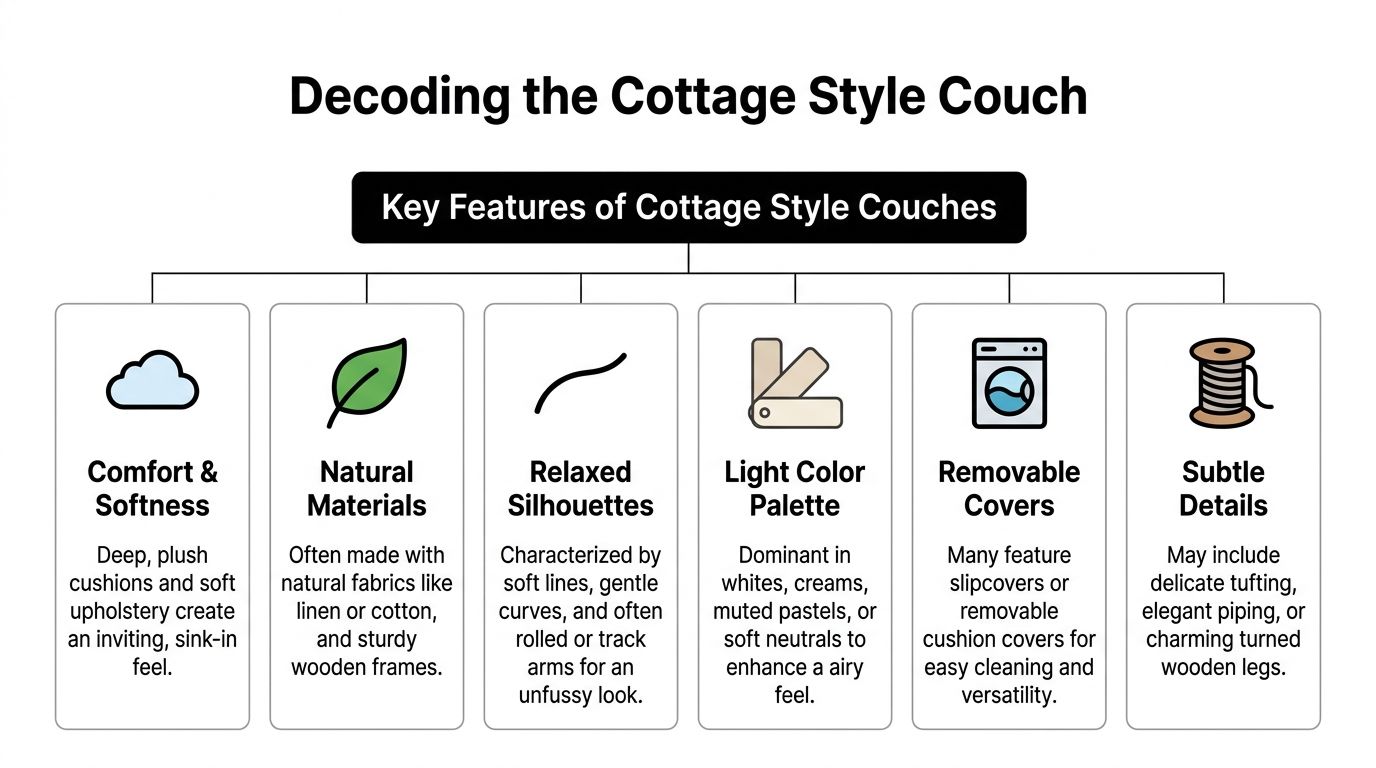
The easiest way to recognize a cottage style couch is to stop looking for sharp lines. Cottage seating is softer in almost every way. The silhouette, the fabric, the color, and the seat itself all lean toward comfort.
Start with the shape
Most cottage sofas have an unfussy outline. You’ll often see rolled arms, slightly curved backs, turned feet, skirted bases, or a shape that feels relaxed rather than rigid.
Those details matter because they change how the room feels. A square, minimal sofa can make a space look crisp and modern. A cottage style couch softens the corners of the room and makes the whole setting feel more welcoming.
Common shape cues include:
- Rolled arms that look gentle instead of boxy
- Curved backs or subtle camelback forms
- Visible wood feet or skirted bottoms depending on whether you want a formal or relaxed look
- Relaxed proportions that don’t feel severe
Comfort is part of the design
This style isn’t only about appearance. It’s built around lounging. According to this explanation of cottage style couch construction, cottage couches use generously filled, overstuffed cushions for deep seating, and the inside seat depth typically ranges from 20 to 32 inches. The same source notes that rolled arms can provide ergonomic head-resting support, which helps explain why these sofas often feel so nap-friendly.
That’s one of the biggest differences between cottage seating and more minimalist designs. A minimalist sofa often asks you to sit upright. A cottage sofa lets you settle in.
Practical rule: If you want a couch for reading, visiting, or stretching out at the end of the day, pay close attention to seat depth and arm shape, not just color.
Fabric and color make the style feel lived in
Cottage style usually looks best in fabrics with a natural, easy character. Cotton-look weaves, linen-look textures, soft neutrals, washed solids, subtle stripes, and quiet patterns all fit the style well.
Colors tend to stay gentle. Think along these lines:
- Warm whites and creams for an airy room
- Soft beige and light gray for a grounded look
- Muted blues or greens for a hint of color without heaviness
- Pastel accents when you want a more classic cottage feel
Many shoppers also like slipcovered looks because they reinforce that relaxed, approachable mood. Others prefer fully upholstered pieces with piping or crisp seams for a cleaner finish.
Details that help you shop smarter
When you’re standing in a showroom or browsing online, it helps to know what to notice first. Instead of asking only “Do I like it?” ask these questions:
- Does the arm style look soft enough for the room?
- Is the seat deep enough for how your family sits?
- Does the fabric feel forgiving for daily life?
- Will the color stay calm next to your floors, tables, and walls?
Brands such as Ashley and Bassett often offer pieces that lean into these softer, more relaxed forms, which makes them helpful starting points when comparing options. If you want a broader style comparison before narrowing in, this look at cottage vs urban furniture style can make the differences easier to spot.
Finding Your Perfect Fit Sizing a Couch for Your Home
Saturday afternoon in Galax or Mount Airy often starts the same way. You find a cottage style couch you love, measure the wall, and feel confident. Then delivery day comes, and the sofa catches at a narrow hall turn, crowds the fireplace, or leaves only a sliver of walking space between the coffee table and the seat.
That happens often in Southwestern Virginia and Northern North Carolina homes because many local houses were not built around wide-open, perfectly square rooms. Older farmhouses, mountain homes, remodeled cottages, and longtime family houses often come with tight entries, angled walls, lower ceilings, and floor plans that ask for a little more planning.
Why sizing matters more in older homes
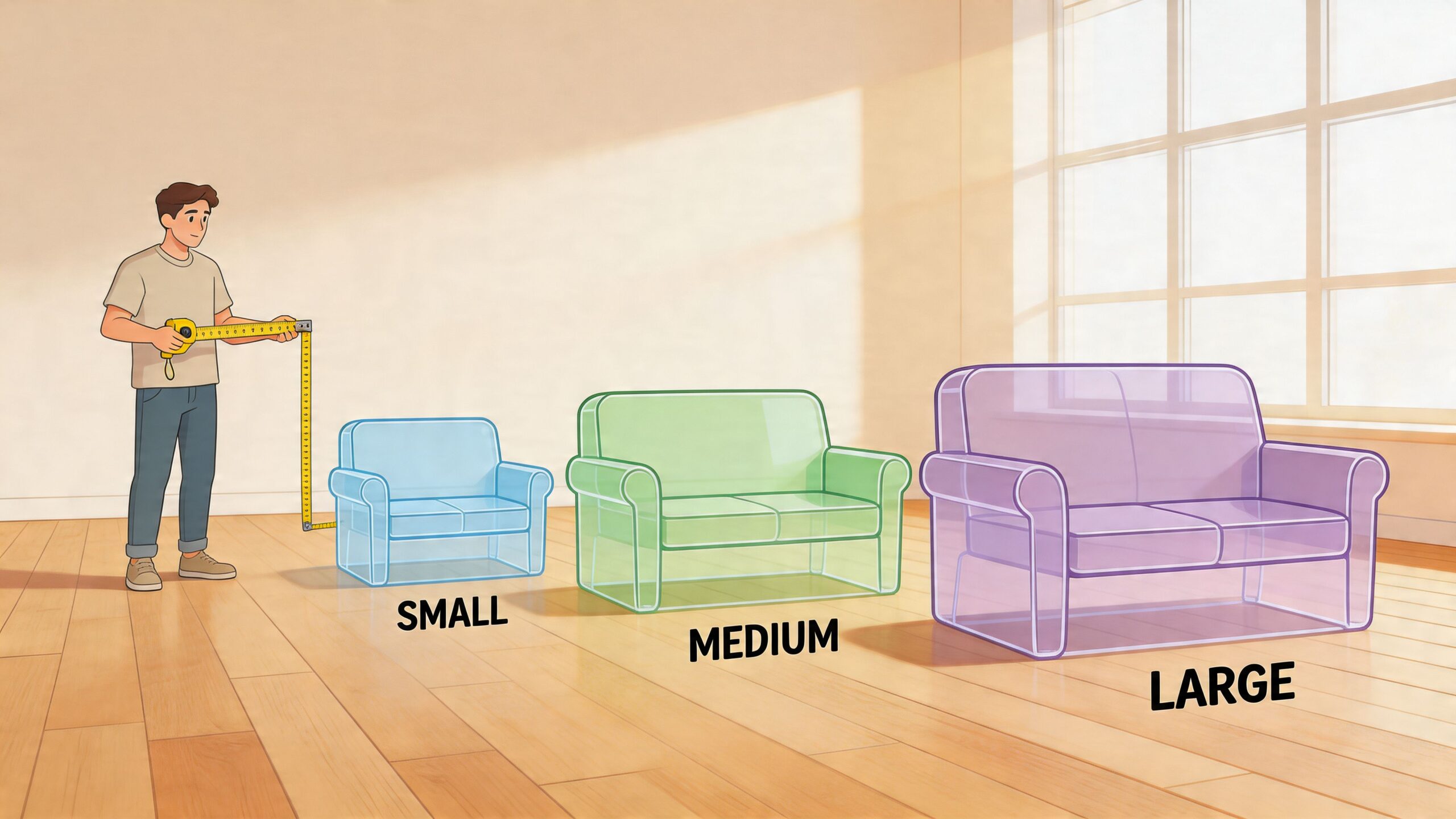
A couch has to fit two places. It has to fit into the house, and it has to fit the way the room lives day to day.
That second part trips people up. A sofa that technically fits a wall can still feel too large if it blocks the path to a porch door, crowds a hearth, or makes a modest living room feel heavy. In many regional homes, every inch has a job to do, especially in rooms that serve as conversation space, TV room, and guest area all at once.
Measure the path, not just the placement
The wall measurement is only the starting point. The full path matters just as much.
Check these before you buy:
- Room width and depth so the couch leaves comfortable walking space
- Front, side, and interior doorways for clearance during delivery
- Hallways and tight turns where a long sofa frame may catch
- Staircases and railings if the piece is going upstairs or downstairs
- Ceiling height in corners where the sofa may need to tilt
- Nearby pieces such as coffee tables, recliners, and end tables
A quick sketch helps more than people expect. Numbers tell you size. A simple floor plan shows how people will move through the room.
If you want a clear checklist, this guide on how to measure a room for furniture walks through the process step by step.
Match the couch to the room's job
Sizing is also about how you use the space.
A deeper couch works well in a den where the family watches movies and stretches out after supper. A shallower sofa often suits a smaller sitting room, where easy conversation and clear traffic flow matter more than extra lounging depth. In an open room, a larger piece can help define the seating area, much like an area rug helps mark the center of the space.
If you are torn between two sizes, ask a practical question instead of a decorative one. Do you want the couch to hold the room together, or do you want it to stay visually quiet?
A simple way to avoid a costly mistake
Bring three measurements with you. The sofa wall, the narrowest doorway, and the tightest turn on the delivery path. Those three numbers answer a lot of questions fast.
At Guynn Furniture, we have helped families across this region work through rooms with quirks and charm in equal measure. The right cottage style couch should feel welcoming the first time you sit down, and it should fit your home as naturally as if it belonged there all along.
Comparing Common Cottage Couch Variations
Not every cottage style couch solves the same problem. Some are better for busy family rooms. Some fit a more polished space. Some prioritize easy cleaning. Others focus on sink-in comfort.
The table below can help you narrow the field.
Which Cottage Couch is Right for You?
| Couch Type | Best For | Key Benefit |
|---|---|---|
| Slipcovered cottage couch | Homes with kids, pets, or frequent guests | Easier everyday upkeep and a relaxed look |
| Fully upholstered cottage couch | Formal living rooms or blended traditional spaces | A more tailored appearance |
| Stationary cottage sofa | Readers, conversational seating, classic layouts | Clean silhouette and simple placement |
| Reclining cottage-style sofa | Comfort-focused households and long lounging sessions | Added support for resting and TV time |
| Loveseat in cottage styling | Smaller rooms, apartments, or paired seating layouts | Cottage charm without overwhelming the space |
| Cottage sectional | Open family rooms or households that gather often | More seating and better room definition |
Two choices that confuse shoppers
Slipcovered vs. upholstered is often the first big decision. Slipcovered pieces usually feel more casual and forgiving. They suit family homes, especially when the room is meant to be used every day. Fully upholstered styles look a bit neater and can feel more finished in a traditional room.
Stationary vs. reclining is the second. Some people assume reclining comfort won’t work with cottage style. In practice, softer lines, plush cushions, and relaxed fabrics can blend surprisingly well with motion furniture when the design is handled carefully.
If comfort is your top priority, don’t rule out cottage-inspired reclining options. A softer silhouette can still deliver that cozy look.
For shoppers who want that extra comfort layer, La-Z-Boy is often part of the conversation because of its strong reputation for supportive seating. If your room needs a complete refresh, it also helps to compare the couch with the rest of the furniture you already own so the final look feels connected rather than pieced together.
Styling Your Couch for a Cozy Retreat
Once the couch is in place, the room starts asking for support pieces. Then, cottage style becomes fun. You don’t need a perfect matching set. You need layers that make the sofa feel settled into the room.
Build the room in soft layers
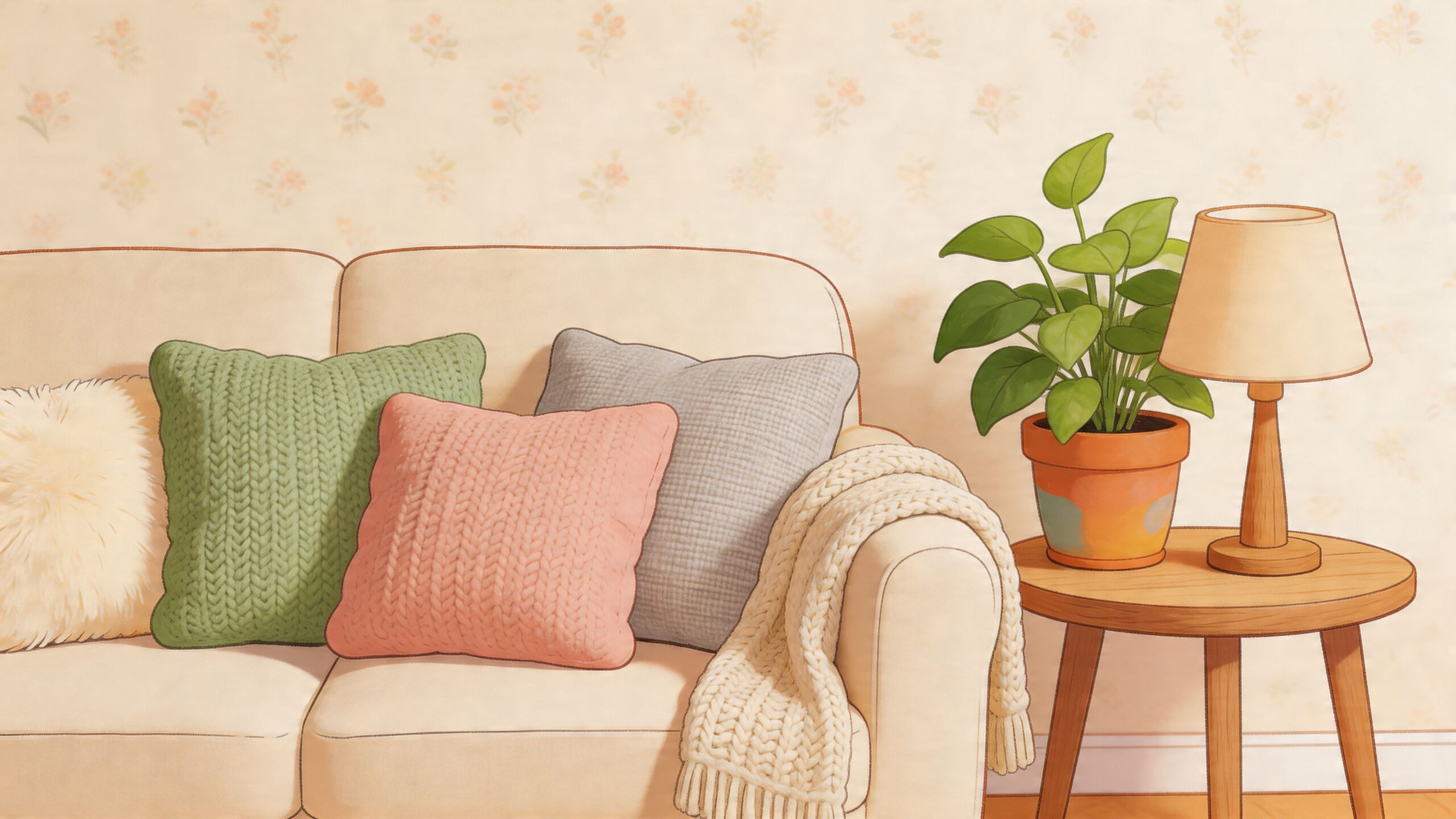
Start with textiles. A cottage style couch usually looks better when it isn’t left bare.
Try a simple mix like this:
- Throw pillows in a blend of solids and subtle patterns
- A soft blanket draped over one arm or folded in a basket nearby
- An area rug that warms the floor and helps define the seating group
- Window treatments in light, easy fabrics that don’t overpower the room
The key is restraint. Cottage rooms feel collected, not crowded.
Pairing furniture without making it too sweet
Regarding this, people sometimes hesitate. They worry the room will turn overly delicate or themed. The fix is balance.
Use the couch as the soft anchor, then mix in a few pieces with structure:
- A wood coffee table with simple lines
- End tables that feel practical, not ornate
- A floor lamp with a clean shape
- One or two natural elements like baskets, pottery, or greenery
That blend keeps the room warm while preventing it from looking overly decorative.
Cottage style works with more than one look
A cottage sofa doesn’t have to live in a pure cottage room. It can flex into nearby styles very easily.
For example:
- Modern farmhouse uses the same relaxed comfort, but with a little more contrast and rustic texture
- Coastal leans lighter and airier, often with soft blues and sandy neutrals
- Transitional pares back the decorative details while keeping the sofa’s welcoming shape
If you’re trying to create a room that feels personal instead of copied from a display, this guide on how to style a living room that truly reflects you offers a helpful way to think about the finishing touches.
A coordinated collection can also make the process easier. The Bungalow Collection by Ben & Erin Napier appeals to many homeowners because it captures that livable, grounded character without feeling stiff. It’s a good reminder that cottage style doesn’t have to be precious. It just needs to feel comfortable, calm, and honest.
Keeping Your Couch Beautiful for Years to Come
A cottage style couch should be easy to live with. That’s one of its best qualities. Still, soft fabrics and light colors look their best when you give them a little regular attention.
The good news is that good maintenance usually isn’t complicated. A few steady habits go a long way.
Everyday habits that help
Start with the basics:
- Vacuum regularly to keep dust and crumbs from settling into the fabric
- Rotate loose cushions so one favorite seat doesn’t wear faster than the others
- Blot spills quickly instead of rubbing them deeper into the weave
- Check care tags before using any cleaner on cotton, linen, or performance fabric
If you want a more detailed cleaning routine, this guide on how to clean a fabric sofa gives a solid starting point.
Choose fabric for real life
A lot of people shop by color first. That’s understandable, but lifestyle matters just as much.
If you have kids, pets, or frequent visitors, ask about:
- Tighter weaves that hold up better to daily contact
- Performance fabrics designed for easier cleanup
- Removable cushion covers if you want simpler maintenance
- Multi-tone fabric colors that disguise normal everyday variation better than flat solids
The best family couch isn’t the one you’re afraid to use. It’s the one that still looks good after real life happens on it.
For deeper refreshes over time, some homeowners also look into professional upholstery cleaning services to revive fabric that has picked up everyday wear.
Protect the comfort, not just the appearance
Cushions need care too. Fluffing back pillows, redistributing fill, and avoiding the exact same sitting spot every day can help the sofa keep its shape longer.
Sunlight is another factor people forget. If one arm or back cushion gets strong direct light every afternoon, you may notice uneven fading over time. A simple furniture shift or window treatment adjustment can help preserve the fabric.
Why Your Neighbors Have Trusted Guynn Since 1902
Some furniture stores feel like you need to make a decision the minute you walk in. That pressure doesn’t help when you’re trying to choose a couch that may stay in your home for years.
For families in Galax, Independence, Hillsville, and the wider Southwestern Virginia and Northern North Carolina region, trust often comes down to a few practical things. People want selection they can sit on, honest guidance, and help solving practical problems that come with furnishing a home.
What local shoppers usually care about most
Different households focus on different needs:
- The Traditionalist wants lasting comfort and a business with roots in the community
- The Aspiring Remodeler wants help visualizing a whole room, not just buying one sofa
- The Value Seeker wants fair pricing and flexible ways to pay
- The Regional Neighbor wants delivery help that reaches beyond one town center
That mix is one reason long-established local stores still matter. A business that has served the region since 1902 has usually learned how people here live, what their homes are like, and what kind of service makes the process easier.
The practical difference
Strong local service often means more than sales talk. It means a no-pressure atmosphere, a broad selection that includes names like La-Z-Boy, Ashley, Bassett, Sealy, and Therapedic, and the ability to compare comfort in person instead of guessing from a screen.
It also helps when the store offers free in-home delivery and setup within 60 miles, a 30-day price guarantee, and local competitor price matching. For people furnishing a first home, remodeling a family room, or replacing a worn-out sofa, those details remove a lot of stress.
If you’d like a closer look at the company story and service approach, you can read more about Guynn Furniture & Mattress.
Start Your Comfort Journey Today
You walk in after a long day, set down your keys, and sink into a couch that feels like it has been waiting for you. That is the quiet promise of cottage style. It softens a room, eases the mood, and helps a house feel lived in and loved.
That matters around Southwestern Virginia and Northern North Carolina, where homes often carry real variety. One family may be furnishing a farmhouse with smaller rooms and uneven walls. Another may be updating a den in town or warming up a mountain retreat for weekend guests. A good cottage style couch can meet all of those spaces well, but the best choice usually comes from slowing down and checking the details.
Start with the basics. Measure your room and doorways. Sit long enough to notice whether the seat depth feels restful or awkward. Look at the arm shape, the cushion support, and the fabric texture. A couch with a more structured appearance can still feel relaxed, much like a neatly made bed that still invites you to climb in.
Ultimately, comfort is easier to create when you have experienced help nearby.
Visit one of our showrooms in Galax, Independence, or Hillsville to try cottage-inspired sofas in person, compare comfort levels, and get practical guidance for your room. If you want help pulling the whole space together, our design team can help you sort through style, size, and everyday function so your home feels cozy from the start.