Discover Your Perfect Vintage Oval Dining Table

You’re probably here because you love the look of a vintage oval dining table, but you’re also wondering how it works in real life. Will it fit the room? Will it hold up to family dinners, homework, pets, and holiday traffic? Can it look timeless without feeling old-fashioned?
Those are the right questions.
A good vintage oval dining table isn’t just a pretty piece. It’s the place where people linger after supper, where grandkids spread out projects, and where a room starts to feel finished. Around Southwestern Virginia and Northern North Carolina, we see many homeowners trying to strike that balance between character and practicality. They want a table with warmth and history, but they also need it to function for everyday life.
That’s exactly where a little guidance helps. If you break the process into size, materials, care, style, and budget, choosing a beautiful vintage piece starts to feel much more manageable.
The Enduring Allure of Vintage Oval Dining Tables
A vintage oval dining table has a softness that’s hard to fake. The curved shape feels welcoming, and it often makes a dining room seem more relaxed than a sharp-cornered rectangle. For families, that shape can also feel easier to live with because the table invites conversation from every seat.
That appeal isn’t new. The extendable oval dining table originated in England around 1650, shifting design away from massive, static rectangular tables toward more adaptable pieces. By the Georgian era, over 60% of exported English dining tables to the American colonies were oval extendables, which shows how strongly people responded to both the look and the function of the form, as noted in this history of antique tables.

Why the oval shape still feels special
Part of the magic is visual. An oval table has presence, but it doesn’t feel bulky in the same way some large rectangular tables do. The ends are useful without looking severe, and the outline naturally softens a room with lots of straight lines.
For many homeowners, it also solves a common problem. They want enough seating for guests, but they don’t want the dining room to feel stiff or crowded every day.
A vintage oval dining table often works because it feels formal enough for holidays and easygoing enough for Tuesday night takeout.
Common vintage looks you might be drawn to
Not every vintage table tells the same style story. A few patterns show up again and again:
- Georgian-inspired pieces often feel balanced and refined. You may notice pedestal bases, rich wood tones, and a shape that looks substantial without feeling heavy.
- Victorian tables can bring more ornament. Turned details, decorative edges, and darker finishes tend to show up here.
- Country and farmhouse versions feel simpler. These are the tables that often look right at home with painted hutches, mixed chairs, and everyday family use.
- Mid-century influenced ovals usually feel lighter. Their lines are cleaner, and they blend easily with updated homes.
If you’re not sure which direction suits your house, it helps to think less about labels and more about mood. Do you want the room to feel stately, relaxed, collected, or clean-lined?
Why this style works in homes that change over time
A lot of furniture trends come and go because they depend on one very specific look. Vintage oval tables last because they’re flexible. They can sit with ladder-back chairs, slipcovered chairs, or something more refined and still feel right.
That’s one reason traditional homes keep finding new life in modern rooms. If you enjoy layered spaces that feel rooted instead of overly matched, this perspective on the traditional home in today’s world is worth a read.
Since 1902, families in our region have been furnishing homes that need to work for real life, not just a photo. That’s why vintage pieces still resonate. They carry history, but they also keep earning their place.
Finding Your Perfect Fit in Your Dining Room
The most common mistake people make with a vintage oval dining table is falling in love first and measuring later. We get it. A table can look perfect in a showroom or a listing photo, then feel oversized once it lands in your home.
The good news is that measuring a dining room isn’t difficult. You just need to think about the room as a working space, not just an empty box.
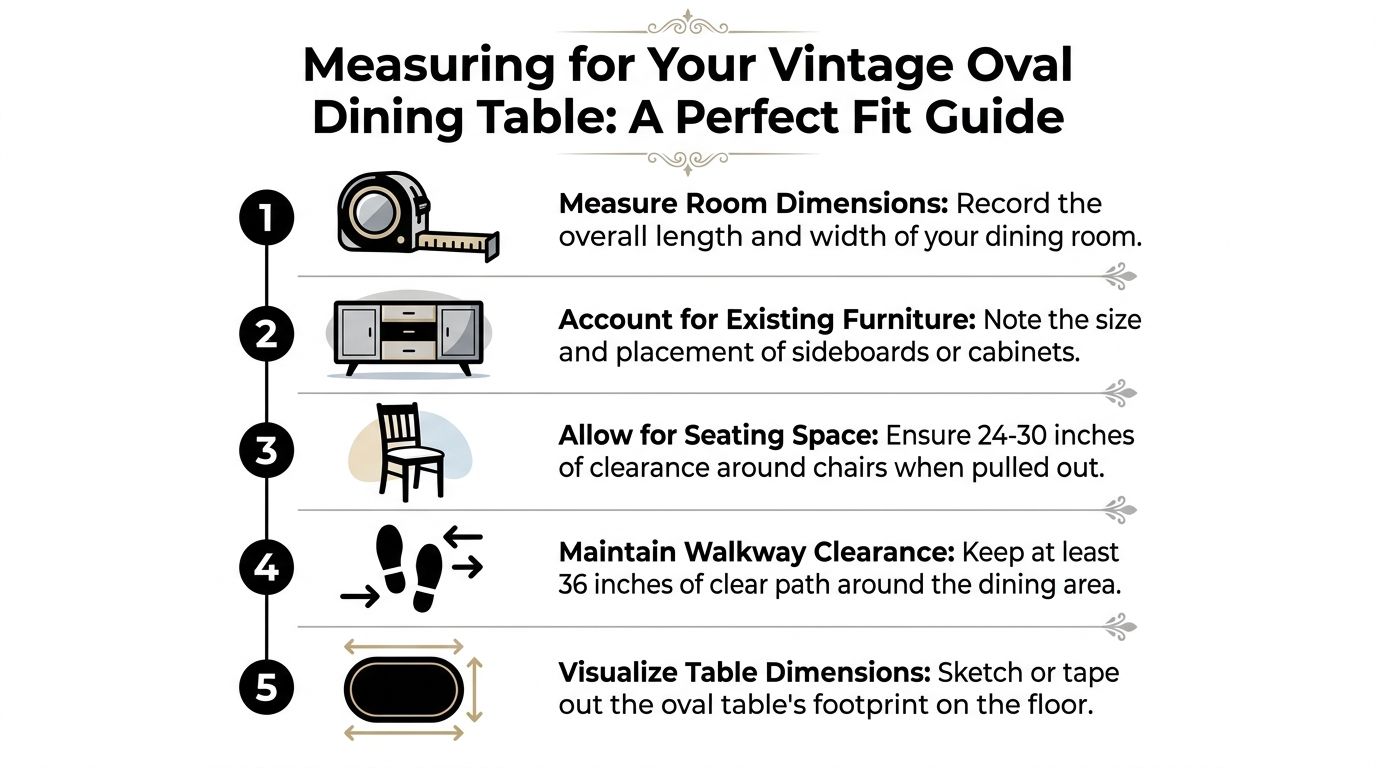
Start with the room, not the table
Take your overall room dimensions first. Then note anything that permanently takes up space, such as a china cabinet, radiator, built-in shelving, or a deep window ledge. Those details matter because the table needs to live in the room comfortably, not barely squeeze in.
The shape of an oval can help more than people expect. An 86-inch long oval table can seat 8-10 adults comfortably, and its geometry can reduce wall clearance needs by 15-20% compared to a rectangular equivalent, according to this Castelle table spec sheet. That’s a practical advantage in many Southwestern Virginia homes, where room shapes can vary from older formal dining rooms to newer open-concept layouts.
A measuring checklist that keeps things simple
Use this before you buy:
- Measure the room itself. Record the length and width in a notebook or on your phone.
- Mark existing furniture. Include sideboards, cabinets, and anything with doors or drawers that need to open.
- Plan for chairs in use. A table may fit, but the room won’t work if chairs can’t pull back comfortably.
- Protect your walkways. People should be able to move through the room without turning sideways.
- Test the footprint. Painter’s tape on the floor is one of the easiest ways to see the actual size.
If you want a little more size guidance before you start shopping, this dining table size guide can help you compare common room layouts.
Practical rule: If a table looks right on paper but feels tight when you tape it out on the floor, trust the floor.
The details people often forget
A dining room fit check isn’t only about the tabletop. It’s also about access. Measure your doorways, entry turns, and stair openings if the table has to move through them. Vintage pieces can have fixed bases or construction details that make delivery trickier than expected.
A few other things deserve a quick look:
| What to check | Why it matters |
|---|---|
| Door width | Helps you know whether the top and base can move in safely |
| Light fixture placement | Keeps the table centered under the room’s visual focal point |
| Nearby traffic path | Prevents the dining area from blocking everyday movement |
| Chair style | Arms and wider backs can change how many seats feel comfortable |
Why oval tables often calm a busy room
Some rooms feel cramped even when the measurements say they should work. That usually happens because the furniture has too many hard edges competing with each other. An oval shape can soften that effect.
It also helps visually if your room connects to a kitchen, hallway, or living area. The rounded ends keep the space flowing, which is one reason so many homeowners choose this shape when they want seating without heaviness.
Understanding Quality Materials and Construction
Not every vintage oval dining table is built to age well. Some become family pieces because of how they were made. Others look attractive at first glance but reveal weaknesses once you check the base, finish, and joinery.
Taking your time proves worthwhile. A few close looks can tell you a lot about whether a table is a long-term piece or a project you may regret.
Wood species shape the look and the wear
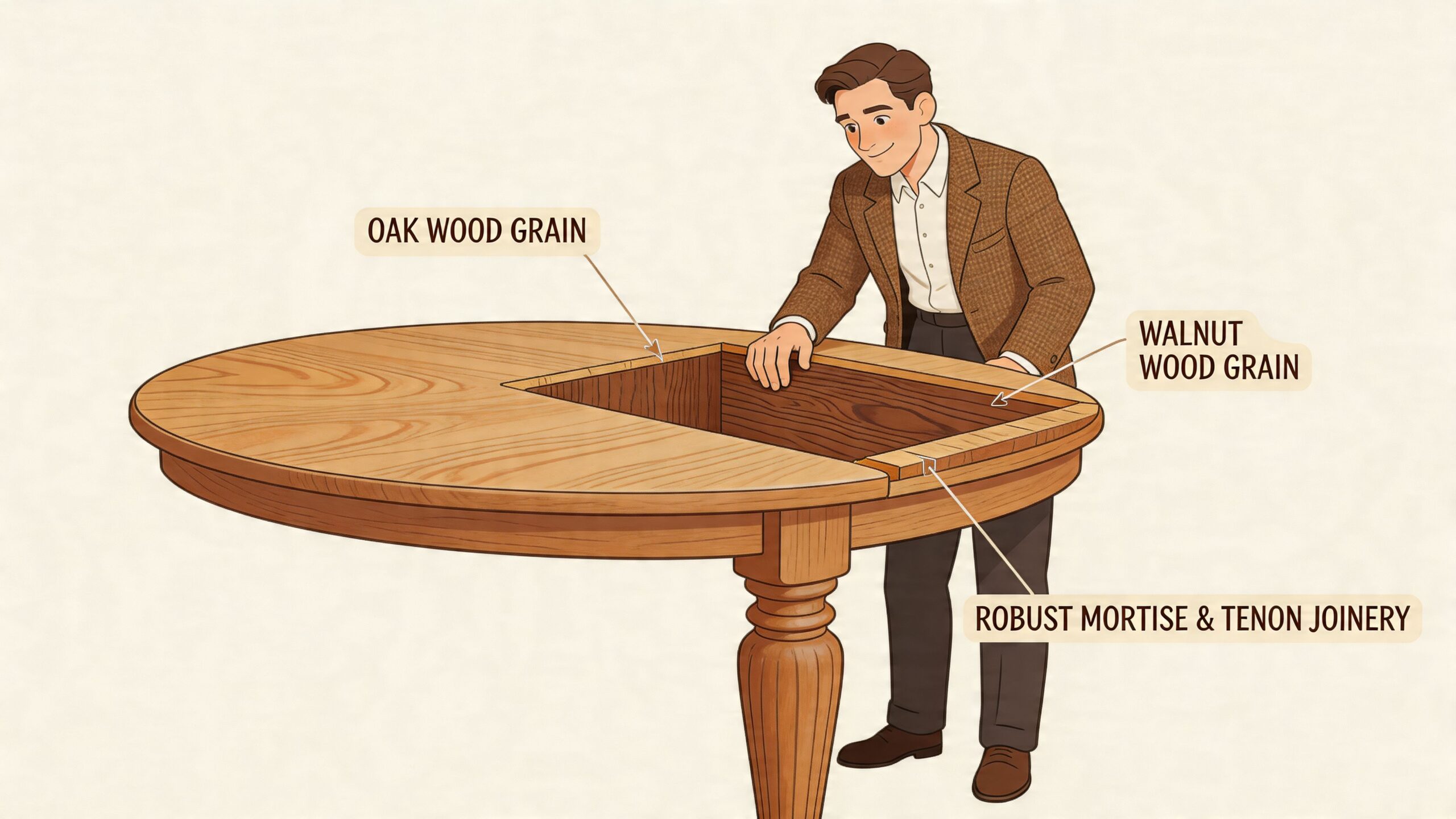
Wood choice affects more than color. It influences grain pattern, visible character, and how a table handles daily use over time. If you’d like a straightforward primer on different wood types, that resource does a good job explaining the personality of common woods in plain language.
In vintage dining furniture, you’ll often run into familiar hardwoods:
- Oak gives you visible grain and a grounded, traditional feel.
- Mahogany tends to look richer and more formal.
- Walnut usually reads warmer and a bit more understated.
- Reclaimed woods often bring marks, variation, and texture that people either love immediately or decide aren’t for them.
The right choice depends on your room and your tolerance for visible character. Some families want a polished surface. Others prefer a table that already has a little life in it.
Construction clues worth checking in person
Turn your attention underneath the table as much as above it. Look at how the base meets the top. Check whether the table feels steady when gently pressed from different sides. Inspect the underside for repairs, movement, or signs that the piece has been altered.
A few construction features tend to inspire more confidence:
- Solid wood where it counts. Tops, aprons, and bases should feel substantial.
- Stable joinery. Tight joints matter more than decorative details.
- Balanced support. Pedestal and apronless designs can distribute stress more evenly.
- A finish suited to daily life. Beauty matters, but so does resistance to scratching and spills.
One practical example comes from heirloom-grade reclaimed wood tables. These often use a catalyzed lacquer finish, which can reduce scratch susceptibility by 40-50% compared to standard finishes, according to this reclaimed wood table reference. For households with kids or pets, that’s not a small detail. It can be the difference between admiring the table and constantly worrying about it.
The finish is part of the construction story. A beautiful top isn’t enough if everyday use quickly leaves it looking tired.
What quality feels like in a showroom
A well-made table usually gives itself away through small signs. The wood grain looks intentional, not printed or overly uniform. The top feels substantial. The base doesn’t wobble. The finish feels even, not gummy or plastic-like.
Many homeowners also compare a vintage piece with newer dining furniture to understand what they value most. That can be useful. Modern solid-wood collections, including styles people often pair with Bassett dining pieces, are built around many of the same lasting principles. This guide to choosing the right hardwood for longevity and style is a helpful companion if you want to train your eye.
A quick table inspection checklist
| Look at | Good sign | Caution sign |
|---|---|---|
| Top surface | Even wear and a finish that feels intact | Deep gouges, active peeling, or soft spots |
| Base and legs | Stable and level | Rocking, looseness, or visible separation |
| Underside | Clean structure and thoughtful repairs | Crude patches or fresh fixes hiding old damage |
| Leaf mechanism | Smooth movement | Sticking, misalignment, or gaps when extended |
If a table passes those checks, it has a much better chance of becoming the kind of piece that stays with your family for years.
Restoration Tips and Lifelong Care for Your Table
Living with a vintage oval dining table means accepting that it’s furniture, not a museum object. Cups get set down. Kids slide projects across the top. Dogs brush past the legs. That doesn’t mean the table can’t stay beautiful. It just means care needs to be realistic.
That matters even more in our area. Data from antique furniture forums shows 68% of owners report refinishing needs within 5 years due to wear, which underlines why practical care matters so much in humid climates like Southwestern Virginia, as noted in this Chairish category reference.
Daily care that prevents bigger problems
Most routine care is simple. Use a soft cloth for dusting. Wipe spills promptly. Don’t leave wet items sitting on the surface longer than necessary.
For everyday protection, a few habits go a long way:
- Use felt under decor so centerpieces and bowls don’t grind against the finish.
- Set down trivets and mats for hot dishes, serving pieces, and rough ceramics.
- Keep moisture moving by drying the top after cleaning instead of letting it air dry.
- Watch window exposure if one side of the table gets stronger light than the other.
Humidity swings can be hard on older wood. In Southwestern Virginia and Northern North Carolina, that means seasonal awareness matters. A table near an HVAC vent, drafty window, or damp wall may move more than one placed in a steadier environment.
What to do about scratches and worn spots
Small marks don’t always need full refinishing. Light surface wear often responds best to gentle cleaning first, followed by a product appropriate for the existing finish. The biggest mistake is reaching for harsh cleaners or aggressive sanding before you know what you’re dealing with.
Try thinking in levels:
- Surface haze or grime needs cleaning.
- Light finish scratches may need touch-up or polish.
- Bare wood or deep damage usually calls for more careful repair.
- Loose joints or structural issues need a furniture professional, not a quick fix.
If you want a more complete approach to prevention, this guide to protecting wood furniture from scratches and stains is a useful resource.
Older finishes can react badly to the wrong cleaner. If you’re unsure what the table has on it, test any product in a hidden spot first.
Realistic restoration choices for family homes
Some tables need a full refresh. Others just need stabilizing, cleaning, and selective touch-up. That’s where many homeowners get stuck. They assume the options are either “leave every flaw” or “strip the whole thing.”
Usually, the middle ground is the smartest path.
- Keep honest wear if it adds character and the finish is still protecting the wood.
- Refinish selectively if only the top has taken abuse and the base still looks good.
- Repair movement first before spending money on cosmetic work.
- Ask for a second opinion if a table has sentimental value or unusual construction.
Families with kids and pets often do best with a table that’s already lived a little. You won’t panic at every new mark, and you can still maintain it thoughtfully over time.
Styling Your Vintage Table in a Modern Home
A vintage oval dining table doesn’t need a room full of antiques around it. In fact, one of the nicest looks is a room that mixes old wood with newer seating, cleaner lighting, and a few updated textures. That blend keeps the space feeling collected instead of theme-driven.
Many homeowners worry about getting this mix wrong. They picture a room that feels random or mismatched. In practice, the opposite usually happens when one strong table anchors the room.
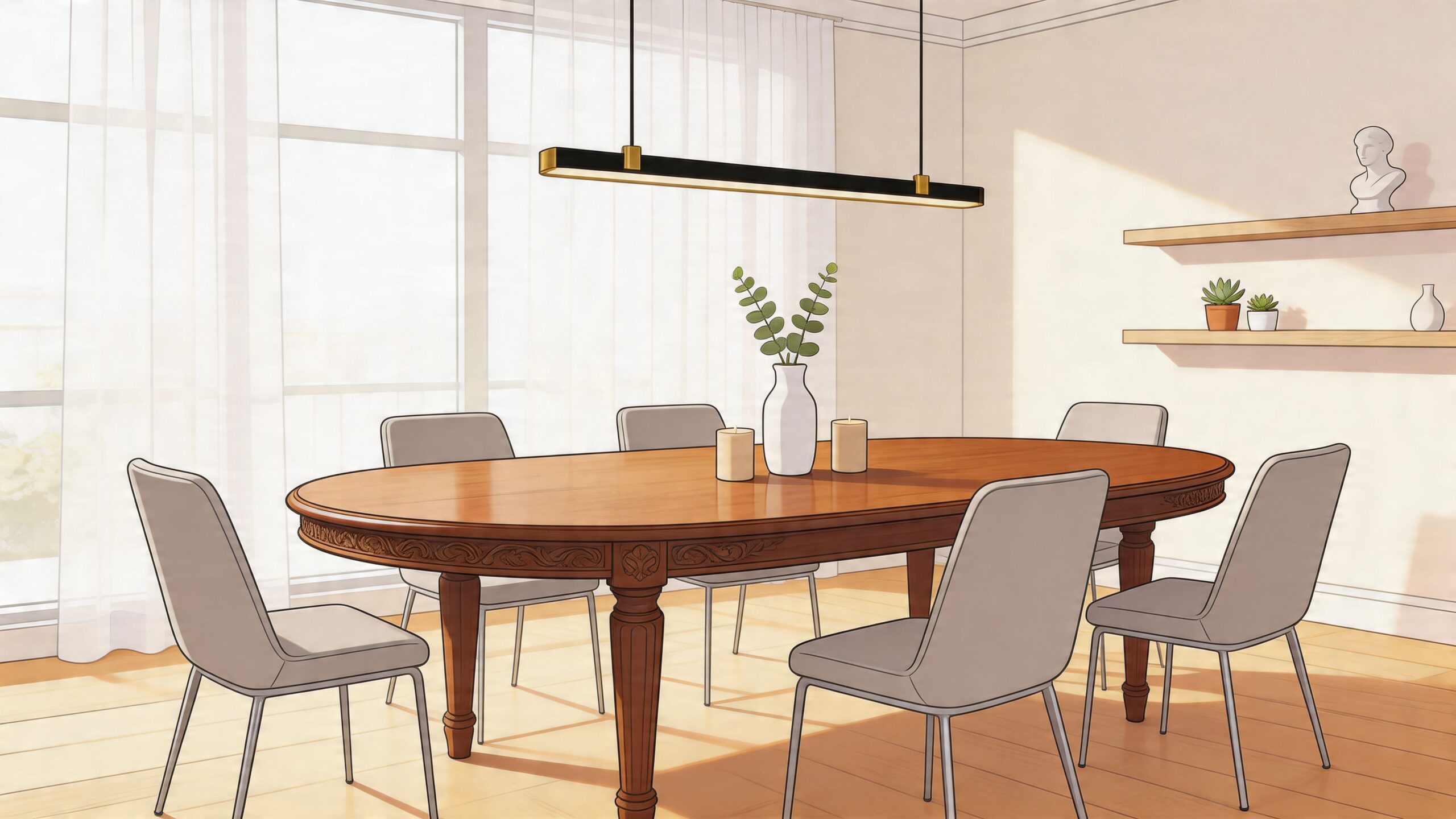
One table, two different directions
A darker, traditional oval table can look excellent with upholstered chairs that soften the formality. That’s a good route for a house where the dining room opens into a cozy living space and you want the whole area to feel inviting.
The same table can also work with simpler silhouettes. Think clean-lined chairs, restrained lighting, and a rug that adds texture without too much pattern. If you like the idea of integrating heritage charm into modern living, that approach mirrors what many thoughtful remodels do so well.
An easy formula for mixing old and new
If you’re styling around a vintage piece, start with balance:
- Let the table be the warm element. Then bring in chairs with a lighter visual weight.
- Repeat one wood tone elsewhere. A frame, sideboard, or lamp base can tie the room together.
- Choose lighting with a simpler shape if the table has more detail.
- Use textiles to soften the transition. A rug or drapery can bridge traditional wood and modern seating.
Here’s a practical example. A family in a remodeled farmhouse might use a vintage oval table with sleek Ashley side chairs and two more cushioned host chairs that prioritize comfort. In another home, someone may lean toward custom-look seating from La-Z-Boy for a little more support during long meals. Both rooms can work beautifully because the table provides the history and the surrounding pieces keep the room current.
Good mixing isn’t about making everything match. It’s about repeating enough shape, tone, or texture that the room feels intentional.
Decor that supports the table instead of competing with it
Centerpieces, rugs, and art should frame the table, not crowd it. Oval tables already have a distinctive outline, so they usually look best with decor that gives them room to breathe.
A few styling habits help:
| Element | What works well |
|---|---|
| Rug | A size that lets chairs stay on the rug when moved back |
| Pendant or chandelier | A shape that echoes the table without overpowering it |
| Centerpiece | Lower arrangements, bowls, or candlesticks that don’t block conversation |
| Wall art | Pieces that support the room’s mood without pulling attention away from the table |
If you want more guidance on blending eras and finishes, this article on how to mix furniture styles for a cohesive home is a solid next step.
For homeowners who want help pulling the full room together, working with an experienced design eye can save a lot of trial and error. That’s especially true when you’re pairing a character-rich table with existing pieces from Ashley, Bassett, or other furnishings already in the home.
Budgeting for an Heirloom and Making It Affordable
A vintage oval dining table can be a meaningful purchase, so it’s fair to talk plainly about cost. Some pieces are priced for decorative appeal. Others cost more because of age, condition, wood quality, restoration work, or the reputation of the maker.
There’s also a very wide range in the market. According to the earlier antique table reference, vintage oval extendables from the historic English tradition can bring $5,000-$50,000 at auction. That doesn’t mean every shopper is looking in that tier. It does show why quality, provenance, and condition can change pricing so dramatically.
What usually influences price
A table tends to cost more when it checks several of these boxes at once:
- Older construction with strong original character
- Desirable hardwoods and solid craftsmanship
- Well-executed restoration
- Useful size and seating flexibility
- Condition that’s ready for daily life
The most affordable route isn’t always the lowest sticker price. Sometimes a less expensive table needs repairs, refinishing, or hardware work that adds cost later. A slightly higher upfront price can be the more practical value if the piece is ready to serve your family now.
Think in years of use, not just purchase day
This kind of purchase often makes sense when you think about how long you want the room to function well. A dining table gets used for everyday meals, holiday gatherings, projects, and visits from friends. If it becomes the piece that stays while other things in the room change, that value stretches far beyond the first receipt.
That said, budget still matters. Most families want to make a smart decision without pressure. That’s why financing, flexible timing, and clear pricing matter just as much as style.
For shoppers comparing new and vintage-inspired dining furniture locally, Guynn Furniture & Mattress offers a Low Price Promise with local competitor price matching and a 30-day price guarantee, along with financing options including no-interest plans for credit-qualified customers and free in-home delivery and setup within 60 miles. For many households in Galax, Independence, Hillsville, and the surrounding region, that makes a long-term piece feel more approachable.
A simple budget mindset that helps
Ask yourself three questions:
- Do I want a statement piece or an everyday workhorse with character?
- Am I comfortable with light wear, or do I want something already restored?
- Would financing help me buy the right table once instead of replacing a temporary one later?
Those answers usually point you in the right direction quickly. A beautiful home doesn’t need to happen all at once, but it does help when each purchase has staying power.
How Guynn Furniture Makes Your Search Simple and Enjoyable
Buying dining furniture is easier when you can sit down, look closely, and picture the piece in your actual home. That’s especially true with a vintage oval dining table or a vintage-inspired oval design, where proportion, finish, and comfort all matter more in person than they do online.
That’s one reason local shopping still matters. A photo can suggest scale. It can’t tell you how the finish feels, how the edge is shaped, or whether the seating arrangement makes sense for your family.
Help that feels personal, not pushy
People often walk into a furniture store expecting pressure. We’ve found the opposite approach works better. A no-pressure atmosphere gives you room to compare shapes, ask practical questions, and decide what fits your house instead of rushing into a choice.
For homeowners in Galax, Independence, Hillsville, and the wider Southwestern Virginia and Northern North Carolina region, that local guidance can be especially useful when a room has quirks. Older homes may have tighter entries or more formal dining rooms. Newer homes may need help balancing open-concept flow with enough seating.
A knowledgeable team can help you sort through things like:
- Room scale so the table doesn’t overpower the space
- Chair pairing if you want to mix styles
- Finish concerns when kids, pets, or heavy use are part of the picture
- Whole-room coordination if the dining space connects to the kitchen or living room
Why in-stock furniture changes the experience
Many shoppers are tired of waiting on vague timelines. Seeing a piece in person and knowing there’s a path to quicker delivery removes a lot of uncertainty.
A large in-stock selection helps with that. It also makes comparison easier. You can look at wood tones, leg styles, and chair options side by side instead of guessing from separate product photos.
For homeowners planning a larger refresh, the design side matters too. Debra Williams and the expert design staff can help with scaled room plans, in-home visits, and pulling together details so the dining room doesn’t feel isolated from the rest of the house. That’s helpful whether you’re matching a table to existing Bassett pieces, selecting complementary seating, or considering nearby comfort pieces from La-Z-Boy in an adjoining room.
The easiest furniture decision is the one where you can see it, measure it, and get help from someone who listens first.
Delivery matters more than people expect
A dining table is not a front-porch package. It’s heavy, awkward, and often one of the most difficult pieces to position correctly. That’s why free in-home delivery and setup within 60 miles is such a practical service for local households.
For families across our service area, that means the piece is brought in, placed properly, and set up without the stress of lifting and maneuvering it alone. It’s one more way the process feels manageable instead of overwhelming.
Since 1902, that local, neighborly approach has mattered here. The furniture itself is important, but so is the way people are treated while they shop for it.
Your Partner in Creating a Home You Love
A vintage oval dining table can bring warmth, history, and everyday usefulness into one piece. When you choose carefully, care for it well, and style it with intention, it becomes more than dining room furniture. It becomes part of your family’s routine and memories.
If you’re furnishing a home in Southwestern Virginia or Northern North Carolina, you don’t have to figure it all out on your own. A little expert help can make the process feel clear, achievable, and even fun.
Visit Guynn Furniture & Mattress to explore ideas for your dining room and see what fits your home and your budget. Visit our showrooms in Galax, Independence, or Hillsville to test the comfort for yourself. Schedule a consultation with our design team to start planning your dream room today. Browse our selection online at guynnfurniture.net.