Average Couch Height: A Practical Guide for 2026


A new sofa can look perfect in the showroom and still feel wrong at home. Someone sits down and sinks too far, a shorter family member can't keep both feet flat, or an older adult finds standing up harder than expected. The phrase average couch height sounds simple, but it usually hides two different measurements, and confusing them can lead to an uncomfortable purchase.
The practical answer starts with the seat, not the silhouette. Once shoppers understand where the seat sits, how the back changes the room, and how cushions compress under real weight, they can choose a personal target instead of relying on a vague average. That makes a showroom visit calmer, more useful, and far less overwhelming.
What Most People Get Wrong About Couch Height
A sofa can have a tall, handsome back and still have a low seat. Another can look compact from across the room but place the seat higher than expected. That's why a couch that photographs beautifully may leave one person perched forward and another struggling to rise.
The confusion comes from two measurements:
- Overall height runs from the floor to the tallest point of the sofa back.
- Seat height runs from the floor to the top of the seat cushion, where the body rests.
Guides commonly place overall sofa height around 30 to 36 inches, while seat height generally falls around 17 to 19 inches. Those measurements describe different parts of the furniture, so they shouldn't be treated as interchangeable. Standard sofa dimension guidance separates the tall back from the lower sitting platform for exactly this reason.
Why the seat deserves attention first
Shoppers often judge height by the arms, back, or overall profile. Those features influence style, support, and how much visual space the sofa occupies, but the seat controls the relationship between the hips, knees, and feet.
A seat that sits too low asks the knees to bend more and can make standing feel strenuous. A seat that sits too high may leave a shorter user's feet unsupported. Upholstery thickness and cushion firmness also change the height a person experiences after sitting down.
The useful showroom question isn't, “How tall is this couch?” It's “Where do the feet, knees, and hips land when this cushion carries real weight?” A shopper comparing styles can also review the practical distinctions in this guide to couch versus sofa terminology, but the comfort test remains the same.
Practical rule: Measure from the floor to the top of the loaded seat cushion. That's the number the body feels first.
A personal target can be carried into the showroom. The broad modern benchmark clusters near 40 to 45 centimeters, or roughly 16.5 to 17.7 inches, while furniture guidance also commonly places lounge chairs and sofas around 15 to 18 inches, with 17 to 18 inches frequently used as a North American target. Furniture ergonomics guidance explains why the range is more helpful than one fixed number.
The Three Measurements That Actually Matter
A sofa's specification sheet can feel like a small engineering document, but three vertical readings make the information manageable. Overall height explains the furniture's presence in the room. Seat height explains the sitting posture. Arm height helps determine how the sofa supports the arms and how easily someone can use the arms while sitting or rising.
Overall height
Overall height is measured from the floor to the highest point of the back. Typical residential sofas often fall around 30 to 36 inches overall, a range reflected in several dimension guides, including this sofa size reference.
This measurement affects:
- Whether the back clears a window or wall feature
- How substantial the sofa looks in an open room
- The amount of wall space available above the furniture
- The visual balance between a sofa and nearby case goods
A tall back may offer more support or a traditional appearance without automatically creating a high sitting position.
Seat height
Seat height is the distance from the floor to the top of the seat cushion. Most sofas place that point around 17 to 19 inches, while broader dimension guidance sometimes shows a practical range of roughly 17 to 20 inches. Consumer sofa dimension guidance identifies about 18 inches as a useful midpoint for many adults.
Think of a sofa like a school chair. The back of the chair can be tall or short, but the seat height determines whether the student's feet reach the floor and whether the knees sit comfortably. The sofa's back can change support and style, but the seat platform sets the basic body fit.
Arm height
Arm height runs from the floor to the top of the arm. Common furniture references place it around 22 to 26 inches, although arm shape and padding can make a rolled arm feel different from a straight track arm.
| Measurement | Standard Range | What It Controls |
|---|---|---|
| Overall height | 30 to 36 inches | Back profile, visual scale, wall clearance |
| Seat height | 17 to 20 inches | Knee angle, foot support, sitting and rising |
| Arm height | 22 to 26 inches | Arm support, lounging posture, push-off assistance |
Seat depth and back height still matter. A deep cushion can place the body farther from the back support, while a tall back can support the shoulders without changing the sitting platform. The central decision remains the seat height because it governs the first contact between the body and the furniture.
How Seat Height Feels for Different Body Types
The same sofa can feel welcoming to one person and awkward to another. Body proportions matter more than a label such as “standard,” because leg length, hip flexibility, cushion compression, and seat depth work together.
Shorter adults
A shorter adult, such as someone around 5 feet 2 inches, may prefer the lower end of the usual range when the seat depth is moderate. A seat near 17 inches can allow the feet to rest flat and the knees to clear the front edge more naturally.
A modern sectional with a seat around 21 inches may create a different experience for a person around 5 feet 4 inches. The user may perch at the front because the feet don't settle comfortably, especially if the cushion is firm and the seat is deep.
That perched posture isn't always solved by adding a pillow. A shorter user should test whether the lower back stays supported while both feet remain grounded.
Average-height adults
Adults around 5 feet 7 inches to 5 feet 10 inches often find the middle of the common range familiar, but “average” still doesn't guarantee a good match. A cushion that compresses significantly may feel lower than its listed measurement, while a firm cushion may preserve more of the published height.
The test should include ordinary activities:
- Sitting upright for conversation
- Leaning back to watch television
- Standing without pulling on a table
- Keeping both feet supported during a longer sit
The body should feel supported rather than folded into the frame.
Taller users
A taller person, such as someone above 6 feet, may appreciate a higher seat or a deeper sitting area. A person around 6 feet 2 inches can feel swallowed by an 18-inch deep-seated sofa if the cushion and back position place the hips too low, though depth may provide useful legroom when the back support is properly positioned.
The useful comparison is not height alone. A seat and its depth form one comfort system.
A higher seat can help a taller user maintain a more open knee angle, but an excessively deep cushion may still leave the lower back unsupported. Conversely, a lower seat with a shallower depth may suit a shorter user better than a high, deep lounge design.
The strongest showroom test is simple. Sit fully back, place both feet on the floor, and notice whether the knees sit comfortably and the lower back receives support. If one family member uses the sofa most often, that person's fit should carry extra weight in the decision.
How to Measure a Couch the Right Way
A reliable measurement takes only a few basic items: a rigid tape measure, a flat book or carpenter's square, and a notebook. The book helps create a level reference when a cushion slopes or has a rounded top.
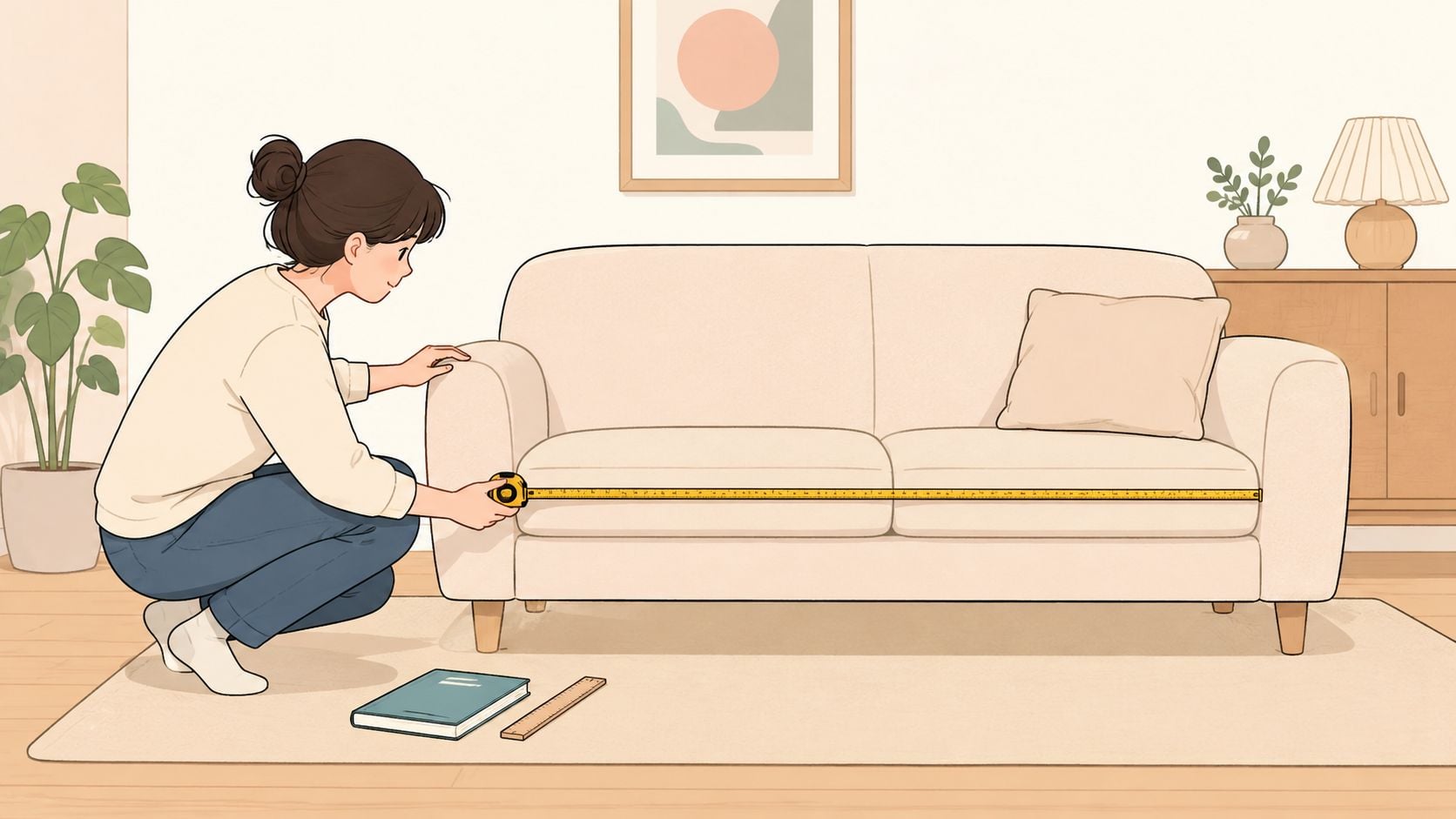
Record three readings
Measure the sofa on a level floor, then write down each result separately:
- Overall height: Place the tape at the floor and extend it to the highest point of the back.
- Arm height: Measure from the floor to the top of the arm roll or track.
- Seat height: Measure from the floor to the top center of the seat cushion, where the user will sit.
For the seat reading, distribute weight across the cushion rather than measuring only an uncompressed corner. Overstuffed cushions can look tall while dropping noticeably once someone sits down. If the cushion is loose, measure the sitting surface after it has settled into its normal position.
Check the seated posture
A useful sit test keeps both feet flat on the floor, with the knees near a right angle. The user should sit all the way back, avoid leaning forward for support, and notice whether the thighs feel supported without pressure behind the knees.
Room measurements matter too. Shoppers who are planning a full flooring or furniture project can use this resource on how to measure a room for flooring for a broader approach to capturing usable dimensions.
The seat-to-floor measurement is the single number worth bringing to the showroom. The broader furniture measuring guide can help organize the rest of the doorway, wall, and placement readings before delivery.
Matching Couch Height to Your Coffee Table and TV
A comfortable sofa can still make a room feel awkward if the surrounding pieces ignore its height. The coffee table and television should be positioned from the seated eye line and leg position, not from an arbitrary wall measurement.
Start with the seat and table
A coffee table generally works best when its top sits roughly 1 to 3 inches below the sofa seat cushion, according to the practical layout rule supplied for this guide. The table should remain close enough for a drink or book without crowding the cushion edge or restricting leg movement.
The relationship works like a step-down from the seat. If the sofa seat is high and the table is unusually low, reaching forward can feel uncomfortable. If the table rises too close to the cushion, knees and feet lose the open space needed for normal movement.
| Sofa Seat Height | Coffee Table Top Height | Suggested TV Center Height |
|---|---|---|
| 17 inches | About 14 to 16 inches | About 24 to 36 inches |
| 18 inches | About 15 to 17 inches | About 24 to 36 inches |
| 19 inches | About 16 to 18 inches | About 24 to 36 inches |
| 20 inches | About 17 to 19 inches | About 24 to 36 inches |
The table values follow the one-to-three-inch relationship. The TV values are a practical viewing range for a 55-inch television, with the final placement depending on sofa height and seated eye level. That screen-size and placement guidance comes from the supplied layout brief, while this TV height guide can support the room-planning process.
Set the screen to the seated eye line
The center of the screen should sit near the eye level of the person watching most often. A low-profile sectional generally pulls that center lower, while a taller-back sofa can make a higher screen position feel more natural.
A simple living-room sketch helps. If a household replaces a high-backed sofa with a lower-slung sectional, the viewer's eyes move down even though the television stays on the same wall. The screen may then feel too high, encouraging neck tilt during a long program.
The decision rule is direct: measure the seat first, then place the table and screen around the seated body. That sequence keeps style from dictating an uncomfortable viewing angle.
Couch Height for Seniors and Accessibility
For older adults, anyone recovering from an injury, and people managing joint pain or balance concerns, couch height becomes a daily movement decision. A seat that feels pleasantly low during a brief test can become difficult after repeated sitting and standing.
The usual lower range may require deeper knee flexion. A higher practical target, around 19 to 21 inches, can make the transition easier for some users by reducing how far the body has to lower before sitting and how much effort standing requires. This isn't a universal prescription. A healthcare professional can provide individualized guidance when pain, weakness, or balance problems are involved.
A representative showroom moment
A daughter brings her father to try a traditional sofa. He likes the fabric and back shape, but when he rises, he leans forward heavily and searches for a stable point to push against. The seat feels low once his weight settles into the cushion.
A lift-support recliner changes the motion. Its seat feels higher and more supportive, the cushion resists excessive sinking, and the arms offer a clear place for his hands. The difference isn't only the extra height. Firmness, arm stability, foot support, and the powered assistance all change how the body moves.
A stable frame and a firm seat can matter as much as the listed number. Blocked footers can reduce unwanted movement, while usable arms may provide helpful support during a controlled rise.
Test for everyday confidence
During a showroom visit, the user should:
- Sit fully back: Check whether the lower back stays supported.
- Place both feet down: Confirm that the feet remain stable rather than dangling.
- Rise without pulling forward: Notice whether the hips and knees move comfortably.
- Use the arms carefully: Test whether they feel stable and positioned for support.
- Repeat the motion: A single sit can hide fatigue that appears during repeated use.
Families planning broader accessibility improvements may also find ideas in these adaptable home blueprints for builders, especially when furniture needs to work within a more accessible home layout. For supportive seating options, shoppers can review recliner chairs for elderly users and discuss the user's actual routine with a design consultant.
Your Next Steps and How We Can Help
The average couch height is only a starting point. The better purchase comes from turning the range into a personal target, then checking that target against the room, the delivery route, and the way the household sits.
Build a short measurement checklist
A practical sequence keeps the decision from becoming a style-only exercise:
- Choose the body-fit target. Start with the seat height that lets the primary user keep both feet flat and rise without unnecessary strain. A household with different body types may need to prioritize the person who uses the sofa most or select seating with different pieces for different needs.
- Measure the room and route. Record the usable wall, the placement area, doorways, stairways, and turns. A sofa can fit the living room and still fail at the entry.
- Mark the footprint. Painter's tape on the floor can reveal whether the sofa crowds a walkway or leaves enough space for side tables.
- Set the coffee table relationship. Use the supplied 14-inch clearance rule as a check for the open space around the coffee table, then confirm that the table top sits about one to three inches below the seat. The clearance and tabletop relationship answer different questions, so both deserve attention.
- Confirm the viewing angle. Sit at the intended viewing position and check whether the screen center sits near seated eye level.
- Shortlist three frames. Compare a conventional sofa, a deeper lounge-oriented option, and a supportive recliner or motion piece if accessibility matters.
A shopper who wants a fuller room-by-room process can use this living-room sofa buying guide while organizing the shortlist.
Turn numbers into a real test sit
An in-store visit gives the measurements context that a product page can't provide by itself. The shopper can sit on each frame, compare how cushions compress, check whether the arms support a controlled rise, and notice how seat depth changes the back position.
Guynn Furniture & Mattress offers a large in-stock selection for immediate delivery, along with La-Z-Boy as a Showcase dealer, Ashley, Bassett, Sealy, and Therapedic. Its expert design staff, including Debra Williams, can help connect a sofa's measurements to the room plan rather than treating the couch as an isolated object.
Plan the handoff
Delivery is part of the fit. A professional team can help place the furniture correctly, but the household still benefits from having the measurements ready before purchase. Guynn provides free in-home delivery and setup within 60 miles, serving Galax, Independence, Hillsville, and the wider Southwestern Virginia and Northern North Carolina region.
The company's history since 1902 gives local shoppers a long-standing furniture resource, while its no-pressure atmosphere keeps the process focused on comfort. If price enters the decision, Guynn's Low Price Promise matches local competitors and includes a 30-day price guarantee.
Guynn Furniture & Mattress can help shoppers compare seat heights, test cushions, plan the room, and arrange free in-home delivery and setup within 60 miles. Visit the Guynn Furniture & Mattress showrooms in Galax, Independence, or Hillsville to test the comfort for yourself, schedule a consultation with the design team to start planning a dream room today, or browse the selection online.