Average Dimensions of a Loveseat: A Simple Guide


The average loveseat is about 58 to 64 inches wide, 30 to 36 inches deep, and 30 to 36 inches tall. That size range is the sweet spot for most homes because it gives two adults comfortable seating without taking over the whole room.
A lot of people start shopping for a loveseat standing in the middle of the living room, tape measure in hand, trying to guess what will fit and what will feel right once it's in place. That's where things get confusing. A loveseat can look compact on a showroom floor and still feel bulky in a den, sitting room, or older home with narrow walkways.
For families across Galax, Independence, Hillsville, and the wider Southwestern Virginia and Northern North Carolina region, those details matter. Rooms often have fireplaces, side tables, traffic paths, pets, and a favorite lamp or two that already claim part of the floor plan. The good news is that the average dimensions of a loveseat are much easier to understand once each measurement is broken down in plain language.
Table of Contents
- Finding the Perfect Loveseat for Your Home
- What Are the Average Loveseat Dimensions
- How Loveseat Dimensions Vary by Style
- Choosing the Right Size for Your Home and Family
- How to Measure Your Space for a New Loveseat
- Find Your Perfect Fit at Guynn Furniture
Finding the Perfect Loveseat for Your Home
A loveseat usually enters the conversation when a room feels like it needs one more comfortable place to land. Maybe the sofa is too large for a second seating area. Maybe a first home needs something practical that won't crowd the walls. Maybe a family wants a cozy spot for reading, watching the news, or letting the dog curl up beside them in the evenings.
That decision sounds simple until the measuring starts.
An empty corner can make almost any loveseat look like it'll fit. Then the side table goes back in, the lamp needs space, and the walkway from the hallway to the kitchen suddenly feels tight. In older homes around Southwestern Virginia, that challenge shows up all the time because rooms often have charm, but not always wide open layouts.
Practical rule: A loveseat shouldn't only fit the wall. It should also fit the way people move through the room every day.
That's why the average dimensions of a loveseat matter so much. Those numbers help take the guesswork out of shopping. They also help families avoid two common mistakes:
- Going too small: The loveseat fits the room, but two adults feel squeezed.
- Going too large: The seat looks inviting online, but the arms and depth make the room feel closed in.
- Ignoring the rest of the layout: The loveseat fits on paper, but traffic flow suffers once tables, lamps, and other seating go back in place.
People often think measurements are only for designers. They aren't. They're for anyone who wants a room to feel comfortable and easy to live in.
That practical approach is especially useful for households in Galax, Independence, Hillsville, and the broader Southwestern Virginia and Northern North Carolina area, where homes can range from compact starter homes to roomy farmhouses. The goal isn't perfection on the first try. The goal is a clear, no-pressure way to understand what size loveseat makes sense.
What Are the Average Loveseat Dimensions
The standard size most shoppers will see
Across multiple product-measurement resources, standard living-room loveseats cluster most strongly around 58 to 64 inches wide, or about 5 to 5.5 feet, while depth most often falls in the 30 to 36 inch range and back height commonly lands between 30 and 36 inches, according to this loveseat dimension guide.
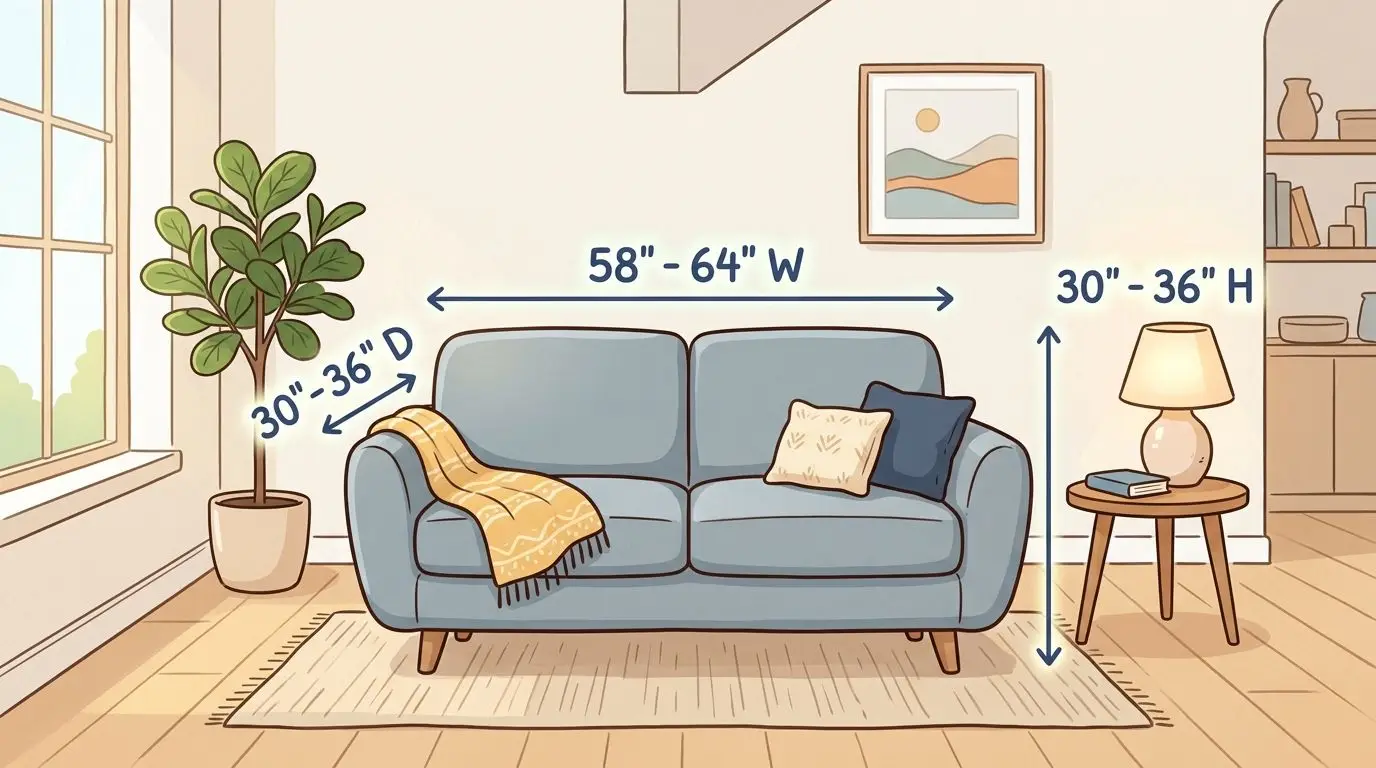
Those numbers represent the average dimensions of a loveseat that works in many living rooms. They aren't random. Furniture makers have spent years balancing comfort for two adults with the need for sufficient space for end tables, lamps, and walkways.
For shoppers who want a simple place to start, here's the simplest way to view it:
- Width tells how much wall and floor space the loveseat uses from arm to arm.
- Depth affects how far the loveseat projects into the room.
- Height shapes how tall the back looks visually and how much support it gives.
Anyone trying to size a specific room can also benefit from a simple measuring walkthrough on how to measure furniture before buying.
Why each measurement matters
Width is usually the first number people check, and for good reason. It decides whether a loveseat feels like a true two-person seat or more like a compact accent piece. In many homes, the standard width range works because it provides shared seating without demanding the same footprint as a full sofa.
Depth is where shoppers often get surprised. A loveseat can be modest in width but still feel large if the seat and back extend too far into the room. In tighter spaces, that front-to-back footprint changes how open the room feels.
A loveseat that looks balanced in a large showroom can feel very different once it's placed between a coffee table, a fireplace, and a traffic path.
Height matters in a quieter way. A back that falls in the common range usually looks proportional in most rooms and offers a familiar sitting posture. A very tall or very low back changes the room's visual weight, even when width stays close to average.
This is why the average loveseat size remains useful. It gives households a realistic baseline before style details, arm shapes, cushion thickness, and fabrics start changing the feel of the piece.
How Loveseat Dimensions Vary by Style
A loveseat's label doesn't always tell the whole story. Two pieces can both be called loveseats and still feel very different once someone sits down or tries to place them in a room. That's especially true when comparing compact apartment styles, plush casual silhouettes, and reclining models from comfort-focused brands like La-Z-Boy, Ashley, and Bassett.
Typical Loveseat Dimensions by Style
| Loveseat Style | Average Width | Average Depth | Key Consideration |
|---|---|---|---|
| Apartment-style loveseat | Usually on the smaller end of the standard loveseat range | Usually on the shallower end of common depth ranges | Works well where floor space is tight and a lighter visual footprint helps |
| Standard fixed loveseat | Commonly falls in the middle of the usual loveseat range | Often aligns with standard everyday sitting depth | Good all-purpose choice for living rooms, dens, and sitting areas |
| Reclining loveseat | Often feels larger overall than a fixed loveseat | Usually needs more room in front and behind once motion is added | Best for comfort-first seating, but placement needs extra attention |
| Deep-seat loveseat | Often similar in width to standard models | Uses more front-to-back floor space | Comfortable for lounging, but can overwhelm smaller rooms |
| Sleeper loveseat | Size can feel compact when closed | Needs planning for extension into the room | Best where guest use matters as much as everyday seating |
A style guide like this becomes easier to use when paired with a broader look at how furniture styles shape a room.
Comfort changes with the design
Technical furniture guidance notes that loveseat seat depth is typically around 20 to 24 inches, and overall cushion heights are about 20 to 22 inches above the floor, which supports comfortable sitting and easier entry and exit for many adults, especially seniors and comfort-focused shoppers, according to this standard loveseat size overview.
That's where style starts to matter.
A sleek, upright loveseat may sit within common overall dimensions but feel more supportive because the seated area keeps the body in a more upright position. A deep, cushioned design may use similar width but encourage more lounging. Neither is automatically better. The better choice depends on how the seat will be used.
Consider a few common situations:
- For reading or conversation: A more supportive sit often feels better than an extra-deep lounge shape.
- For movie nights: A plush seat can be appealing if the room has enough depth to spare.
- For older relatives: Seat height and easy entry can matter just as much as style.
- For everyday family use: Cushion feel, arm shape, and posture often matter more than appearance alone.
Many households looking at a reclining loveseat from La-Z-Boy, for example, are prioritizing comfort first. Others may prefer the broad style mix available through Ashley or Bassett because the room needs a certain look as much as a certain size.
The smartest comparison isn't just loveseat versus loveseat. It's upright sitting versus lounging, compact footprint versus extra comfort, and clean traffic flow versus added bulk.
Choosing the Right Size for Your Home and Family
The best loveseat size isn't just about what fits on the wall. It's about what fits the people, pets, and routines in the house. A loveseat can be technically the right size and still become the seat no one really enjoys if the depth, posture, or shared space doesn't match daily life.
The right loveseat should fit real life
One of the most overlooked realities in loveseat shopping is that two adults on paper and two adults in real life aren't always the same thing. Add a dog that likes to claim the middle cushion, or a taller family member who wants more leg support, and the “standard” pick can start to feel snug.
Guidance on loveseat sizing notes that a 60-inch loveseat may be comfortable for two adults but feel cramped for two adults plus a medium-sized dog, and it also suggests that shallower 30 to 32 inch loveseats can work better for shorter adults or aging-in-place layouts, while deeper 34 to 36 inch models may suit taller users or homes where pets share the seat, as described in this loveseat width and sizing discussion.
That's a helpful way to reframe the decision. The question shifts from “Will this fit?” to “Who will use it most, and how?”
For small-space households, this can also connect with broader planning ideas for the best furniture choices for a small living room.
A practical way to think about depth
Some households do better with a loveseat that keeps people sitting a bit more upright. Others want that sink-in feeling for evening TV time. Both can be valid. The room and the family decide which tradeoff makes more sense.
A practical way to sort it out is to think about the main user:
- Shorter adults or seniors: A shallower loveseat often feels easier to use comfortably.
- Taller adults: More depth can support the legs better.
- Pet-sharing households: Extra depth can make the seat more usable without everyone feeling crowded.
- Formal sitting rooms: A tidier, less lounge-heavy profile may suit the room better than a deep casual piece.
A loveseat should support the way a household actually sits. Not just the way a catalog photo looks.
Local lifestyle also matters. In Southwestern Virginia and Northern North Carolina, many homes ask furniture to do several jobs at once. A loveseat may serve as daily seating, overflow holiday seating, the dog's afternoon nap spot, and the favorite place for morning coffee. Choosing the right dimensions means accounting for all of that, not just the tape measure.
How to Measure Your Space for a New Loveseat
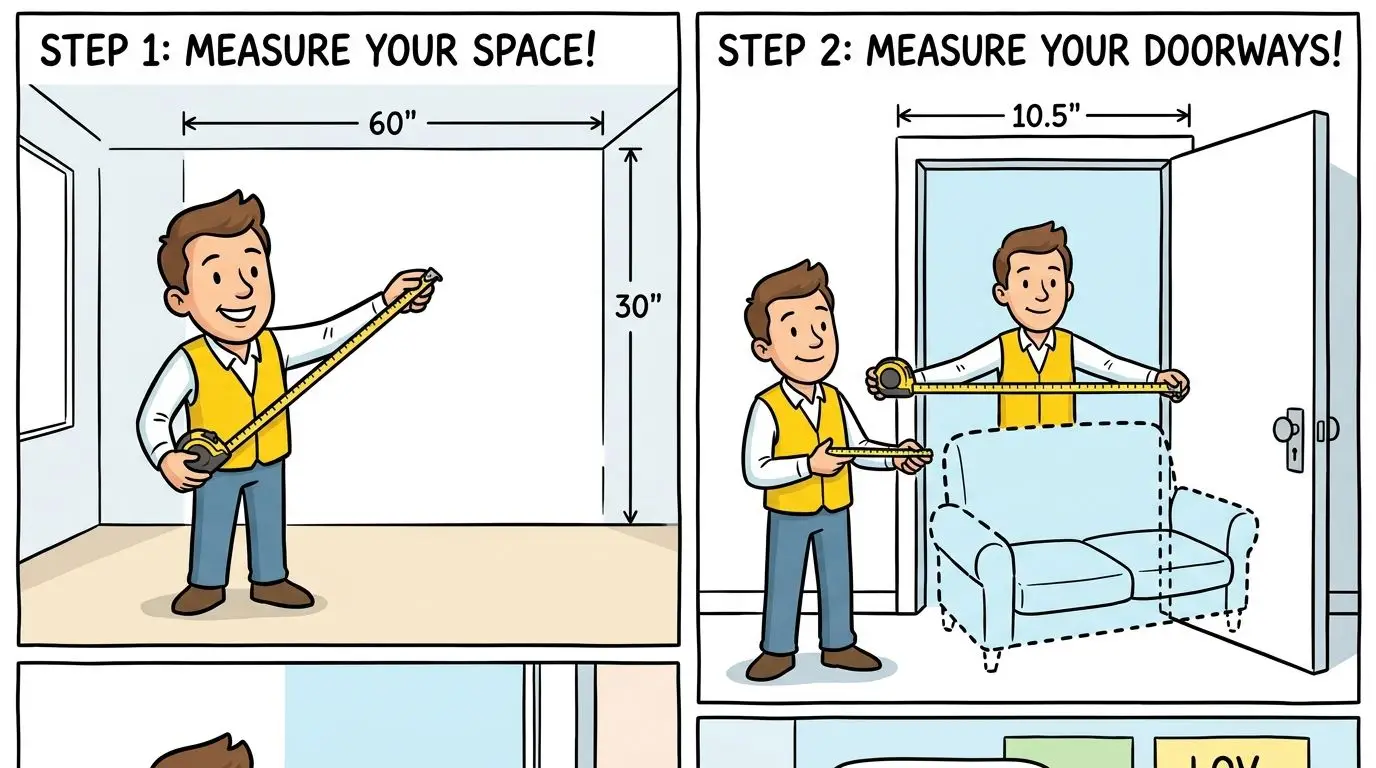
A good measurement process saves stress, returns, and awkward delivery-day surprises. It also keeps a promising loveseat from becoming a room that feels hard to walk through. The simplest approach is to measure the room itself, then the route the loveseat will take to get inside.
Measure the room first
Interior planning guidance recommends allowing at least 36 inches of clearance around the loveseat in any direction for comfortable traffic flow, especially in narrower Virginia-style living rooms, according to this loveseat layout reference.
That rule helps because many tend to measure only the wall. The wall matters, but so does the open space around the piece.
A straightforward process works best:
- Measure the placement wall. Write down the full open width available, not the full room width.
- Measure outward from the wall. This shows how much depth the room can handle before walkways feel pinched.
- Mark the footprint on the floor. Painter's tape makes it easier to see the loveseat in real size.
- Walk around the taped outline. Open nearby doors, pass by tables, and test the normal traffic path.
- Check nearby furniture. End tables, consoles, and coffee tables all affect how the loveseat will fit.
For rooms with unusual layouts, older architecture, or multiple focal points, guidance from how to measure a room for furniture can make the planning stage much easier.
Then measure the path into the house
A loveseat can fit the room and still fail the doorway test. That's why delivery planning matters just as much as floor planning.
Shoppers should check:
- Front door openings: Include width and height.
- Hallways: Watch for narrow turns.
- Stairways: Especially in split-level or upper-floor spaces.
- Corners and railings: These are common trouble spots.
- Entry clearance indoors: Foyers and small landings can get tight quickly.
For readers outside the local area who want a useful example of how delivery specialists think through access issues, this guide to professional furniture delivery London offers practical context on handling bulky pieces through real homes.
When layouts get tricky, an expert design staff can take a lot of pressure off the process. In homes with alcoves, angled walls, or narrow entries, support from experienced planners such as Debra Williams can help families avoid costly guesswork and feel more confident about what will work.
Find Your Perfect Fit at Guynn Furniture
A loveseat works best when three things line up. The room has enough space for it, the seat feels right for the people who use it, and the style fits the home instead of fighting it. That's the value in understanding the average dimensions of a loveseat. The numbers give shoppers a starting point, but the final decision still comes down to comfort, layout, and daily life.
Why local help still matters
For households in Galax, Independence, Hillsville, and the wider Southwestern Virginia and Northern North Carolina region, local guidance can make furniture shopping feel much simpler. A long-standing business that has served the region since 1902 brings a different kind of confidence to the process, especially when shoppers want a no-pressure atmosphere and practical answers instead of guesswork.
That's also why in-person support still matters for pieces like loveseats. Comfort is personal. Seat depth, arm height, cushion feel, and back support are easier to judge when shoppers can sit, stand, and compare styles for themselves. Room planning help can be just as valuable, especially for anyone using tools like Sketch Your Space or working with expert design staff on a larger room update.
A strong local experience also gives shoppers practical advantages:
- Immediate options: A large in-stock selection can help with faster delivery than online-only shopping.
- Trusted brands: Well-known names like La-Z-Boy, Ashley, Bassett, Sealy, and Therapedic give families a range of comfort and style choices.
- Clear value: Local price matching and a 30-day price guarantee help value-focused households shop with more confidence.
- Delivery support: Free in-home delivery and setup within 60 miles removes a major headache from the process.
For neighbors looking for comfort, value, and a friendly team that keeps the process simple, Guynn Furniture & Mattress is ready to help. Visit our showrooms in Galax, Independence, or Hillsville to test the comfort for yourself. Schedule a consultation with our design team to start planning your dream room today. Browse our selection online at guynnfurniture.net.