Pedestal Counter Height Tables: Find Your Perfect Fit


A lot of households end up in the same spot. The kitchen island feels too busy for a real meal, the formal dining room gets used a few times a year, and the everyday table has to handle everything from coffee mugs to school papers to takeout night.
That's where pedestal counter height tables tend to make sense. They sit in the comfortable middle ground between a standard dining table and a bar setup, and they often work especially well in open kitchens, breakfast nooks, and the kind of lived-in homes found across Galax, Independence, Hillsville, and the wider Southwestern Virginia and Northern North Carolina region. They can look polished without feeling fussy.
They also aren't some passing trend. Pedestal tables trace their origins to the late 18th century, evolving from smaller candle stands and becoming a foundational element in furniture design, a history of stability and style that continues in today's counter-height models, as noted in this historical guide to antique tables. That long view matters. Good furniture lasts, and families often want pieces that feel current but still rooted in tradition.
Table of Contents
- Welcome Home to Casual Dining
- The Benefits and What to Consider
- Measuring for the Perfect Fit
- Finding Your Style at Guynn Furniture
- Pairing Stools and Caring for Your Table
- Let Our Family Help Yours Find the Perfect Table
Welcome Home to Casual Dining
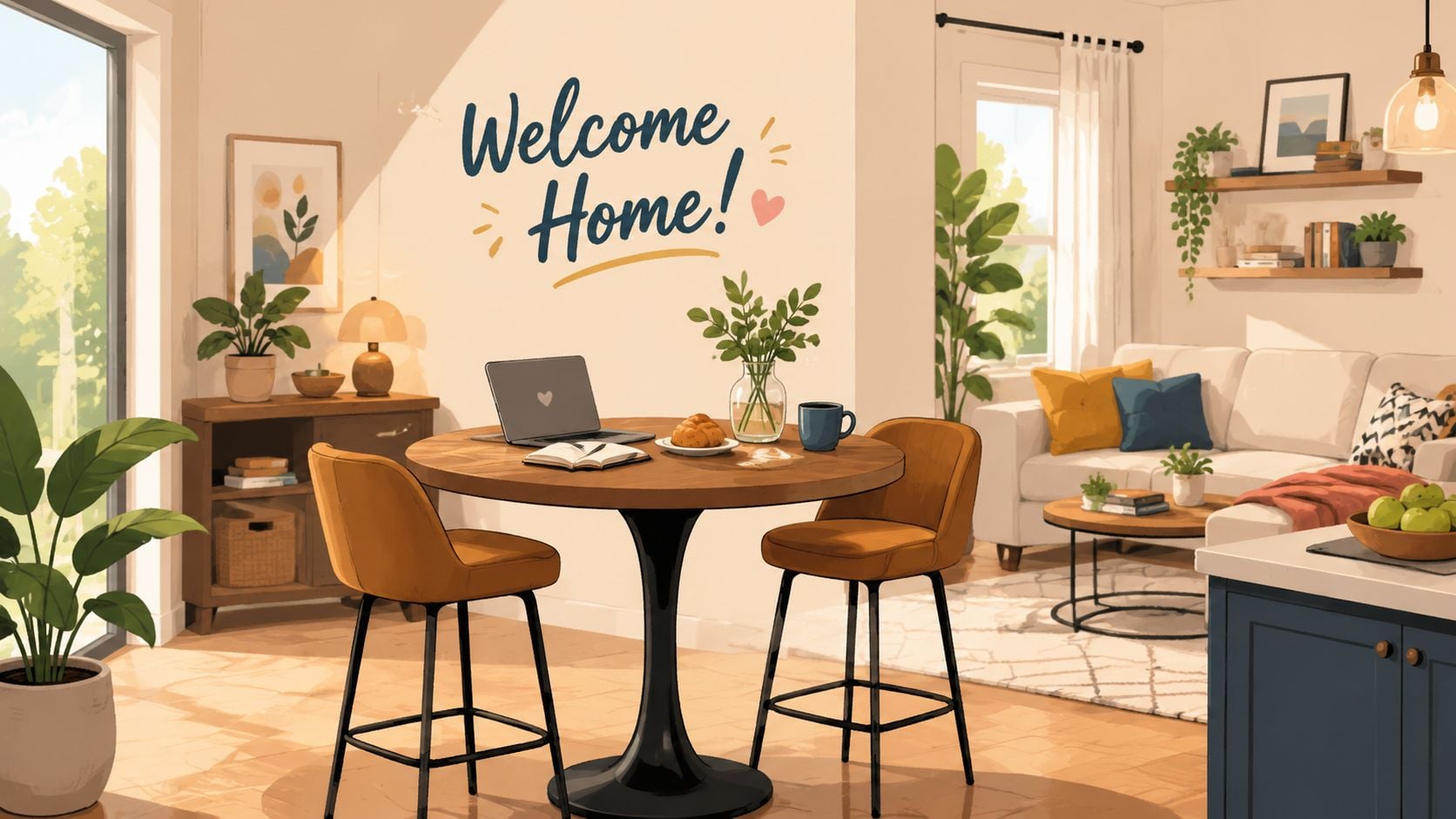
One common local setup looks something like this. A family wants one spot that can handle a quick breakfast before work, a slower Saturday lunch, and an evening where somebody is paying bills while somebody else is helping with homework. They don't want a towering bar table, and they don't want another low dining table that disappears visually beside the kitchen counters.
That's why pedestal counter height tables keep showing up in real homes. They create a casual place to gather that still feels finished. In older homes around Hillsville and Galax, they can add a little lift to a dining corner without making the whole room feel formal. In newer open layouts, they help the eating area connect naturally with the kitchen.
Why this shape feels so inviting
A pedestal base changes the mood of a room in a subtle way. Without four corner legs, the table often looks lighter and less crowded. That can make a breakfast area feel more open, even when the room itself isn't very large.
It also supports the kind of casual decorating many families prefer. A simple centerpiece, a bowl of fruit, or a seasonal candle display can make the table feel warm and lived in. For readers who enjoy adding that kind of detail, this easy guide to crafting floating candles offers a simple decorating idea that suits a counter-height table nicely.
A good everyday dining spot shouldn't feel like overflow space. It should feel like part of the home's rhythm.
A practical fit for daily life
Pedestal counter height tables work well when the table has to serve more than one purpose. That's often the situation in family homes, smaller cottages, and remodeled farmhouses throughout Southwestern Virginia. The same table may host lunch, laptop work, and conversation with neighbors who stop by.
Readers exploring the broader look of a dining area can also gather ideas from these dining room decorating ideas. The table itself matters, but so does how it fits the room around it.
The Benefits and What to Consider
A pedestal counter height table often solves a very ordinary problem. In many homes around Galax, Hillsville, and the surrounding area, the dining spot is not a separate formal room. It may sit beside the kitchen, near a back door, or right in the middle of the path between the stove and the living room. In that kind of layout, the base matters just as much as the top.
With a pedestal table, the support stays in the center. That usually gives knees, stools, and foot traffic a little more freedom. It works a bit like clearing the corners out of a small parking area. People have more room to pull in, turn, and get comfortable without bumping into a leg at each corner.
That open feel is a big reason families choose this style.
Why many homes do well with one
- Easier seating around the base: A center pedestal can make it simpler to slide stools in from different angles, especially in breakfast nooks and compact eat-in kitchens.
- Less visual clutter: One base can look lighter than four legs, which helps smaller rooms feel calmer and less boxed in.
- A better match for everyday living: Counter height sits closer to kitchen work surfaces, so the table often feels natural for quick meals, homework, or visiting over coffee.
- Helpful in mixed-use spaces: In older farmhouses, cottages, and remodeled homes, one table may need to serve several jobs without making the room feel crowded.
Of course, there are tradeoffs.
A single pedestal needs a well-built base and good weight balance. That is especially important in active households with children, pets, or a narrow walkway nearby. If someone leans hard on the edge, climbs up, or catches a stool on the way past, a lightweight table can feel less steady than it looked on a sales page.
That does not make pedestal counter height tables a poor choice. It means the details deserve a close look. Base width, table weight, top size, and the way the table feels on your actual floor all matter. At Guynn Furniture, this is one of the biggest advantages of shopping in person. You can sit down, pull the stool in and out, put a hand on the edge, and get a real sense of stability before the table goes home with you.
What to weigh before you choose
Some homes are a natural fit for this style. Others need a little more thought.
- Young children in the house: Kids lean, wiggle, and sometimes treat furniture like playground equipment.
- Large dogs or busy pets: A fast turn around the table can bump stools or shake a lighter base.
- Tight pass-through areas: If the dining area sits between the kitchen and another room, daily traffic can matter as much as seating.
- Uneven older floors: Many local homes have character. They also have floors that are not perfectly level, which can change how stable a table feels.
If you are unsure whether counter height is the right call, our guide to dining table heights can help you compare counter height with standard and bar-height options in a clear, practical way.
The best choice is the one that fits your room, your routine, and the way your family lives. That part can be tricky on your own. It gets much easier when you can walk into our showroom, talk through your layout, and see which pedestal counter height table feels right for your home.
Measuring for the Perfect Fit
Many mistakes frequently occur. A table can look perfect in a photo and still feel too tight once stools are pulled out and people start walking around it. Measuring first saves a lot of regret.
The technical standard for a pedestal counter height table is a tabletop elevation of 34 to 36 inches, with a recommended minimum 36-inch walkway clearance around the perimeter to prevent congestion in high-traffic zones, according to this counter-height dining set guide. That gives a clear starting point.

A simple way to measure the room
Start with the room, not the table.
- Measure the open floor area where the table would sit.
- Mark the table footprint with painter's tape or flattened boxes.
- Add walking space all around it so the household can judge whether chairs, stools, and traffic paths will overlap.
- Check nearby doors, cabinets, and appliances if the dining area sits close to the kitchen.
This matters in older local homes, where walls may jog, windows may drop lower than expected, and the dining area often doubles as a walkway. A room may be wide enough in one direction and tight in another. The tape outline usually reveals that quickly.
Where readers often get confused
People often measure only the tabletop. They forget that the lived-in size of the table includes the people using it. Once stools are occupied and someone walks behind them, the room can feel much smaller.
A few common trouble spots show up again and again:
- The kitchen pass-through: If the table sits between the sink and the fridge, traffic builds fast.
- The corner squeeze: A round pedestal table may fit better than a square one when one side of the room narrows.
- The chair pull-back problem: Seating needs room to move, not just room to exist.
A table should help the room flow, not turn every meal into a shuffle around furniture.
Readers who want a more detailed planning worksheet can use this dining table size guide while mapping their room.
Finding Your Style at Guynn Furniture
A family in Galax may have a dining area that opens straight into the kitchen. A home in Hillsville may have an older breakfast nook with a window on one side and a tight walkway on the other. In rooms like these, style is not decoration alone. The table's base, shape, and finish all affect how the space feels and how easily people can use it every day.
That is why we encourage shoppers to look at a pedestal counter height table the way they would look at a pair of boots. It should look right, yes, but it also has to fit the way you live. A beautiful table can still feel awkward if the base catches feet, blocks stool placement, or looks too heavy for the room around it.
Single pedestal or double pedestal
The base often decides whether a table feels easy to live with.
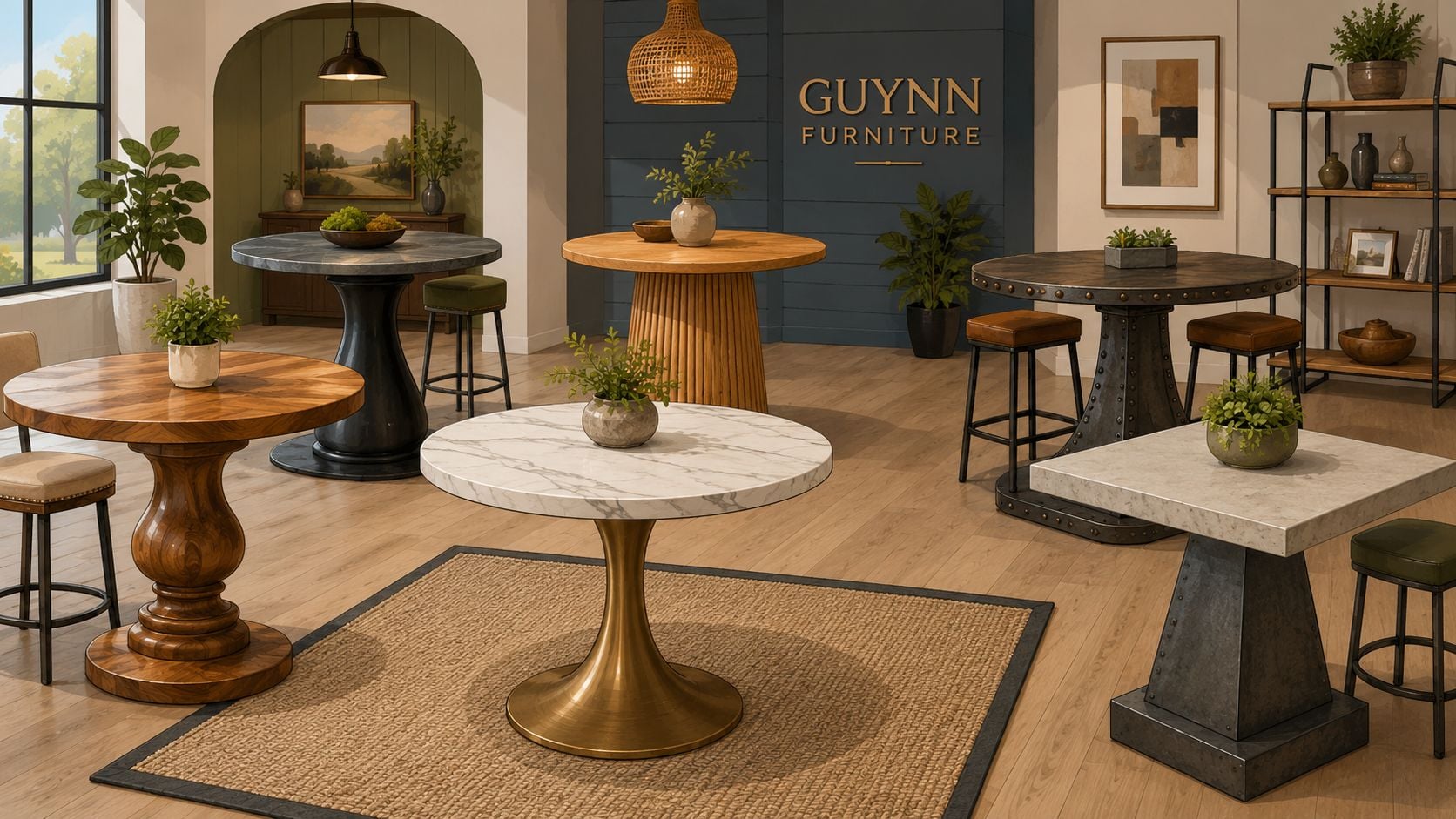
A single pedestal keeps the center more open, which can help in smaller dining spots and breakfast areas. If your home has a compact nook or a table that sits near a traffic path, one central base usually gives legs and stools a little more freedom to move.
A double pedestal brings a different benefit. It often looks more anchored and can suit a longer tabletop well, especially in homes with a dedicated dining zone instead of a tight eat-in corner. The tradeoff is simple. More base structure below can mean less flexibility for knees, feet, and stool placement.
Here is a practical way to compare them:
| Base type | Best fit | Main advantage | Main caution |
|---|---|---|---|
| Single pedestal | Smaller nooks, round tops, open-concept areas | Keeps the center feeling open and seating more flexible | Needs the right top size and construction to feel steady |
| Double pedestal | Longer tops, wider dining areas | Gives a substantial look and balanced support | Takes up more space below the table and can limit legroom |
Shape changes how the room works
Shape is part of style, but it is also part of floor planning.
A round top often works well in local homes where people need to move around the table from more than one direction. It softens a room and avoids sharp corners in tighter layouts. A square top can make sense in a compact corner where you want the table to line up neatly with walls or cabinets. A rectangular top gives more usable surface, but it usually asks more from the room around it, especially in narrower spaces.
Materials matter too. Wood finishes often feel at home in the traditional houses found across our area. Mixed-material looks can suit updated interiors where older architecture meets newer flooring, lighting, or cabinetry.
If you are trying to match the table to the rest of the room, our furniture style guide for choosing a look that fits your home can help you sort out the difference between classic, casual, and more updated styles.
The helpful part of shopping in person is that you do not have to guess from a screen. At Guynn Furniture, we can walk through these choices with you, show how different pedestal styles sit in real space, and help you find a table that fits your house in both scale and personality.
Some rooms feel better with a different base or shape, even when the tabletop size stays the same.
Pairing Stools and Caring for Your Table
A counter-height table only feels right when the seating matches it. This is one of the most common reasons a dining setup looks good but doesn't feel comfortable once people sit down.
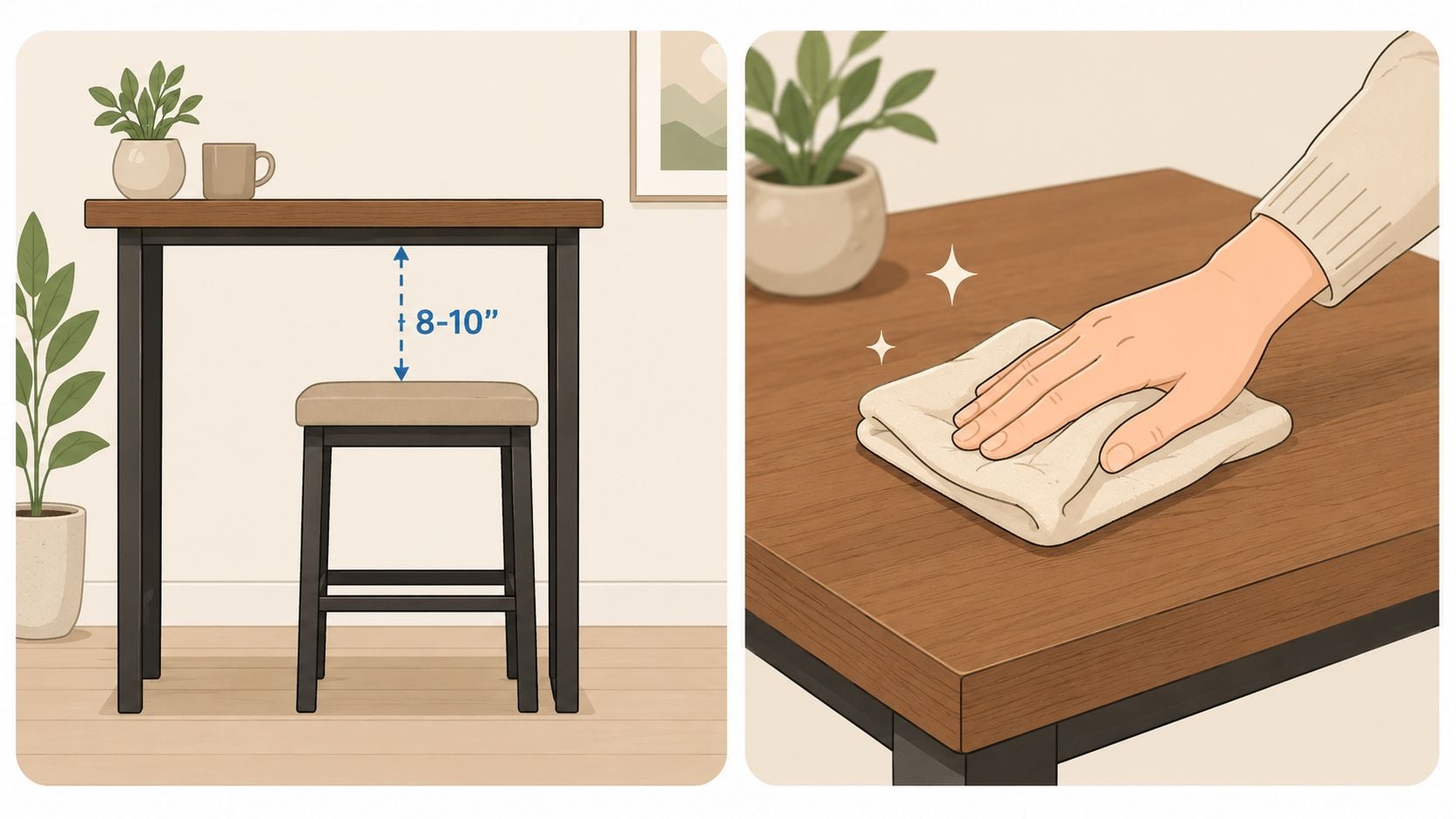
For proper ergonomics with a 34 to 36 inch high table, stools must have a seat height between 24 and 26 inches to provide the necessary 8 to 10 inches of knee clearance for comfortable seating, according to this counter-height dining table reference. That's the comfort rule to keep in mind before choosing anything upholstered, swivel-based, or backless.
Picking stools that match the way the room is used
Some homes need stools that disappear neatly under the table. Others need seating with more back support because people sit there for longer stretches.
- Backless stools: Good for tighter spaces where clean sightlines matter.
- Stools with backs: Better for long meals, conversation, or older family members who want more support.
- Upholstered seats: Softer and warmer in feel, though they may need more upkeep.
- Swivel styles: Handy in active spaces, especially when stools sit near a kitchen work zone.
Comfort-focused shoppers often prefer supportive seating throughout the home, which is one reason names like La-Z-Boy carry so much trust. The same attention to comfort also matters when choosing dining stools.
Easy care habits that help
Most pedestal counter height tables don't need fussy maintenance. They need consistent, sensible care.
- For wood surfaces: Use a soft cloth and clean spills quickly.
- For metal elements: Wipe fingerprints and moisture so the finish stays looking crisp.
- For everyday protection: Placemats and coasters help reduce wear from repeated use.
- For pedestal bases: Check the area around the base during routine cleaning so dust and grit don't build up where shoes and stools tend to bump.
Readers comparing stools, chairs, and mixed seating can sort through the basics in this guide on how to choose dining chairs.
Let Our Family Help Yours Find the Perfect Table
A lot of families start the table search the same way. They measure the wall, pick a finish they like, and assume they are almost done. Then real life steps in. The walkway feels tighter than expected, the pedestal base lands where feet naturally want to rest, or the table looks right in a photo but feels oversized in a dining nook inside a farmhouse, split-level, or older cottage around Galax, Hillsville, or Independence.
That is why local help still matters.
Choosing a pedestal counter height table is not only about the table itself. It is about how people move through the room, where groceries come in, how close the kitchen island sits, and whether the space needs to handle quick breakfasts on weekdays and extra guests on weekends. In many homes across our area, rooms were not built to one standard template. Doorways can sit at odd angles. Breakfast areas can be narrow in one direction and open in another. A pedestal base often helps in those spaces, but only if the size and shape are matched carefully to the room.
Guynn Furniture & Mattress has helped regional families furnish their homes for generations, and that experience shows up in the practical details. Our team can help you sort through table height, top size, finish, seating comfort, and room flow without making the process feel complicated. If your space has an awkward corner, a nearby traffic path, or a mix of open and closed sightlines, we can help you compare options in person instead of guessing from a screen.
That in-person step makes a difference. You can walk around the table, pull up a stool, and get a real sense of scale, much like taping out a room on the floor but with the actual furniture in front of you. For households that want extra guidance, our design staff can help work through harder layouts and coordinate the table with the rest of the room. Delivery and setup also remove a lot of the stress once the choice is made.
Some shoppers arrive knowing the exact look they want. Others just know the room is not working and want honest advice. Both are welcome.
A well-chosen pedestal counter height table should make daily life easier, not force the room to work harder. If you want help from people who know the homes and floor plans common in our part of Virginia and North Carolina, visit Guynn Furniture & Mattress in Galax, Independence, or Hillsville. We will help you find a table that fits your space, your routine, and your home.