Difference Between Queen and Full Mattress: Your Guide

A lot of mattress decisions start the same way. Someone is standing in a bedroom with a tape measure, trying to picture a bed, two nightstands, a dresser, and enough open floor to make the room feel calm instead of crowded.
That's where the difference between a queen and full mattress becomes more important than it first appears. On paper, the sizes seem close. In daily life, that gap affects comfort, movement, storage, bedding costs, and how the whole room works for the people living in it.
For families across Galax, Independence, Hillsville, and the wider Southwestern Virginia and Northern North Carolina region, this choice often comes down to three practical concerns. Will it fit, will it feel comfortable, and will it stay within budget? Those are the right questions to ask.
Table of Contents
- Choosing Your Perfect Mattress A Timeless Decision
- Queen vs Full Mattress At a Glance
- The Tale of the Tape Inches and Personal Comfort
- Will It Fit Planning Your Bedroom Space
- Beyond the Mattress Cost Bedding and Frames
- Making the Right Choice for Your Family
- Your Neighbors at Guynn Make It Easy
Choosing Your Perfect Mattress A Timeless Decision
A bedroom usually isn't furnished in isolation. A family might be setting up a first apartment, refreshing a longtime primary suite, or turning a spare room into a place that feels welcoming for guests and grandchildren. The mattress size sets the tone for everything that follows.
The queen didn't become common by accident. According to this history of queen mattress sizes, the queen-size mattress was introduced in the 1940s to 1950s and became widely popular in the 1960s as homes got larger and people placed more value on comfort for couples. That shift still shapes bedrooms today.
A full mattress still has a real place in the home. It works well when a room needs to stay flexible, when a single sleeper wants more room than a twin offers, or when keeping costs manageable matters. A queen, though, often fits the way many households live now, especially in primary bedrooms.
For shoppers sorting through support, room size, and sleep habits, it also helps to look beyond size alone. Some households exploring adjustable comfort and support compare mattress sizing alongside resources on beds for chronic pain relief, especially when comfort needs go beyond a basic guest setup.
A mattress choice lasts beyond move-in day. The better decision is the one that still works when the room is fully furnished and the sleeper's needs are clearer.
Anyone trying to narrow down comfort, support, and size can also use this practical guide on how to choose a mattress before deciding on a full or queen.
Queen vs Full Mattress At a Glance
For a quick answer, the biggest difference between queen and full mattress options is simple. A queen is both wider and longer, while a full is more compact and usually more affordable.
| Feature | Full (Double) Mattress | Queen Mattress |
|---|---|---|
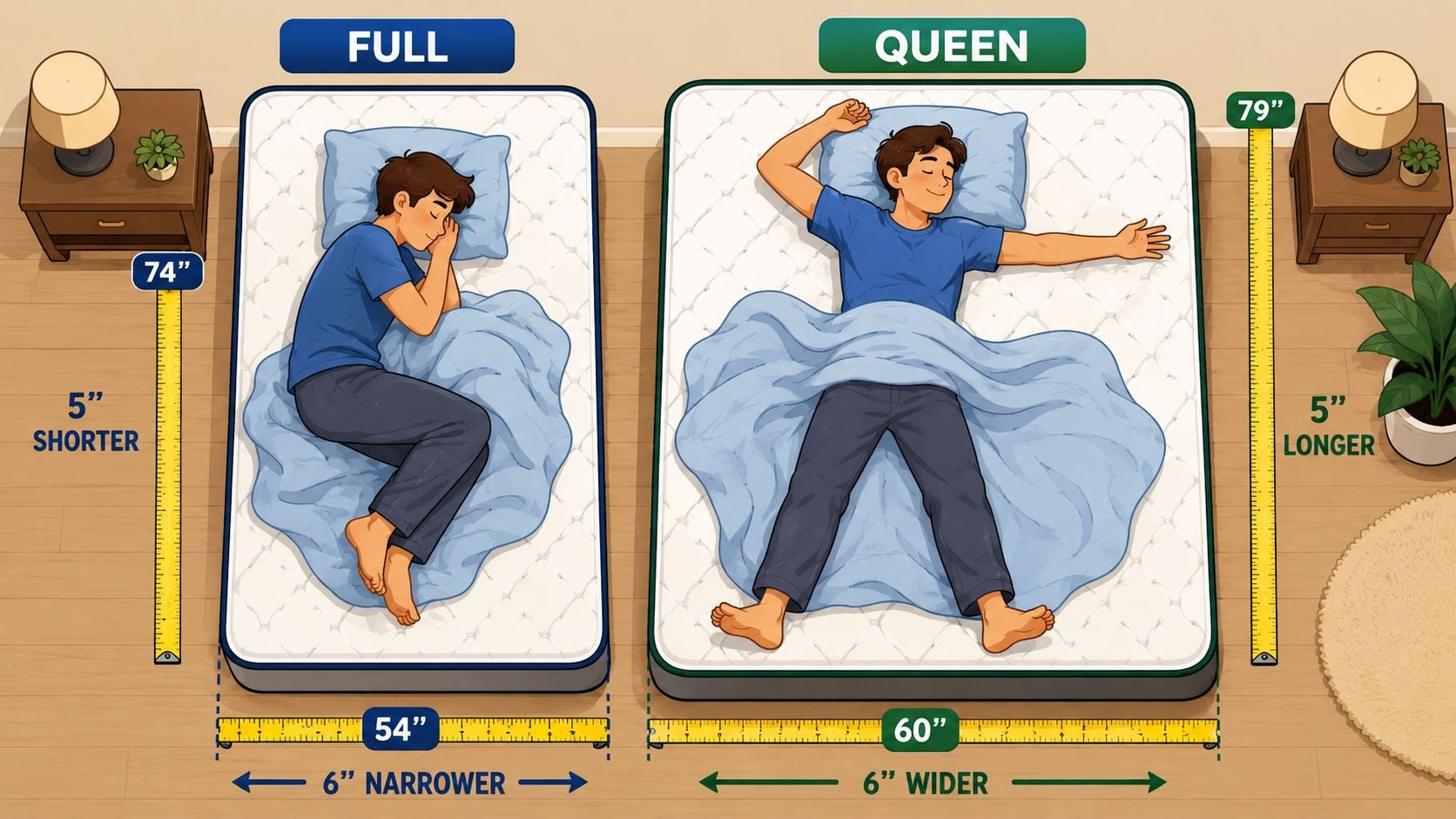
| Standard dimensions | 54 inches x 75 inches | 60 inches x 80 inches |
| Best fit for | Single sleepers, teens, guest rooms | Couples, taller sleepers, primary bedrooms |
| Sleeping area | 4,050 sq. in. | 4,800 sq. in. |
| Space difference | Smaller footprint | 750 sq. in. more sleeping area |
| Personal space for two | 26.5 inches per person | 30 inches per person |
| Typical price range | $700 to $2,800 | $800 to $3,000 or more |
| Bedding cost | Lower | Usually higher |
| Room feel | Easier in tighter layouts | Better comfort, larger footprint |
That chart shows why this decision isn't just about inches. A full helps preserve floor space. A queen gives more breathing room, especially for shared sleep.
Quick takeaway: If the room is the limiting factor, a full often wins. If the sleepers are the limiting factor, a queen usually does.
The Tale of the Tape Inches and Personal Comfort
The numbers matter because they change how the bed feels at the end of a long day.
According to Purple's full vs. queen mattress guide, the primary difference between a full and queen mattress is their surface dimensions. A queen measures 60 inches by 80 inches, while a full measures 54 inches by 75 inches, giving the queen 6 inches more width, 5 inches more length, and 750 square inches more sleeping area.
What the size difference means in daily use
For a single sleeper, a full often feels perfectly comfortable. It gives more room than a twin without taking over the whole bedroom. In a guest room, that can be the sweet spot.
For two adults, that same full can start to feel narrow in a hurry. The issue usually isn't whether two people technically fit. The issue is whether both people can rest without bumping shoulders, fighting for blanket space, or waking when the other person rolls over.
A queen tends to solve that problem because it adds width and length in a way people notice right away once they lie down.
- More elbow room: The extra width helps both sleepers settle naturally instead of staying tucked inward.
- Less edge pressure: On a full, one sleeper often ends up closer to the side than they'd like.
- Better leg support: Taller sleepers get more usable length on a queen.
A closer look at queen bed size details can help when the goal is understanding how those dimensions translate into real bedroom comfort.
Who feels the difference most
Couples usually feel the change first. A queen mattress is widely treated as the standard choice for shared sleep because each person gets more room to settle into a normal sleep position.
Single sleepers can feel the difference too, especially if they stretch out, sleep with a pet, or don't like feeling boxed in. Taller adults also notice the added length more than the width.
Practical rule: If a sleeper's feet tend to reach the edge or if two people share the bed regularly, those extra inches stop feeling small and start feeling necessary.
There's also a less obvious issue that many guides skip. Some shoppers assume a full might feel sturdier just because it's smaller. In practice, mattress durability depends on construction, and some discussions around coil count point out that a smaller mattress can include fewer coils, which may affect how well it maintains support for two people over time, as discussed in this Mattress Underground forum thread on full vs. queen durability. That doesn't make every full a poor choice. It means size alone doesn't guarantee better support.
Will It Fit Planning Your Bedroom Space
A mattress can be comfortable and still be wrong for the room. That's one of the most common layout mistakes in bedroom planning.
A queen is the most popular size for master bedrooms because it gives 30 inches of personal sleeping space per person for couples, while a full offers 26.5 inches per person, which can feel cramped for two adults, according to Casper's mattress size comparison guide. That comfort benefit is real, but it only works well when the room still feels open enough to move through easily.
Start with the room, not the mattress
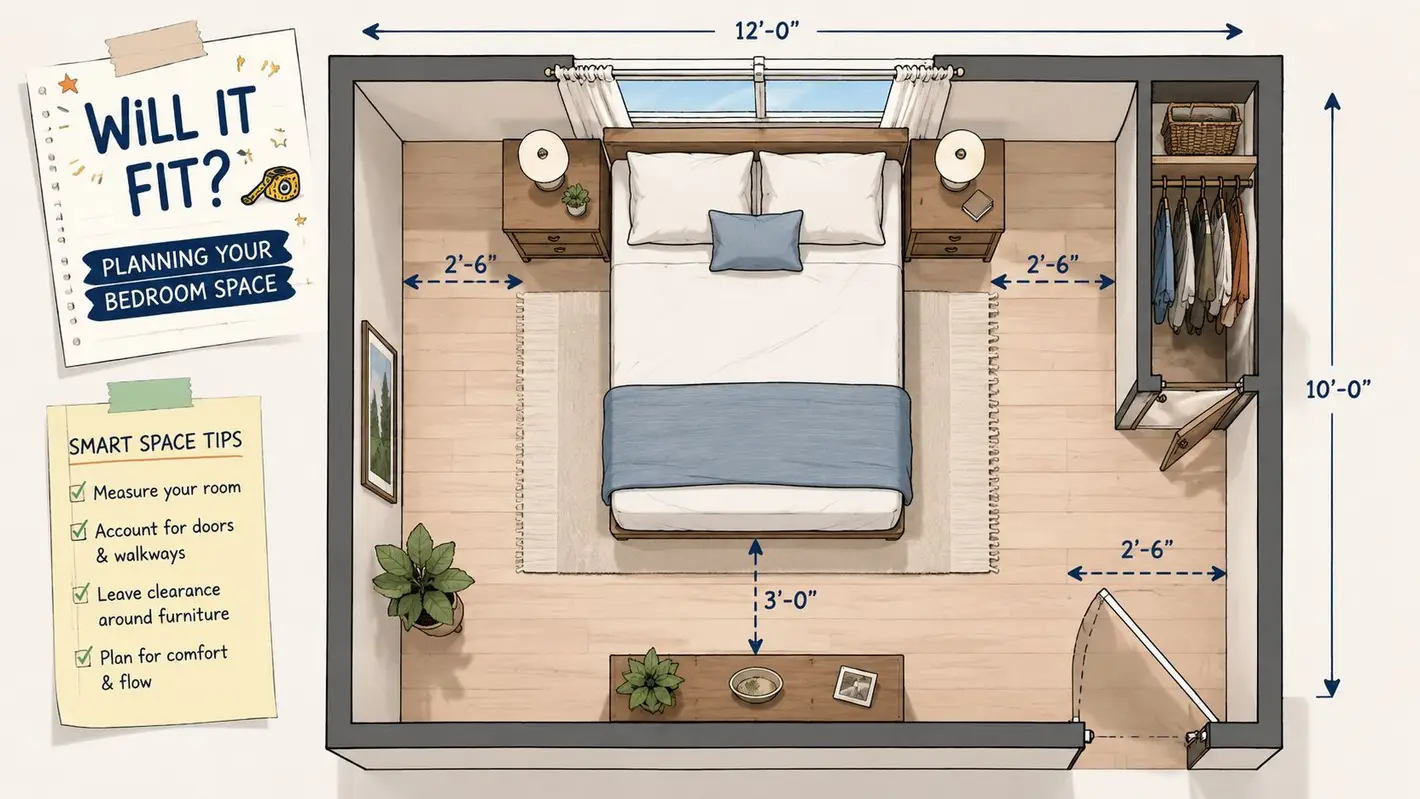
A good bedroom layout supports sleep, storage, and movement. It should let people get into bed easily, open drawers without hitting the frame, and walk around the room without turning sideways.
A full mattress is often easier to place in a compact bedroom, especially when the room also needs a dresser or desk. A queen usually fits best when the bedroom is the primary sleeping space and the layout can support a larger centerpiece.
The importance of measuring becomes apparent. A room can look spacious when empty and feel crowded once the bed frame, nightstands, lamps, and chest are in place.
- Measure wall to wall: Get the usable dimensions of the room first.
- Include the swing path: Bedroom and closet doors need room to open.
- Map furniture depth: Dressers, benches, and nightstands take more floor space than many people expect.
- Think about daily routes: The path from the door to the bed and to the closet should stay clear.
Shoppers who want a more accurate plan can use this guide on how to measure a room for furniture before settling on mattress size.
A simple way to map the layout
One practical method is to outline the mattress footprint on the floor with painter's tape. Then place markers for nearby furniture. That quick exercise usually reveals whether the room still has balance.
Some layouts also need to account for style choices. A larger headboard, a storage bed, or a deeper Bassett dresser can change the room more than the mattress itself.
If the bed size forces every other piece tight against the wall, the room may technically work, but it won't feel restful.
For households furnishing smaller homes, guest rooms, or downsized spaces, a full can create a better overall room than a queen that dominates everything around it. In a larger primary bedroom, a queen often gives the space the proportions people expect.
Beyond the Mattress Cost Bedding and Frames
Price matters, and most families want the whole bedroom budget to make sense before bringing anything home.
According to Mattress Warehouse's full vs. queen comparison guide, full mattresses typically range from $700 to $2,800, while queen mattresses typically range from $800 to $3,000 or more. The same source notes that queen accessories also tend to cost more because the mattress has a larger surface area and needs larger sheets, blankets, and related bedding.

The mattress price is only part of the budget
A lot of shoppers compare only the mattress ticket price. That's understandable, but the bed setup includes more than that one item.
A complete budget usually includes:
- Bed frame or foundation: The mattress needs the correct support underneath it.
- Sheets and protectors: Size changes affect replacement costs over time.
- Comforter or quilt: Queen bedding usually costs more than full bedding.
- Pillows and styling pieces: A larger bed often calls for more layers to look finished.
That's why the difference between queen and full mattress pricing should be viewed as total ownership cost, not just shelf price.
Households replacing a bed after a move also often underestimate setup effort. For anyone coordinating delivery or relocation, resources like Posch & Silva's bed assembly can be useful for understanding what proper bed assembly involves and why frame stability matters.
Why accessories matter more than people expect
Bedding availability also shapes long-term convenience. Queen is such a standard size that shoppers generally find a wider selection of sheets, blankets, and layered bedding looks. Full bedding is still easy to find, but the design range may feel narrower depending on the style someone wants.
That matters most when the bed is in a primary bedroom and the room needs a polished, finished look. It matters less when the bed is in a teen room, guest room, or second home where function leads the decision.
A practical bedding checklist helps avoid missing the smaller pieces that affect the final budget. This guide to bedding, mattress protectors, and comforters is a useful place to start.
A full often saves money at purchase. A queen often adds flexibility later. The better value depends on whether the room is temporary, long-term, single-sleeper, or shared.
For shoppers in Galax, Independence, Hillsville, and across Southwestern Virginia and Northern North Carolina, this is also where local value matters. Many families want clear pricing, a no-pressure atmosphere, and options from trusted brands such as Ashley, Bassett, Sealy, Therapedic, and La-Z-Boy.
Making the Right Choice for Your Family
The best size depends less on what sounds standard and more on how the bed will be used.
According to BedInABox's mattress size guide, a queen mattress gives partners 6 inches of extra width, which provides enough breathing room to reduce the crowded feeling many people notice on a full. That's why queen is commonly recommended for couples who want shared sleep without moving up to a king.

When a full makes sense
A full is often the right choice when the room or the stage of life calls for efficiency.
It usually fits well for:
- A single adult: Especially in a first apartment or smaller home where floor space matters.
- A teenager: It gives growing sleepers more room than a twin without taking over the room.
- A guest bedroom: It keeps the space flexible for other furniture or occasional multi-use needs.
A full can also work when the goal is affordability first. If the mattress won't be shared nightly and the room needs to stay open, it's a sensible option.
When a queen is the better fit
A queen is usually the stronger choice when comfort and flexibility matter more than saving a little floor space.
It's often the better fit for:
- Couples: Shared sleep is more comfortable with added width.
- Taller sleepers: The extra length can make a noticeable difference.
- Primary bedrooms: A queen feels more natural in a room meant to serve as the main retreat in the home.
- Households thinking ahead: A bed that works now and later can prevent an early replacement.
For couples sorting through support, motion transfer, and sleeping styles together, this guide on finding the right mattress for two sleepers is worth reading alongside size planning.
Sealy and Therapedic models in both sizes can suit very different needs, from a firm guest room setup to a softer primary bedroom feel. That's why testing matters. Two mattresses with the same dimensions can still feel very different once real sleep positions come into play.
Your Neighbors at Guynn Make It Easy
A mattress purchase should feel manageable, not stressful. That's especially true when the choice affects budget, room layout, and everyday comfort all at once.
For families in Galax, Independence, Hillsville, and the wider Southwestern Virginia and Northern North Carolina region, local guidance still matters. Guynn Furniture & Mattress has served this region since 1902, and that long history shows up in the way the store helps people shop. There's a no-pressure atmosphere, experienced guidance, strong values on everyday pricing, and a large in-stock selection for faster delivery than many online-only options.
For shoppers balancing style and layout, the expert design staff, including Debra Williams, can help with scaled room planning and furniture coordination. For value-focused households, the store's Low Price Promise includes matching local competitors and a 30-day price guarantee. Once the choice is made, free in-home delivery and setup within 60 miles makes the final step much easier.
That combination matters whether someone is outfitting a guest room with an affordable full, building a primary suite around a queen, or pairing a new bed with trusted names like La-Z-Boy, Ashley, Bassett, Sealy, and Therapedic.
Visit Guynn Furniture & Mattress to explore mattress options in a friendly, no-pressure atmosphere. Visit our showrooms in Galax, Independence, or Hillsville to test the comfort for yourself. Schedule a consultation with our design team to start planning your dream room today. Browse our selection online at guynnfurniture.net.