How to Measure a Couch for a Slipcover (Step-by-Step Guide)


A sofa slipcover usually takes at least 8 measurements, and one detailed measuring guide lists 20 separate measurements, all taken in inches without rounding, because width alone won't predict fit slipcover measuring guide. That extra care saves money, time, and stress when a cover looks perfect online but shows up too tight on the arms, too short at the base, or loose enough to slide every time someone sits down.
That moment is familiar in a lot of living rooms. A homeowner finds a color that wakes up the whole room, orders with confidence, then opens the package and sees the problem right away. The fabric may stretch across the seat but fight the arm shape, or it may hang well in front and leave awkward gaps near the floor.
Most of those headaches start with skipped measurements, not bad taste.
For families in Galax, Independence, Hillsville, and across Southwestern Virginia and Northern North Carolina, that matters because furniture isn't a throwaway purchase. A slipcover is supposed to refresh a room, protect upholstery, and buy a little more life from a sofa. If the fit is wrong, the room never feels settled.
Why Measuring Your Sofa Matters Before You Shop
A lot of slipcover problems start the same way. The color looks right online, the size sounds close enough, and the sofa seems like a standard shape. Then the cover arrives, the arms strain, the seat wrinkles, and the whole thing needs tugging back into place every time someone gets up.
A good fit looks settled. It follows the lines of the sofa, stays where it belongs, and can pass for a custom update from across the room. A poor fit slides, bunches, and advertises itself.
That difference usually comes down to measuring before you buy.
A common living room mistake
From the front, many sofas look simpler than they are. In person, the details matter. Rolled arms need different allowance than square arms. A tall deck changes how the fabric falls. A back that rises above the cushions can make a cover look short even when the width seemed right on paper.
Width alone misses too much.
Slipcover fit depends on the full shape of the piece, including the seat, arms, base, and back. Skirted styles add one more point people often miss. The fabric drop from beneath the seat to the floor needs its own measurement. If that drop is off, the cover can hover above the floor or puddle at the base, and both look sloppy fast.
Practical rule: The more tailored the look, the less room there is for guessing.
I have seen this play out in ordinary family rooms for years. A homeowner buys a cover for a three-cushion sofa, only to find one arm is slightly flared and the back is taller than expected. The cover goes on, but it never quite settles. It gets tucked after company leaves, straightened after the dog jumps up, and adjusted again after movie night.
Why accuracy saves money, not just time
A slipcover that shifts every day stops feeling like a bargain. Return shipping adds up. Replacement orders cost more than expected. The bigger cost is frustration, especially when the goal was to make the room feel finished again.
Careful measuring gives you a better shot at a slipcover that looks custom-made instead of temporary. It also helps you judge whether a certain fabric and fit style make sense for the sofa you already own. If you are comparing textures, durability, or drape, it helps to understand upholstery fabric types and performance before you decide.
That is also where a local store can earn its keep. Guynn's Low Price Promise matters more when you know you are comparing the right size and style from the start, not trying to rescue a bad guess after the fact. And when a sofa has unusual arms, a loose back, attached cushions, or another tricky detail, expert design help can prevent the kind of measuring mistake that leads to slipping, bunching, or an avoidable return.
In short, measuring first protects the look of the room and the money behind the purchase.
The Core Measurements You Need to Take
Good slipcover measuring starts with the frame, not the cushions. Cushions compress, shift, and puff back up. The sofa frame stays put, and that is the part the cover has to wrap correctly if you want a result that looks custom-made instead of something you keep retucking after people get up.
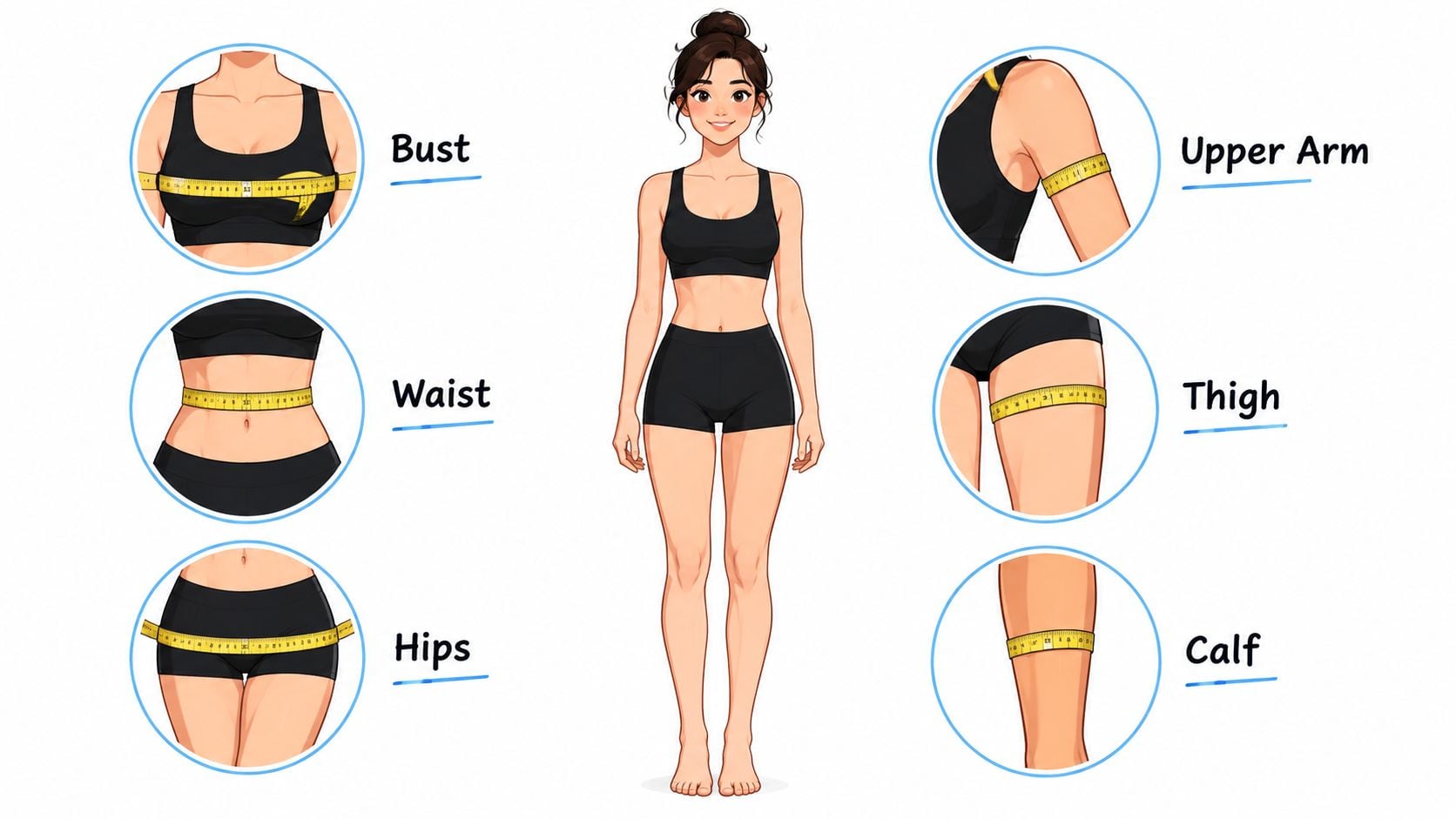
A flexible cloth or fiberglass tape works best because it follows curves without lifting off the fabric. Keep a notepad nearby, measure in inches, and write down the exact number. Do not round up to the nearest inch. Half an inch at the arm or back can be the reason a cover sits neatly or creeps loose by the end of the week.
Start with the four paths that matter most
Begin with the four measurements that decide whether a slipcover has a fair chance of fitting well.
- Overall width: Measure from the outside of one arm to the outside of the other.
- Overall depth: Measure from the front-most point of the sofa to the back-most point.
- Back height: Measure from the floor to the top of the back. If the seat cushions are loose, remove them first so you are measuring the frame height, not the cushion stack.
- Arm height: Measure from the floor to the highest point of the arm.
These four numbers give you the sofa's basic shape. They also help you rule out covers that might technically stretch on, but never sit right once the room is back in use.
A quick sketch helps. Draw the sofa from the front and side, then place each number where it belongs. That saves a lot of second-guessing later, especially if your notes include similar measurements like 34-inch depth and 34-inch arm height.
If you are already tracking room dimensions, doorways, or clearance, Guynn's guide on how to measure furniture is a useful way to keep all those numbers straight in one place.
Then measure the details that affect how the cover hangs
This is the part people skip, and it is usually the reason a cover looks loose at the arms or strained across the seat.
- Seat width: Measure the usable sitting space between the arms.
- Base depth: Measure the front-to-back depth of the sofa base, not just the front face of the cushions.
- Arm depth: Measure each arm from front to back. Some arms stop short. Others run deep and change how the fabric falls.
- Back drop: Measure from the top of the back down the rear side if the cover will drape behind the sofa.
- Arm shape: Check whether the arms are straight, rolled, flared, or wider at the top than the base.
Keep the tape snug to the upholstery, but do not pull hard enough to flatten soft edges. You want the true shape of the sofa as it lives in the room.
I also recommend measuring both arms separately on older sofas. In real living rooms, one arm may have settled a little from years of use, or one side may flare more than the other. That small difference matters more with fitted slipcovers than many shoppers expect.
One practical habit borrowed from sewing rooms helps here. Set out your tape, notebook, phone photos, and fabric notes before you start. People who like organized project tools often use the same approach when they find the perfect rolling case for sewing supplies. Less back-and-forth means cleaner notes and fewer missed details.
Measure the sofa as it really sits
Remove throws and accent pillows, but leave the sofa in its normal position and measure the full piece as it is used every day. Rolled arms, deep seats, attached backs, and skirts can look ordinary from across the room and still create fit problems if those dimensions never make it onto the page.
That extra care pays off. Accurate numbers give you a better shot at a slipcover that stays in place, looks finished, and does not send you back into the return process. If the sofa has unusual arms, a high back, or a shape that is hard to read with a tape measure alone, Guynn's design team can step in before a sizing mistake turns a low-price purchase into an expensive redo.
Matching Your Measurements to Slipcover Sizes
A lot of returns happen at this stage. The measurements are fine, but the shopper matches them to a product label instead of the actual size range and shape the cover was cut for. That is how you end up with a slipcover that technically fits the tag, yet still rides up on the arms or puddles across the seat.
Read the size range before you buy
Slipcover sizing is usually sold in bands, not exact furniture dimensions. A standard sofa cover often fits a broad width range, while oversized or deep-seat versions are cut with more fabric to wrap farther over the back, arms, and lower front rail.
That extra fabric matters.
A sofa can look average from the front and still need a larger category because of tall backs, full rolled arms, or a deep frame. If you want the finished look to feel closer to custom than temporary, match the cover to the whole outside shape, not just the seating area.
One measurement many shoppers overlook is height. If you are unsure whether your piece has a taller-than-average profile, this guide to average couch height helps put your back height in context before you choose a slipcover size.
Slipcover Size Reference Chart
| Slipcover Size | Sofa Width Range | Typical Use Case |
|---|---|---|
| Loveseat | Check the brand's loveseat band | Smaller two-seat sofas or compact apartment seating |
| Sofa | Mid-range standard sofa widths | Standard full-size sofas |
| Oversized or deep-cover sofa | Wider or fuller-cut cover range | Sofas with deeper frames, taller backs, or more wraparound coverage |
Match the measurements to the cut of the cover
Width gets you into the right category first. Depth and height decide whether the cover will stay put and look tidy.
For example, a sofa may fall into a standard width band but still need an oversized cover if the cushions sit deep or the arms are thick and rounded. On the other hand, a straighter sofa with slim track arms can sometimes fit neatly within the standard category even when it looks substantial in the room.
Fitted slipcovers are less forgiving. Relaxed styles can hide a little extra room, but a closer fit will show every mismatch around the front corners and arm caps.
That is the trade-off. A cover that is slightly generous may need more tucking, while one that is too tight will pull loose every time someone sits down. Careful measuring helps you avoid both problems, which is exactly what turns a budget-friendly update into one that looks intentional. If your numbers land near the edge of two sizes, Guynn's Low Price Promise and design help give you a practical backup before a wrong order turns into a frustrating return.
Measuring Specialty Sofas and Unique Shapes
A sectional in a busy family room can look straightforward until you try to order one cover for it. Then the trouble starts. One side is longer, the chaise sits on the opposite end from what you wrote down, and the corner piece is deeper than it looked from across the room. Those small misses are what separate a slipcover that looks custom from one that twists, bunches, or gets sent back.
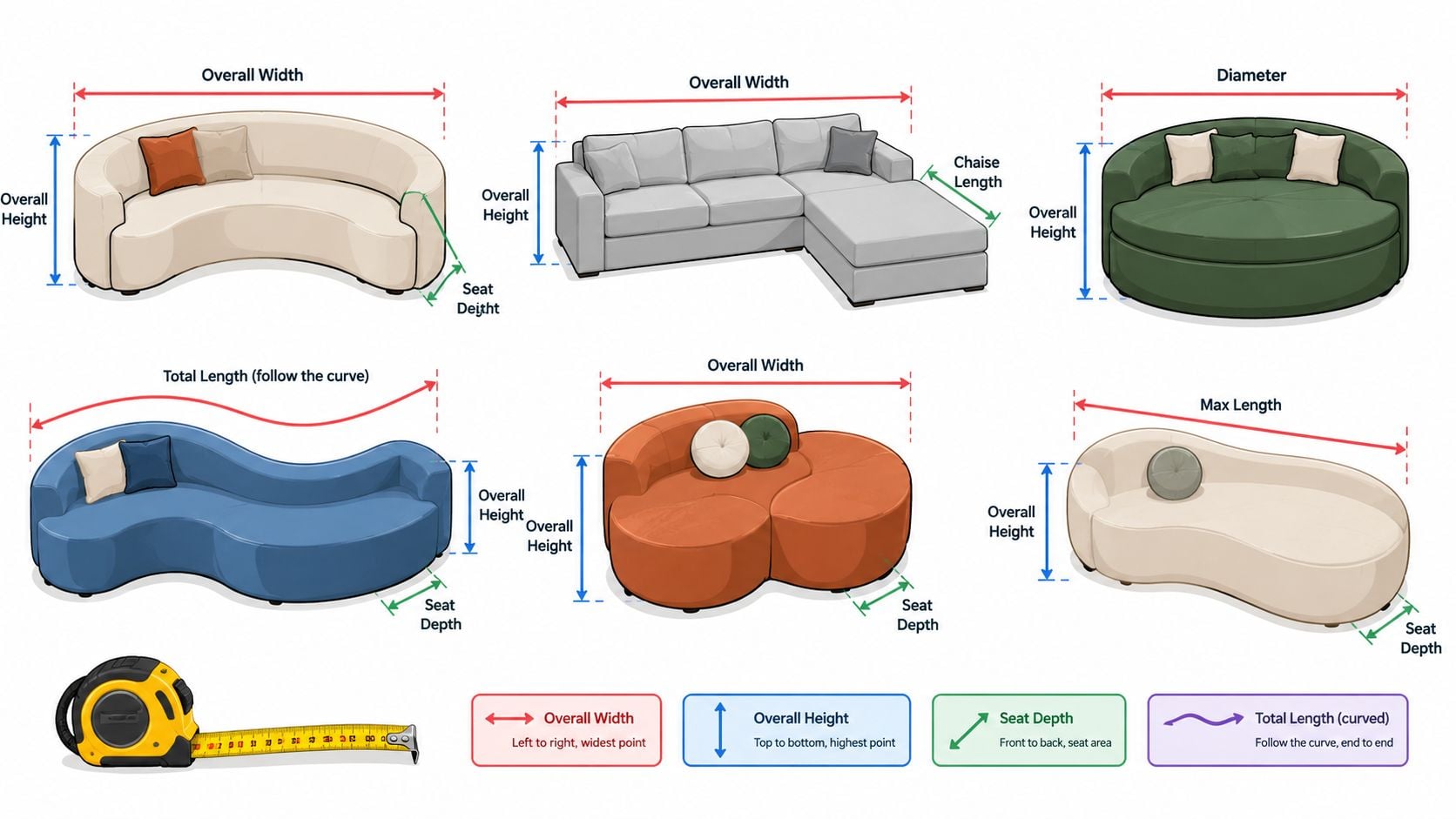
Specialty sofas need to be measured in sections, not as one big piece. Treat each seat run, corner, arm, and extension as its own part. That gives you numbers you can match to a cover, instead of one broad measurement that hides the awkward spots.
Loveseats are the simplest of the group, but they still cause mistakes. Some slipcover lines size loveseats separately, and a compact two-cushion sofa does not always fit neatly into a standard sofa cut. Measure it the same carefully as a full sofa, then check the brand's loveseat sizing instead of guessing based on appearance.
Sectionals need a sketch. It does not have to be fancy. A pencil drawing with left arm, right arm, corner, and each run labeled is usually enough to keep the dimensions straight. Measure each section on its own, note which side the return or chaise sits on when facing the sofa, and keep those notes together. Guynn's sectional measuring guide helps sort out left-versus-right orientation before that mix-up turns into a bad fit.
Chaises deserve their own line on the page. Measure the main sofa first, then measure the chaise extension separately from the seat break to the far end. In real living rooms, this is often the spot that causes the cover to pull loose, because the extra length needs fabric and hold in a very specific direction.
Sleeper sofas bring another trade-off. The hidden bed mechanism adds bulk through the seat deck and lower frame, even when the bed stays closed. A cover may fit the width and still look strained across the front rail if you ignore that extra structure.
A modular sofa needs the same approach as a sectional, but with more discipline. Measure every individual unit, especially if one armless chair or corner block sits slightly deeper than the rest. Pieces that look identical at a glance are often off by enough to matter once the cover is on.
Use this quick check as you measure:
- Loveseat: Record full width, depth, back height, and confirm whether the cover line has a separate loveseat size.
- Sectional: Measure each run separately, label left and right facing sides, and include the corner section.
- Chaise sofa: Record the sofa body and chaise extension as two distinct measurements.
- Sleeper sofa: Note seat depth, front rail shape, and any extra bulk from the folded bed frame.
- Modular pieces: Measure each unit on its own, even if the pieces look matched.
Careful measuring pays off more on unusual sofas than on standard ones. If your numbers feel messy or the shape is hard to define, that is usually the moment to slow down and ask for design help. It is a lot easier to confirm a tricky measurement before ordering than to wrestle with a cover that never stays where it should.
Common Mistakes to Avoid When Measuring
A slipcover return often starts with one innocent note on a scrap of paper. 84 instead of 86. Floor to skirt instead of top of leg to floor. Cushion bulk counted as frame height. Those little misses are what turn a cover from tidy into something that creeps forward every time someone stands up.
The first common mistake is measuring only the front width and assuming that tells the whole story. On many sofas, it does not. Some covers need the full outside contour, the U-shaped measurement from the front of one arm, across the outside back, to the front of the other arm. If the style includes a skirt, measure the drop from the top of the legs to the floor so the fabric does not hover awkwardly or drag.
Those details matter because slipcover sizing bands are not very forgiving. As a general guide, many ready-made covers are grouped by width around 68 to 96 inches, height around 30 to 38 inches, and depth around 36 to 42 inches. A sofa that lands near the edge of a range can look custom-fit with careful measuring, or look loose and restless if the numbers are off.
Another mistake is rounding.
It sounds harmless to write 35 when the tape shows 35 and 3/4, but those fractions add up fast across width, depth, arm height, and back height. I have seen sofas that technically matched a size chart still wear the wrong cover because the homeowner rounded every measurement in the same direction.
Use the tape reading you get, in inches, and write it down right away. Exact notes make it much easier to compare against product specs and much easier to ask for help if something looks questionable.
A third mistake is measuring the cushions instead of the frame. Loose back cushions puff out. Seat cushions compress unevenly. If you measure over all that softness, you can end up ordering a cover that sags through the back or rides low in the front once everything settles.
Measure the structure the cover has to fit. Remove loose seat cushions before checking back height, and note anything unusual about the frame shape that might affect how the fabric sits.
One more mistake shows up after the measuring is done. People trust memory instead of labeling their notes. Write down which number is overall width, which is seat depth, and which is outside arm to outside arm. On a standard sofa, that habit saves confusion. On a near-custom fit, it can save a return.
Careful measuring is what separates a slipcover that looks pulled together from one that always needs straightening. If your sofa sits near the edge of a size range or the shape is giving you mixed signals, that is a good time to slow down. Getting the numbers right the first time protects your budget, and if the fit still feels uncertain, Guynn's Low Price Promise and design help give you a practical backup instead of a frustrating guess.
When to Get Professional Measuring Help
Some sofas are straightforward. Others aren't worth guessing on. Large sectionals, unusual arm shapes, layered room projects, and homes with tricky access points can all justify a second set of experienced eyes.
That's especially true when the sofa refresh is part of a broader room plan. A slipcover may solve the immediate upholstery issue, but the room still has to work as a whole with scale, traffic flow, and the furniture already in place.
Good times to ask for help
A homeowner usually benefits from measuring assistance when any of these apply:
- The sofa is modular: Separate pieces and corners make left-right orientation easy to confuse.
- The arms have unusual shape: Tapered, rolled, or oversized arms often distort a “standard” cover fit.
- The room is tight: Doorways, stair turns, and narrow passages can complicate furniture decisions. Homeowners sorting through those constraints often benefit from guidance like this overview of furniture planning for narrow doorways.
- The slipcover is part of a remodel: Once paint, rugs, accent chairs, and layout are involved, fit becomes only one part of the decision.
Why local guidance can save frustration
In this region, shoppers often want practical help without a hard sell. That's where a no-pressure atmosphere matters. Guynn Furniture & Mattress has served Galax, Independence, Hillsville, and the wider Southwestern Virginia and Northern North Carolina region since 1902, and for more complex measuring questions, Debra Williams and the expert design staff can help sort through sizing, proportions, and room planning.
That support is useful for the Traditionalist who wants comfort and longevity, for the Aspiring Remodeler trying to visualize the whole room, and for the Value Seeker who wants to avoid paying twice for a wrong choice. It also helps that shoppers can compare upholstery styles and comfort levels from brands such as La-Z-Boy as a Showcase dealer, Ashley, Bassett, Sealy, and Therapedic while thinking through the room as a whole.
The value side of careful measuring
There's a practical budget connection here too. A good measurement process cuts down on wrong-fit purchases, but when a project expands beyond a slipcover, price protection matters. Guynn matches local competitors and offers a 30-day price guarantee through its Low Price Promise, which gives shoppers a little breathing room when they're trying to make a careful decision.
For many households, timing matters as much as price. A large in-stock selection for immediate delivery helps when the old setup isn't working and the room needs attention soon. And for customers within the service area, there's free in-home delivery and setup within 60 miles, which takes some of the strain out of replacing or reworking key pieces.
The right help doesn't remove choices. It makes the choices clearer.
That's often the benefit of professional measuring and design support. It reduces uncertainty. Instead of hoping a cover or furniture piece works, a homeowner can make the call with much more confidence.
If a slipcover project feels simple, a careful measuring session may be all that's needed. If the sofa shape, room layout, or style choices are getting complicated, Guynn Furniture & Mattress offers expert guidance, a no-pressure atmosphere, free in-home delivery and setup within 60 miles, and help for homes across Galax, Independence, Hillsville, and the wider Southwestern Virginia and Northern North Carolina region. Visit our showrooms in Galax, Independence, or Hillsville to test the comfort for yourself, schedule a consultation with our design team to start planning your dream room today, or browse our selection online at guynnfurniture.net.